Some temples invite us to admire their architecture. Others encourage us to slow down and listen to the stories surrounding them.
At Wat Ban Kao in Rayong, a pond, a wooden scripture library, and an old ordination hall create a setting in which literature feels close at hand. A small stone marker connects this quiet village with Sunthorn Phu and his travel poem, Nirat Mueang Klaeng.
I arrived on my Honda Super Cub, expecting to explore another historic temple. What stayed with me was the feeling of walking through a place remembered in a poet’s journey.
Arriving in the Old Village
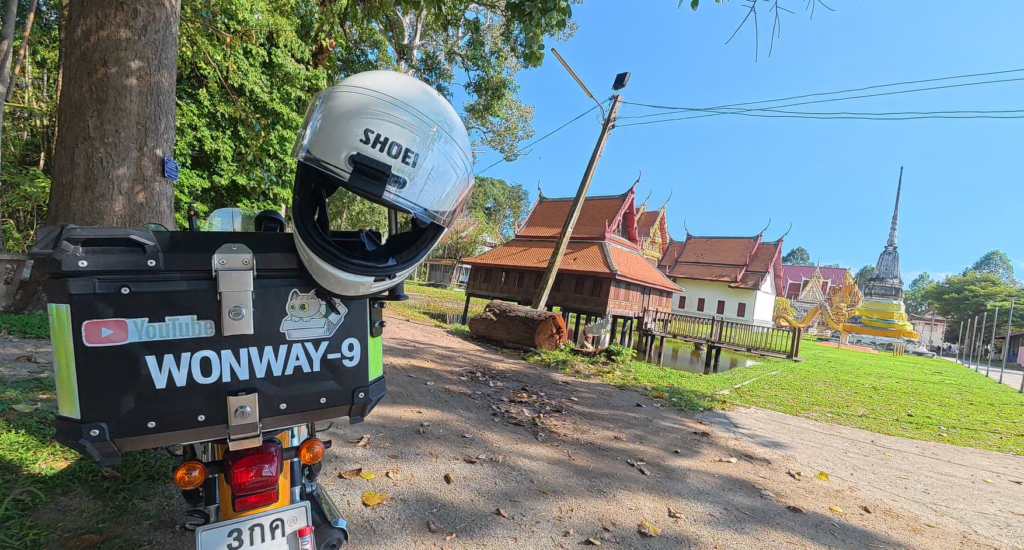


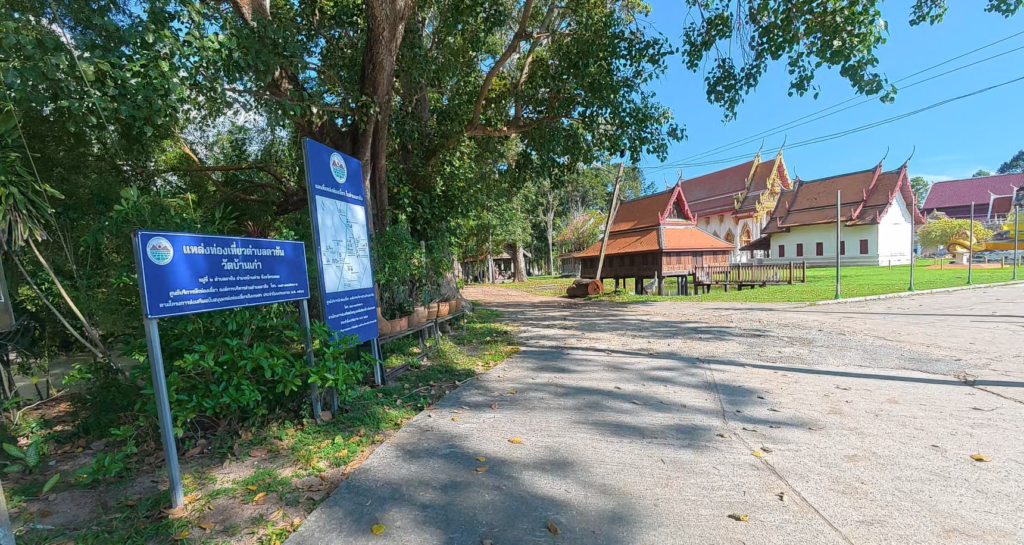
The approach to Wat Ban Kao was part of the pleasure. Riding into the temple grounds, I found open space, trees, and buildings that invited a closer look.
The name Ban Kao—บ้านเก่า—means “old village.” Here, it provides a fitting introduction to a temple where local history and literary memory meet.
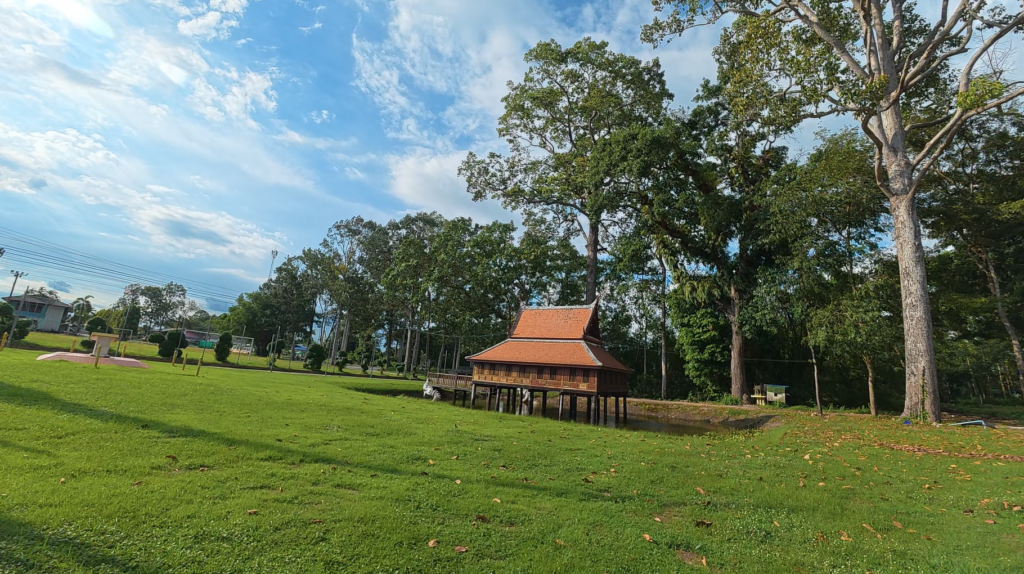
Before visiting the main buildings, I stopped beside the pond. Across the water stood a small wooden structure with a tiled roof. Its reflection offered a quiet first impression of the temple.
A Scripture Library Above the Water
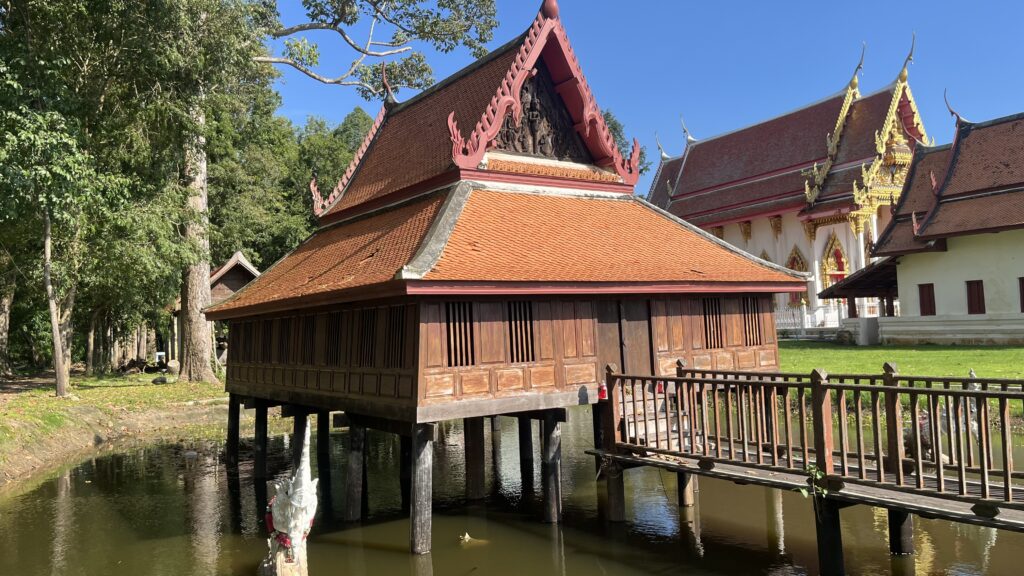
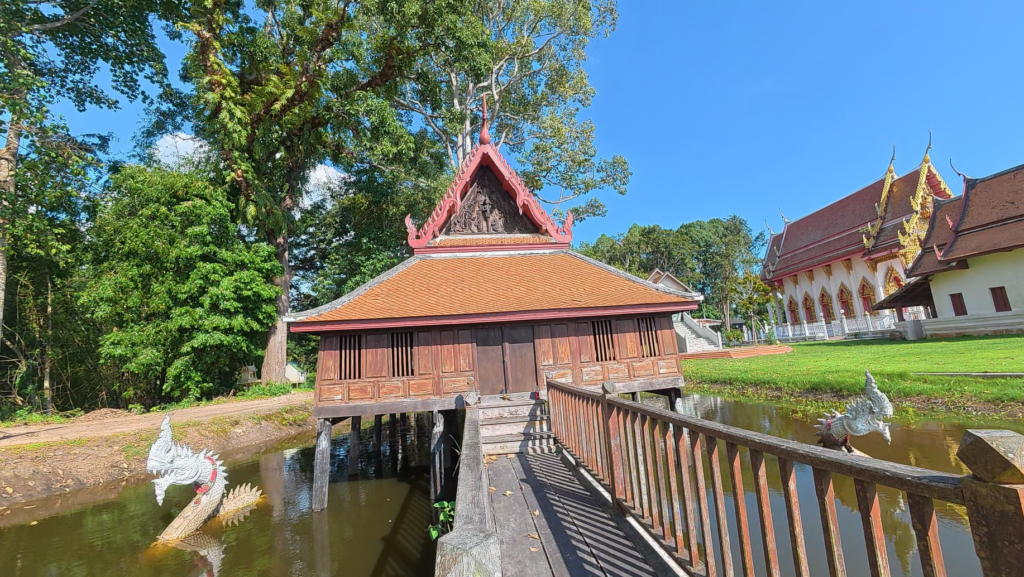
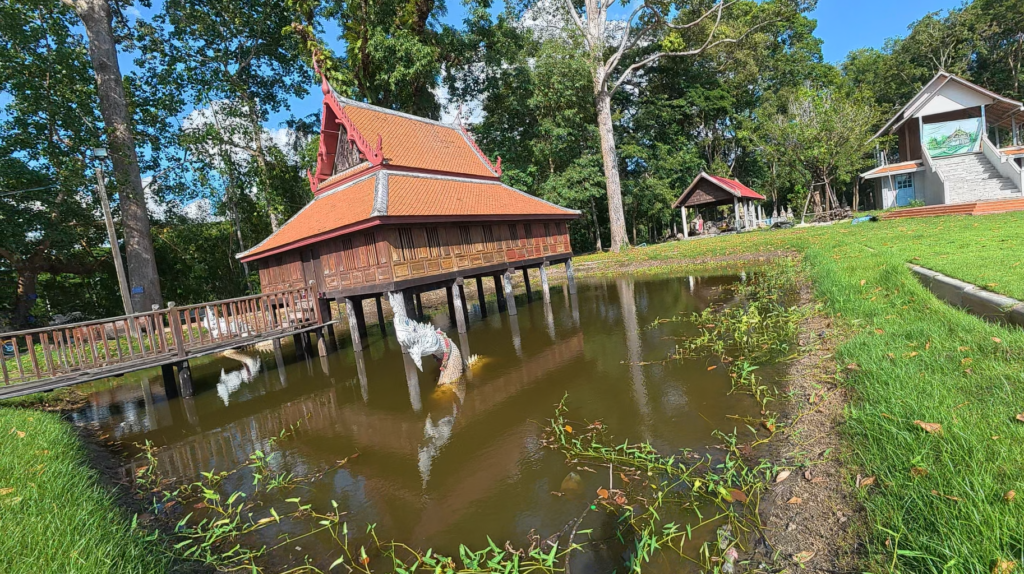
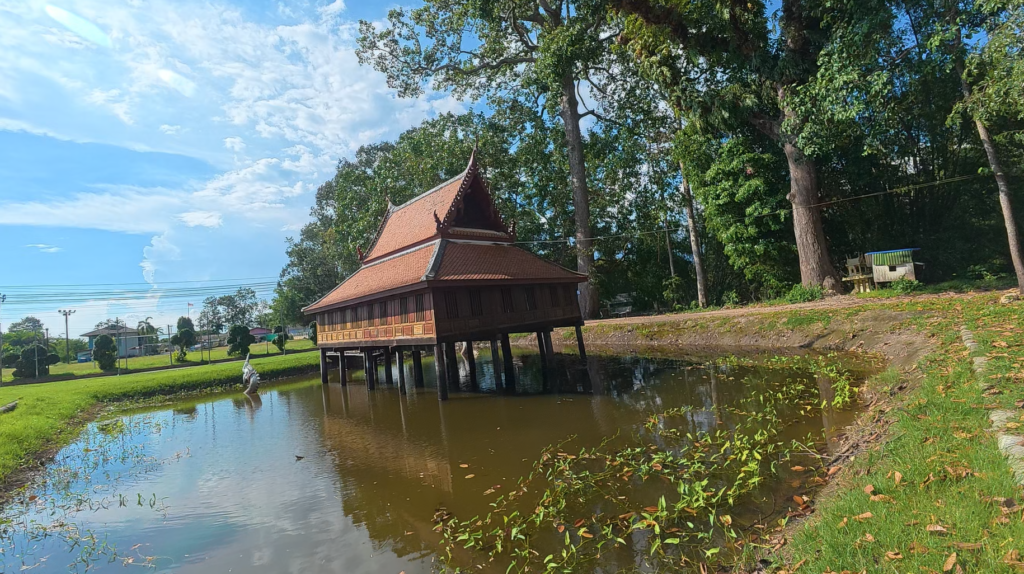


The wooden ho trai, or scripture library, is one of Wat Ban Kao’s most memorable features. Raised on posts above a pond and approached by a bridge, it draws attention through its modest scale and careful details.
Water provided a practical barrier against termites reaching manuscripts stored in such libraries. The building therefore speaks of the care once required to preserve religious knowledge.
Moving around the pond changes the view. From one side, the bridge leads the eye toward the entrance. From another, the roof and wooden walls appear between reflections and surrounding trees.
The carved gable deserves a closer photograph. Its figures and decorative work give this small building a presence that is easy to miss from a distance.
The wooden library also reminded me of Wat Phlap Bang Kacha in Chanthaburi, where another pond-side scripture hall preserves the memory of a temple’s role as a place of learning.
A Poet’s Journey Through Ban Kao

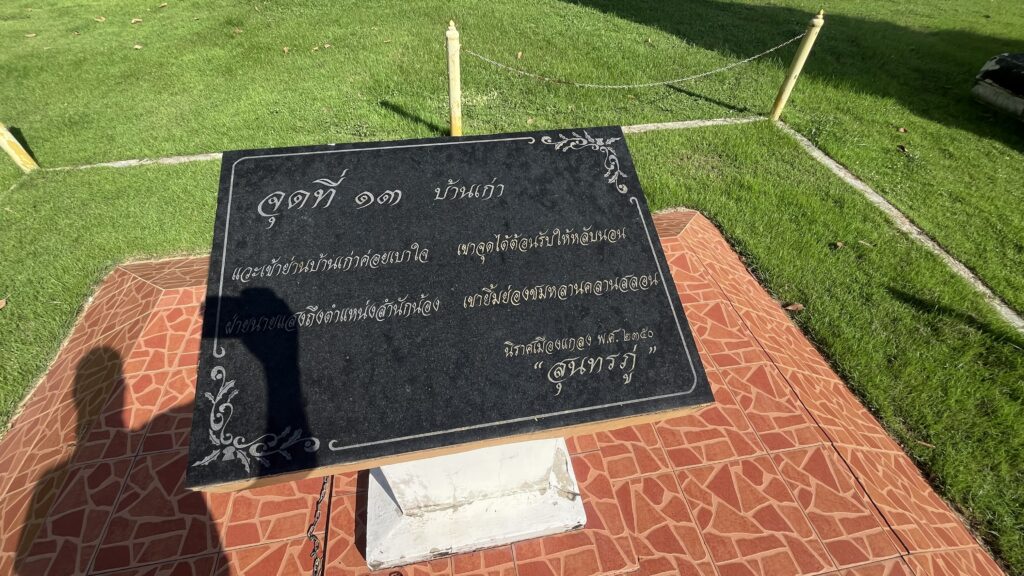
A stone marker identifies Ban Kao as the thirteenth point in the literary route presented here. It carries verses from Sunthorn Phu’s Nirat Mueang Klaeng and the year Buddhist Era 2350, corresponding to 1807.
The poem records a journey toward Klaeng, where the poet sought his father, who had become a monk. Like other works in the nirat tradition, it brings travel together with separation and longing.
Places encountered along the way become occasions for remembering someone absent. A village, an evening sky, or a night’s rest can carry an emotional weight beyond its appearance.
Reading the marker changed how I experienced the grounds. The pond and old buildings became the setting for imagining a traveller arriving tired, resting briefly, and continuing with thoughts that would not leave him.
The modern temple landscape has changed since Sunthorn Phu’s time. Yet the marker preserves a connection between his words and the name of this village.
This local account is recorded in the Thai Ministry of Culture’s entry on Wat Ban Kao.
For another stop connected with the poet, explore my visit to the Sunthorn Phu Memorial in Rayong, continuing the journey from a village remembered in his verses to a place dedicated to his literary legacy.
An Old Ordination Hall and a Sharp Literary Memory
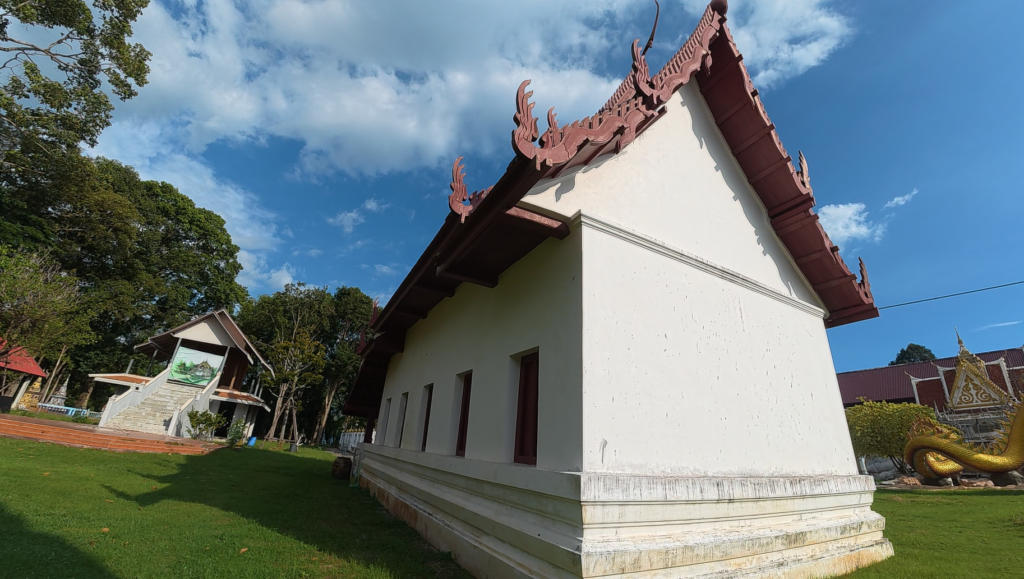
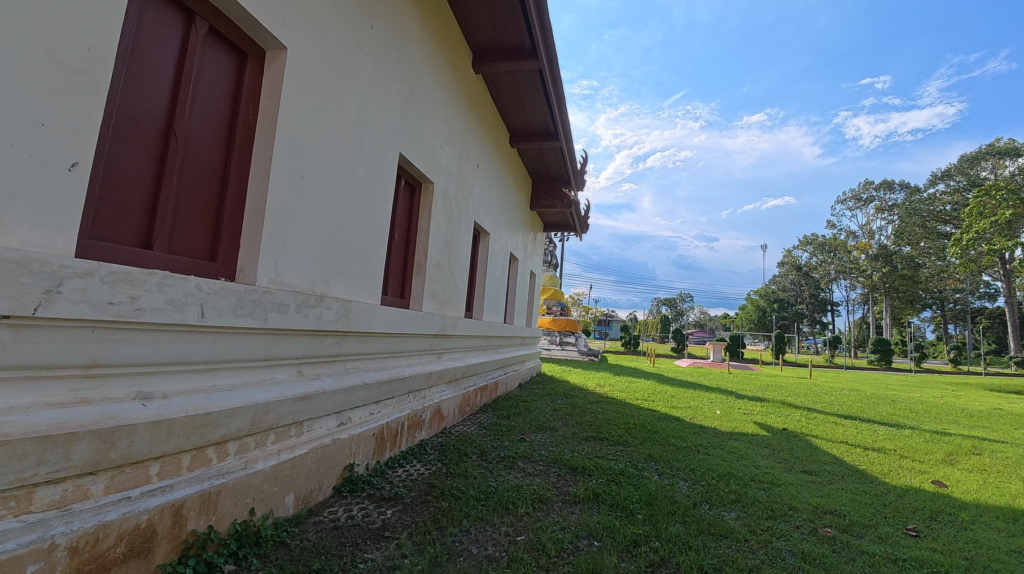

A local account preserved in Thailand’s Ministry of Culture database gives Ban Kao a more personal connection with the poet.
According to that account, Sunthorn Phu stopped overnight while travelling with a guide named Nai Saeng Khiao. After staying with a friend in the village, the guide refused to continue the following morning.
The frustrated poet is said to have used charcoal to write on the ordination hall wall, declaring that he would thereafter call the guide “Saeng Thewathat”—an unflattering reference to Devadatta in Buddhist tradition.
The writing is no longer visible. The account states that it was later covered with paint.
Even without a surviving inscription, the story adds character to the visit. Alongside the celebrated poet of longing, we glimpse a weary traveller capable of anger and a memorable insult.
Inside the Quiet Hall

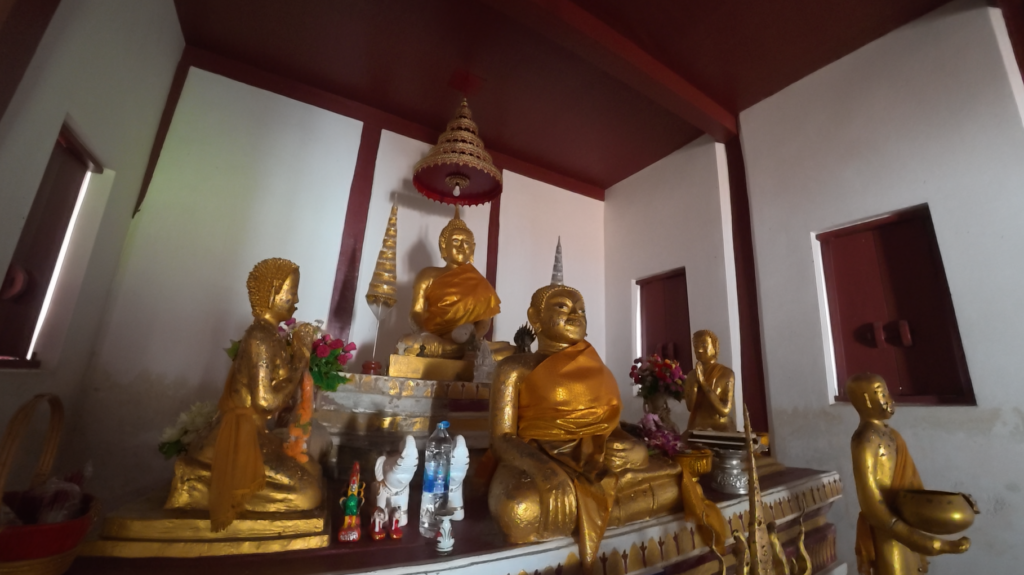
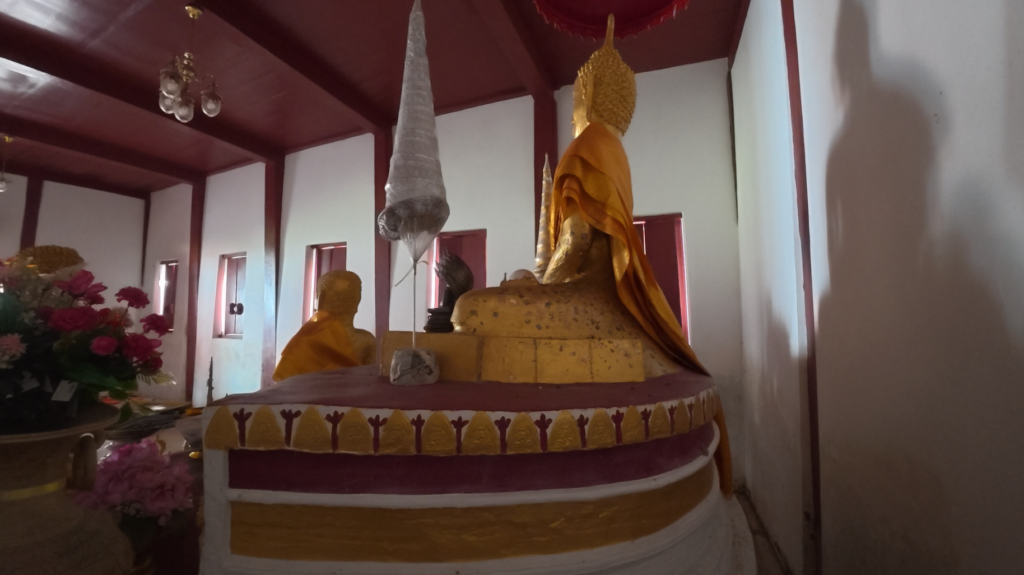
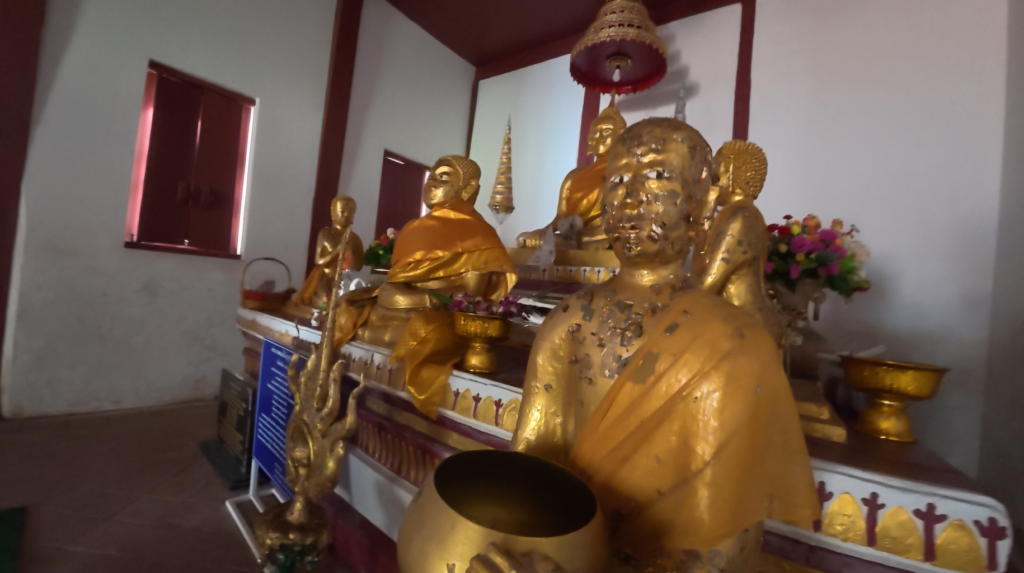

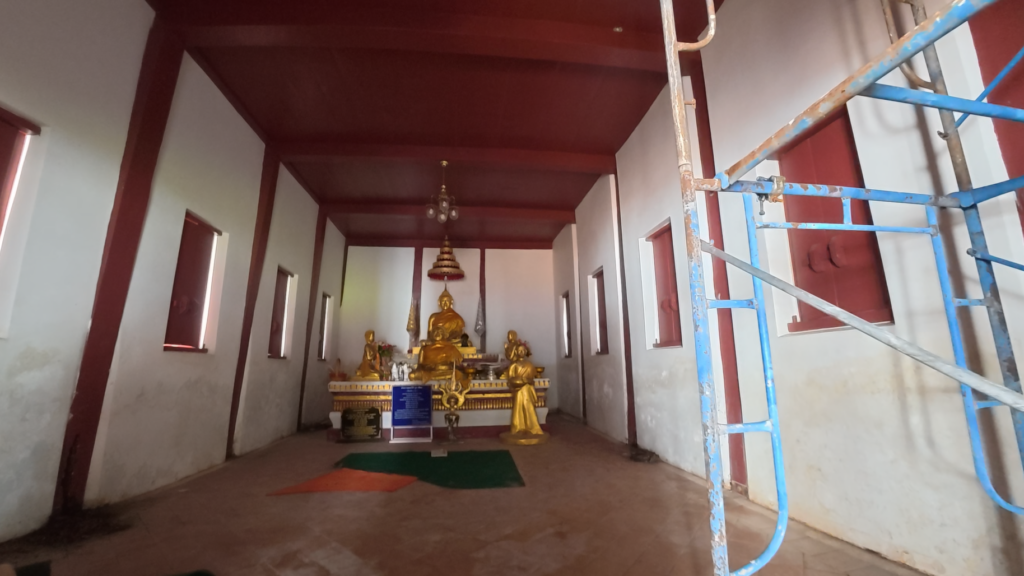


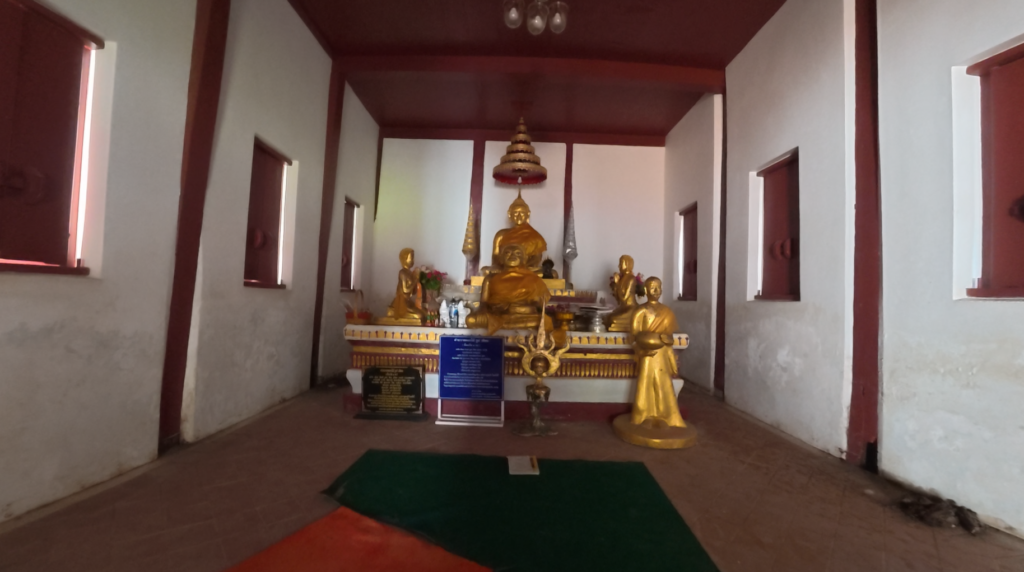
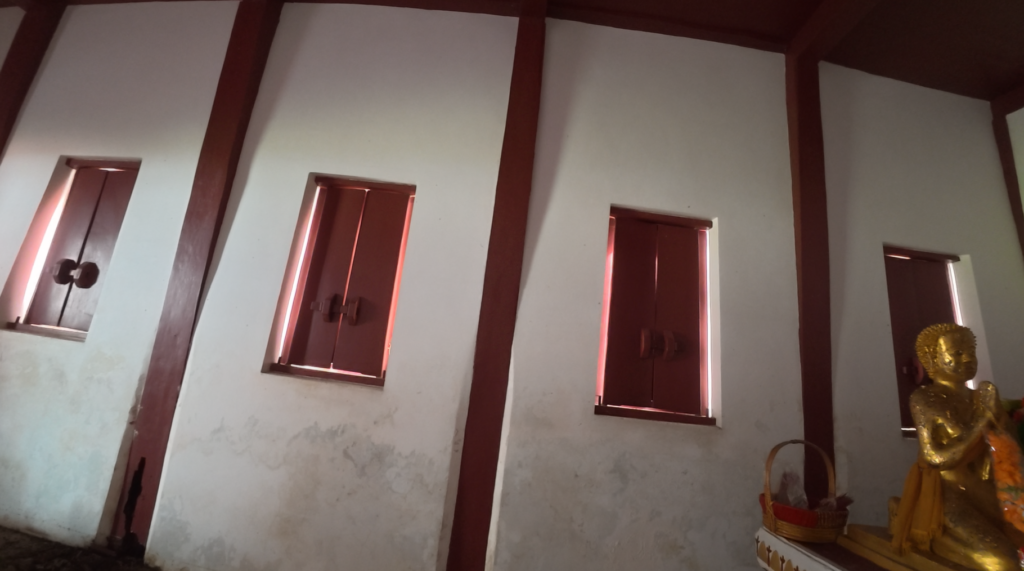
Inside the small hall, the atmosphere becomes intimate. Buddha images occupy the far end, while narrow windows punctuate the plain walls.
The photographs also record worn surfaces, exposed material near the floor, and scaffolding present during my visit. These details deserve a place in the story: an old building requires attention and continued care.
I paused to look from the doorway toward the altar, then back toward the light outside. The simplicity of the interior made it easy to remain still for a moment.
For this visit, that quiet space carried the strongest sense of the poem. The connection was a personal impression—the feeling of rest, reflection, and thoughts held during a journey.
The Chedi and the Temple’s Longer History

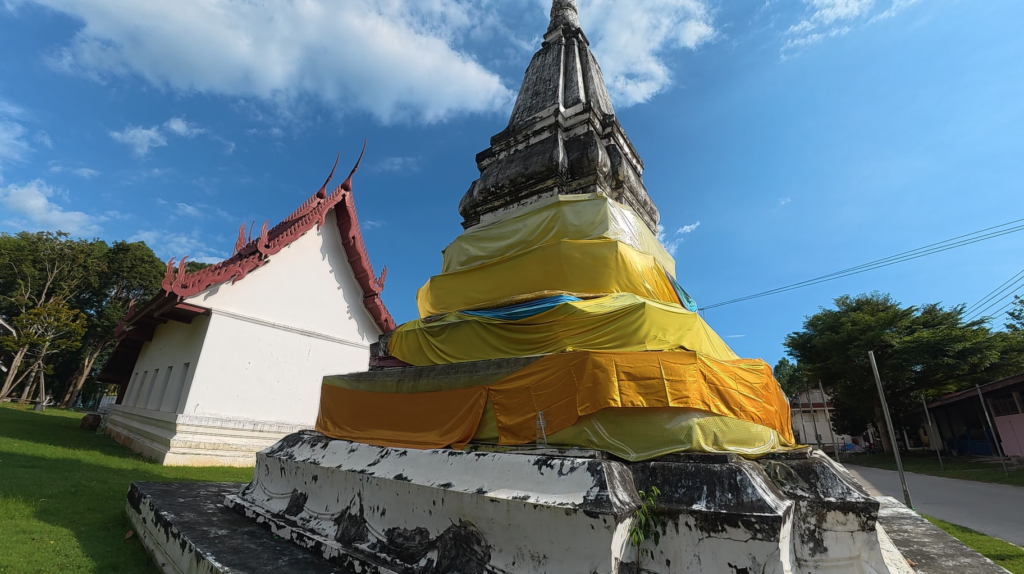


Beside the old hall stands a weathered chedi wrapped with coloured cloth. Its surface and stepped base provide a different texture from the warm wood of the scripture library.
Local historical accounts trace Wat Ban Kao’s origins to the Sukhothai period and describe abandonment followed by restoration. Those early origins should be understood as a tradition associated with the temple; a securely established foundation date remains uncertain.
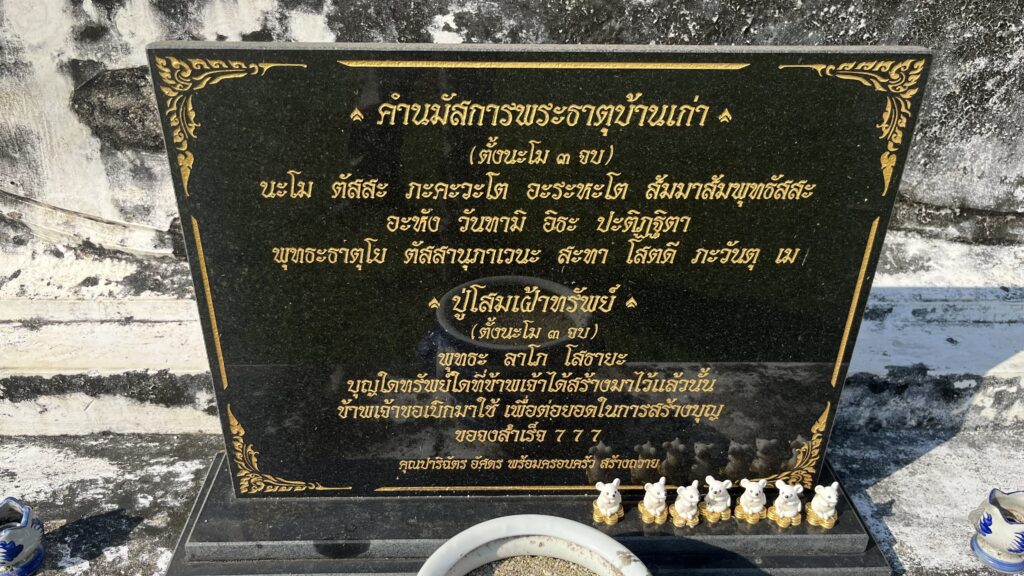
The prayer plaque at the chedi invites visitors to pay respect to the Buddha’s relics. It also includes an invocation associated with Pu Som Fao Sap, a guardian of treasure.
Together, the structure and its plaque show how historical memory and present-day devotion occupy the same space.
A Temple That Continues to Change


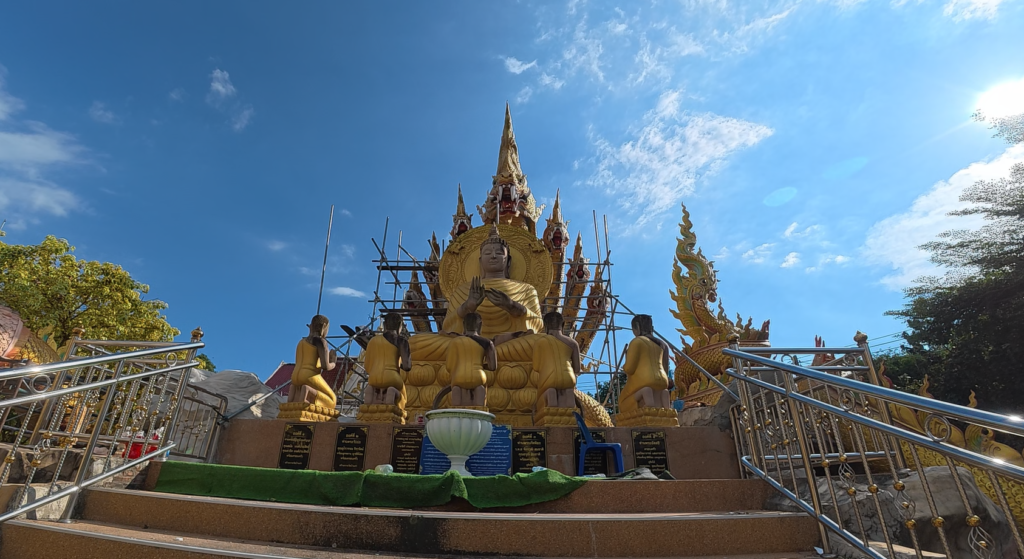
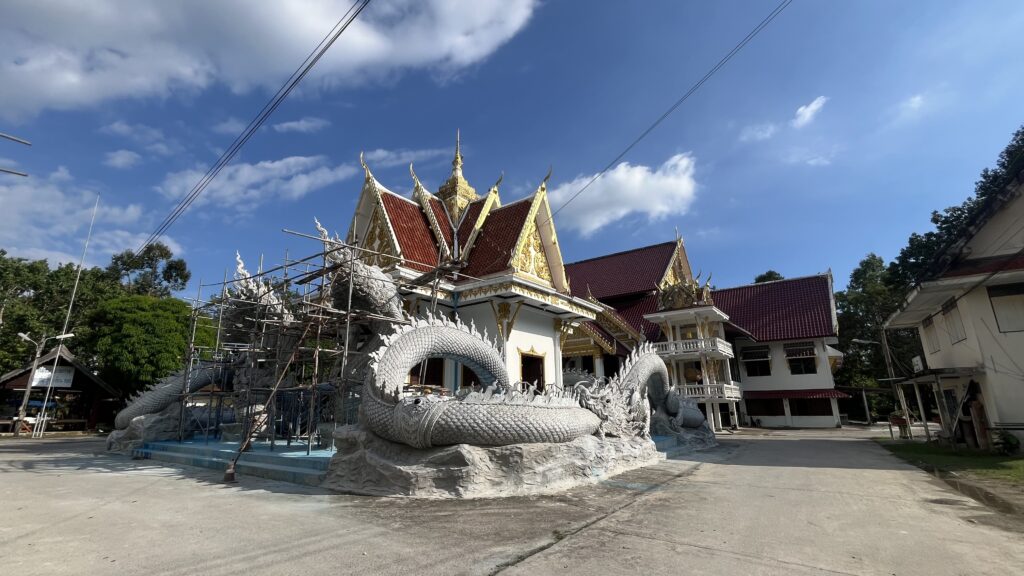


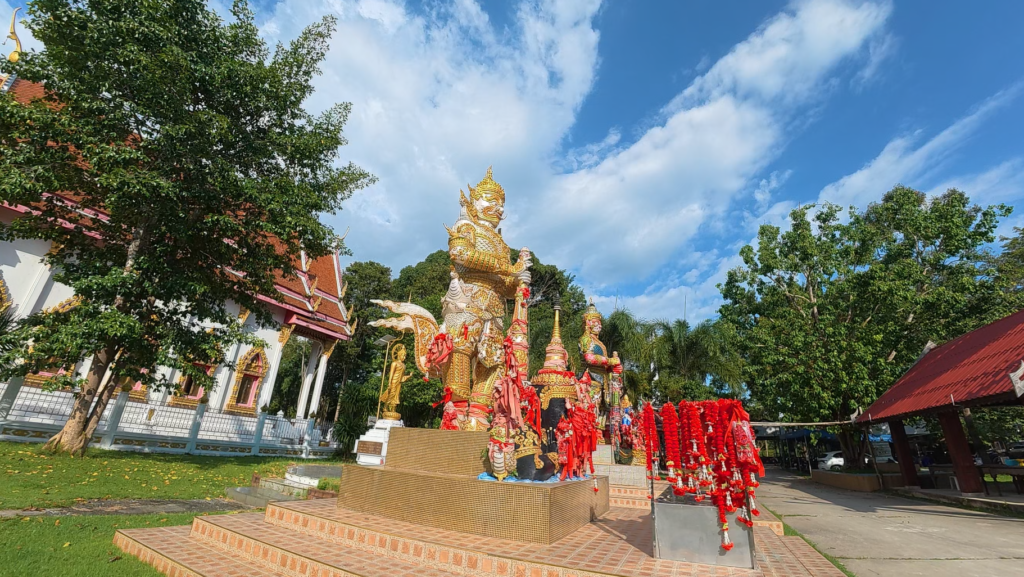

Beyond the older buildings, large naga sculptures and more elaborate religious structures introduce another side of Wat Ban Kao.
Some areas were under construction or repair when I visited. The photographs capture this continuing work alongside completed shrines and established places of worship.
These additions belong to the temple’s current life. Visitors come to make offerings, support building projects, and find meaning in different devotional spaces.
For me, the older pond, the poetry marker, and the small hall remained the heart of the visit. The newer structures showed the community continuing to shape the place around them.
To learn more about the figures encountered around the grounds, read my guide to Thai Temple Gods and Guardian Spirits, exploring how Buddhist devotion, Hindu traditions, and local beliefs share space within Thai temples.
Leaving With a Verse in Mind
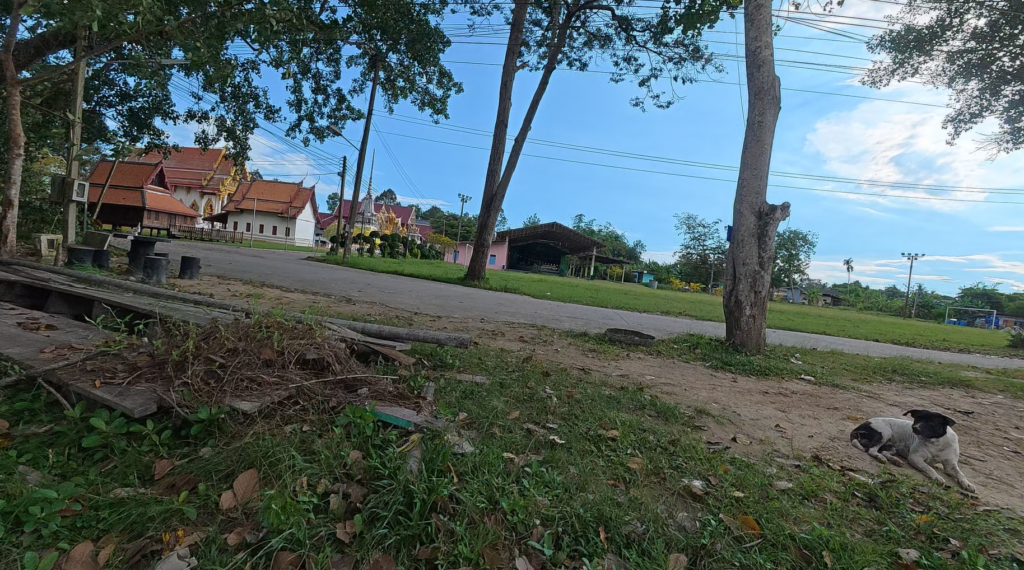
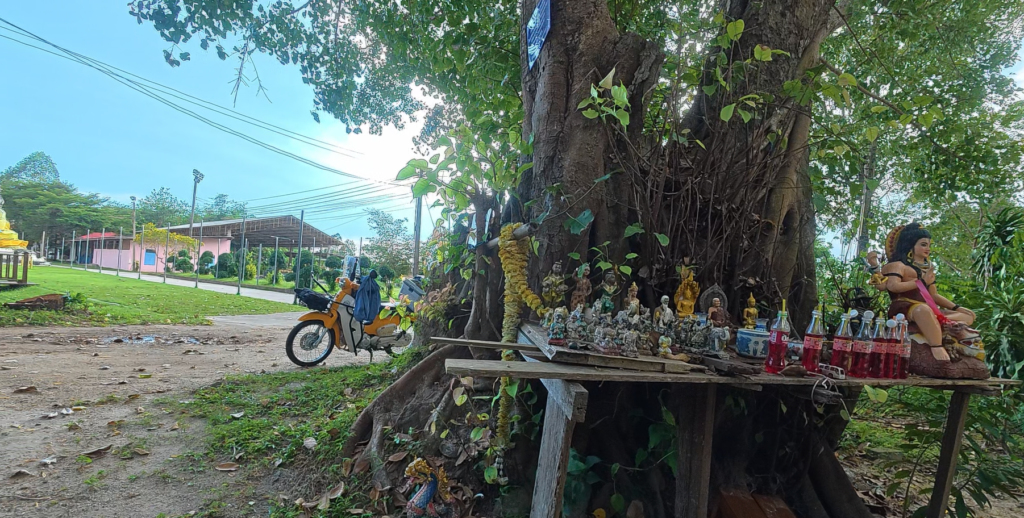
Before leaving, I returned to the trees and water. Small offerings beneath a large tree formed another quiet detail in the grounds.
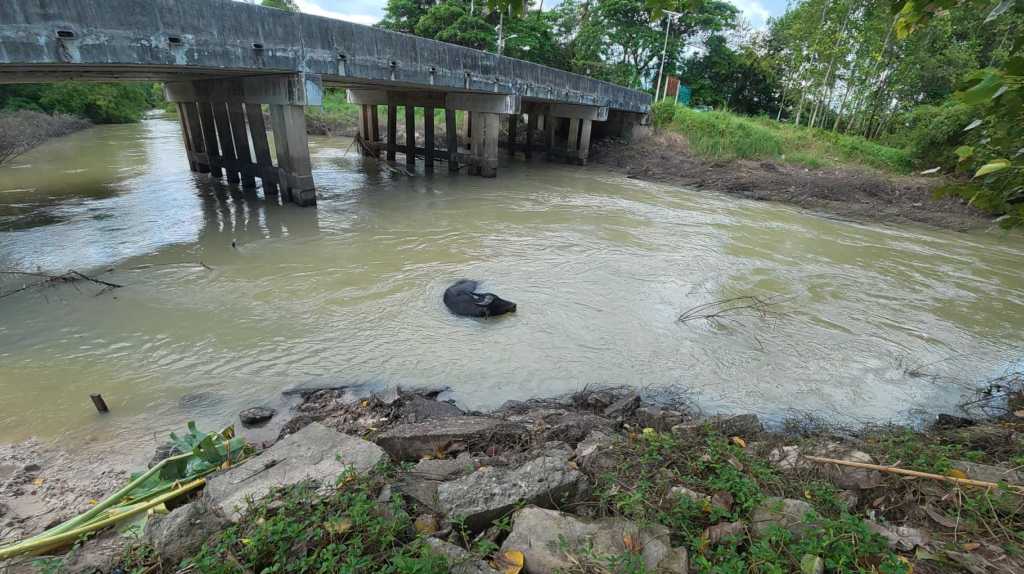
Beside the temple, the river continued toward the canal, where water buffaloes were cooling themselves in the water. A lone dog stood nearby, keeping watch as though guarding its companions. I paused to enjoy this gentle scene of village life. With Sunthorn Phu’s verses still in mind, I wondered whether such an ordinary moment might once have caught his attention too—a river, resting animals, and a traveller reluctant to leave.
My visit had begun with a motorcycle ride and a wish to see an old temple. It ended with the sense that a poem could change the way a place is seen.
At Wat Ban Kao, Sunthorn Phu’s literary memory gives the walk its thread: arrival, a pause beside the water, a troubled night recalled in verse, and the road onward.
Location and Visiting Notes
Wat Ban Kao, also known as Wat Ban Kao Thong Tharam, is in Ta Khan Subdistrict, Ban Khai District, Rayong Province.
Allow time for the pond-side scripture library, poetry marker, old ordination hall, and chedi. Access to individual buildings may depend on temple activities and maintenance work.
Dress respectfully, remove shoes before entering worship halls, and ask before entering areas undergoing repair.