Entering a Place That Remembers a King
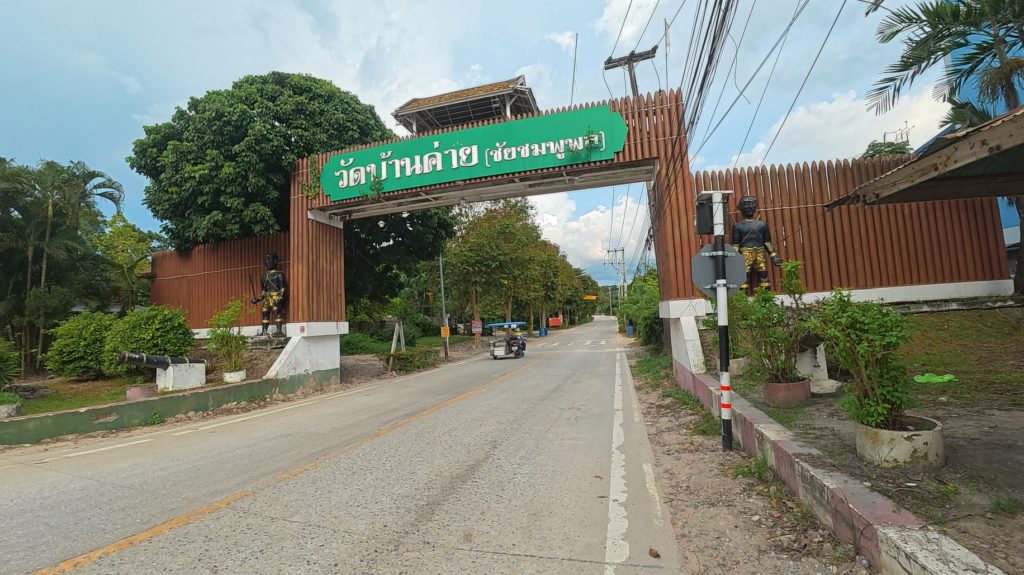
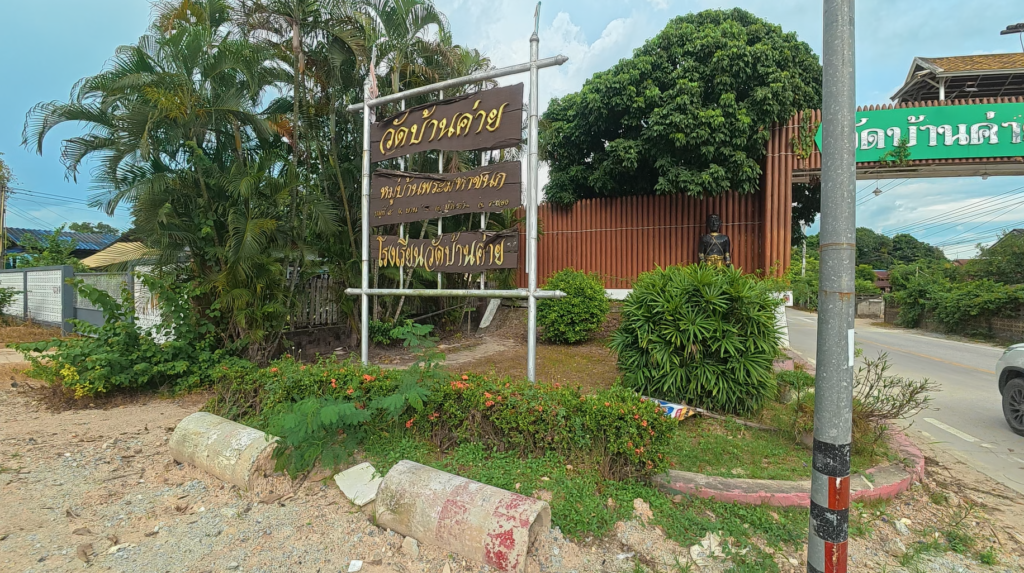

Arriving at Wat Ban Khai in Rayong, I felt as though I were entering an old military camp.
The road led into an active temple, with shaded buildings and familiar signs of everyday village life. Yet the story of King Taksin stayed in my mind. Local tradition connects this area with the troops he gathered during the struggle to restore Siamese independence in 1767.
The name Ban Khai itself evokes a camp. Before looking closely at any building, I was already searching the landscape for something that might have survived from that turbulent time.
Thailand’s cultural heritage database describes the temple as a place believed to have served as a camp during Taksin’s time. It also distinguishes the former northern temple, known as Wat Bon, from the relocated temple, formerly called Wat Lang. The present compound therefore needs to be understood alongside the older site and the changing riverside landscape.
With that history in mind, I began my walk.
A Locked Door and a Carefully Built Mondop


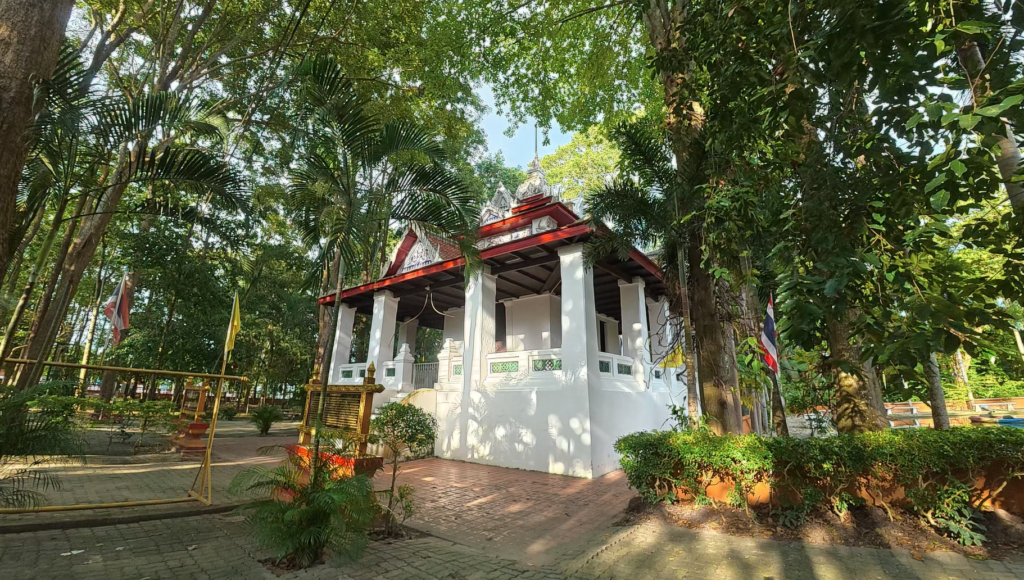


The first building I approached was the old mondop, a shrine associated with a replica of the Buddha’s footprint.
Its raised floor, central staircase, white walls, and decorated roof gave it a quiet dignity. From below, the building seemed carefully composed: the steps drew the eye upward, while the roof ornaments rewarded a slower look.
The doors were locked. I could admire the exterior, but I could not enter or examine the sacred objects inside.
According to the temple’s history board, construction began in B.E. 2454, or 1911, under Phra Khru Wichit Thammanuwat, better known as Luang Pho Wong.
The board describes a remarkable communal effort. Villagers brought seashells from the Rayong coast to make lime, while materials arriving from Bangkok continued their journey by boat and ox cart. It also records the use of a sticky-rice mixture in the construction process.
Those details made the building feel more personal. Its walls represented the work of people carrying, burning, mixing, and building together.
The same account says that Luang Pho Wong drew inspiration from sacred buildings at Phra Phutthabat in Saraburi and in Lopburi. A replica Buddha footprint and a Buddha image identified with Rattanakosin Era 130 were installed inside.
I left the staircase with an unfinished curiosity. The closed door had kept the interior hidden, but the craftsmanship outside was already worth the stop.
The Quiet Memory of a Wooden Museum

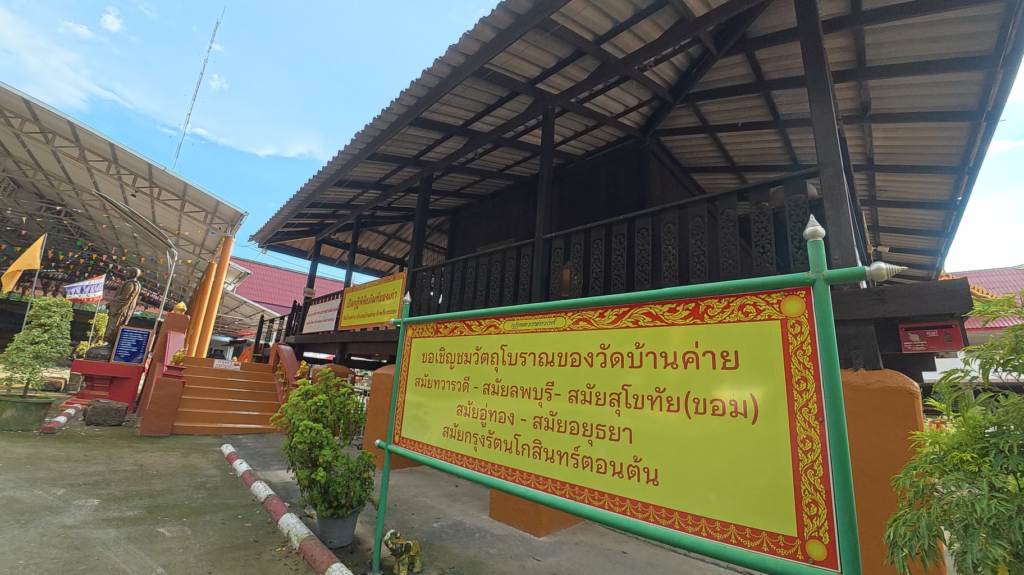


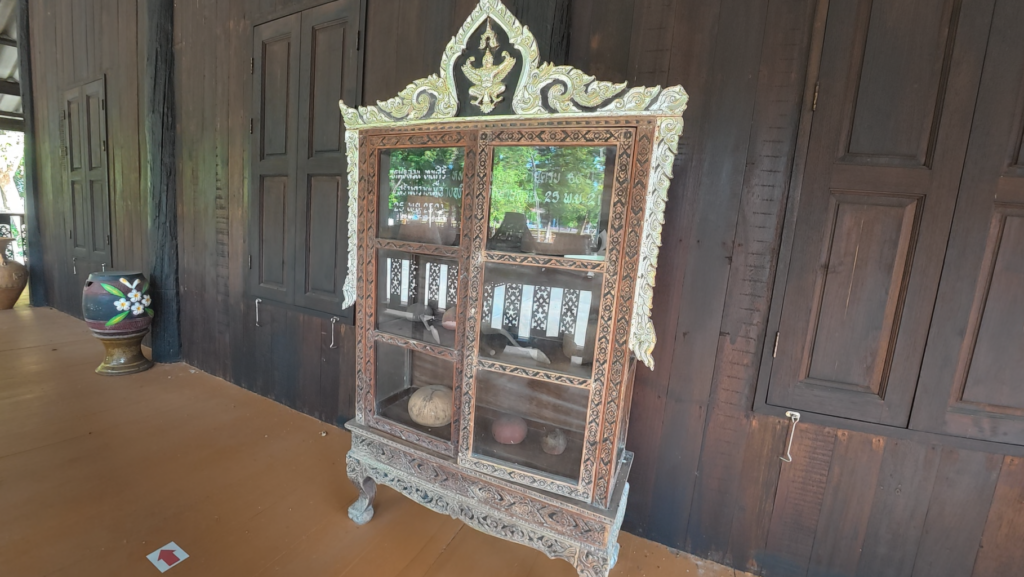
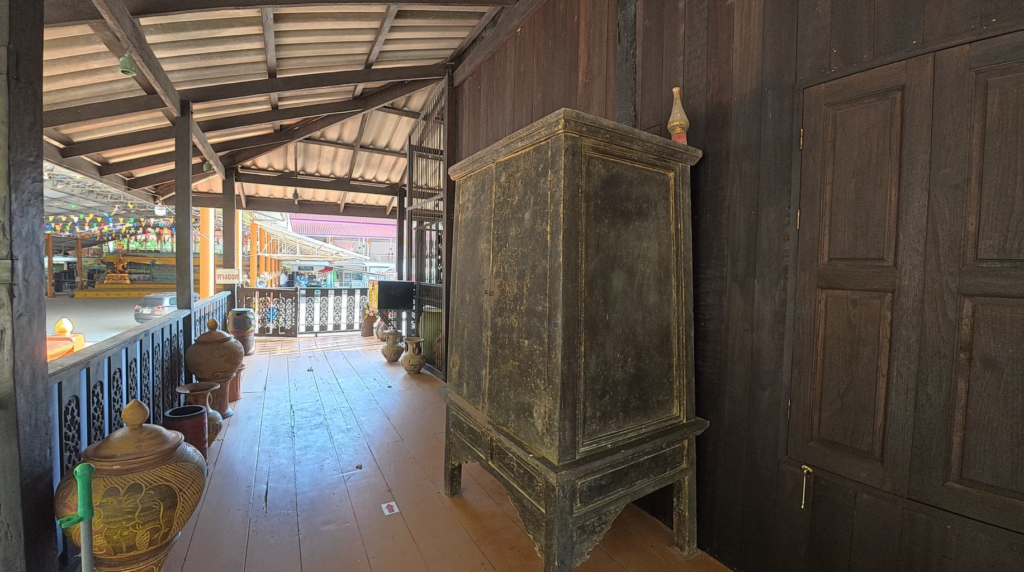
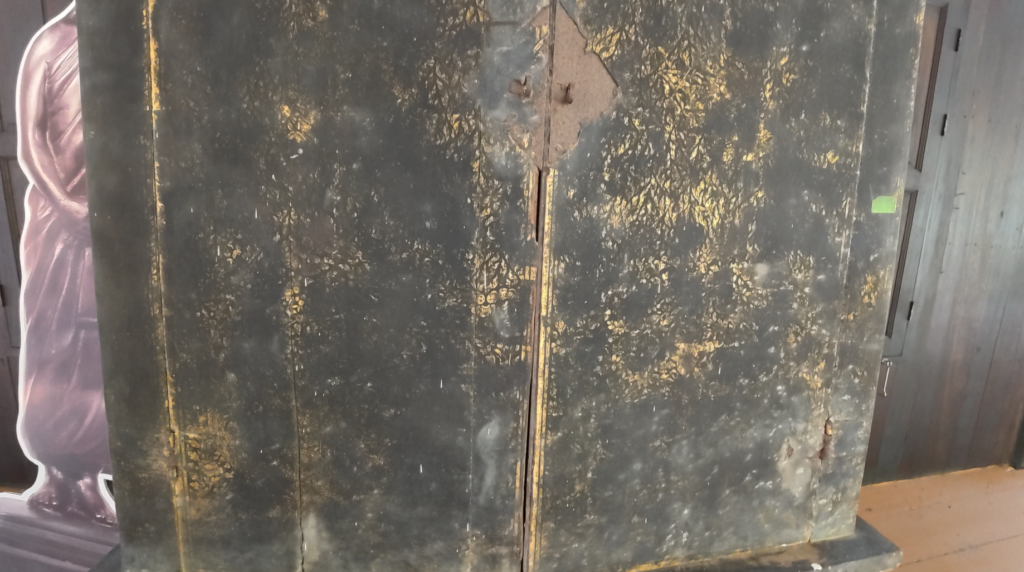
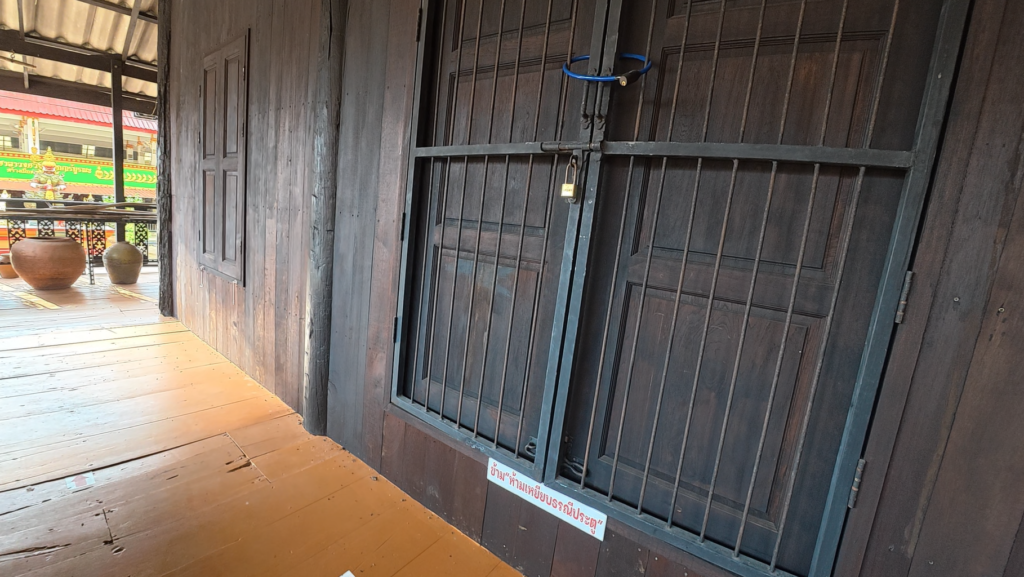
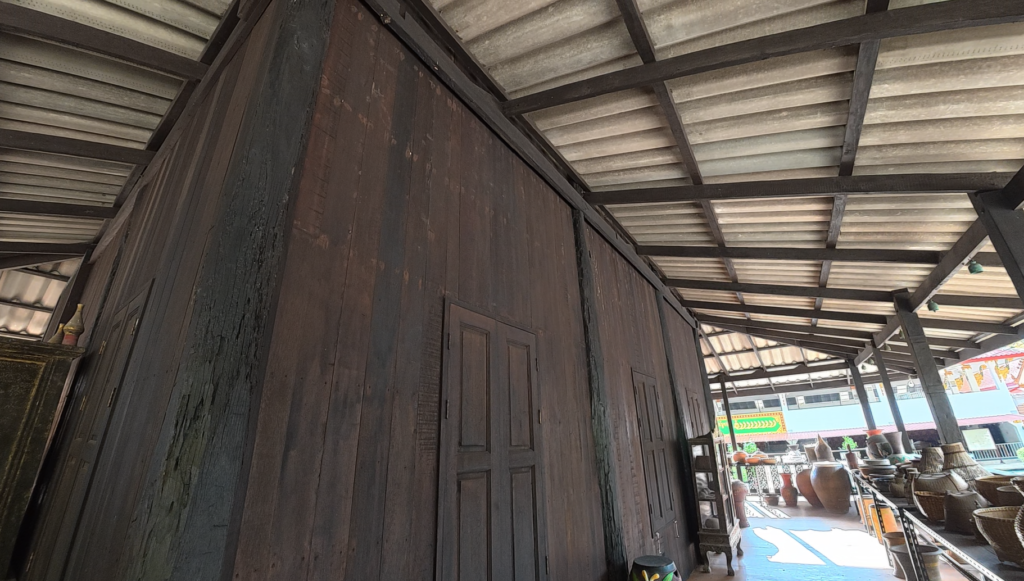
My next stop was the wooden building near the center of the compound, used to display the temple’s collection of old objects.
The atmosphere changed immediately. Timber walls, worn cabinets, ceramics, and wooden chests brought the visit down to the scale of everyday things.
Some objects stood behind bars or glass. Others could be seen along the veranda. Faded gold decoration on a dark cabinet caught my attention, its remaining patterns becoming clearer as I moved closer.
The display sign identifies the building with Luang Pho Wong and introduces objects attributed to several periods, including Dvaravati, Lopburi, Sukhothai, U Thong, Ayutthaya, and early Rattanakosin.
These are the collection’s stated categories; they should not be taken as proof that every object, or the temple itself, dates to those periods.
For me, the appeal was in the encounter with the objects themselves. Beside the grand story of a king and his army, these cabinets and household vessels suggested quieter lives: things kept, used, donated, and eventually entrusted to a temple.
Compassion at the Center of the Pond


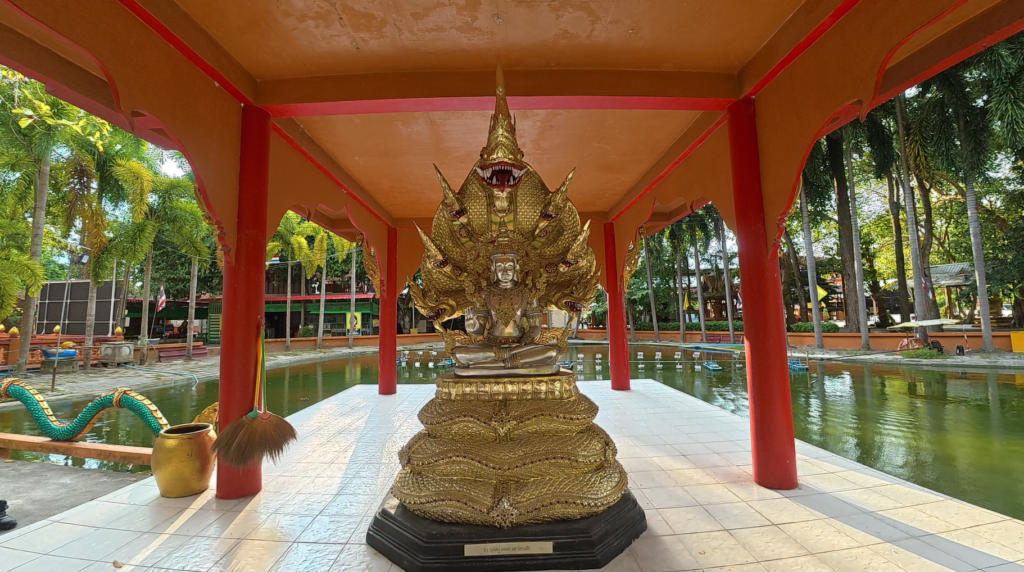
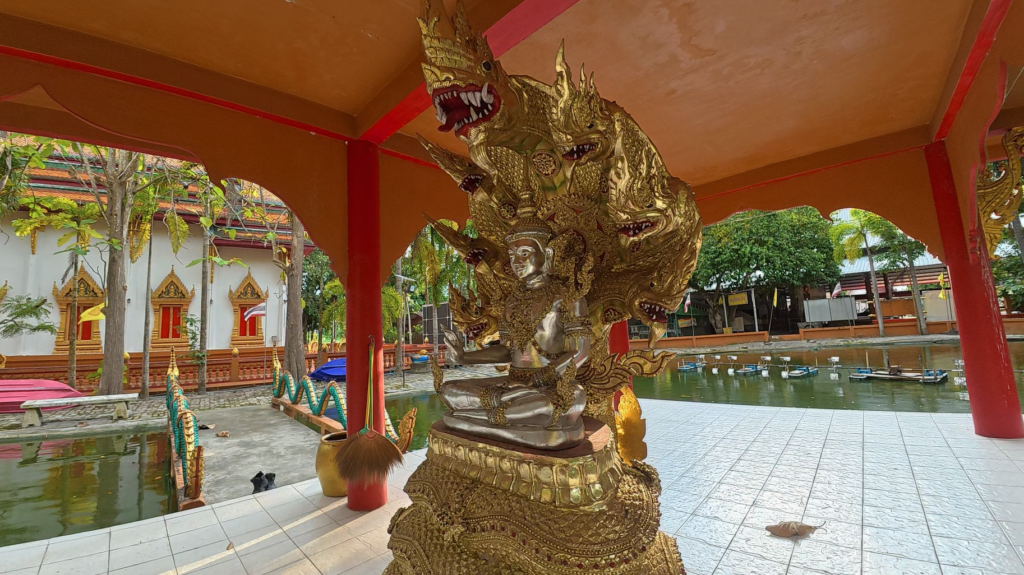
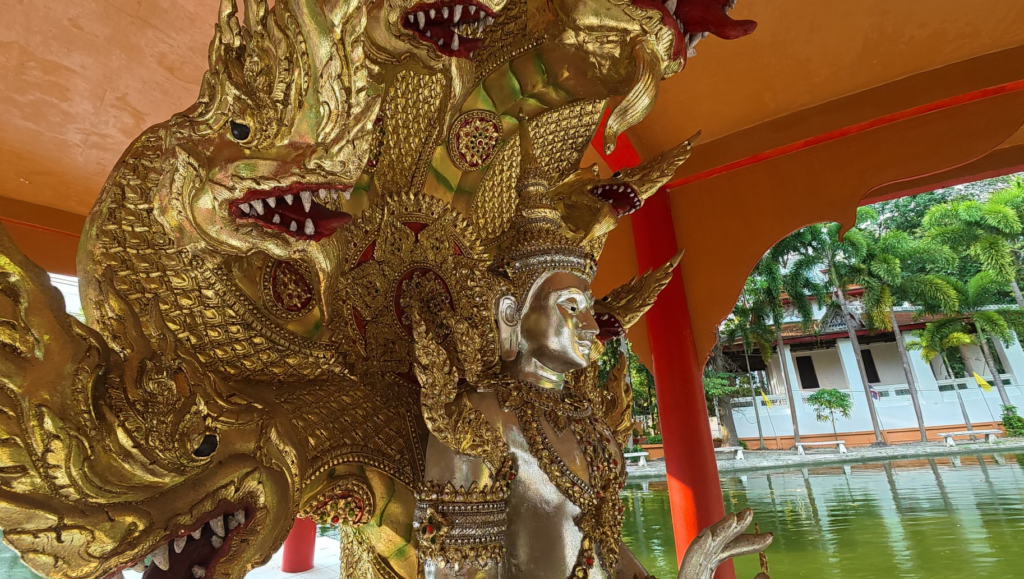
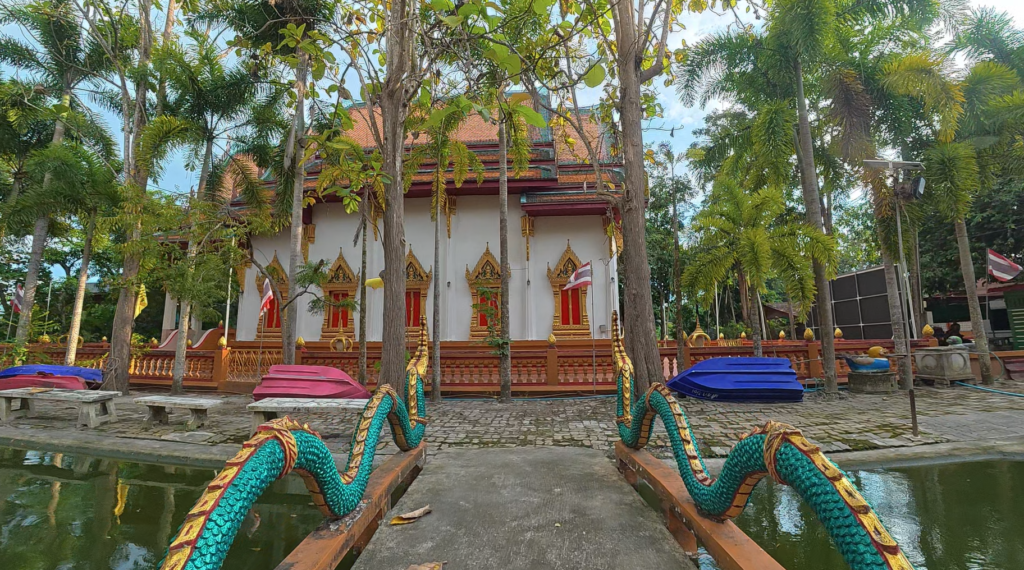
Beyond the wooden building, a richly decorated pavilion stood in the middle of a pond.
Its red and gold roof reflected in the water. A bridge with naga-shaped balustrades led toward the shrine, turning the approach into a small ceremony of its own.
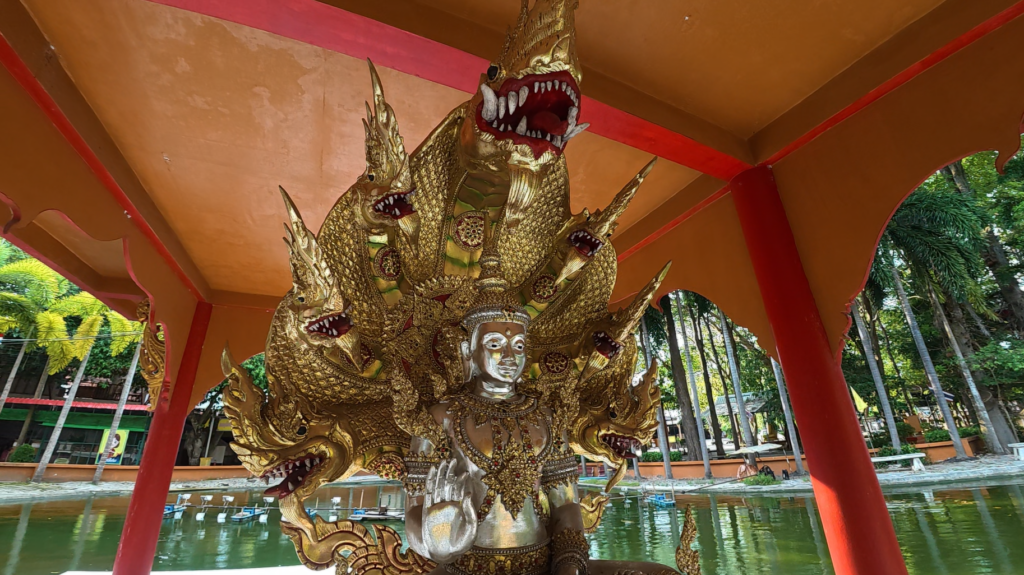
Inside, a seated Buddha was sheltered by the spreading heads of a naga. The image recalls the Buddhist story of Mucalinda, the serpent king who protected the meditating Buddha during a storm.
The ornament was dazzling at close range. Golden scales, curling forms, and the many-headed canopy surrounded the still figure at the center.
Yet what I felt most strongly was gentleness.
The Buddha seemed held within a shelter of compassion. Looking at the elaborate pavilion, I thought of the people whose offerings and labor had helped create it. Perhaps that was why the brightness felt warm: behind the gold were many individual acts of merit.
I paused before crossing back over the pond.
A Monk Sweeping, Three Chedis Standing


Passing the ubosot, I noticed a monk cleaning.
It was a simple scene, but it stayed with me. Around the decorated roofs and sacred images, someone still had to sweep and care for the grounds. The temple’s continuity was visible in that ordinary work.
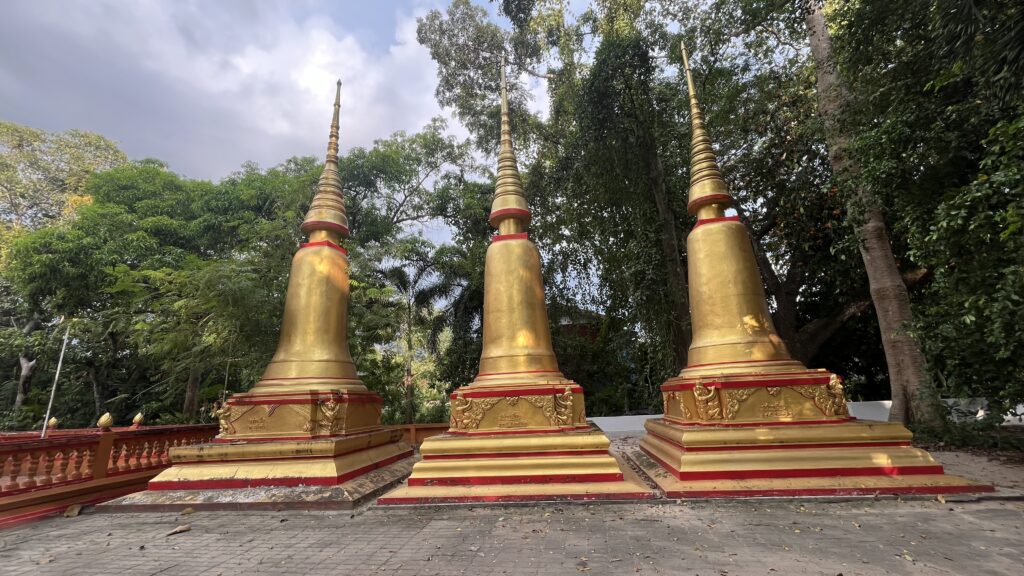
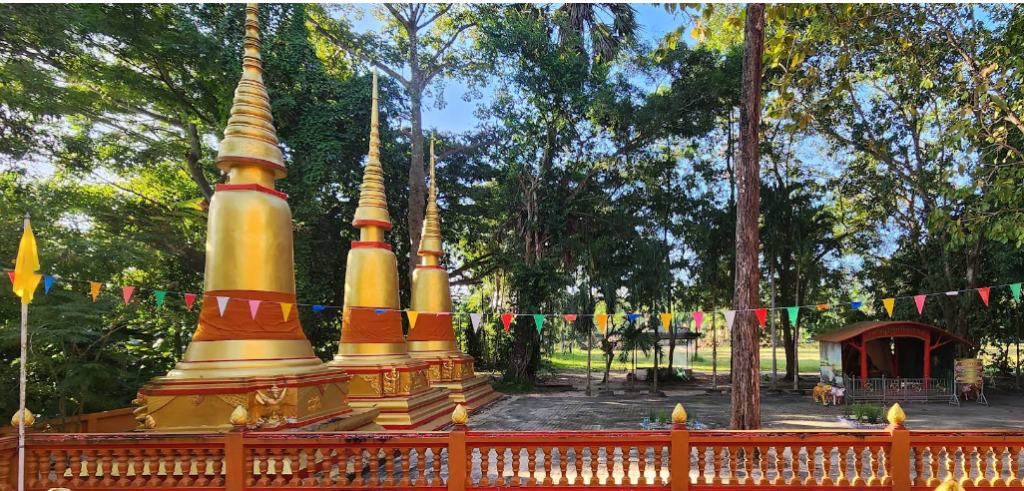
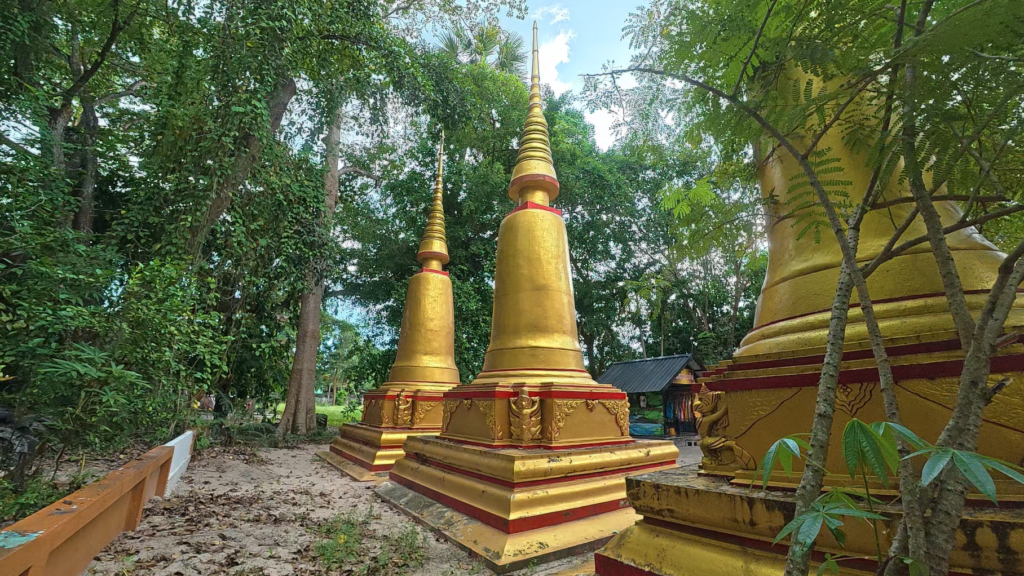
Farther along stood three golden chedis.
Their slender spires rose above bell-shaped bodies and stepped bases. Seen together, they formed a striking group beneath the trees.
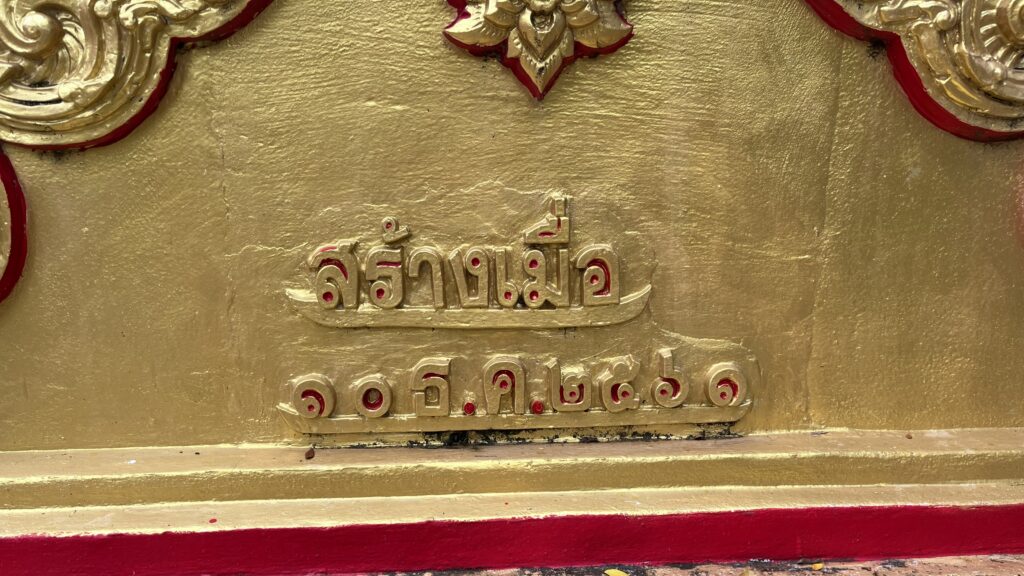
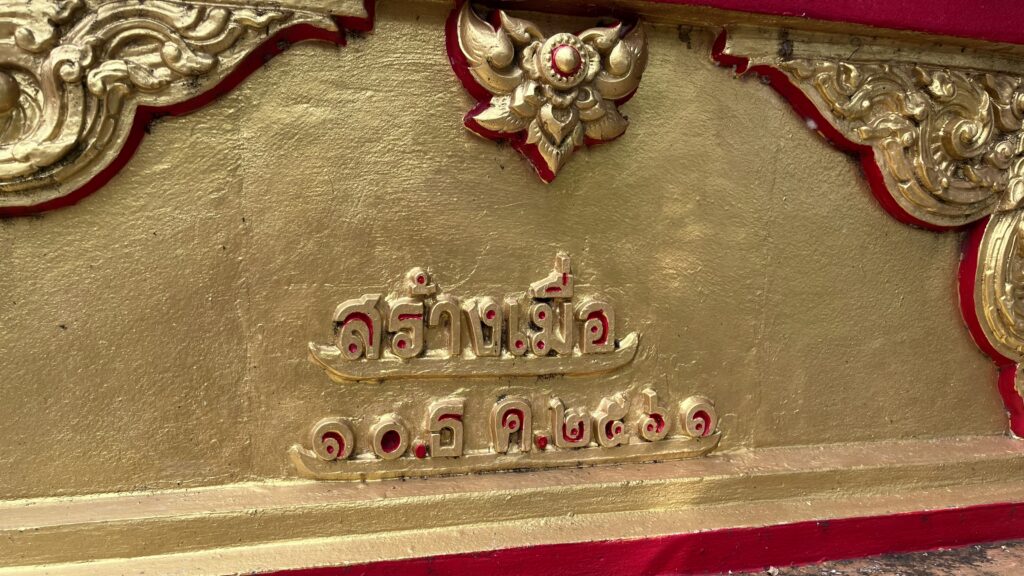
The inscriptions introduced an interesting difference in time. One states that its chedi was built during the Sukhothai period. The other two date panels record construction on 10 December B.E. 2561, or 2018.
The Sukhothai attribution is the temple’s own historical claim. It does not, by itself, establish the age of every part of the structure visible today.
That distinction made the group more interesting to me. The three chedis brought an old tradition and recent acts of building into the same small space. Their matching gold surfaces held together stories that reached across very different periods.
Dresses for a Tree Spirit, Tigers for a Hermit



Beside the chedis stood a shrine to Chao Mae Takhian Thong Khlong Yai.
Inside, a female figure stood before a tree trunk, with colorful dresses hanging along both sides. Gold leaf covered much of the figure.
In Thai popular belief, certain takhian trees are associated with a female spirit, often called Nang Takhian or Mae Takhian. Dresses are among the offerings made in her honor.
Here, the rows of garments gave the shrine an intimate feeling. Each dress suggested a personal act of devotion, although I could not know the individual wishes or stories behind them.
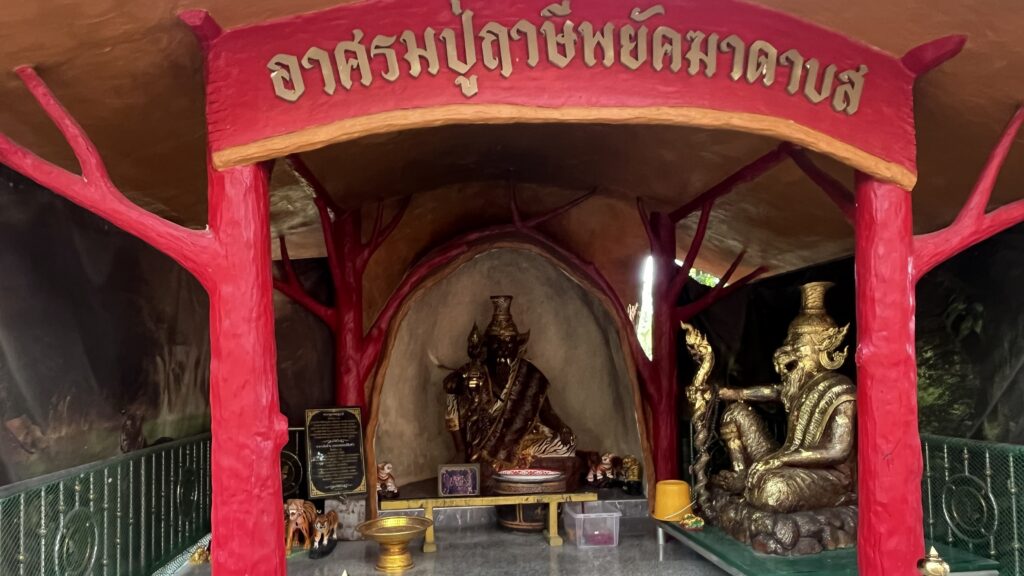
Nearby, another shrine contained hermit figures in a cave-like setting. Tiger figurines gathered around one of the ascetics.
The images belonged to the wider world of Thai ruesi traditions, in which hermits are associated with spiritual discipline, knowledge, and protective power. Without a clear identification of each figure, I preferred to observe the shrine without assigning names.
Together, these small sanctuaries showed another part of temple life: the many ways people seek reassurance, protection, and a place to bring their hopes.
For more background, see Thai Temple Gods and Guardian Spirits.
The King on Horseback
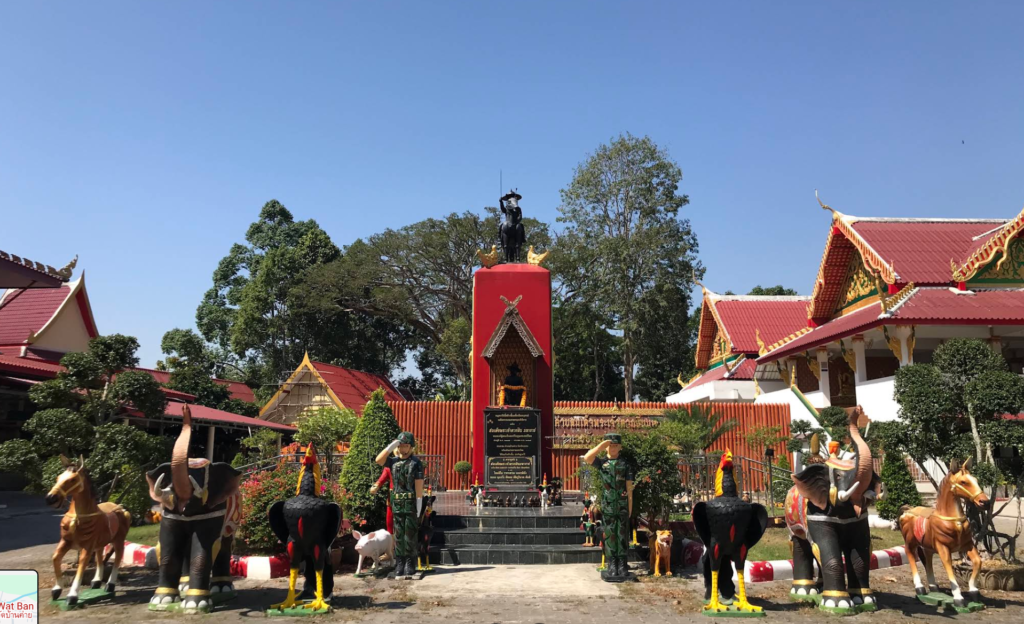


Eventually, I stood before King Taksin himself.
Mounted on horseback, he appeared composed and resolute above the surrounding figures of soldiers, horses, and elephants.
This was the image that most strongly brought back my first impression of entering a camp. The monument gave a visible form to the history I had carried through the visit.
Its dedication plaque records that the monument was installed on 5 March B.E. 2559, or 2016, through the efforts of local people and supporters. It honors Taksin’s role in recovering the country’s independence.
The statue is a modern memorial. Its importance lies in how the community remembers the king and keeps his story present.
Looking up at the rider, I could understand why that memory remains so powerful here.
A Guardian Before the Hall
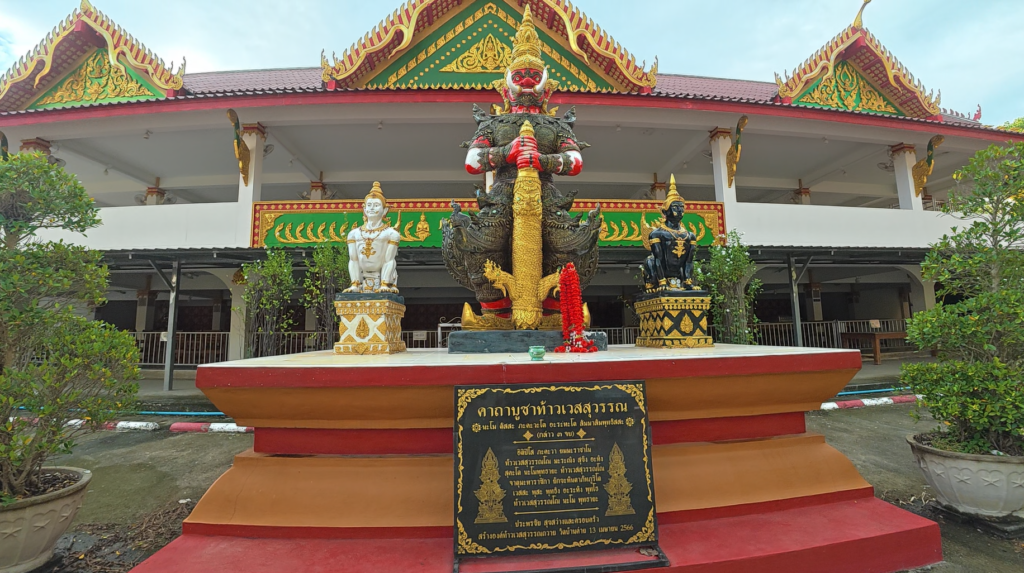
Before the hall stood Thao Wessuwan, his hands resting on an enormous upright club.
His red face, ornate crown, and dark armor gave him an imposing presence. Smaller white and dark figures flanked him, while red garlands hung beside the club.
Known in broader Buddhist tradition as Vaisravana, Thao Wessuwan is one of the Four Heavenly Kings, associated with the northern direction and guardianship. In Thailand, devotees also approach him for protection and prosperity.
After the equestrian monument, this was another powerful figure standing watch.
The temple’s history, Buddhist devotion, and protective beliefs met along the same walking route.
Leaving Without Finding the Camp
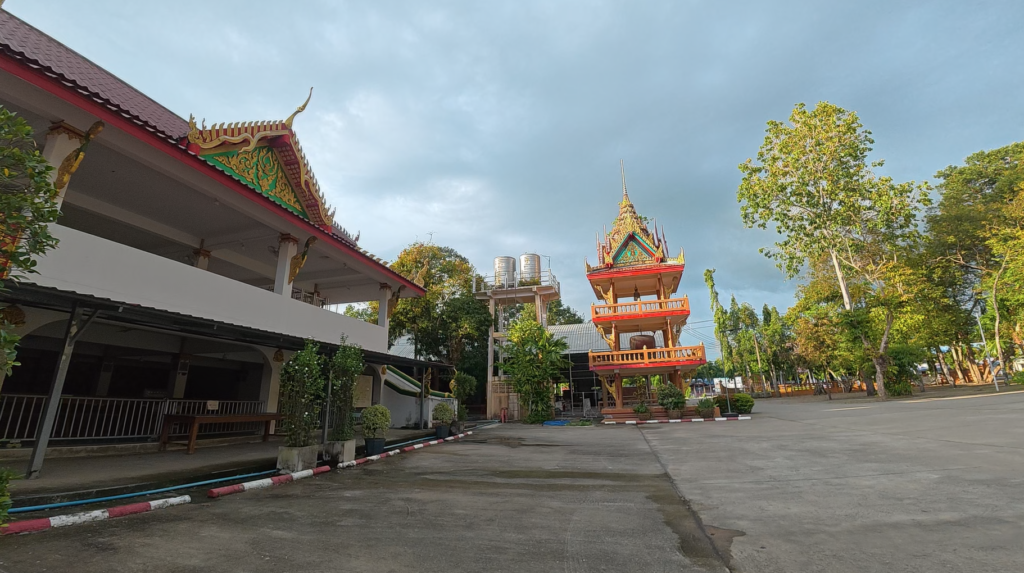
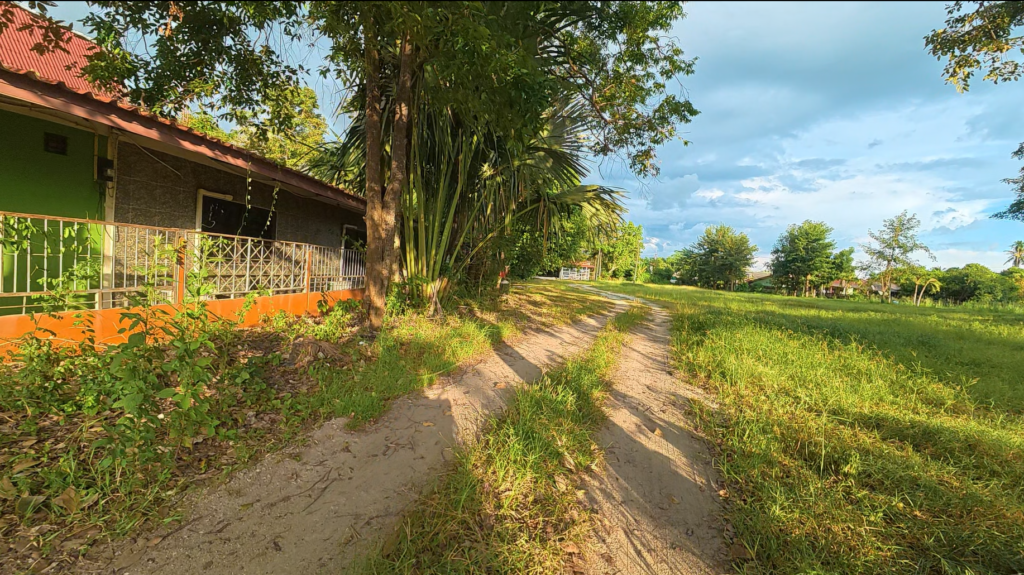

Before leaving Wat Ban Khai, I walked around the edges of the grounds.
I hoped that an uneven bank, an old line in the earth, or some overlooked remnant might reveal a trace of the king’s soldiers.
I found nothing that I could confidently recognize as a surviving military feature.
That was the limit of my own visit. The former temple site and the local accounts of earthworks require more careful investigation than a walk around the present compound can provide.
Instead, I left with other images in mind: a locked shrine built through communal effort, old cabinets in a wooden museum, a Buddha sheltered above the pond, and a monk quietly cleaning.
The king remained upright on his horse.
Beyond him, the temple continued its ordinary day.
Location and Visitor Notes
Wat Ban Khai — วัดบ้านค่าย — is in Ban Khai Subdistrict, Ban Khai District, Rayong Province. The entrance sign gives the address as 145 Moo 5.
Find Wat Ban Khai on Google Maps.
This is an active place of worship. Dress respectfully, remove shoes where required, and give monks and worshippers space. The mondop was locked during my visit, so access to its interior should not be assumed.
For historical background, consult Thailand’s cultural heritage entry for Wat Ban Khai.