Riding Toward the World of Sunthorn Phu
Some journeys begin with a destination on a map. Others begin with a name that has lived in stories for generations. This ride brought me to the world of Sunthorn Phu, one of Thailand’s greatest poets, whose verses carried readers across seas, forests, kingdoms, and strange imaginary worlds filled with love, danger, separation, and adventure.
Arriving here by Honda Cub felt different from simply visiting a monument. Sunthorn Phu himself was a traveler, and many of his writings were shaped by places, people, and experiences encountered along the way. I had come along the roads of Rayong not only to see where a famous poet is remembered, but to discover how the journeys of one man became stories that Thailand still remembers today.
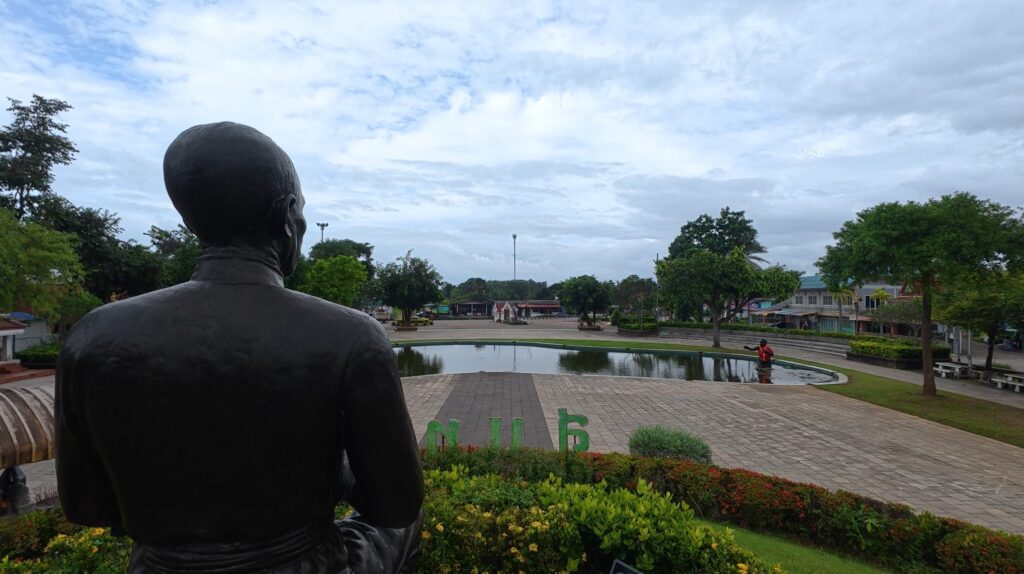
Meeting the Poet Before the Legend
Before entering the fantastic world of Phra Aphai Mani, it is worth meeting the man who created it. Sunthorn Phu (1786–1855) lived through a period of great change in early Rattanakosin Siam and became one of the most celebrated poets in Thai literature. His writing was not confined to royal courts or imaginary kingdoms. Love, separation, hardship, travel, temples, rivers, villages, and the people he encountered along the way all found their way into his poetry.
His connection with this part of Rayong was also deeply personal. His father came from the Klaeng area, and as a young man Sunthorn Phu traveled east to find him. That journey later became part of Nirat Mueang Klaeng, one of his early travel poems. More than two centuries later, those old journeys give this place another meaning: the memorial does not stand in an arbitrary location, but in a landscape closely connected with the poet’s own life and writing.
Yet before following the real journeys of Sunthorn Phu, I first encountered something much more extraordinary outside the museum—the strange and beautiful world he created in Phra Aphai Mani.
A Prince Whose Weapon Was Music
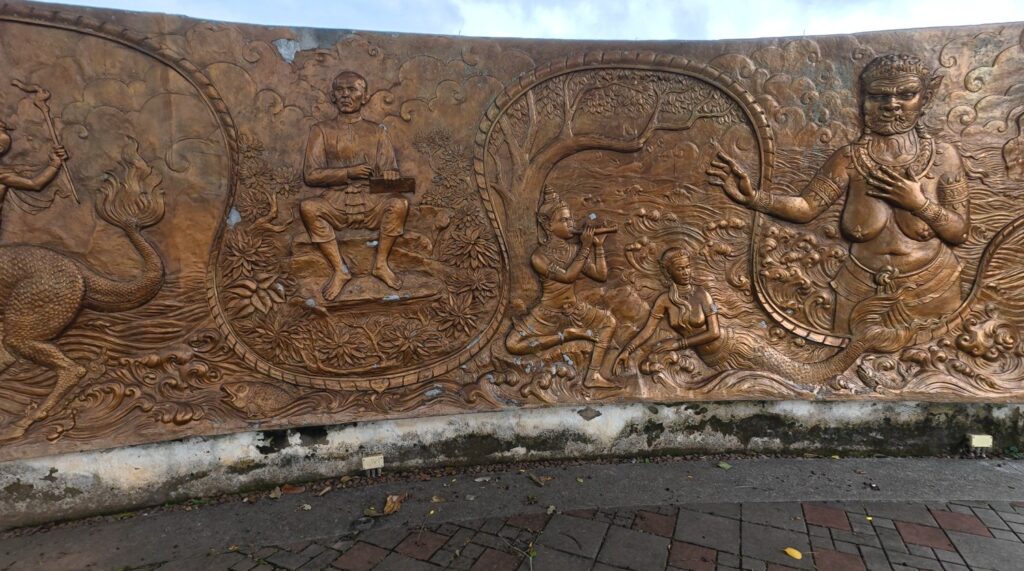
Among Sunthorn Phu’s many works, Phra Aphai Mani opened the door to an extraordinary world of princes, giants, mermaids, magical creatures, distant islands, love and war. At its center is Prince Phra Aphai Mani, an unusual hero who chose neither the sword nor the spear. He learned to play the pi, a traditional wind instrument, and his music possessed supernatural power—capable of enchanting those who heard it, putting them to sleep, and even bringing death.
His adventures eventually carried him into the domain of Nang Phisuea Samut, the powerful sea giantess who fell in love with him and kept him with her. Their relationship produced a son, Sin Samut, but Phra Aphai Mani longed to escape. With the help of a mermaid, Nang Ngueak, he fled across the sea, beginning another chapter in a story that would grow across generations, kingdoms and distant shores.
The mermaid later became part of Phra Aphai Mani’s life, and their son Sud Sakhon grew into another great traveler of the epic. Riding the fantastic creature Ma Nin Mangkorn, Sud Sakhon ventured into the unknown in search of his father. Around the memorial garden, these characters step out of poetry and into the landscape. A prince plays his magical flute, a mermaid rises beside the water, giants and strange creatures appear around the pond, and a young adventurer rides toward a world waiting beyond the horizon.
Sunthorn Phu had transformed imagination into a journey—and nearly two centuries later, I was walking through that journey myself.
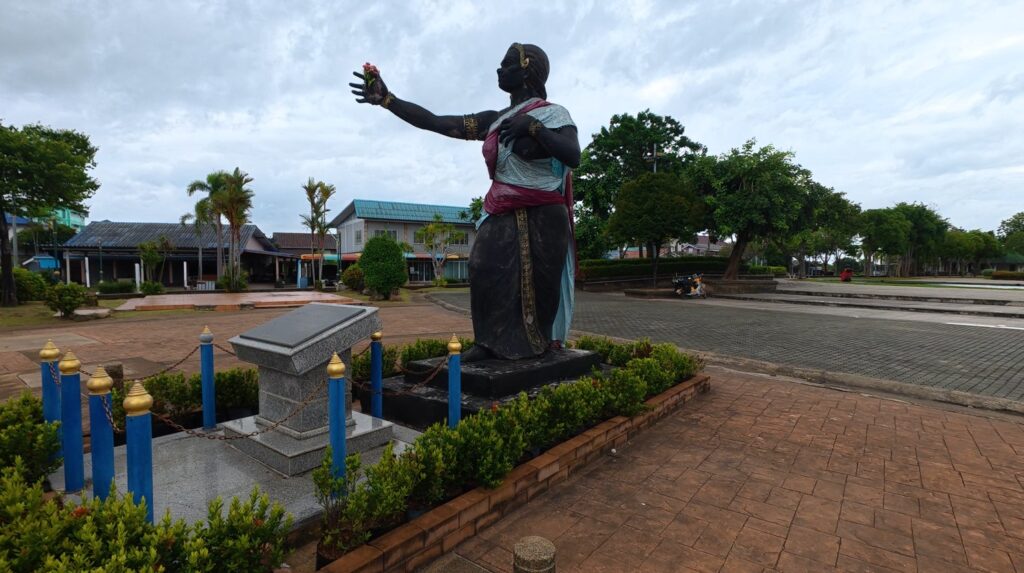
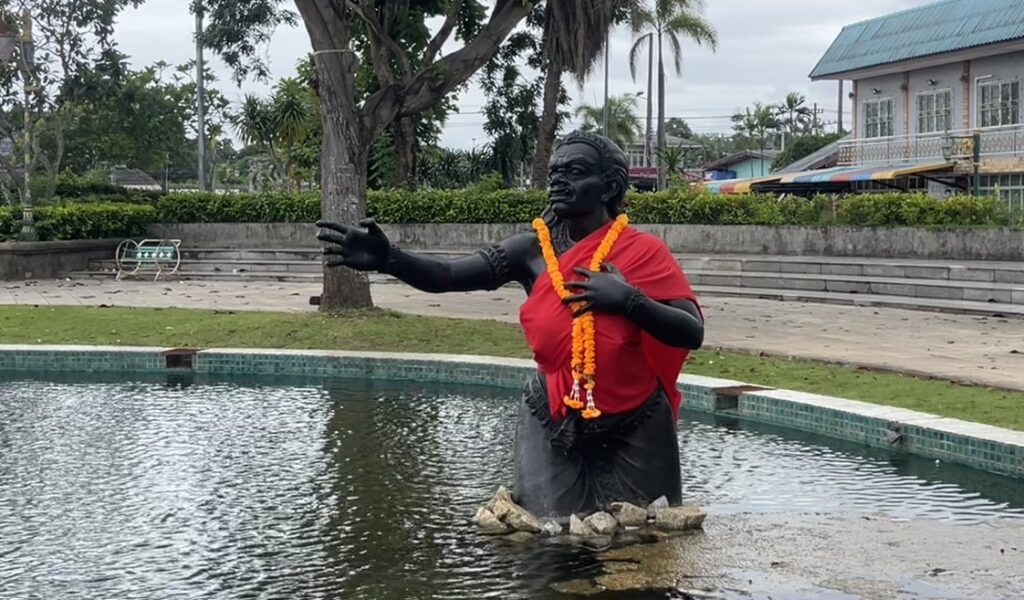
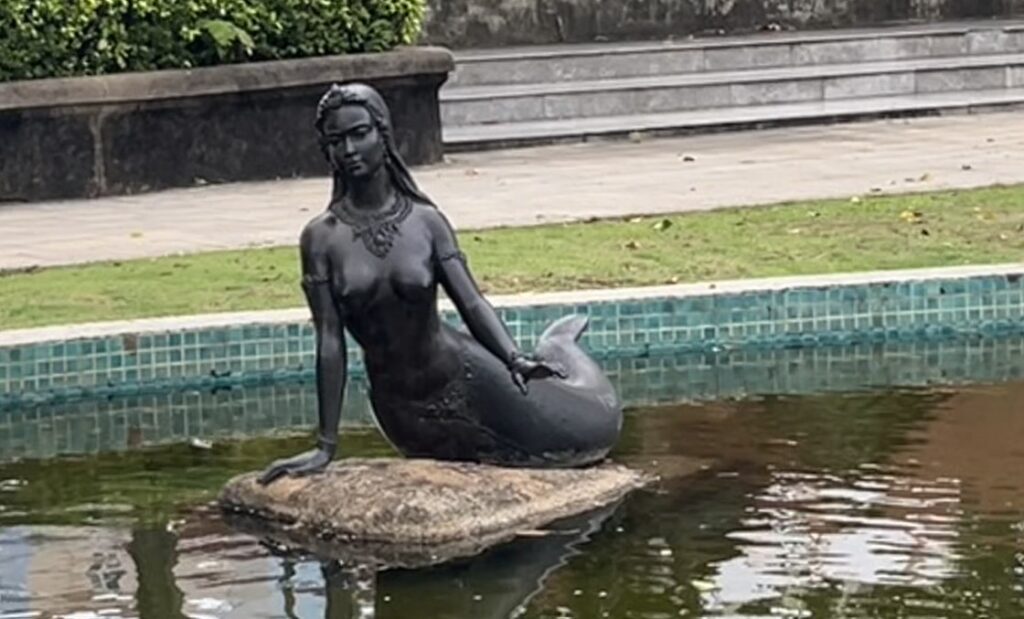
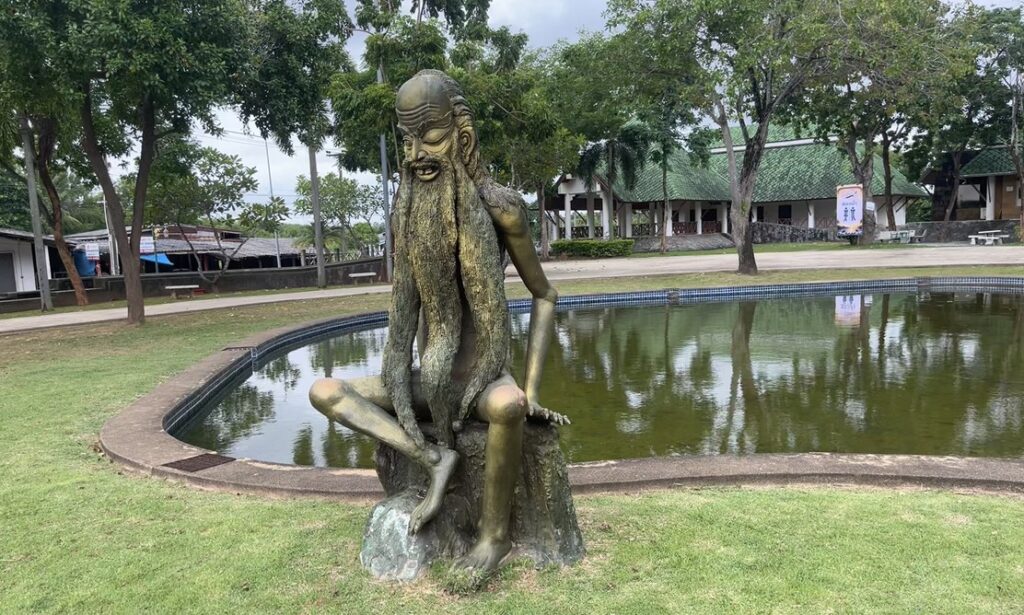
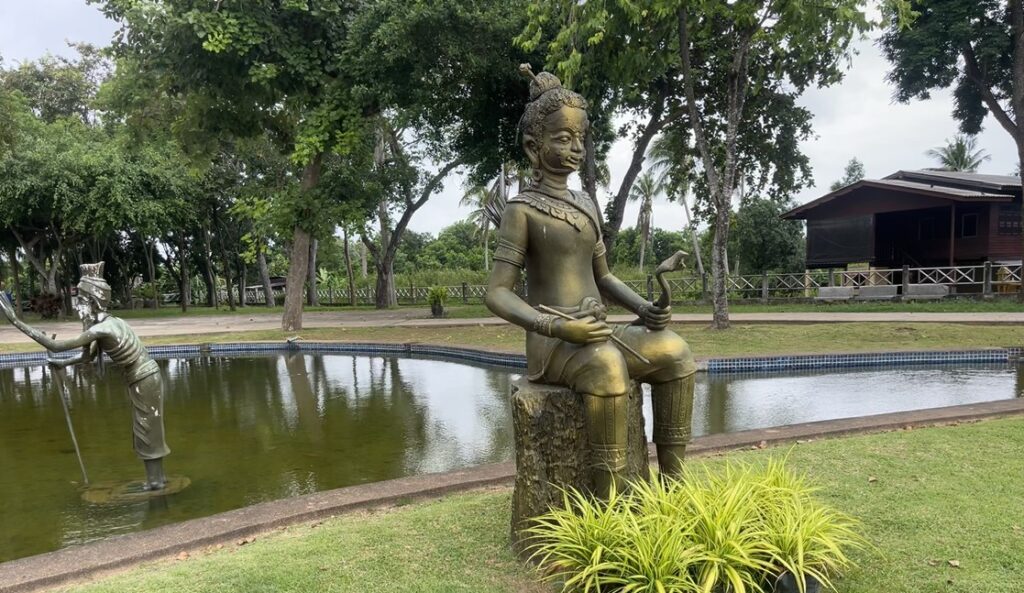
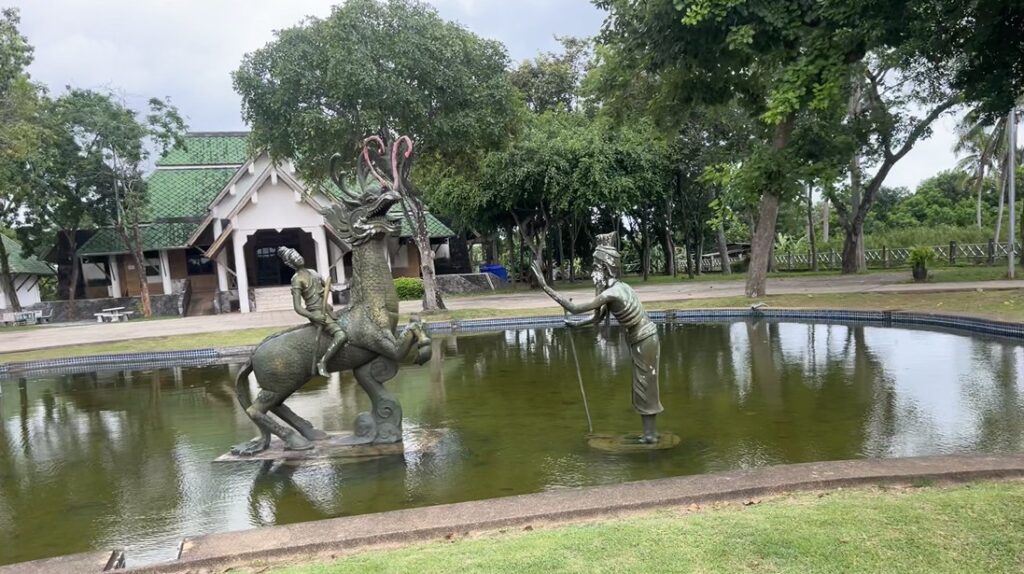
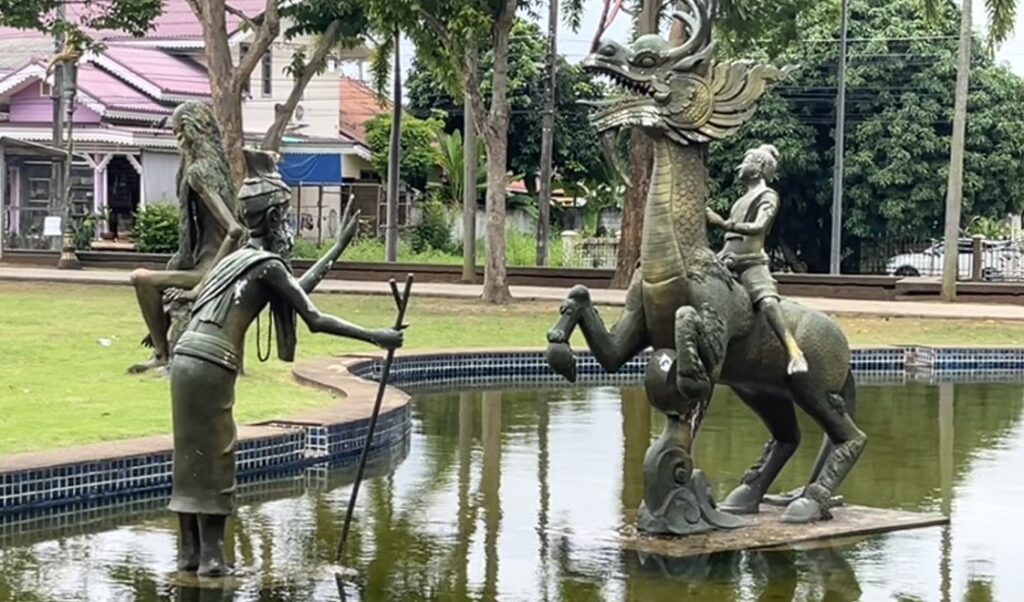
The world of Phra Aphai Mani comes alive around the memorial garden—through magical music, mermaids, giants and the adventures of a new generation.
A Poet Remembered Beyond Thailand
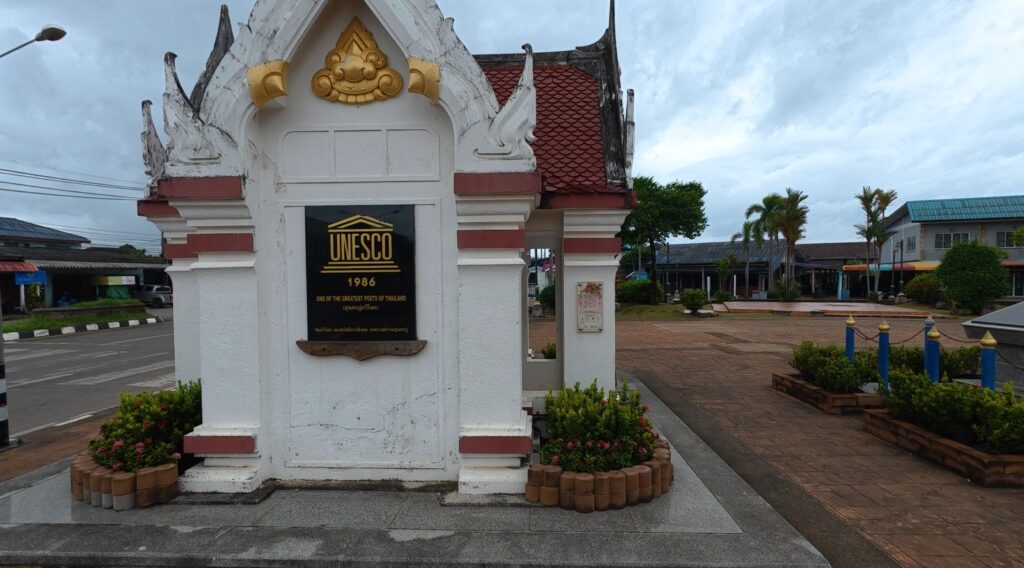
Near the entrance, the UNESCO 1986 memorial marks an important moment in the international recognition of Sunthorn Phu. The year celebrated the 200th anniversary of his birth, placing the Thai poet within UNESCO’s program commemorating notable personalities and historic events. It is an important distinction: this is not a UNESCO World Heritage designation, but recognition of the cultural significance of a writer whose work had endured far beyond his own lifetime.
Standing nearby is Sunthorn Phu himself, surrounded by figures born from his imagination. The contrast is striking. The poet was a real man who experienced love, hardship, court life, travel and periods as a Buddhist monk, yet around him stand princes, mermaids, giants and fantastic creatures that have continued to live in Thai cultural memory.
Outside, I had been walking through his imagination. Now it was time to enter the museum and meet the man behind it.
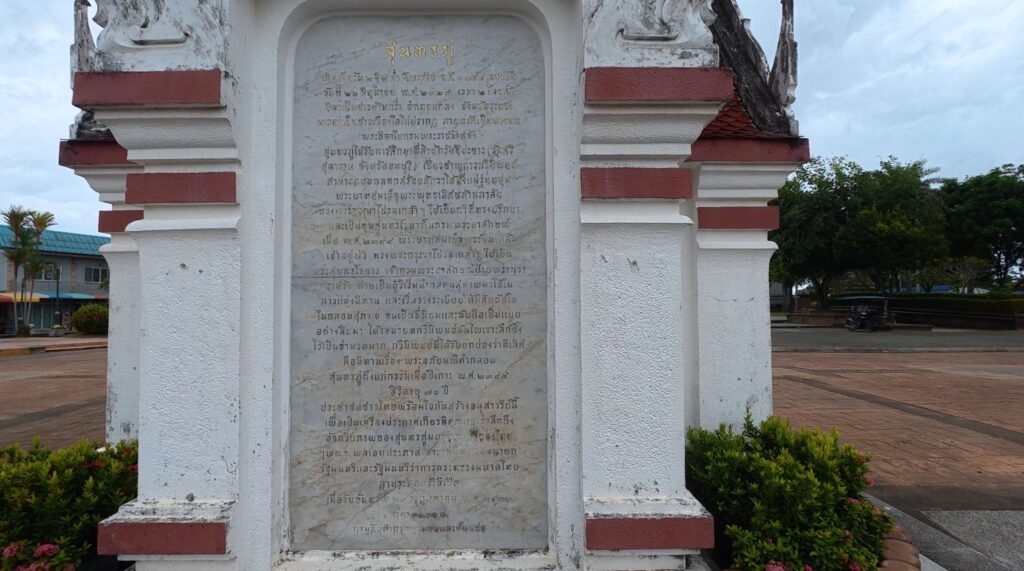
Inside the Museum — The Man Behind the Poetry
Inside the museum, the fantastic creatures of Phra Aphai Mani give way to the life of the man who imagined them. The displays trace Sunthorn Phu’s journey from childhood to court poet, traveler, monk and eventually one of the most enduring literary figures in Thailand. His life was far from a simple path to fame. It included love, separation, imprisonment, changing royal patronage and long periods of travel.
One particularly important journey brought the young poet eastward to Mueang Klaeng, where his father had returned and entered the monkhood. Sunthorn Phu recorded the landscapes, villages, waterways, temples and emotions of that journey in Nirat Mueang Klaeng. The work reveals another side of the poet: not only the creator of imaginary seas and magical creatures, but an observant traveler who transformed places encountered along the road into literature.
Walking past the museum panels, I began to recognize something familiar. Sunthorn Phu traveled in a very different age and recorded his journeys with poetry; today, travelers record roads with cameras, photographs and video. The tools have changed, but the desire to remember a place—and what we felt while passing through it—has not.
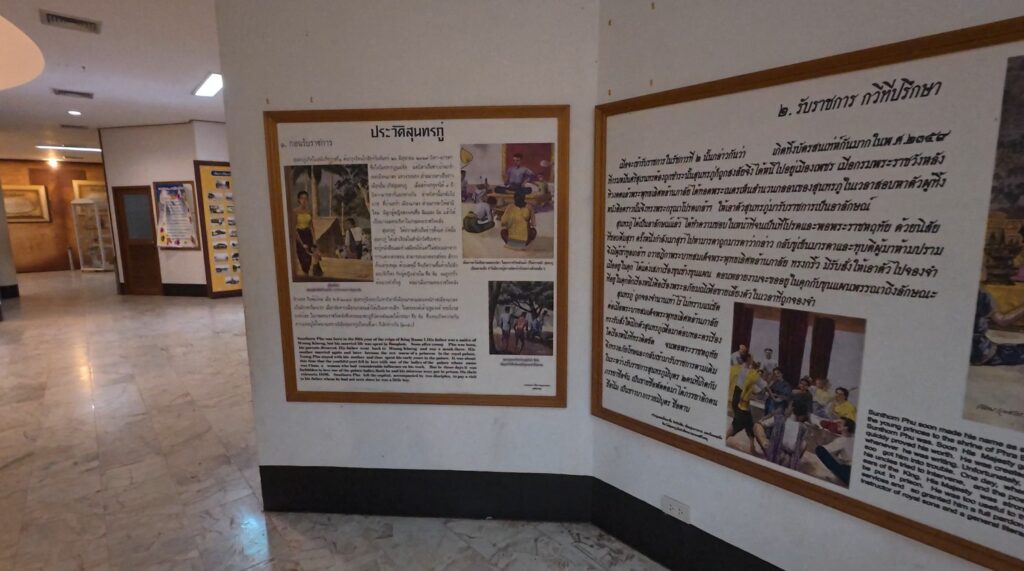
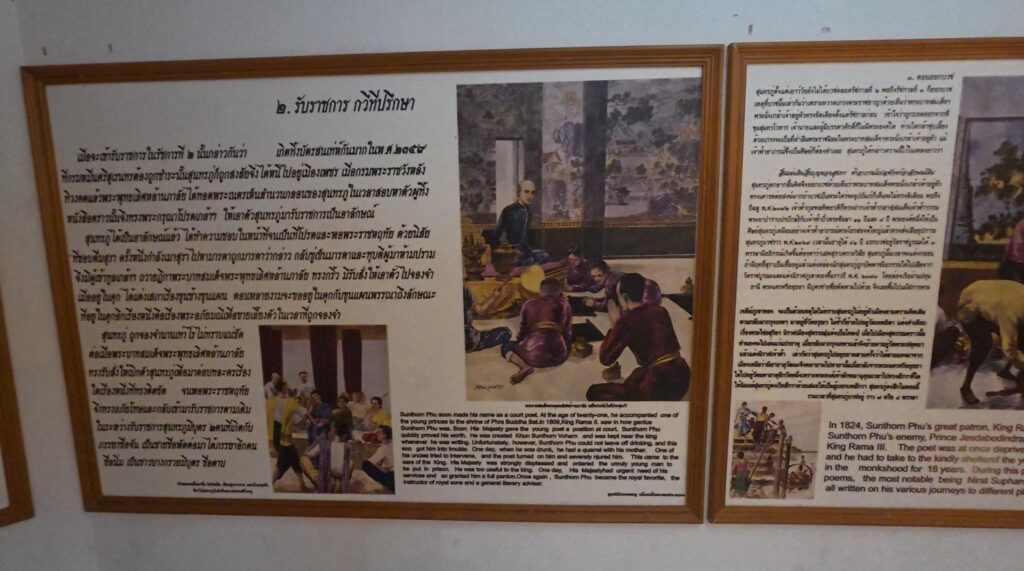
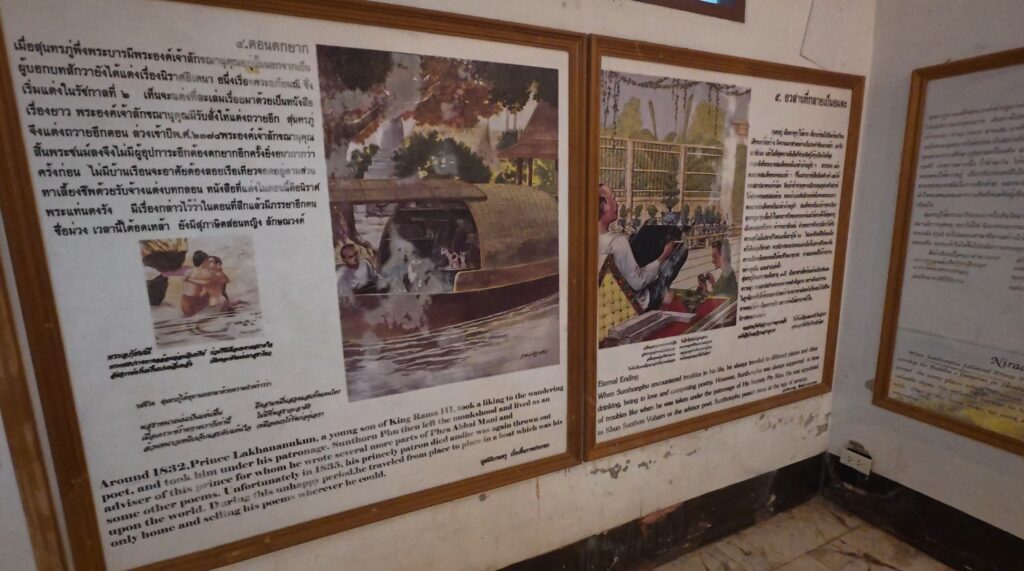
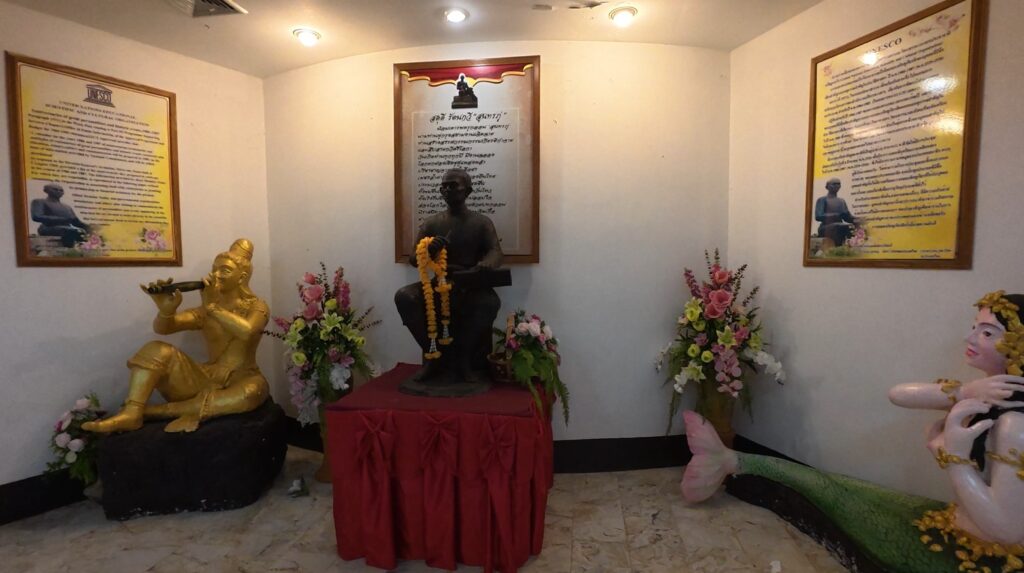
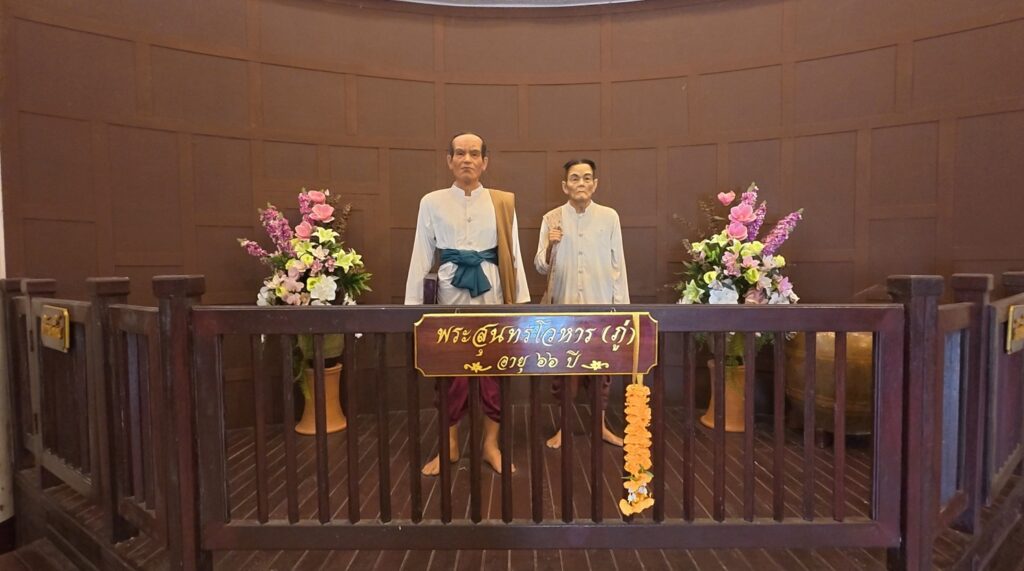
Inside the museum, Sunthorn Phu emerges not only as a celebrated poet, but as a man shaped by love, hardship, court life, monkhood and a lifetime of journeys.
Sunthorn Phu at a Glance
- 1786 — Born in Bangkok during the early Rattanakosin period.
- Childhood — Raised mainly by his mother after his parents separated; his father later returned to the Klaeng area and entered the monkhood.
- Youth — Received an education that included temple learning and became known for his talent with language and poetry.
- Early Adulthood — Fell in love with Chan, a woman connected with the royal court; the relationship brought difficulties and a period of imprisonment.
- 1806 — Traveled east to Mueang Klaeng in search of his father. The journey later became the basis for Nirat Mueang Klaeng.
- Royal Court Years — Served as a poet under royal patronage and gained recognition for his literary skill.
- Later Life — After changes at court, he spent periods as a Buddhist monk and continued traveling and writing.
- Major Works — Created Phra Aphai Mani and numerous nirat travel poems, along with other narrative and poetic works.
- 1855 — Died at the age of 69, leaving a literary legacy that remains central to Thai culture.
- 1986 — The bicentenary of his birth was internationally commemorated through UNESCO’s anniversaries program.
The Roads That Became Poetry
One wall of the museum reveals another remarkable part of Sunthorn Phu’s legacy: his NIRAT a distinctive form of Thai travel poetry in which a physical journey becomes inseparable from memory, longing and separation. Places along the route are not merely names on a map. Rivers, temples, villages and landscapes become opportunities for the traveler to reflect on people left behind and on the changing course of his own life.
The displays introduce journeys preserved in works such as Nirat Mueang Klaeng, Nirat Phu Khao Thong, Nirat Mueang Phet and others. For this visit, however, Nirat Mueang Klaeng felt especially close. Sunthorn Phu once traveled through this eastern landscape toward Klaeng in search of his father, observing the world along the way and transforming the experience into verse.
More than two centuries later, the roads are different. I arrived on a small Honda Cub, crossing bridges and waterways and passing through the green landscape of Rayong with a camera recording the journey. Sunthorn Phu carried no camera, yet his poetry accomplished something remarkably similar: it preserved not only the places he passed, but also the feelings of the traveler who passed through them.
Perhaps that is why his travel poetry still feels alive. A road eventually disappears behind us, but a story can keep the journey moving long after the traveler has gone.
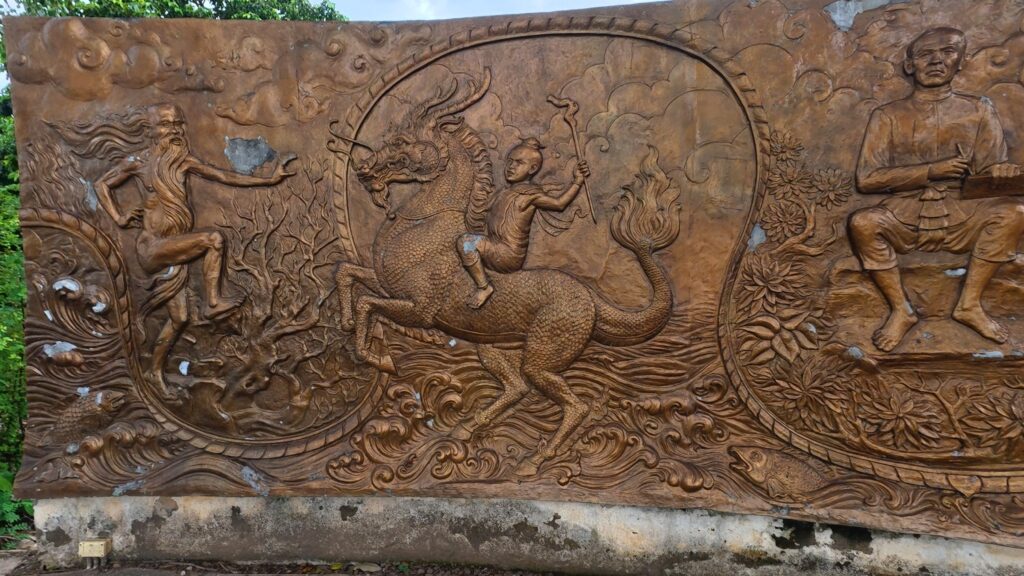
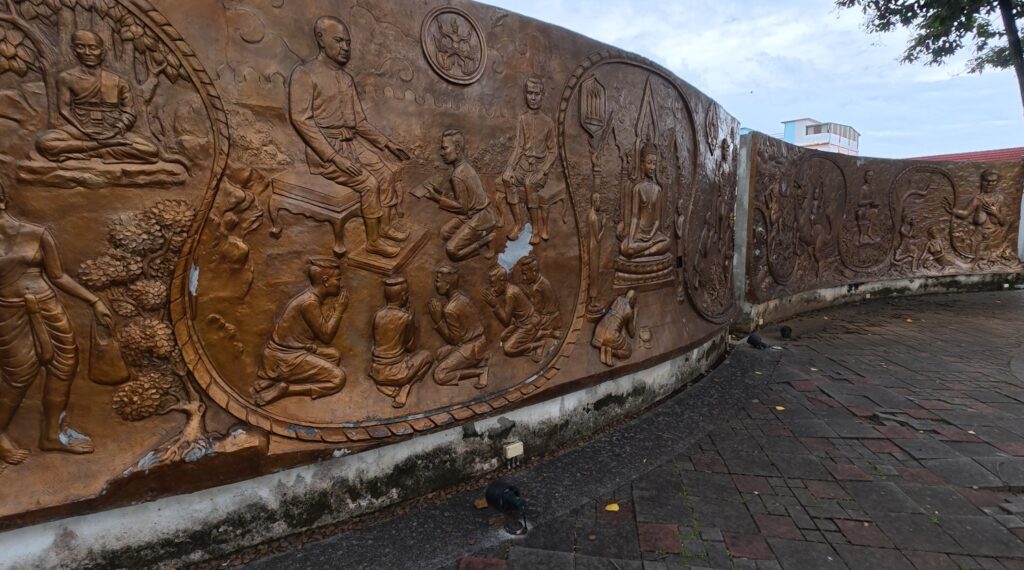
Sunthorn Phu turned journeys into poetry. His nirat preserved roads, waterways, places and emotions—including the eastern journey remembered in Nirat Mueang Klaeng.
Watch the Journey
This video follows the ride to the Sunthorn Phu Memorial, from the quiet roads of Rayong and the mangrove landscape to the outdoor sculptures, literary characters and museum displays that bring the poet’s world to life.
Along the way, the journey moves between two worlds: the real life of Sunthorn Phu and the imagined world of Phra Aphai Mani. It is not simply a visit to a memorial, but a ride into the landscapes, stories and journeys that shaped one of Thailand’s greatest poets.
Riding into the world of Sunthorn Phu — from the roads and mangroves of Rayong to Phra Aphai Mani, the museum, and the journeys preserved in Thai poetry.
More Than One Great Epic
Phra Aphai Mani may be the work most immediately associated with Sunthorn Phu, but the museum makes clear how much broader his literary world was. Displays introduce his travel poems, narrative poetry and other writings, while charts map the surprisingly complex relationships among the princes, mermaids, giants, warriors and other characters who populate Phra Aphai Mani.
Seeing the character map after walking among the sculptures outside was particularly interesting. Figures that had first appeared as mysterious statues around the pond now belonged to a much larger story of families, journeys, love, conflict and separation. The garden and museum seemed to work together: outside, the characters were given physical form; inside, their relationships and the imagination behind them became easier to understand.
Yet the deeper I went into the museum, the less this visit seemed to be only about a famous epic. Behind every imaginary kingdom and every extraordinary creature stood a real traveler—a man who watched the world around him and found a way to preserve it in words.
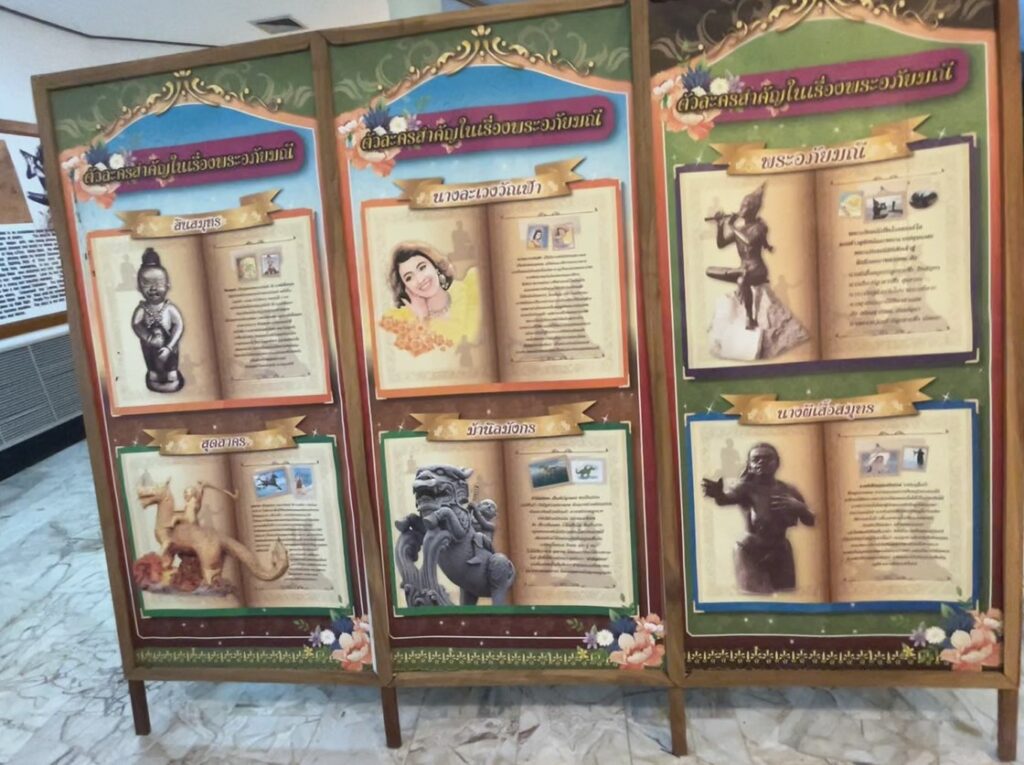
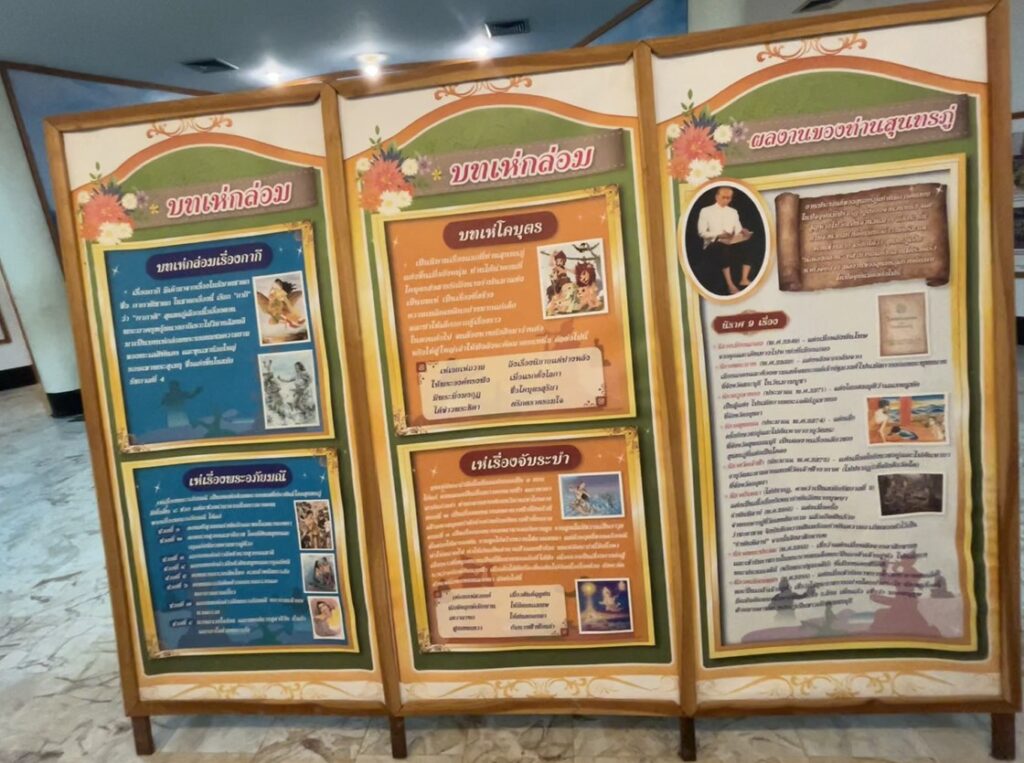
Beyond Phra Aphai Mani, the museum reveals the breadth of Sunthorn Phu’s writing and the complex world of characters created through his imagination.
The Journey Continues
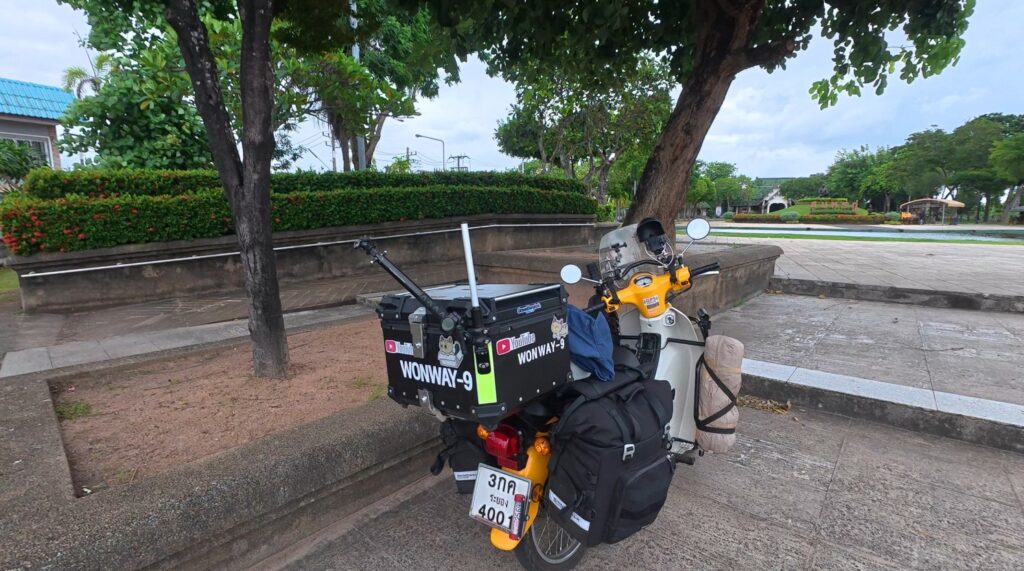
Eventually, I stepped out of the museum and returned to my Honda Cub. The strange creatures, mermaids and princes remained behind in Sunthorn Phu’s world, but the idea of the journey followed me outside.
More than two centuries ago, Sunthorn Phu traveled through this part of eastern Siam and transformed what he saw, remembered and felt into poetry. His journeys survived because he wrote them down. Today the roads have changed, bridges cross waterways that once required boats, and a small motorcycle can cover in hours distances that once demanded a very different kind of journey.
I came here simply hoping to feel something of Thailand’s literary past. Instead, I found a traveler whose way of looking at the road felt unexpectedly familiar. He recorded his world with words; I carry a camera and record mine through photographs and video. The methods are different, but perhaps the reason for traveling has not changed very much—to see what lies beyond the familiar, to meet the stories of a place, and to bring a small part of them home.
I started the morning riding toward a monument to a poet. I left carrying something more: the feeling that every road has a story, if we take the time to notice it.
Sunthorn Phu continued his journey through poetry. My journey continues on a Honda Cub.
Visitor Information
Sunthorn Phu Memorial (อนุสาวรีย์สุนทรภู่) is located in the Klaeng area of Rayong Province, a region closely connected with the poet’s family history and his famous journey recorded in Nirat Mueang Klaeng.
The memorial grounds include the large statue of Sunthorn Phu, outdoor sculptures inspired by characters from Phra Aphai Mani, landscaped ponds and a museum presenting his life, travels, literary works and legacy.
For travelers interested in Thai history and culture, this is more than a quick monument stop. Allow enough time to walk through the outdoor literary landscape before entering the museum, because seeing the characters outside first makes the exhibits inside much easier—and more enjoyable—to understand.
Location: Klaeng District, Rayong Province, Thailand
Google Maps: Sunthorn Phu Memorial
Best for: Thai literature, cultural heritage, history and a quiet stop during a ride through eastern Rayong
Continue the Literary Journey
Sunthorn Phu – Thailand’s Beloved Poet
Learn more about the life and literary legacy of Sunthorn Phu.
Nirat – The Thai Traveling Poetry
Discover how journeys, memory and emotion became poetry in the Thai nirat tradition.
Continue the Journey Through Rayong
Sunthorn Phu’s stories belong to a much wider landscape of Rayong—its coastline, old communities, temples and roads. These journeys continue through other places explored along the way.
Explore more journeys through Rayong and the cultural heritage of eastern Thailand.
A Final Cup Before the Road
After spending the morning walking through the life, journeys and imagination of one of Thailand’s greatest poets, I stopped for a drink before getting back on the Cub. The conversation became lighter, the road could wait for a little while, and the great world of poetry quietly gave way to an ordinary moment at a roadside café.
Sunthorn Phu wrote about love, longing and journeys more than two centuries ago. I thought I had spent the morning following in the footsteps of a great poet. Then I met the charming café owner, heard that she was sixty, and found myself thinking that she certainly didn’t look it.
That was when another familiar traveler suddenly came to mind.
Perhaps I had not been following Sunthorn Phu after all.
Maybe Yellow had been following me. 😹
After all, even after a long story of poetry, history and wandering, every traveler eventually needs a drink, a laugh—and another road to follow.
Sunthorn Phu continued his journey through poetry. Yellow would probably have stayed for another coffee. I had a Honda Cub waiting outside.