Wat Ratchabanlang Praditthawararam, Rayong
Before Chanthaburi
There are temples we visit for their beauty, and others that make us stop because of the history that seems to remain in the land itself.
My ride today brought me to Wat Ratchabanlang Praditthawararam in Rayong, a quiet countryside temple whose story reaches back more than three centuries. At first glance, the newer ordination hall, freshly decorated in traditional Thai style, draws the eye. But I had come here looking for something much older.
This part of eastern Siam is closely connected with the turbulent year of 1767, when Ayutthaya fell to the Burmese armies. In the chaos that followed, Taksin and his men moved eastward, gathering men, supplies and strength in Rayong before continuing toward Chanthaburi.
Walking through this peaceful temple today, it is difficult to imagine those desperate days. Yet old stones, an ancient ordination hall, a weathered chedi and memories associated with King Taksin still give this place an extraordinary connection with that period of Thai history.
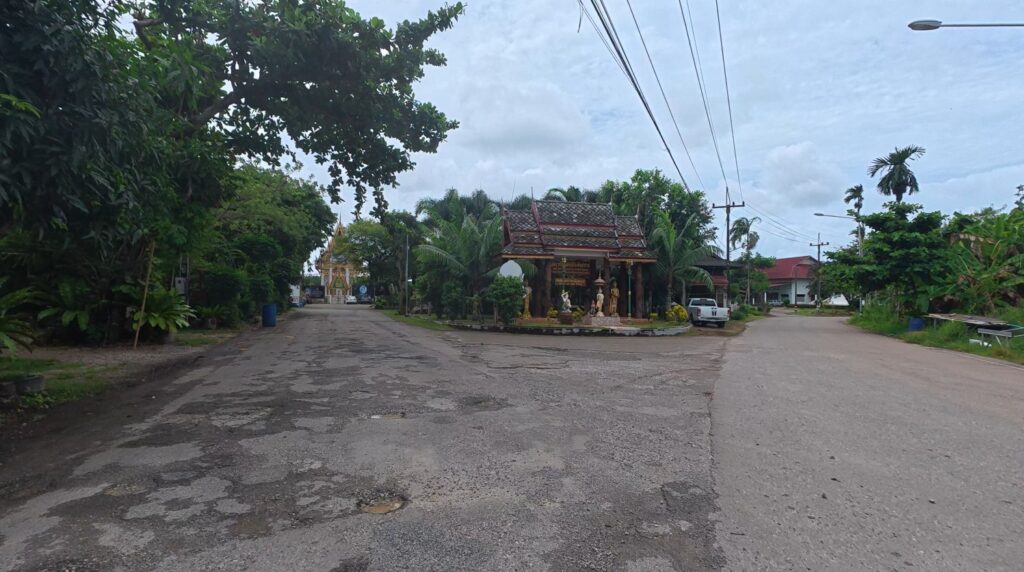
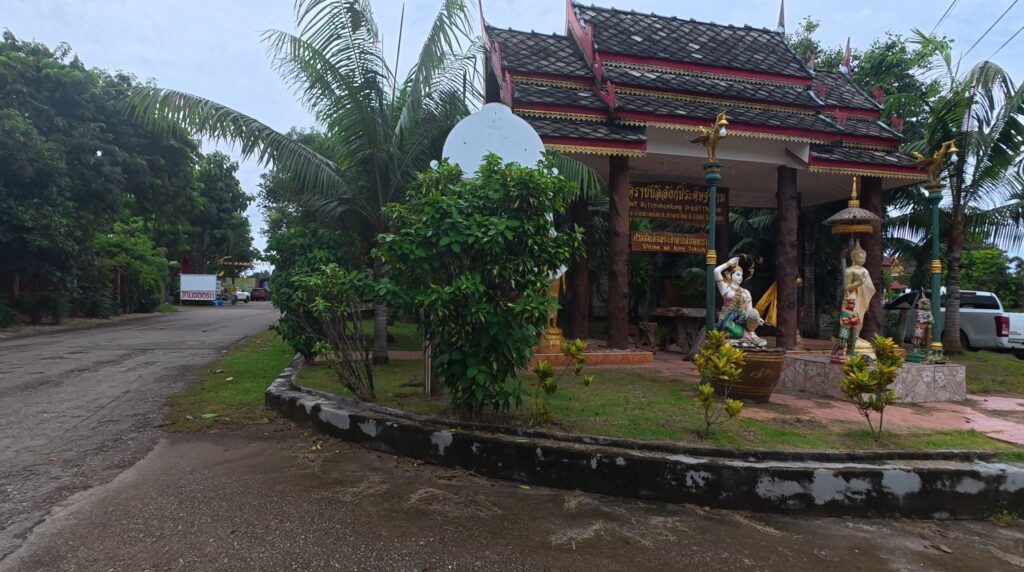
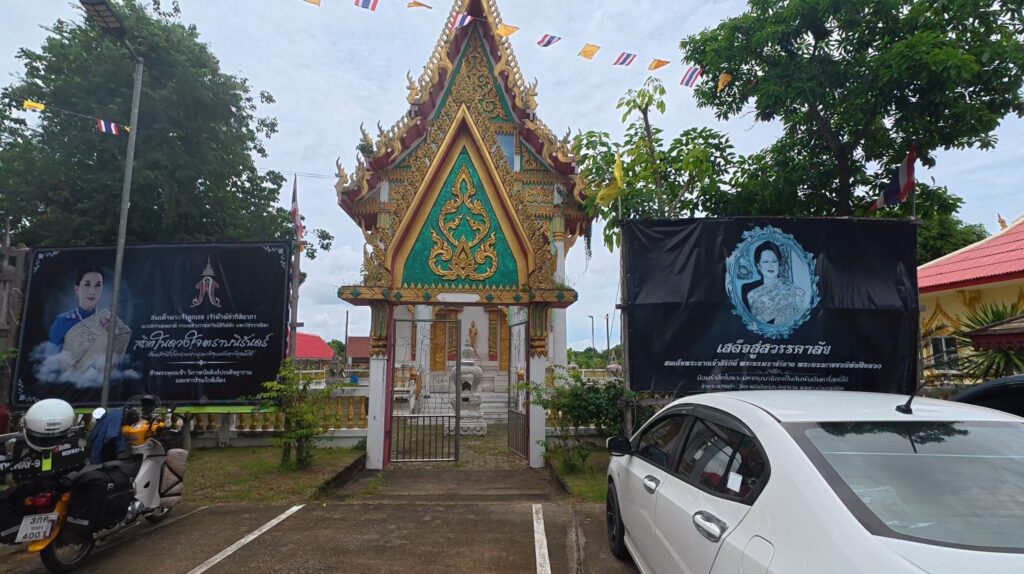
Arriving at Wat Ratchabanlang Praditthawararam, a quiet temple in Rayong with deep connections to the history of King Taksin’s eastern campaign.
Ancient Bai Sema Around a New Ubosot
The first building I explored was the newer ubosot, or ordination hall. Its bright decoration and carefully maintained exterior stand in clear contrast to the much older structures elsewhere in the temple grounds.
What caught my attention, however, was not the new building itself. Around the ubosot stand Bai Sema, the sacred boundary markers that define the consecrated area of a Buddhist ordination hall.
Looking closely, the dark stone markers appear far older than their surrounding structures. The ancient stones have been carefully preserved within newly constructed ornamental bases, allowing them to continue serving their sacred purpose beside the newer ubosot.
The old ubosot that I would visit next no longer has visible Bai Sema around it. This raises an interesting possibility: these older stone markers may have been relocated when the newer ordination hall was established. Without documentary evidence, however, it is better to regard this as an observation rather than a confirmed part of the temple’s history.
What remains certain is more meaningful. The building may be new, but the sacred boundary is marked by stones carrying the traces of an earlier age.
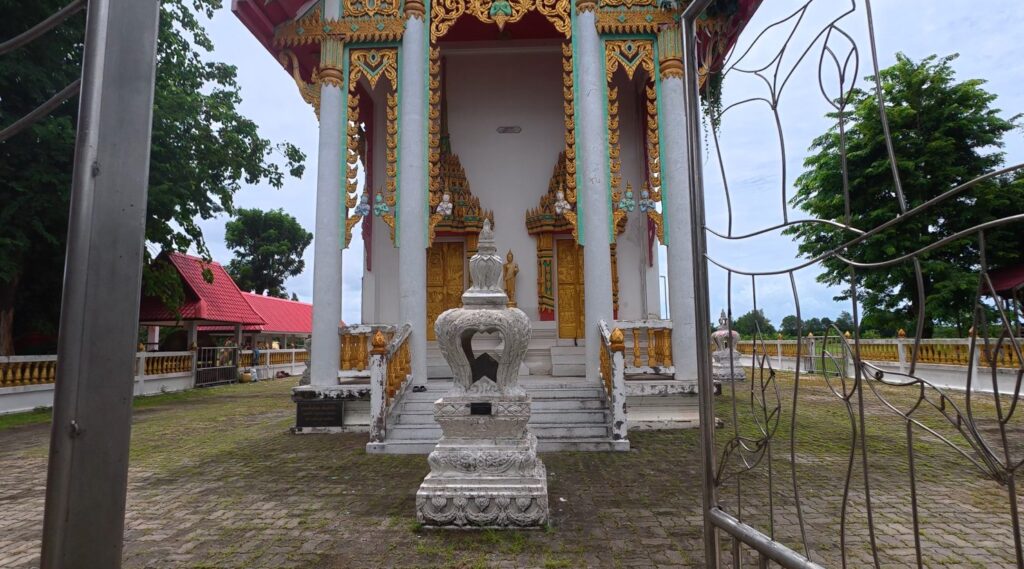
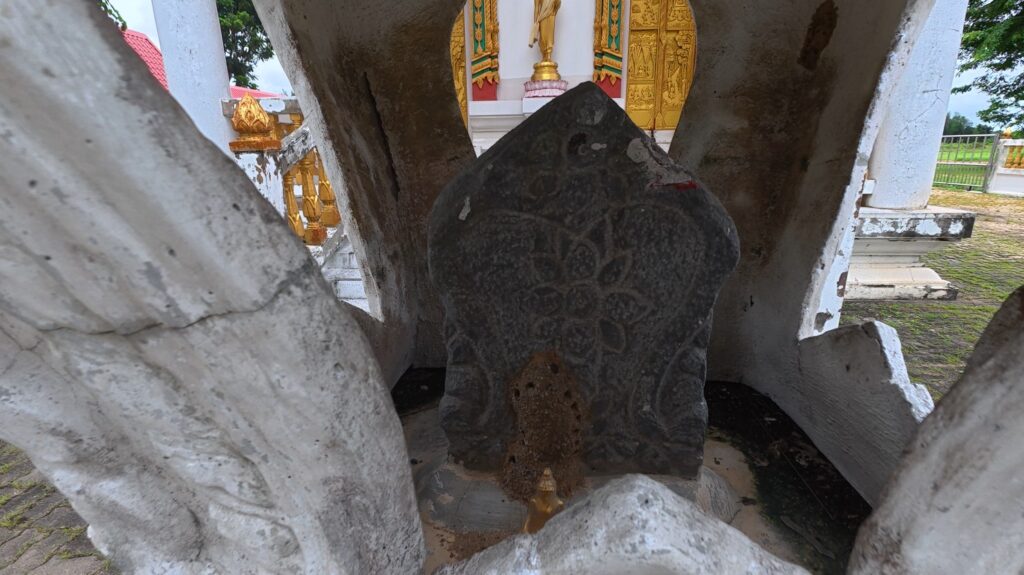
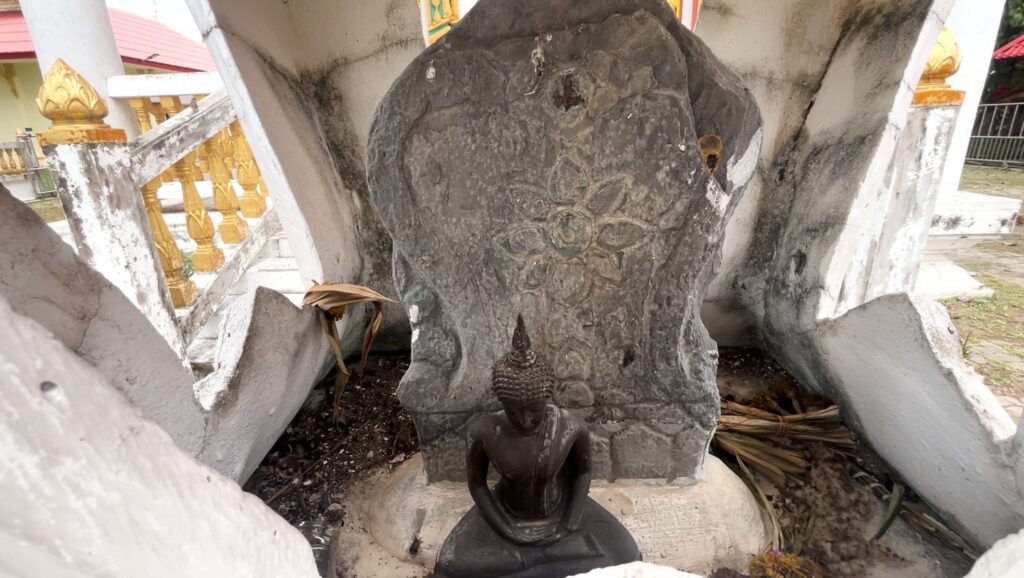
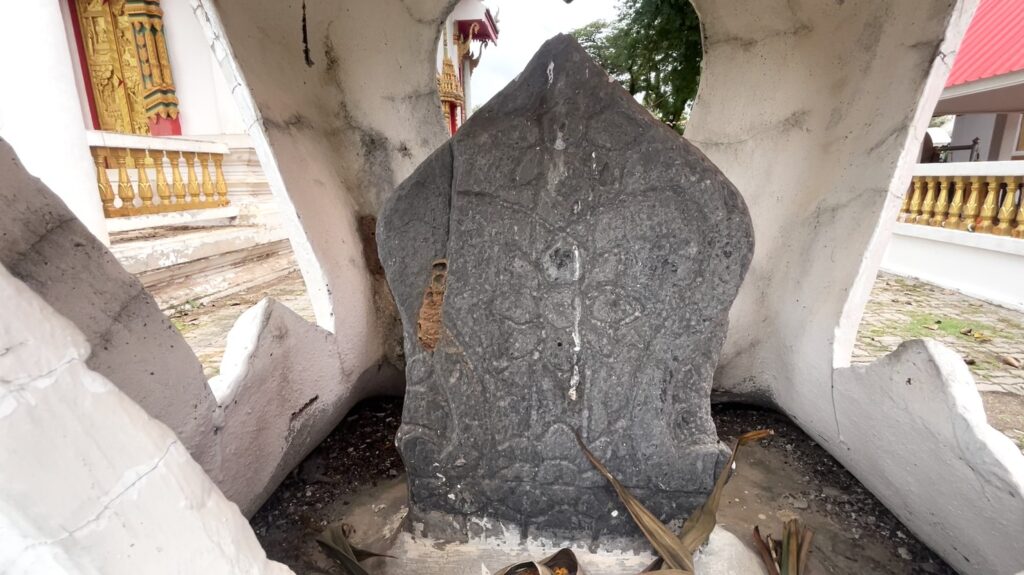
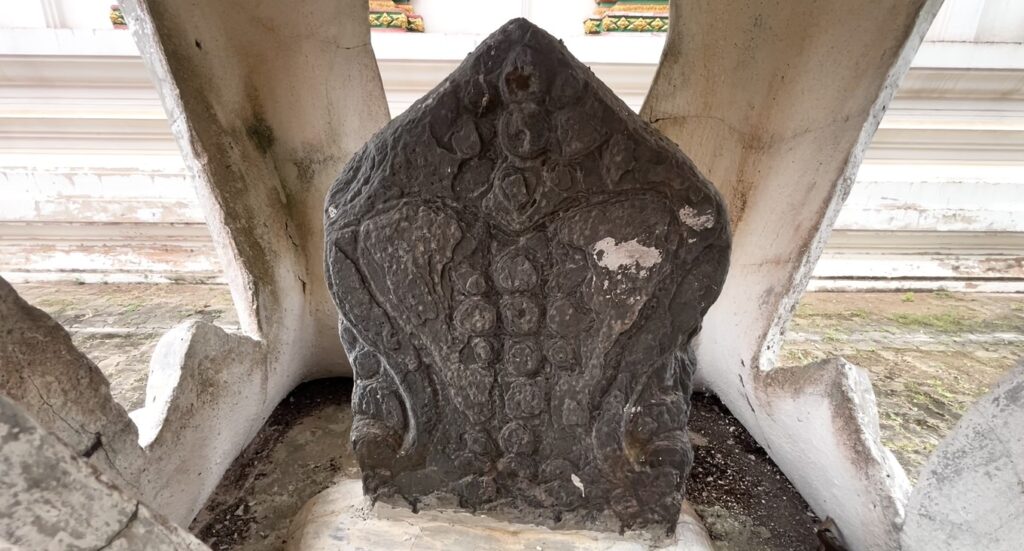
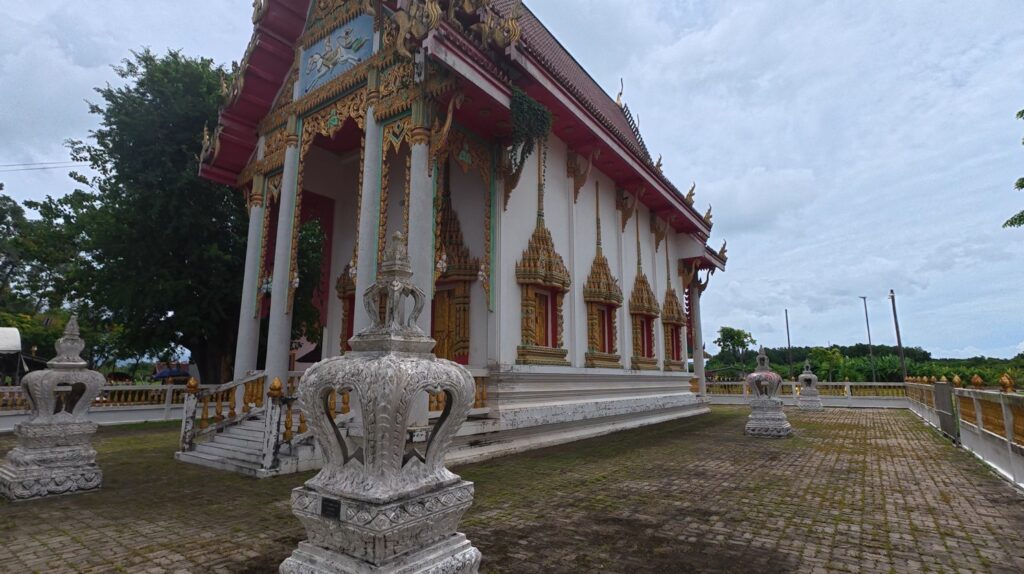
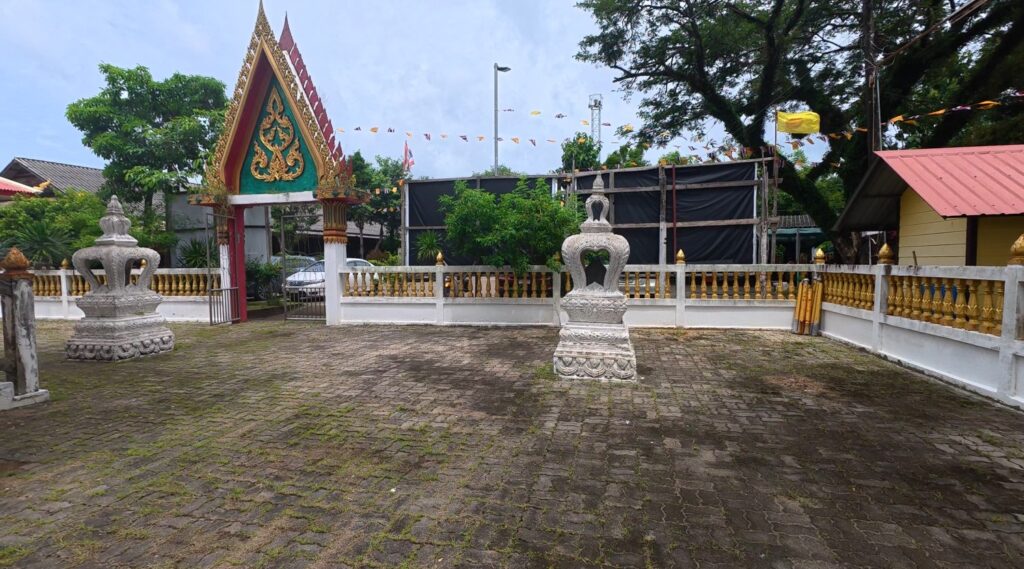
Ancient boundary stones remain around the newer ubosot, connecting the temple’s present-day religious space with its much older past.
The Old Ubosot — More Than Three Centuries of Faith
Leaving the newer ordination hall behind, I walked toward the building that had really brought me here — the old ubosot, believed to have stood on these temple grounds for more than three centuries.
There is nothing grand about it. Its faded walls, darkened roof and weathered decoration immediately reveal the passage of time. Yet this simplicity gives the building a presence that the newer structures cannot reproduce. Generations of villagers must have walked through these doors long before the modern temple grew around it.
I slowly circled the old ubosot before entering. Cracks, worn plaster and aged architectural details remain visible across the building. Rather than hiding its age, the structure seems to carry it openly.
Standing before its entrance, I found myself thinking about how much the world around this small building must have changed while it remained here.
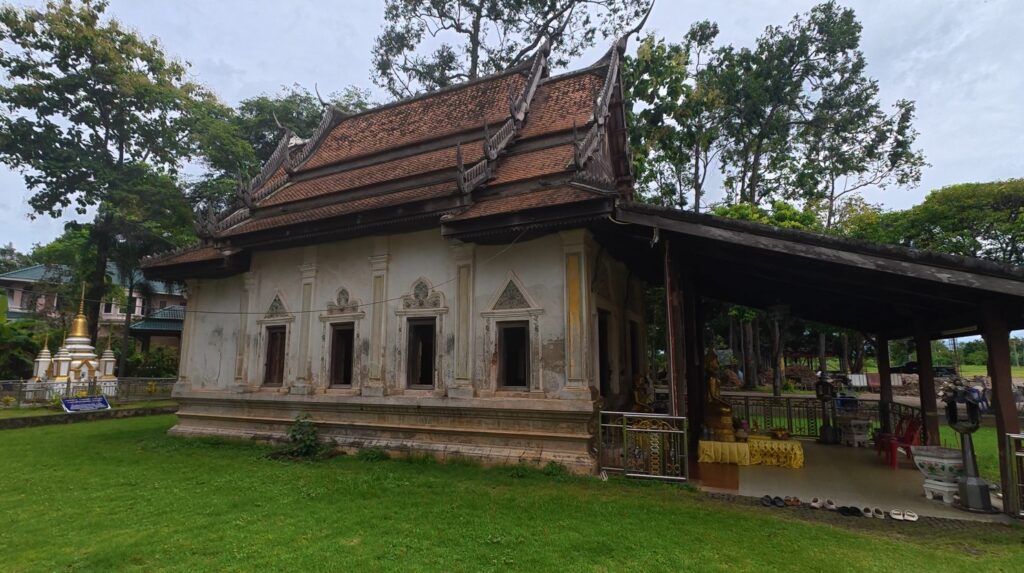
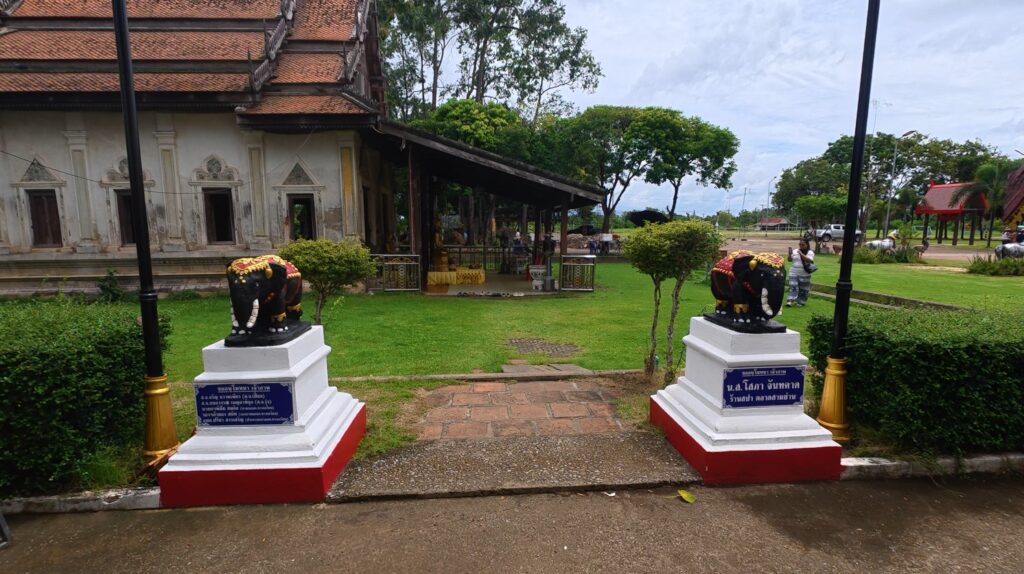
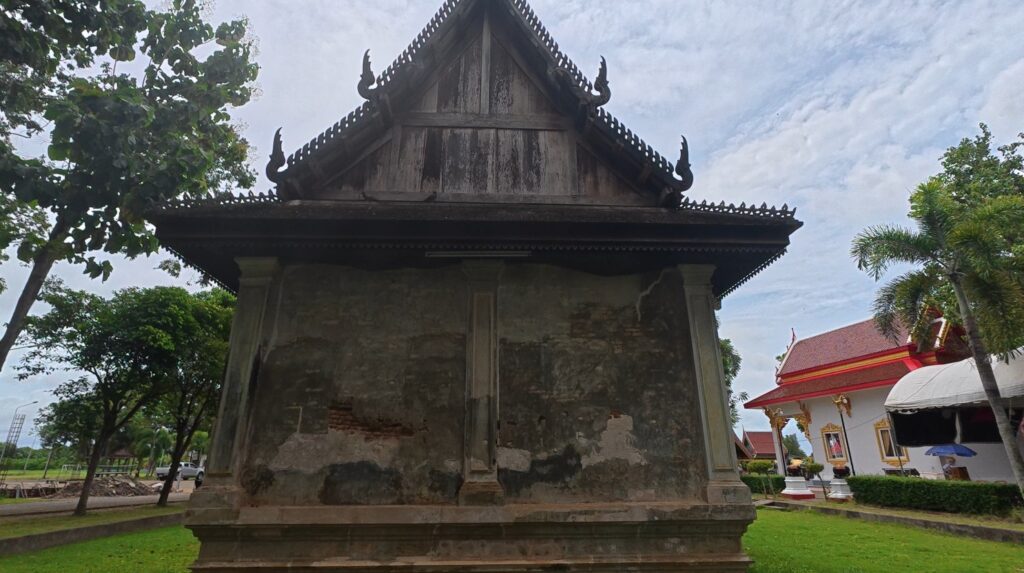
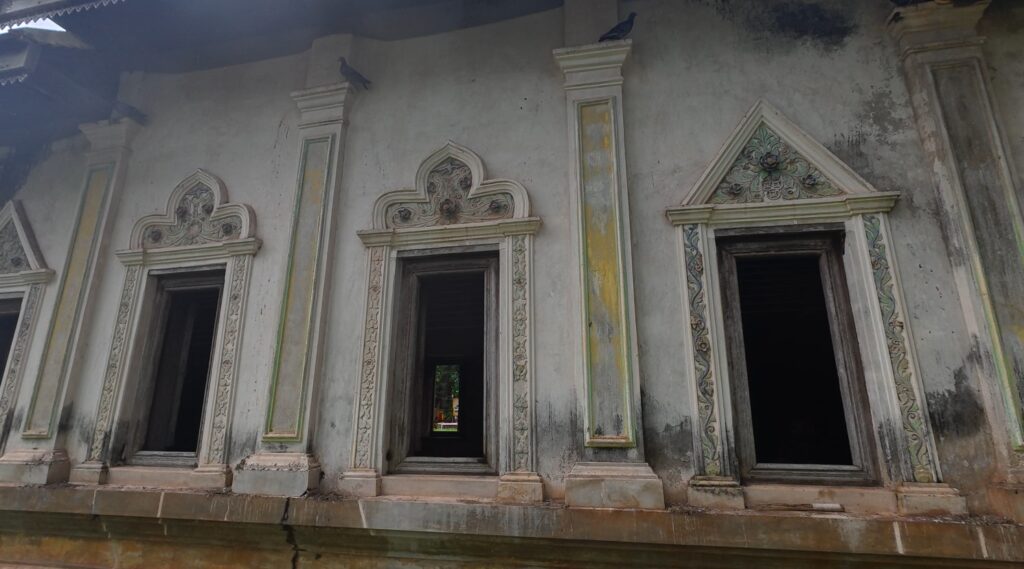
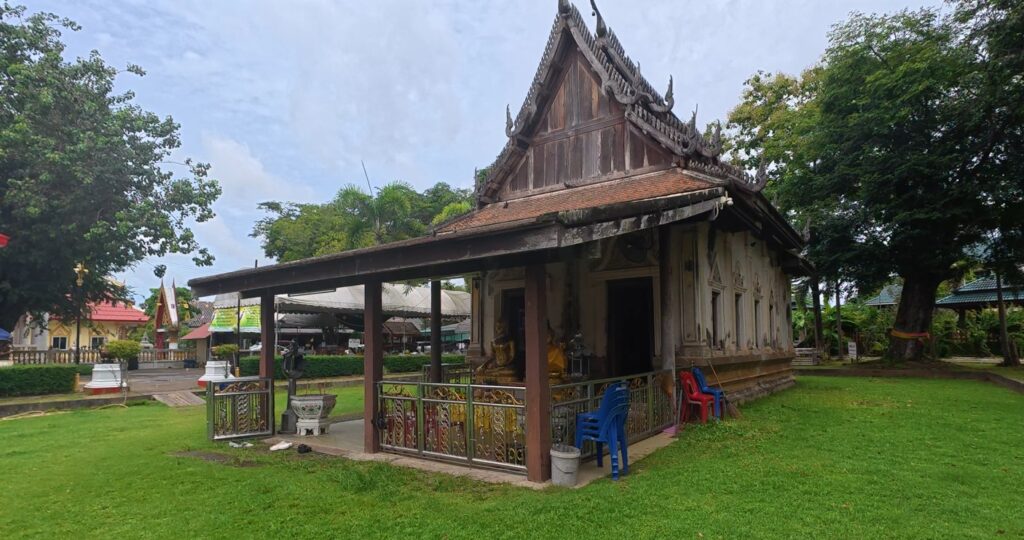
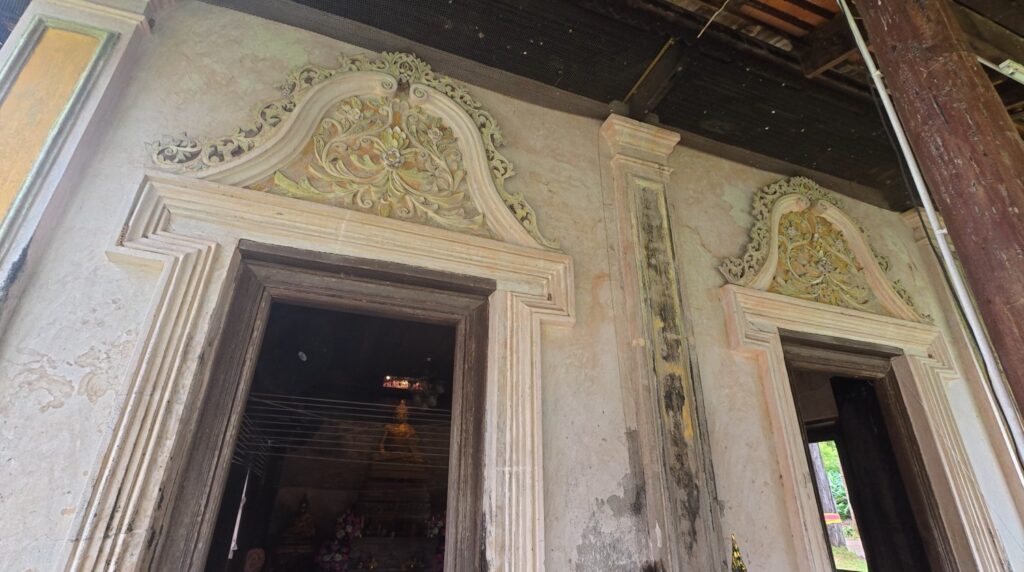
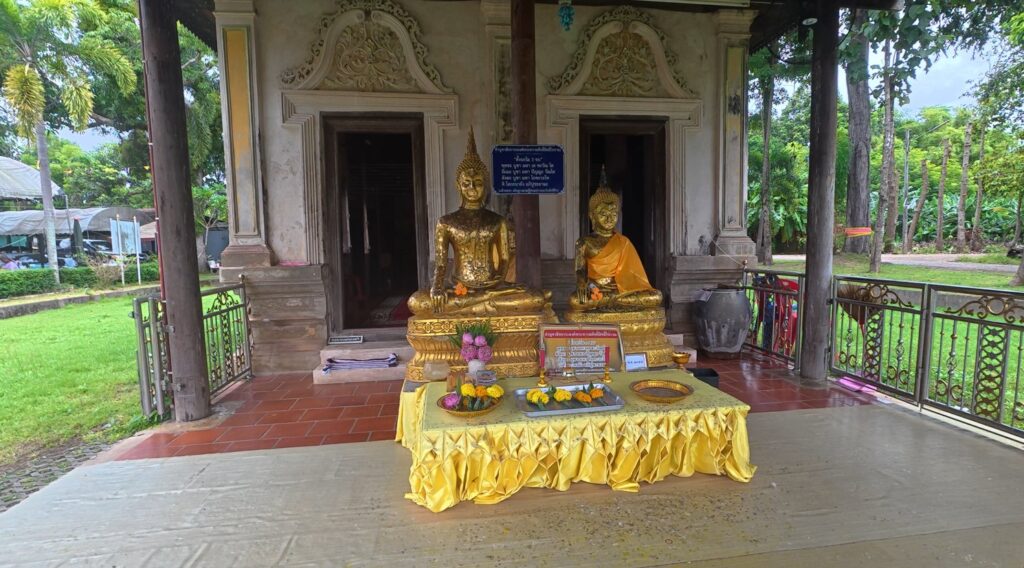
Walking around the old ubosot reveals weathered walls, traditional architectural details and the unmistakable marks of centuries of use.
Inside the Old Ubosot
Stepping through the doorway changes the atmosphere completely. Outside, I had been looking at architecture and history. Inside, this was still a living Buddhist sacred space.
At the far end sits the principal Buddha image. I approached quietly, made an offering and paid my respects — following in the footsteps of countless worshippers who had entered this small hall over generations.
The old Buddha image here is especially interesting. According to the temple tradition, its form was created using an internal framework before being covered and shaped into the sacred image. Such a method gives the Buddha more than artistic importance; the materials hidden beneath its surface become part of the story of how earlier communities created objects of faith with the resources and skills available to them.
Perhaps there is also a more human way to understand it. Like threads woven together to form something stronger, faith connects one generation to the next. The craftsmen who created the image are gone, as are generations of worshippers who prayed before it. Yet the connection remains.
For a moment, sitting quietly before the Buddha, the old building no longer felt like a historical monument. It felt like a place where more than three centuries of human lives were still joined by the same simple act of prayer.
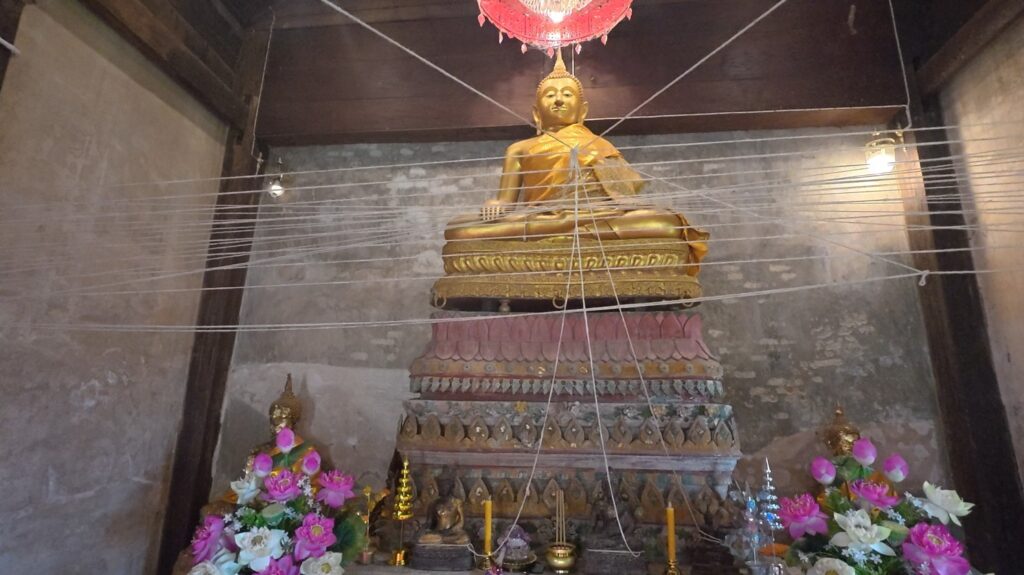
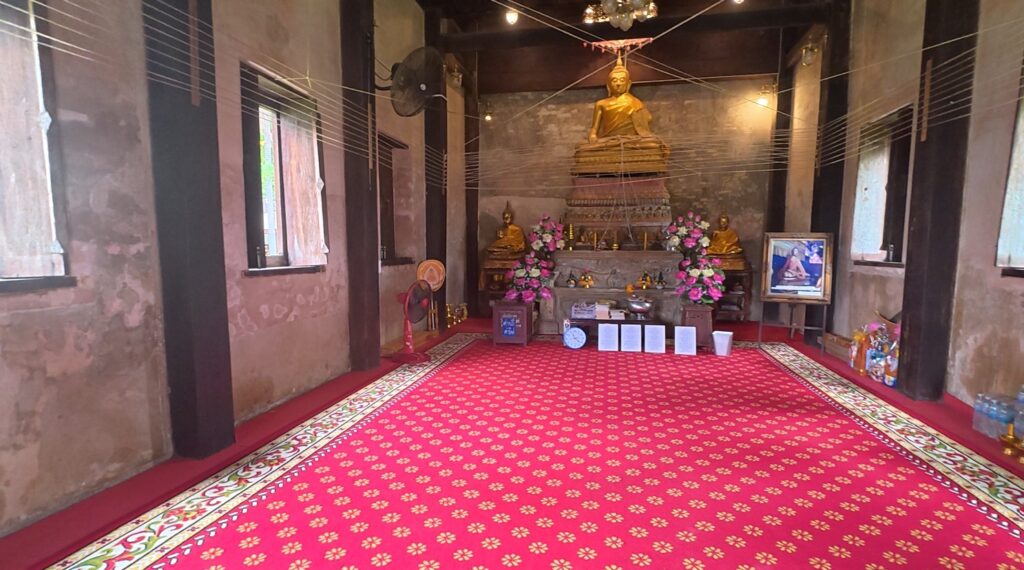
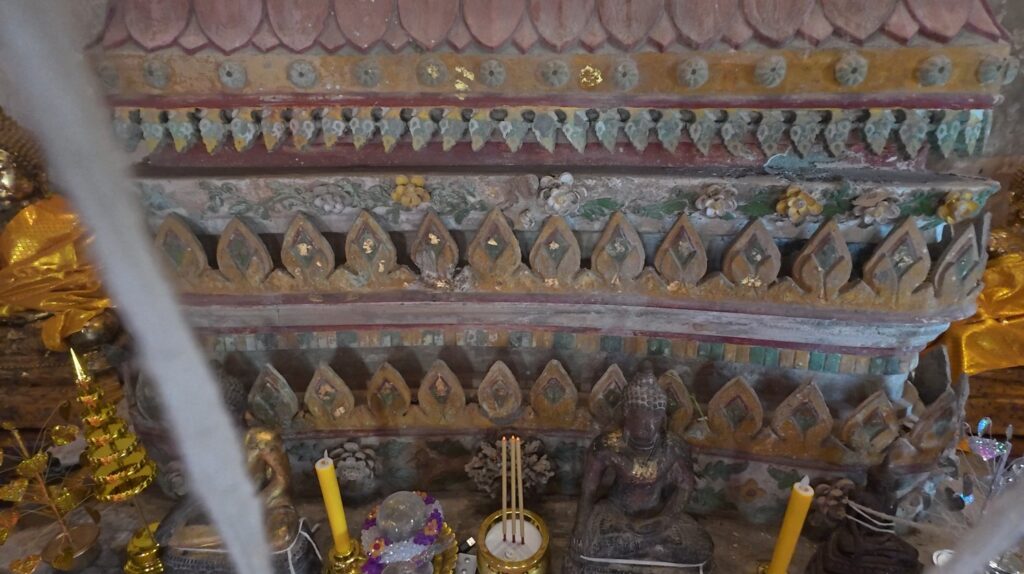
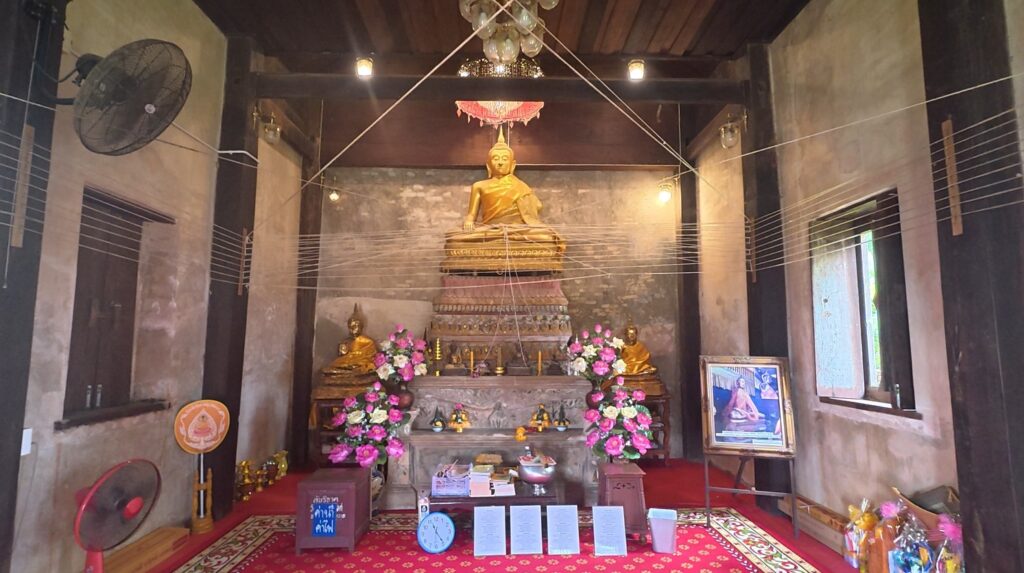
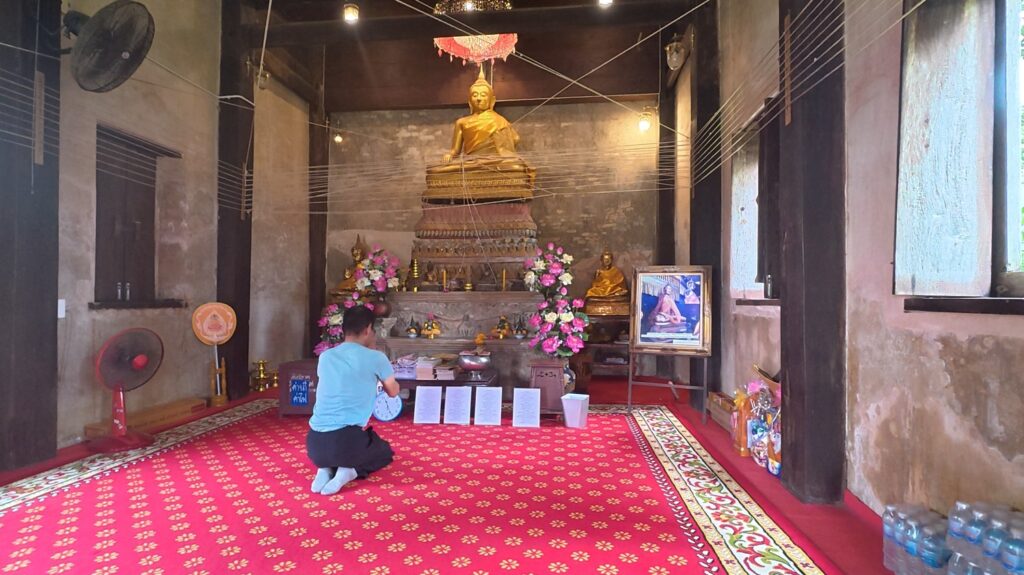
Inside the old ubosot, aged walls, traditional decoration and the principal Buddha image preserve the intimate atmosphere of a sacred space still used for worship.
Follow the full ride through Wat Ratchabanlang Praditthawararam — from the newer ubosot and ancient Bai Sema to the centuries-old hall, King Taksin memorials and the weathered chedi beyond.
Exploring Wat Ratchabanlang Praditthawararam in Rayong — a journey through more than three centuries of faith, memory and the legacy of King Taksin the Great.
In the Footsteps of King Taksin
Leaving the old ubosot, the story of this temple begins to move beyond Buddhism alone and into one of the most dramatic periods in Siamese history.
Within the temple grounds stands a shrine dedicated to King Taksin the Great, the military leader who emerged from the destruction of Ayutthaya and eventually reunited much of the fragmented kingdom.
I stopped at the shrine to pay my respects. Surrounded by the silence of this rural temple, it was difficult not to think of the uncertainty that Taksin and his followers faced as they moved through the eastern provinces in 1767.
Outside the shrine stand a large drum and gong. I struck them and listened as their sounds travelled across the temple grounds. These are not presented here as surviving battlefield instruments from Taksin’s army, but their sound invited another thought: drums and gongs once played an important role in calling men together, communicating and marking moments of ceremony and action.
For just a few seconds, the quiet temple seemed connected to a very different world — a world of marching soldiers, uncertainty and a journey east toward Chanthaburi.
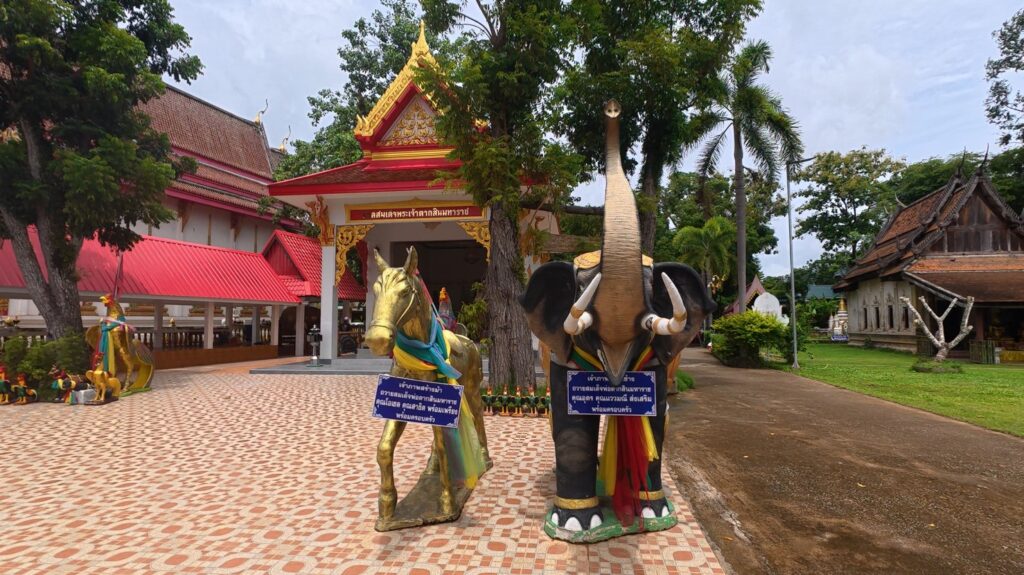
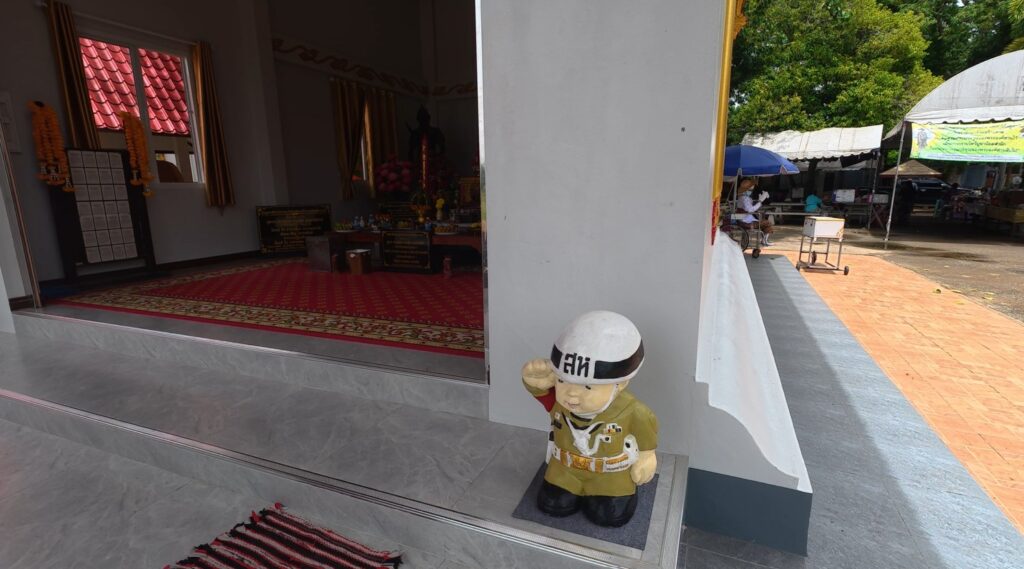
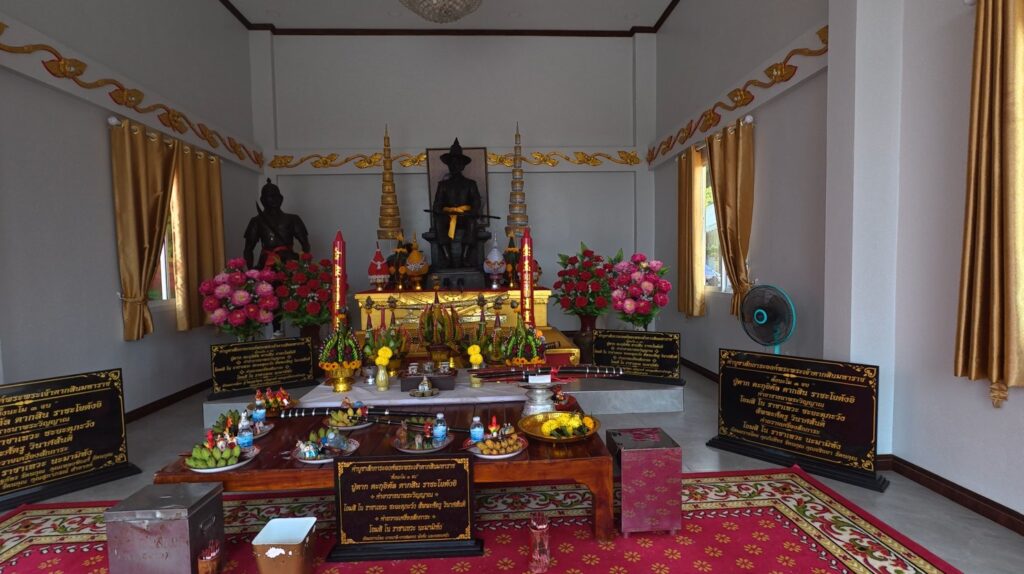
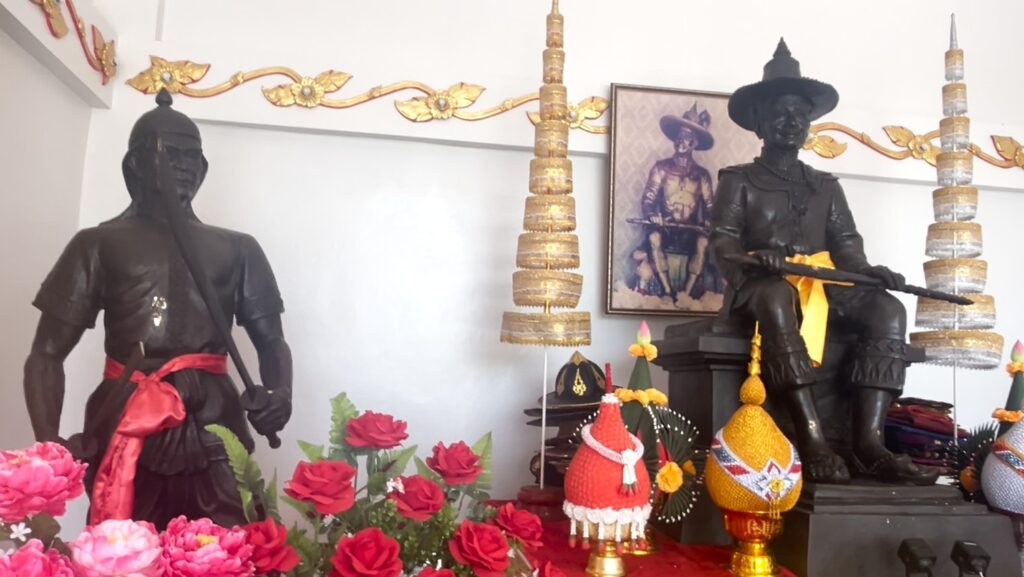
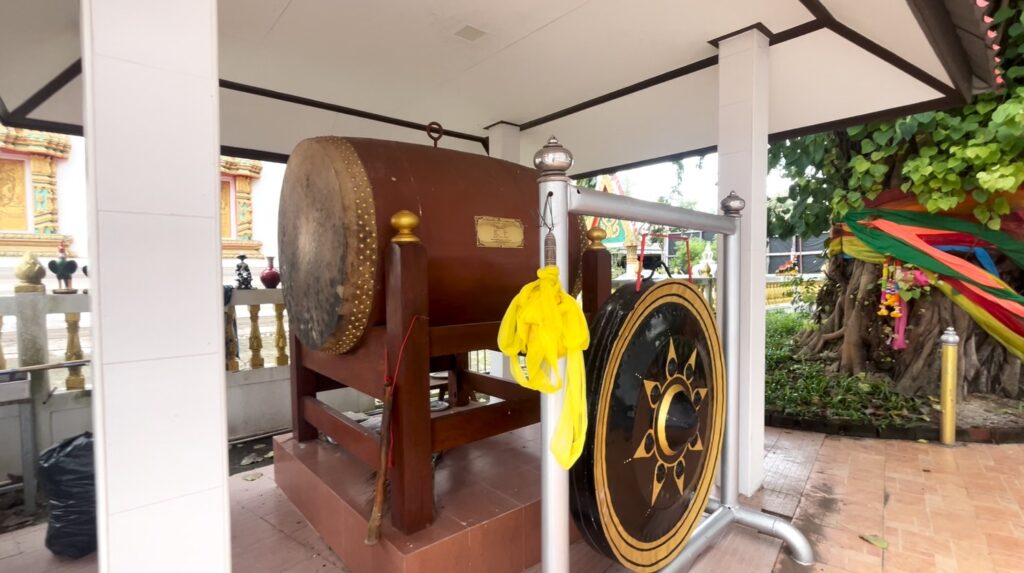
Paying respects at the King Taksin shrine before sounding the drum and gong — a moment that evokes the military world of his journey eastward in 1767.
A Memorial to the King
Nearby, I entered a memorial hall where the memory of King Taksin is preserved alongside Buddhist devotion.
At the entrance stands an image of Guanyin, the Bodhisattva of Compassion. Inside, a large Buddha image occupies the central position, while statues of revered monks and other sacred figures surround the hall. The arrangement creates an interesting meeting of royal memory and religious faith.
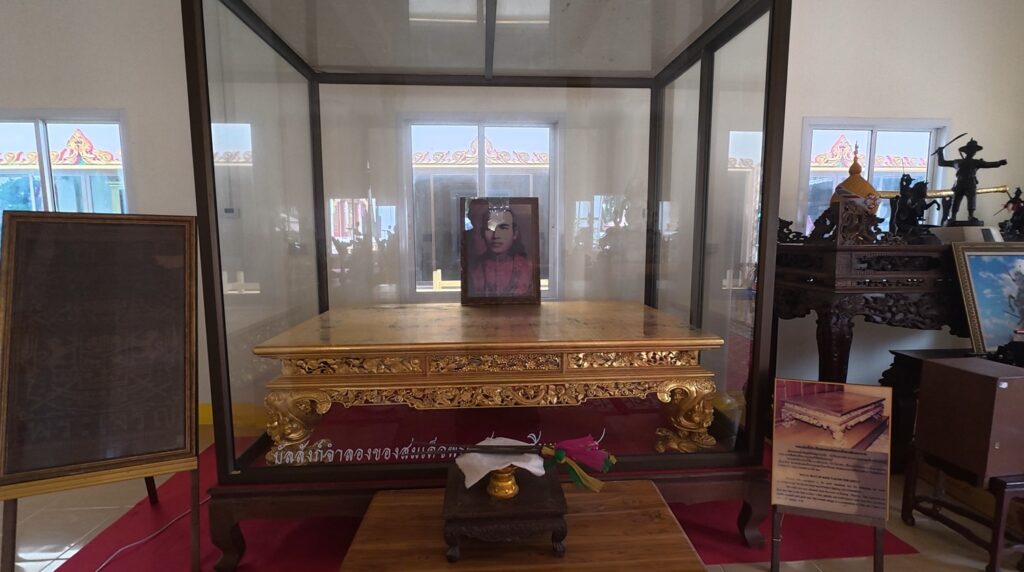
Along one side is perhaps the most evocative object in the room — a royal seat traditionally associated with King Taksin the Great.
The temple’s information panel describes the seat as having come from Klaeng in Rayong. Its carved decoration combines Thai and Chinese artistic influences, with lion-shaped feet, floral and vine motifs, and traces of gilding.
There is, however, an important historical detail. The information displayed at the temple dates the seat stylistically to around the 19th century, later than Taksin’s 1767 eastern campaign. For that reason, it is best understood as an object preserved through local tradition and associated with the king, rather than unquestioned physical proof that he personally used this exact seat during his march to Chanthaburi.
Yet standing before it, historical caution and human imagination meet.
Beneath the portrait of Taksin, the empty royal seat seems almost occupied. For a moment, it feels as though the king has simply risen and stepped away.
Around him are the Buddha, Guanyin and images of generations of revered monks. In the stillness of the hall, I could imagine their prayers offering comfort to a man who once carried an extraordinary burden — how to survive the destruction of a kingdom and find the strength to build again
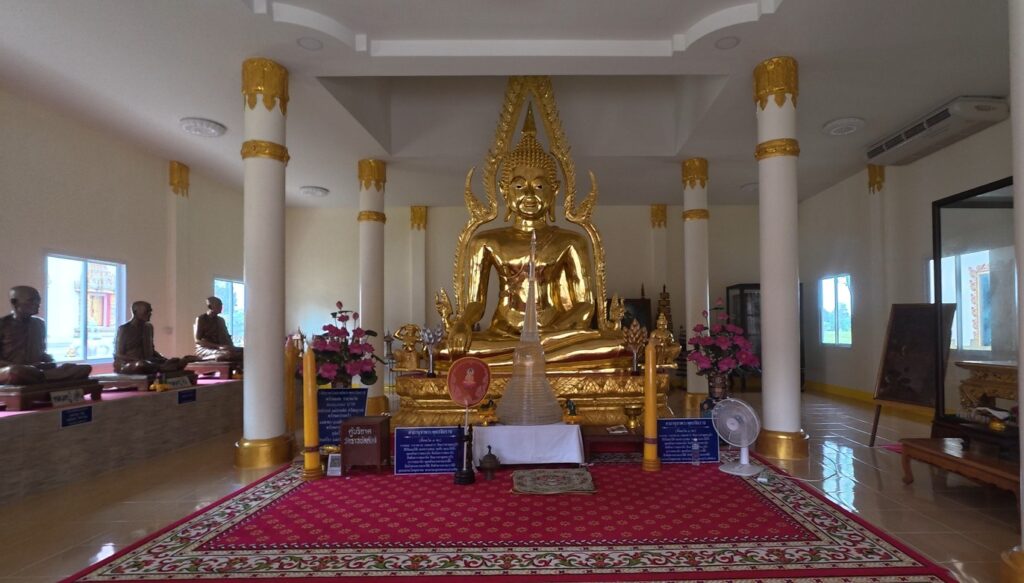
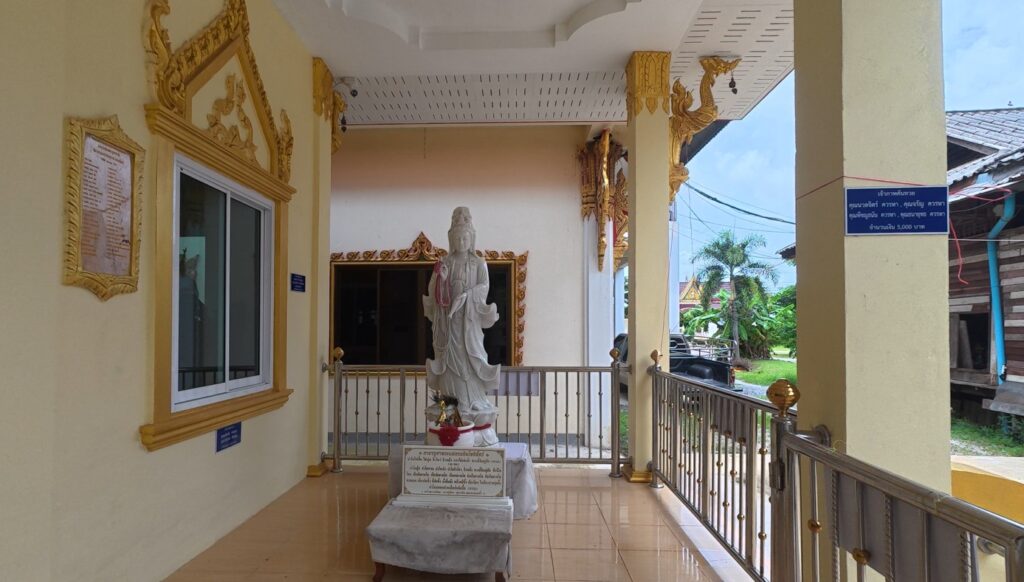
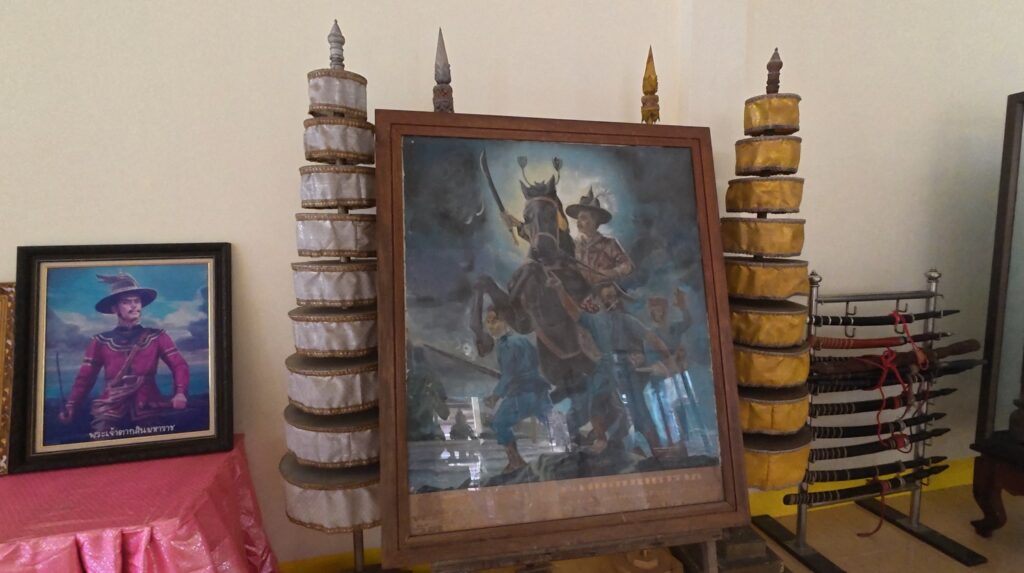
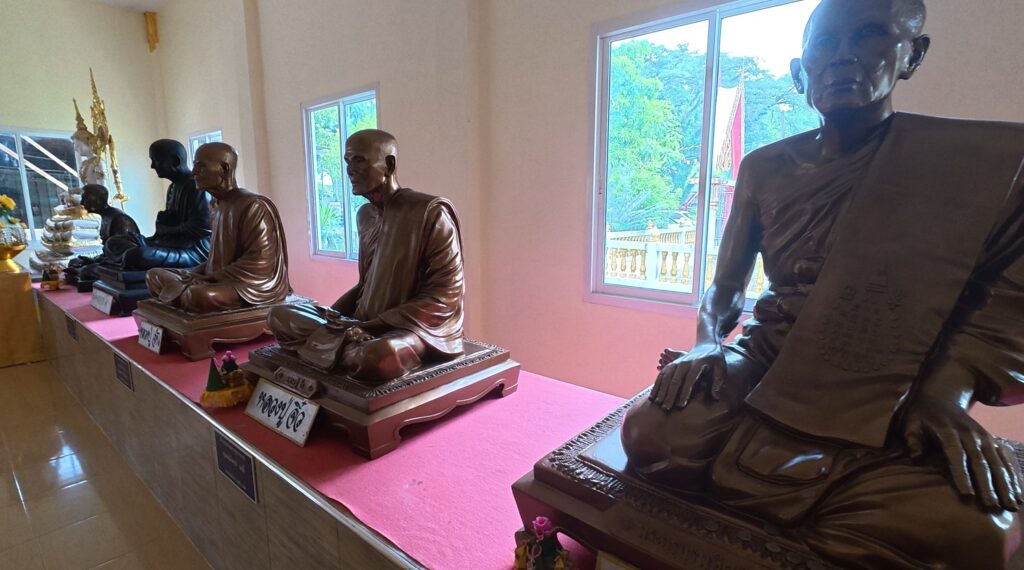
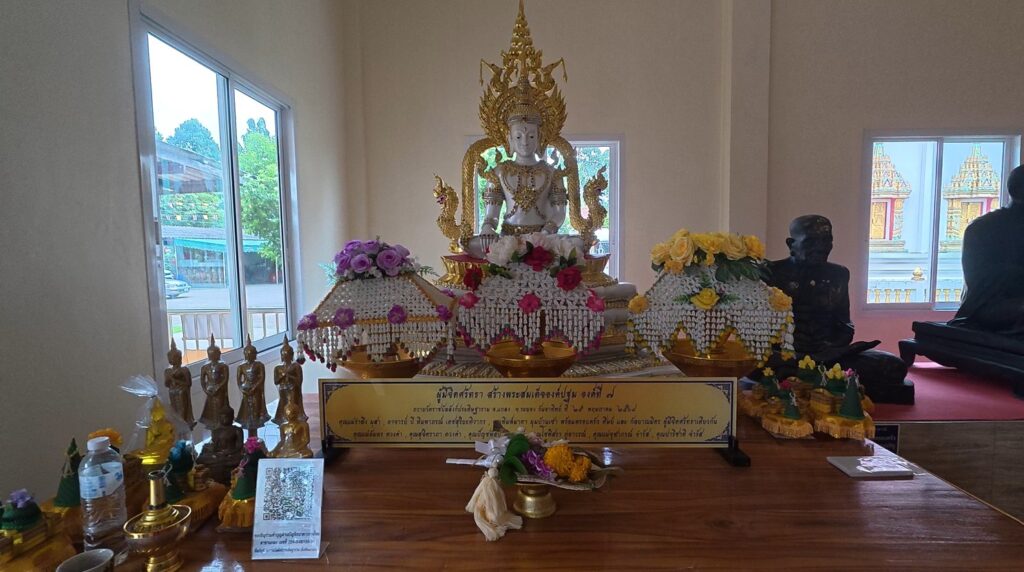
Guanyin, revered monks and sacred images surround the memorial space, reflecting the continuing religious devotion associated with the temple.
The Old Chedi — A Witness to Three Centuries
Leaving the memorial hall, I walked toward one of the oldest and most powerful sights in the temple grounds — an ancient chedi standing apart from the other buildings.
Time has not treated it gently.
Deep cracks run across its surface. Sections of the lower structure have deteriorated, and part of it has already collapsed. Today, metal supports surround the chedi, helping to protect a monument that has endured centuries of tropical rain, heat and changing seasons.
And yet, it still stands.
I walked slowly around the structure, looking closely at the damaged masonry and layers exposed by time. Here, restoration has not erased the past. The cracks themselves have become part of the story.
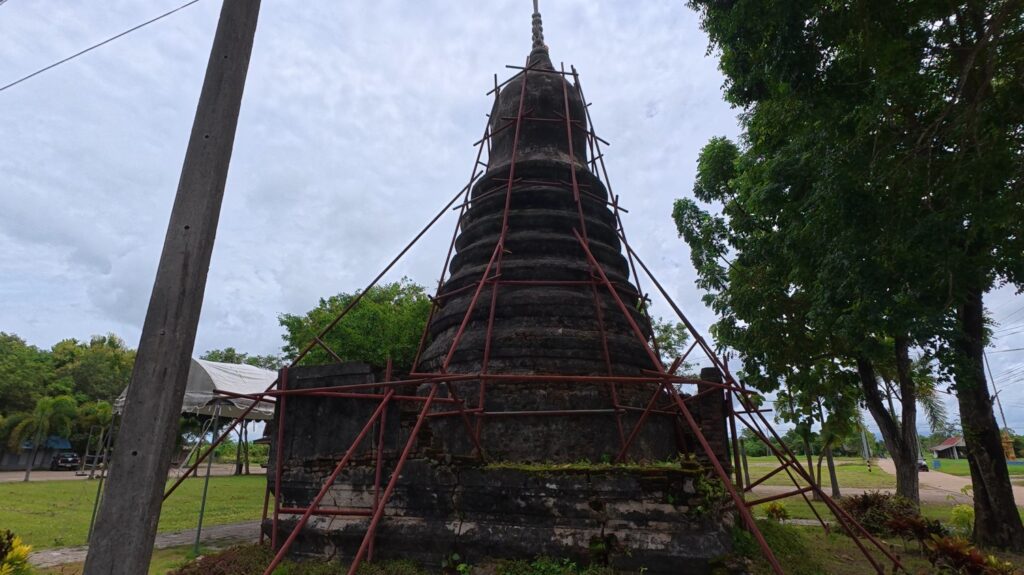
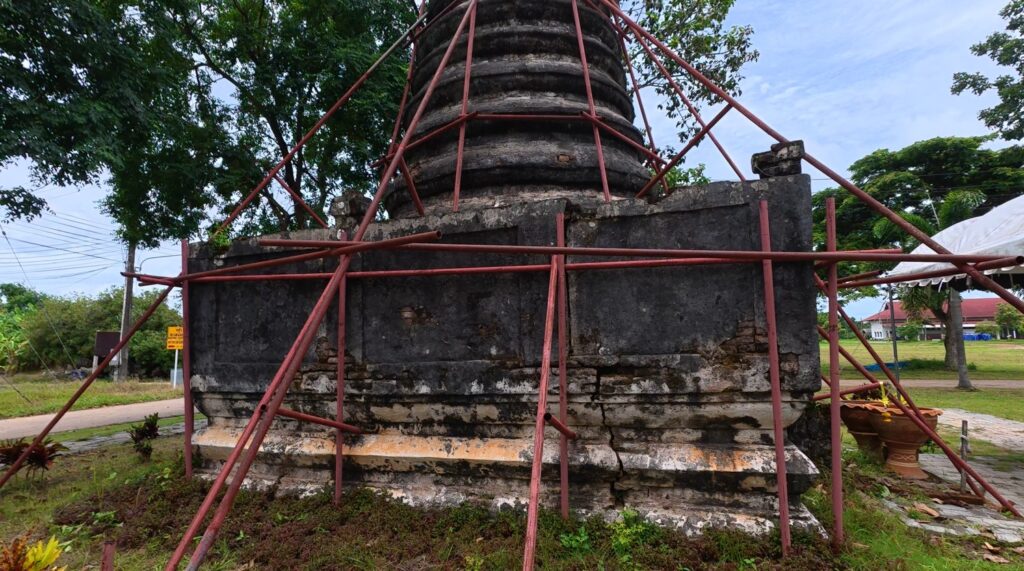
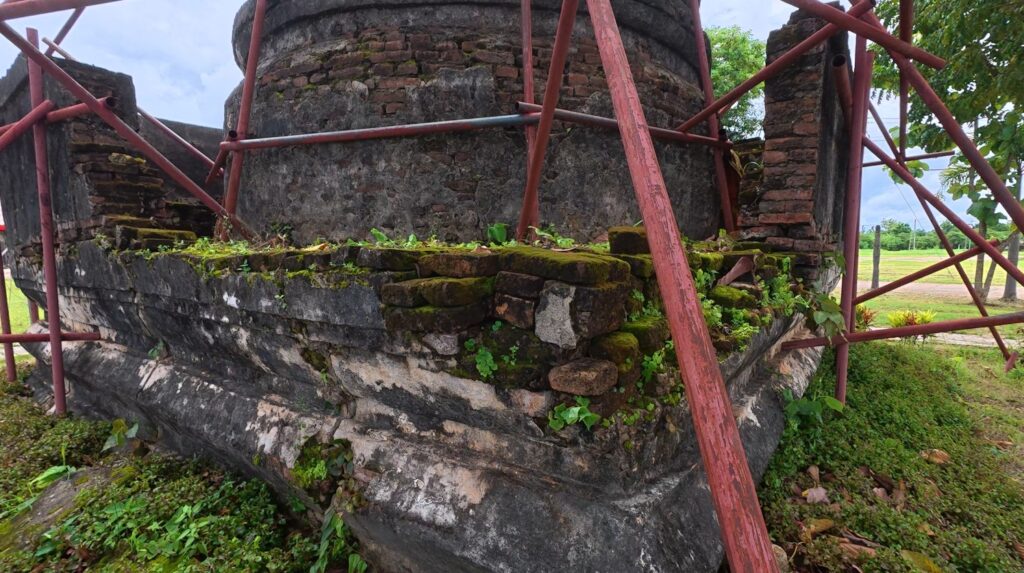
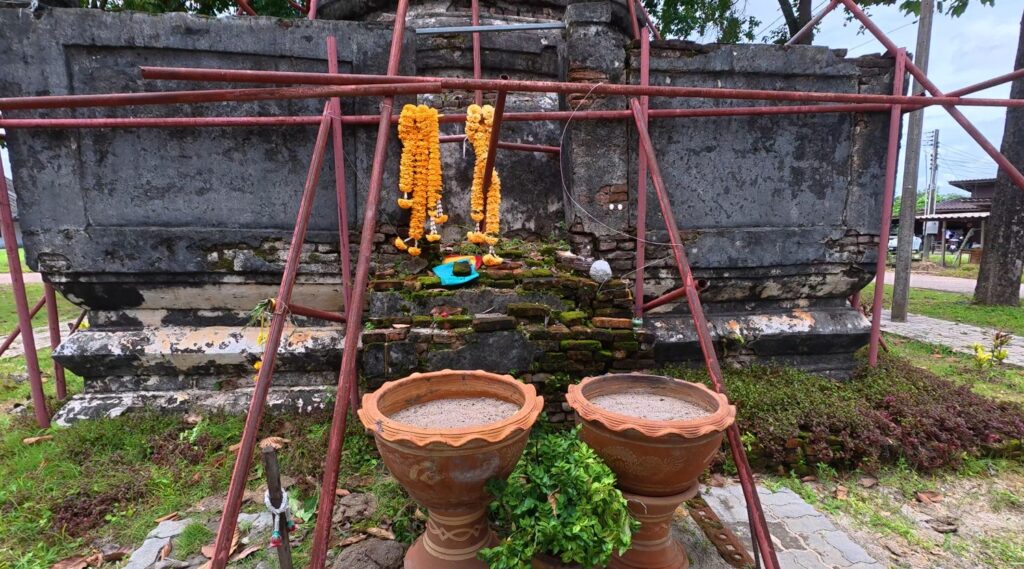
Cracks, exposed masonry and structural damage reveal the long passage of time across the ancient chedi.
Did Taksin Once Stand Here?
Standing beside the old chedi, my thoughts returned to 1767.
Ayutthaya had fallen. The political order that had dominated Siam for centuries had collapsed, and different regional powers were struggling to survive and control what remained.
Taksin had escaped east with his followers. Rayong became an important stage in his effort to gather men, supplies and strength before continuing toward Chanthaburi.
This old chedi appears to belong to that distant world.
There is no historical evidence I have found that says King Taksin stood before this particular chedi or made a vow here. It would therefore be wrong to present such a moment as historical fact.
But history experienced on the ground is sometimes different from history read in a book.
Standing beside a structure that has survived for more than three centuries, I could not help wondering:
Did Taksin ever see this chedi?
Perhaps he passed nearby. Perhaps some of his men prayed somewhere on these temple grounds before continuing east.
And perhaps, while looking toward Chanthaburi, Taksin was already thinking beyond survival — toward recovering a country that had been shattered.
We cannot know.
But standing there, beside the cracked old chedi, the question itself seemed worth asking.
Across the Fields Toward Chanthaburi
Beyond the chedi stretches a broad, open landscape.
Today it is peaceful countryside — grass, trees, scattered houses and quiet roads. But walking and riding around the open ground, I began to imagine how different this landscape might have appeared more than 250 years ago.
Such open land could have provided space for men to gather and rest before continuing their journey. Again, there is no evidence that allows me to identify this particular field as Taksin’s military camp, so I can only look at the landscape and imagine the possibilities.
Somewhere across these eastern lands, however, Taksin and his followers were preparing for what came next.
Ahead lay Chanthaburi.
And Chanthaburi would become crucial to Taksin’s ability to gather resources, build military strength and eventually return to challenge the forces that had filled the vacuum left by Ayutthaya’s destruction.
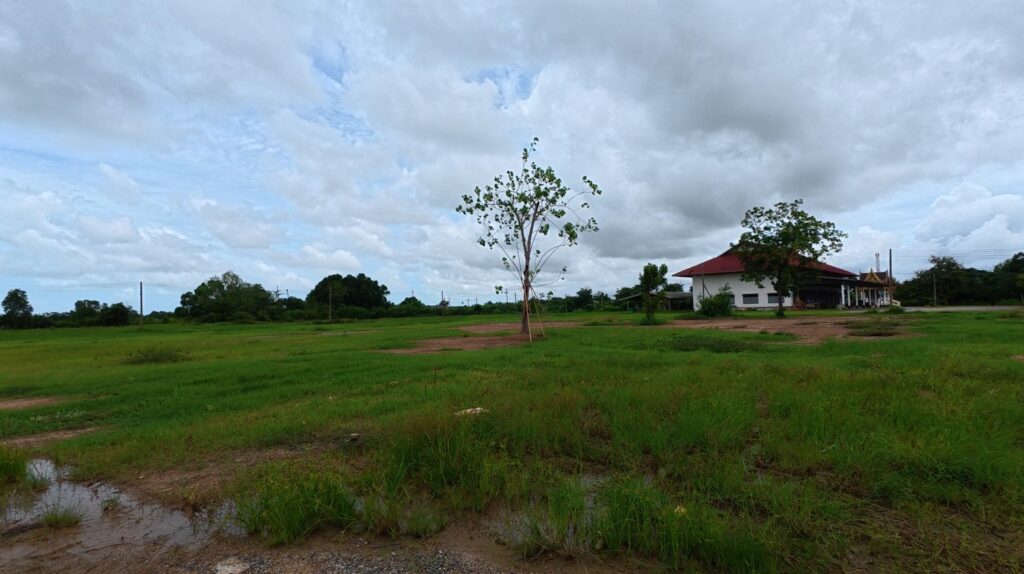
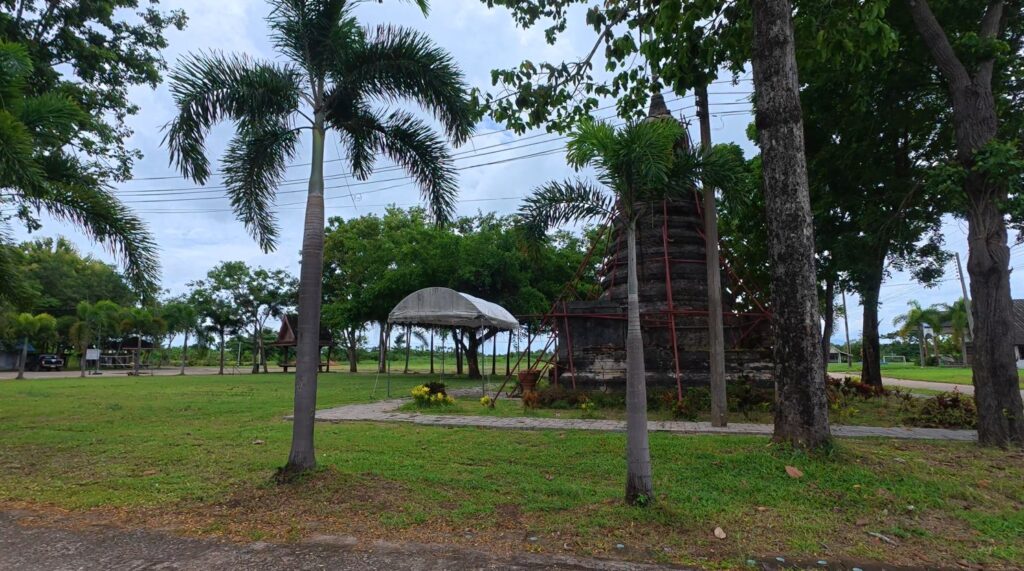
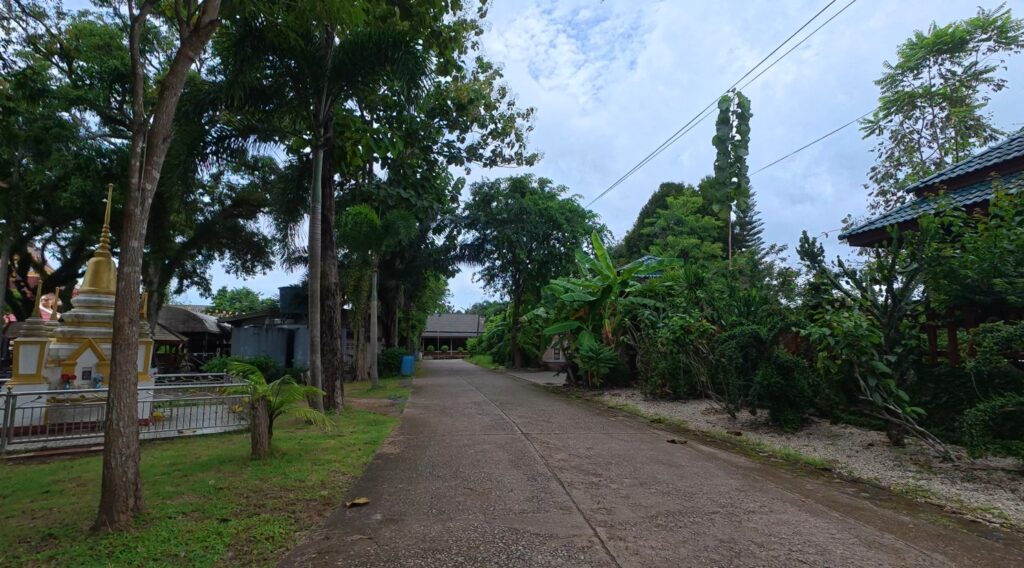
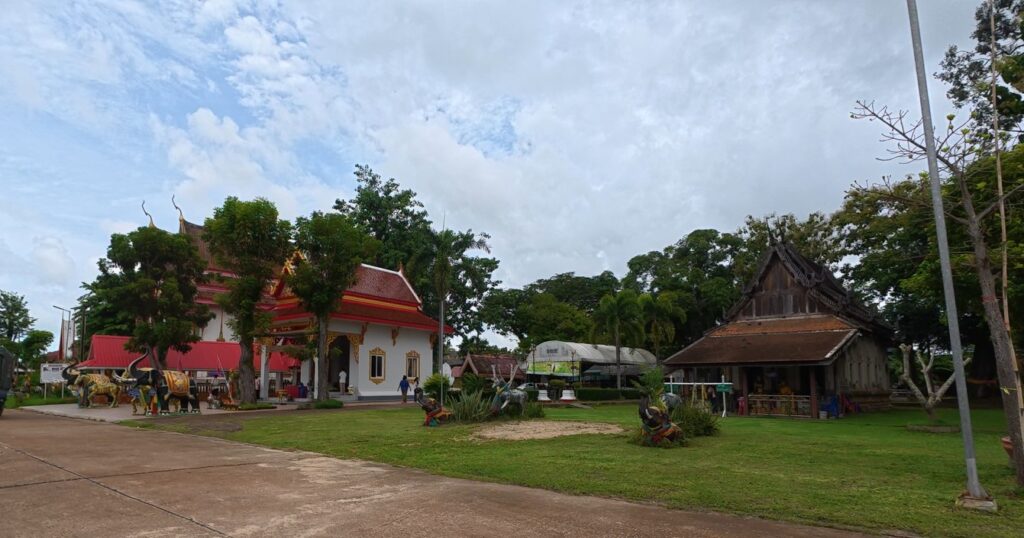
One final ride around the quiet temple grounds before returning to the road — following, in imagination, the historic route east toward Chanthaburi.
Leaving the Temple, Carrying the Story
I arrived at Wat Ratchabanlang Praditthawararam expecting to see an old temple.
I left thinking about something much larger.
A weathered ubosot still shelters the Buddha. Ancient Bai Sema continue to mark sacred ground. A royal seat preserves the local memory of King Taksin. And beyond them, an old chedi continues to stand despite centuries of rain, cracks and partial collapse.
None of these objects can tell us everything that happened here.
But together they bring us closer to a remarkable moment in Thai history — when one kingdom had fallen, the future was uncertain, and a small force was moving east in search of the strength to begin again.
More than 250 years later, the soldiers are gone.
The countryside is quiet.
The old chedi is still standing.
And Won Cub Life continues.
Location and Visitor Information
Location
Wat Ratchabanlang Praditthawararam is located in Thang Kwian Subdistrict, Klaeng District, Rayong Province, Thailand. Thailand’s official Tourism Directory classifies the temple as a historical and cultural attraction.
Admission
Free entry. As this is an active Buddhist temple, donations for temple maintenance are welcome.
Best Time to Visit
Morning or late afternoon is best, when the temperature is lower and the old ubosot and chedi can be explored comfortably.
Dress
Modest clothing is recommended. Shoulders and knees should be covered when entering the ubosot or other sacred buildings.
Photography
Photography is generally suitable around the temple grounds. Inside sacred buildings, photograph quietly and avoid disturbing worshippers or monks.
Visit Time
Allow approximately 1–2 hours for a relaxed visit. Anyone interested in the old ubosot, Bai Sema, King Taksin memorials and ancient chedi may want to stay longer.
Footwear
Easy-to-remove footwear is useful because shoes should be removed before entering Buddhist sacred buildings.
Google Maps : Wat Ratchabanlang Praditthawararam in Rayong,
For additional visitor information, see the official Thailand Tourism Directory listing for Wat Ratchabanlang Praditthawararam.
Related Stories
King Taksin in Chanthaburi – The Land That Helped Rebuild Siam
King Taksin the Great Shipyard – Where Thailand Was Reborn