Riding Toward the Mouth of the Prasae River
My journey began on the bridge crossing the mouth of the Prasae River in Rayong. From above, the river opened wide beneath me, with fishing communities lining the water and the Gulf of Thailand waiting somewhere beyond the horizon.
I stopped the Honda Cub for a moment and looked down at the river before continuing toward Pak Nam Prasae. There was nothing dramatic about the beginning of the ride—just a quiet coastal road, an overcast sky, and the familiar feeling of following a road simply to see where it would lead.
Leaving the bridge behind, I rode toward the coast. At that moment, I had no idea that this short ride would eventually lead me from a small fishing community in Rayong into a story stretching across World War II, the Soviet Union, the Korean War, and the Royal Thai Navy.
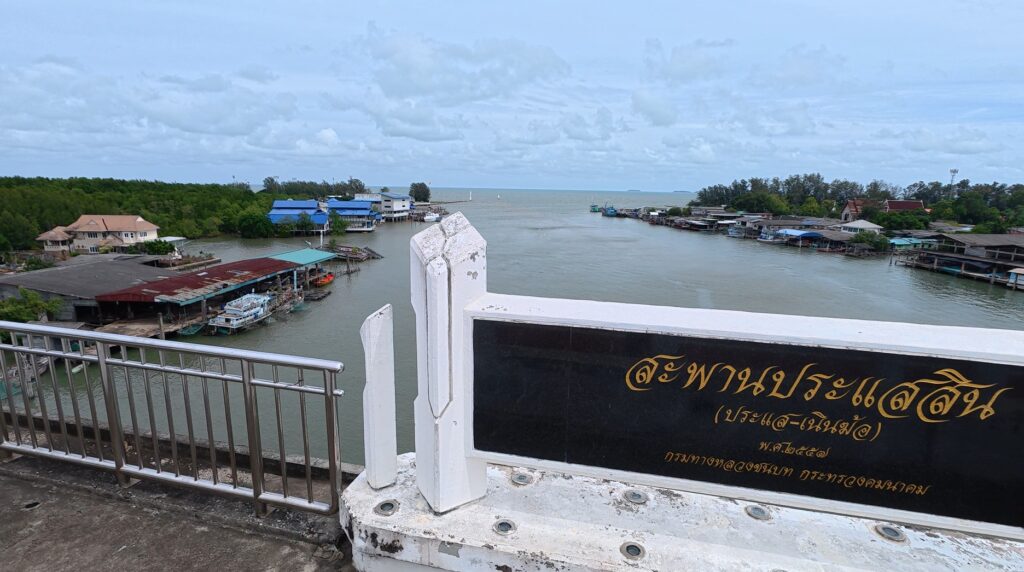
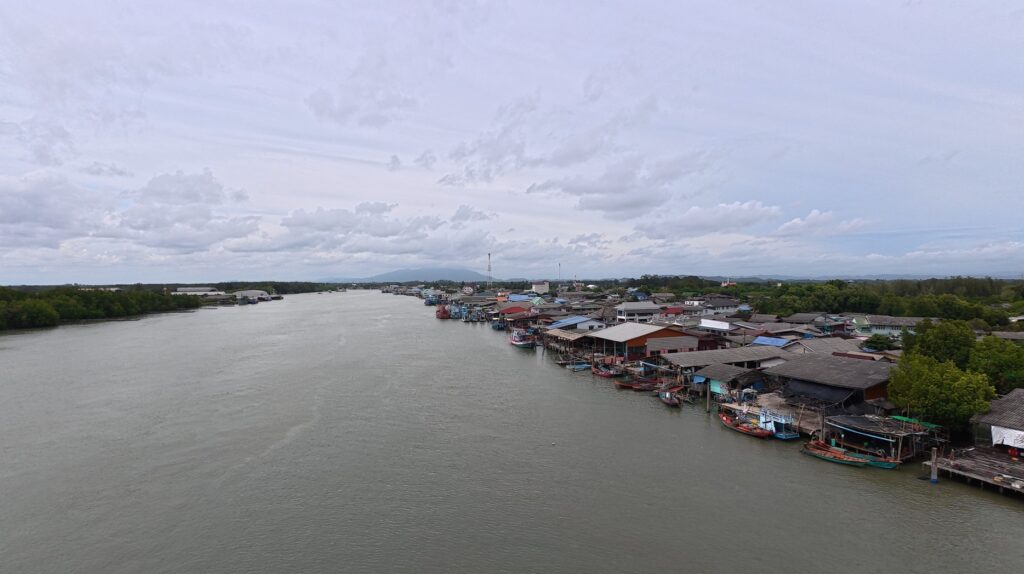
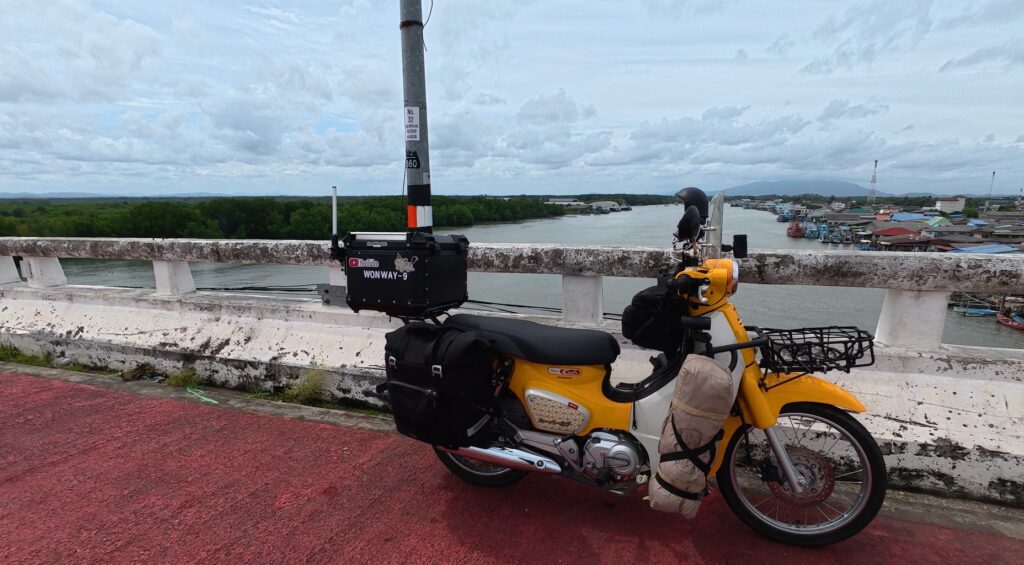
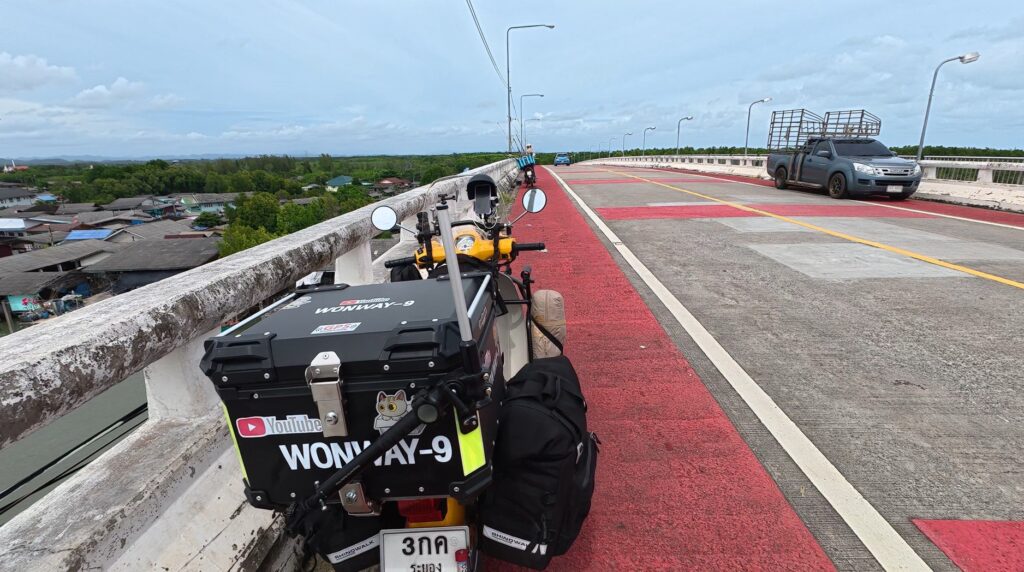
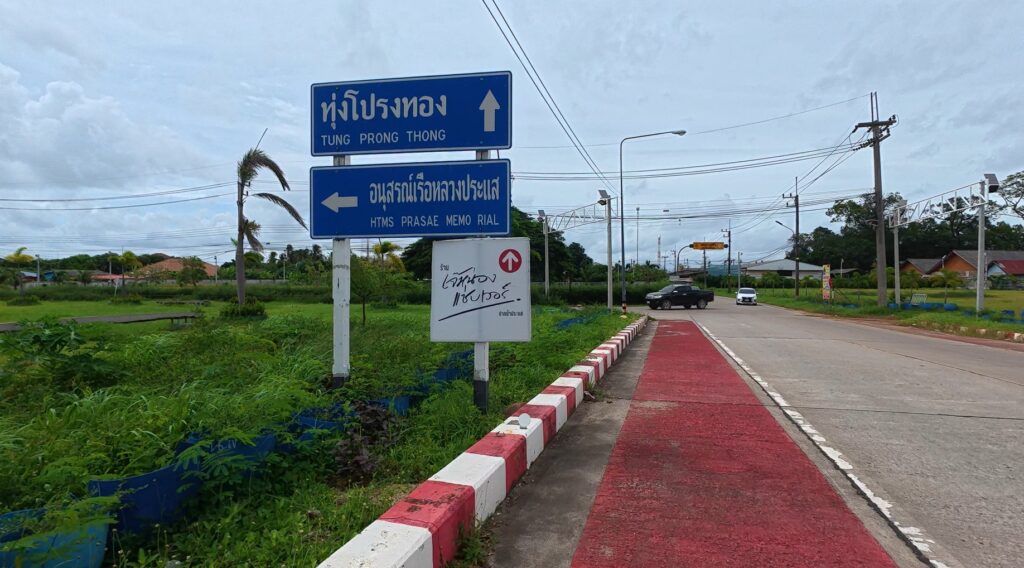
Crossing the Prasae River and setting out on the Honda Cub toward Pak Nam Prasae and the Gulf of Thailand.
Through the Mangroves to the Sea
Leaving the bridge behind, the road became quieter as I rode through the mangrove landscape of Pak Nam Prasae. These wetlands form a natural boundary between the river and the Gulf of Thailand, while also protecting the shoreline and providing an important habitat for fish, crabs, birds, and other coastal life.
For the local community, the mangroves are more than scenery. They have long been connected to fishing and everyday life around the Prasae River. Riding slowly through this green landscape, the sea still remained out of sight, but the stronger wind ahead told me that the coast was getting close.
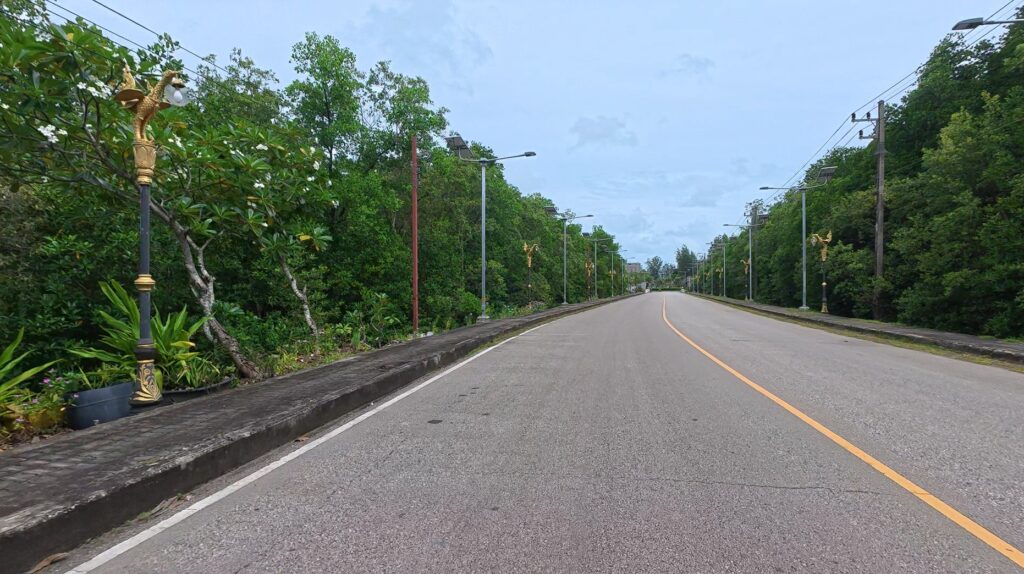
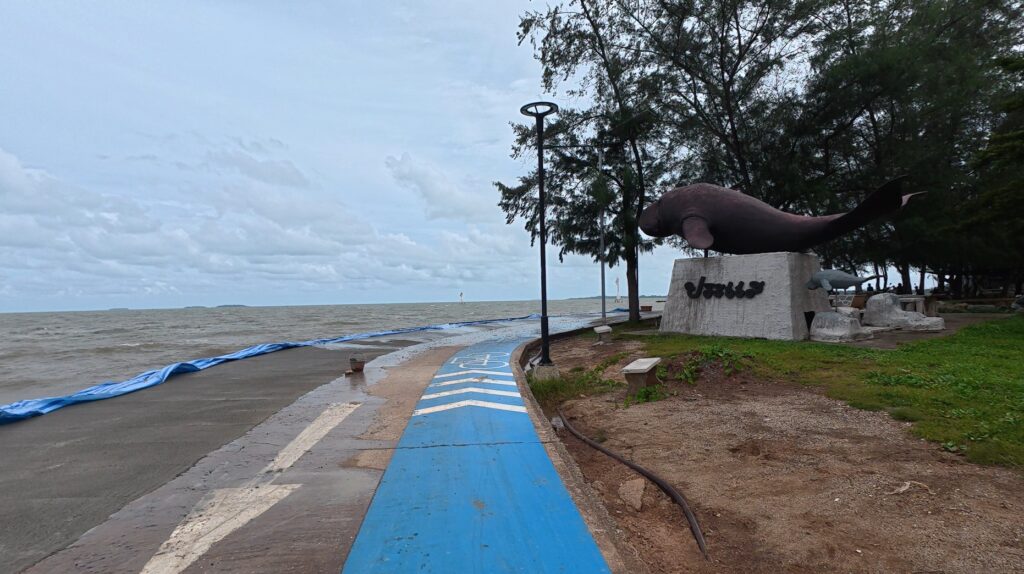
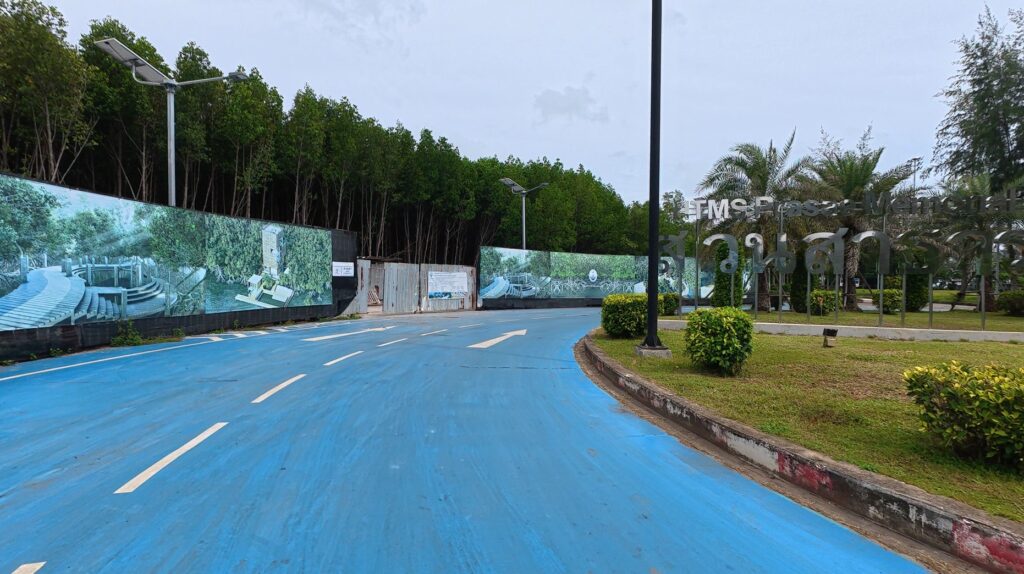
The quiet road through the mangroves of Pak Nam Prasae, leading from the river toward the Gulf of Thailand.
Where the River Meets the Gulf
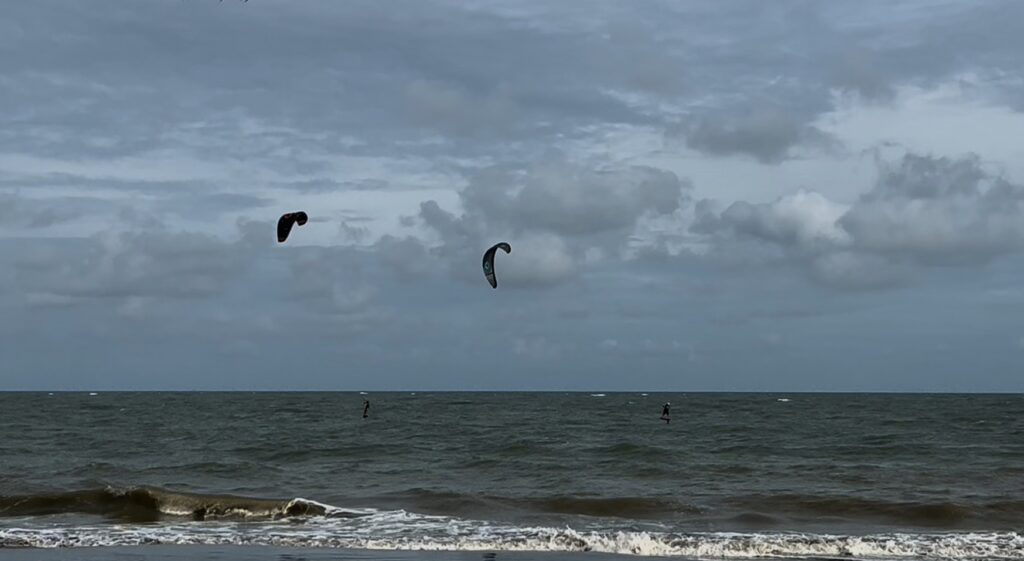
The mangroves eventually opened onto the coast, and the quiet ride suddenly met a much stronger world of wind and sea. The Gulf of Thailand stretched out beneath a heavy sky, and the wind was strong enough to bring a group of kite surfers onto the water. Their colorful kites moved rapidly above the waves as they raced back and forth across the shoreline.
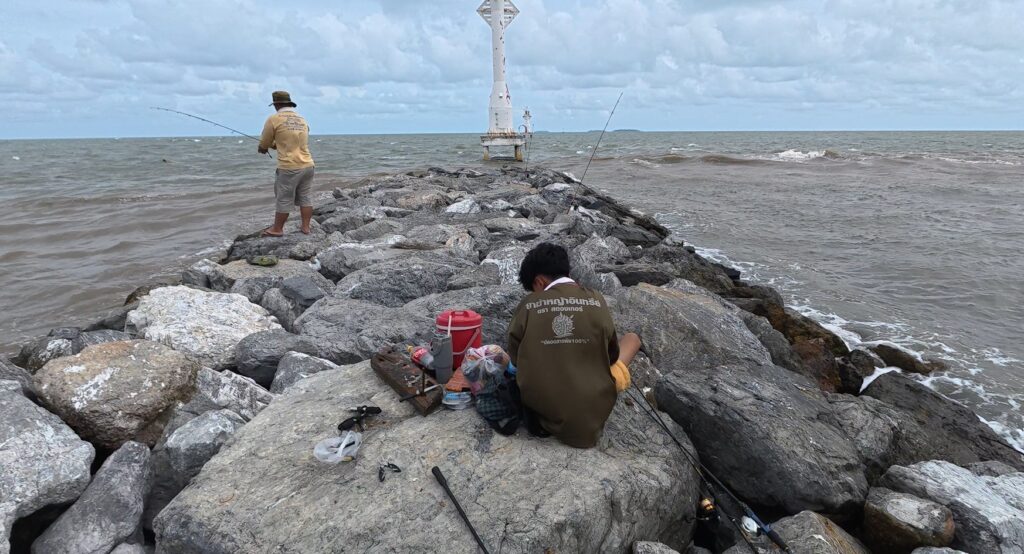
I followed the coast toward the breakwater, where a small lighthouse stood at the end looking out over the gulf. Behind me was the Prasae River and its mangroves; ahead was the open sea. It felt like a peaceful meeting point between river, land, and ocean. Yet only a short distance away stood something that seemed completely out of place in this relaxed coastal scene—an old warship.
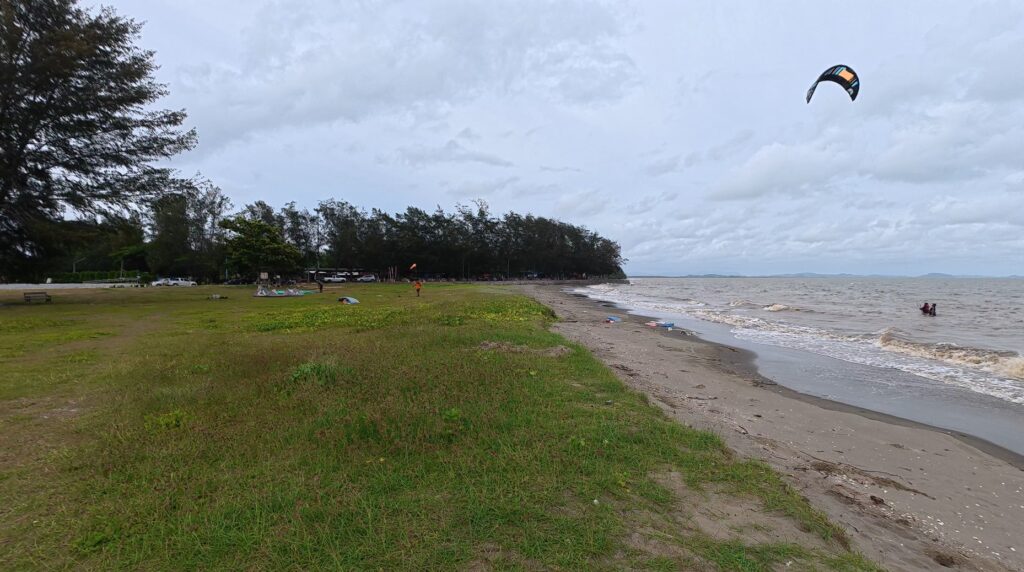
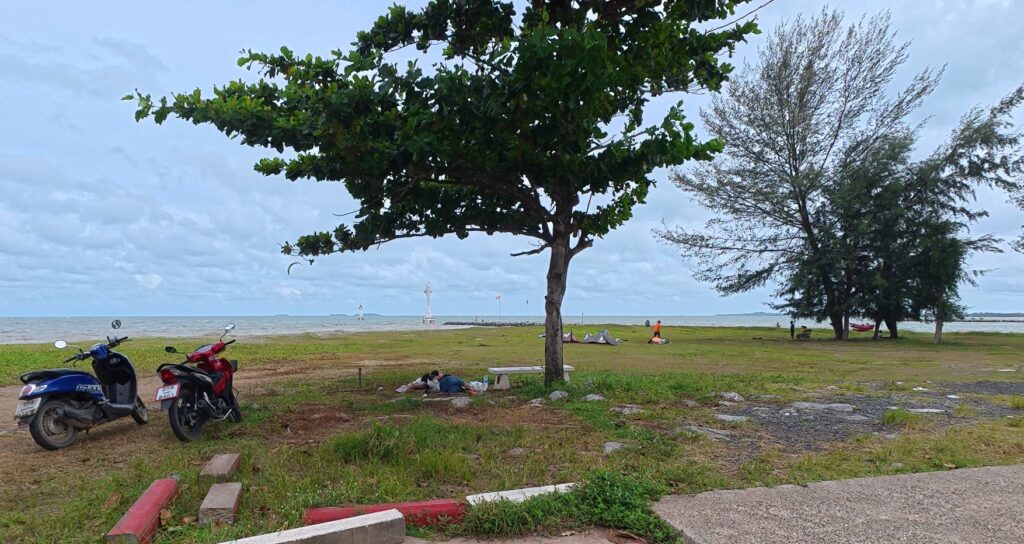
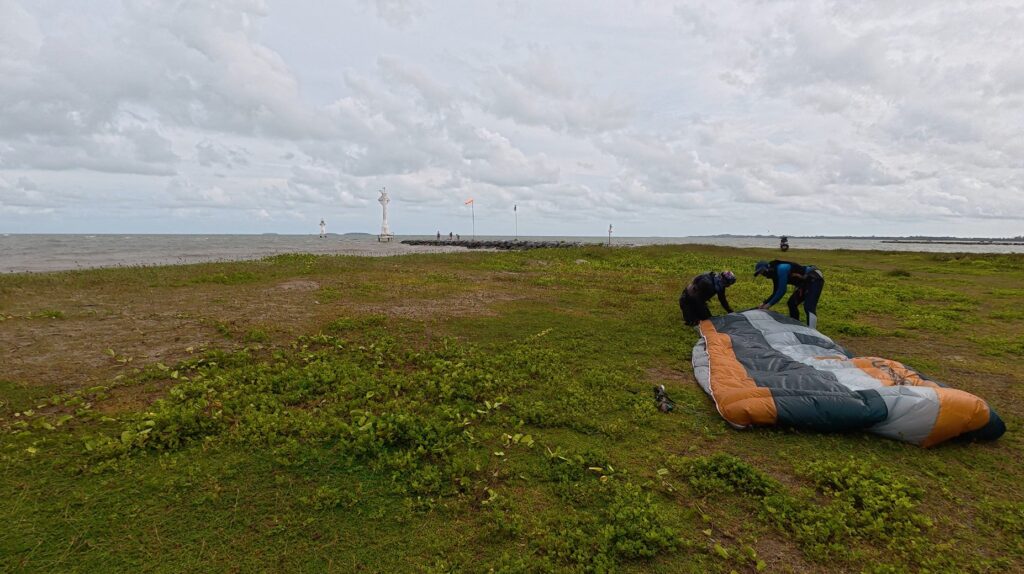
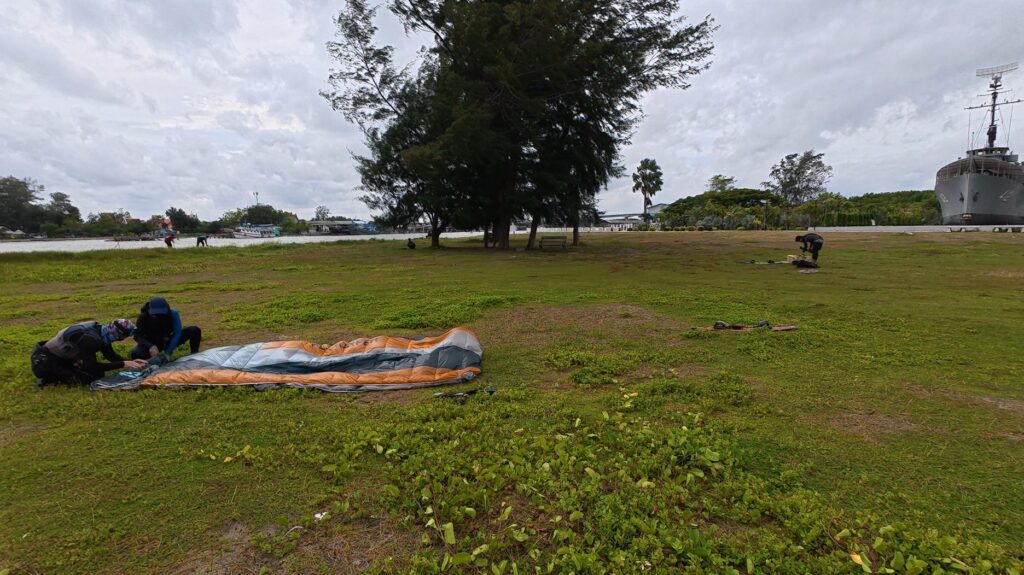
Strong coastal winds bring kite surfers onto the Gulf of Thailand at Pak Nam Prasae.
And Then, a Warship
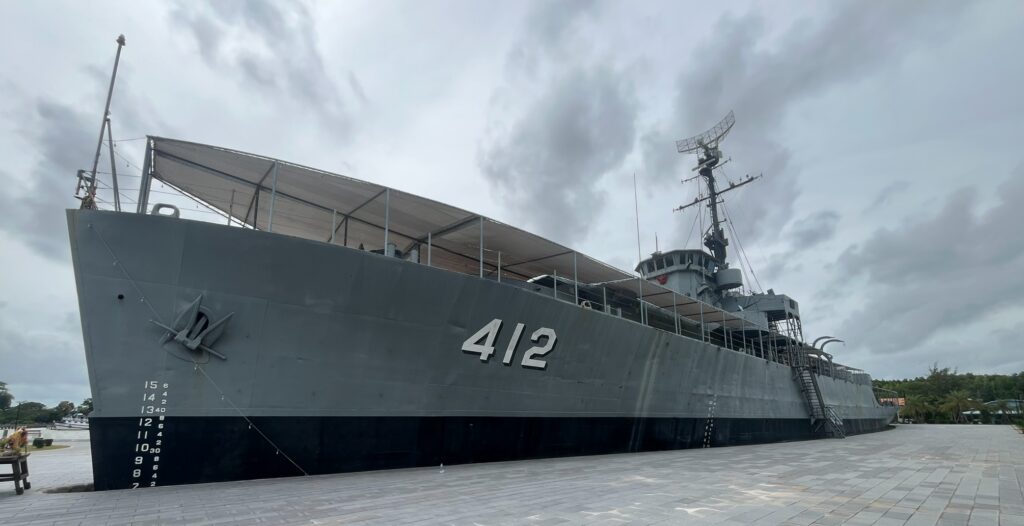
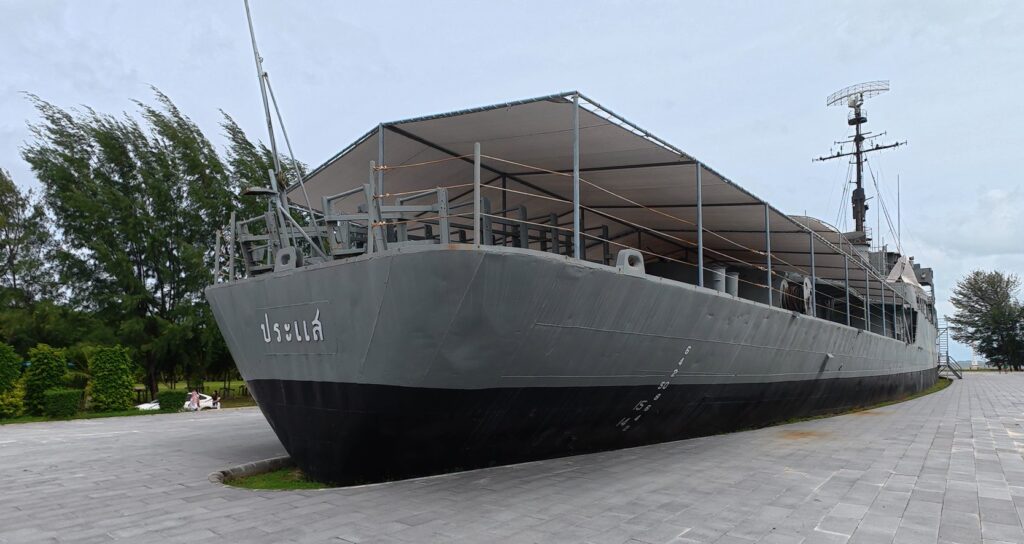
Leaving the lighthouse behind, I turned back toward the shore and finally came face to face with the reason I had ridden here. Rising above the coastal park was HTMS Prasae, hull number 412, preserved beside the river after decades of service with the Royal Thai Navy.
From below, the ship felt much larger than I had expected. Her grey hull, high bow, guns, and weathered steel stood in sharp contrast to the fishermen, kite surfers, and quiet coastal life surrounding her. At first, I thought I was simply looking at an old Thai warship.
But HTMS Prasae was not originally a Thai ship. Before carrying the number 412 and the name Prasae, she had crossed oceans under different flags and lived through some of the defining conflicts of the twentieth century.
Her first name was USS Gallup (PF-47).
And that was where the real story began.
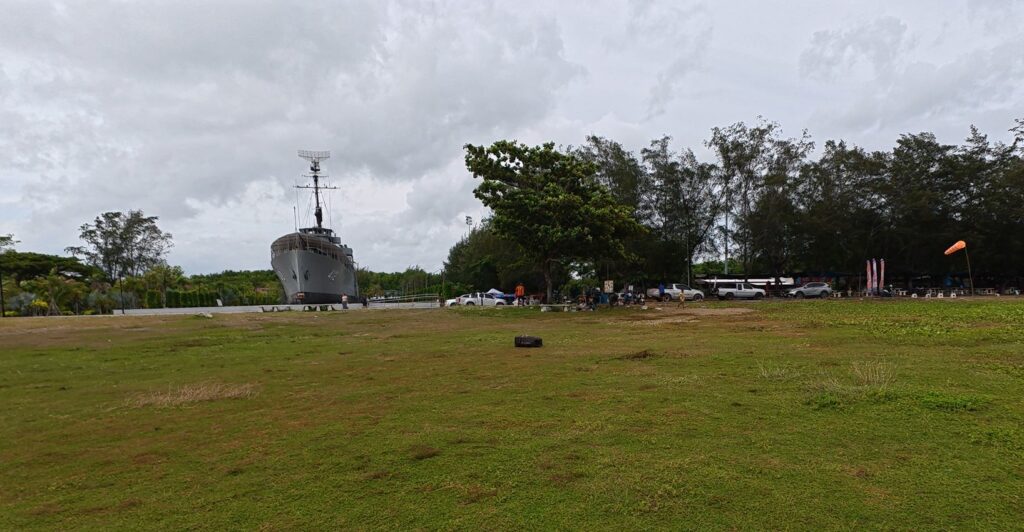
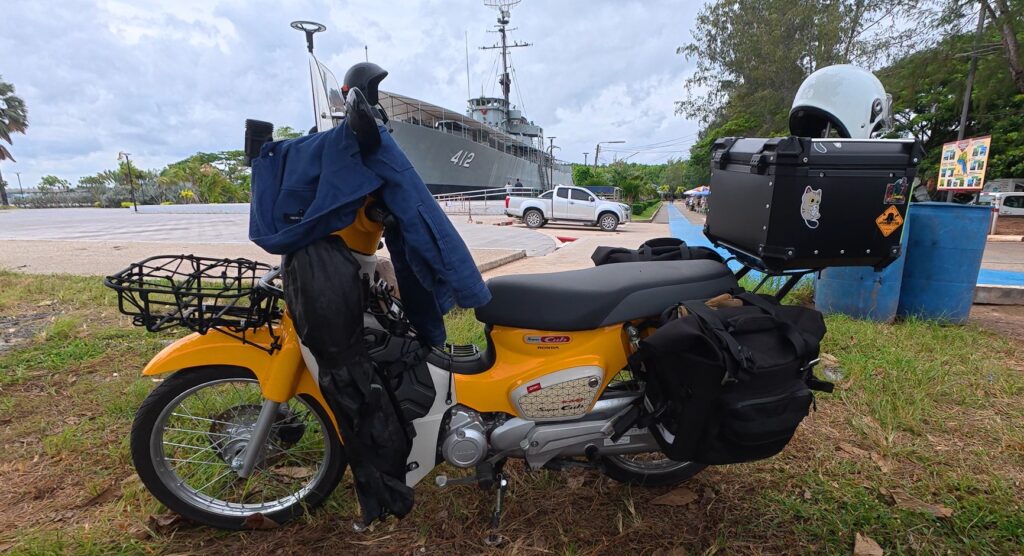
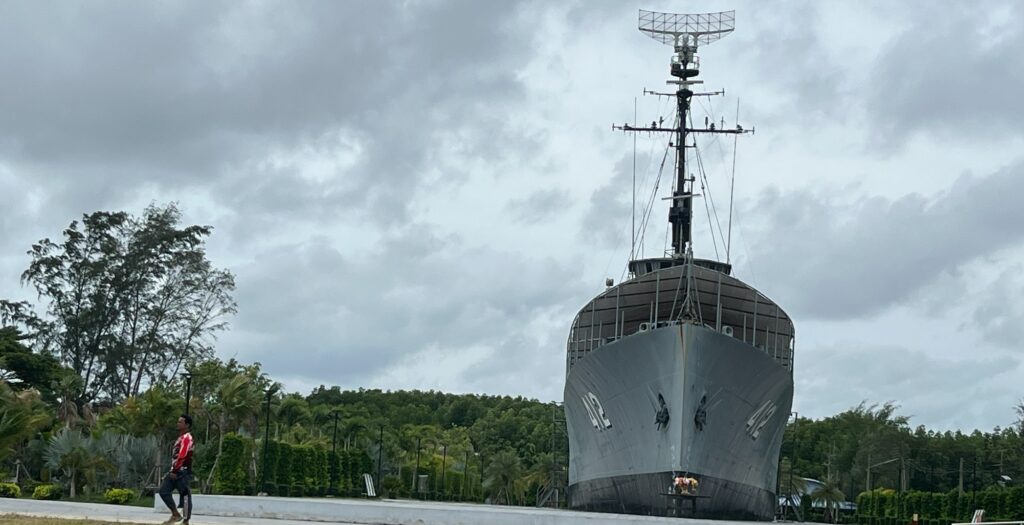
The first approach to HTMS Prasae 412, an imposing grey warship resting beside the peaceful coast of Pak Nam Prasae.
Won Cub Life explores Pak Nam Prasae and HTMS Prasae 412—from the peaceful Gulf of Thailand to the remarkable journey of a warship that once served as USS Gallup.
Walking Through a Ship That Served Three Navies
I climbed aboard and began exploring the old warship. The guns, bridge, steering position, and weathered steel structures were still there, silent reminders of the sailors who once worked and fought aboard her. Standing behind the old weapons and looking out toward the Gulf of Thailand, it was difficult to imagine how far this ship had traveled before finally coming to rest here.
The story began in the United States. Commissioned in 1944 as USS Gallup (PF-47), she served in the Pacific during World War II on patrol, escort, and support duties. Then, near the end of the war, her journey took an extraordinary turn. The United States and the Soviet Union were still allies against Japan, and under the secret Project Hula, American naval vessels were transferred to Soviet forces in preparation for operations against Japan. Gallup was transferred in August 1945 and served with the Soviet Navy as EK-19.
After World War II, yesterday’s allies became Cold War rivals. The Soviet Union returned the ship to the United States in 1949, but Gallup’s fighting days were not yet over. Recommissioned in 1950, she was sent to Korean waters, where she performed patrol and escort duties and supported naval operations along the coast, including action around Wonsan. USS Gallup received three battle stars for her Korean War service.
Standing on her deck more than seven decades later, the contrast was striking. The guns were silent, the bridge was empty, and instead of wartime seas there was only the sound of the wind coming in from the Gulf of Thailand.
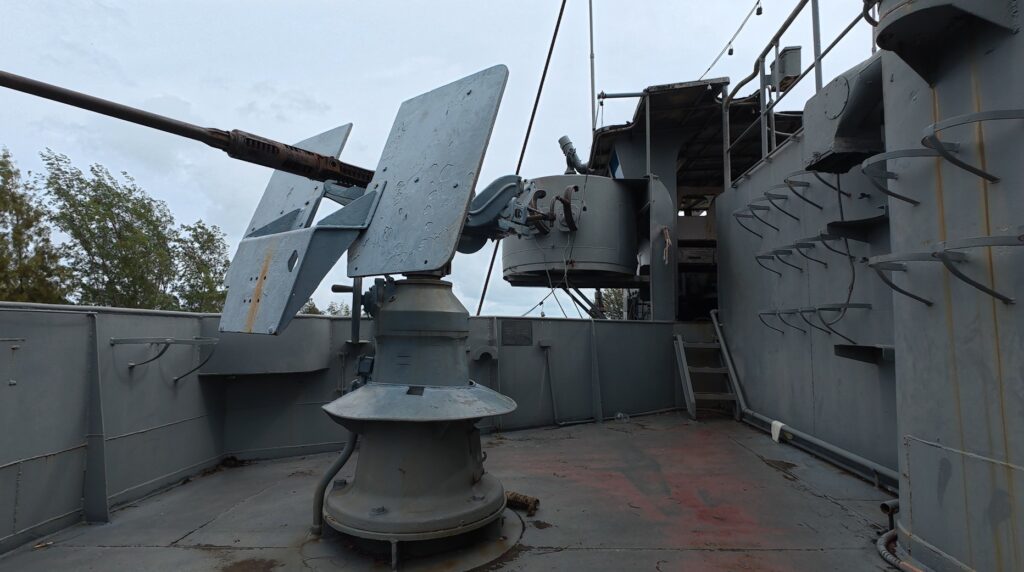
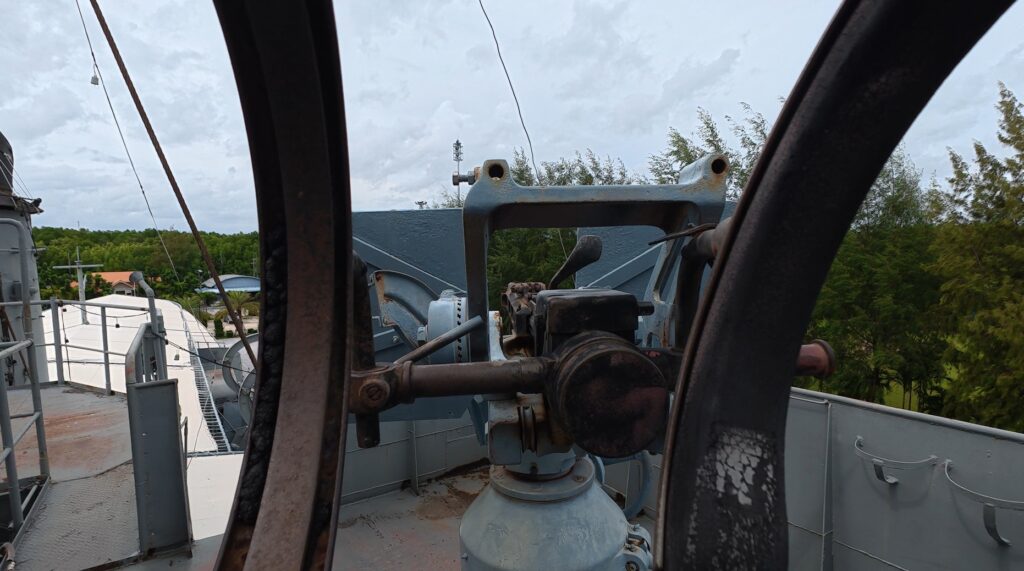
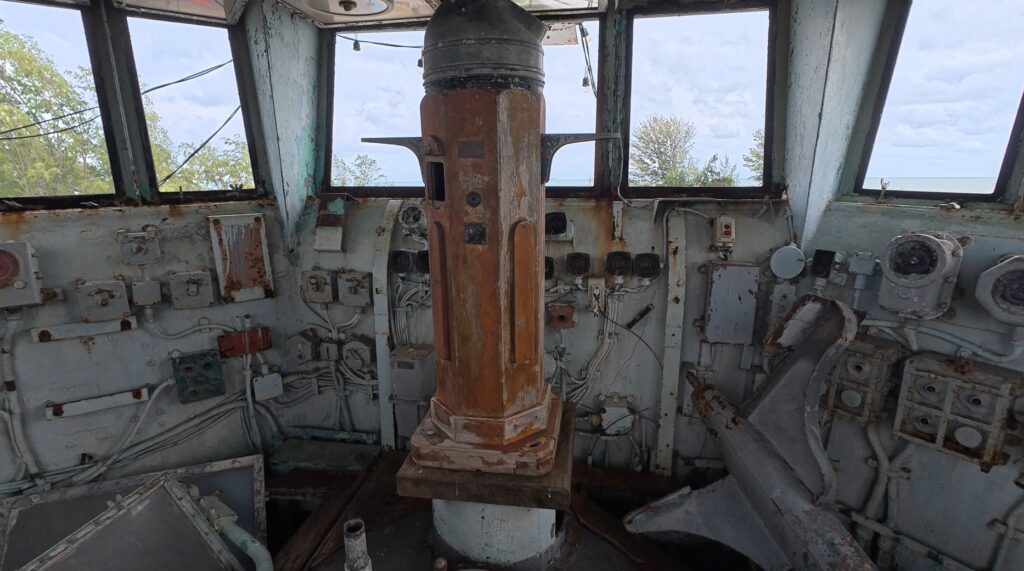
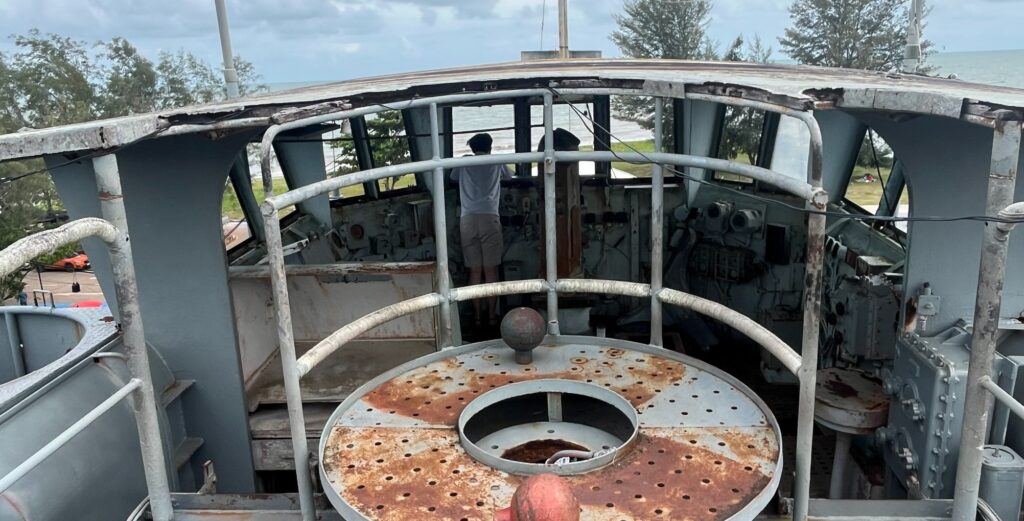
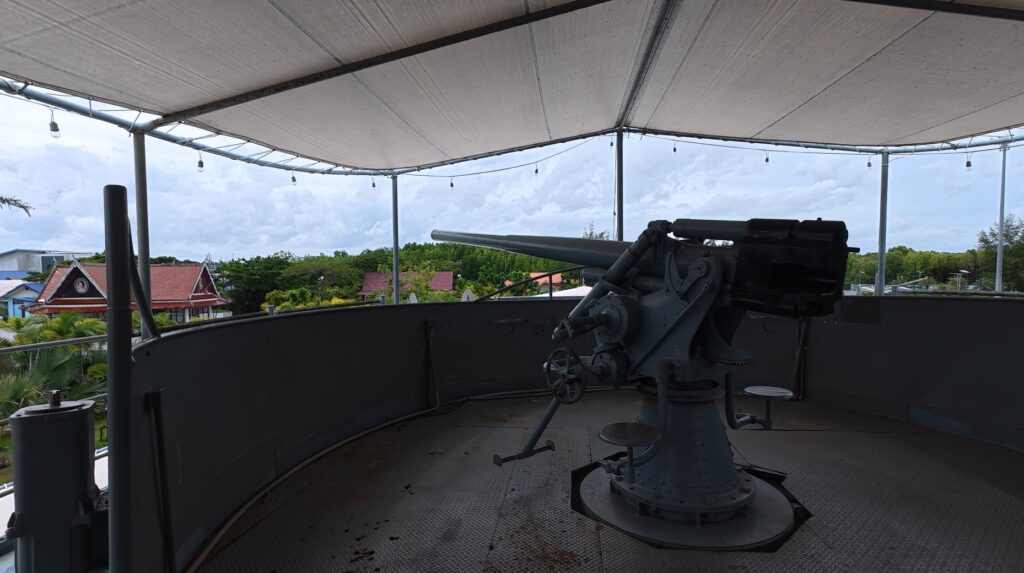
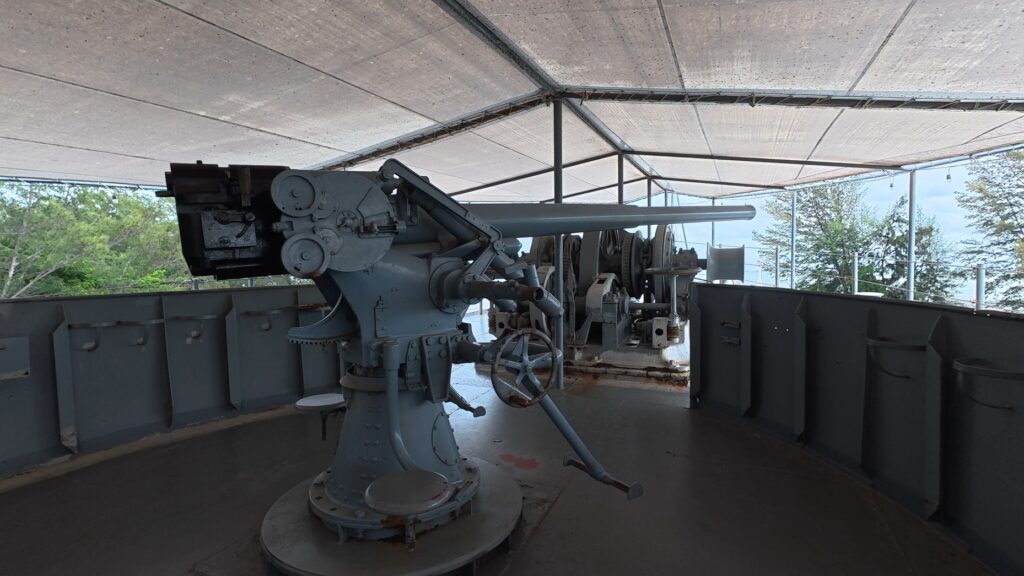
Exploring the weapons, bridge, and working areas aboard HTMS Prasae 412.
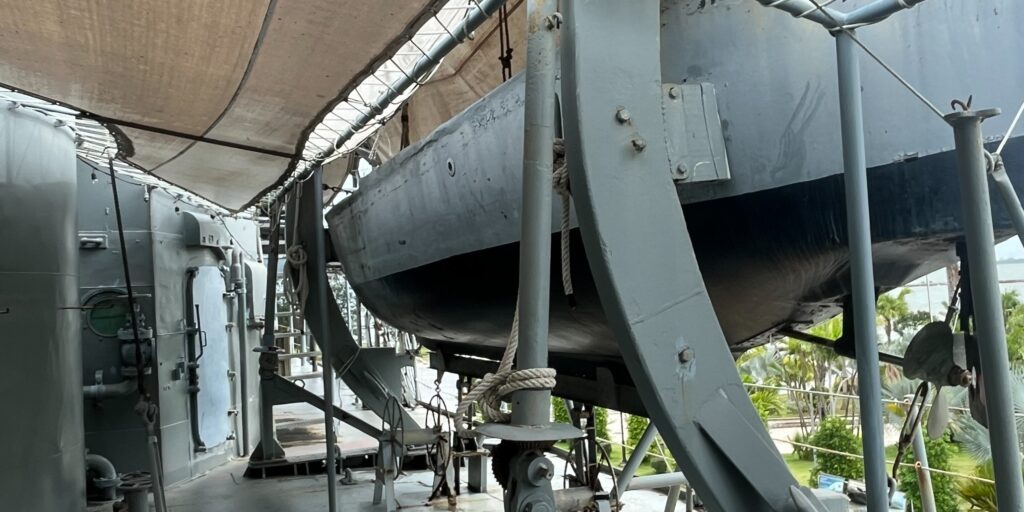
USS Gallup (PF-47) — Official Service History
The official U.S. record traces USS Gallup from World War II service through her transfer to the Soviet Navy as EK-19, return to the United States, Korean War service, and transfer to Thailand in 1951 as Prasae.
The Other HTMS Prasae — Lost on the Korean Coast
After coming down from the deck, I walked around the bow and along the massive grey hull. Near the ship, I found a plaque describing her long history. By then, the journey from USS Gallup to Soviet EK-19 and back to the United States was already remarkable enough. But there was another part of the story that caught my attention, especially as a Korean visiting this ship in Thailand.
The vessel standing before me was not the first Thai warship to carry the name HTMS Prasae. An earlier Prasae had also sailed to Korea as part of Thailand’s contribution to the United Nations forces during the Korean War. On January 7, 1951, while operating off Korea’s east coast, the ship encountered a severe snowstorm. Visibility deteriorated, her radar was not functioning properly, and she ran hard aground near the coast.
Attempts were made to pull the stranded ship back into deeper water, but the weather and heavy seas made recovery impossible. The crew was evacuated, and the first HTMS Prasae had to be abandoned. On January 14, UN naval forces destroyed the stranded vessel with gunfire to prevent it from falling into enemy hands.
The first Prasae ended her journey on the Korean coast. But only months later, the name would return to sea.
On October 29, 1951, the United States transferred USS Gallup (PF-47) to the Royal Thai Navy. Thailand gave the ship the name HTMS Prasae, continuing the name of the vessel lost in Korea. USS Gallup had become HTMS Prasae 412—the ship now standing quietly before me in Rayong.
For me, this unexpected connection made the visit much more personal. I had ridden to a small coastal community in Thailand to see an old warship, only to discover that part of her story led back to the shores of my own country.
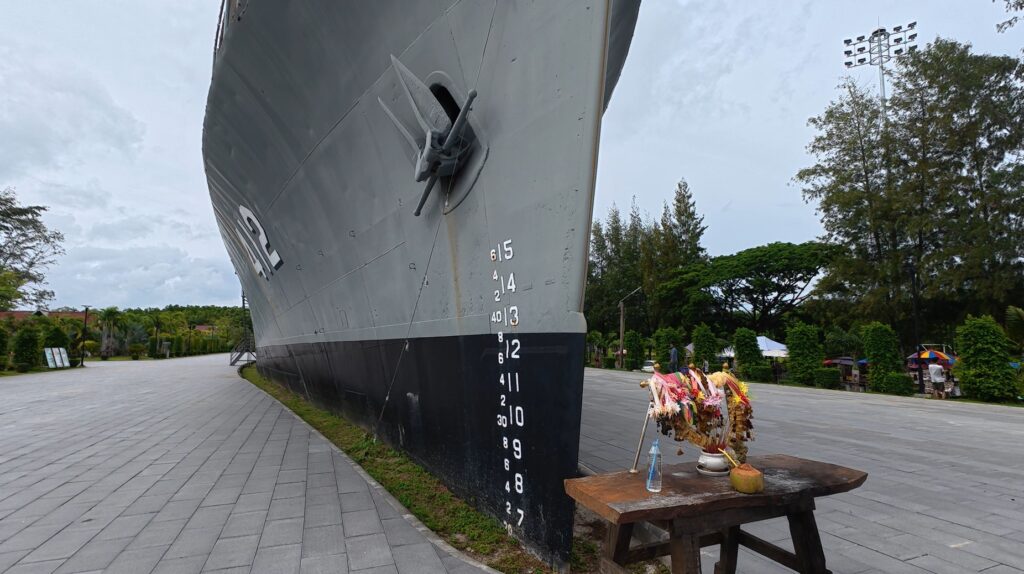
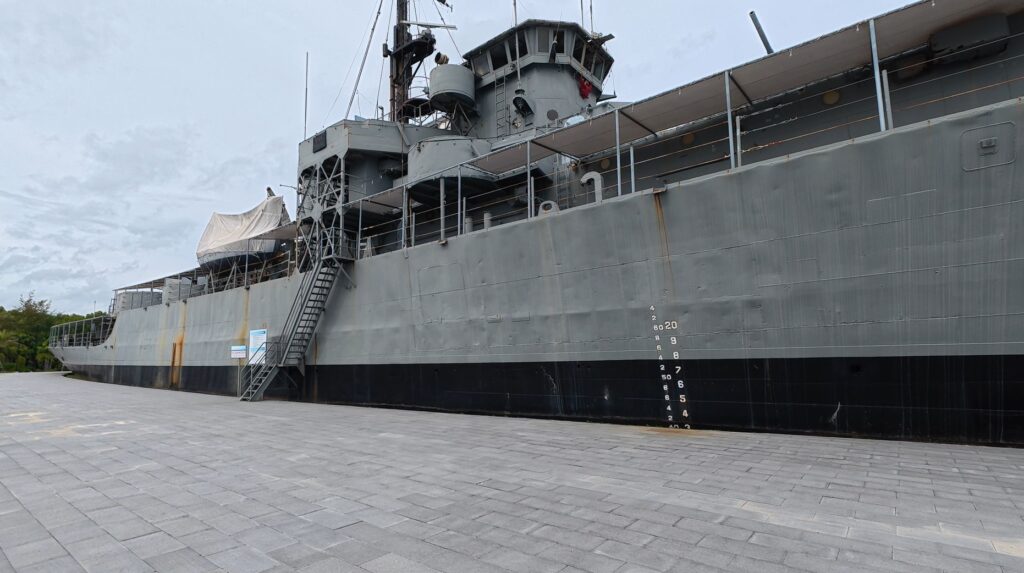
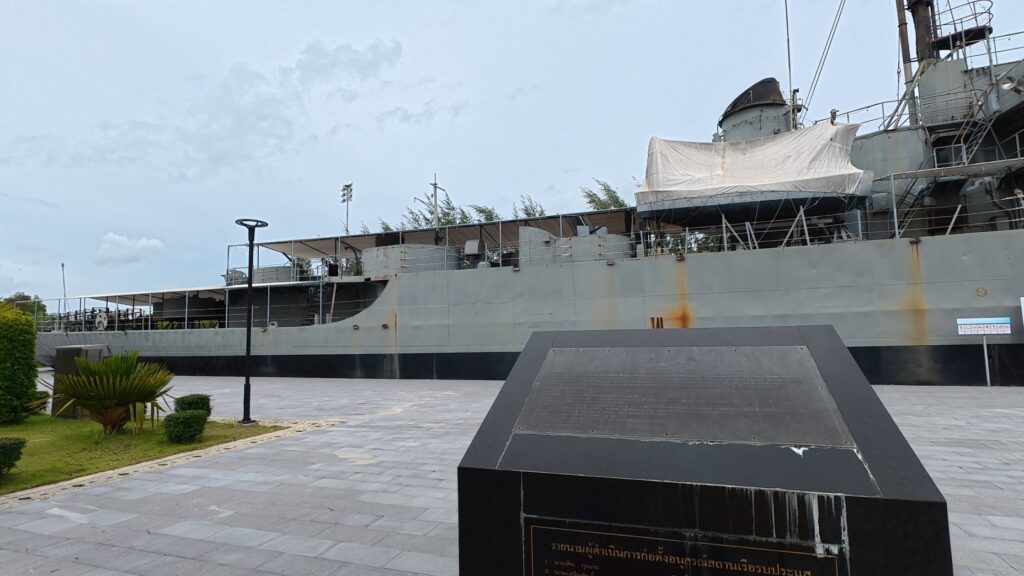
Walking around the preserved warship reveals the memorial area and historical displays surrounding HTMS Prasae 412.
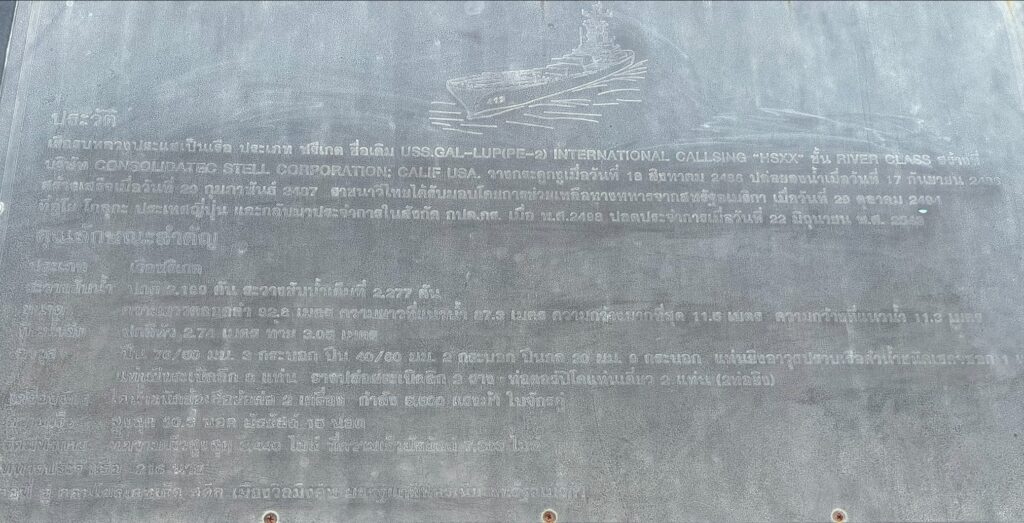
A Timeline of USS Gallup and HTMS Prasae
1943 — Launched on September 17 at Consolidated Steel Corporation in Los Angeles, California.
1944 — Commissioned as USS Gallup (PF-47) on February 29. She entered the Pacific War, serving on patrol, escort, and bombardment missions around New Caledonia, New Guinea, Biak Island, and the Philippines.
1944 — Took part in operations connected with General Douglas MacArthur’s return to the Philippines, including duties around Leyte Gulf.
1945 — After patrol duty in the North Pacific, Gallup was decommissioned at Cold Bay, Alaska, on August 26.
1945 — Transferred to the Soviet Union under Lend-Lease on August 27 and commissioned into the Soviet Navy as EK-19.
1945–1949 — Served with the Soviet Navy in the Far East.
1949 — Returned by the Soviet Union to the United States at Yokosuka, Japan, on November 14.
1950 — Recommissioned into the U.S. Navy on October 18 as the Korean War expanded.
1950 — Departed for Korea in November and served at Hungnam, controlling the harbor entrance, escorting vessels, and supporting search-and-rescue operations during the period of the Hungnam evacuation.
1950 — Moved to Busan in December and conducted antisubmarine patrols around the harbor approaches.
1951 — Returned to Korean waters for patrol, escort, diversionary operations, and naval gunfire support.
1951 — Participated in the bombardment of Wonsan from February 23 to 25 and later served in harbor-defense duties.
1951 — On October 29, USS Gallup was decommissioned at Yokosuka and transferred to Thailand under the Mutual Defense Assistance Program.
1951 — Entered service with the Royal Thai Navy as HTMS Prasae.
1951–2000 — Served the Royal Thai Navy for nearly five decades.
2000 — Decommissioned from active Thai naval service.
2003 — Moved to Pak Nam Prasae, Rayong, to become a permanent memorial ship.
Today, HTMS Prasae 412 stands beside the Prasae River as a reminder of a remarkable journey through World War II, Soviet service, the Korean War, and modern Thai naval history.
The Other HTMS Prasae — Lost on the Korean Coast
After coming down from the deck, I walked around the bow and along the massive grey hull. Near the ship, I found a plaque describing her long history. By then, the journey from USS Gallup to Soviet EK-19 and back to the United States was already remarkable enough. But there was another part of the story that caught my attention, especially as a Korean visiting this ship in Thailand.
The vessel standing before me was not the first Thai warship to carry the name HTMS Prasae. An earlier Prasae was already serving with the Royal Thai Navy and had been sent to Korea as part of Thailand’s contribution to the United Nations forces.
At the beginning of 1951, two completely different ships were therefore connected to the same war. The first HTMS Prasae was serving under the Thai flag, while USS Gallup (PF-47) was still serving under the American flag. They were separate ships, belonging to separate navies, but both were operating in the Korean War.
On January 7, 1951, the first HTMS Prasae encountered a severe snowstorm while operating off Korea’s east coast. Visibility deteriorated, her radar was not functioning properly, and she ran hard aground near the coast.
Attempts were made to pull the stranded ship back into deeper water, but the weather and heavy seas made recovery impossible. The crew was evacuated, and the first HTMS Prasae had to be abandoned. On January 14, UN naval forces destroyed the stranded vessel with gunfire to prevent it from falling into enemy hands.
The first Prasae ended her journey on the Korean coast. But only months later, the name would return to sea.
On October 29, 1951, the United States transferred USS Gallup (PF-47) to the Royal Thai Navy. Thailand gave the ship the name HTMS Prasae, continuing the name of the vessel lost in Korea.
In other words, the ship now standing in Rayong was not simply given a new Thai name. A warship that had itself served in Korea inherited the name of another Thai warship that had been lost there earlier that same year.
USS Gallup had become HTMS Prasae 412.
For me, this unexpected connection made the visit much more personal. I had ridden to a small coastal community in Thailand to see an old warship, only to discover that part of her story led back to the shores of my own country.
When the Warship Finally Came Home
I continued toward the stern for one last look at HTMS Prasae. After serving under different flags and crossing seas shaped by World War II, the early Cold War, and the Korean War, the ship eventually spent decades with the Royal Thai Navy. She was finally decommissioned in 2000, ending a remarkable naval career that had begun in the United States more than half a century earlier.
Today, HTMS Prasae no longer crosses oceans. She rests beside the river whose name she carries, preserved as a memorial in Pak Nam Prasae. Her engines will never start again and her guns will never fire again, but the old ship still has stories to tell to anyone willing to stop, walk around her, and look a little deeper.
Back to the Present
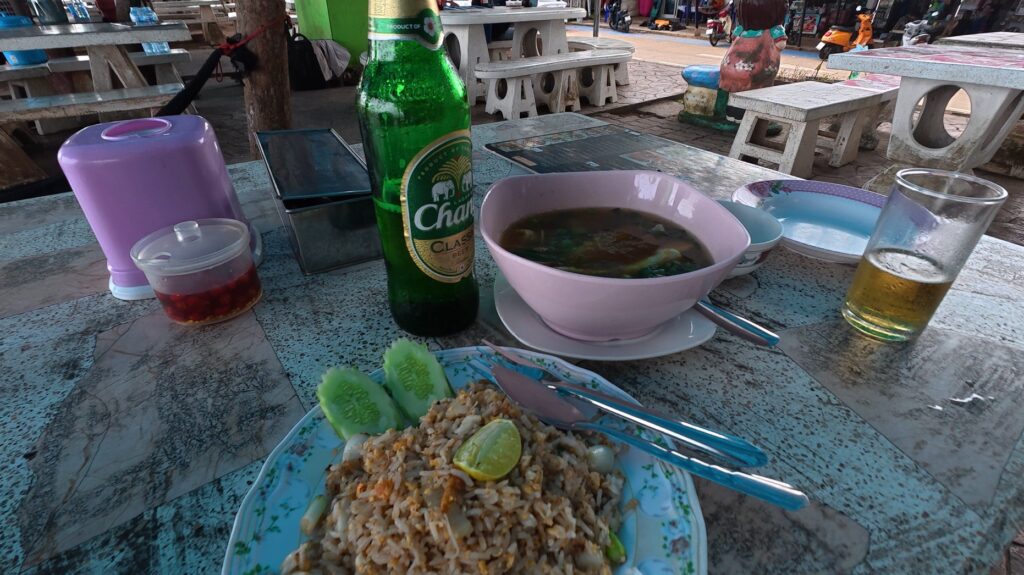
After spending so much time walking through the past, it was time to return to the present. I found a small restaurant nearby, ordered a simple plate of fried rice, and opened a cold beer. Outside, the coastal wind was still blowing hard, and the kite surfers were still racing across the water.
The contrast seemed like the perfect ending to the day. Once, this ship crossed dangerous seas carrying sailors and guns. Today, fishermen work nearby, families visit the coast, and kite surfers chase the wind across the Gulf of Thailand. The warship has stopped moving, but life around her continues.
I came here expecting to see an old ship. Instead, I found a story connecting World War II, the Soviet Union, the Korean War, Thailand—and even my own country.
Sometimes, a small road on a Honda Cub leads to a much bigger story.
Won Cub Life continues.
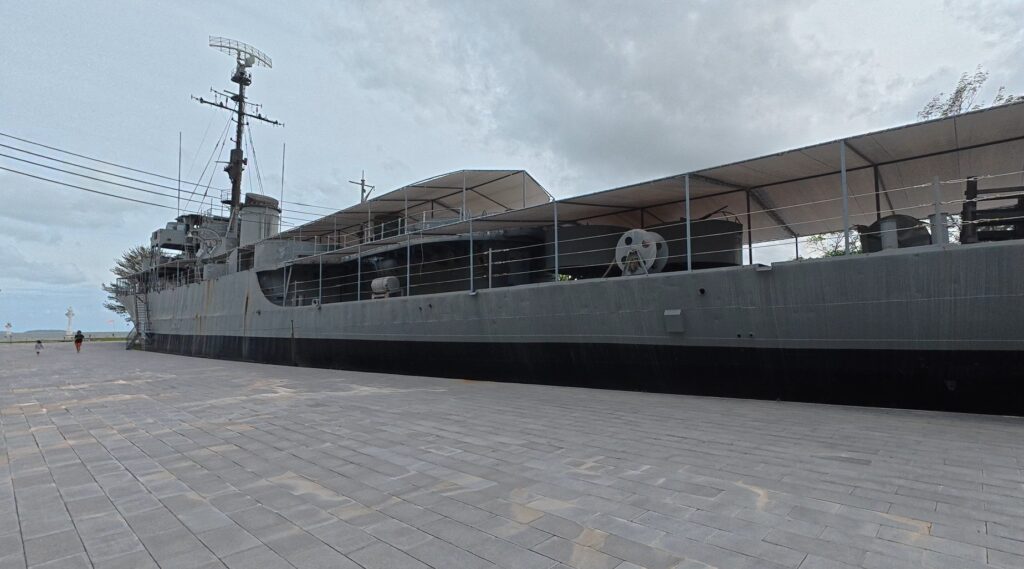
A final walk around the stern of HTMS Prasae, now permanently at rest beside the river whose name she carries.
Location and Visitor Information
Location: HTMS Prasae Memorial, Pak Nam Prasae, Klaeng District, Rayong Province, Thailand.
Admission: The outdoor memorial area is generally free to visit. Access to parts of the ship may depend on local opening conditions.
Best Time to Visit: Morning or late afternoon is most comfortable. The coastal area is exposed to strong sun and wind, while overcast days can make walking around the ship much more pleasant.
Visit Time: Allow around 1–2 hours to explore the memorial, walk around HTMS Prasae, and enjoy the nearby coastline. More time is worthwhile if you also visit the mangrove areas around Pak Nam Prasae.
Footwear: Comfortable shoes with good grip are recommended, especially when climbing stairs and walking on the metal decks of the ship.
Photography: Photography around the memorial and exterior areas is generally suitable for visitors. The bow, hull number 412, preserved weapons, bridge, and views toward the Gulf of Thailand provide particularly interesting viewpoints.
Weather: Pak Nam Prasae can be windy, especially along the open coast. Take extra care on exposed decks and stairs during rain or strong winds.
Nearby: The surrounding area includes the Prasae River estuary, mangrove ecosystems, fishing communities, the Gulf of Thailand coastline, and the well-known Tung Prong Thong mangrove area.
Pak Nam Prasae Municipality
Explore Pak Nam Prasae and its local attractions
The Pak Nam Prasae Subdistrict Municipality provides information about local attractions including the HTMS Prasae Memorial, Tung Prong Thong, the riverside community, and other places around the Prasae estuary.
Google Maps:
HTMS Prasae Memorial, Pak Nam Prasae, Rayong