Arriving at Wat Khao Bang Sai
My yellow Honda Super Cub brought me to Wat Khao Bang Sai, just outside the centre of Chonburi. Beyond the entrance, a golden chedi rose above the trees. I had come to see the Buddha’s footprints, but the number of buildings around me made me curious about what else this temple might hold.
I parked the Cub and began to walk. Rather than hurry toward the hill, I followed the paths through the grounds, letting each corner introduce the next part of the story.
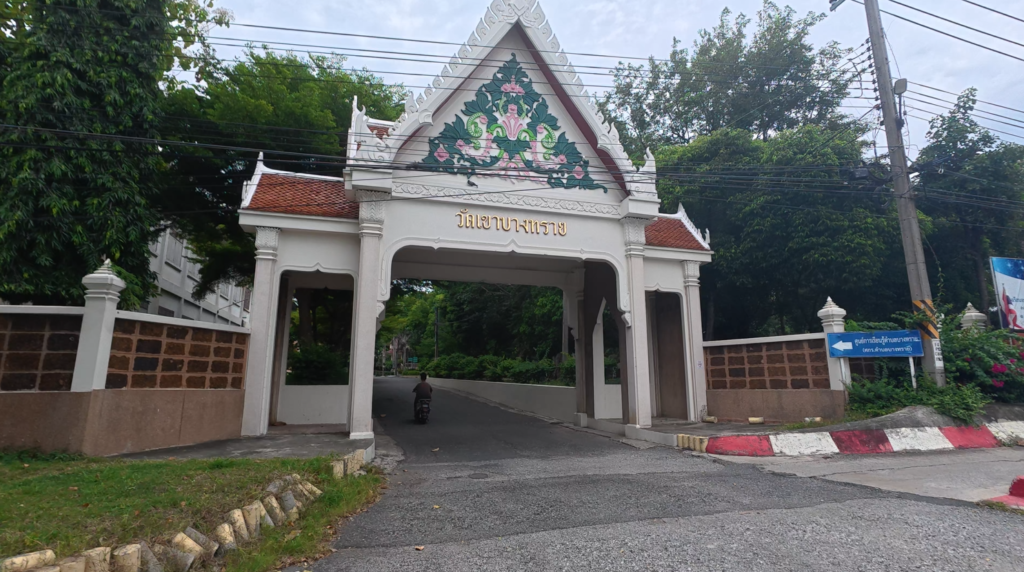
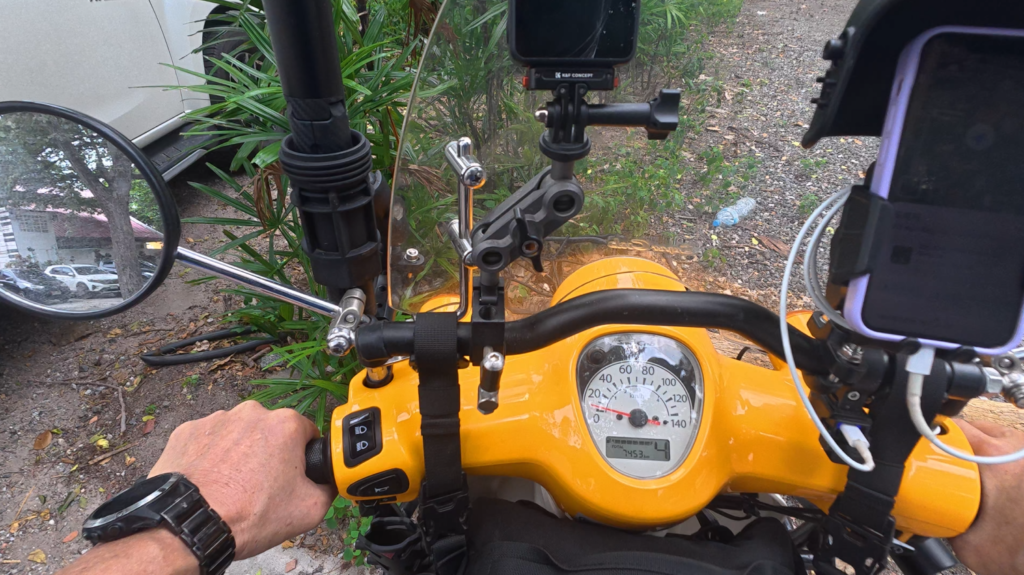
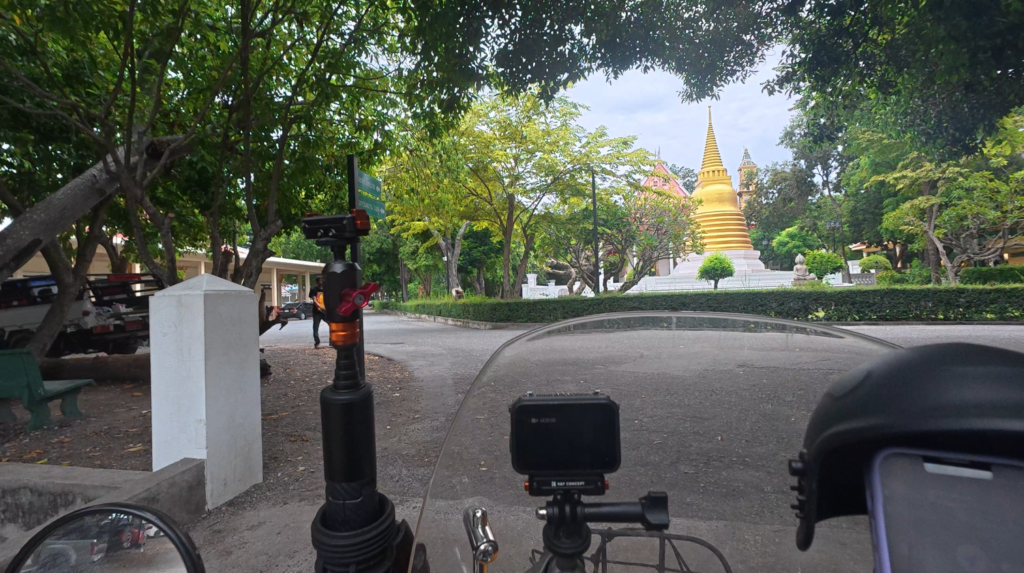
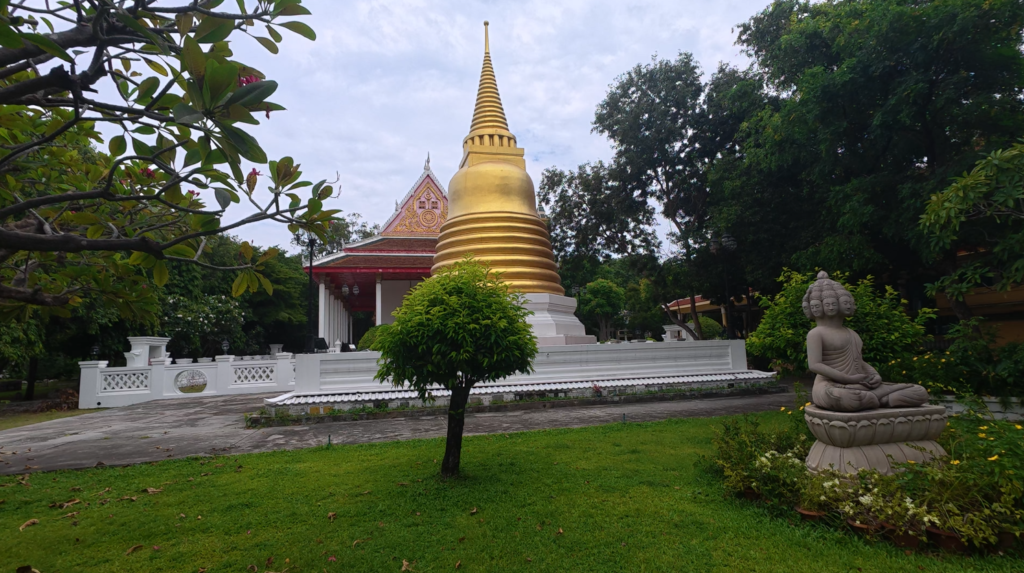
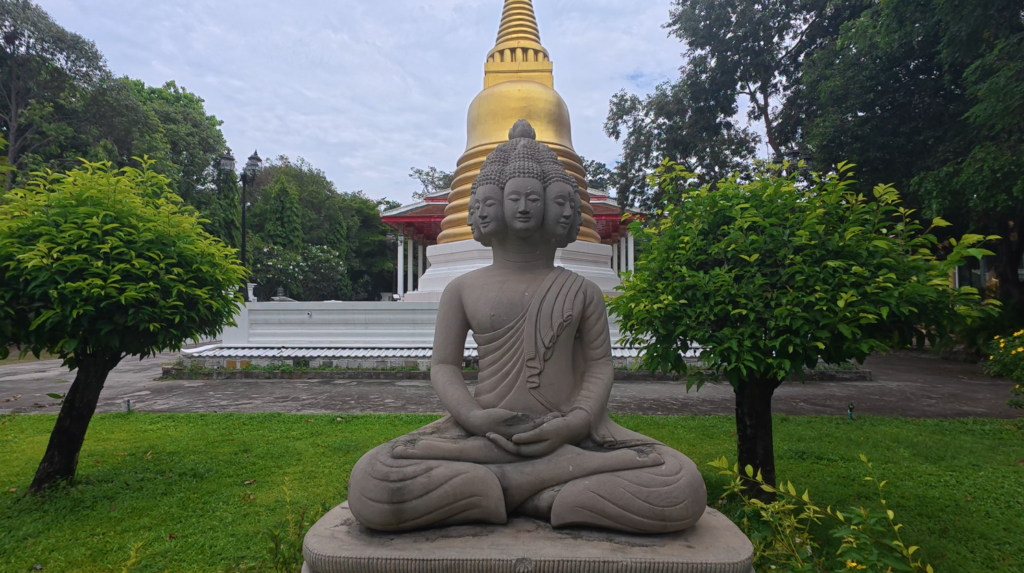
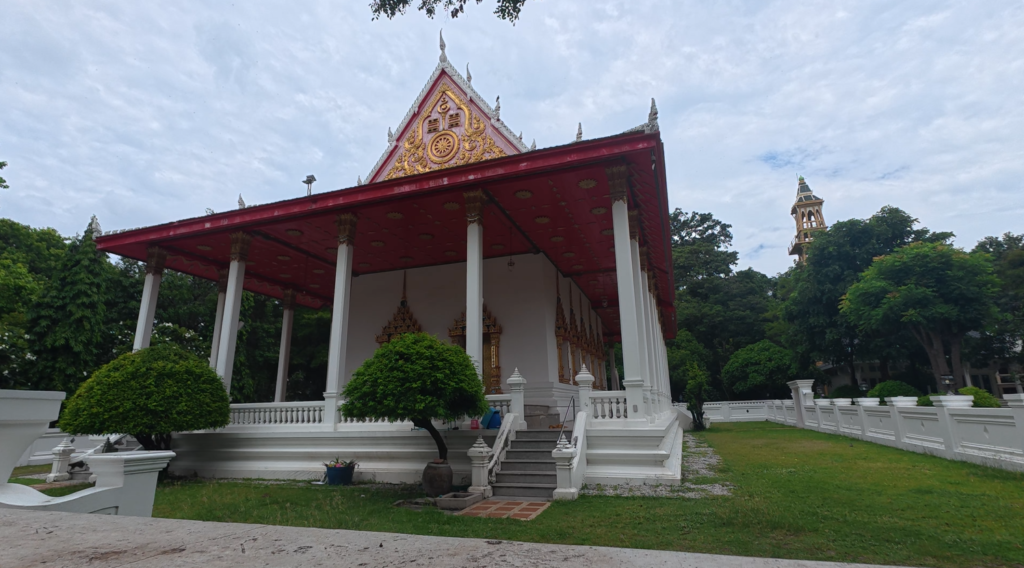
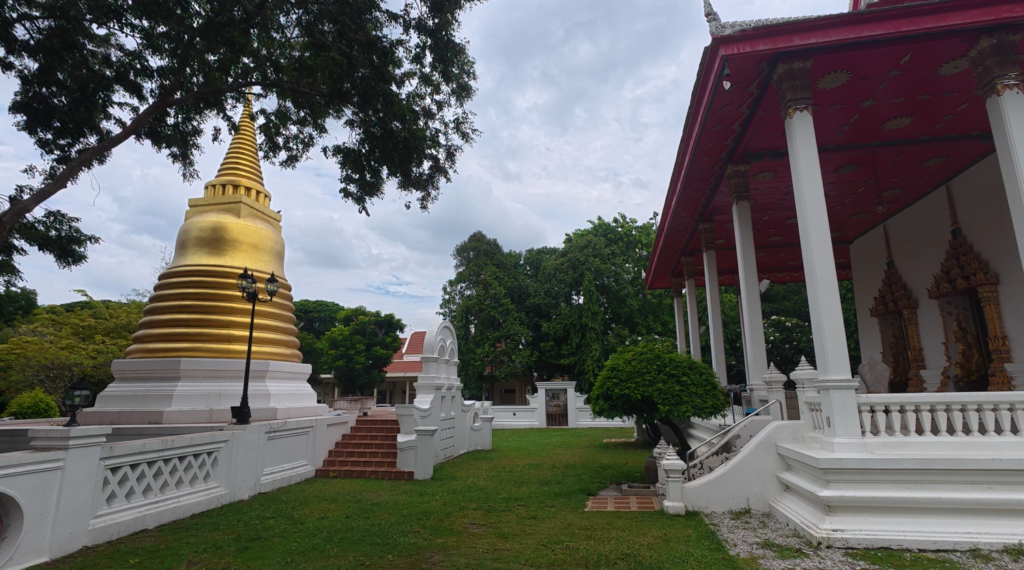
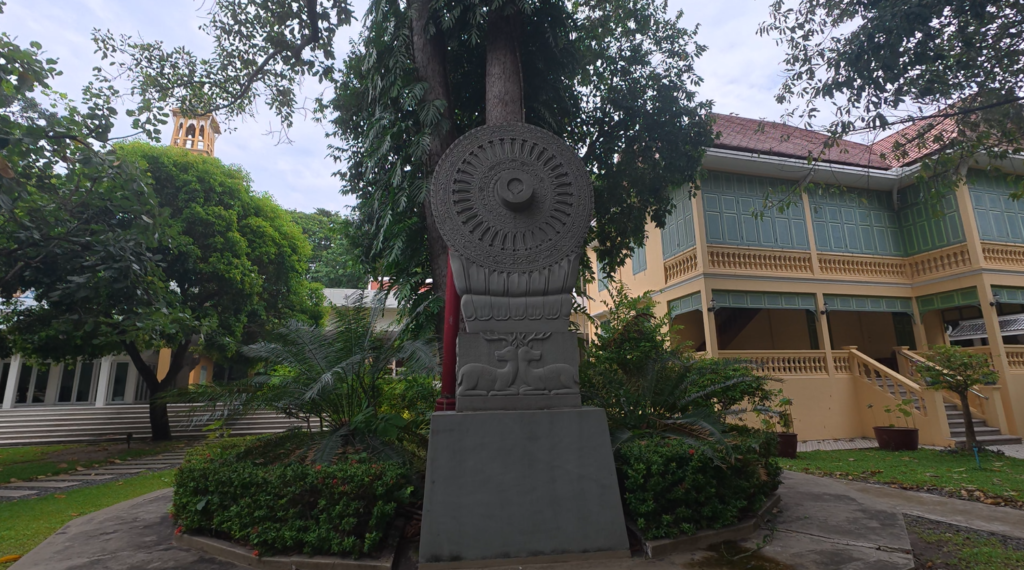
My first walk through Wat Khao Bang Sai—from the entrance and my yellow Cub to the golden chedi, Buddha images, and the Dharma wheel beside the path.
A Dharma Wheel Beside the Path
The Dharma wheel represents the Buddha’s teaching set in motion. A wheel moves forward, and so can a teaching as people learn and practice it. Standing before the stone wheel, I am reminded that this temple is more than a place to admire beautiful buildings; it is also a place to reflect on the path the Buddha taught.
The stone wheel and two deer caught my attention as I moved away from the chedi. They recall the Buddha’s first teaching at the Deer Park in Sarnath. It was a small monument, but it opened a much larger story along my walk.
Behind it stood a two-storey building with a different architectural character. Nearby, a figure appeared among the plants, followed by Buddha images sheltered beneath a roof. I walked around them slowly, noticing how the pale stone and gold surfaces changed in the light.
At first, the many buildings had made the temple seem difficult to understand. On foot, they began to feel less like a collection of separate sights and more like places I could discover one at a time.
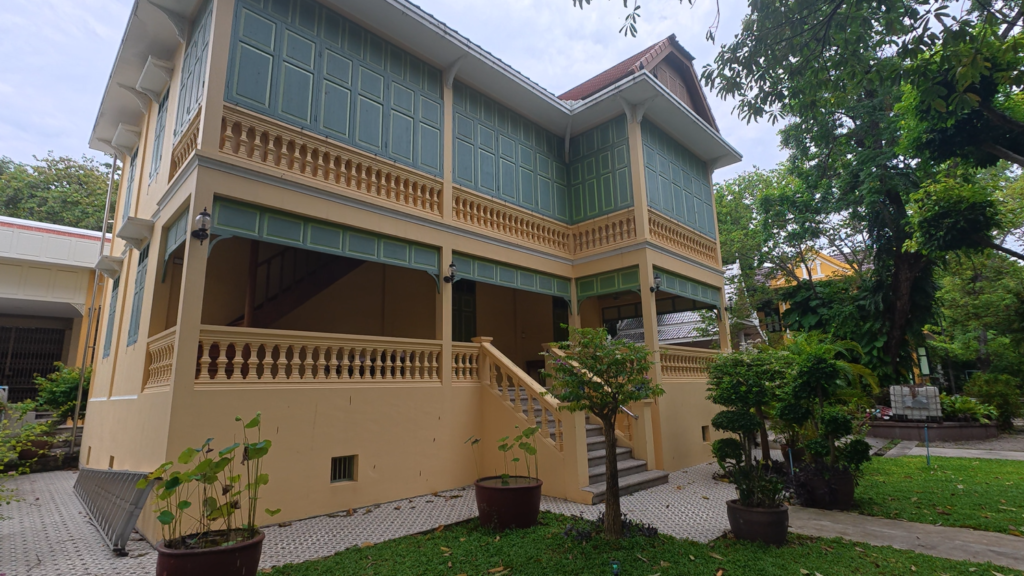
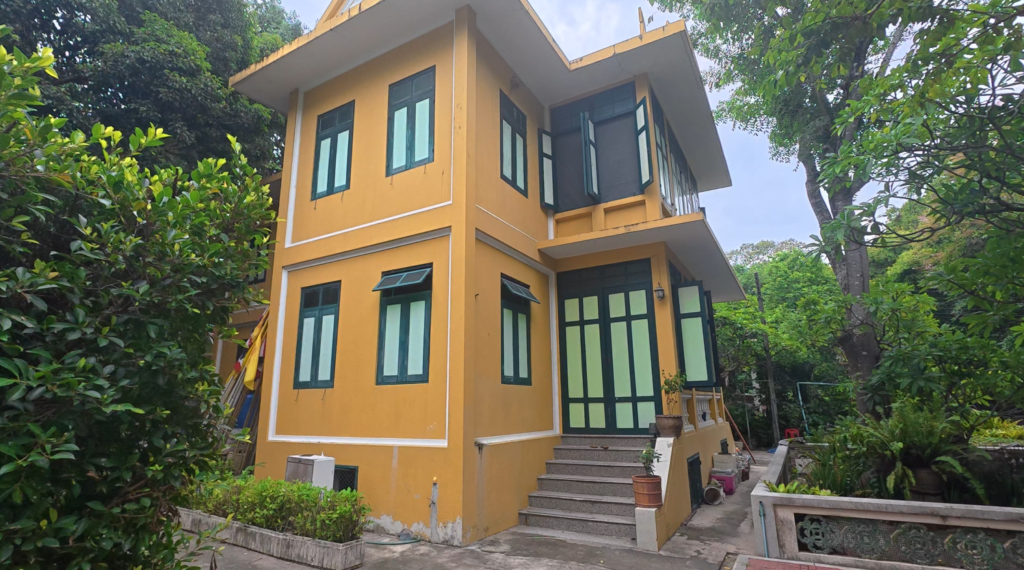
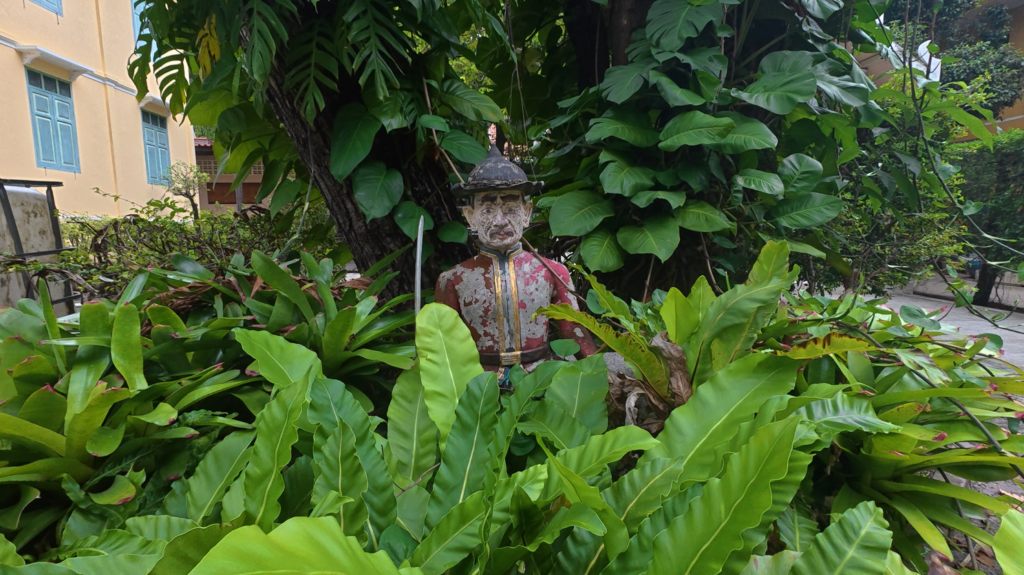
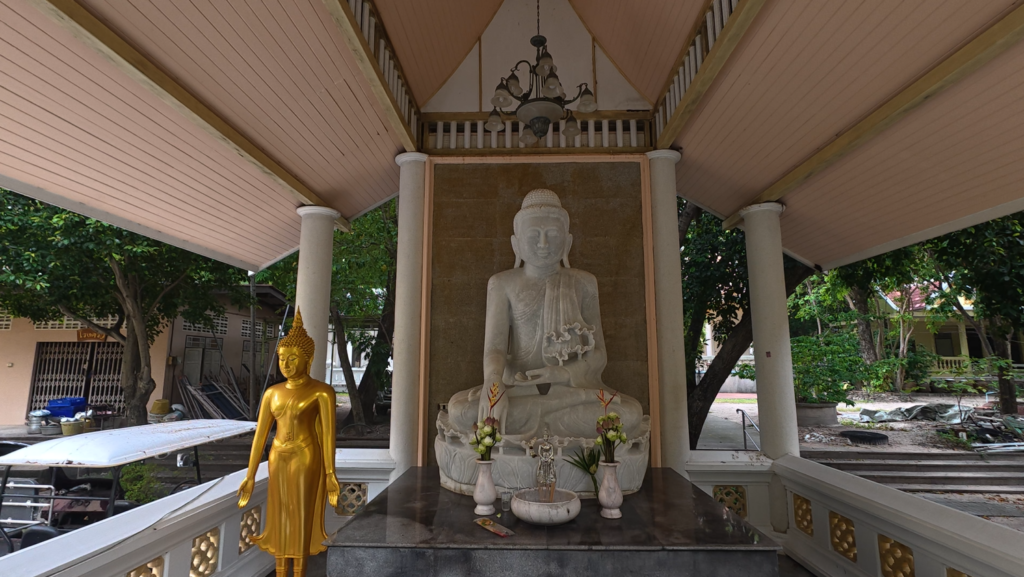
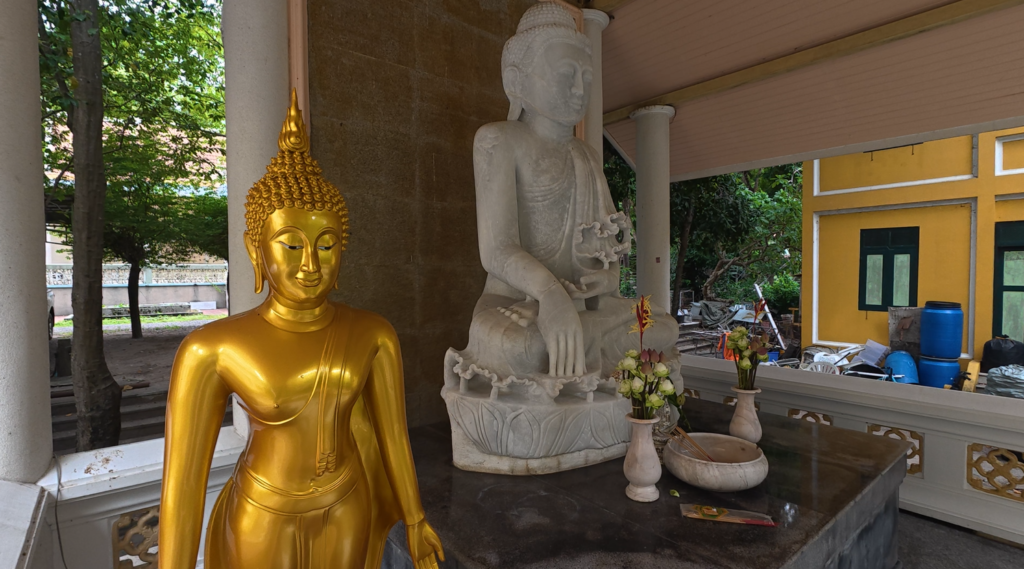
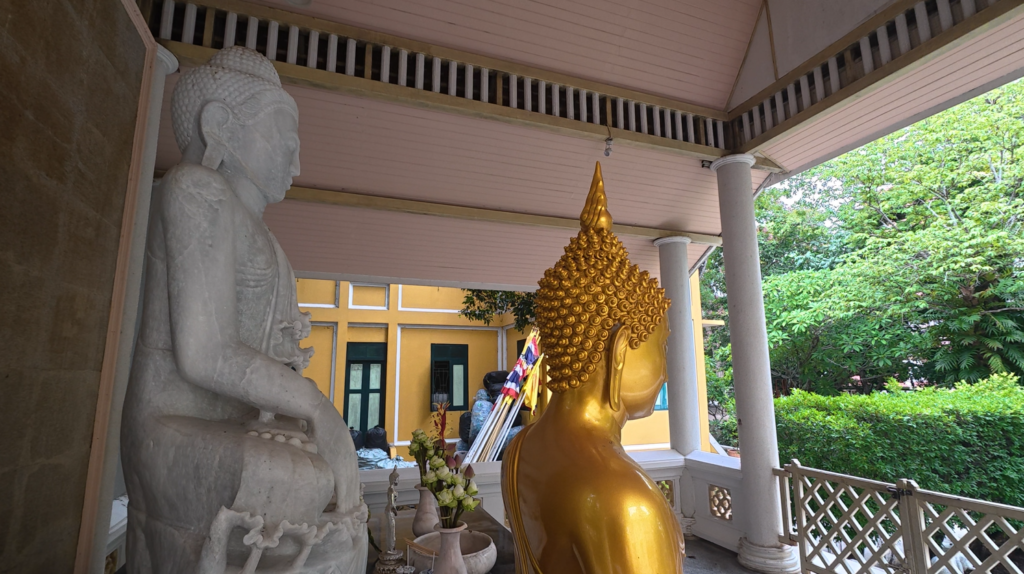
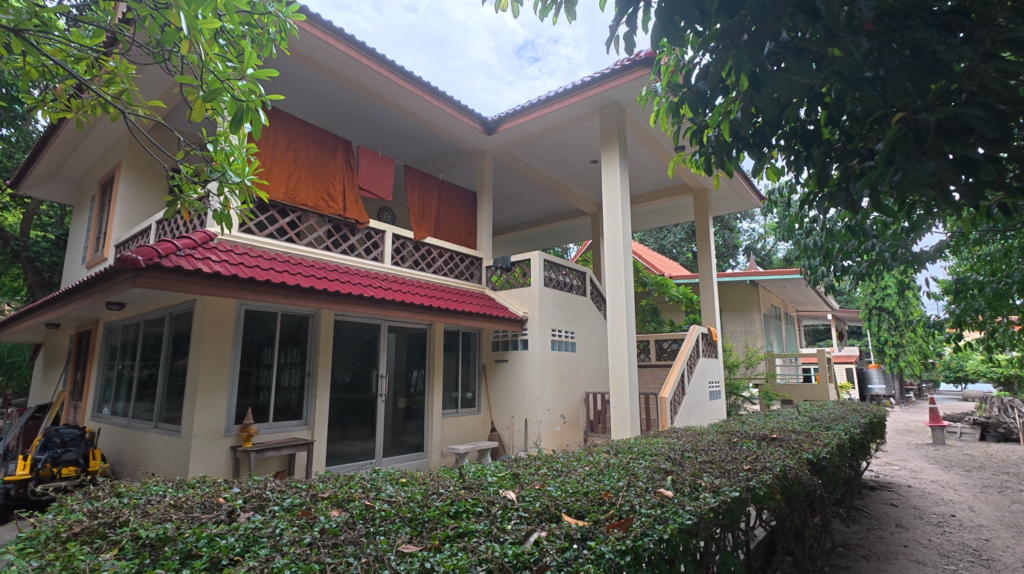
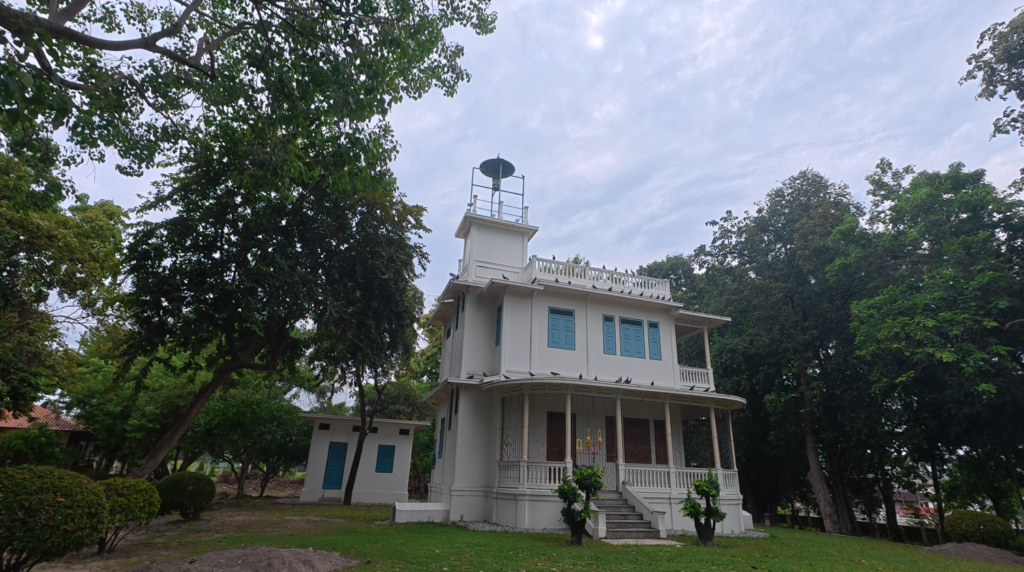
Buddha images, garden details, and buildings encountered while walking through the lower temple grounds.
A Temple Rebuilt Across Generations
Wat Khao Bang Sai did not acquire all its buildings in a single period. According to the Chonburi Provincial Office of Buddhism, local tradition connects the temple’s origins with the Ayutthaya era. After a period of decline, it was re-established in 1847 during the reign of King Rama III.
The same account records further restoration under King Rama V, including the Buddha’s footprint mondop, chedi, vihara, meditation buildings, and a water source. As I walked past halls that looked quite different from one another, this history began to make sense. Wat Khao Bang Sai was not built as one finished scene. It has been cared for, changed, and renewed across generations.
A Memorial and a Temple Under Repair
In a quieter corner, a stone marker led me toward a hall with Chinese inscriptions and a memorial space. I had not expected to encounter this part of the temple’s story. The writing and offerings suggested a place where people have chosen to remember someone, although I would need more evidence to tell the full story of the person commemorated here.
Nearby, I passed other buildings and a structure surrounded by scaffolding. After eighteen years working on construction projects in Thailand, I found myself looking at the repair work as closely as the finished architecture. A temple needs people who care for its buildings, generation after generation. The scaffolding reminded me that Wat Khao Bang Sai is still being maintained today.
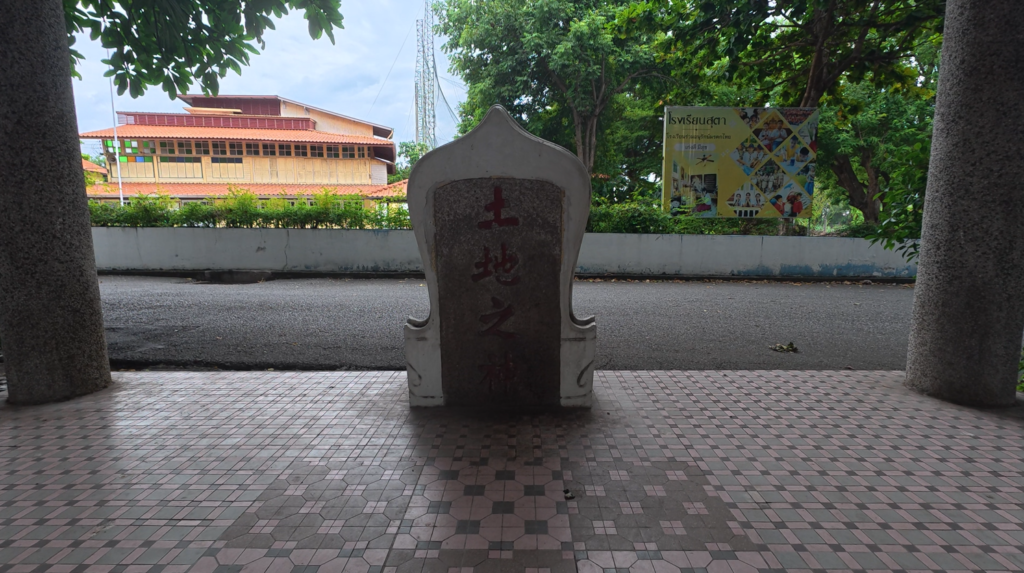
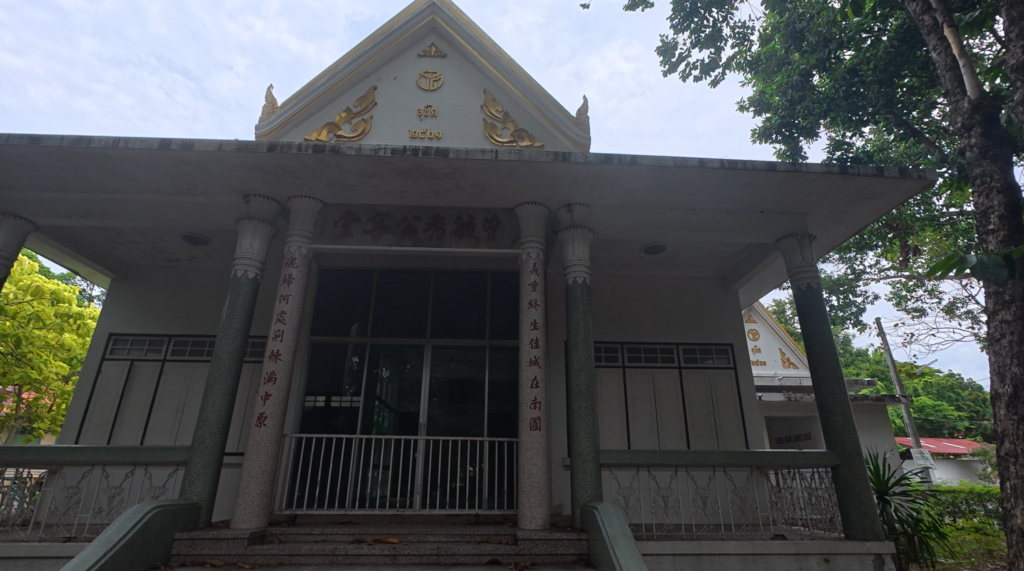
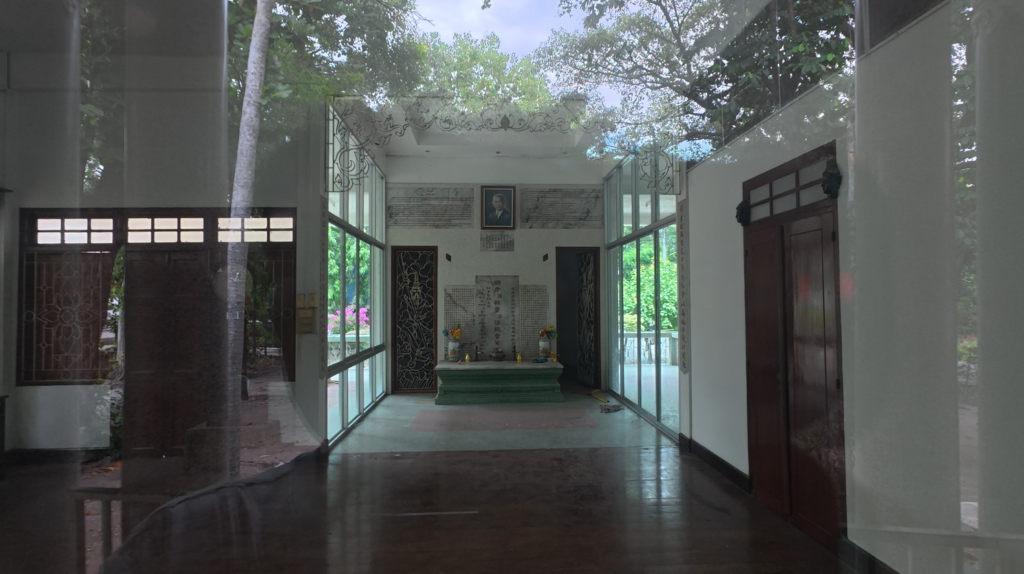
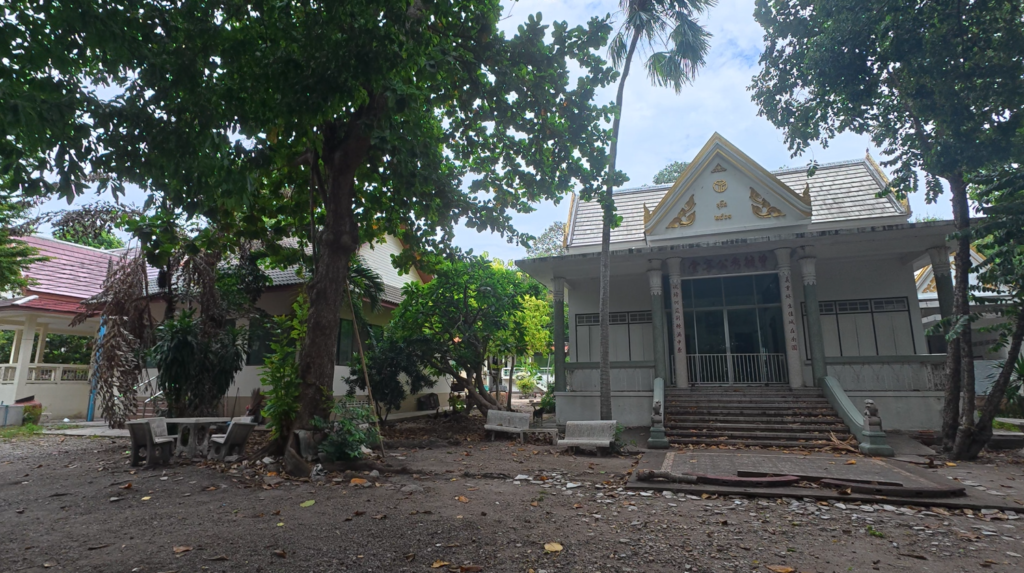
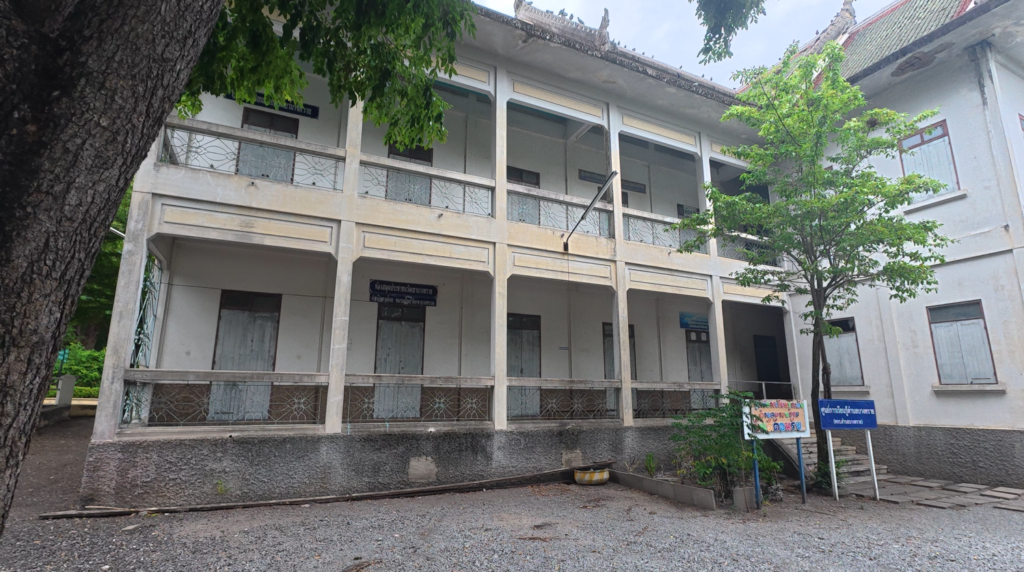
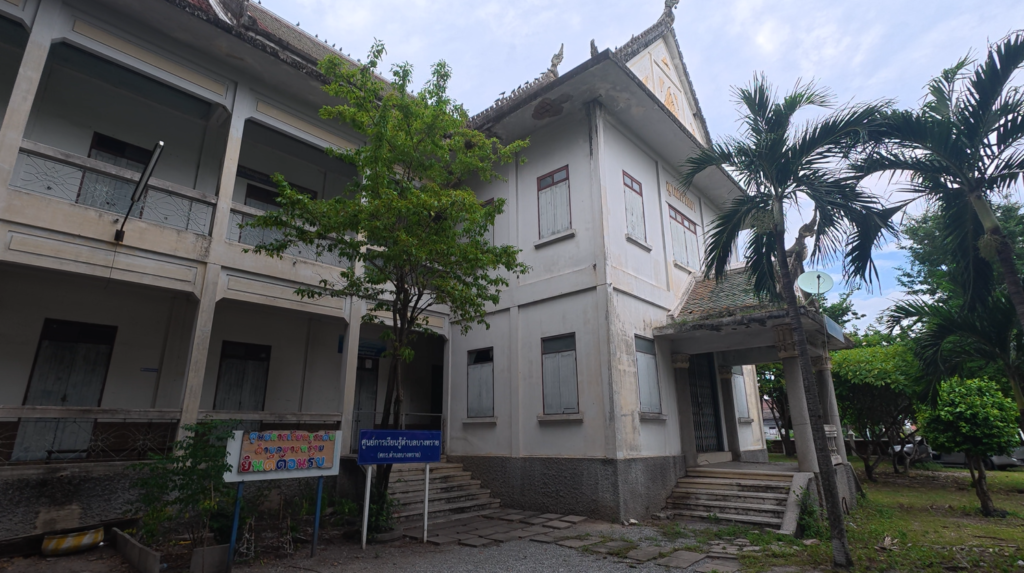
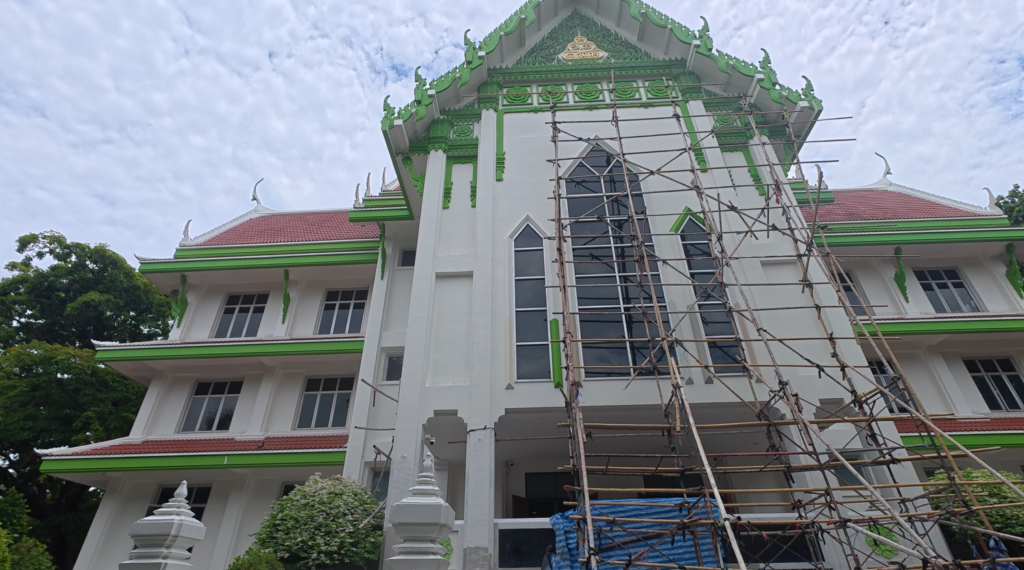
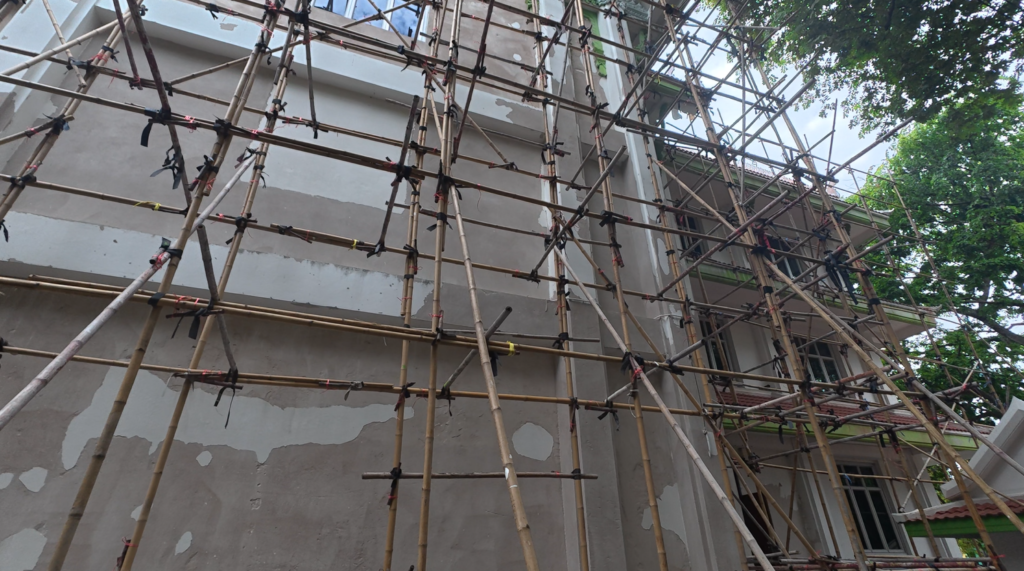
A quieter part of Wat Khao Bang Sai: a memorial space, neighbouring buildings, and structures being cared for today.
Returning to the Golden Chedi
Past the repair work, I found small decorated shrines and a carved stone marker beside a hall. I stopped for the details, though I could not tell their age or exact purpose simply by looking at them.
Then the golden chedi appeared again. I had seen it soon after arriving, but this second view felt different. After walking through the gardens, memorial space, and buildings under repair, I could see it as part of a much larger temple.
The path continued past another small building and a tall structure among the trees. Wat Khao Bang Sai was revealing itself gradually—one turn, one quiet corner, and one new view at a time.
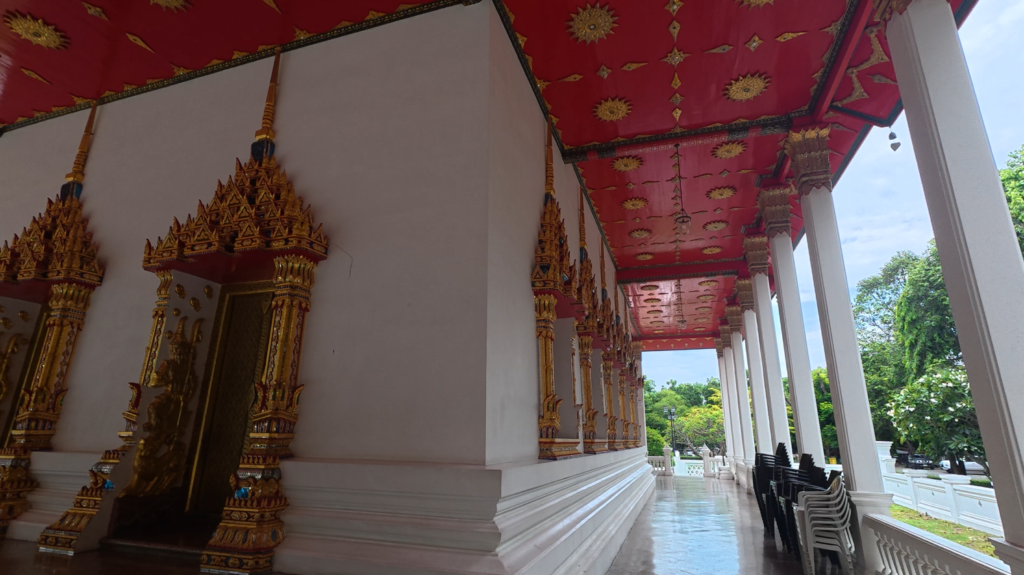
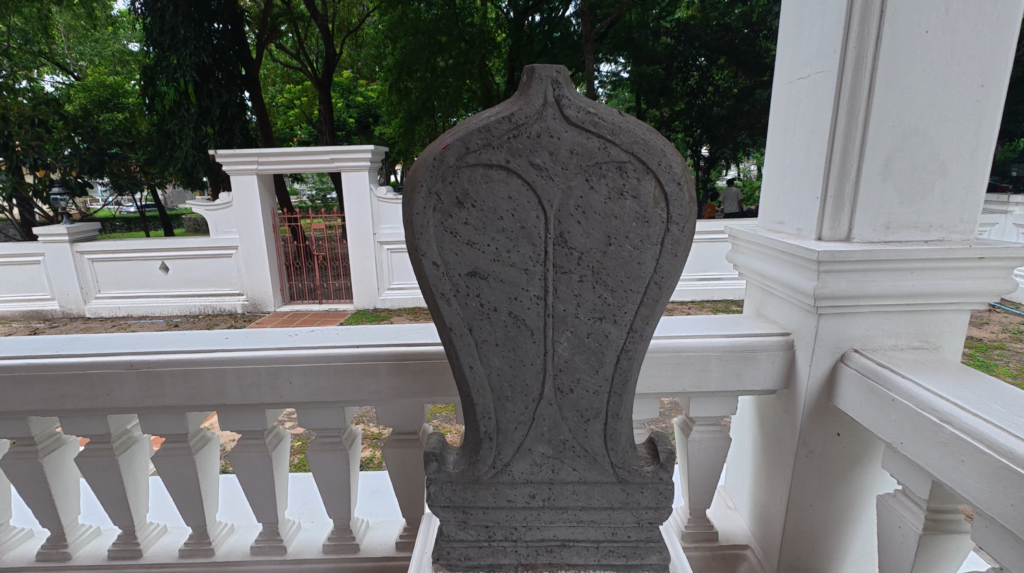
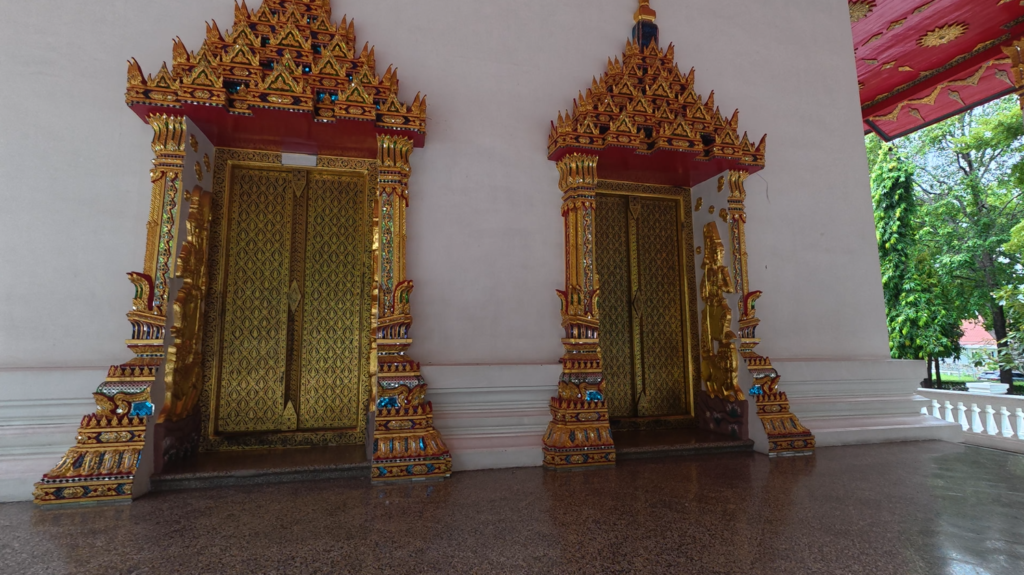
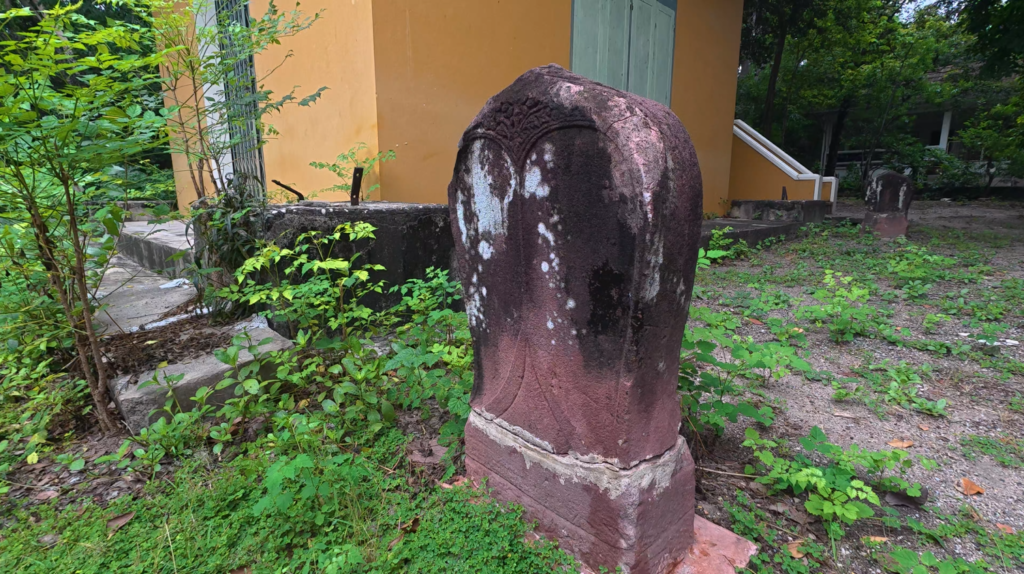
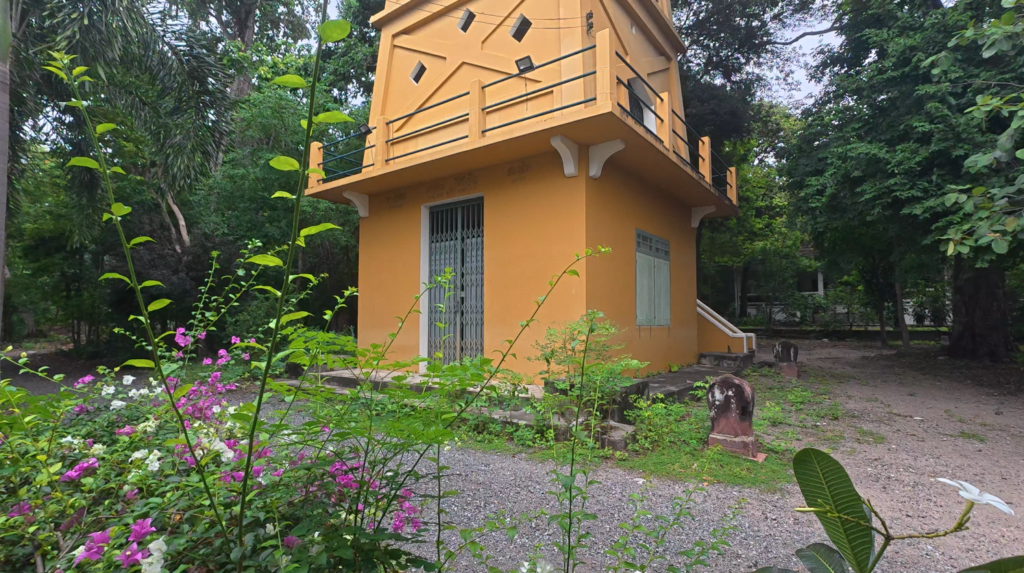
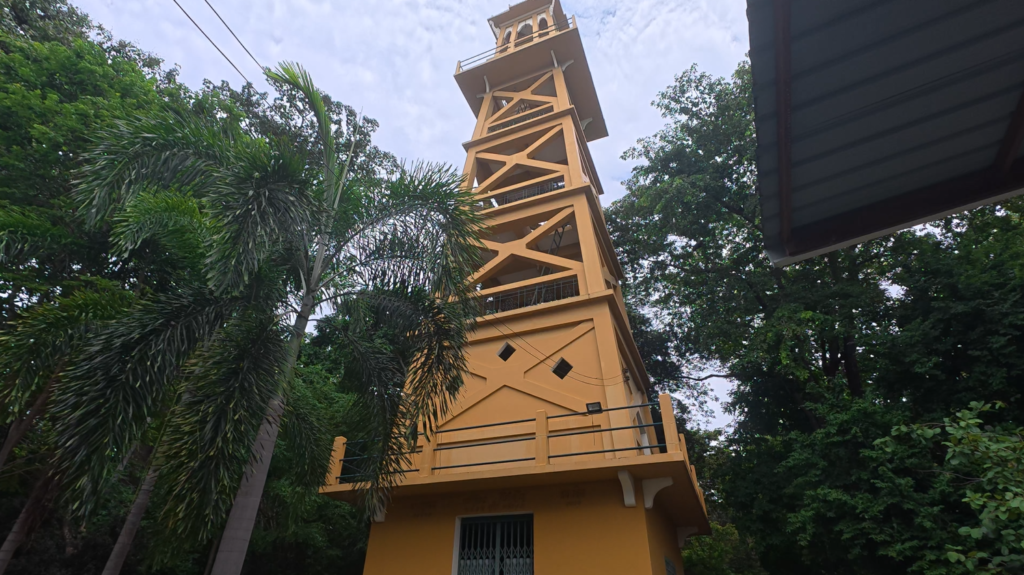
Decorated shrines, carved stone, and the varied structures encountered on my way across Wat Khao Bang Sai.
Water from the Hill
Before going up to the Buddha’s footprints, I stopped beside the temple’s water source. An on-site sign calls it Sa Chao Khun Thao (สระเจ้าคุณเฒ่า) and describes water flowing down from the hill into the pond. What first looked like a quiet corner of the grounds had its own place in the temple’s history.
The Chonburi Provincial Office of Buddhism also records that Wat Khao Bang Sai was used for an oath-of-allegiance ceremony through the reign of King Rama V. Standing between the water and the hill, I began to see how the landscape, the temple, and its ceremonial life were connected.
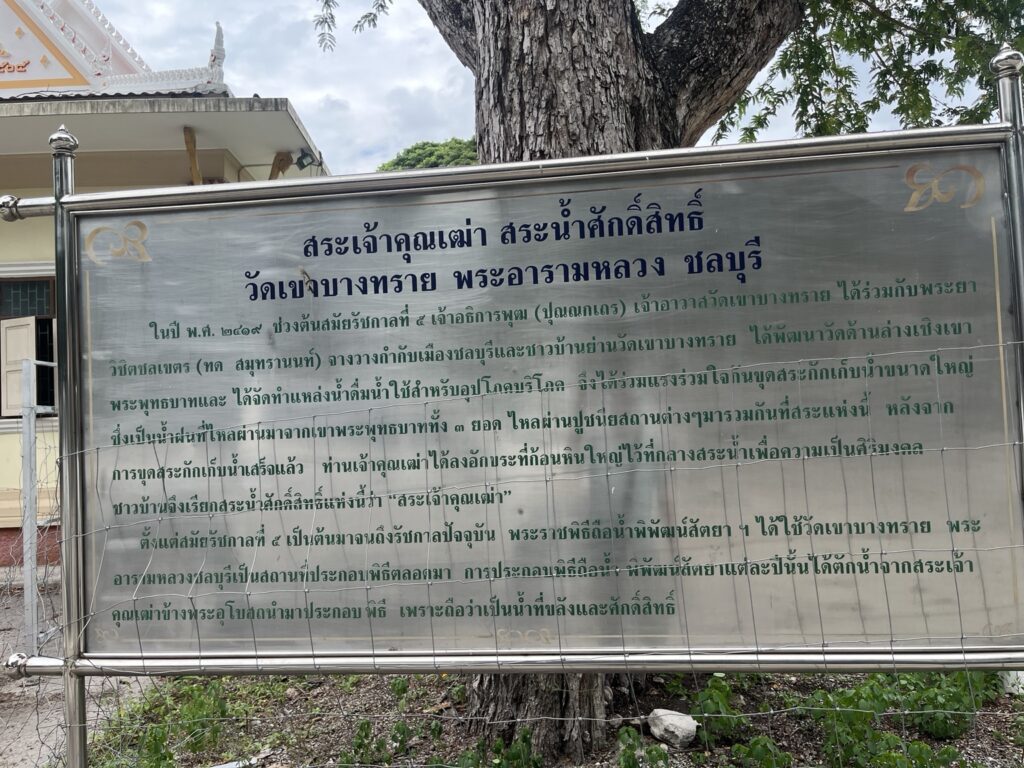
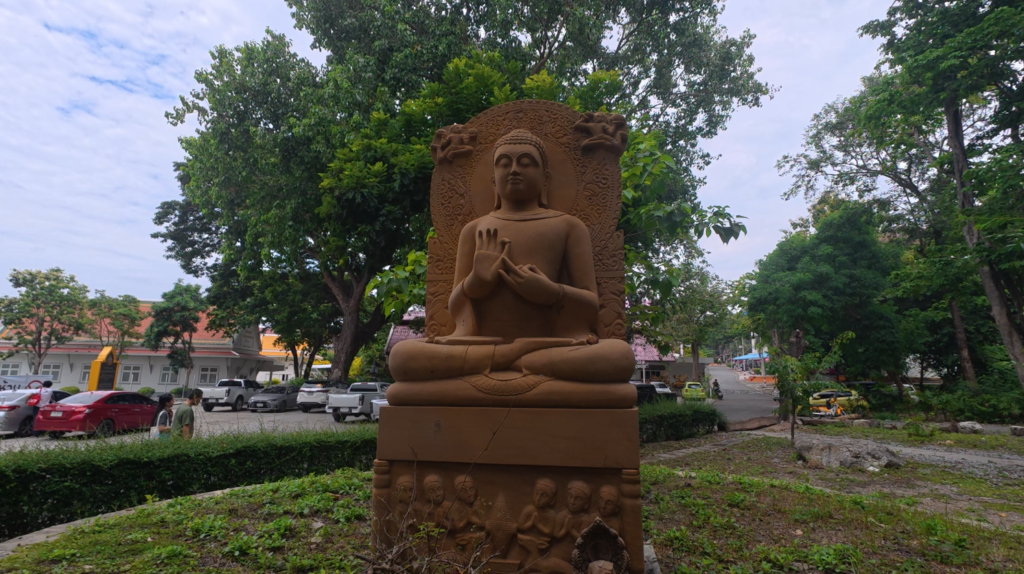
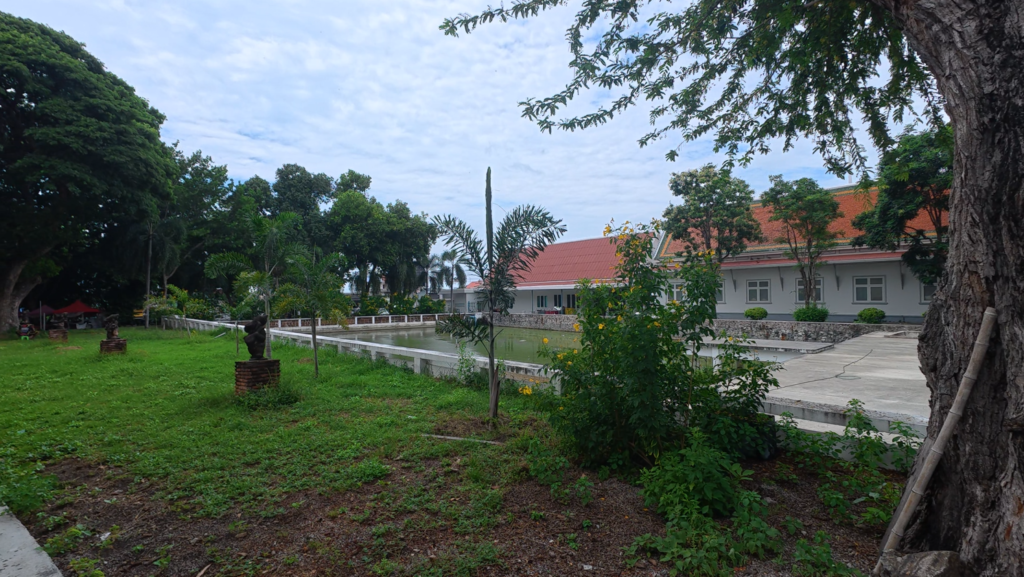
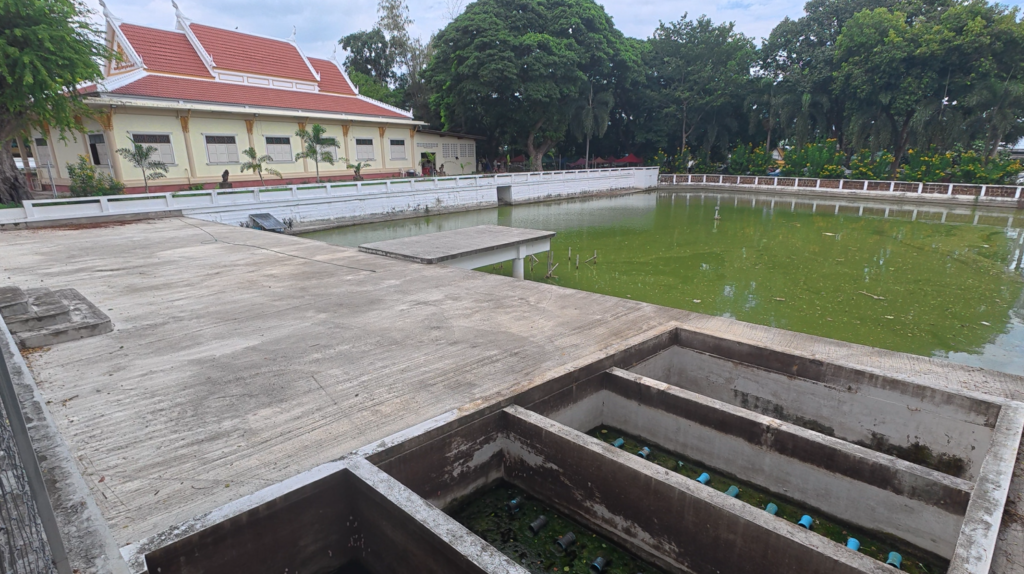
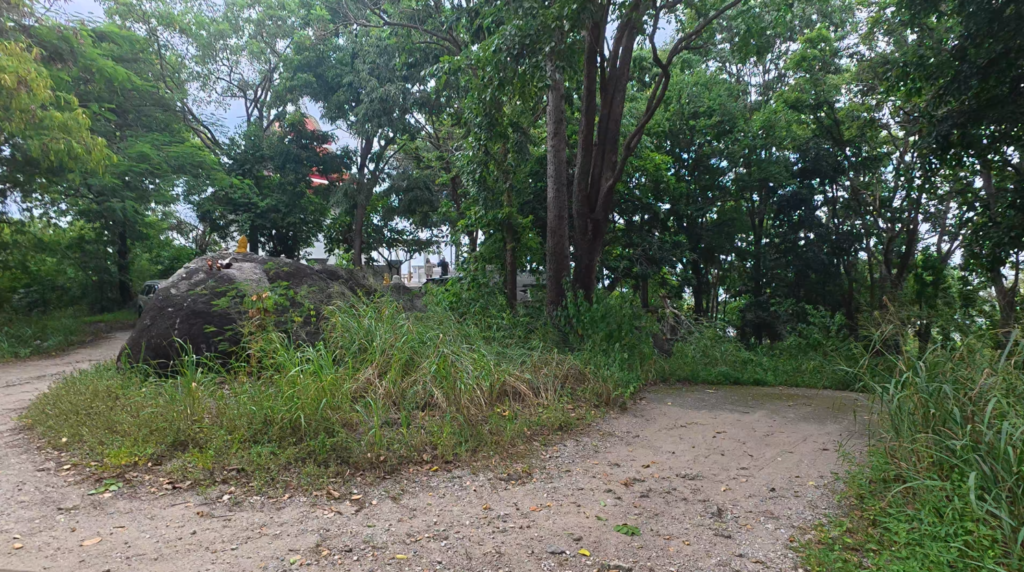
Walking through the lower grounds and following the path toward the hilltop shrine.
At the Buddha’s Footprints
The temple’s longer name, Wat Khao Phra Phutthabat Bang Sai, points to the purpose of my visit: Phra Phutthabat means “Buddha’s footprint.” After walking through the lower grounds, I reached the shrine where the footprints are venerated.
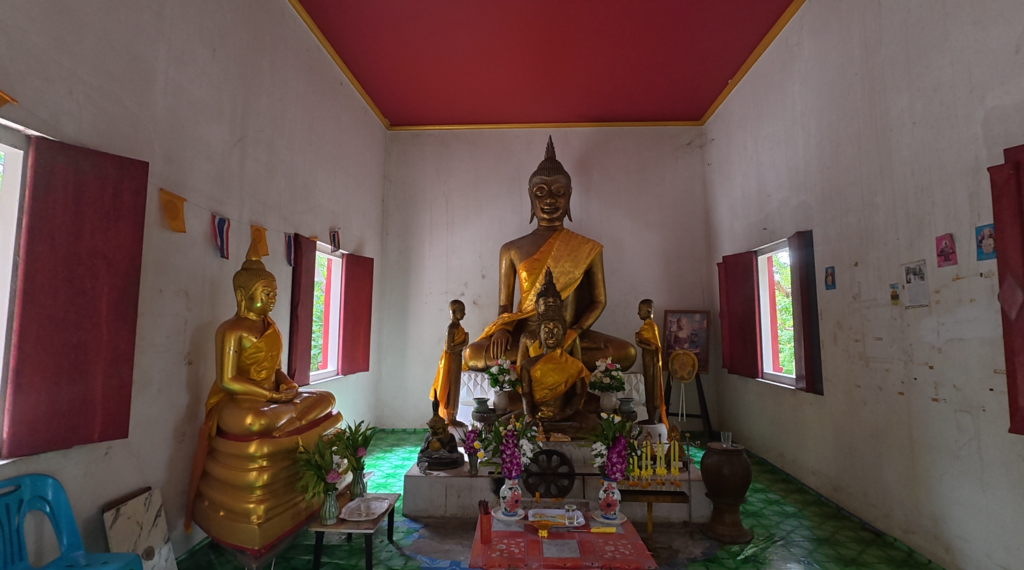
Buddha images, flowers, and offerings filled the space around them. I slowed down and spent a moment looking before taking more photographs. A footprint is different from an image we meet face to face. It suggests a path left for others to follow.
The temple has a long history, but I cannot determine the age of the particular footprint forms from my photographs alone. What I could see was their meaning to the people who continue to care for and visit this shrine.
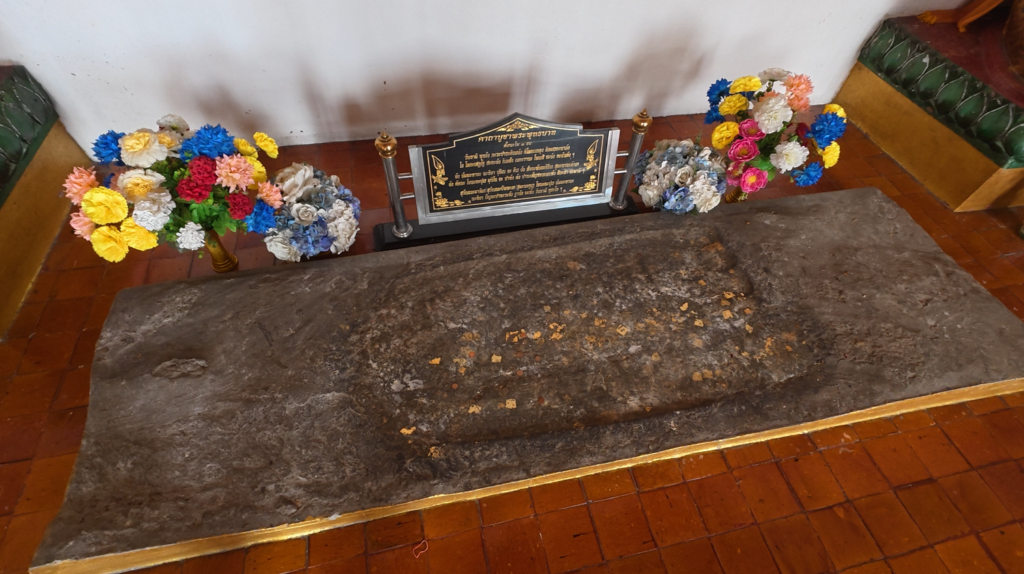
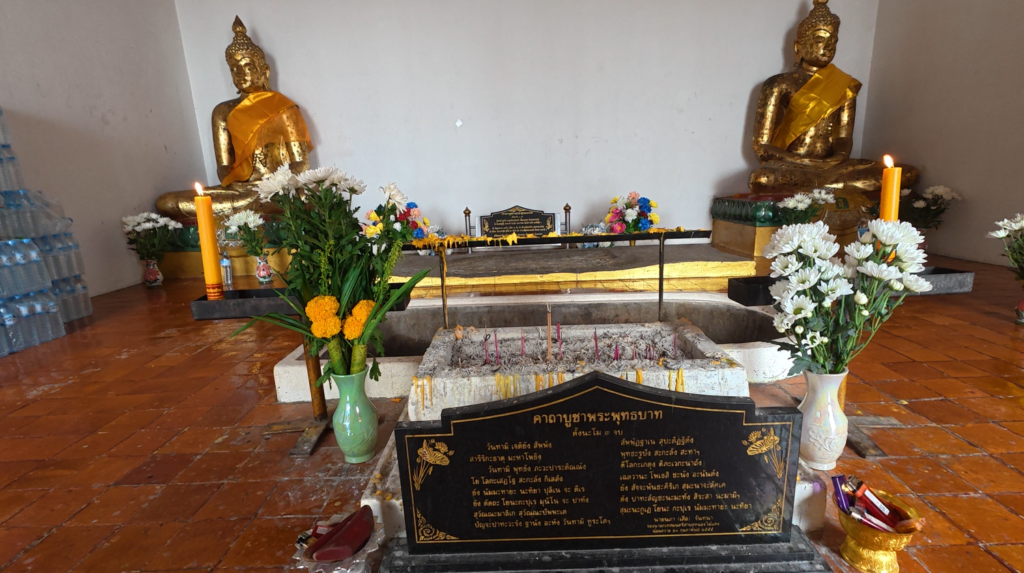
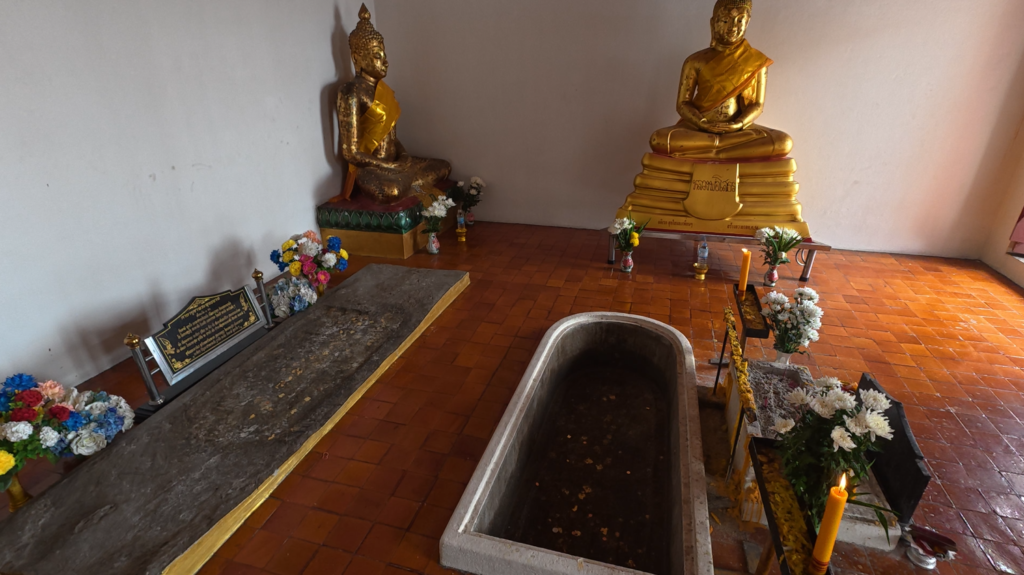
Buddha images and offerings inside the footprint shrine.
A View Before the Ride Continues
Outside the shrine, the view opened across Chonburi. From here, the buildings I had walked past seemed to belong to one landscape: the chedi, the halls, the water below, and the hill that had brought me to the Buddha’s footprints.
The long stairway reminded me to take my time. I began riding at sixty-five, and I have learned that a journey is not better simply because it is faster. I stopped to catch my breath and enjoy the view before visiting one final, quiet hall with Buddha images inside.
I had arrived expecting one sacred footprint shrine. I left remembering the paths and people that keep the whole temple alive. Soon I would return to my yellow Cub—but I wanted to give Wat Khao Bang Sai one last look before riding away.
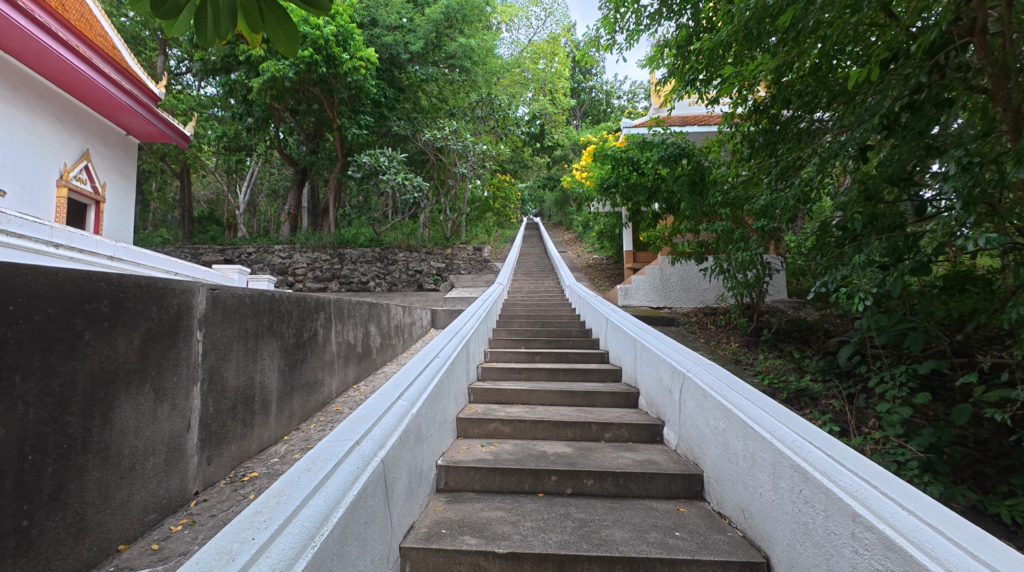
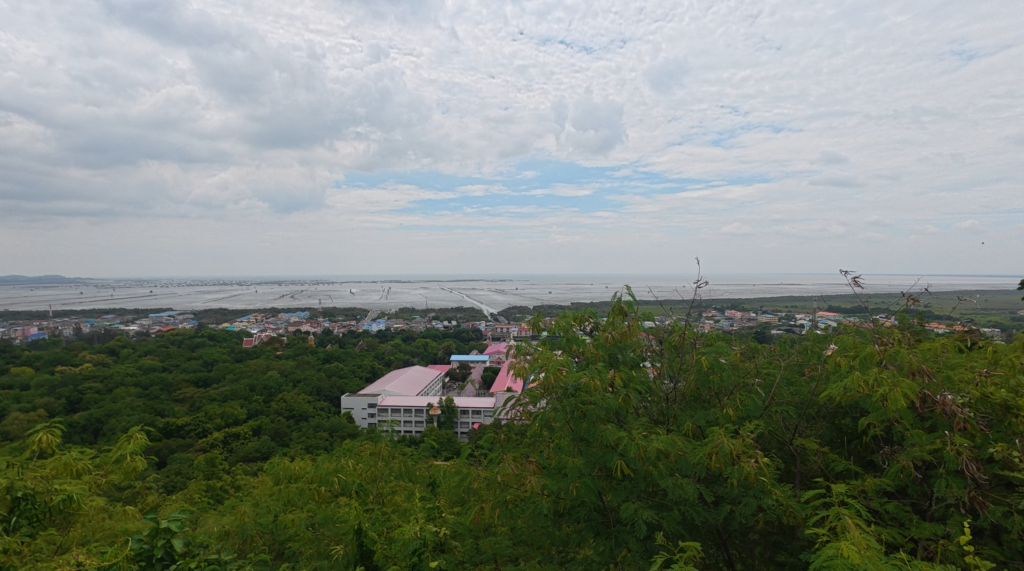
A view across Chonburi, the long temple stairway, and a final quiet hall before returning to the Cub.
Walk Through Wat Khao Bang Sai with Won Cub Life
Join me on the same route shown in this post—from arriving on my yellow Super Cub to exploring the temple grounds, visiting the Buddha’s footprints, and looking out over Chonburi.
A slow, 18-minute walk through Wat Khao Bang Sai in Chonburi.
Visitor Information
- Temple: Wat Khao Bang Sai, also known as Wat Khao Phra Phutthabat Bang Sai (วัดเขาบางทราย / วัดเขาพระพุทธบาทบางทราย)
- Location: Bang Sai, Mueang Chonburi District, Chonburi Province, Thailand
- What to see: The golden chedi, temple buildings, sacred water source, Buddha’s footprint shrine, and views from the hill
- Walking: The grounds are spread out, and the hilltop route includes stairs. Allow time to explore at a comfortable pace.
- Temple etiquette: Dress respectfully, follow signs, and avoid disturbing people who are praying.
- Before visiting: Check current access and opening arrangements locally, as individual buildings may not always be open.
Continue Exploring
For another temple where old and new structures stand side by side, read my visit to Wat Ratchabanlang Praditthawararam in Rayong.
For more stories about the different layers of faith found at a Thai temple, visit Wat Ang Kaeo.
For the documented history of Wat Khao Bang Sai, see the Chonburi Provincial Office of Buddhism.