Riding into the Quiet Hills
The journey began on the open roads of Rayong, leaving the busier highway behind and gradually turning onto smaller roads surrounded by trees. As the traffic disappeared, the ride became quieter, and the narrow road leading toward the temple felt almost hidden in the forest.
The deeper I rode, the more the atmosphere changed. The sound of the motorcycle became the loudest thing around me, with only trees, scattered houses, and the mountain landscape ahead. It was the kind of approach that made the destination feel separate from everyday life — a quiet place waiting at the end of the road.
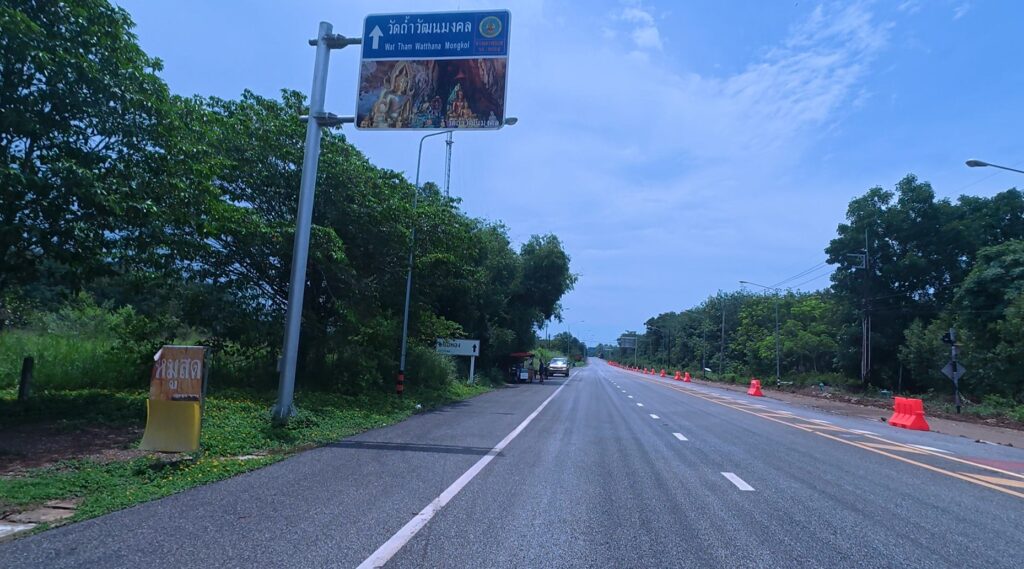
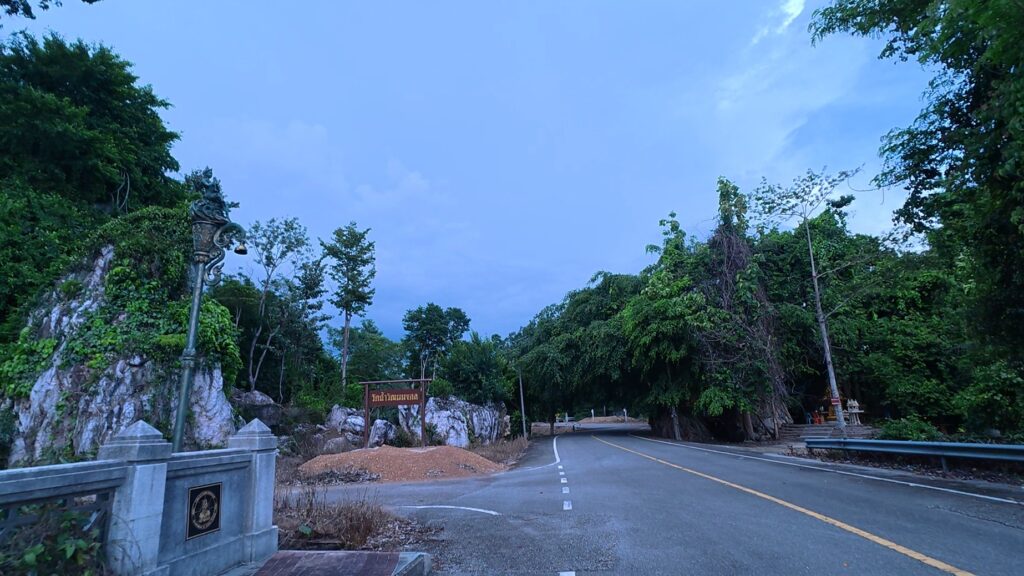
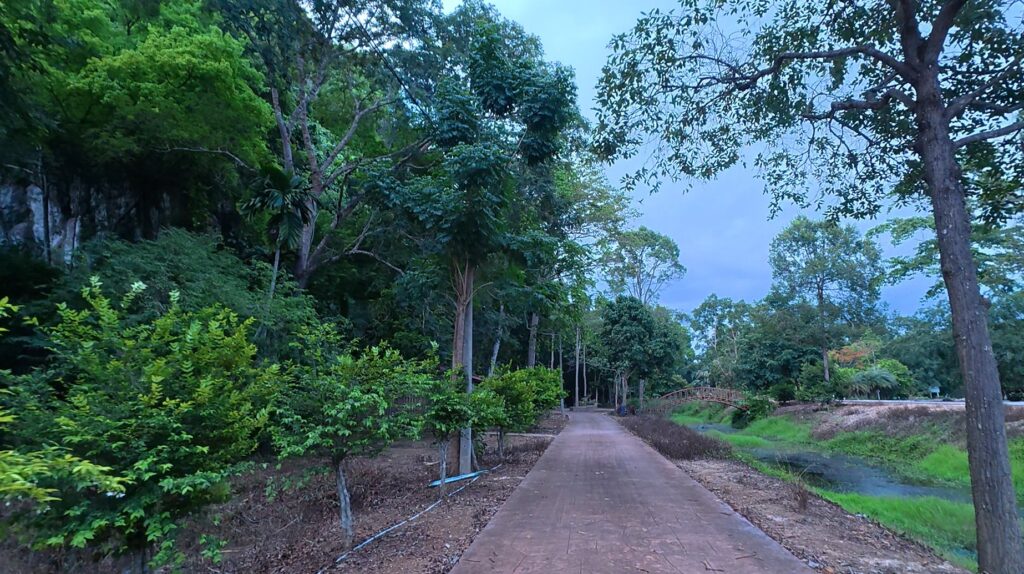
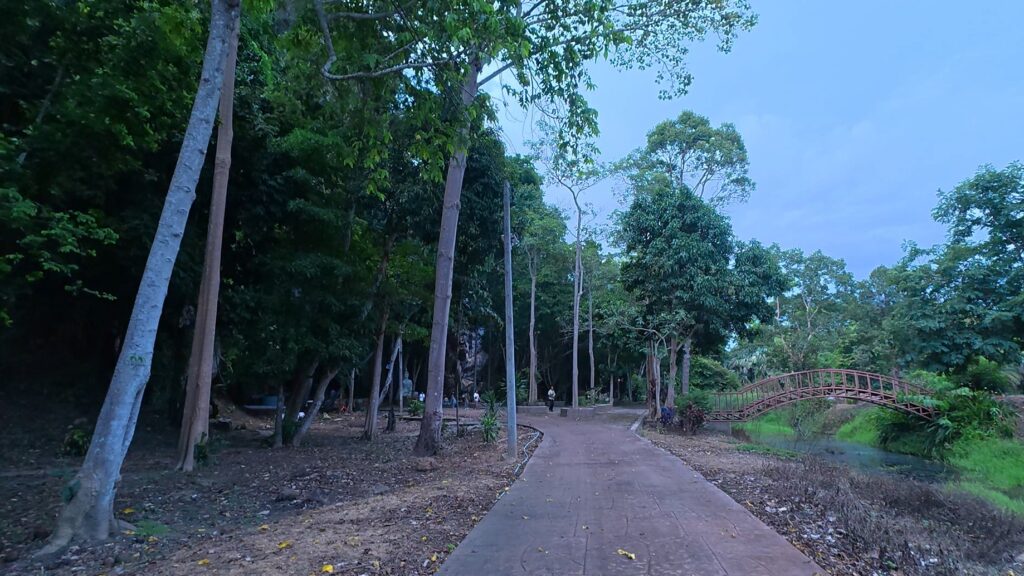
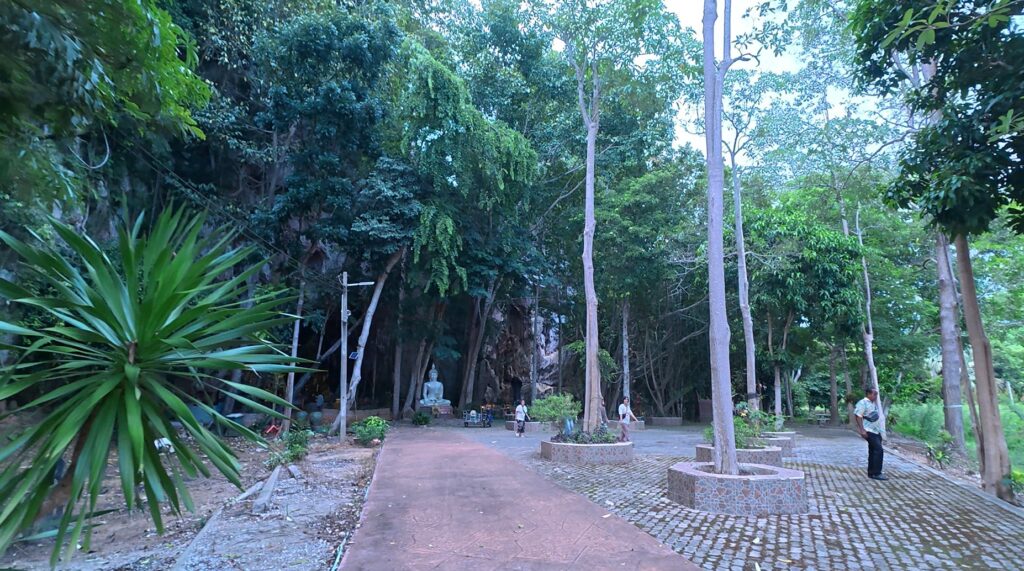
Leaving the main road behind and riding deeper into the quiet forest road toward the sacred caves and Wat Tham Wattana Mongkol.
Buddha Images at the Entrance to the Cave
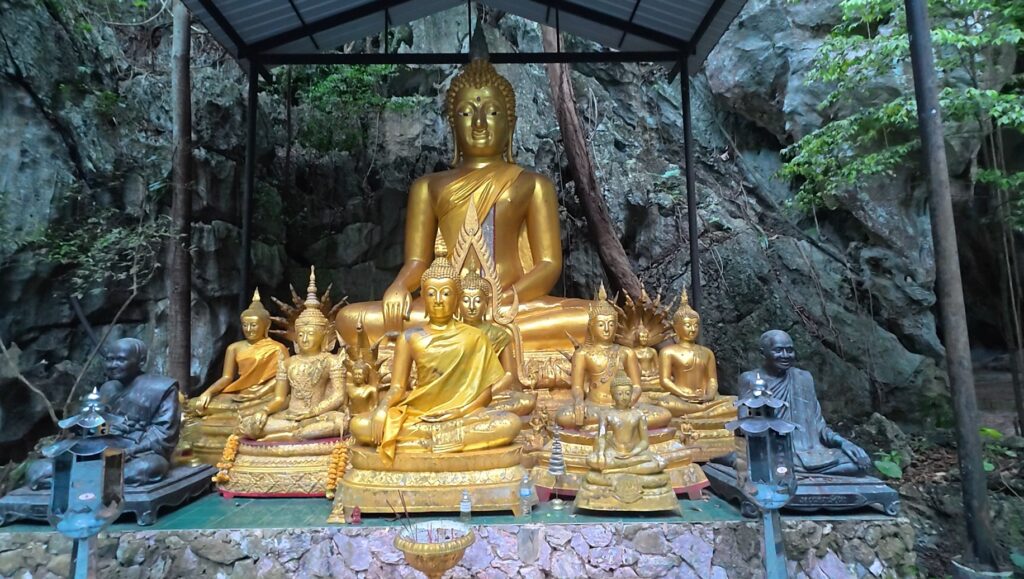
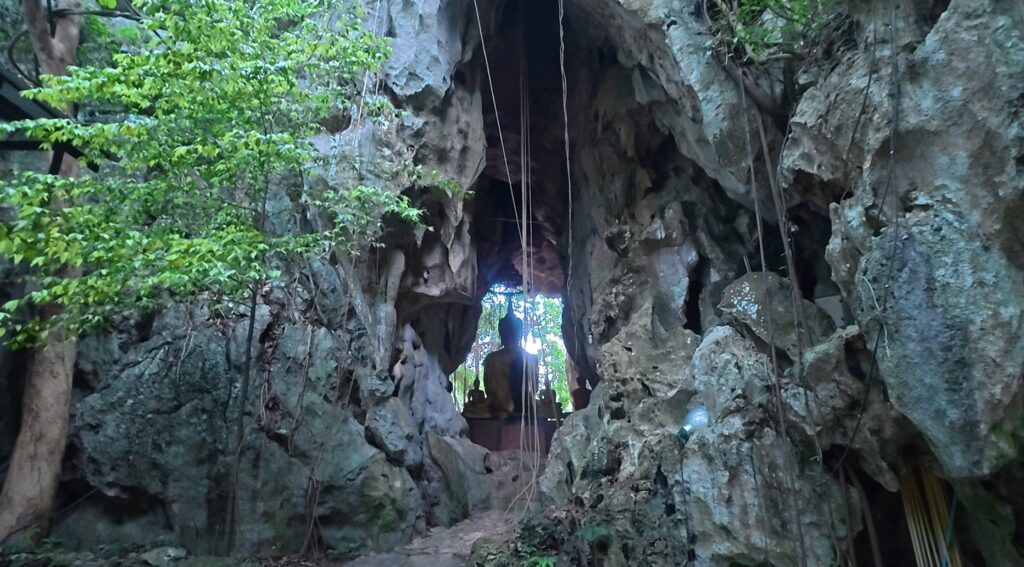
At the end of the quiet approach, the landscape changed into a small sacred area built around the natural rock. Buddha images appeared beneath the trees and along the entrance to the cave, as though the forest and the shrine had gradually grown together.
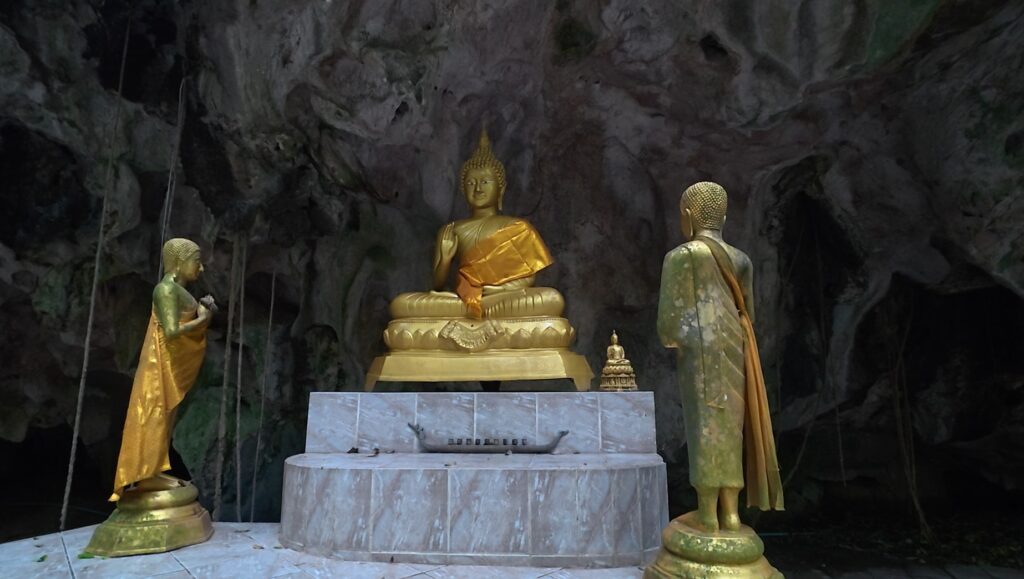
Stepping inside, I found more Buddha images placed among the rough stone walls and narrow passages. Unlike a formal temple hall, the cave felt intimate and slightly mysterious. Natural rock formations became part of the sacred space, while statues and offerings showed that people still come here to pray and pay their respects
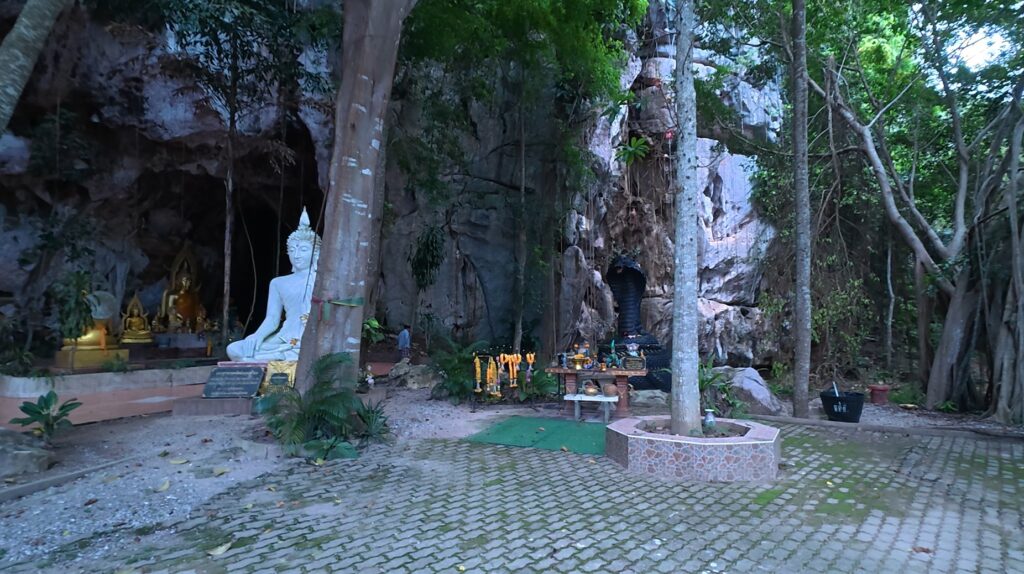
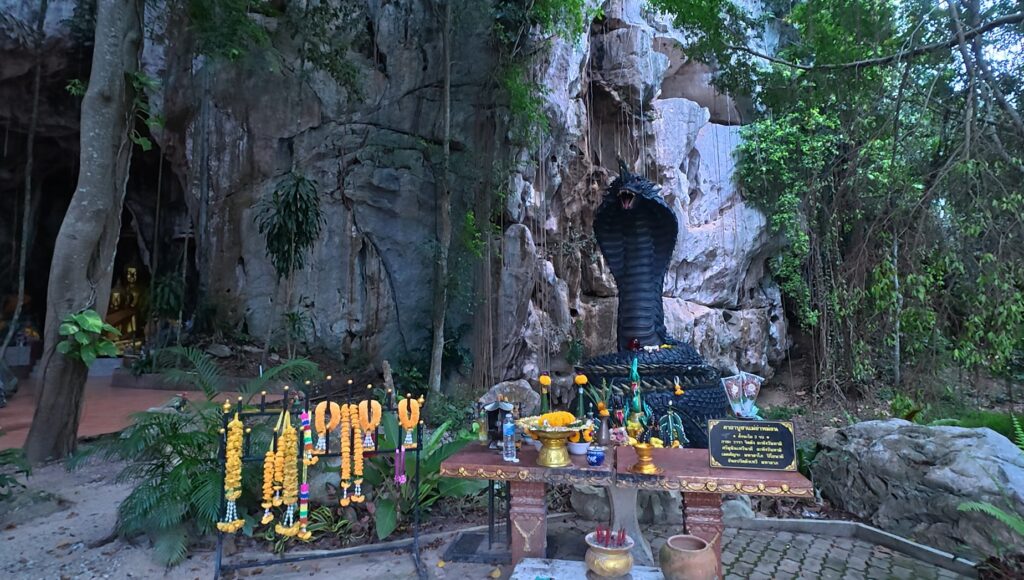
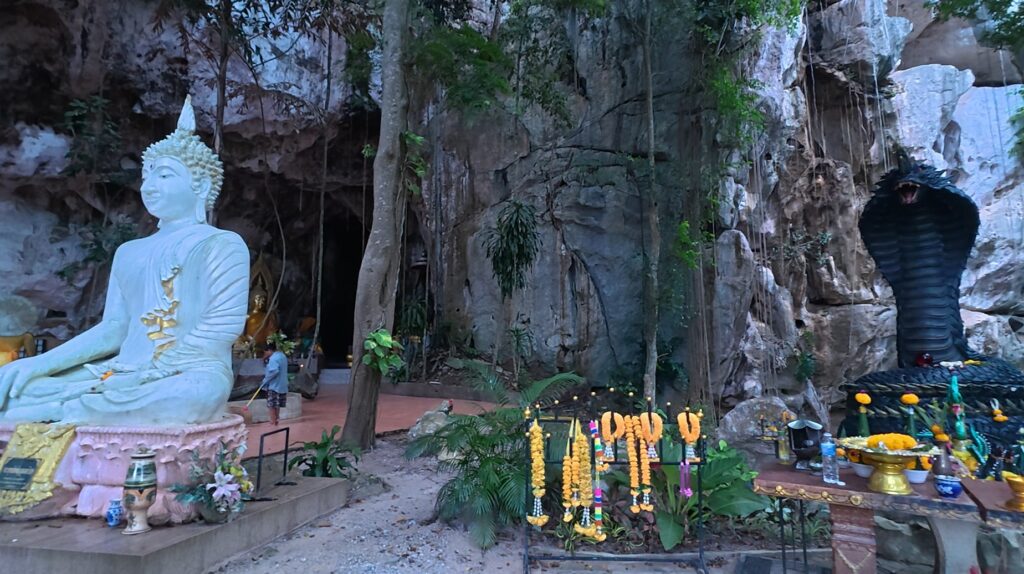
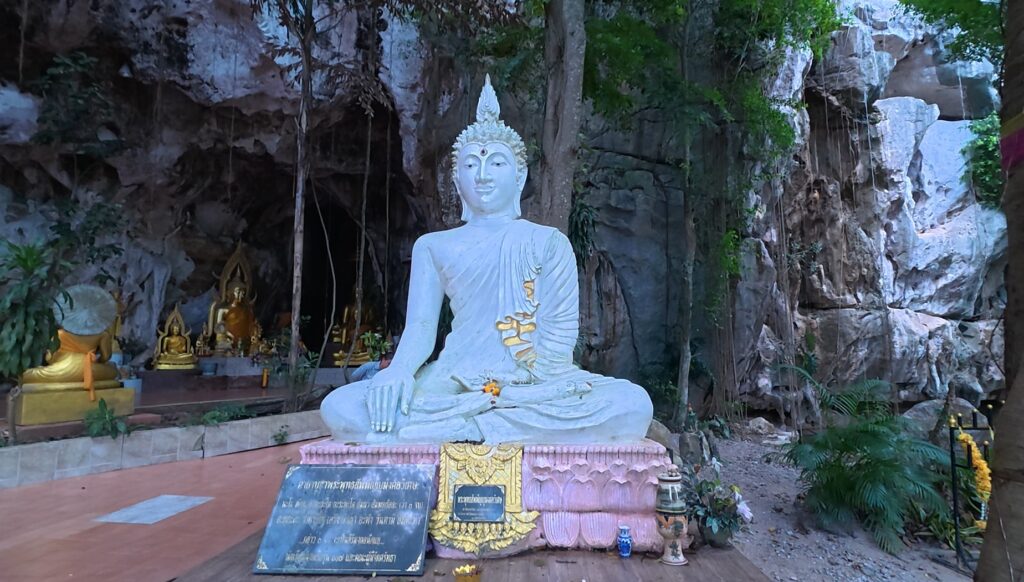
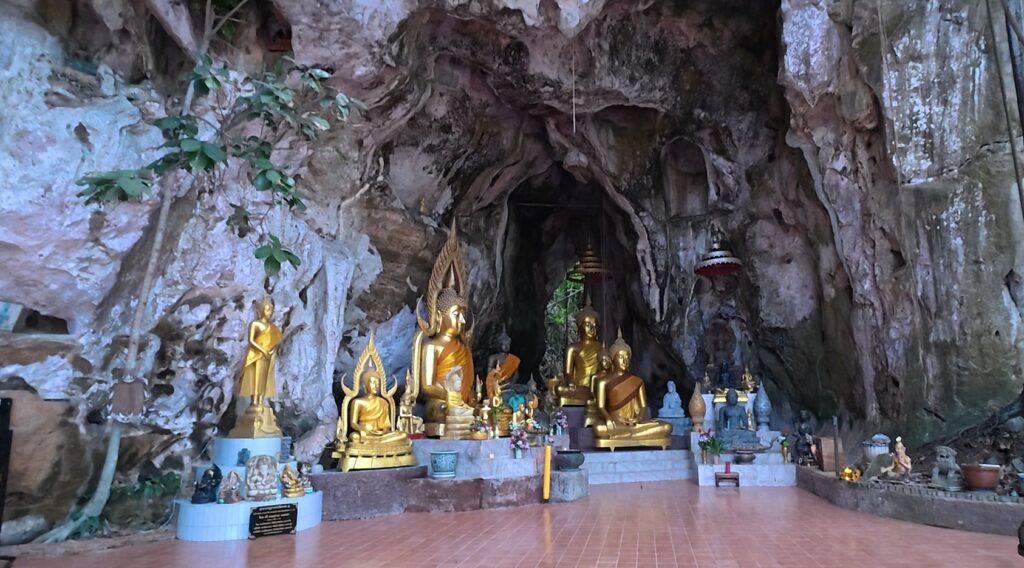
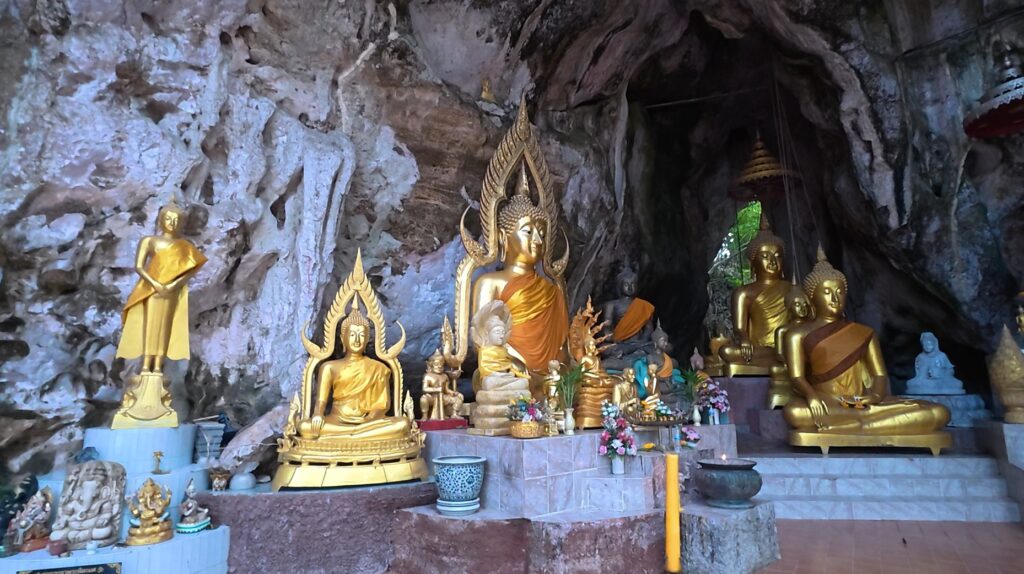
Buddha images and small shrines surrounding the natural cave, where the forest, rock formations, and Buddhist devotion come together.
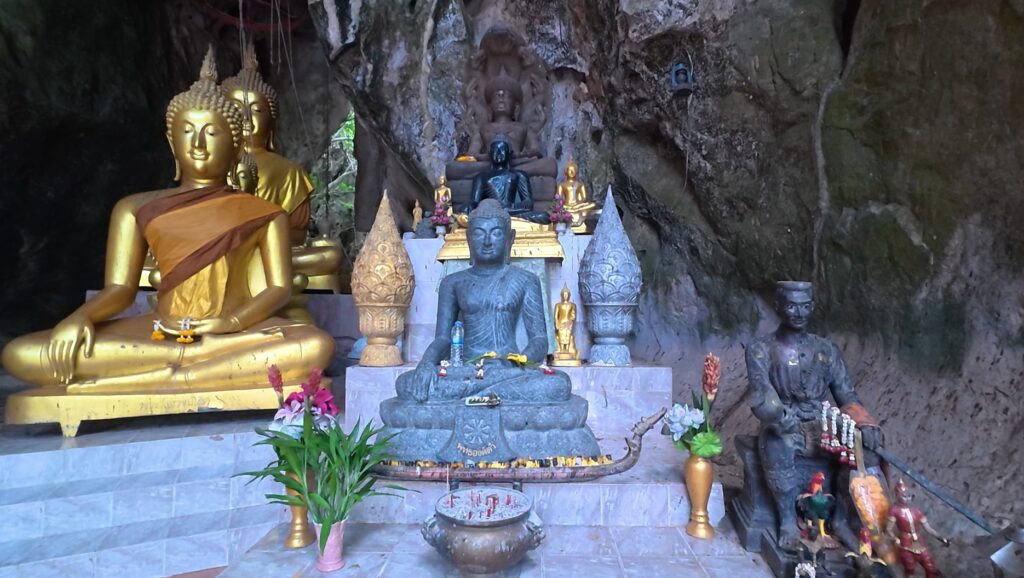
King Naresuan the Great (1555–1605) remains one of Thailand’s most revered historical rulers. His victories against Burmese forces and his declaration of independence from Burmese authority made him an enduring symbol of courage, sovereignty, and protection of the kingdom. His presence among the sacred images adds a layer of Thai historical memory to this otherwise Buddhist cave sanctuary.
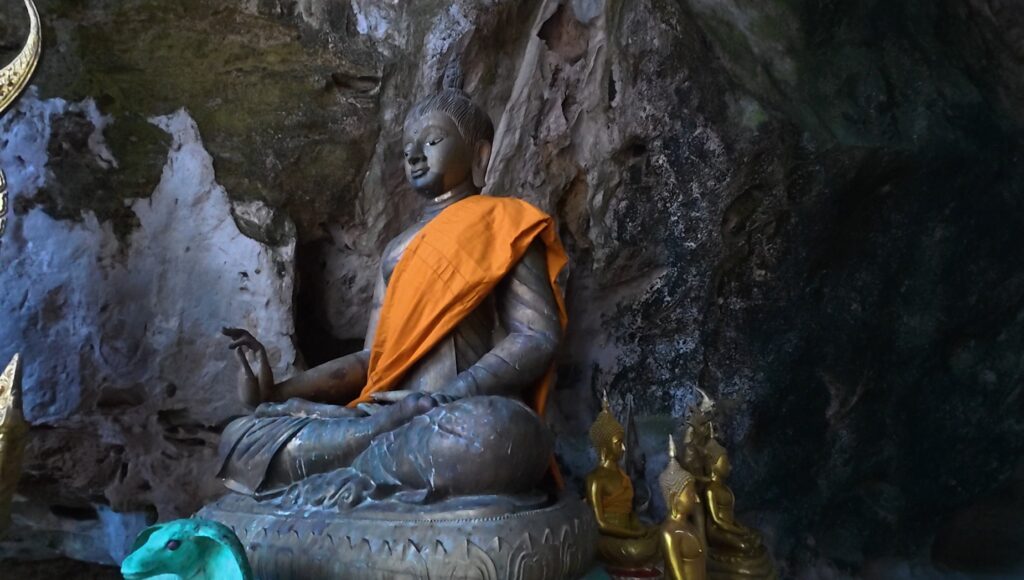
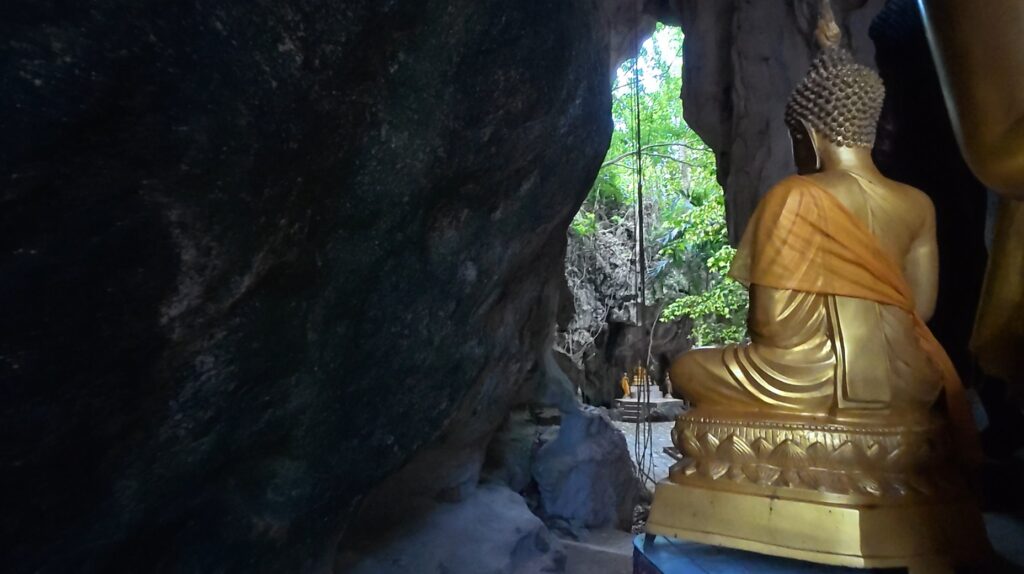
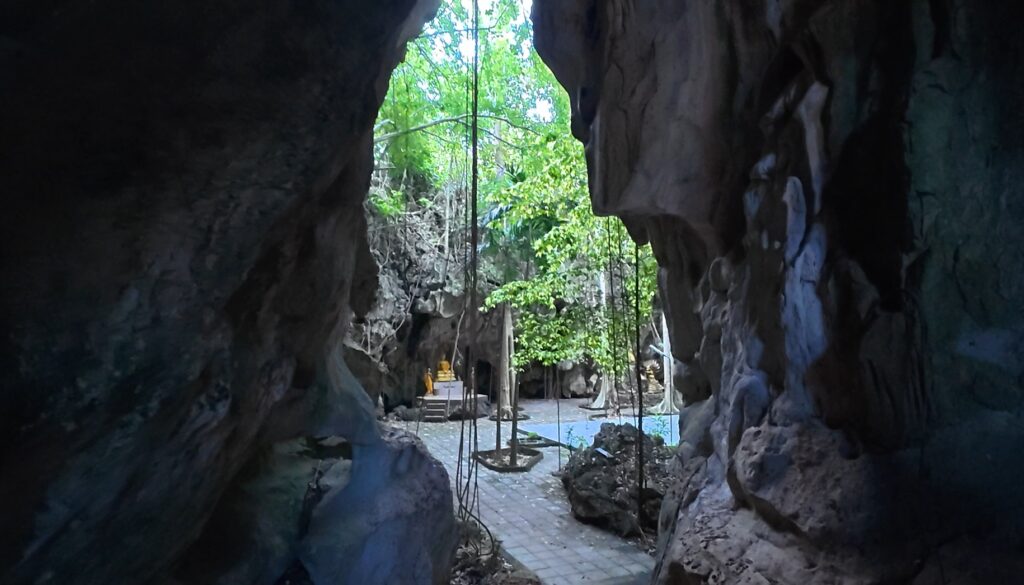
Deeper inside the cave, Buddha images stand between narrow passages and ancient rock walls, creating a simple but deeply atmospheric place of worship.
A Sacred Chedi Hidden Inside the Cave
Deeper inside the cave, the passage opened into another small sacred chamber. Here, a chedi stands among Buddha images and religious decorations, protected on either side by Naga figures. In the dim light of the cave, the shrine felt quite different from the bright temple structures outside.
In Thai Buddhist tradition, the Naga is closely associated with the protection of Buddhism and sacred places. Its roots reach back to ancient Indian religious traditions, but the Naga became deeply integrated into Buddhist belief, particularly through the story of the Naga king Mucalinda sheltering the Buddha during meditation. Caves, mountains, underground places, and water are also traditionally associated with Naga mythology, making their presence here especially fitting.
Rather than representing a separate Hindu shrine, this arrangement is better understood as an example of how older Indic symbolism and Buddhist devotion have blended naturally within Thai religious culture. The chedi represents a sacred Buddhist focus, while the Nagas appear to guard the space around it.
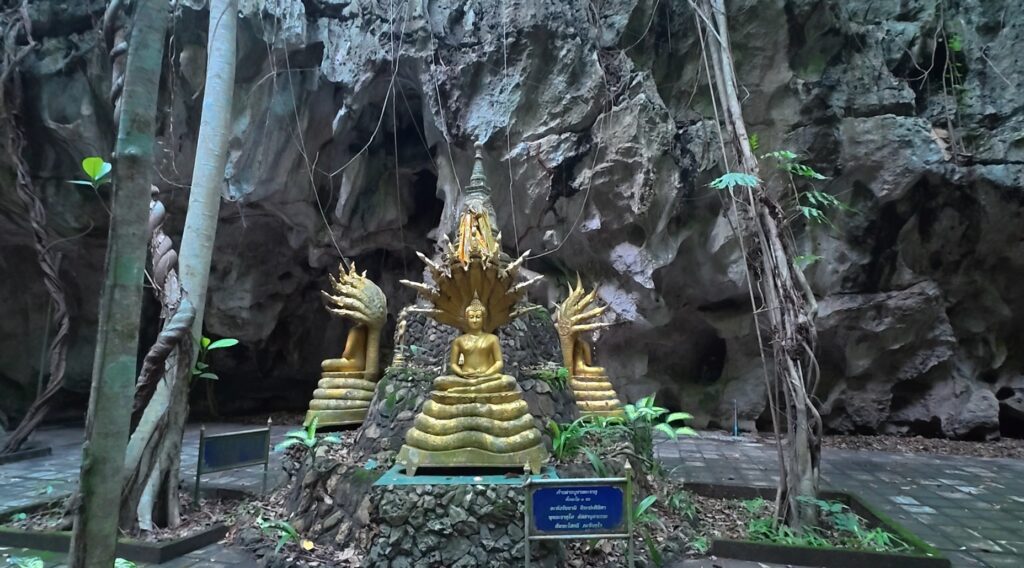
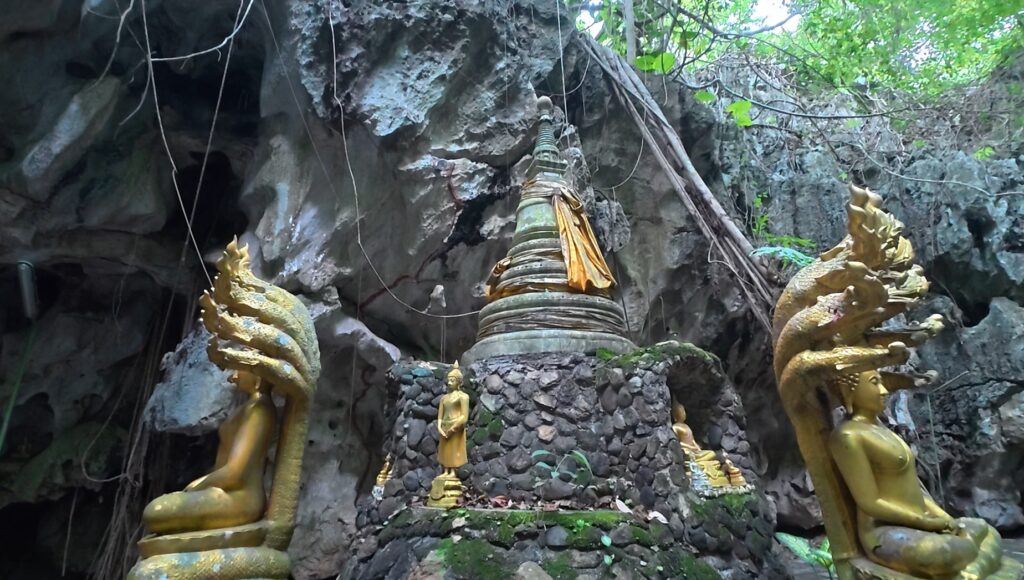
A small chedi protected by Naga figures deep inside the cave, blending Buddhist devotion with ancient Indic guardian symbolism.
From the Cave to Wat Tham Wattana Mongkol
Leaving the darkness of the cave behind, I returned to my Cub and continued the short ride to nearby Wat Tham Wattana Mongkol. The atmosphere changed almost immediately. Instead of narrow rock passages and enclosed chambers, the temple opened onto a high, airy landscape surrounded by green hills.
The air felt noticeably cooler here. Standing outside the tall chedi-shaped building, I could look across the surrounding countryside in a wide panorama. After spending time inside the confined cave, the open sky and distant mountains gave the second part of the journey a completely different feeling — quiet, spacious, and peaceful.
This video follows the full journey — from the quiet ride into the cave sanctuary to the prayer halls, sacred relics, and the final wish at the emerald crystal sphere.
Riding to two neighboring sacred sites in Rayong, exploring the cave sanctuary and Wat Tham Wattana Mongkol before ending the visit with a quiet wish at the emerald crystal sphere.
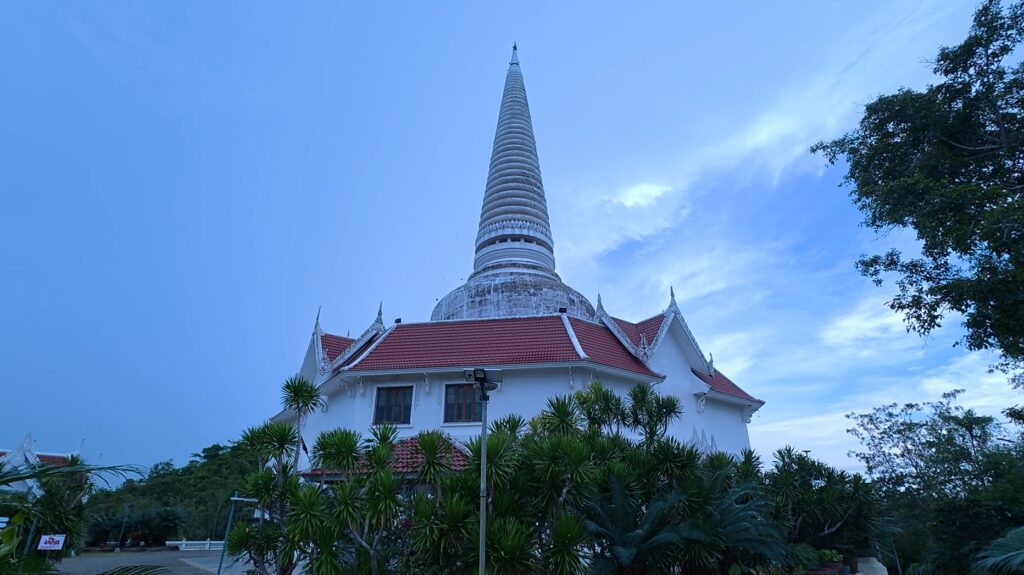
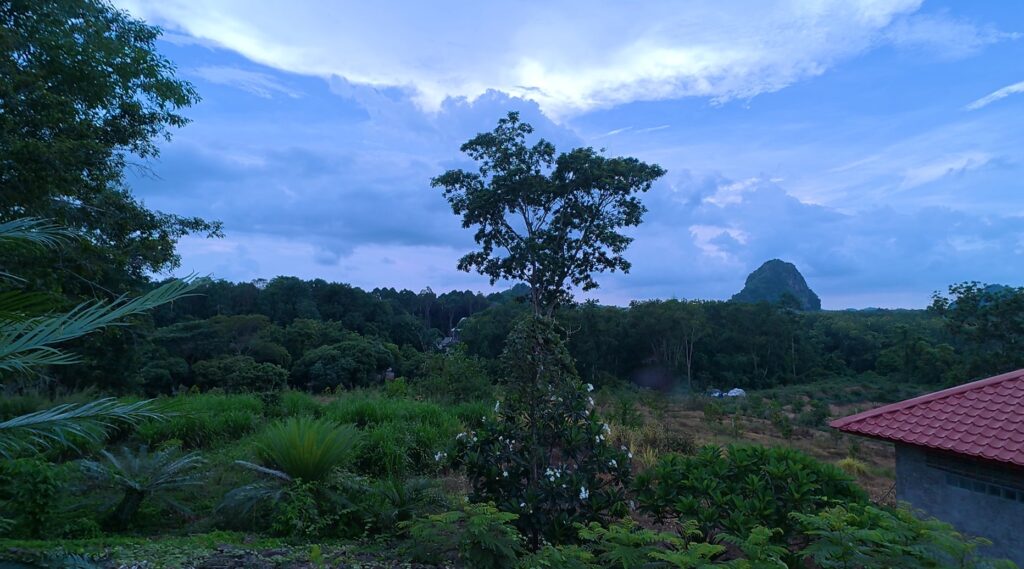
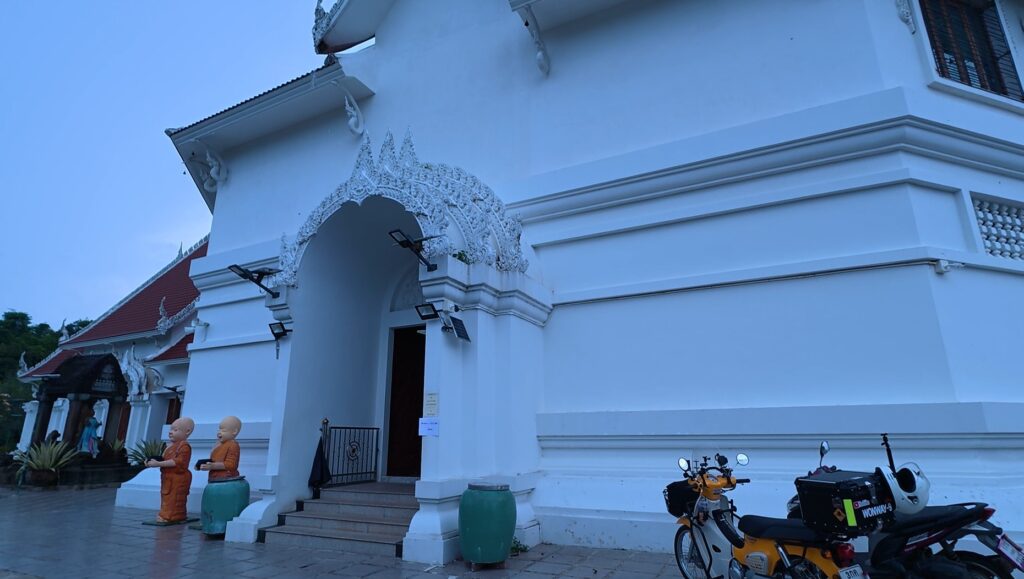
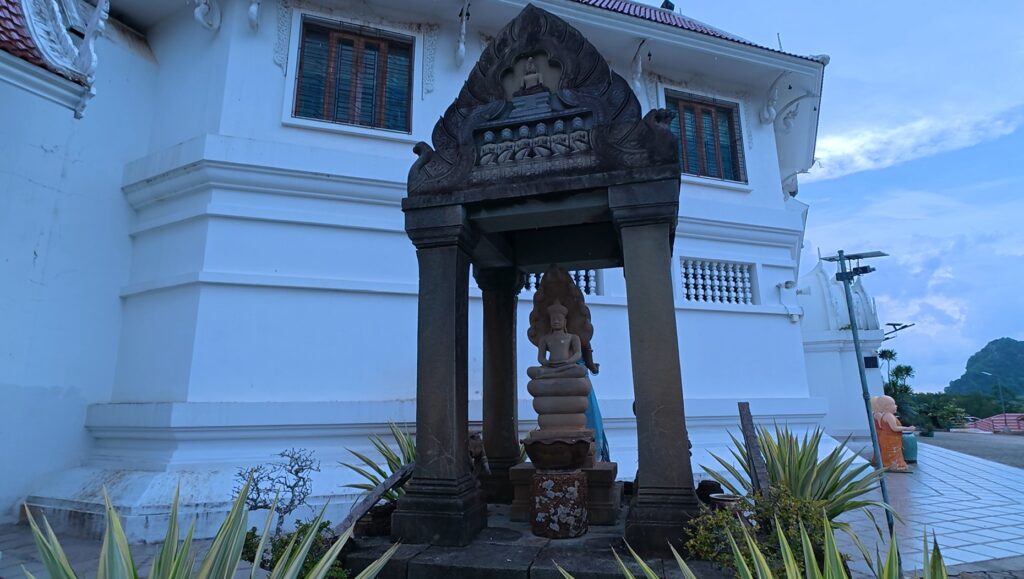
Cool mountain air and wide panoramic views welcome visitors to Wat Tham Wattana Mongkol after the enclosed atmosphere of the nearby cave.
Inside the Chedi — A Moment of Prayer
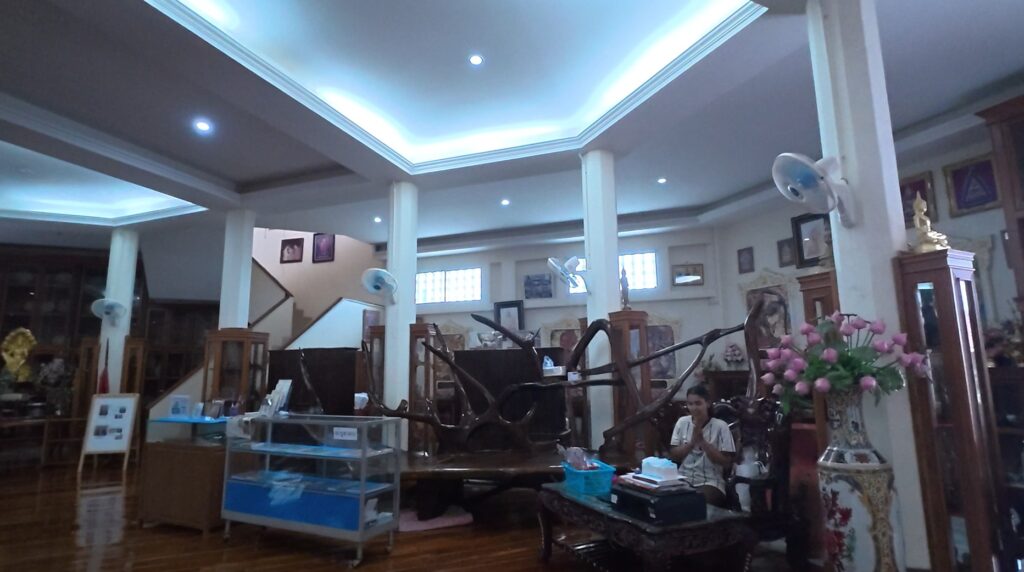
Passing through the entrance of the chedi-shaped building, I entered a much quieter world. The ground floor contains Buddha images, sacred objects, and figures of revered monks arranged around the hall. Rather than feeling like a museum display, the space felt alive with devotion — a place where visitors still stop, bow, and pray.
Here I stopped exploring for a while. In front of the shrine, I bowed and prayed quietly for the health and well-being of my family, and for my own health as well. After the long ride and the exploration of the cave, it became one of those simple moments when travelling is no longer about seeing another place. For a few minutes, there was nowhere else I needed to go.
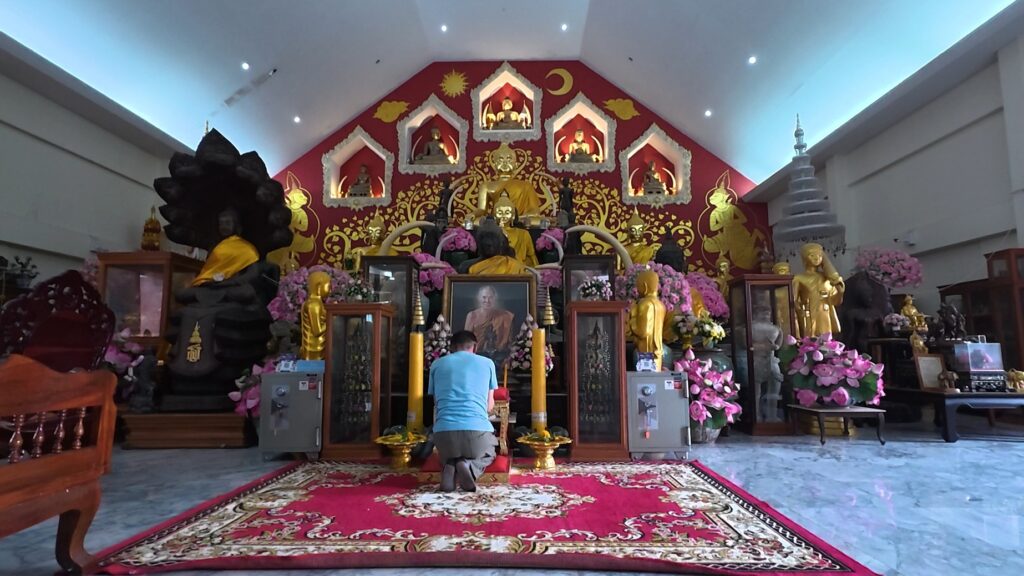
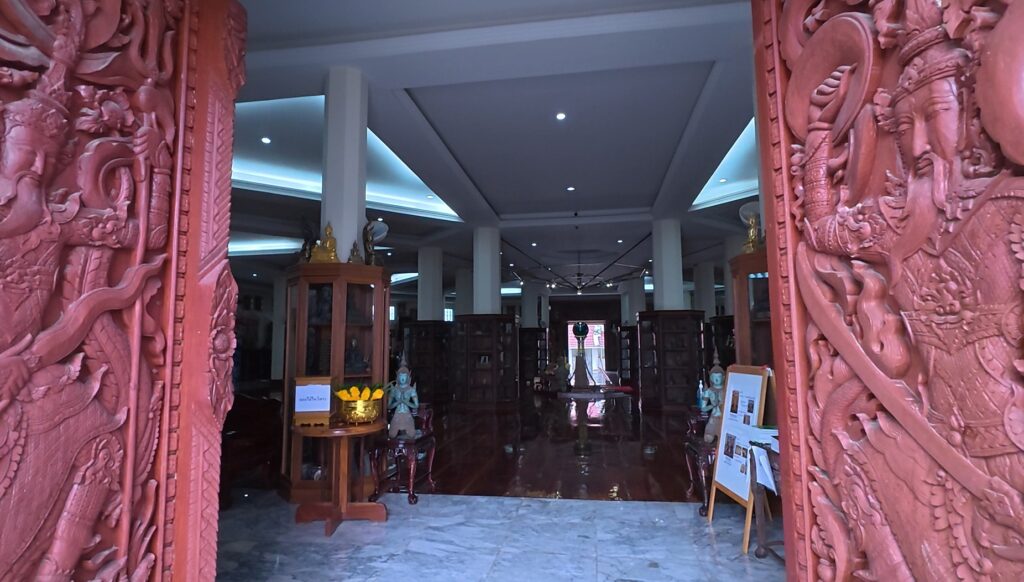
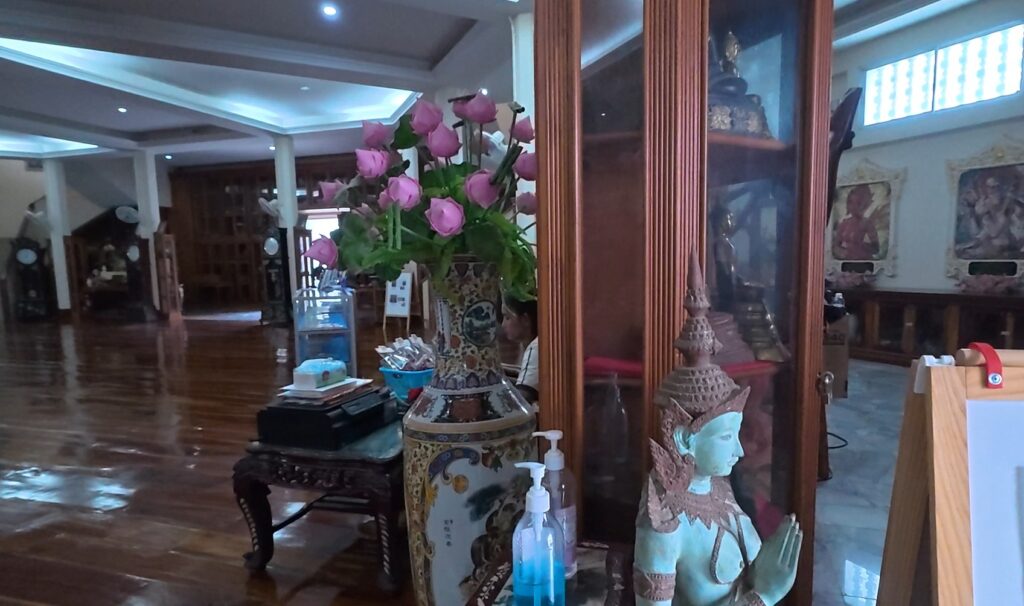
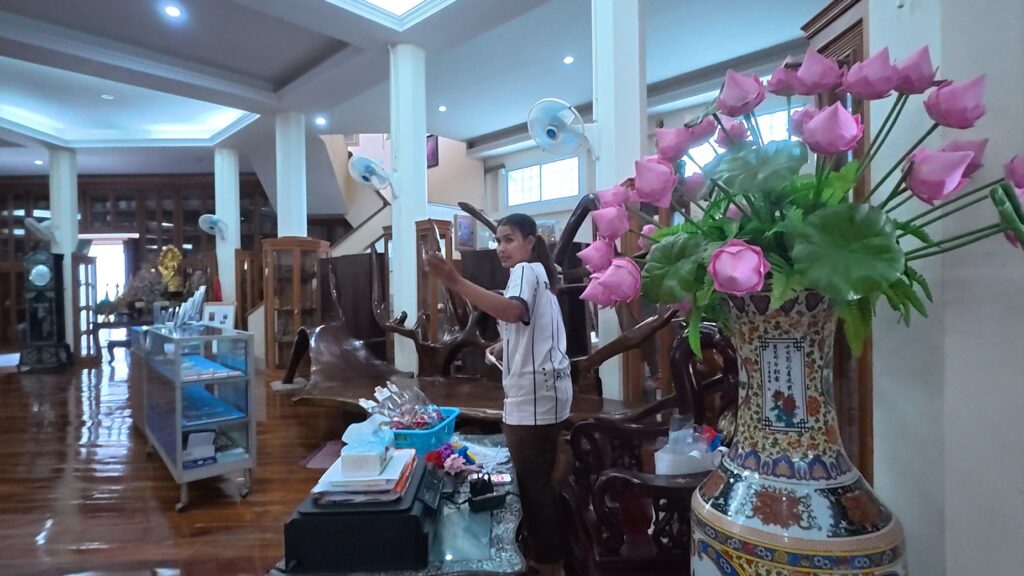
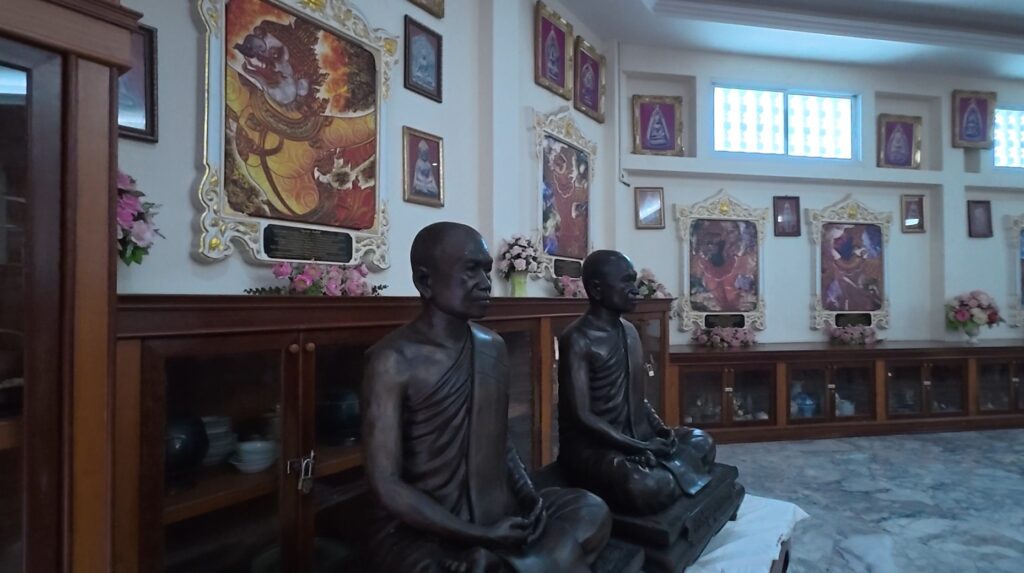
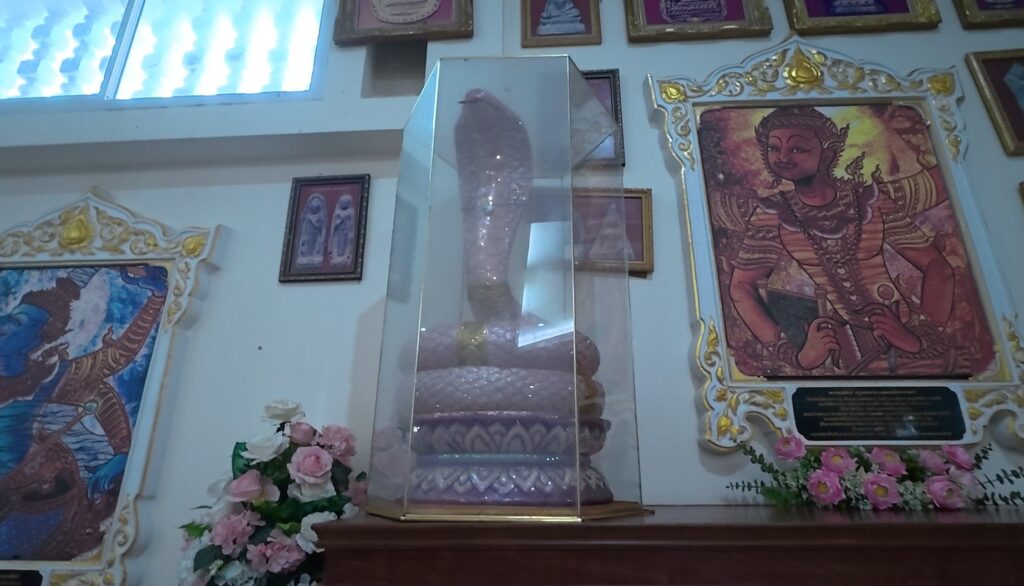
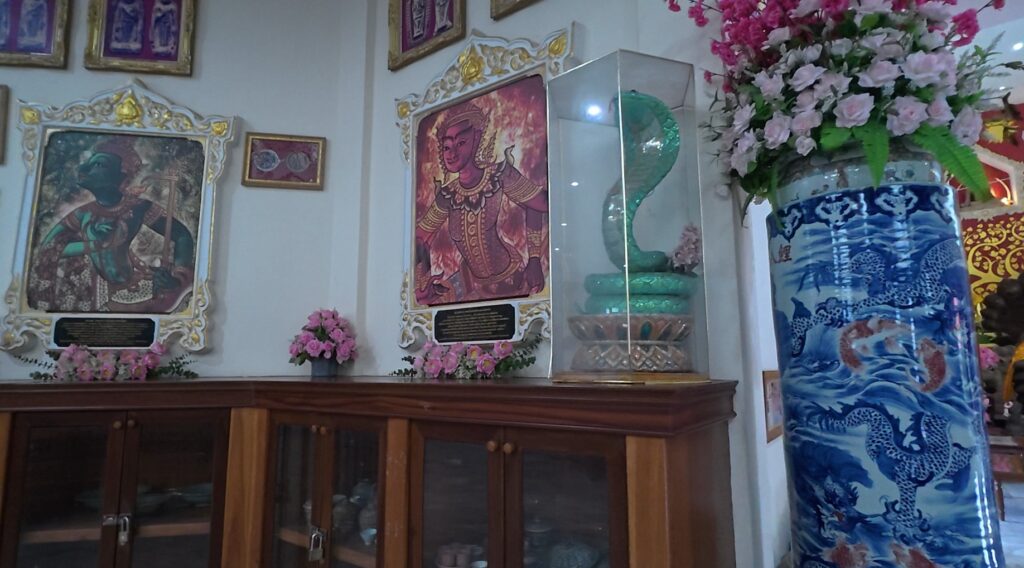
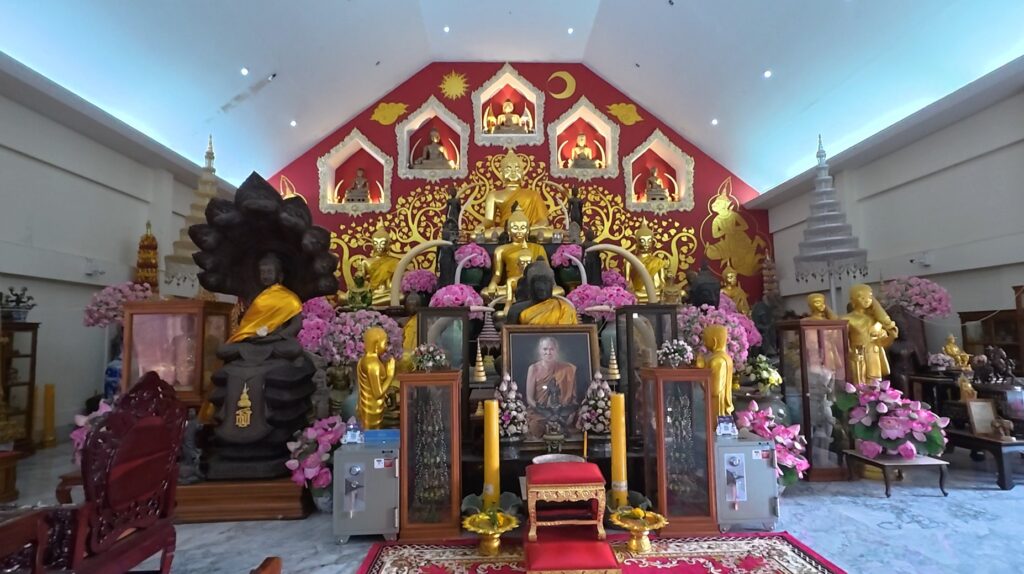
Buddha images, revered monastic figures, and sacred objects fill the peaceful ground-floor hall of the chedi-shaped building at Wat Tham Wattana Mongkol.
Buddha Images and the Memory of Revered Monks
Around the hall, I found Buddha images in several forms and postures, together with figures representing respected Buddhist monks. At first they may appear simply to be different styles of statues, but such variations often carry meaning within Thai Buddhist tradition.
Different Buddha postures and hand gestures can recall particular episodes in the Buddha’s life or express aspects of his teaching, while images of revered monks preserve the memory of teachers whose practice and wisdom inspired later generations. I could not identify every figure here with certainty, but together they gave the hall the feeling of a place where different generations of Buddhist devotion have been gathered under one roof.
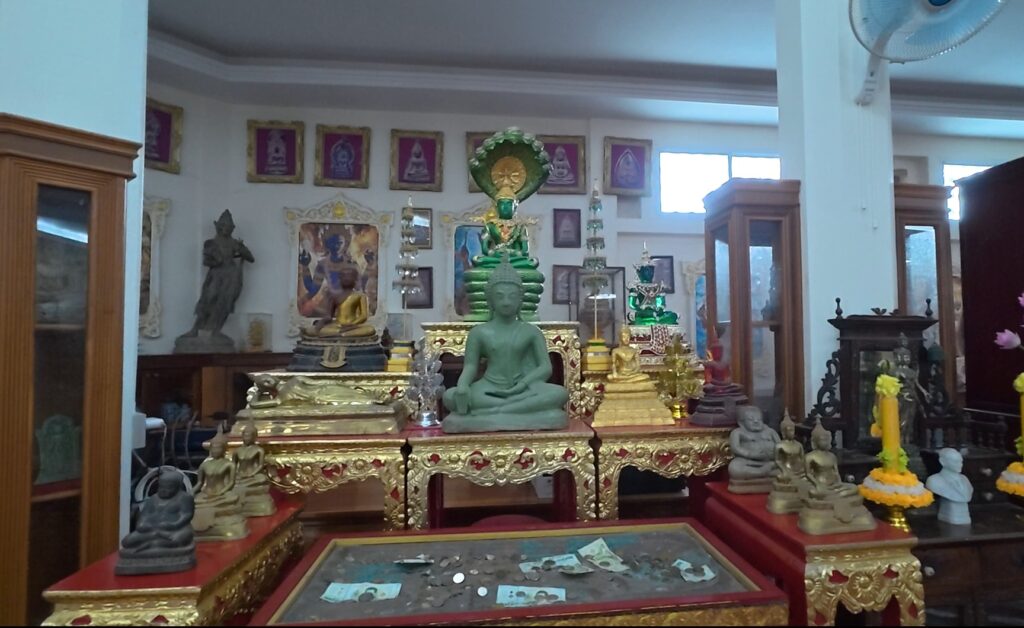
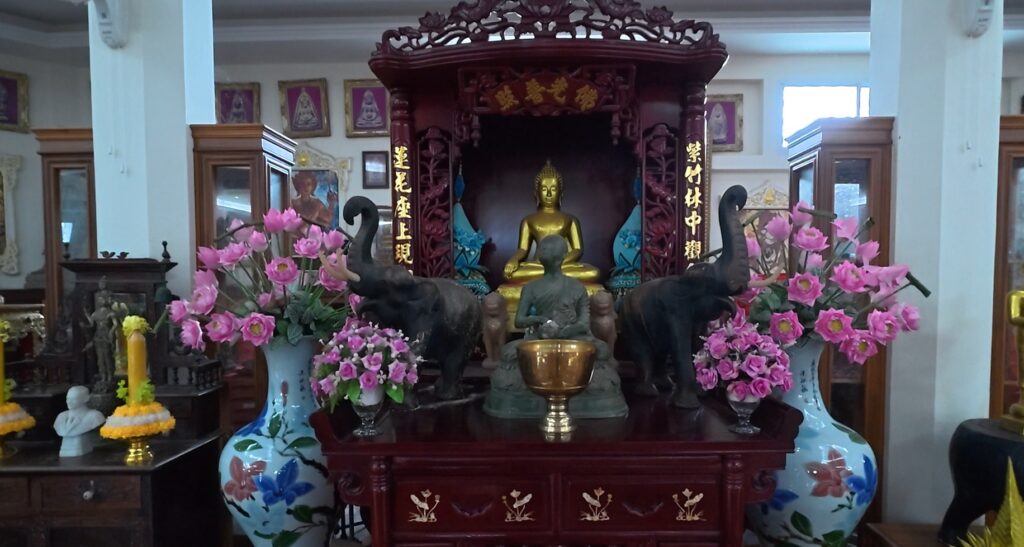
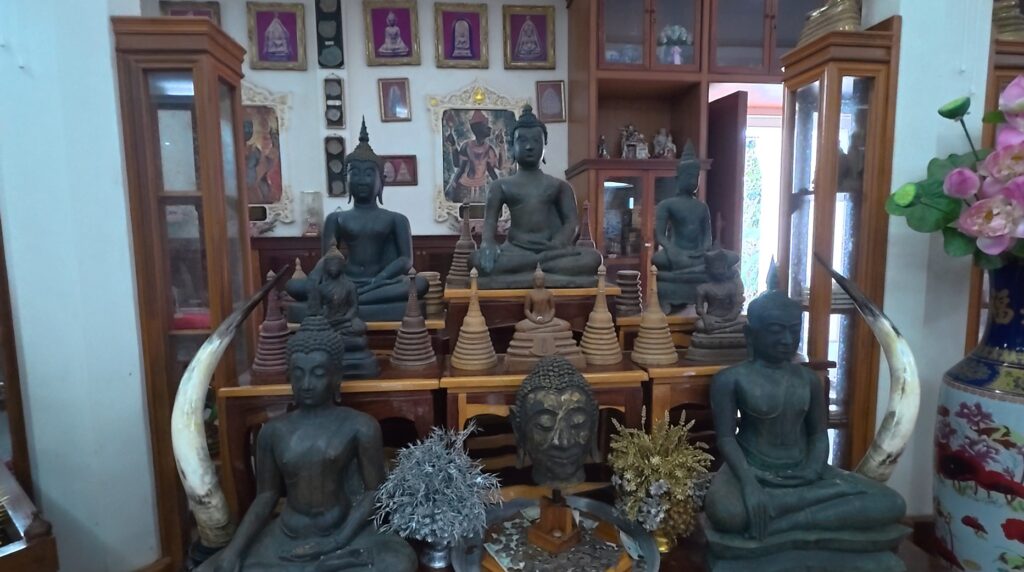
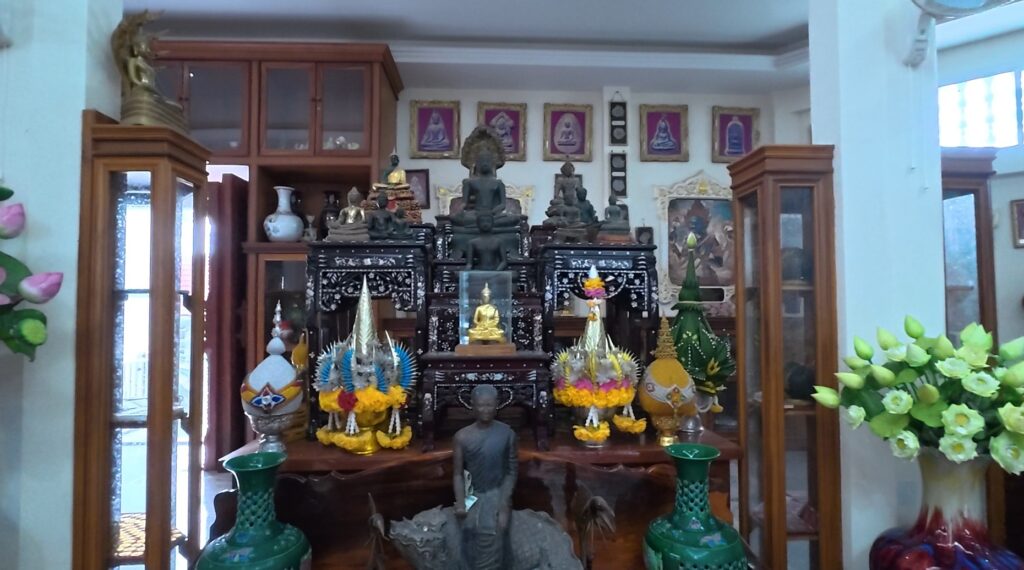
Buddha images and revered monastic figures appear in different forms and postures, reflecting the many layers of Buddhist devotion preserved within the temple.
Sacred Relics on the Second Floor
Climbing to the second floor, the atmosphere became even more solemn. At the center stood a carefully enshrined chedi, surrounded by Buddhist images, offerings, and sacred objects. Everything appeared to have been arranged with particular care, giving this upper level the feeling of a reliquary rather than simply another prayer hall.
Among the most intriguing objects were the tiny relic-like remains displayed in small transparent containers in Photos 62 and 63. They appear to be sacred relics associated with Buddhist veneration, possibly connected with a revered monk, although I could not confirm whose relics they are and would not want to identify them without reliable evidence.
The temple itself, however, has a documented connection with relic worship. Rayong Provincial Administrative Organization states that relics of the Buddha (Phra Borom Saririkathat) were ceremonially enshrined here on April 14, 2001, in a chedi made with white stone and jade from Myanmar. This helps explain why relics and chedis occupy such an important place within the temple’s sacred landscape.
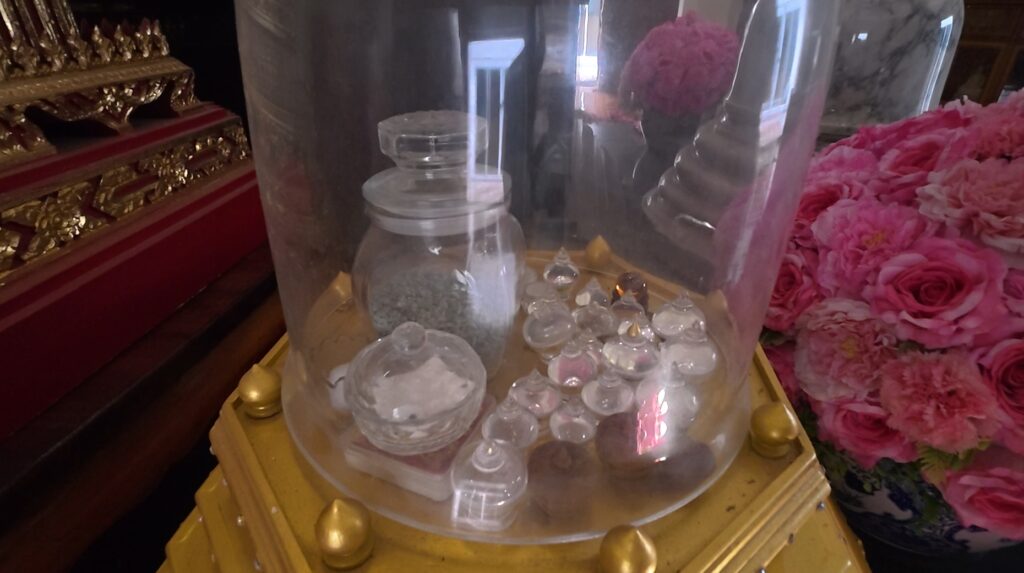
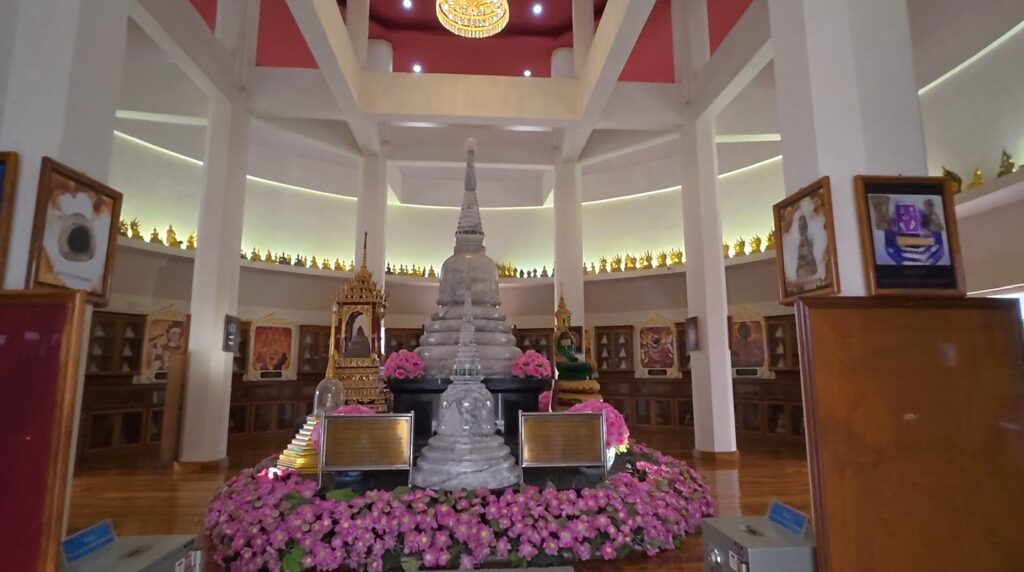
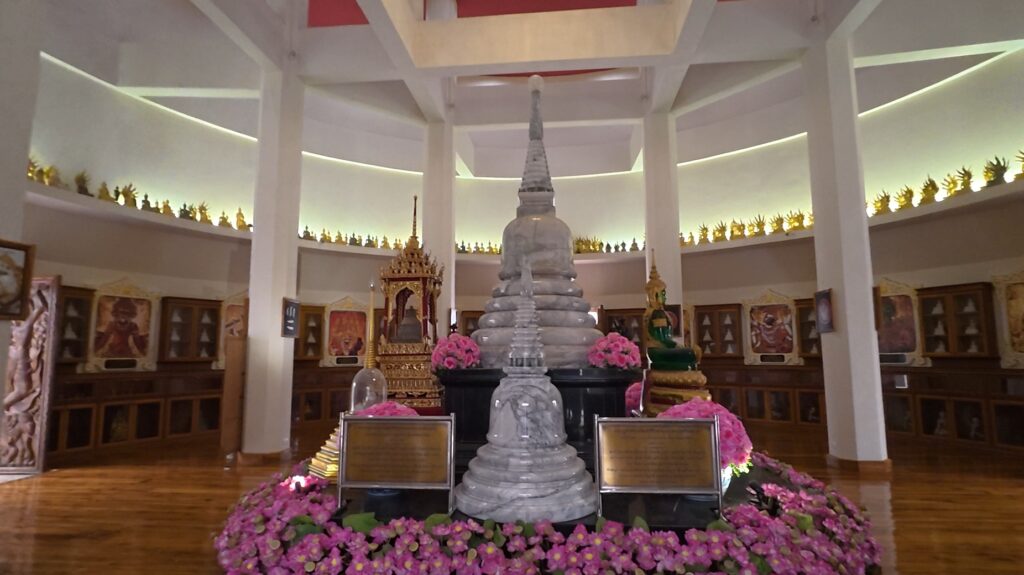
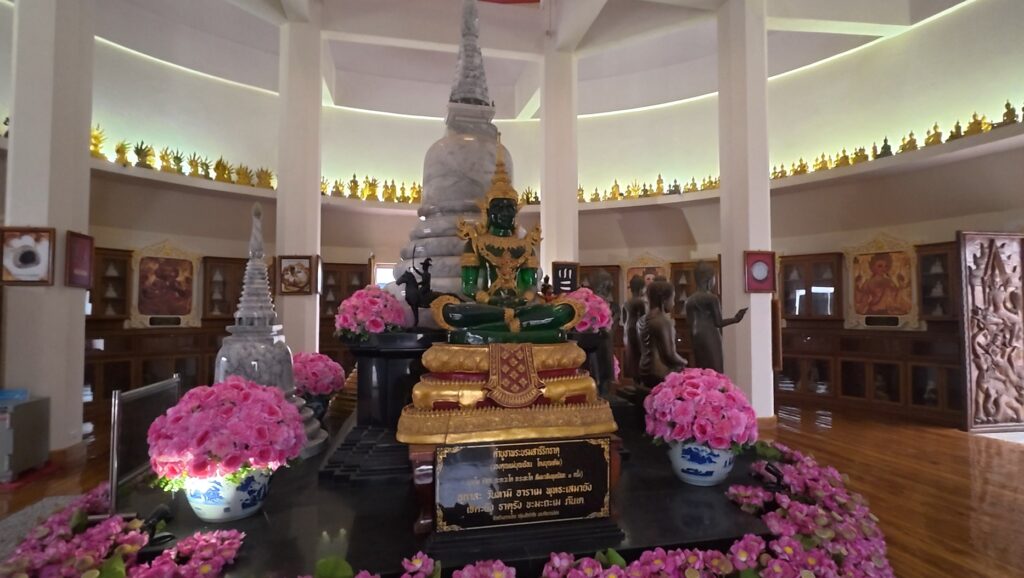
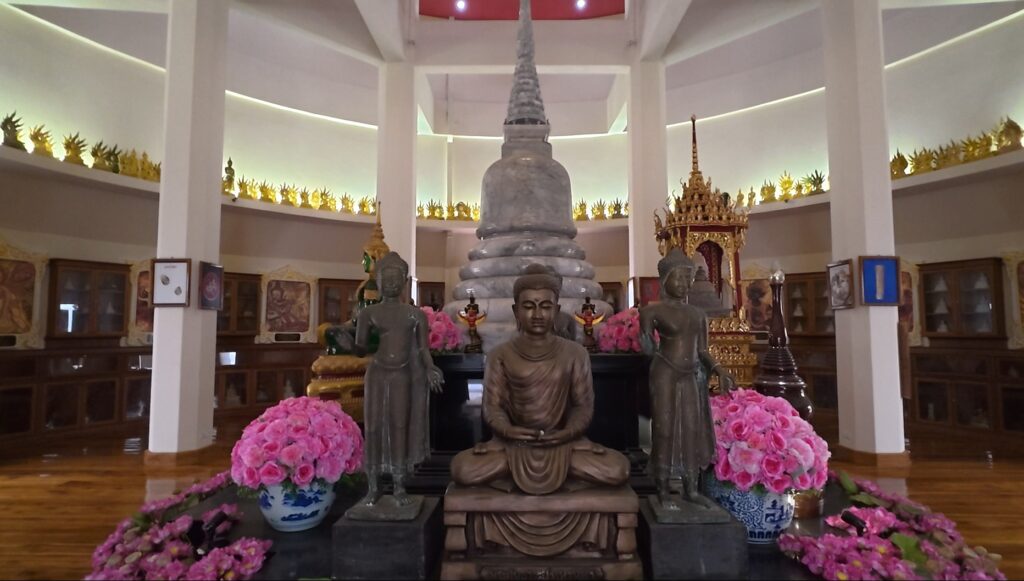
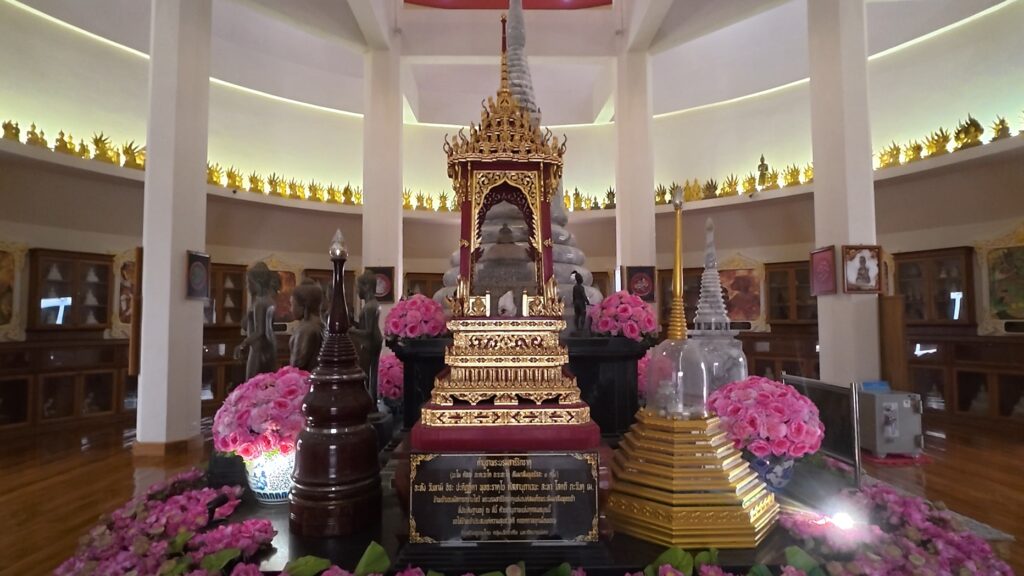
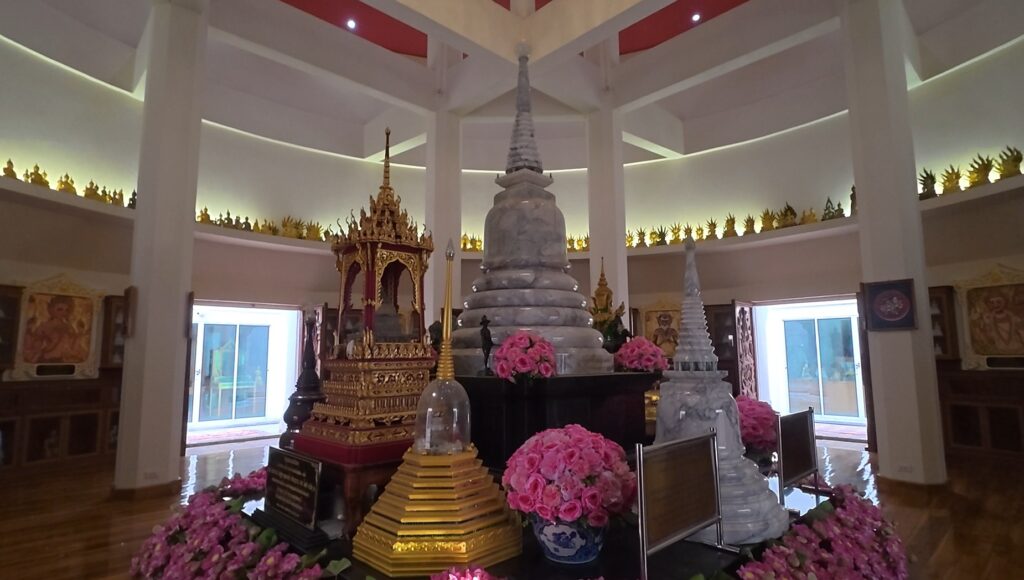
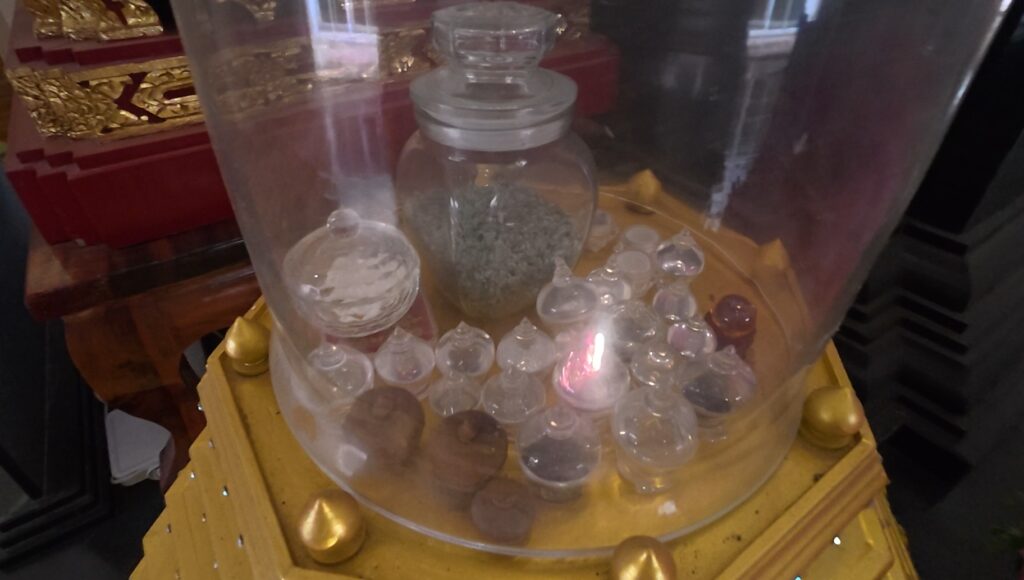
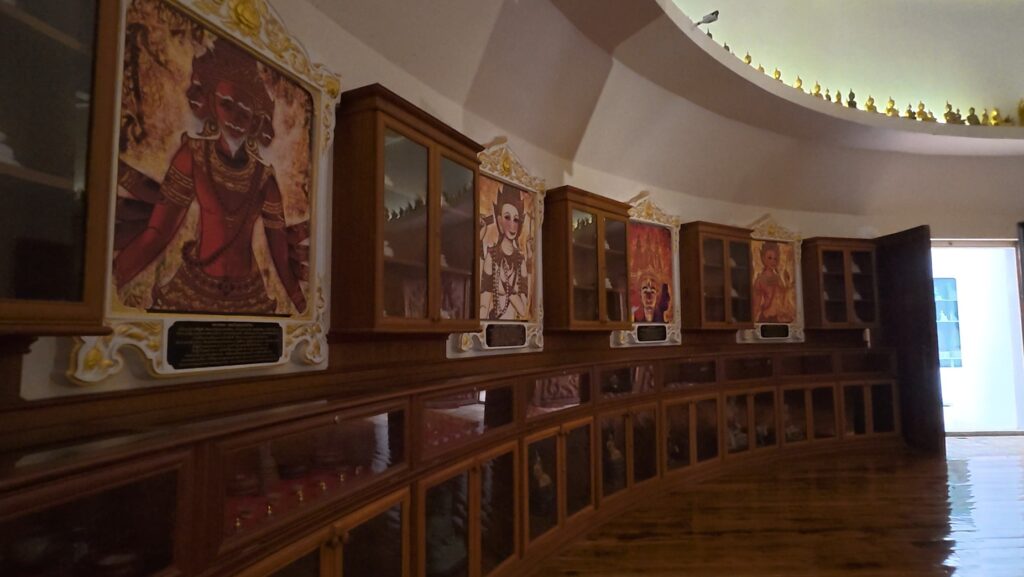
A carefully enshrined chedi, sacred images, offerings, and reliquaries create a solemn atmosphere on the second floor of Wat Tham Wattana Mongkol.
Three Touches and One Quiet Wish
Near the end of my visit, a friendly young guide led me to one of the temple’s most memorable objects — a large, emerald-colored crystal sphere resting on an ornate pedestal.
Following her guidance, I gently rubbed the smooth surface three times and made a wish. Whether understood as a local custom, a symbolic act of devotion, or simply a personal moment of hope, I did not feel the need to question it too deeply. After the cave, the prayer for my family, and the sacred relics upstairs, it felt like a natural way to bring the visit to an end.
For me, the wish itself was less important than the moment: standing quietly before the glowing green sphere, thinking about family, health, and the road still ahead.
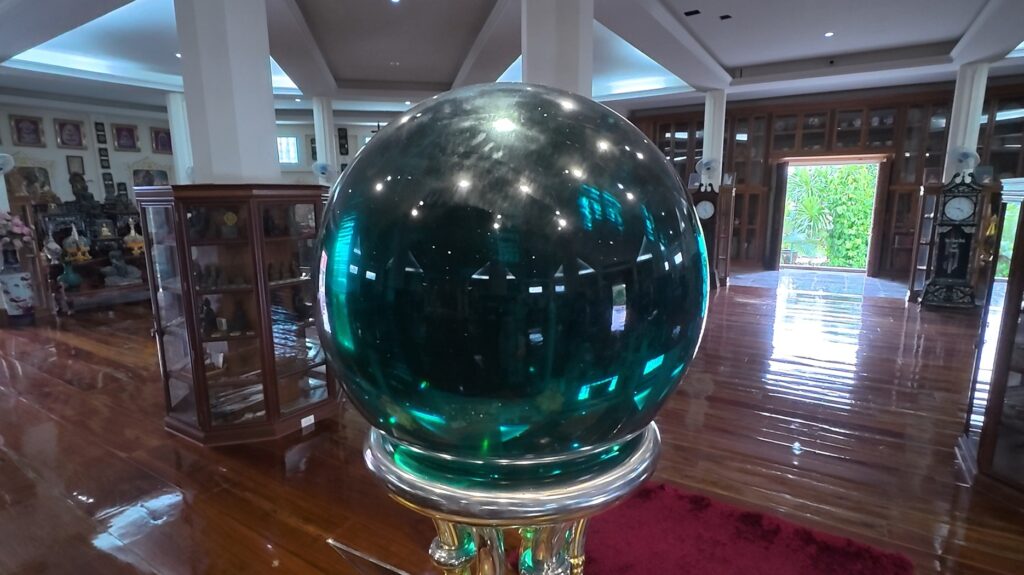
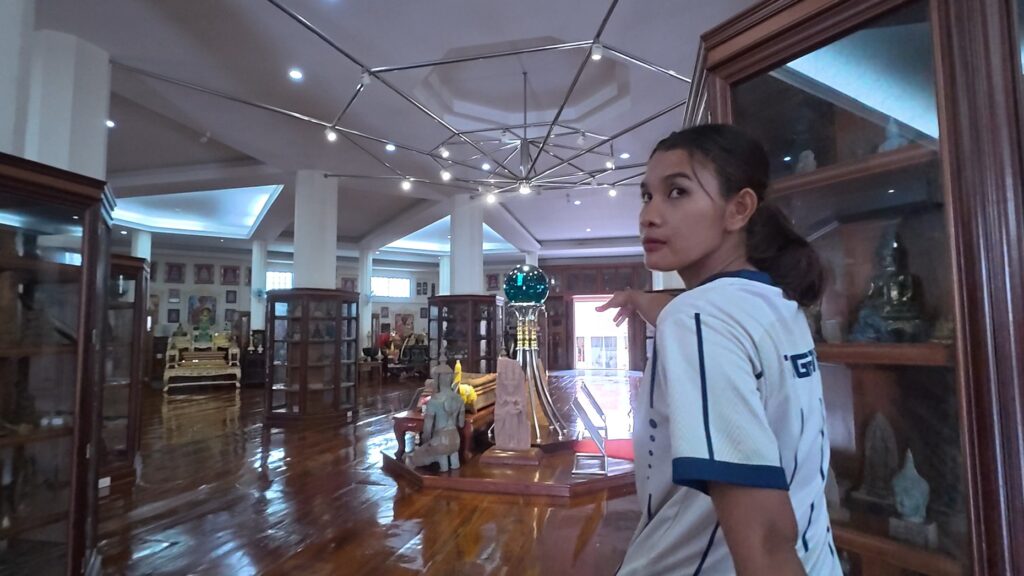
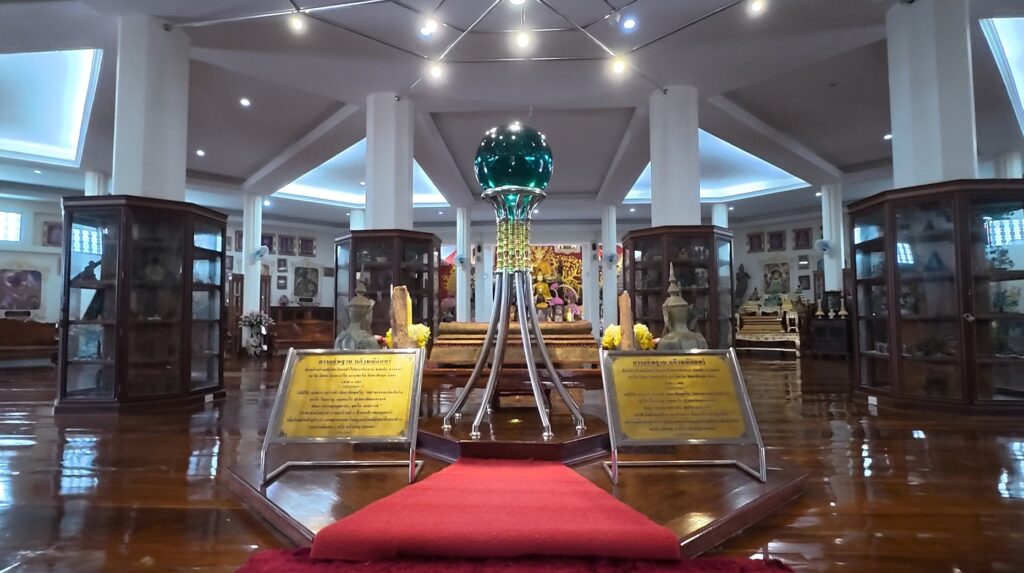
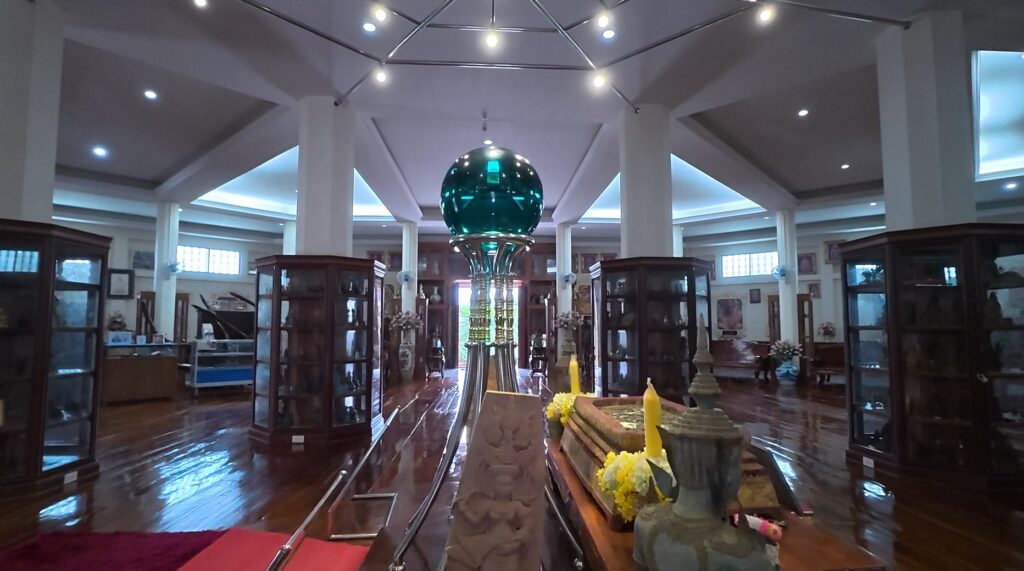
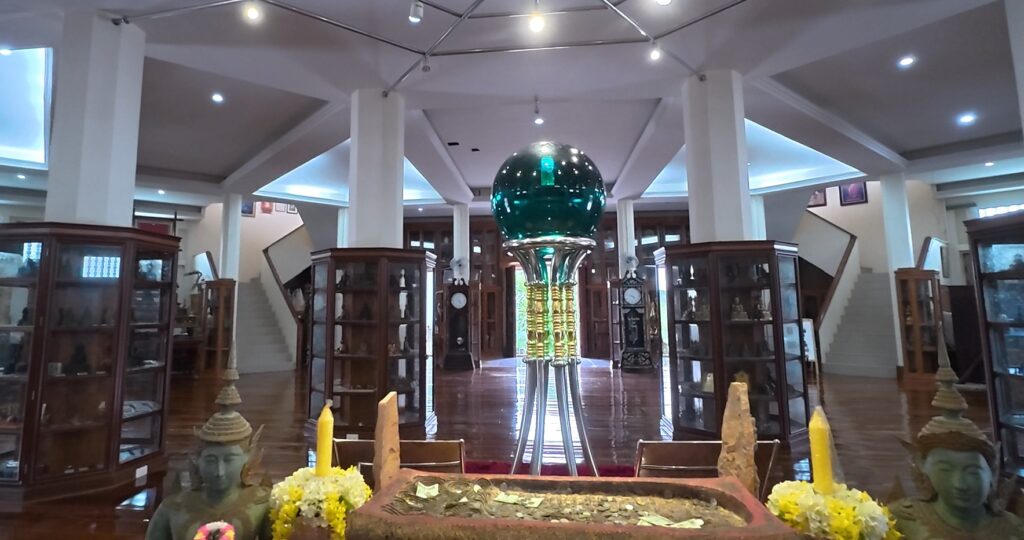
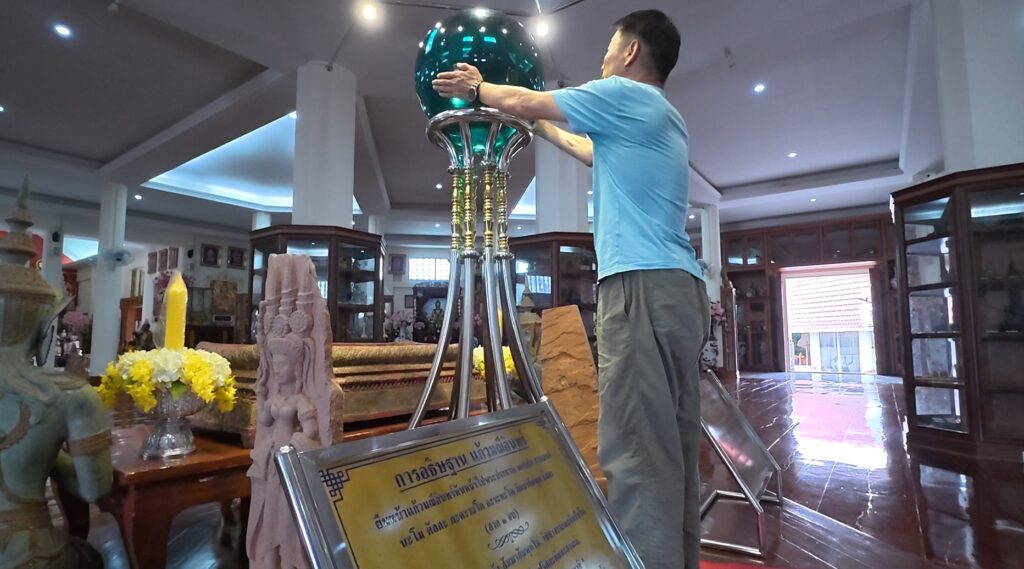
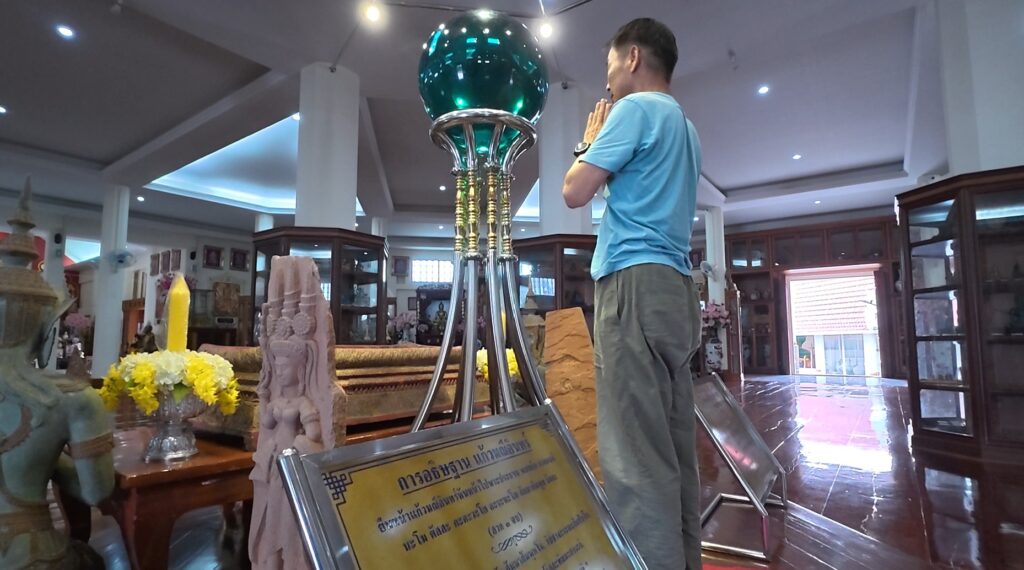
At the end of the visit, I followed the local custom shown to me by the temple guide — gently touching the emerald-colored crystal sphere three times while making a quiet wish.
The Future of Wat Tham Wattana Mongkol
Wat Tham Wattana Mongkol is already recognized as an important religious and cultural site in Rayong, but its future seems likely to remain closely tied to the surrounding forest, caves, and quiet atmosphere rather than large-scale commercial development. Local and provincial planning in the Khao Chamao area continues to consider tourism, access, and community development, while environmental agencies emphasize the value of preserving the temple’s natural and cultural setting.
If improvements come in the years ahead, they are more likely to involve better access, visitor information, conservation, and links with nearby natural attractions. For that reason, the temple today still feels like a place caught between preservation and gradual discovery — peaceful, little changed, and worth recording before more visitors begin to find it.
Location and Visitor Information
Location
Wat Tham Wattana Mongkol, Khao Chamao District, Rayong Province, Thailand. The temple lies in a quiet, green inland area of Rayong, making the ride itself part of the experience.
Admission
Generally free to enter. A small donation to support the temple is appropriate if you wish.
Best Time to Visit
Morning is recommended, when the temperature is cooler and the temple grounds are especially peaceful. The elevated area around the temple also offers pleasant views across the surrounding countryside.
Dress
As this is an active Buddhist temple and sacred site, modest clothing covering the shoulders and knees is recommended.
Photography
Photography is generally possible around the temple, but visitors should be respectful inside prayer and relic areas. Avoid disturbing people who are praying, and follow any instructions from monks or temple staff.
Footwear
Comfortable footwear is useful for exploring the cave and temple grounds. Shoes should be removed wherever indicated before entering sacred interior spaces.
Visit Time
Allow approximately 1–2 hours if visiting both the cave sanctuary and Wat Tham Wattana Mongkol at a relaxed pace.
Google Maps
Use the two Google Maps locations from this trip for the cave sanctuary and Wat Tham Wattana Mongkol. Since they are close together, they work naturally as a single visit.
Official Local Information
For additional information about attractions and Buddhist heritage in Rayong, the Rayong Provincial Administrative Organization is a useful official local source. Its information about Wat Tham Wattana Mongkol also records the enshrinement of Buddha relics at the temple.
For more information about Wat Tham Wattana Mongkol and its sacred relics, visit the Rayong Provincial Administrative Organization.
Continue exploring more Buddhist temples, sacred caves, and local beliefs across Thailand in the Won Cub Life Temple collection.