A Royal Temple Between Ayutthaya and Rattanakosin
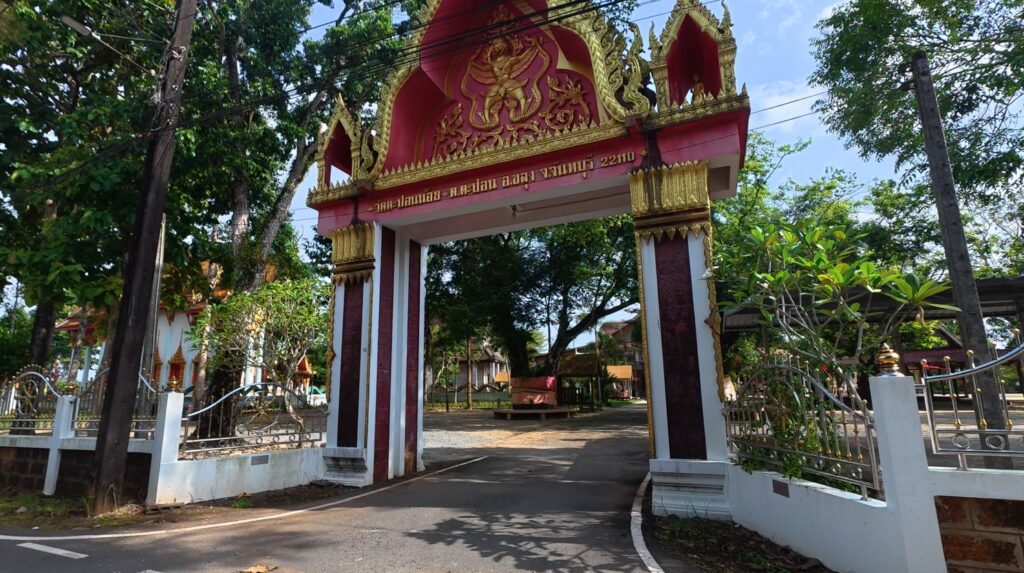
Before noon, I arrived at Wat Tapon Noi, a quiet temple hidden in the countryside of Chanthaburi.
According to the temple’s information board, this place was formerly known as Indraram and was recognized as a Royal Temple. Although the present Ubosot was built during the reign of King Rama I (1782–1809), its ancient murals date back to the late Ayutthaya period, preserving the artistic spirit of an even earlier era.
At first glance, Wat Tapon Noi appears to be a modest village temple. Yet every corner quietly reveals centuries of history, faith, and craftsmanship waiting to be discovered.
Walking Through the Ancient Temple
Passing through the small temple gate, I was welcomed by a standing Buddha at the center and seated Buddha statues inside two small pavilions on either side.
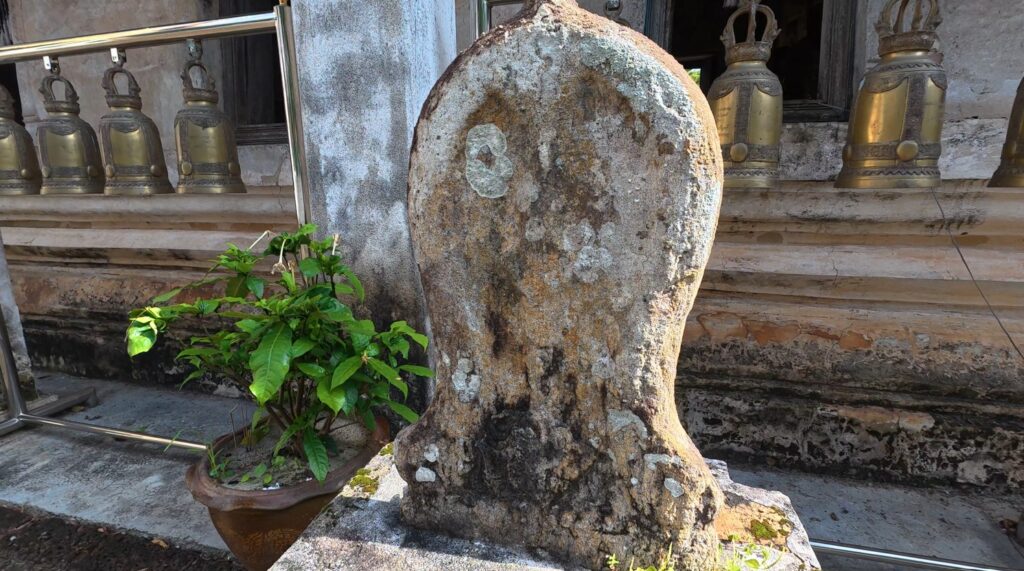
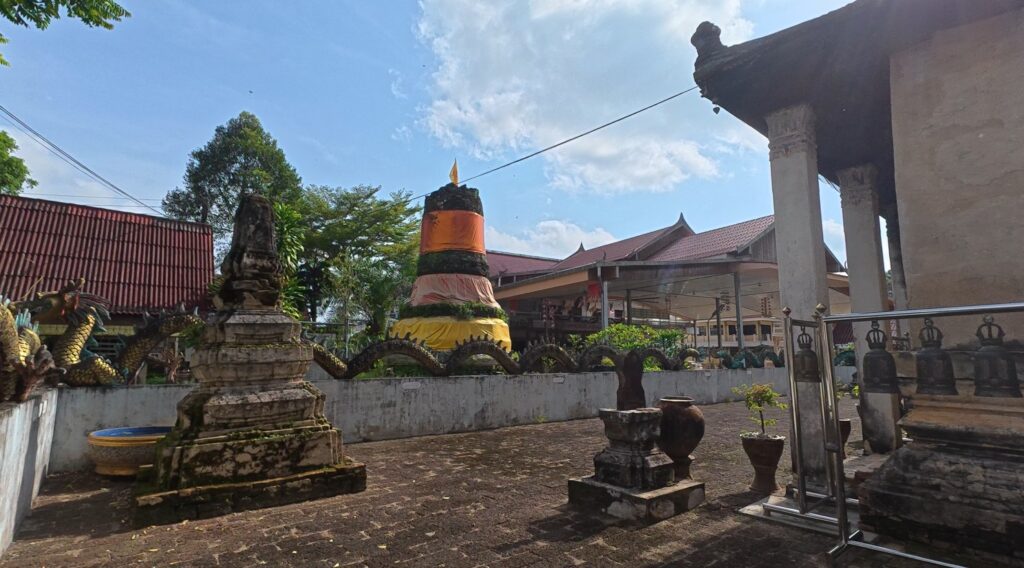
At each corner stood ancient chedis, quietly bearing the marks of centuries. The Bai Sema stones surrounding the sacred boundary silently spoke of the passing of time through their weathered forms.
some journeys are measured by the distance we travel. Others are measured by the peace we find along the way.
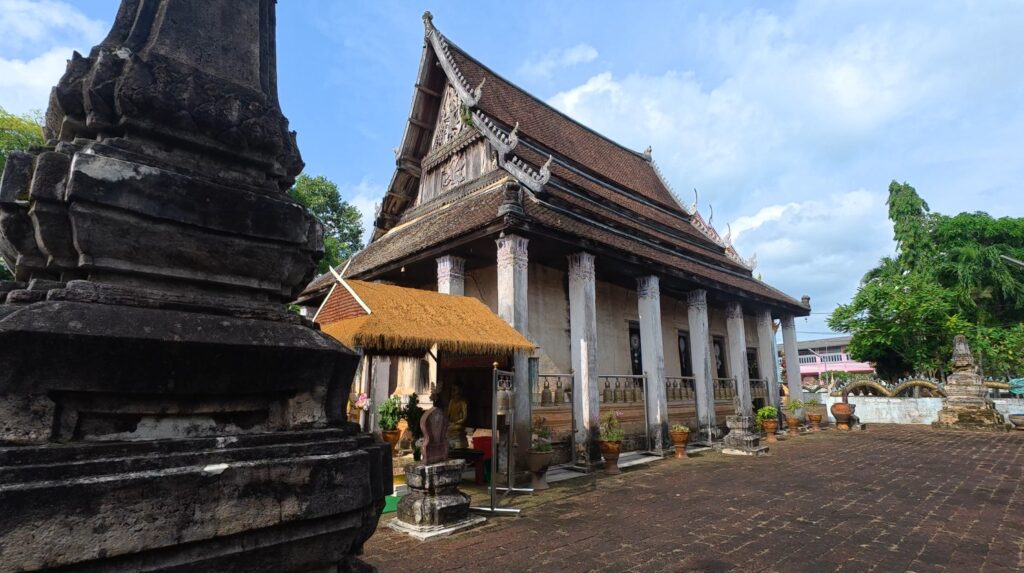
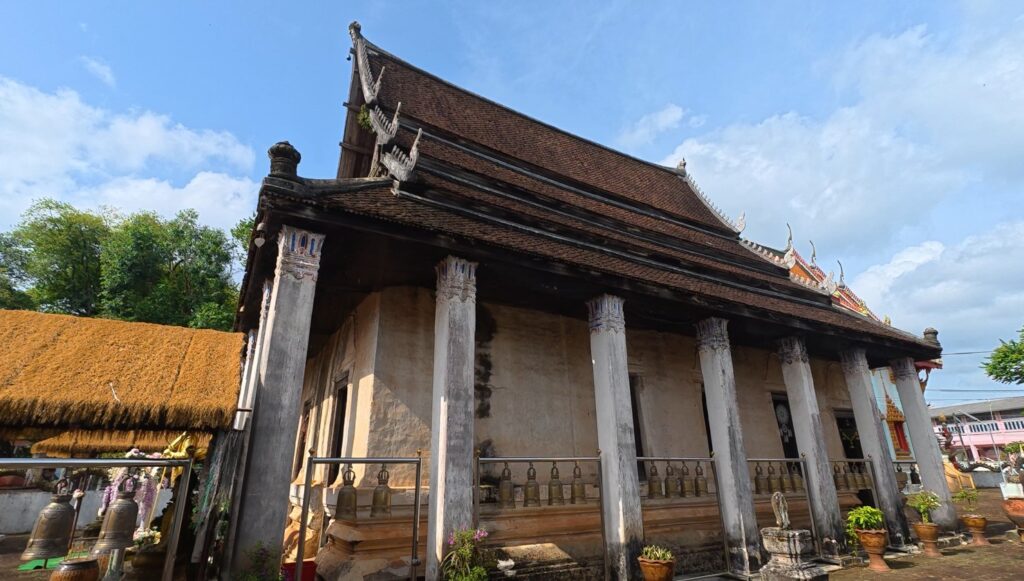
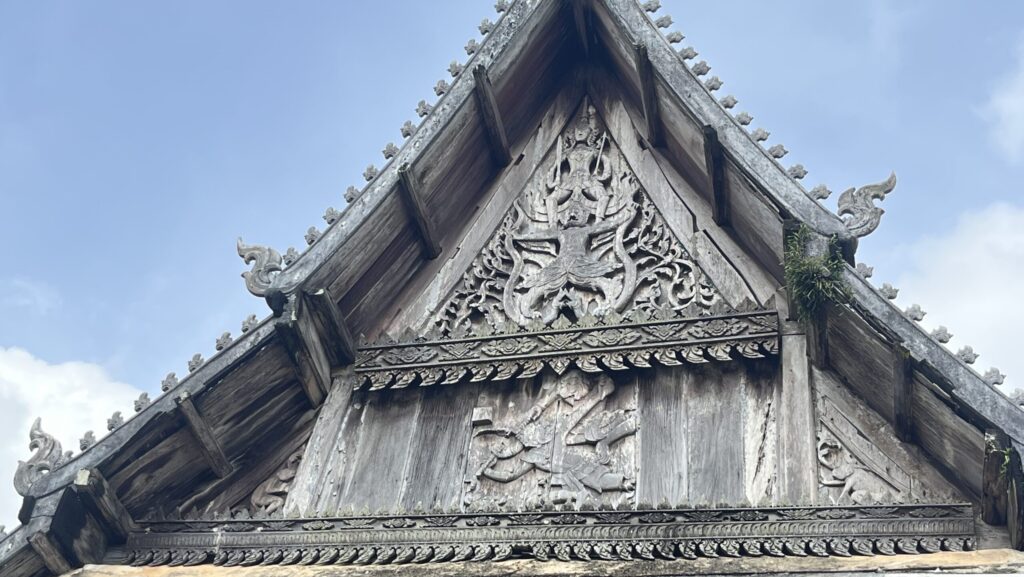
The faded walls are adorned with carvings of hermits, angels, and mythical beings. Above them, a three-tiered roof covered with Chinese ceramic tiles rises gracefully, while beautifully carved wooden gables reveal the influence of Chinese architecture.
Many bells hang between the pillars. Though they were probably added in later years, they still seem to comfort those who arrive carrying the burdens of life.
Fourteen sturdy pillars continue to support the Buddha’s dwelling, just as they have done for generations.
Passing through the entrance supported by Nangrachorn decorative pillars, I stepped quietly into the ancient Ubosot.
Inside the Ancient Ubosot
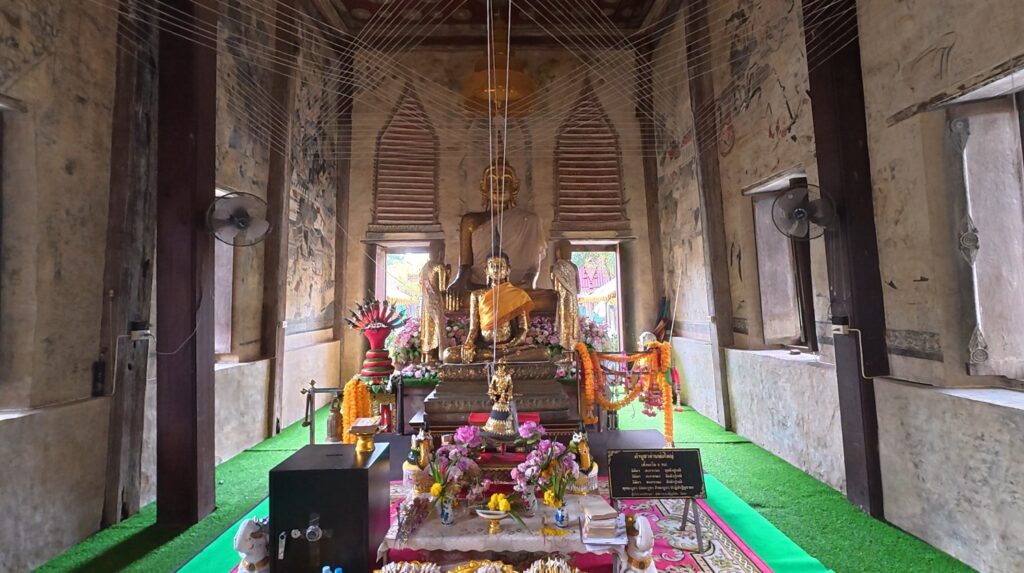
The moment I stepped inside, I could not hide my admiration.
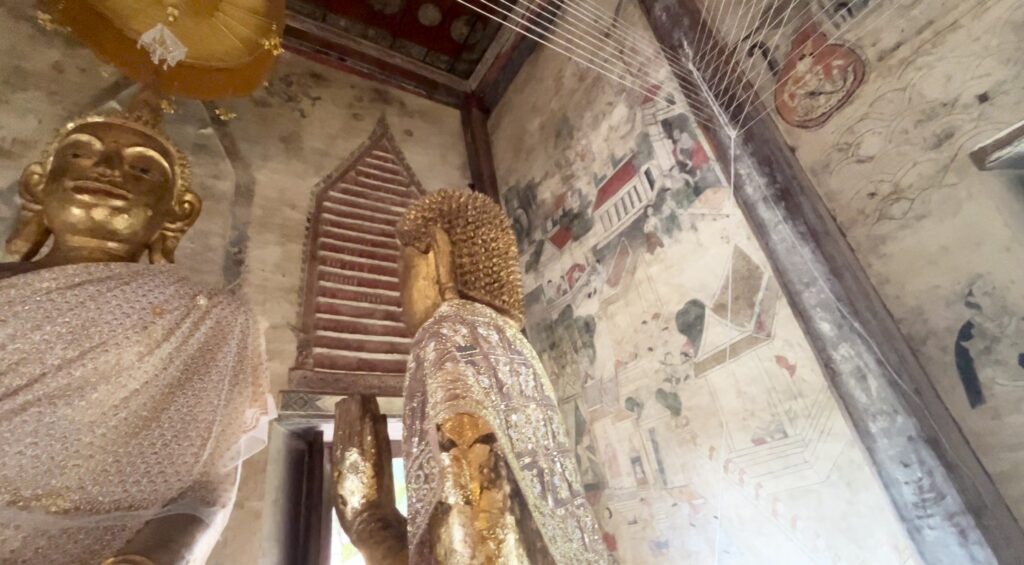
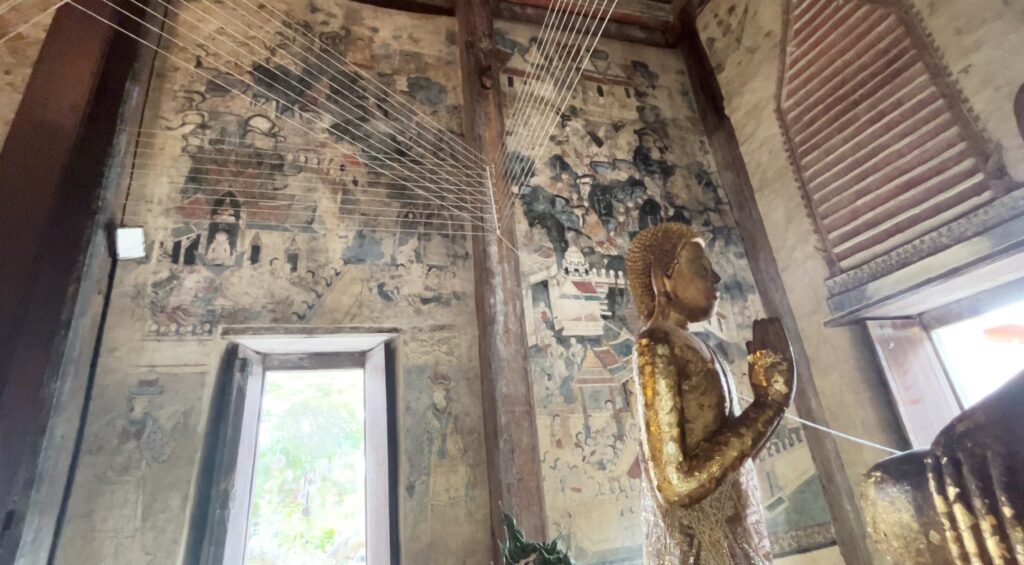
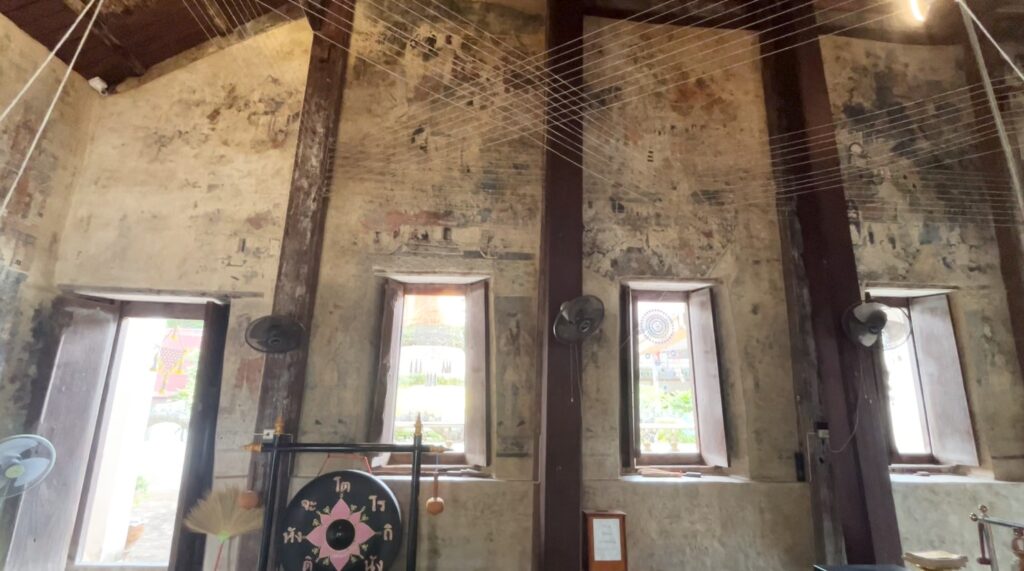
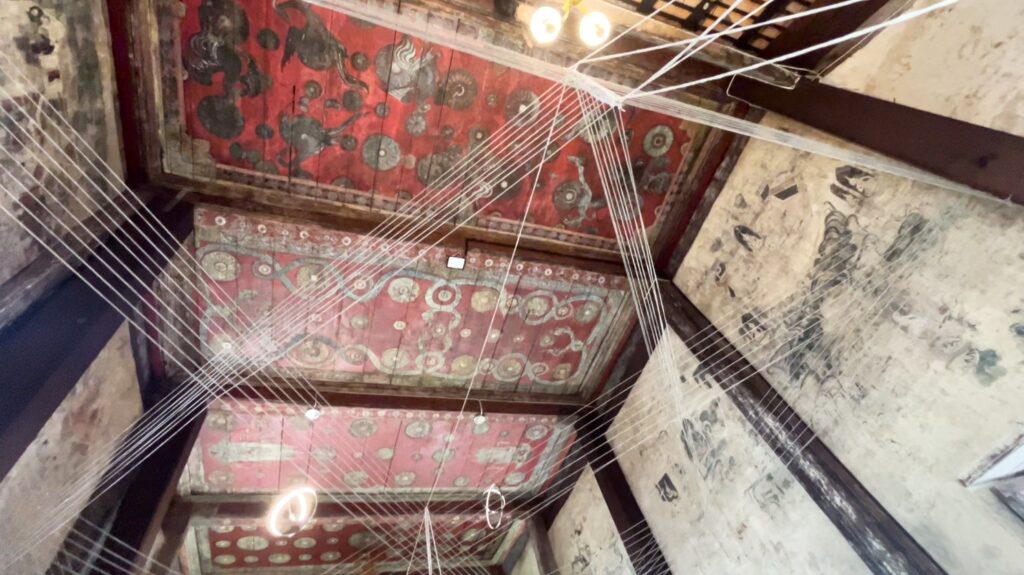
Murals painted during the late Ayutthaya period covered the walls, telling stories of ordinary people, mythical beings, wandering hermits, and above all, the sacred life and teachings of the Buddha.
Time has faded many of the colors, and much of the artwork has become blurred. Yet the devotion of the artists who painted these walls centuries ago can still be felt today.
Above me, the deep red ceiling was decorated with delicate golden patterns, creating a peaceful and sacred atmosphere.
Looking toward the Buddha, I imagined the thread of destiny extending from His hand, connecting every person through compassion and wisdom.
Standing there, surrounded by the faith of generations past, I felt overwhelmed by the sincere devotion left behind by the people of the early Rattanakosin era.
A Prayer of Gratitude
As I looked upon the disciples listening to the Buddha’s teachings, I quietly offered my own prayer.
With gratitude for arriving safely at this ancient temple, I bowed three times before the Buddha.
In that peaceful moment, I also gave thanks that Won Cub Life exists, allowing me to continue sharing these remarkable places and stories with others.
Some journeys are measured by the distance we travel.
Others are measured by the peace we find along the way.
History of Wat Tapon Noi
Wat Tapon Noi, formerly known as Indraram, is one of Chanthaburi’s historic royal temples. According to the temple’s information board, the present Ubosot was constructed during the reign of King Rama I (1782–1809), the founding period of the Rattanakosin Kingdom.
The temple is especially valued for its murals, which date from the late Ayutthaya period through the early Rattanakosin era. These paintings preserve religious teachings, scenes from daily life, and traditional Thai artistic styles that have survived for more than two centuries.
Its architecture also reflects a unique blend of Thai and Chinese influences. Chinese ceramic roof decorations, finely carved wooden gables, and Nangrachorn decorative entrance pillars make Wat Tapon Noi an important example of cultural exchange during Thailand’s early Rattanakosin period.
Today, the temple remains an active place of worship where local residents continue to preserve centuries-old Buddhist traditions.
Visitor Information
Visitor Information
Wat Tapon Noi is located in Chanthaburi Province, Thailand.
The temple is an active place of worship, so visitors should dress respectfully and remain quiet inside the historic ubosot.
Photography is generally possible around the temple grounds, but permission should be requested before photographing monks or religious ceremonies.
The best time to visit is in the morning, when the weather is cooler and the temple grounds are peaceful.
Location
Wat Tapon Noi (วัดตะปอนน้อย)
Tapon Subdistrict, Khlung District,
Chanthaburi Province 22110, Thailand
View on Google Maps: Wat Tapon Noi on Google Maps
Related Articles
Continue exploring more historic temples in Chanthaburi:
Wat Tapon Yai – A Traditional Temple in Chanthaburi
Wat Yai Phliu – A Historic Temple of Chanthaburi
Wat Thong Thua – A Quiet Temple in Chanthaburi
Muang Paniat Archaeological Site – Ancient Khmer Heritage
Official Resources
Learn more about Thailand’s cultural heritage through these official resources:
Tourism Authority of Thailand (TAT)
Fine Arts Department of Thailand
Some journeys are measured by the distance we travel.
Others are measured by the peace we find along the way.