Hidden beneath the shade of giant trees in Chanthaburi, Wat Yai Phliu appears to be an ordinary rural temple. Yet behind its quiet atmosphere lies a history connected to King Taksin, King Rama V, and more than two centuries of local faith. During my ride through eastern Thailand, I discovered that this peaceful temple preserves stories far greater than its quiet appearance suggests.
The Ride to Wat Yai Phliu
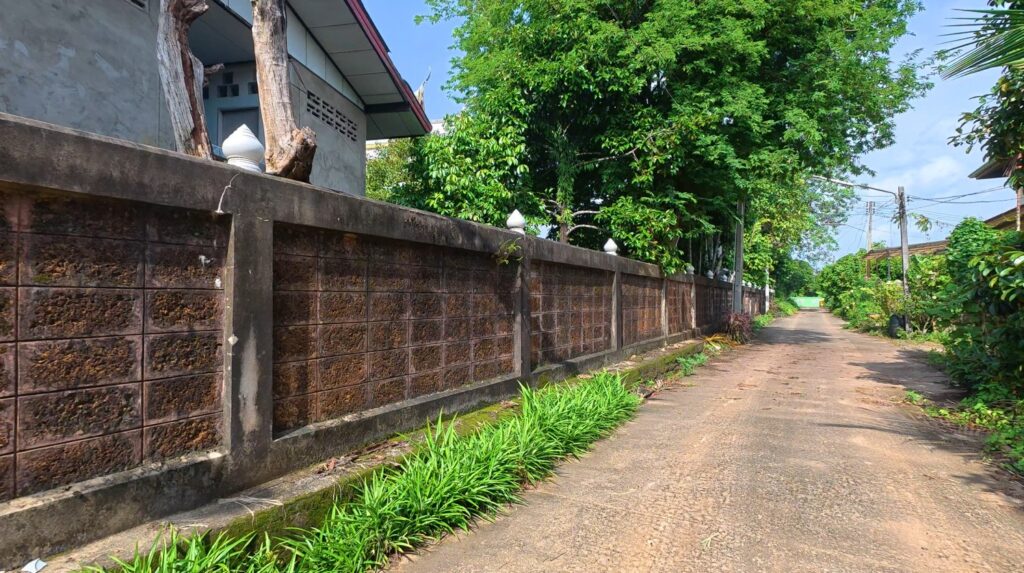
Leaving the main road behind, I slowly rode my Honda Cub through a narrow village lane. Houses, garden walls, and thick greenery stood close to the road, while large trees cast cool shadows across the path.
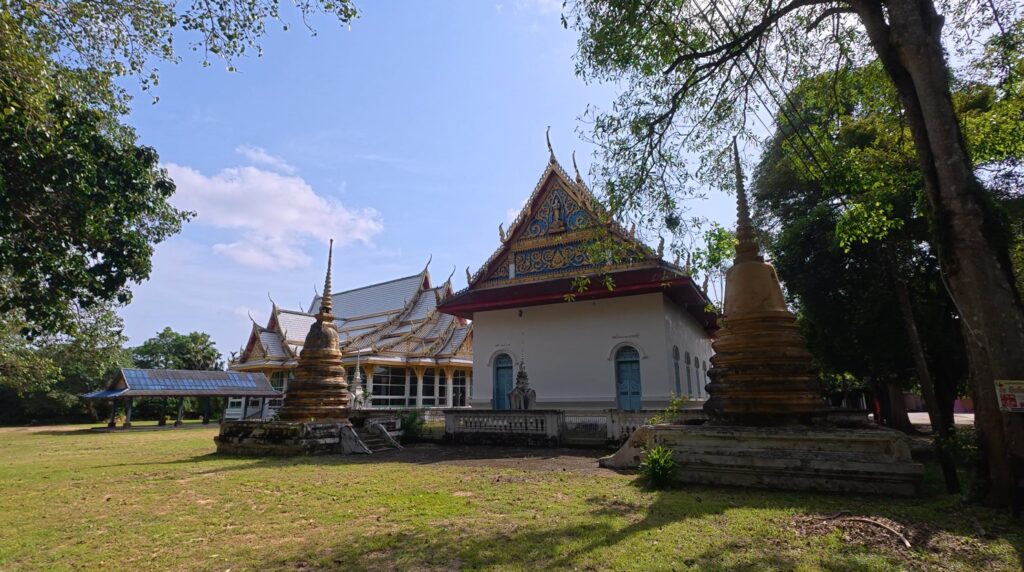
At the end of the quiet lane, Wat Yai Phliu appeared beneath the trees. At first glance, it looked like an ordinary rural temple—small, peaceful, and far removed from the busy tourist routes of Chanthaburi.
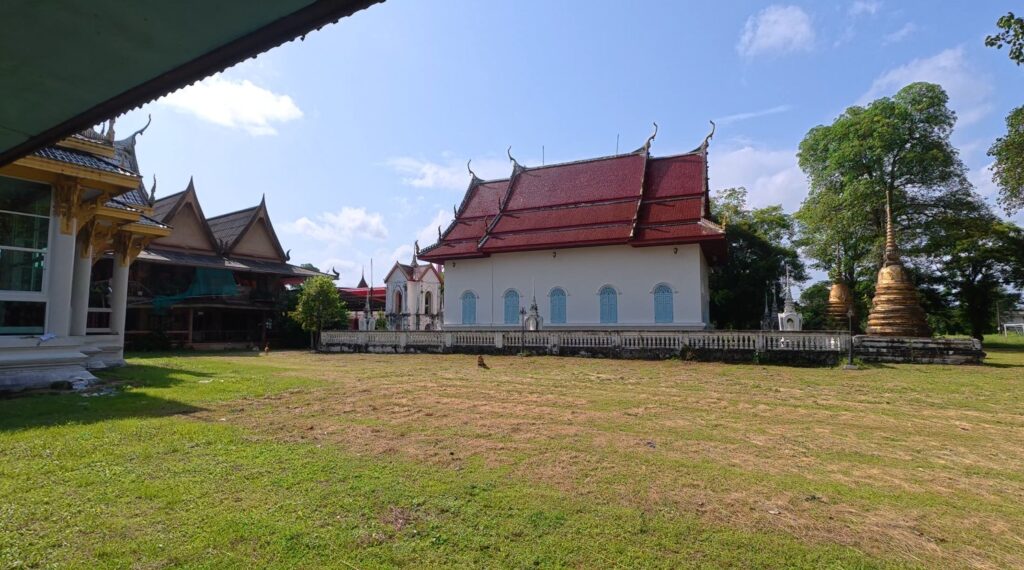
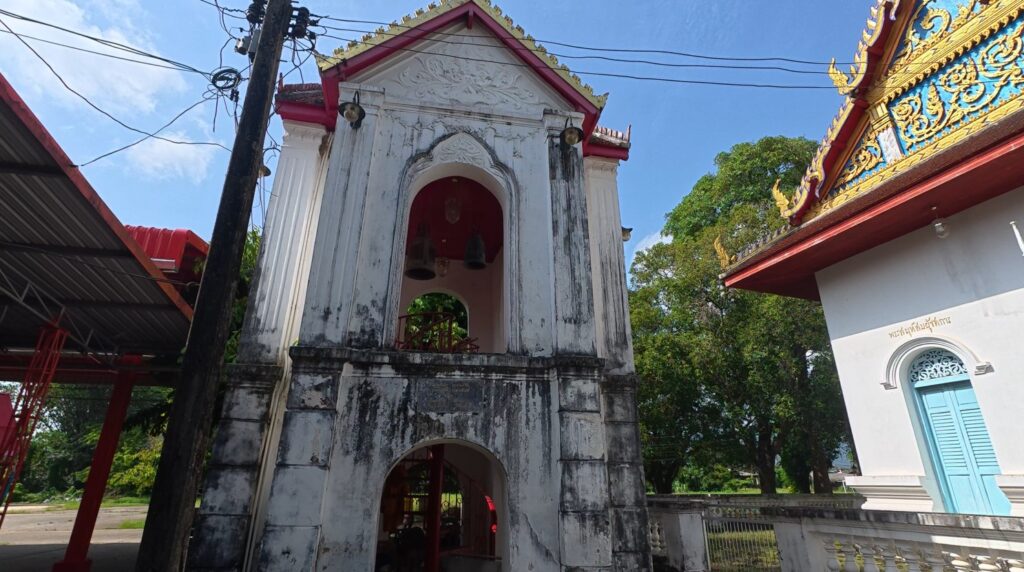
On the right stood the ubosot, or ordination hall. In the center was an unusual old structure, while a large and more recently built assembly hall occupied the left side of the temple grounds. The buildings seemed to belong to different periods, quietly revealing how the temple had changed over time.
Exploring the Historic Ubosot
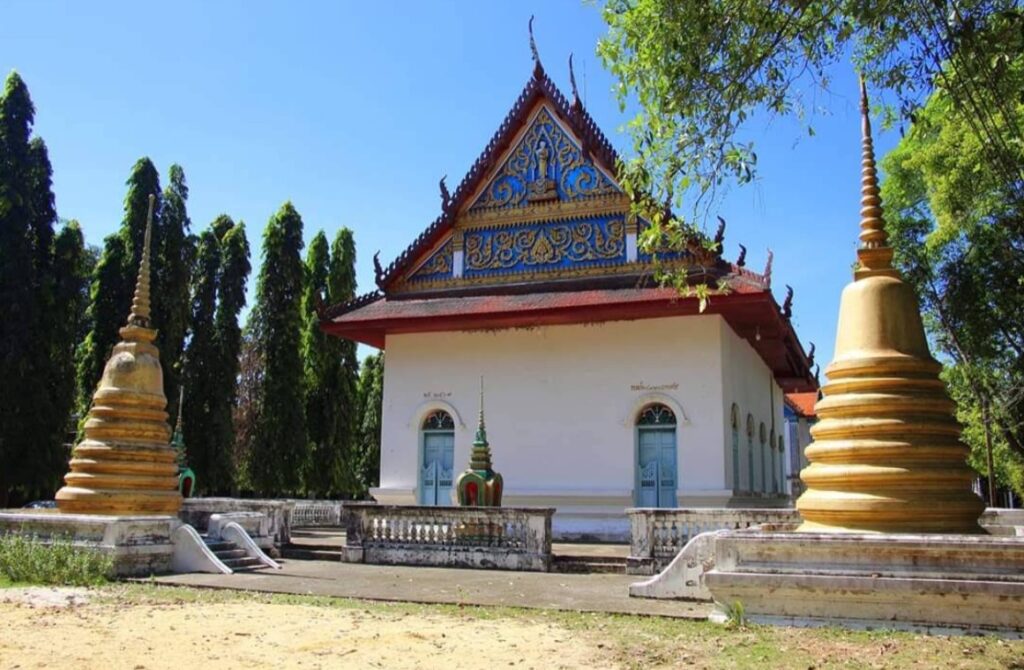
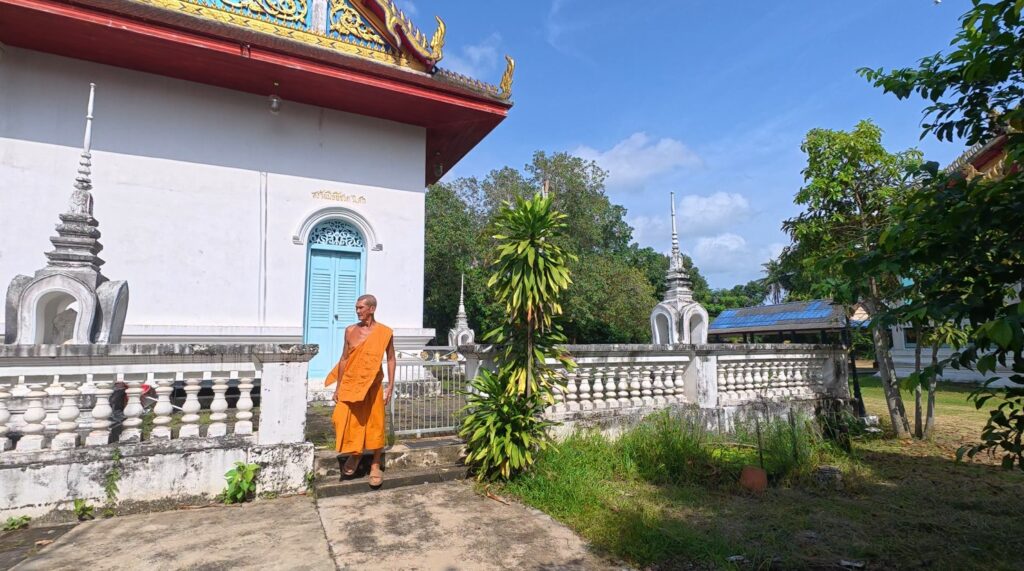
I first walked toward the ubosot. Standing at the entrance were two weathered golden chedis. Their faded surfaces suggested they had quietly watched over this temple for many decades.
As I walked around the ordination hall, the Bai Sema stones immediately caught my attention. The traditional stucco walls, simple window frames, and modest architectural details gave the temple a timeless character rather than a grand appearance.
Although parts of the temple have clearly been renovated over the years, the original atmosphere has been carefully preserved. Old and new stand together here, allowing visitors to feel the passage of time instead of hiding it.
A Quiet Story Shared by an Elder Monk
After exploring the temple grounds, I met an elderly monk.
I hoped to enter the ubosot to pay my respects to the Buddha, and he kindly tried to find the key. Although he searched for a while, he could not find it.
Even without opening the doors, he generously shared a little of the temple’s history.
According to the temple’s tradition, King Taksin stopped here during his eastern campaign after the fall of Ayutthaya. Many years later, King Chulalongkorn (Rama V) also visited this temple while traveling through eastern Thailand.
Listening to his quiet voice beneath the shade of the old trees, I realized that this peaceful country temple had witnessed some of the most important moments in Thai history.
The Monks’ Residence and a Family’s Legacy
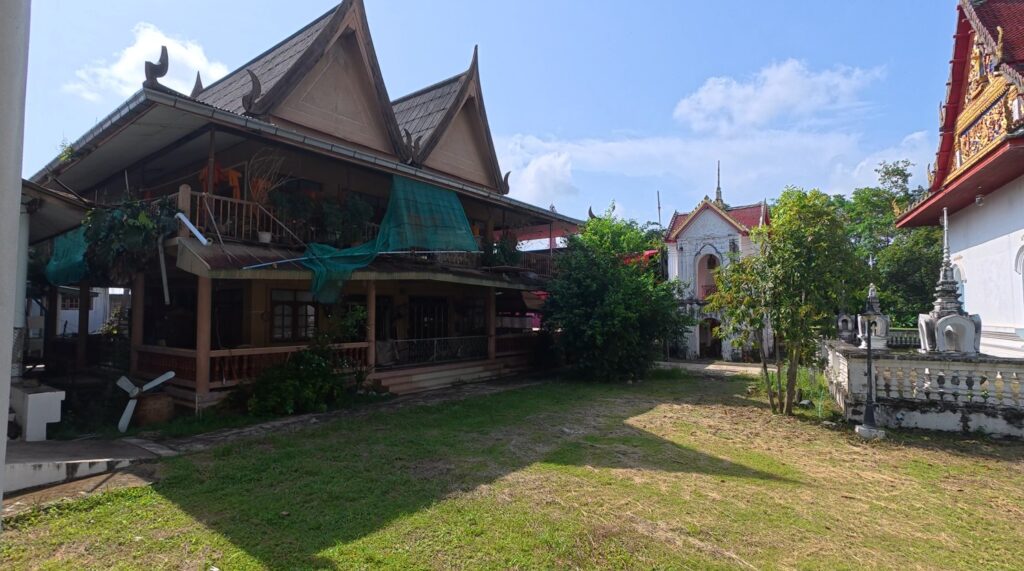
Near the bell tower, I found a traditional monks’ residence known as a kuti.
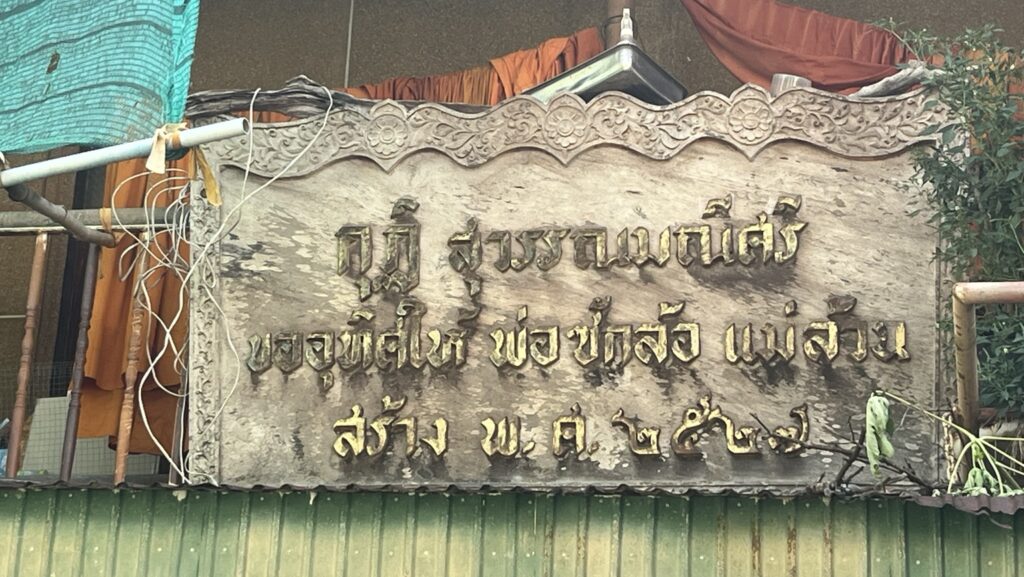
An old inscription explained that the building had been dedicated in memory of the donor’s parents. It was a simple building, but its story reflected one of Thailand’s most meaningful traditions.
Across the country, many families make merit by building or restoring temple structures in honor of their parents and ancestors. Their names remain on stone inscriptions, preserving both gratitude and family history for future generations.
Walking through Wat Yai Phliu, I realized that the temple is not only a place of worship. It is also a place where history, faith, and family continue to live together.
A Temple That Still Watches Over History
Before leaving, I took one final walk around the temple grounds.
The giant trees gently swayed in the afternoon breeze, and the quiet atmosphere seemed unchanged by time. Although I could not enter the ubosot, I had already discovered something far more valuable than an open door.
Wat Yai Phliu is not famous for magnificent architecture or large crowds. Instead, it preserves centuries of local history through its ancient structures, stone inscriptions, and the stories passed down by generations of monks.
For a brief moment, I stood where King Taksin and King Chulalongkorn are believed to have once stood. The same land, the same shade, and the same peaceful silence continue to welcome every traveler who arrives with curiosity.
I started my Honda Cub once again and slowly rode away from the temple.
Another quiet road stretched ahead.
Another forgotten place had shared its story.
And somewhere beyond the next turn, another chapter of Thailand was waiting to be discovered.
Visitor Information
Location: Wat Yai Phliu, Phlio, Chanthaburi Province, Thailand
Highlights:
- Historic temple connected with King Taksin and King Rama V
- Traditional ubosot and Bai Sema stones
- Historic monks’ residence (Kuti)
- Peaceful rural atmosphere beneath giant trees
Best Time to Visit:
Early morning or late afternoon for cooler weather and softer light.
Respect:
Please dress modestly and help keep the temple quiet during your visit.
➡️ Official Tourism Authority of Thailand
Location
Related Articles
Continue exploring the history of eastern Thailand:
- Muang Paniat Archaeological Site – Discover the ancient Khmer city of Chanthaburi.
- Wat Thong Thua – A peaceful temple preserving local Buddhist heritage.
- Cathedral of the Immaculate Conception, Chanthaburi – Thailand’s largest Catholic cathedral with more than 300 years of history.
Thank you for traveling with Won Cub Life.
Every quiet road has a story.
See you on the next ride.