Hidden in the peaceful countryside of Chanthaburi, Wat Thong Thua is one of eastern Thailand’s oldest temples. Its ancient ubosot, weathered chedi, and Dvaravati Bai Sema stones quietly preserve centuries of Buddhist faith and local history. Join me as I explore this remarkable temple on another Honda Cub journey through Thailand.
A Ride to Wat Thong Thua
The journey to Wat Thong Thua began on a quiet country road in Chanthaburi. Riding my Honda Cub through small villages and green countryside, I slowly approached one of the region’s oldest temples.
At the entrance, a golden statue of King Taksin the Great welcomed every visitor. Nearby, an ancient brick chedi stood silently, its weathered surface covered with moss and traces of passing centuries.
The peaceful surroundings immediately reminded me that this was more than a temple. It was a place where history, faith, and time continue to exist together.
The Ancient Ubosot of Wat Thong Thua
Beyond the modern temple buildings, I found the place I had been looking for—the ancient ubosot of Wat Thong Thua.
Its simple walls, old wooden windows, and traditional tiled roof reflected the craftsmanship of another era. Unlike many richly decorated temples, this historic building expressed its beauty through simplicity and quiet dignity.
Walking around the ubosot, I discovered ancient Bai Sema stones marking the sacred boundary of the ordination hall. According to the temple’s information board, some of these stones are believed to date back to the Dvaravati period, making them among the oldest surviving Buddhist monuments in eastern Thailand.
Although the old ubosot had suffered the effects of time, it was carefully restored between 2000 and 2001. Today, it continues to stand as a symbol of the community’s respect for its religious and cultural heritage.
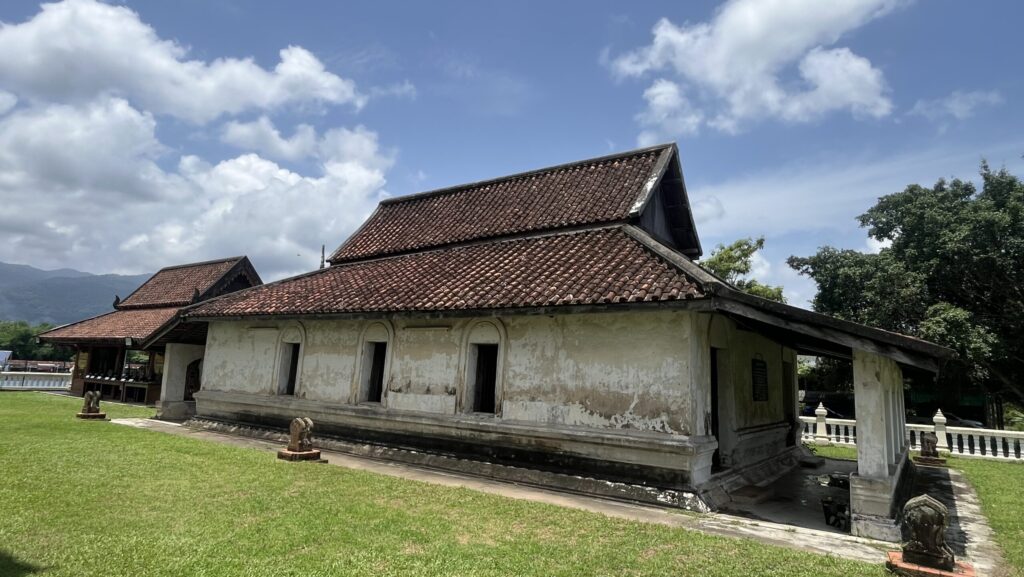
Historic Ubosot of Wat Thong Thua surrounded by ancient Bai Sema stones
The Silent Chedi and the Passing of Time
Near the ancient ubosot stands an old brick chedi that has quietly watched over the temple for generations.
Its weathered bricks are now covered with soft green moss, while small plants have found life between the cracks. Every layer tells a story that no words can fully explain.
Standing before the chedi, I realized that time changes everything. The colors fade, the stones grow old, and even the strongest buildings slowly return to nature.
Yet this ancient monument has never lost its purpose.
It continues to remind every visitor that faith is not measured by beauty or grandeur, but by the devotion that survives through countless generations.
As I quietly walked around the chedi, I felt the peaceful rhythm of time itself.
Perhaps history is not something we simply read in books.
Sometimes, it lives silently within old bricks, weathered stones, and sacred places that continue to inspire those who pause long enough to listen.
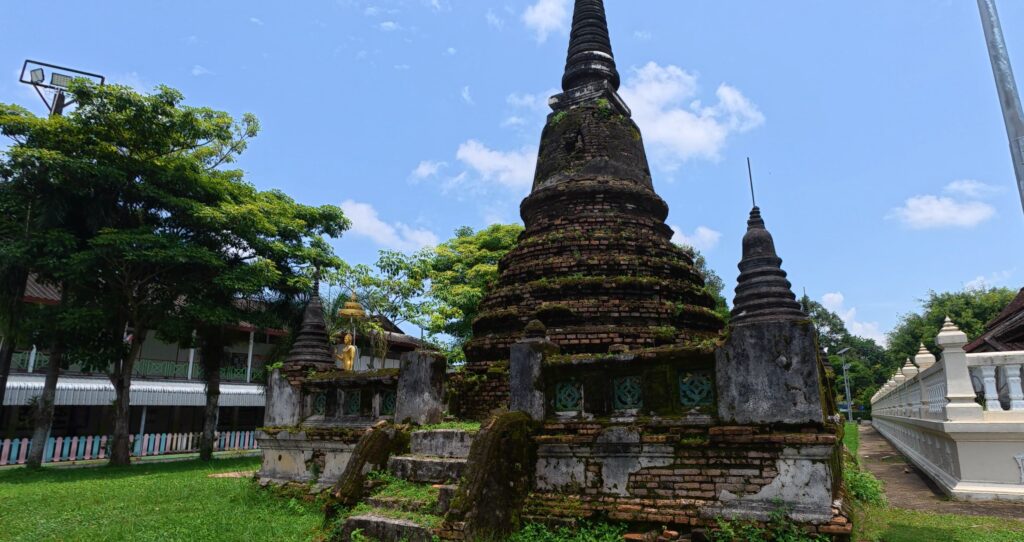
An ancient chedi quietly preserving centuries of Buddhist history at Wat Thong Thua.
A Prayer Inside the Ancient Ubosot
After exploring the ancient grounds, I quietly stepped inside the old ubosot.
The atmosphere immediately changed. Soft light filtered through the wooden windows, while white sacred threads, known as Sai Sin, stretched across the hall above a peaceful golden Buddha.
In Thai Buddhism, these sacred threads symbolize blessings, protection, and the spiritual connection shared between monks and laypeople during important ceremonies.
Standing before the Buddha, I joined my hands in prayer and offered my deepest respect.
For a few quiet moments, the sound of the outside world disappeared. Only stillness remained.
This visit reminded me that temples are more than historical monuments. They are living places of faith where generations have come to pray, reflect, and find peace.
As I left the ancient ubosot, I carried with me not only photographs and memories, but also a renewed appreciation for Thailand’s rich spiritual heritage.
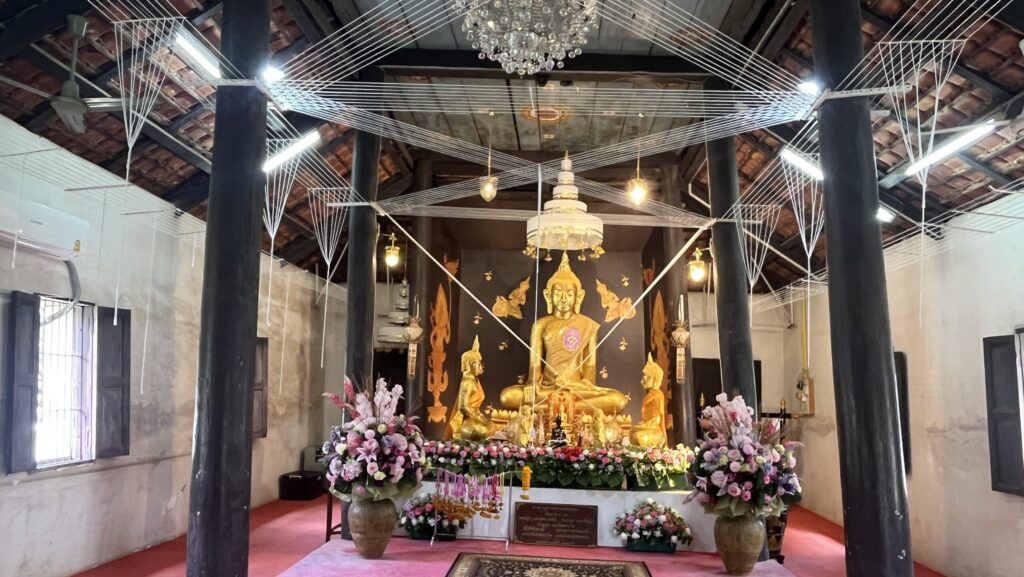
Golden Buddha beneath sacred Sai Sin threads inside the ancient ubosot
Visitor Information
Wat Thong Thua is located in Chanthaburi Province, eastern Thailand. The temple can be reached easily by motorcycle or car, and parking is available within the temple grounds.
Visitors should dress respectfully, remove their shoes before entering the ubosot, and avoid disturbing people who are praying.
The temple grounds include the ancient ubosot, old Bai Sema boundary stones, a historic chedi, a modern ordination hall, and a museum that preserves local religious and cultural objects.
The atmosphere is usually quiet, making it a good place to explore slowly and appreciate the history, architecture, and Buddhist traditions of Chanthaburi.
Location
Wat Thong Thua is located in Mueang Chanthaburi District, Chanthaburi Province. Use the Google Maps link below for directions to the temple.
📍 View the location on Google Maps
Related Temple Stories
For another quiet journey through eastern Thailand’s historic Buddhist heritage, read my visit to Wat Thung Khwai Kin, a forgotten rural temple in Rayong.
For official visitor information and historical background, see the Tourism Authority of Thailand’s page about Wat Thong Thua.
Until the Next Journey
As I rode away from Wat Thong Thua, I realized that history does not end at the temple gate.
Beyond these ancient walls, another chapter is waiting to be discovered.
In the next journey, I will explore the museum of Wat Thong Thua, where more stories, artifacts, and local history continue to preserve the heritage of Chanthaburi.
Thank you for joining me on another Honda Cub adventure through Thailand.
See you in the next story.
Ride safely, and keep discovering the hidden treasures of Thailand.