In the rural fields of Klaeng, Rayong, there is a quiet temple that feels almost forgotten by time.
Wat Thung Khwai Kin is not a place of golden luxury or crowded tourism.
It is a temple of old walls, faded paintings, sacred boundary stones, and a silence that still carries the faith of the village.
A Quiet Temple in Rural Rayong
Wat Thung Khwai Kin is located in Klaeng District, Rayong Province, away from the busy tourist routes. At first glance, it may look like a small local temple, but its old ordination hall tells a deeper story.
The temple is connected with the rural landscape of Rayong, where fields, village life, and Buddhist faith have long existed together. Its name, Thung Khwai Kin, can be understood as “the field where buffaloes grazed,” reflecting the agricultural life that once shaped this area.
The History of Wat Thung Khwai Kin
According to local records, Wat Thung Khwai Kin dates back to around 1757. The temple was originally established with land donated by local villagers, and it later became known as Wat Udom Thanyawas before returning to the name Wat Thung Khwai Kin.
The name itself is closely connected to the rural past of this area. “Thung” means field, “Khwai” means buffalo, and “Kin” means to eat. Together, the name recalls a time when buffaloes grazed in the open fields of Klaeng.
This simple name gives the temple a very local character. It is not only a Buddhist temple, but also a reminder of the agricultural life that once surrounded it.
The Old Ordination Hall
One of the most important features of Wat Thung Khwai Kin is its old ordination hall. An inscription records that this hall was built in 1909, making it more than one hundred years old.
The building may look worn and fragile, but that is also what gives it its beauty. Its old walls, faded paintings, and traditional roof details show the quiet faith of the people who built and maintained it through generations.
This ordination hall is not only an architectural structure. It is a sacred space where Buddhist rituals were performed, and where the spiritual life of the village was centered.
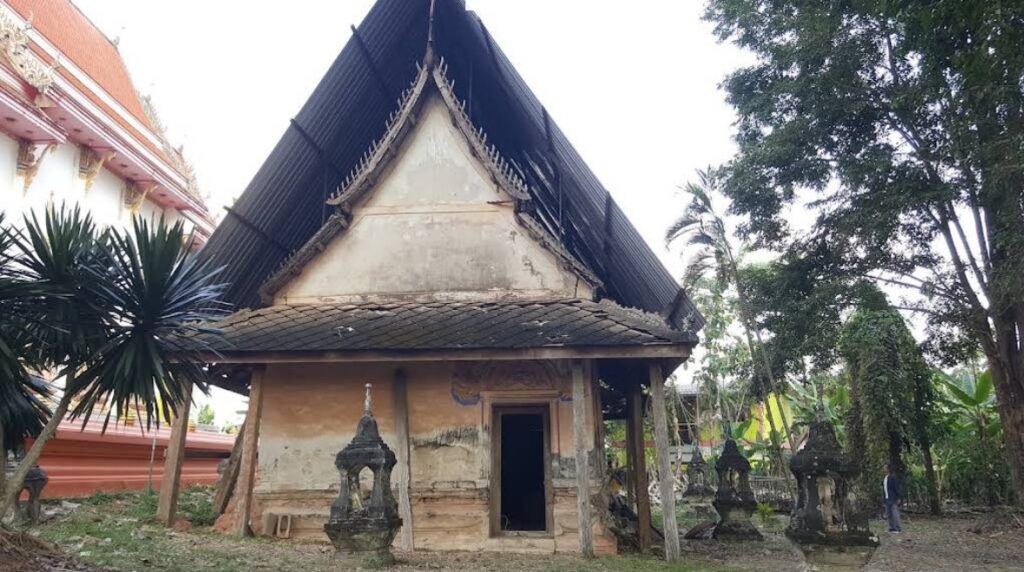
The old ordination hall of Wat Thung Khwai Kin, a quiet rural temple in Rayong.
The Maravijaya Buddha Image
Inside the old ordination hall, the main Buddha image is in the Maravijaya posture. This posture represents the moment when the Buddha defeated Mara before attaining enlightenment.
In this image, the Buddha sits calmly with one hand reaching down toward the earth. It is a gesture of strength, peace, and spiritual victory. The earth itself is called to witness the Buddha’s virtue and awakening.
For visitors, this Buddha image gives the old hall a deeper meaning. Even though the walls have aged and the paintings have faded, the image still expresses calmness, faith, and the victory of wisdom over fear and temptation.
Bai Sema Boundary Stones
Around the old ordination hall, there are sacred boundary stones called Bai Sema. In Thai Buddhist temples, these stones mark the holy area of the ubosot, where important monastic ceremonies take place.
Bai Sema are not simply decorations. They show that the space inside the boundary is sacred and officially separated from the outside world. Traditionally, they are placed around the hall in different directions, protecting and defining the spiritual space.
At Wat Thung Khwai Kin, the Bai Sema make the old ordination hall feel even more meaningful. They remind visitors that this quiet building was once the heart of religious life for the local community.
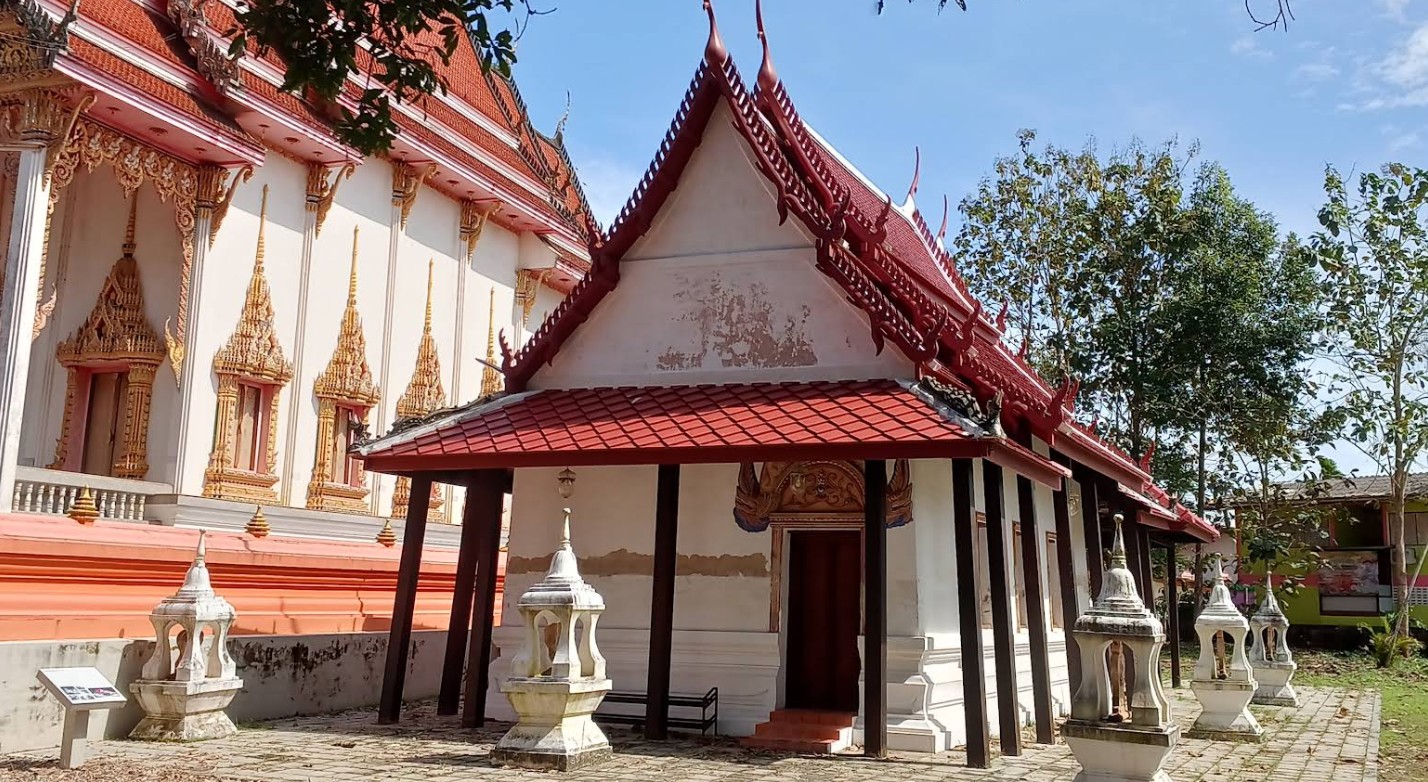
A Bai Sema boundary stone marking the sacred area of the old ordination hall.
Faded Murals and the Beauty of Time
The old ordination hall also preserves traces of faded murals and traditional decorations. Some parts are damaged by age, but this makes the place feel more real and emotional.
These murals may no longer look bright or complete, but they still carry the memory of the people who once prayed here. The beauty of Wat Thung Khwai Kin is not the beauty of new paint or perfect restoration. It is the beauty of time, silence, and endurance.
Walking through this temple, visitors can feel how faith remains even when buildings grow old. That is what makes this forgotten temple so special.
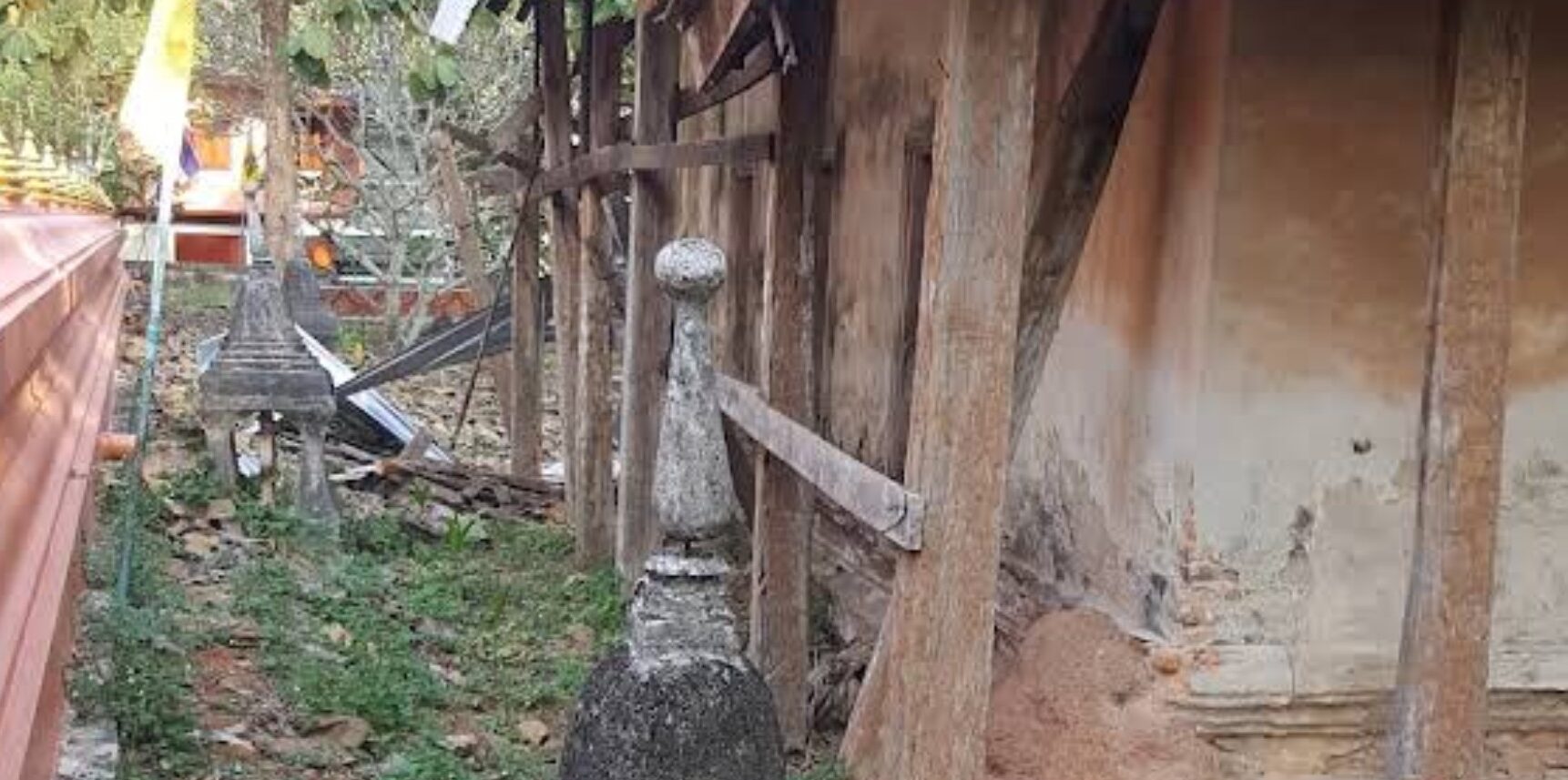
Weathered walls and old wooden details show the quiet beauty of time.
Watch the Video
This short video captures the quiet atmosphere of Wat Thung Khwai Kin, an old rural temple in Klaeng, Rayong. The worn ordination hall, the sacred boundary stones, and the silence of the temple show a different side of Thailand beyond the usual tourist routes.
Visitor Information
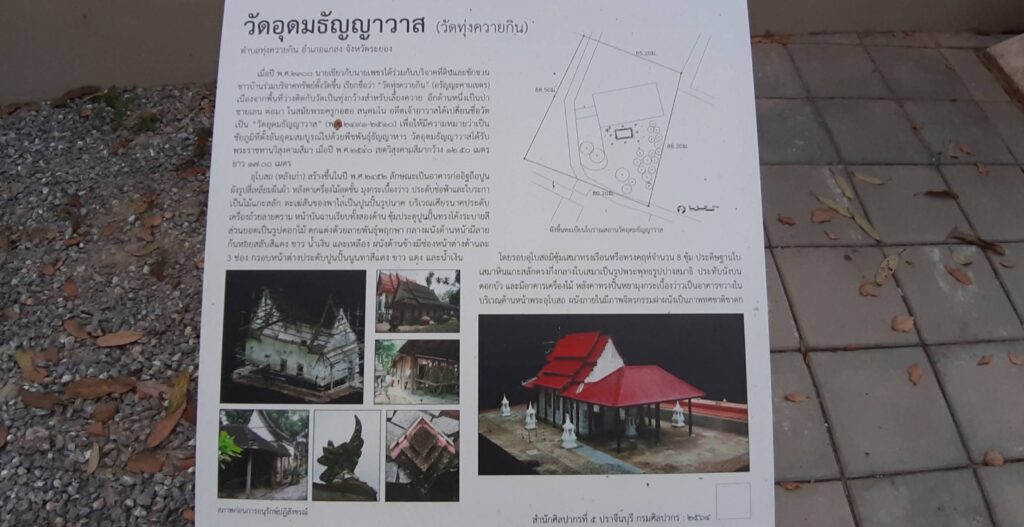
Wat Thung Khwai Kin is located in Klaeng District, Rayong Province. It is a quiet local temple rather than a busy tourist attraction, so visitors should come with respect for the peaceful atmosphere of the place.
The old ordination hall is the main highlight of the visit. When walking around the hall, look carefully for the Bai Sema boundary stones, the aged walls, and the remaining details that show the temple’s long history.
This temple is a good stop for travelers who enjoy hidden places, rural Thai temples, local history, and quiet Buddhist heritage.
Location
Google Maps: Wat Thung Khwai Kin, Klaeng, Rayong
Final Thoughts
Wat Thung Khwai Kin is a small temple, but it carries a deep sense of history. Its old ordination hall, Maravijaya Buddha image, Bai Sema boundary stones, and weathered details all tell the story of rural faith in Rayong.
This is not a place that tries to impress visitors with luxury. Instead, it speaks quietly through age, silence, and memory.
For travelers who want to see a more local and meaningful side of Thailand, Wat Thung Khwai Kin is a beautiful hidden stop in Klaeng, Rayong.