A Chinese Temple at the End of the Dragon Path
After riding through the quiet roads of Chanthaburi, I arrived at Wat Mangkorn Buppharam, a Chinese Mahayana Buddhist temple also known as Longhua Temple. The curved roofs, red lanterns, guardian figures, and dragon decorations immediately created an atmosphere very different from the Thai temples I usually visit.
This temple is more than a beautiful place of worship. It is also an important spiritual centre for the Chinese-Thai community of Chanthaburi. Families come here to pray for health, protection, prosperity, family harmony, and peace of mind. Their faith is expressed through incense, offerings, quiet bows, and traditions passed from one generation to the next.
Watch the Journey
Follow my full ride and visit to Wat Mangkorn Buppharam, from the temple entrance and smaller shrines to the Main Hall and the upper halls dedicated to respected Buddhist masters.
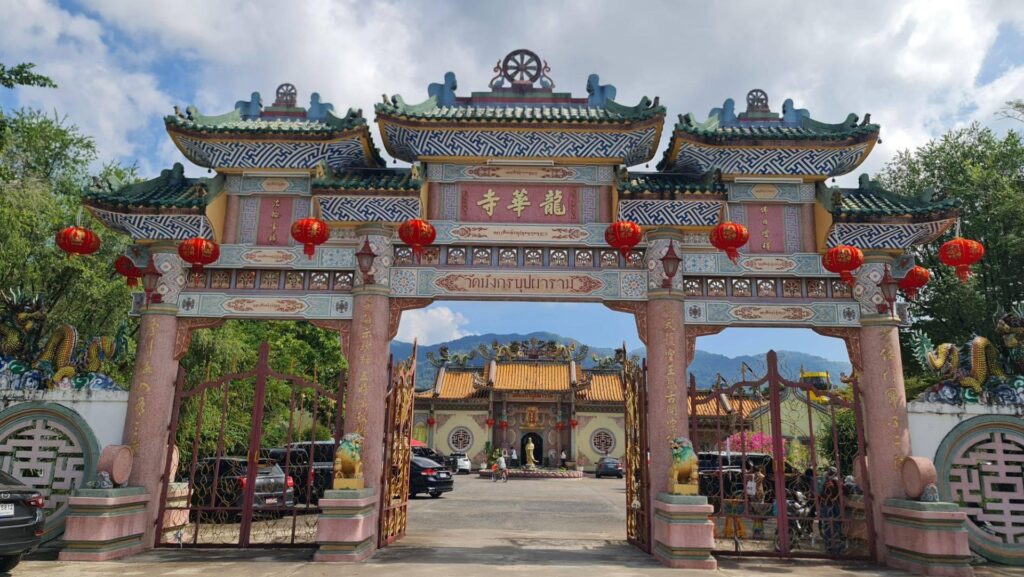
The Dragon That Connects Three Temples
As I walked through the entrance, dragons appeared everywhere—on the gates, rooftops, pillars, and walls. In Chinese culture, the dragon is not a symbol of fear but of wisdom, protection, prosperity, and harmony between heaven and earth.
Wat Mangkorn Buppharam is also known for its connection to the symbolic Three Dragon Temples of Thailand. According to Chinese-Thai tradition, Wat Mangkon Kamalawat in Bangkok represents the Dragon’s Head, Wat Chin Prachasamosorn in Chachoengsao represents the Dragon’s Belly, and Wat Mangkorn Buppharam in Chanthaburi represents the Dragon’s Tail.
Although this tradition is symbolic rather than historical, it reflects the spiritual bond shared by Chinese Buddhist communities throughout Thailand. Together, these three temples form what many devotees call the Dragon Path, connecting faith across generations and provinces.
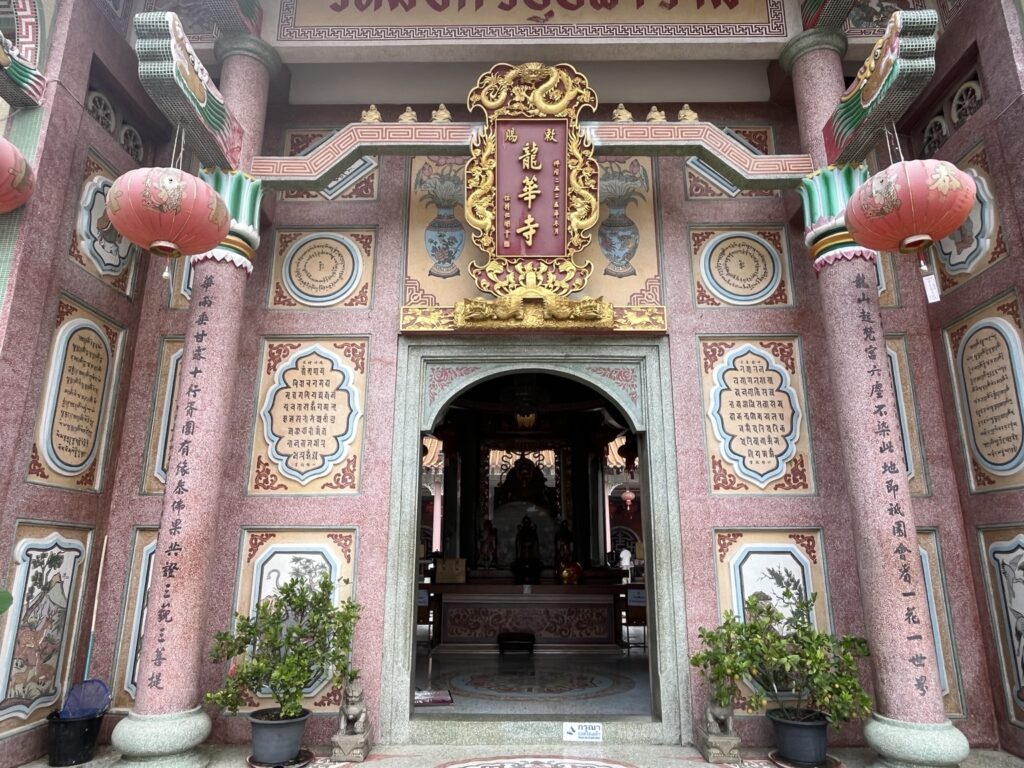
Exploring the Temple Grounds
Beyond the entrance, the temple opens into a spacious courtyard surrounded by beautifully decorated halls. Traditional Chinese architecture is visible in every direction, from the sweeping tiled roofs and carved dragons to the red lanterns hanging beneath the eaves.
Walking through the grounds, I found a series of smaller shrines, each dedicated to different Buddhas, Bodhisattvas, and revered deities. Every hall has its own purpose, and every visitor seems to carry a different prayer.
Some come to ask for good health. Others pray for success in business, family harmony, safe journeys, or protection from misfortune. The quiet sound of footsteps, the fragrance of incense, and the gentle movement of worshippers create an atmosphere of peace that is both welcoming and deeply spiritual.
For many Chinese-Thai families, this temple is not simply a place to visit. It is a place where faith becomes part of everyday life.Paragraph
Beyond the entrance, the temple opens into a spacious courtyard surrounded by beautifully decorated halls. Traditional Chinese architecture is visible in every direction, from the sweeping tiled roofs and carved dragons to the red lanterns hanging beneath the eaves.
Walking through the grounds, I found a series of smaller shrines, each dedicated to different Buddhas, Bodhisattvas, and revered deities. Every hall has its own purpose, and every visitor seems to carry a different prayer.
Some come to ask for good health. Others pray for success in business, family harmony, safe journeys, or protection from misfortune. The quiet sound of footsteps, the fragrance of incense, and the gentle movement of worshippers create an atmosphere of peace that is both welcoming and deeply spiritual.
For many Chinese-Thai families, this temple is not simply a place to visit. It is a place where faith becomes part of everyday life.
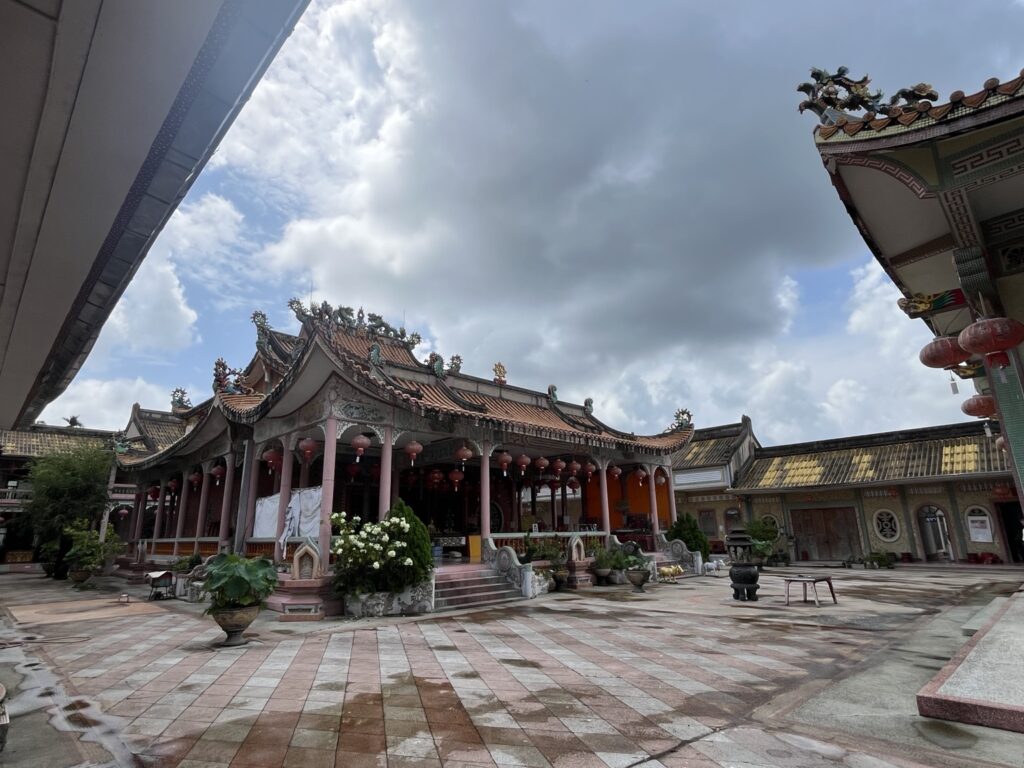
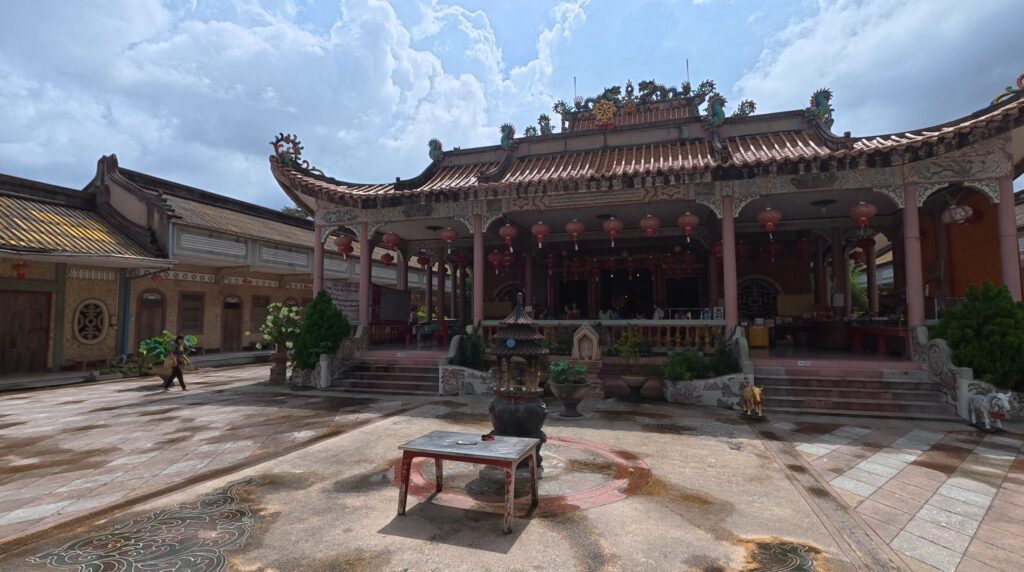
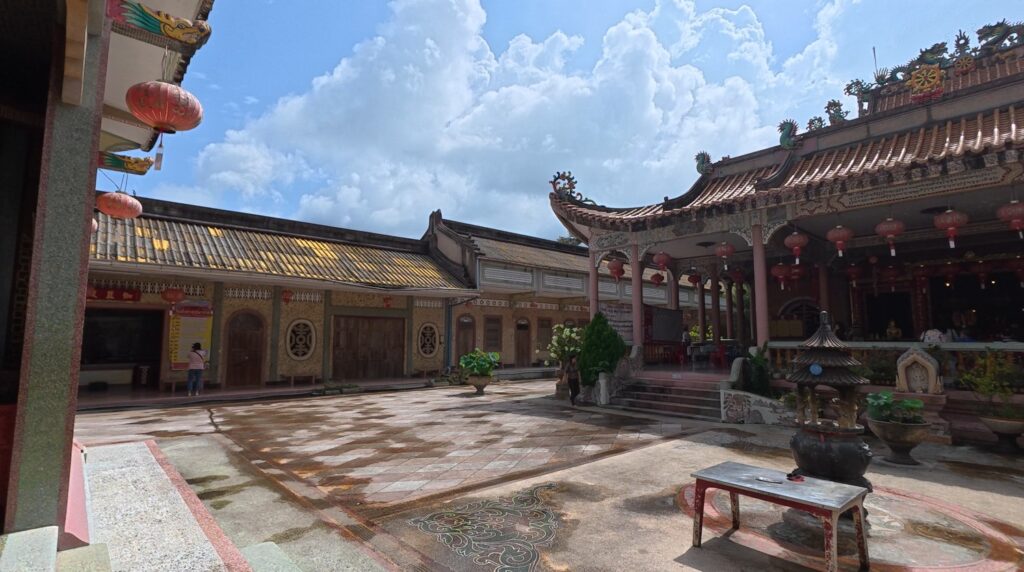
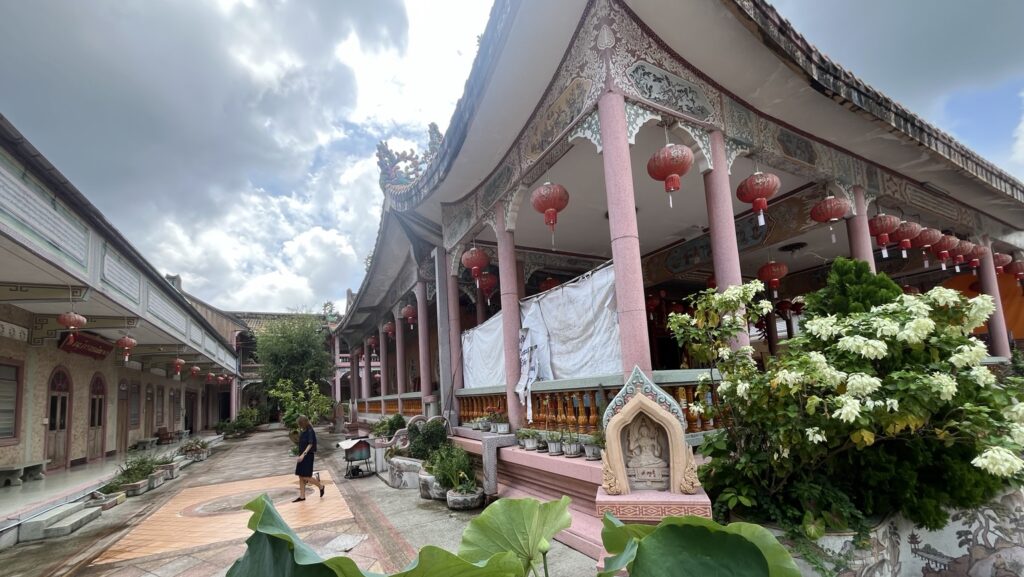
The spacious courtyard leads visitors through a series of halls, shrines, and places of prayer within Longhua Temple.
Inside the Main Hall of Worship
Stepping into the Main Hall, the atmosphere immediately became quieter. Soft light filtered through the windows, illuminating golden Buddha statues, colourful lanterns, and offerings carefully placed before the altar.
I lit incense, bowed in respect, and joined the many worshippers who had come here with sincere hearts. Some stood silently in prayer, while others offered flowers, candles, and incense as expressions of gratitude and hope.
In Mahayana Buddhism, compassion lies at the heart of spiritual practice. Worship is not only about seeking blessings for oneself, but also about wishing happiness, peace, and freedom from suffering for all living beings.
Standing before the Buddha, I could feel why this temple continues to be an important spiritual home for generations of Chinese-Thai families. It is a place where faith, gratitude, and tradition quietly come together.
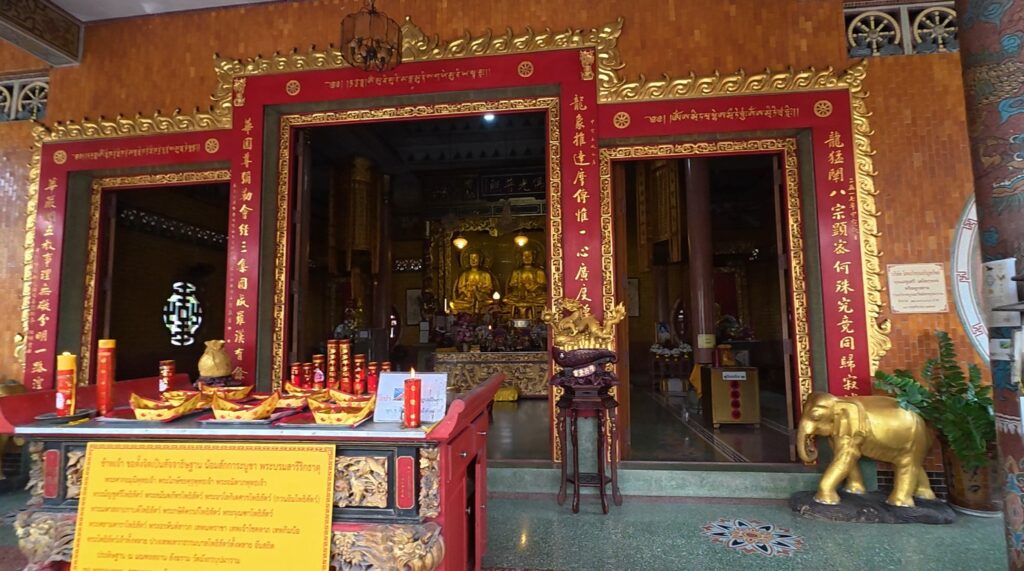
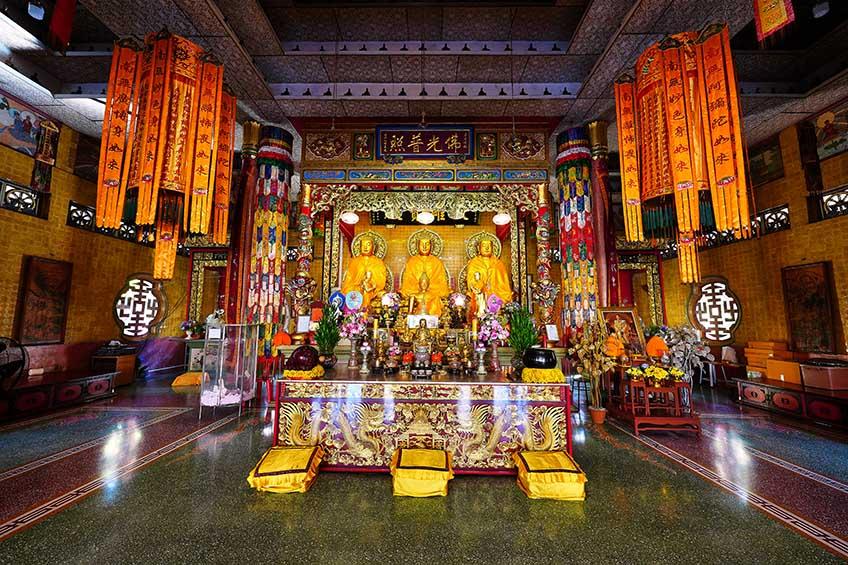
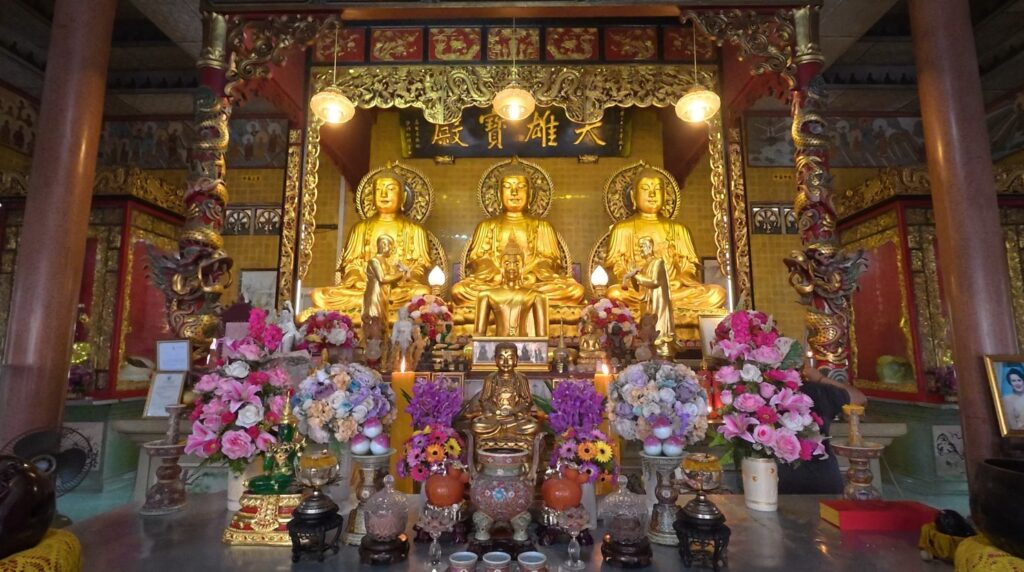
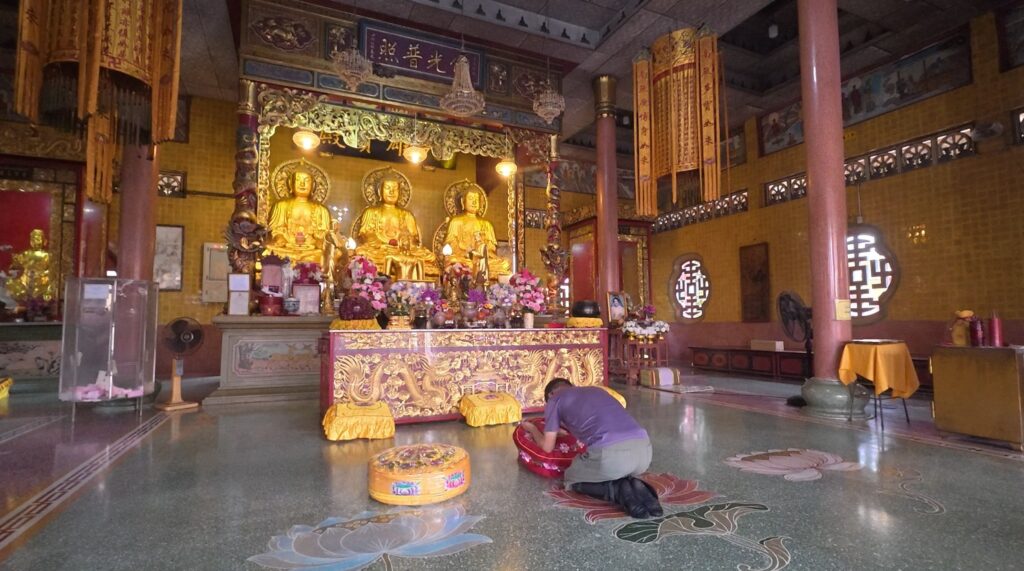
The Main Hall is the spiritual heart of Wat Mangkorn Buppharam, where worshippers gather to pray with incense, flowers, and deep devotion.
The Upper Shrines and the Legacy of Faith
After leaving the Main Hall, I followed the pathway leading toward the upper buildings behind the temple. The atmosphere became even quieter as the crowds disappeared, replaced by peaceful courtyards and smaller prayer halls.
These upper shrines are dedicated to respected Buddhist masters and spiritual teachers whose wisdom continues to inspire generations of followers. Their statues are not worshipped as gods, but honoured as examples of compassion, discipline, and lifelong devotion to the Dharma.
As I slowly explored each hall, I realized that Wat Mangkorn Buppharam is more than a beautiful collection of buildings. It is a living place of faith where history, tradition, and community continue to flourish together.
Standing at the final pavilion and looking back across the temple grounds, I could see the golden rooftops, graceful dragons, and quiet courtyards stretching below. The peaceful view seemed to bring together everything I had experienced during this visit.
The road had brought me to another destination, but the people, their faith, and the stories preserved within this temple are what will remain in my memory long after the ride is over.
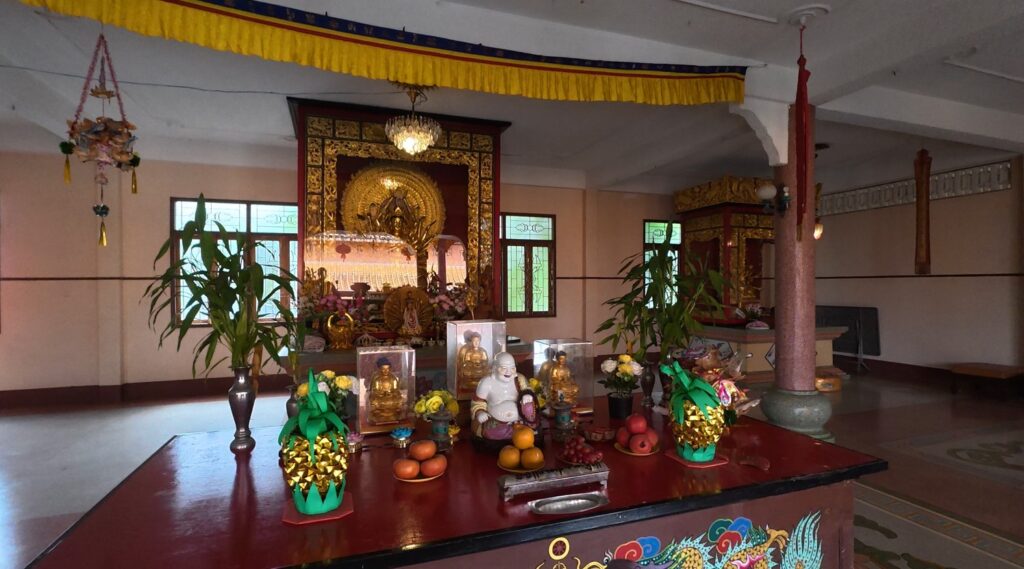
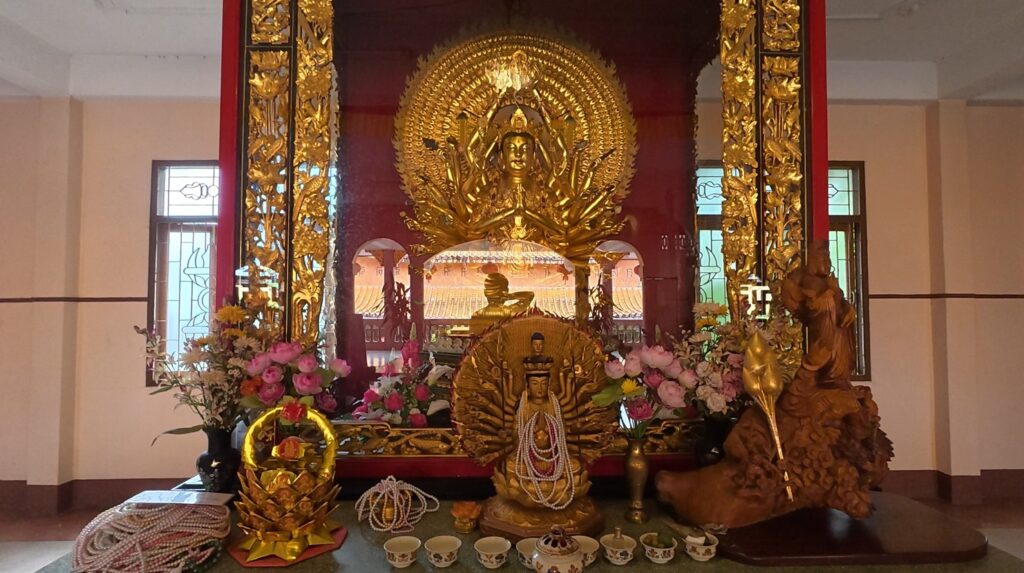
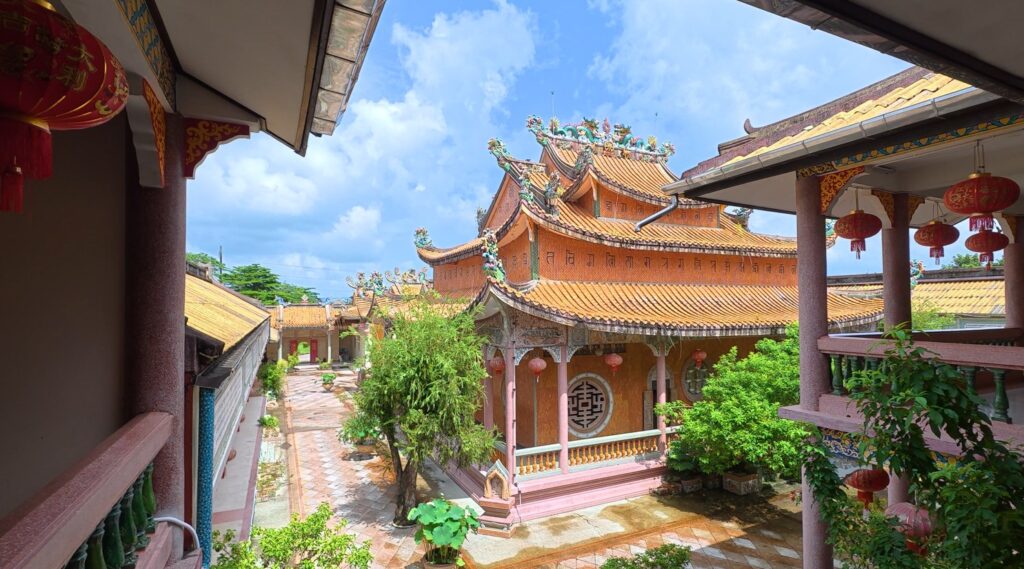
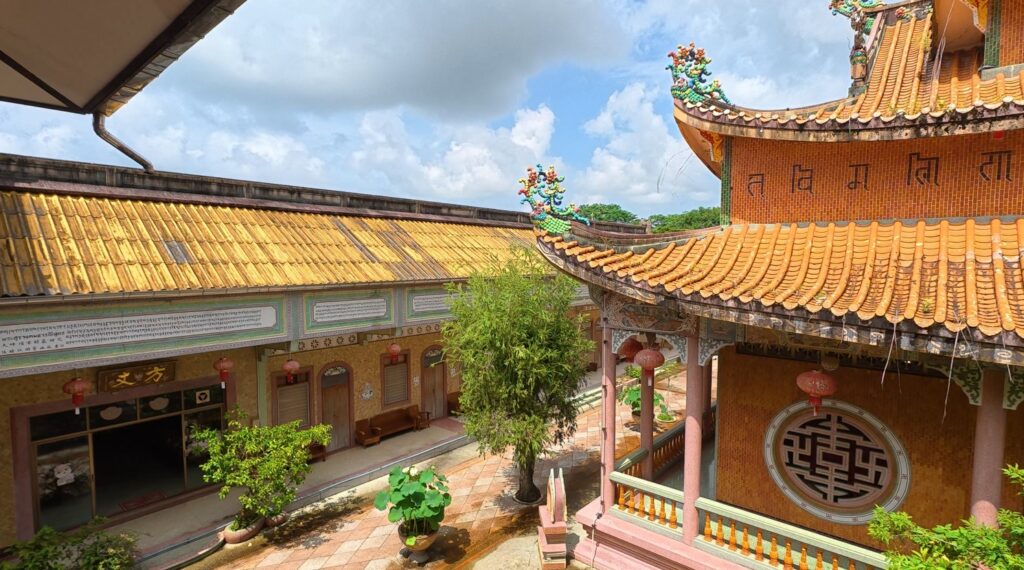
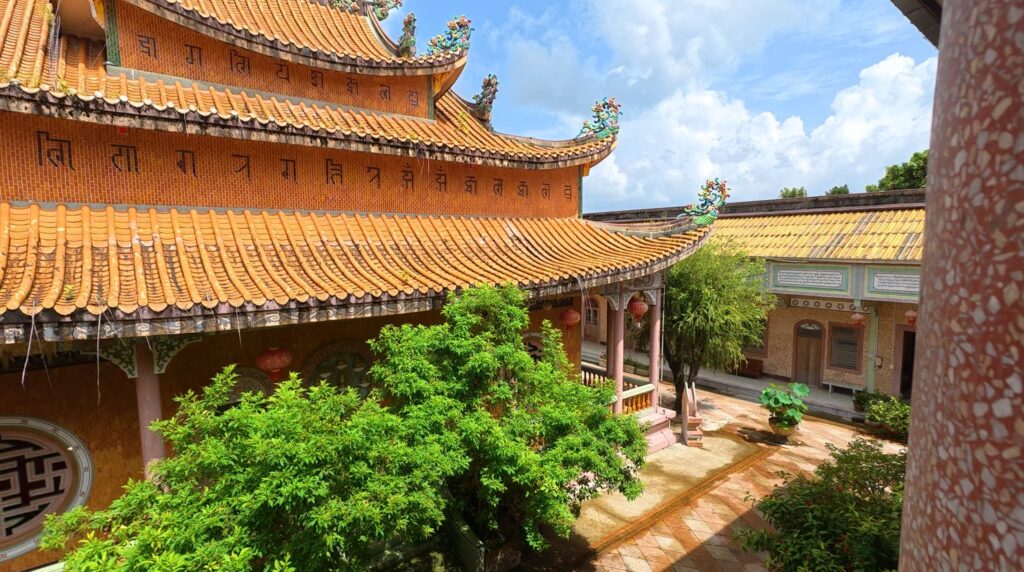
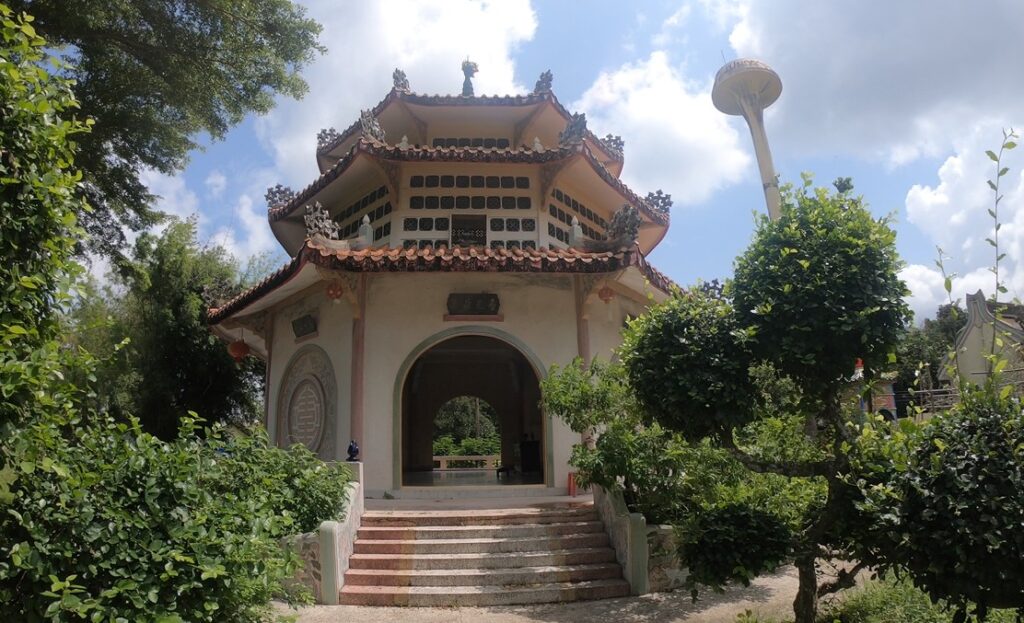
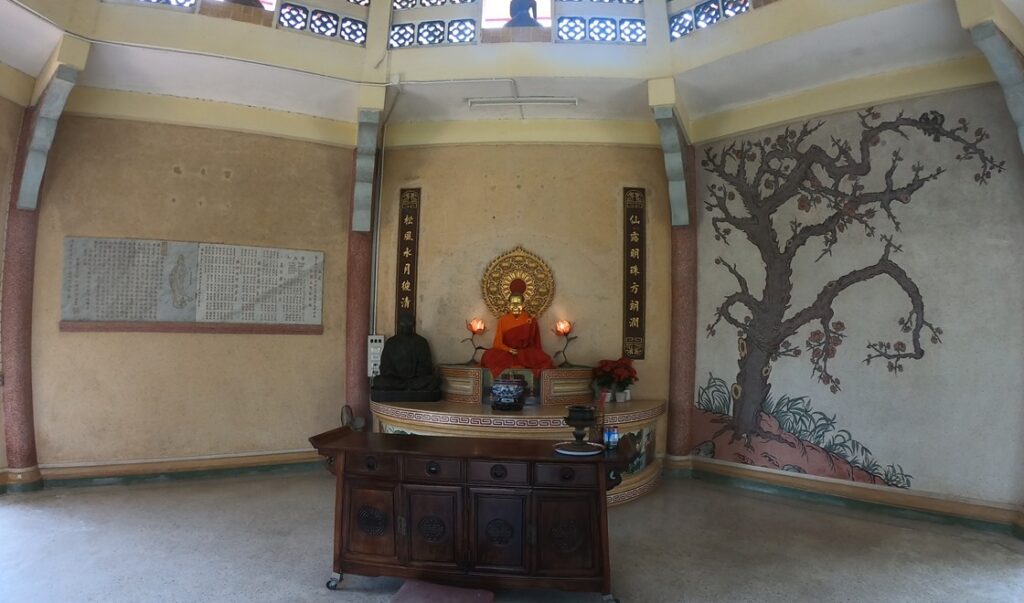
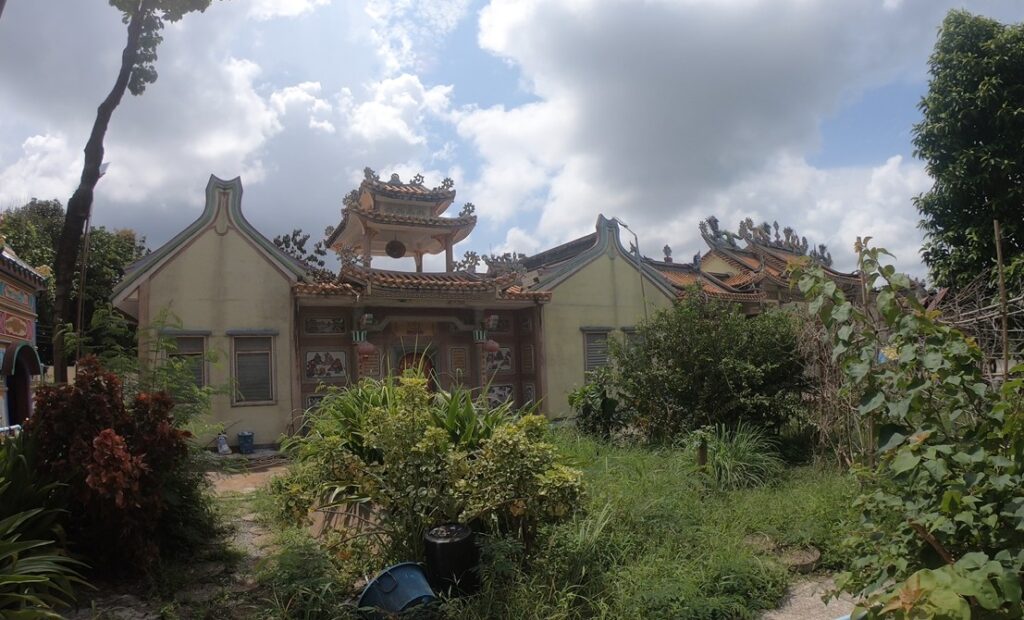
The upper shrines preserve the teachings of respected Buddhist masters, offering visitors a quiet place for reflection above the main temple grounds.
Final Thoughts
Wat Mangkorn Buppharam is not only one of Chanthaburi’s most beautiful Chinese Buddhist temples, but also an important spiritual home for the Chinese-Thai community. As the symbolic Dragon’s Tail of Thailand’s Three Dragon Temples, it represents the continuation of faith, culture, and tradition across generations.
For me, this ride was more than another stop on the map. It was an opportunity to understand how different cultures have become part of Thailand’s rich heritage while preserving their own identity.
Every road tells a story.
Today, that story was written beneath the watchful eyes of the dragon.
📍 Visitor Information
Location: Laem Sing District, Chanthaburi, Thailand
Temple Name: Wat Mangkorn Buppharam (龍華寺)
Religion: Chinese Mahayana Buddhism
Established: 1977
Best Time to Visit: Morning or late afternoon for cooler weather and softer light.
🔗 Internal Links
1. Chanthaboon Waterfront Community
2. Wat Tapon Yai
3. Namtok Phlio National Park
🌐 External Links
Google Maps
Wat Mangkorn Buppharam – https://maps.app.goo.gl/F4nR5Aj7qU8tKM9c6