After visiting the sacred well at Wat Phlap Bang Kacha, I learned that Chanthaburi had two other sacred water sources connected with royal ceremonies: Sa Kaeo and Than Narai. That discovery gave my next ride a purpose. I wanted to find the places behind the names, following the small roads on my Honda Super Cub.
The first stop would be Sa Kaeo Ancient Pond. Later, while searching for the third source, I would take a mistaken turn into a quiet Buddhist sanctuary—and encounter a story that made me stop much longer than expected.
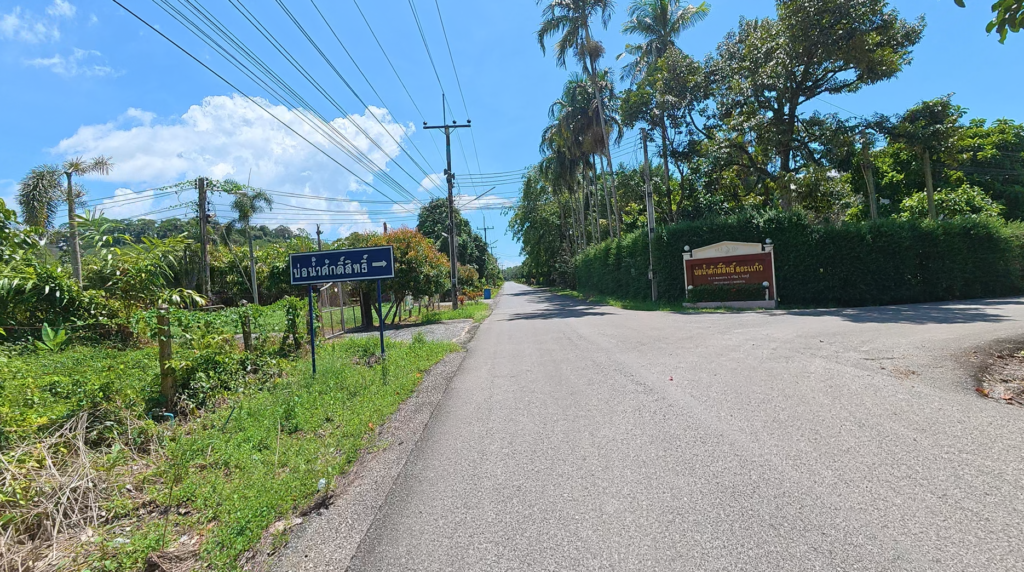
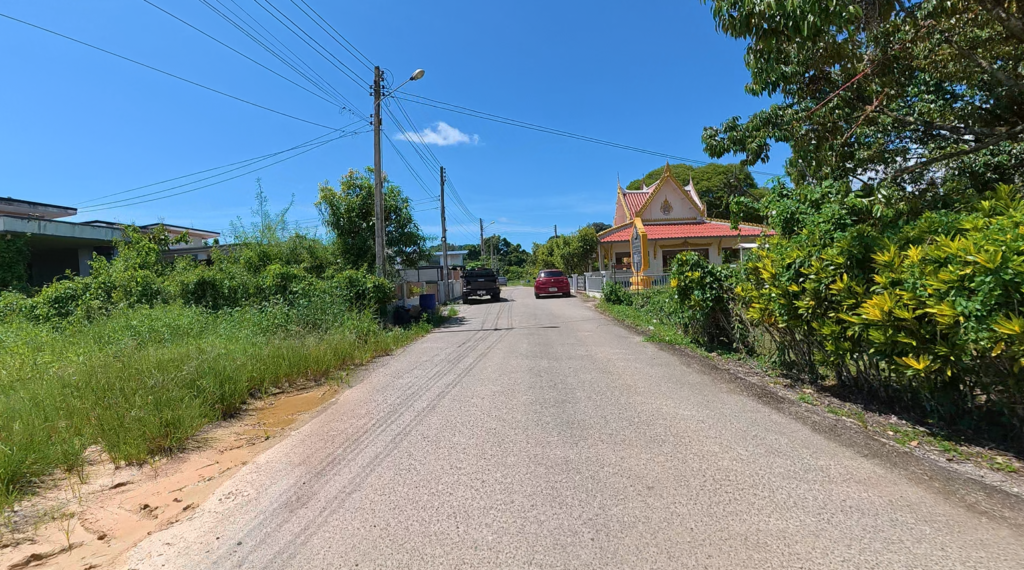
Following Chanthaburi’s village roads in search of sacred water.
Watching The Search of the Second Sacred Water Source
A ride to Sa Kaeo Ancient Pond, followed by an unexpected encounter with Queen Sunandha’s story at Samnaksong Khlong Narai, before continuing the search for the third sacred water source.
A Small Pavilion Among Orchards

I had imagined another temple. Instead, the road led through fruit orchards and a quiet village to a modest, neatly maintained compound.
A small pavilion sheltered the sacred water. There was no grand entrance to announce its importance. Trees, shade, and the ordinary surroundings of village life gave the place a gentler presence.
Sa Kaeo (สระแก้ว) is in Ploi Waen Subdistrict, Tha Mai District, Chanthaburi. Despite its English name, “Ancient Pond,” the water is now approached through a sheltered, well-like opening. This is Chanthaburi’s Sa Kaeo sacred water site, rather than Sa Kaeo Province near the Cambodian border.


The pavilion, shaded grounds, and quiet surroundings of Sa Kaeo Ancient Pond.
The Well That Looked Dry
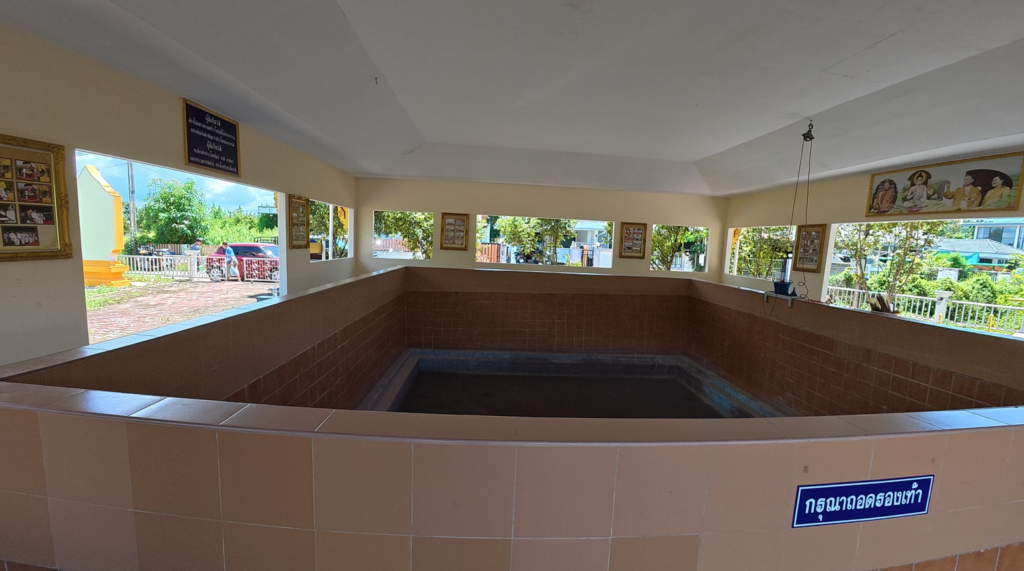
When I first looked down, I thought the well had dried up.
A layer of pollen lay across the surface, making it look like a solid floor. Then I lowered the bucket. The surface broke, ripples spread, and clear water appeared beneath it.

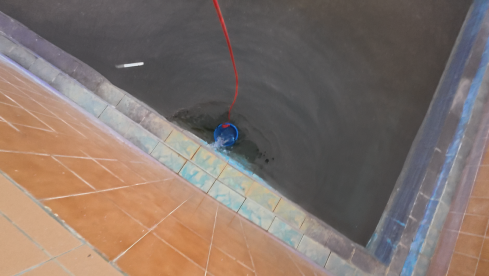
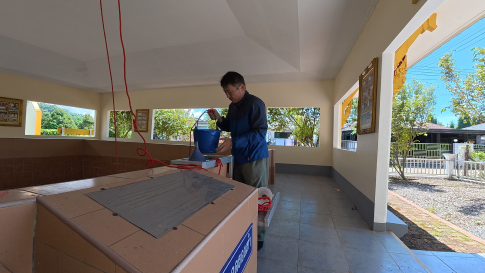
Lowering the bucket revealed water beneath the pollen-covered surface.
I drew some water and tasted it. To me, it tasted pleasantly plain and fresh—a personal impression, rather than a test of its quality. I drew another bucket and used the water to clean the information plaque. As the dust washed away, I paused to read the story again.
It was a small act, but it changed the visit. I was no longer only looking at an old water source. I was taking a little time to care for a place that other people had valued before me.

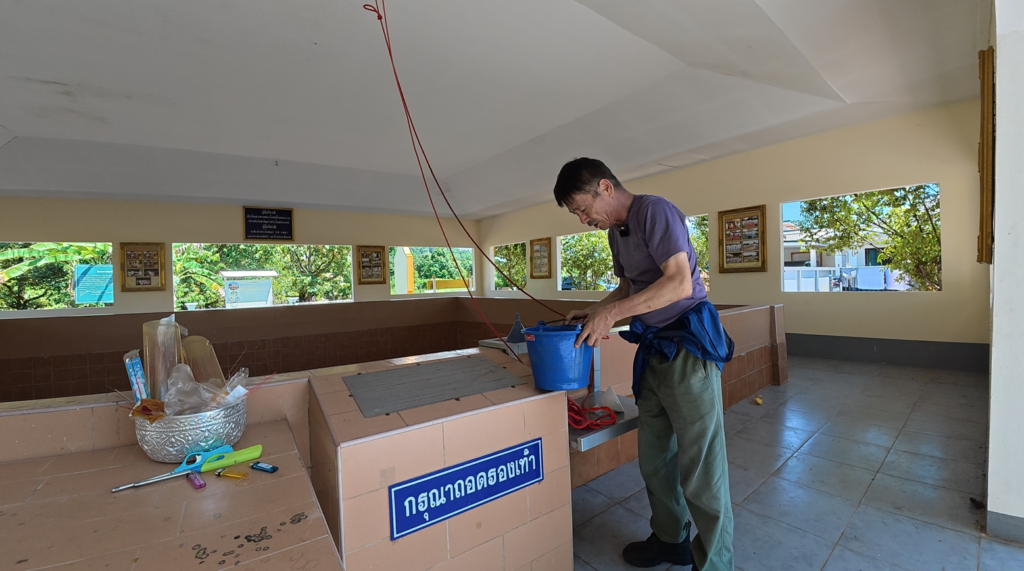
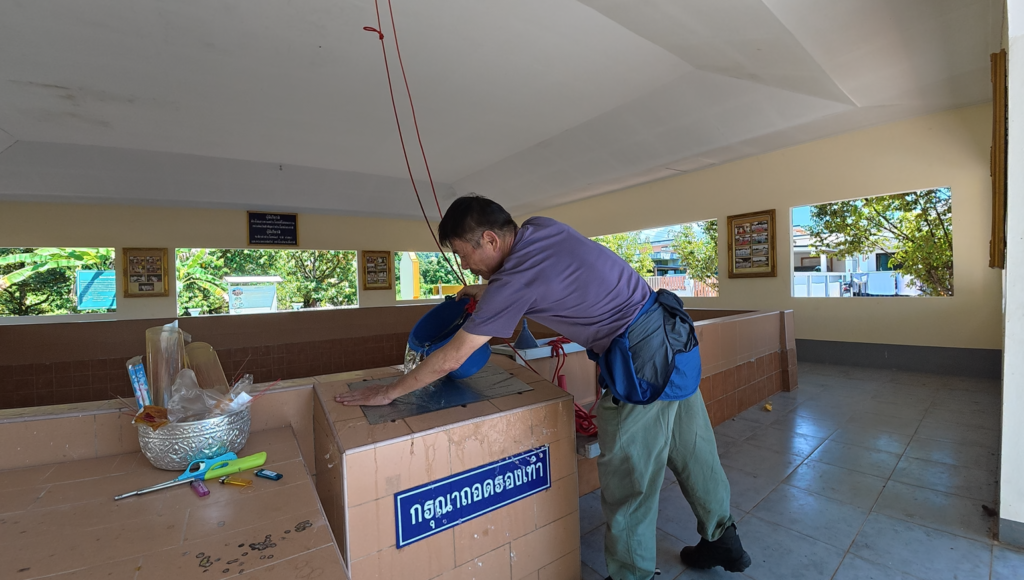
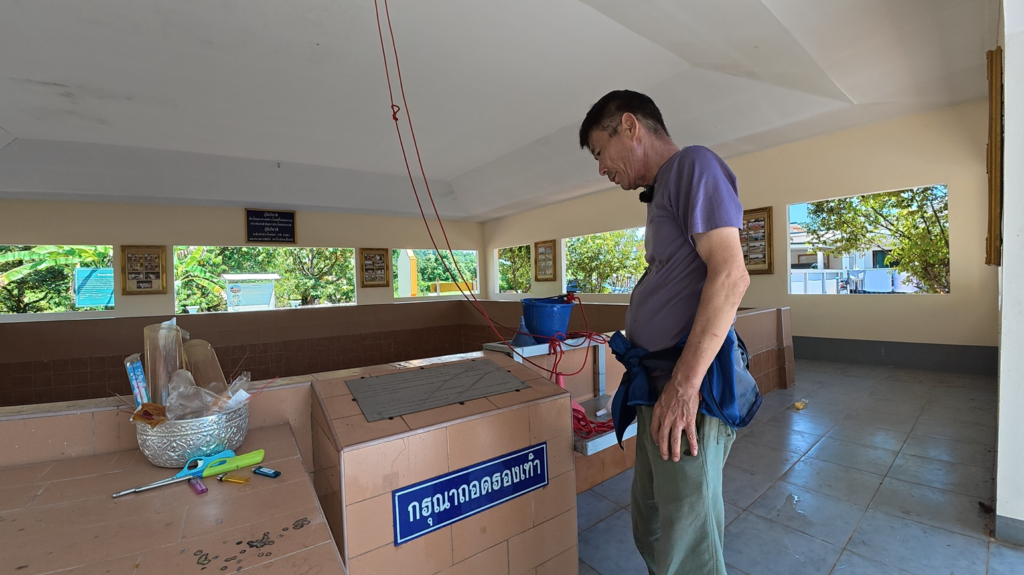
Drawing water and cleaning the information plaque before reading its story.
The Legends of Sa Kaeo

Sa Kaeo’s sacred reputation survives in more than one local tradition.
A legend preserved by the Chanthaburi National Archives describes emerald-clear water, a green glow, and light reflected from a palm beside the pond. Settlers reportedly found relief from fatigue in its water. Fish swam there but could never be caught. During a drought, people tried to drain the pond to catch them; a violent storm refilled it, and they abandoned the attempt. These stories helped explain its name, often rendered as “Crystal Pond,” and the respect surrounding it. These are recorded beliefs, rather than verified supernatural events. [1]
Another tradition, published by the provincial cultural office, tells of a poor elderly couple suffering from persistent skin sores. While hunting, the husband followed a wounded rabbit to a pond. The animal entered the water and emerged healed. Astonished, he bathed there and found his own sores had disappeared. He brought his wife, who was also healed. News spread to local officials and eventually the capital; the legend then connects the water with royal ritual use. [2]
The two accounts differ, but both express the community’s belief that this water deserved protection and reverence.
From Local Belief to Royal Ceremonies
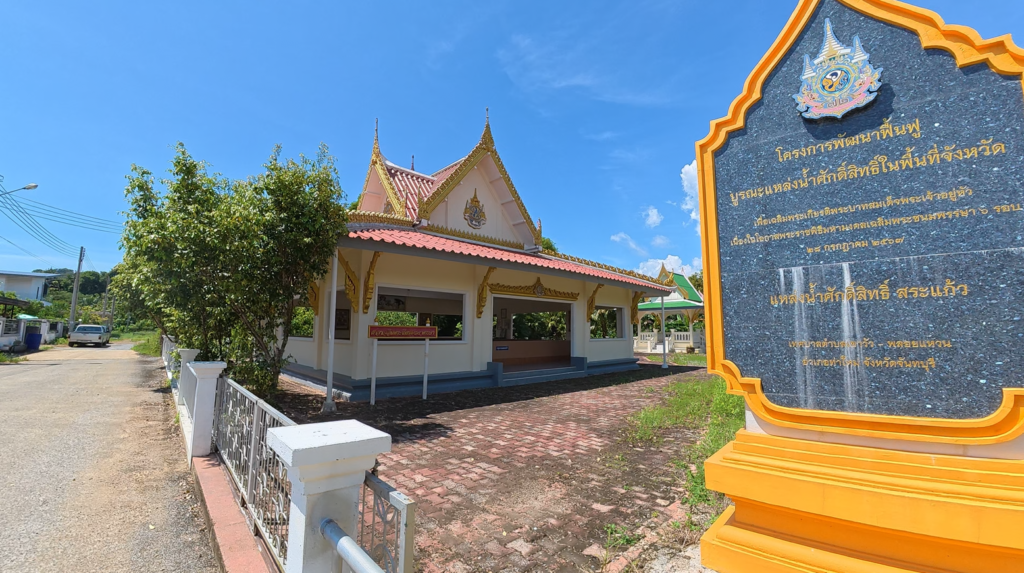
The National Archives traces Sa Kaeo’s documented royal ceremonial use to Rama VI, when additional provincial water sources entered the coronation tradition. It also records Sa Kaeo and Than Narai water being collected for Rama VII and Rama IX, with consecration at Wat Phlap Bang Kacha. [1]
There is a difference between accounts: the English visitor panel discussed during this visit attributes use to Rama V and records restoration in 1987. The archival account provides the firmer basis for the historical timeline; Rama V’s accession year should not be presented as a proven first collection date.
For the 2019 coronation of Rama X, Chanthaburi’s three named sources were Sa Kaeo, Than Narai, and the sacred well at Wat Phlap. The connection is ceremonial: water was collected from particular sources and prepared through prescribed rites. It does not establish that a king personally visited or bathed at every source. [3]
A Sacred Place Still Used by the Community
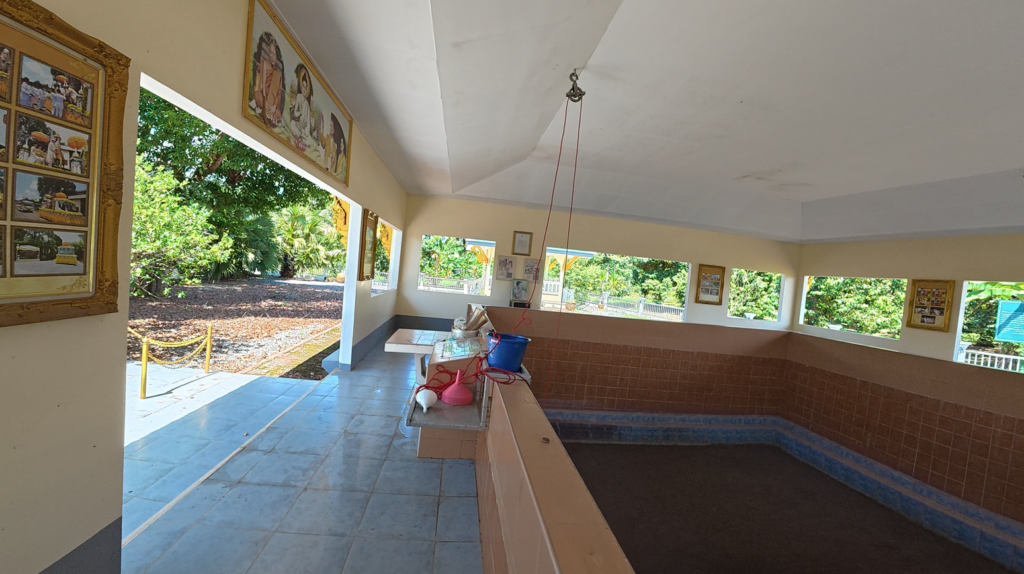
The photographs displayed around the pavilion showed official and royal ceremonial scenes associated with the water. They made the well’s public significance visible even on a quiet day.
This tradition remains active. On 4 July 2024, officials, local leaders, and residents took part in water collection for King Rama X’s seventy-second birthday celebrations. Sa Kaeo’s ceremony was led by a deputy provincial governor. Water from Chanthaburi’s three sources was subsequently consecrated at Wat Phlap on 7 July, followed by a candle-circling celebration on 8 July. [4][5]
These are scheduled ceremonial occasions; visitors should not expect a daily performance or assume there is an annual festival on the same date.
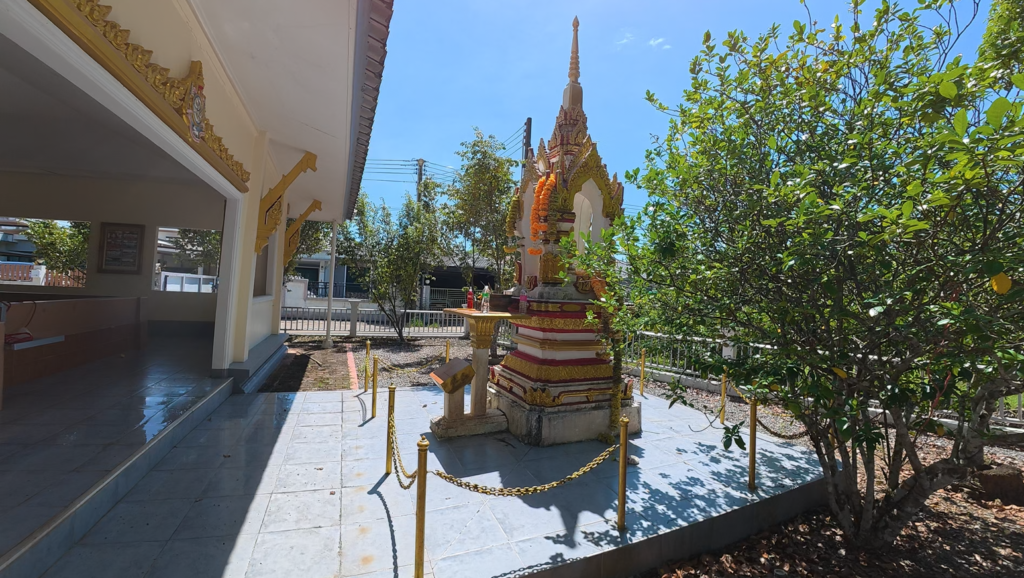


Devotional images and photographs around the sacred water pavilion.
I stayed for a while on a shaded bench. A breeze moved through the compound. Beyond the shade lay the afternoon sunlight, and the air carried the smell of trees and growing things.
Sitting there, I recalled the rabbit, the elderly couple, the luminous pond, and the fish nobody could catch. Around me was a small village space, yet its stories reached far beyond it.
Searching for the Third Sacred Water Source
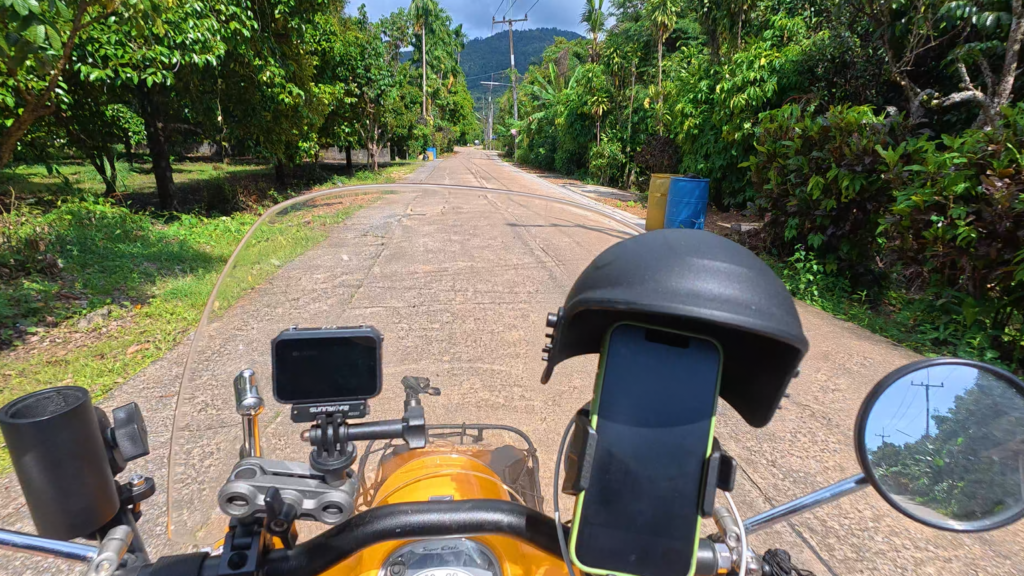
Eventually, I returned to the Cub and continued toward Khlong Narai, where I expected to find Than Narai, the third sacred water source of my journey.
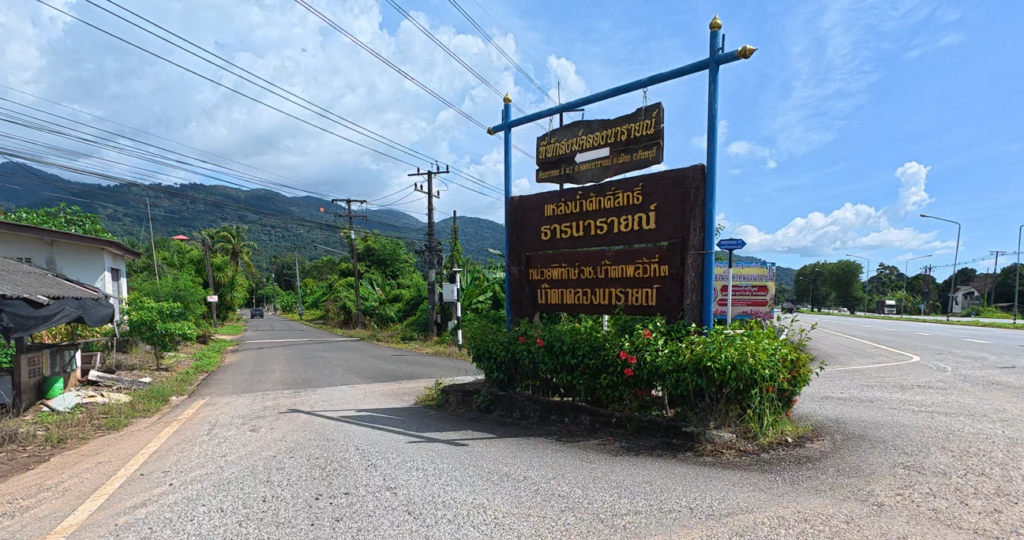

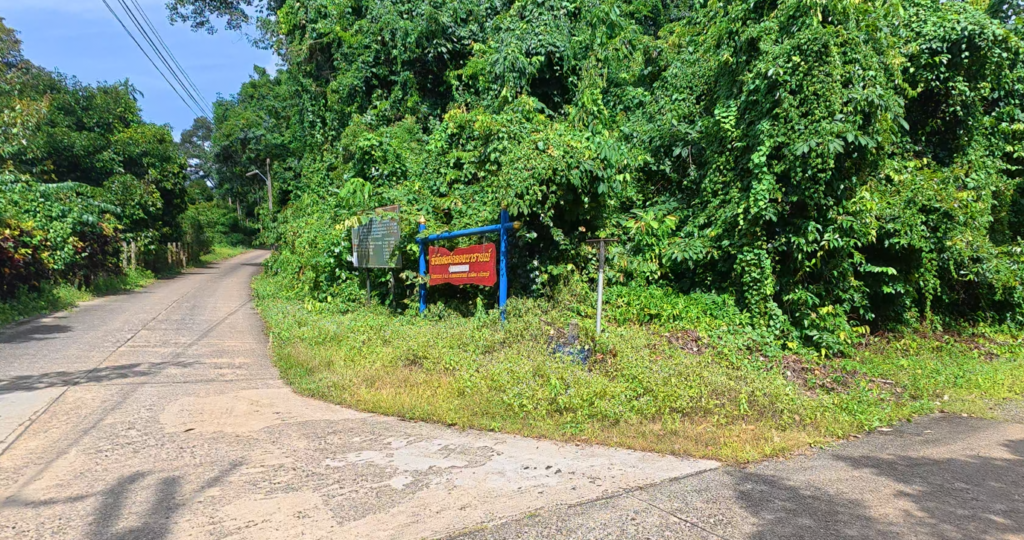
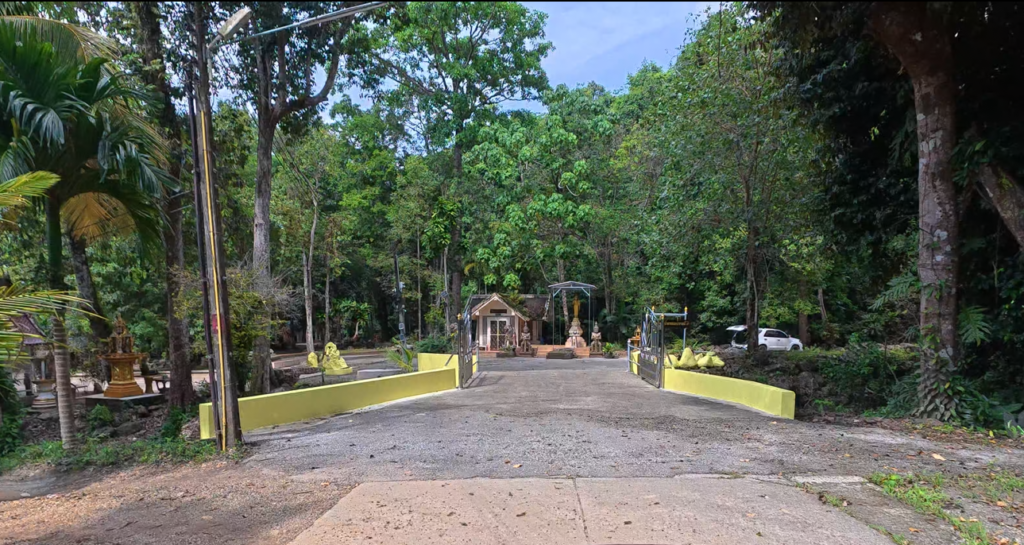
Village roads gave way to greener surroundings on the approach to Khlong Narai.
The roads narrowed, the vegetation thickened, and the hills drew closer. My search led me first to Samnaksong Khlong Narai (สำนักสงฆ์คลองนารายณ์), a Buddhist monastic sanctuary.
I had arrived believing the sacred water might be here. That assumption proved mistaken. The sanctuary and the official Than Narai source are separate places. Nevertheless, this unexpected stop became an important part of the day.
Shrines in the Forest

Shrines and devotional figures stood among the trees. There were images associated with local beliefs, and a small shrine identified by its sign as a shrine to King Taksin the Great.


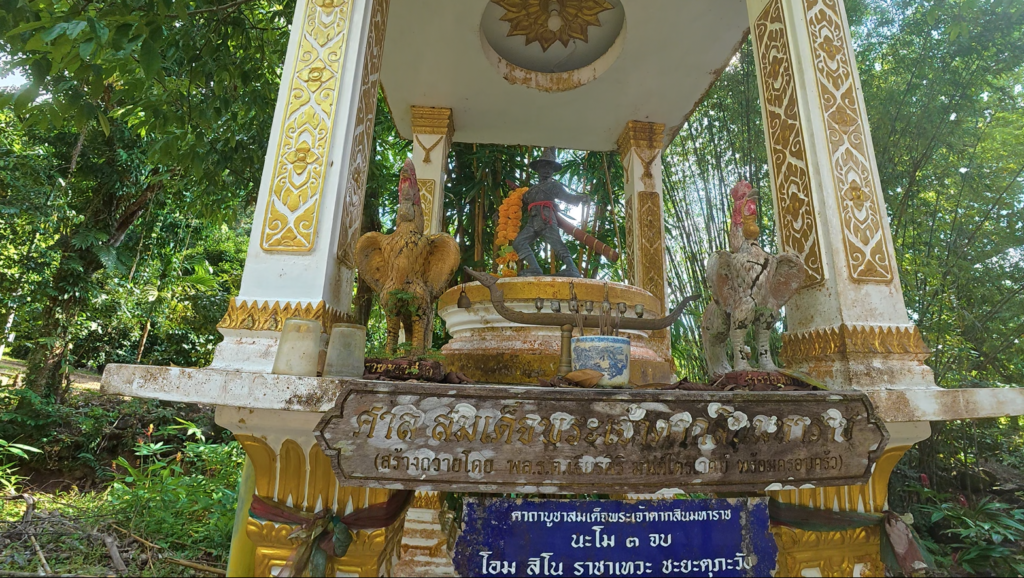
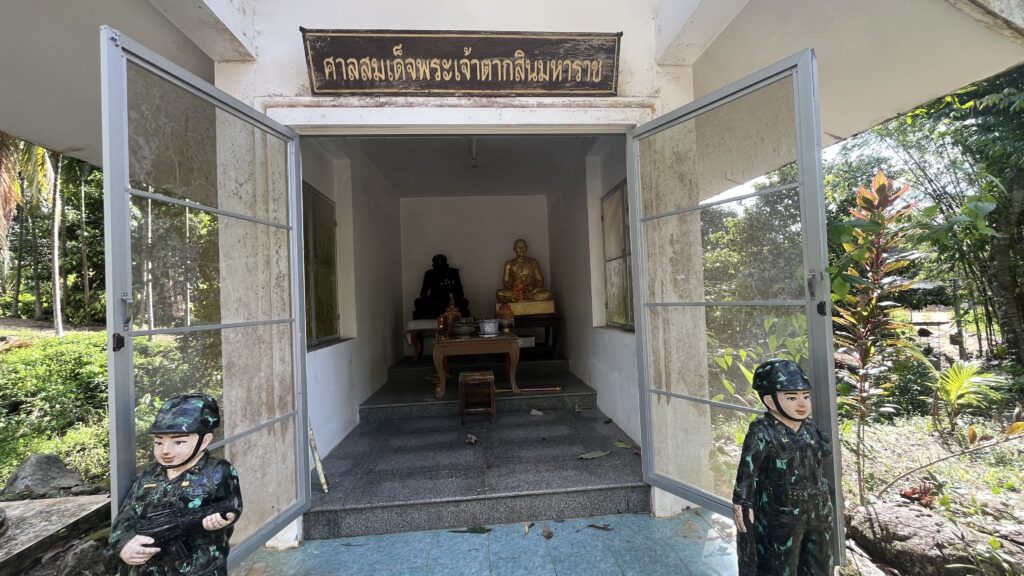
Local devotional figures and the shrine to King Taksin the Great.
Then I noticed a red-and-gold boat-shaped structure beside the stream.
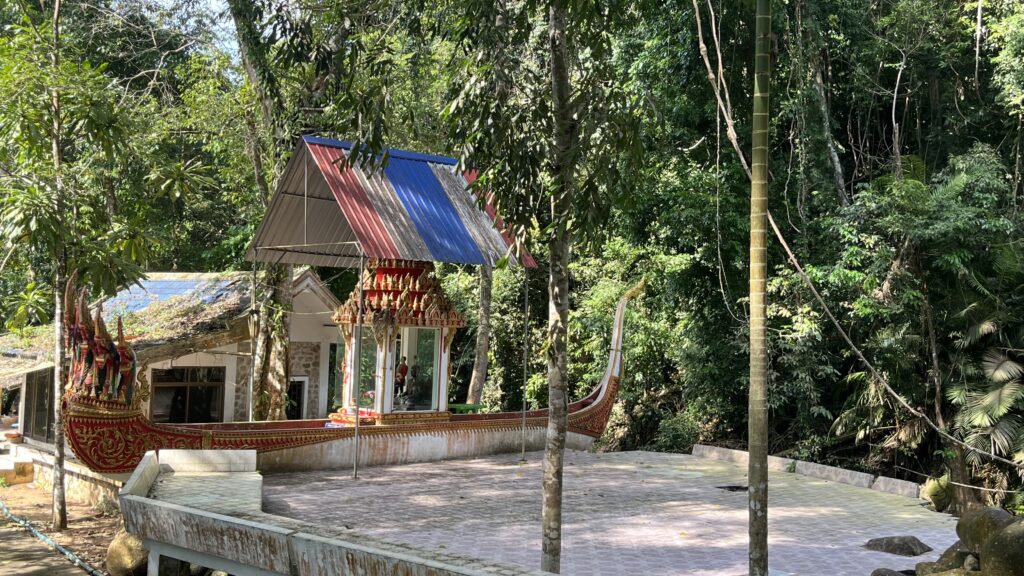

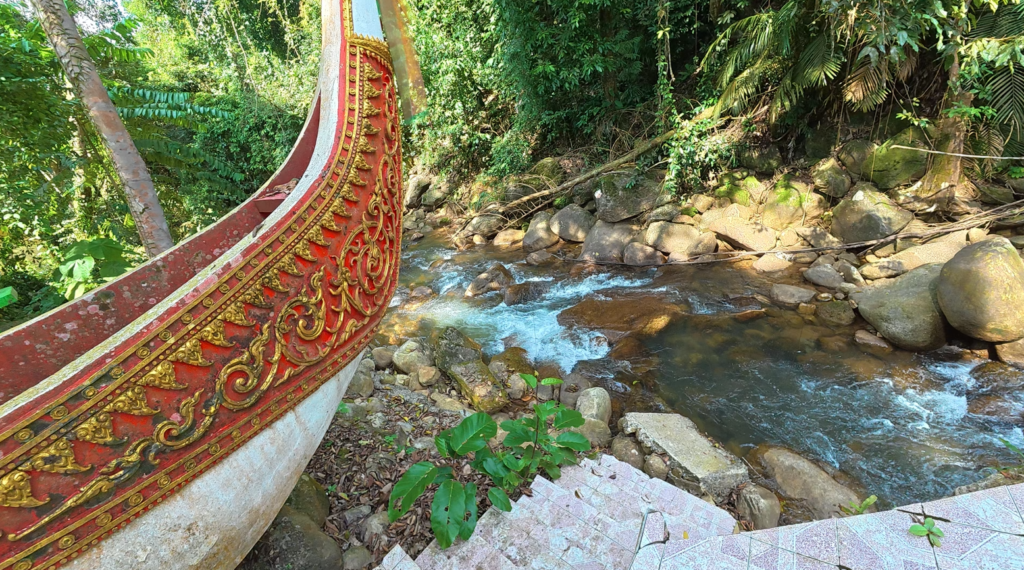
A red-and-gold boat-shaped shrine beside the forest stream.
Inside it sat a woman holding a small child. A standing figure of King Chulalongkorn, Rama V, was nearby. Knowing whom they represented changed the way I saw the scene: Queen Sunandha Kumariratana and her young daughter, with the king appearing, to my eyes, to stand watch over them.
That protective impression was my response to the arrangement. The sanctuary’s founding history and the reason these particular memorial images were installed here remain unconfirmed.
Queen Sunandha and the Boat Tragedy

Queen Sunandha Kumariratana was a consort of King Chulalongkorn. On 31 May 1880, a royal boat carrying her toward Bang Pa-In Palace capsized in the Chao Phraya River near Bang Phut, in present-day Nonthaburi.
The queen and her little daughter, Princess Kannabhorn Bejaratana, died. Sunandha was only nineteen and pregnant, so the accident also ended the life of her unborn child. [6][7]
Here, in the forest sanctuary, the mother-and-child image gave those names an intimate form. I had set out looking for sacred water; now I was standing before the memory of a family lost on a river.
One familiar version says nobody dared touch the queen because of royal prohibitions. The historical inquiry makes the story more complicated. It examined failures of command and delayed assistance, including the conduct of the official responsible for royal protection. The tragedy should therefore not be reduced to a simple claim that every witness stood idle because one law forbade rescue. [8]
A King’s Grief, Preserved in Memorials
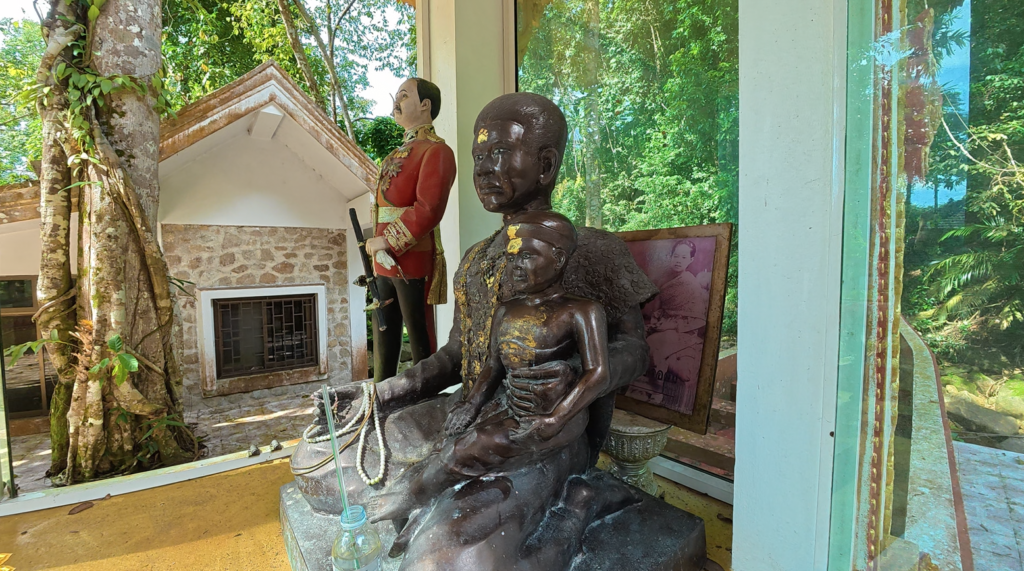
For Rama V, the deaths were a devastating personal loss. His grief found lasting expression in memorials commissioned for the queen and their daughter.
The memorial at Bang Pa-In records his love for Sunandha. Another, in Bangkok’s Saranrom Garden, commemorates both mother and child and carries inscriptions in Thai and English. These monuments show the king’s wish to preserve their memory beyond the immediate period of mourning. [9][10]
There is also a substantial connection with Chanthaburi: the Sunandha Monument at Phlio Waterfall. Built in 1881, it takes the form of a stone pyramid and contains the queen’s ashes. The monument links her memory to a waterfall landscape the royal couple had visited together. [11]
That established royal memorial at Phlio should be distinguished from the boat-shaped shrine I was visiting at Samnaksong Khlong Narai. I found no evidence that this sanctuary was the accident site or that the king commissioned its present images.
Yet the scene before me was moving in its own way. The mother held her child, and the king stood close by. His statue seemed to offer the protection that no memorial could give them in life.
Cleaning the Queen’s Portrait
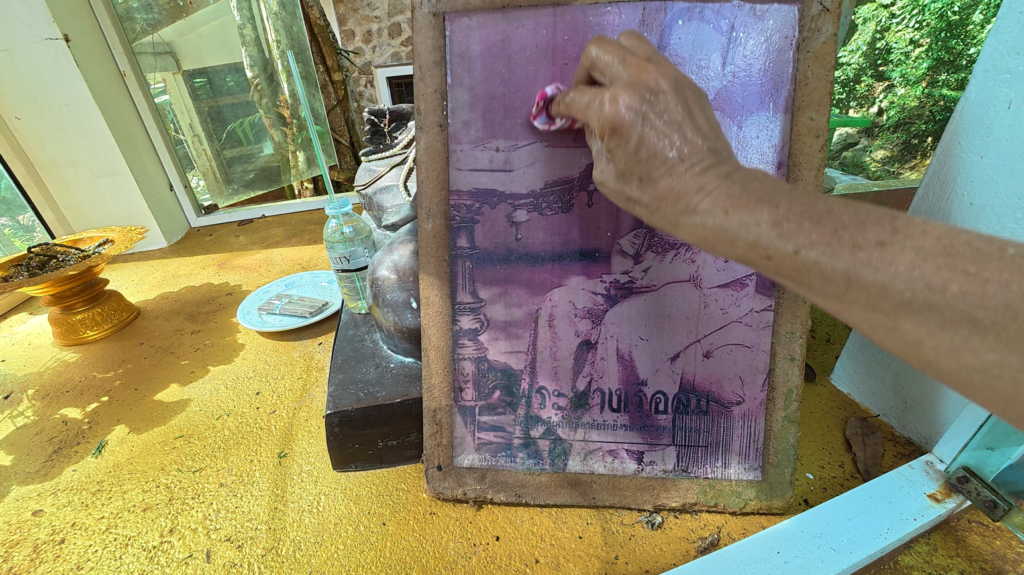


Gently cleaning the queen’s portrait and the mother-and-child image.
The queen’s framed portrait and the statues had become dusty. I gently cleaned the portrait and wiped the figures with care, then offered a quiet prayer for peace.
There was nothing elaborate about it. I simply felt that I should not walk away without doing something, however small.
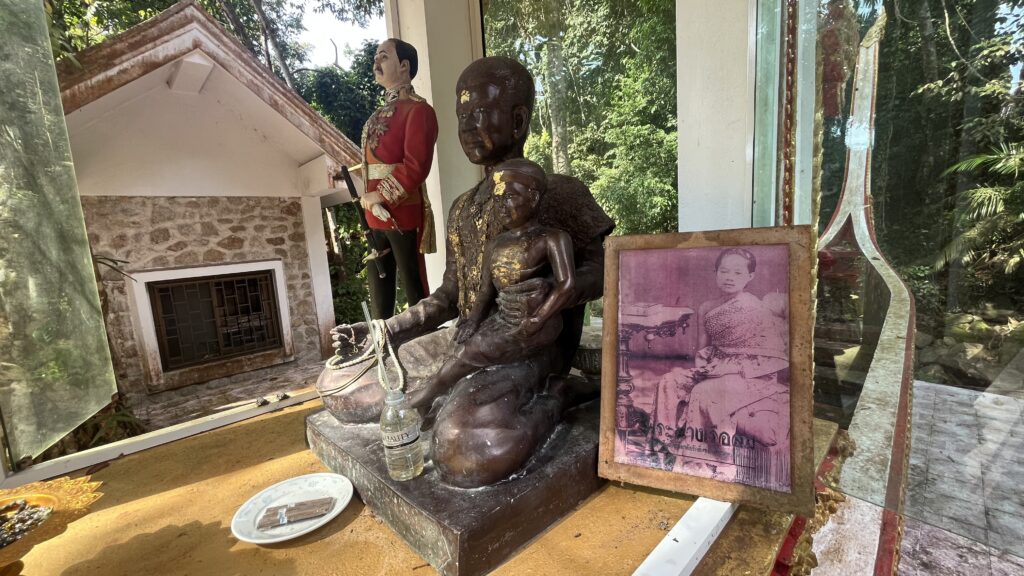
Earlier, I had washed a plaque beside the sacred well. Here, I cleaned a mother’s portrait and an image of her child. These two modest acts became the most personal moments of the ride.
A Royal Poem Beside the Shrine
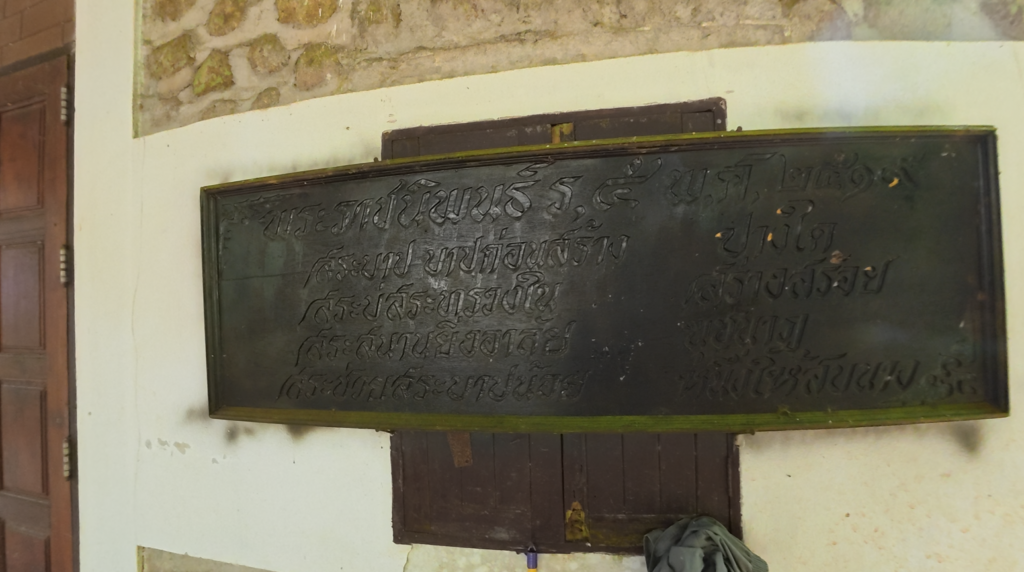
A wooden panel on a nearby shrine wall carried a poem attributed to Rama V. Its play on the name Sa Bap (สระบาป) moves between water, washing, sorrow, and longing.
I read its sentiment as a question: could water wash away what troubled the heart, when bathing only seemed to deepen longing for a loved one?
The date matters. The panel identifies the poem with B.E. 2419, or 1876—four years before Sunandha’s death. It should not be presented as an elegy written after the boat accident, nor does its unnamed beloved establish that it was addressed to her. Sa Bap is also a different name from Sa Kaeo.
Nevertheless, reading those words beside the mother-and-child shrine was affecting. That emotional connection belonged to my visit, even where a historical connection could not be demonstrated.

In front of the boat stood an image I understood as Guanyin, the Bodhisattva of Compassion. To me, her presence seemed to offer consolation to the queen and child.
Leaving the Sanctuary, Continuing the Search
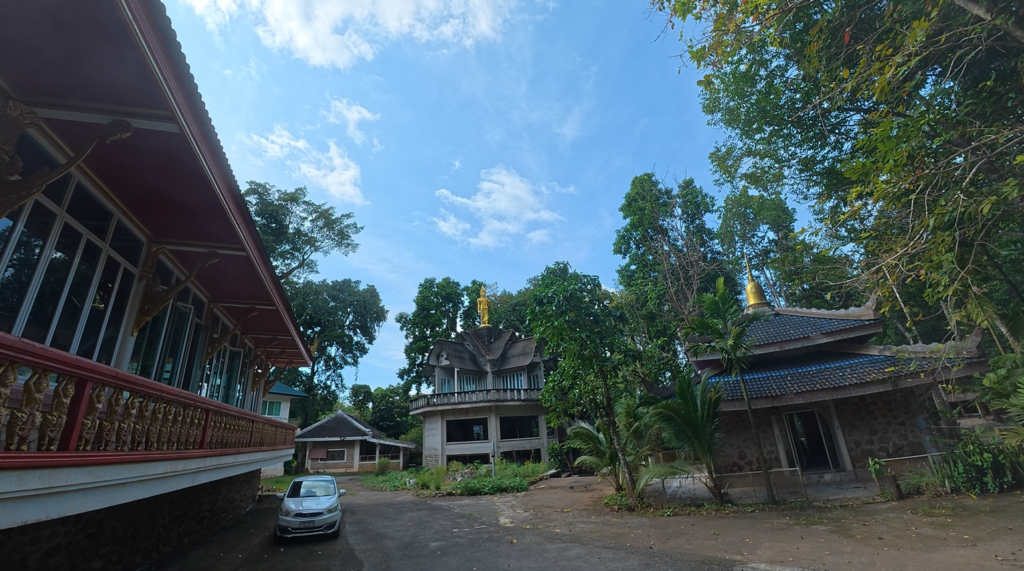

Paying my respects before leaving the sanctuary and continuing the search.
Before leaving, I paid my respects to the Buddha in the main hall.
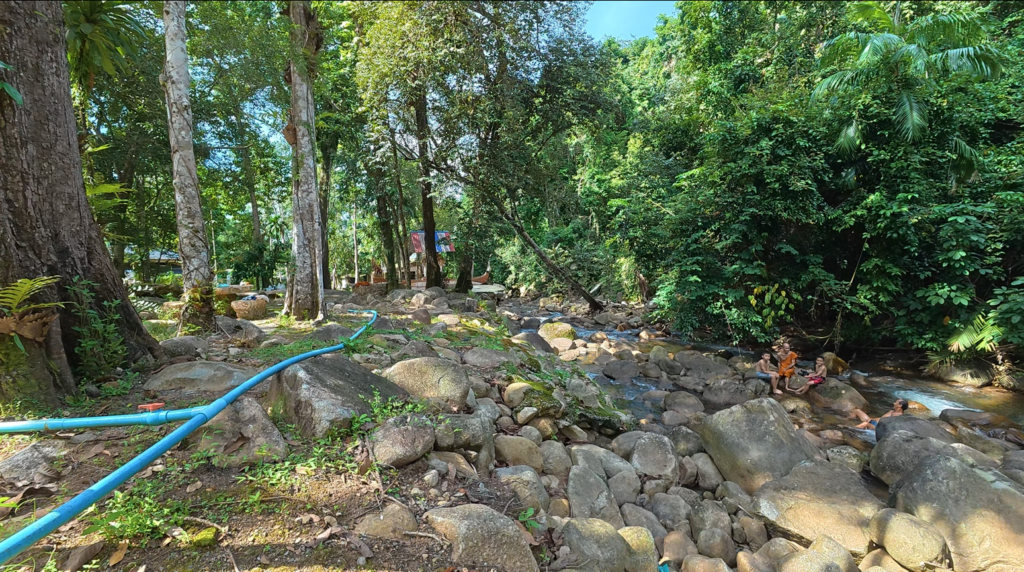
Nearby, monks and children were enjoying the water in the valley. Their ordinary happiness brought me back from the royal tragedy to the living place around me: a sanctuary where people prayed, rested, and spent time beside a stream.
I left them behind and returned to the road.
I had found Sa Kaeo’s sacred water and encountered an unexpected story of loss and remembrance. Than Narai, the third source I had set out to find, still lay ahead.

That search continues in the next part of the journey.
Location & Visitor Information
- Sa Kaeo Ancient Pond — สระแก้ว: Ploi Waen Subdistrict, Tha Mai District, Chanthaburi. A small sacred water compound in a village and orchard setting. Search for the Chanthaburi site specifically.
- Samnaksong Khlong Narai — สำนักสงฆ์คลองนารายณ์: Khlong Narai Subdistrict, Mueang Chanthaburi District. A monastic sanctuary with devotional shrines, including images of Queen Sunandha, her child, and Rama V. It is separate from the official Than Narai sacred water source.
- Respect worshippers and resident monks. Ask before moving or cleaning devotional objects. My tasting of the well water describes my experience and is not a recommendation to drink untreated water.
- Opening hours, admission arrangements, and access were not independently confirmed for this article.
External Links & Historical Sources
- Chanthaburi National Archives: Legends and ceremonial history of Sa Kaeo
- Chanthaburi Provincial Cultural Office: Sa Kaeo tradition
- Royal Coronation: Chanthaburi sacred water sources
- 4 July 2024: Chanthaburi sacred water collection ceremonies
- Chanthaburi Public Relations Office: 7 July 2024 consecration
- Suan Sunandha Rajabhat University: Queen Sunandha biography
- Fine Arts Department: Sunandalai memorial history
- Vajirayana Digital Library: Historical account of the boat-disaster inquiry
- Thai Inscriptions Database: Bang Pa-In memorial
- Thai Inscriptions Database: Saranrom memorial
- Princess Maha Chakri Sirindhorn Anthropology Centre: Sunandha Monument, Phlio