Kuti Rishi Ban Nong Bua Lai is a small but fascinating Khmer ruin hidden in the quiet countryside of Buriram, Thailand. Located not far from Phanom Rung Historical Park, this ancient sanctuary stands almost unnoticed among fields and village roads.
A Forgotten Khmer Sanctuary
Unlike the grand stone towers of Phanom Rung, Kuti Rishi Ban Nong Bua Lai is modest in size and easy to miss. Yet its weathered laterite walls and sandstone details reveal that this quiet place once belonged to the ancient Khmer world that spread across the region.
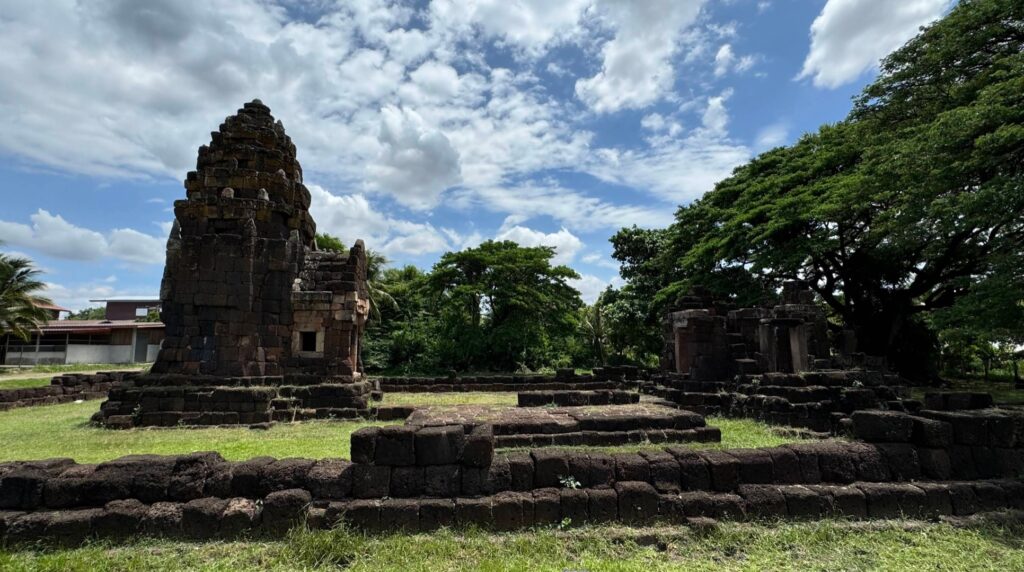
An Ancient Khmer Hospital Chapel
Kuti Ruesi Ban Nong Bua Rai is believed to have been an Arokayasala, or hospital sanctuary, established during the reign of King Jayavarman VII in the late 12th or early 13th century. These small religious and medical complexes were built throughout the Khmer Empire to provide care for travelers and local communities.
A Small but Meaningful Design
The sanctuary follows the compact layout commonly associated with Khmer hospital chapels. A small central shrine was surrounded by an enclosure, with the main entrance facing east. Laterite formed much of the structure, while sandstone was used for important architectural details.
Although only part of the original complex survives today, its simple arrangement still reveals how religion, healing, and royal authority were connected during the reign of King Jayavarman VII.
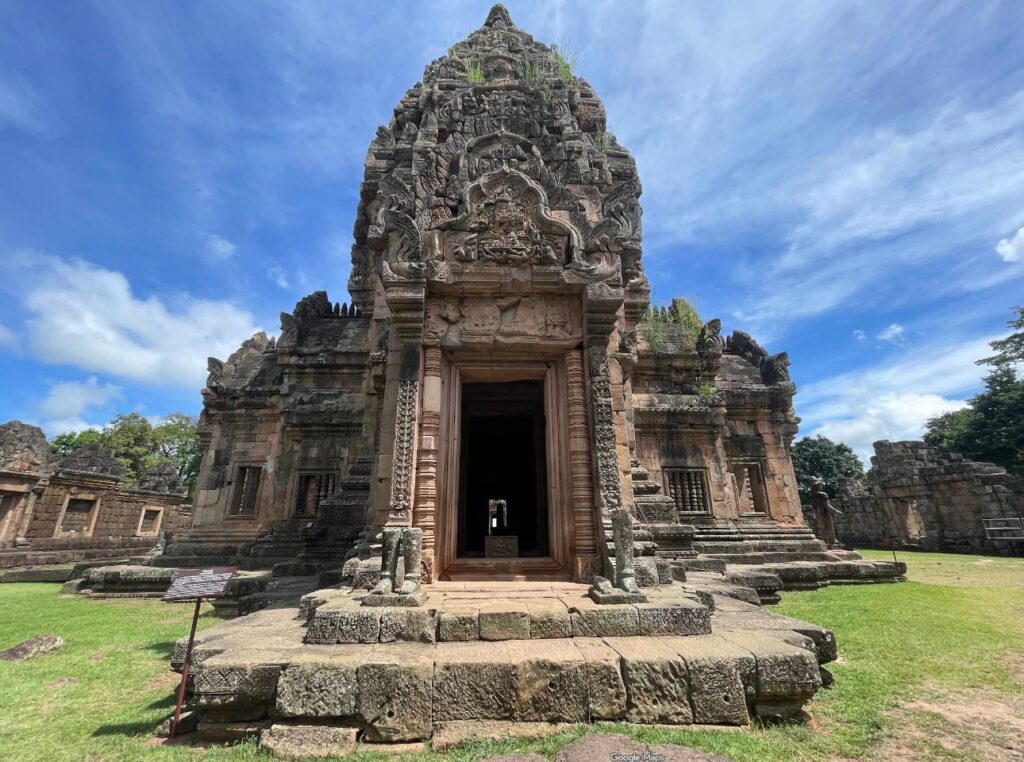
A Quiet Ruin Beside Village Roads
Today, Kuti Ruesi Ban Nong Bua Rai stands quietly beside the rural roads of Buriram. There are no crowds, large gates, or long walking routes. Visitors can approach the ruin closely and observe the rough laterite blocks, worn stone surfaces, and traces of its ancient structure.
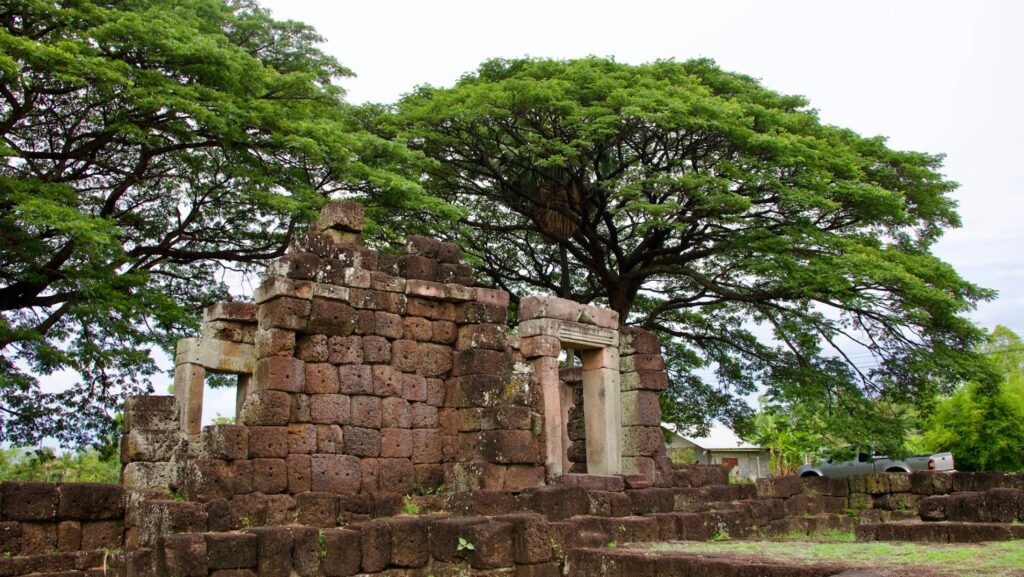
Its silence is part of its charm. After visiting the grand monuments of Phanom Rung, this small sanctuary offers a more intimate glimpse into the everyday landscape of the Khmer Empire.
Exploring Kuti Ruesi Ban Nong Bua Rai
Visitor Information
Kuti Ruesi Ban Nong Bua Rai is located in Prakhon Chai District, Buriram Province, close to Phanom Rung Historical Park. The site is small and can be explored in a short time, making it a worthwhile stop for travelers interested in Khmer history and lesser-known archaeological sites.
There are limited visitor facilities, so bring drinking water and visit during daylight hours. Please respect the ancient stones and avoid climbing on the ruins.
Learn more about Buriram’s Khmer heritage from the Fine Arts Department of Thailand.
Location
Kuti Ruesi Ban Nong Bua Rai is located near Phanom Rung Historical Park in Prakhon Chai District, Buriram Province.
View Kuti Ruesi Ban Nong Bua Rai on Google Maps
A Small Window into the Khmer Empire
Kuti Ruesi Ban Nong Bua Rai may be small, but it tells an important story. This quiet hospital sanctuary shows that the Khmer Empire was not built only around grand temples and royal monuments. It also created places of healing, worship, and rest for people living and traveling across the region.
For Won Cub Life, finding this forgotten ruin near Phanom Rung was another reminder that some of Thailand’s most meaningful historical places are hidden far beyond the main tourist routes.
Continue the journey to Phanom Rung Historical Park.
Why This Hidden Site Matters
Kuti Ruesi Ban Nong Bua Rai is especially valuable because it helps visitors understand the wider landscape surrounding Phanom Rung. The famous mountain temple represented royal power and sacred architecture, while smaller sites like this one supported local communities and travelers.
Its modest scale also makes the experience feel personal. Without crowds or large modern facilities, visitors can stand close to the surviving stones and imagine how this place may have served people centuries ago. Together with nearby Khmer monuments, Kuti Ruesi Ban Nong Bua Rai forms part of a much larger historical network across Buriram.