Hidden Khmer Ruins near Prasat Muang Tam reveal a quieter side of the ancient Khmer Empire. Kuti Ruesi Ban Khok Muang served as a place of healing, while Prasat Ban Bu offered rest and shelter to travelers moving along the old Khmer road.
Kuti Ruesi Ban Khok Muang – A Sanctuary of Healing
Kuti Ruesi Ban Khok Muang is a small Khmer hospital sanctuary believed to date from the reign of King Jayavarman VII in the late 12th or early 13th century. Like other Arokayasala sites across the Khmer Empire, it combined religious devotion with care for local people and travelers.
The surviving laterite walls and compact layout show that this was never intended to be a grand royal temple. Instead, it formed part of a wider network of practical sacred places built to support communities along important routes.
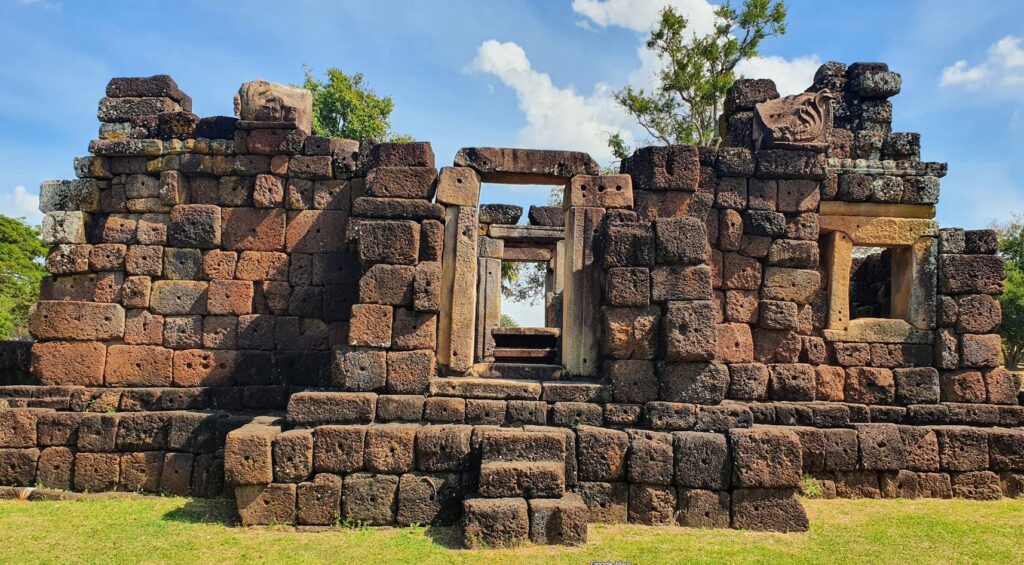
A Quiet Arokayasala beside the Village
Today, Kuti Ruesi Ban Khok Muang stands quietly among trees and village roads near Prasat Muang Tam. The remaining laterite blocks, doorway, and low enclosure walls preserve the simple plan of an ancient Arokayasala.
There are no large towers or elaborate galleries here. Its importance comes from its original purpose. This was a place where faith, medicine, and royal care were brought together for ordinary people living or traveling through the region.
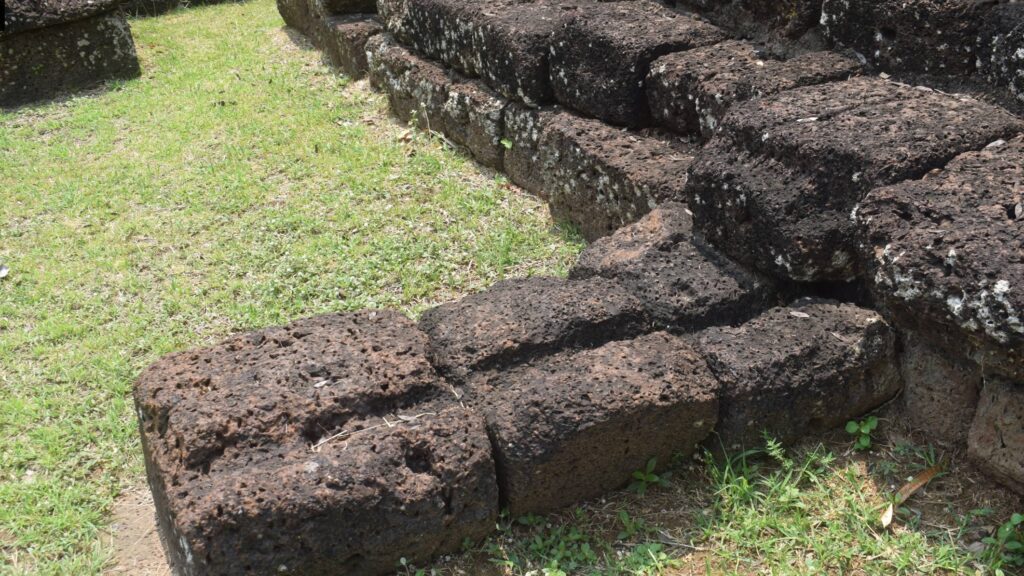
Exploring Kuti Ruesi Ban Khok Muang
Prasat Ban Bu – A Rest House for Ancient Travelers
Prasat Ban Bu is believed to have served as a rest house or shelter along an ancient Khmer route. These roadside structures offered travelers, officials, monks, and pilgrims a protected place to stop during long journeys across the empire.
Its small stone sanctuary may look simple today, but it reflects the organized road system that once connected major religious centers throughout the region. Near Prasat Muang Tam, Prasat Ban Bu helps us imagine the movement of people between temples, villages, and royal centers centuries ago.
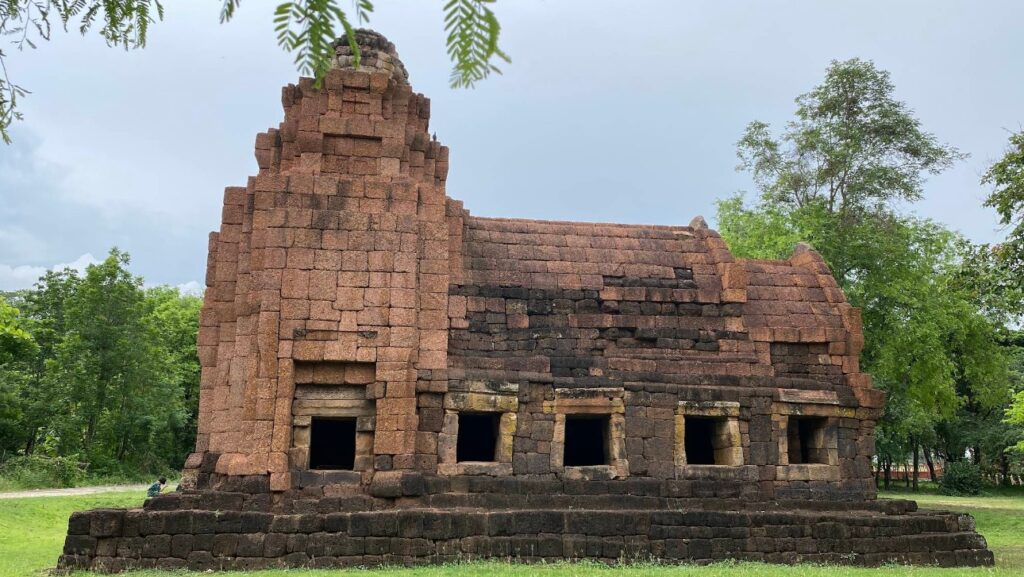
A Small Shelter on the Khmer Road
Prasat Ban Bu stands quietly in the countryside, far from the scale and grandeur of Phanom Rung or Prasat Muang Tam. Its surviving stonework suggests a modest roadside sanctuary designed for function rather than ceremony.
For travelers following the ancient route, this place may have offered shade, safety, prayer, and a brief pause before continuing the journey. The ruin reminds us that the Khmer road network depended not only on great temples, but also on small stations that supported movement across the landscape.
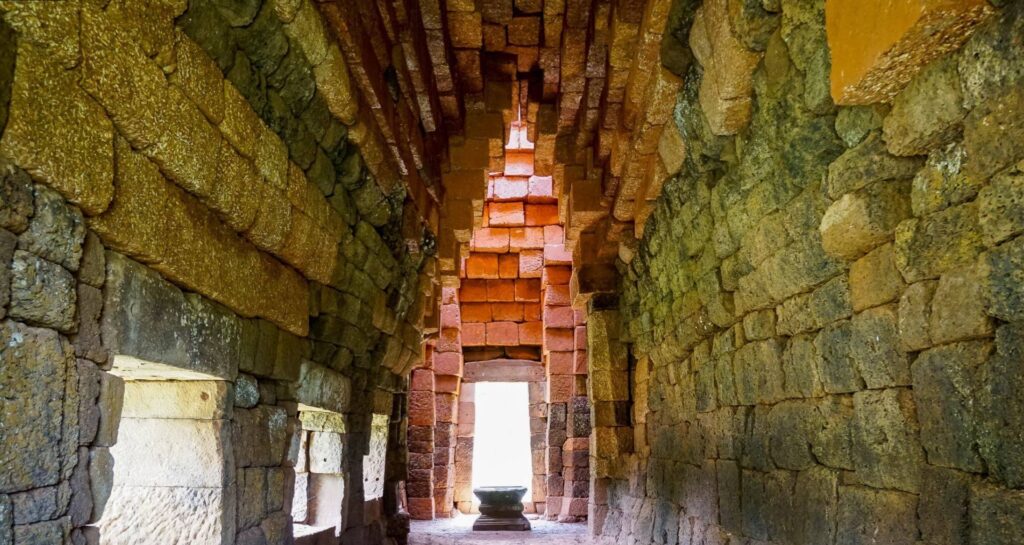
Exploring Prasat Ban Bu
Hidden Khmer Ruins near Prasat Muang Tam
Kuti Ruesi Ban Khok Muang and Prasat Ban Bu reveal how carefully the Khmer Empire supported people beyond its monumental temples. One place was associated with healing and spiritual care, while the other offered rest to those traveling between important religious and administrative centers.
Together, these two small ruins complete the larger story of Prasat Muang Tam. They show that the ancient landscape was not made only for kings and ceremonies, but also for patients, monks, pilgrims, workers, and ordinary travelers.
Visitor Information
Kuti Ruesi Ban Khok Muang and Prasat Ban Bu are both located near Prasat Muang Tam in Buriram Province. Each site is small and can be visited in a short time, making them ideal stops for travelers exploring the Khmer heritage of the area.
Facilities are limited, so it is best to visit during daylight hours and bring drinking water. Please avoid climbing on the ancient stonework and help preserve these quiet archaeological sites.
Kuti Ruesi Ban Khok Muang Location
View Kuti Ruesi Ban Khok Muang on Google Maps
Prasat Ban Bu Location
View Prasat Ban Bu on Google Maps
Two Small Ruins, One Larger Story
Kuti Ruesi Ban Khok Muang and Prasat Ban Bu may be small, but together they reveal the human side of the Khmer Empire. One offered healing and spiritual care, while the other provided shelter and rest along an ancient route.
For Won Cub Life, visiting these quiet ruins near Prasat Muang Tam was a reminder that history is not found only in grand monuments. Sometimes, the smallest places preserve the clearest traces of everyday life from centuries ago.