My visit to Wat Phlap Bang Kacha began after a three-hour ride from the Marine Air Force area,
I continued beneath a wide blue sky. The road carried me onward for three hours, past open landscapes and quiet green roadside lanes. As the steady rhythm of the ride settled in, I began to feel that this was more than a journey to another temple. I was riding toward Wat Phlap Bang Kacha and the stories preserved there. When the temple entrance finally appeared, the long ride had become the beginning of the visit.
The temple is recorded as having been established in Buddhist Era 2300, or 1757 CE, during the late Ayutthaya period. The structures we see today reflect different periods of construction and repair, so the history of the temple should be distinguished from the age of any individual building. ONEP: Wat Phlap

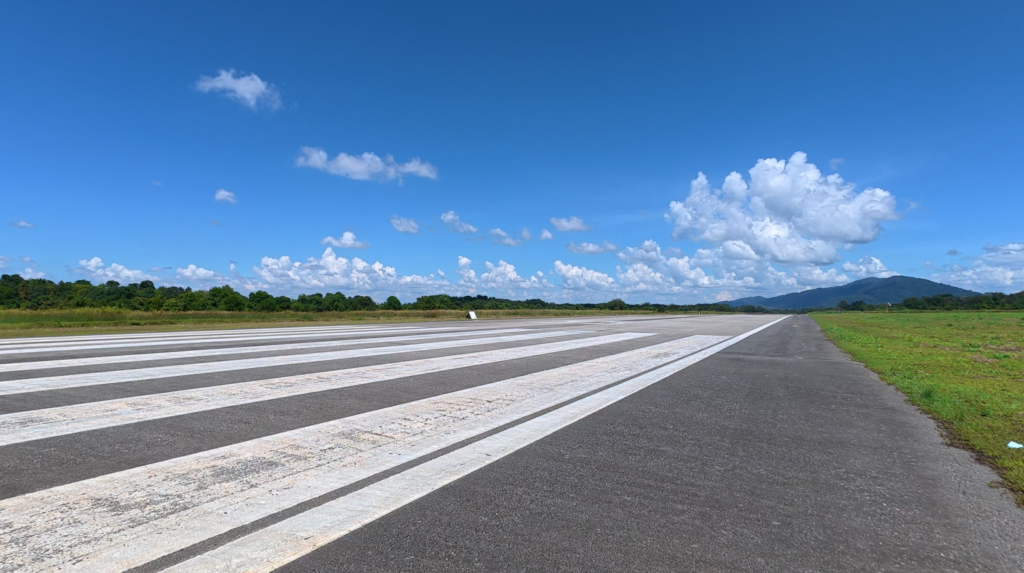
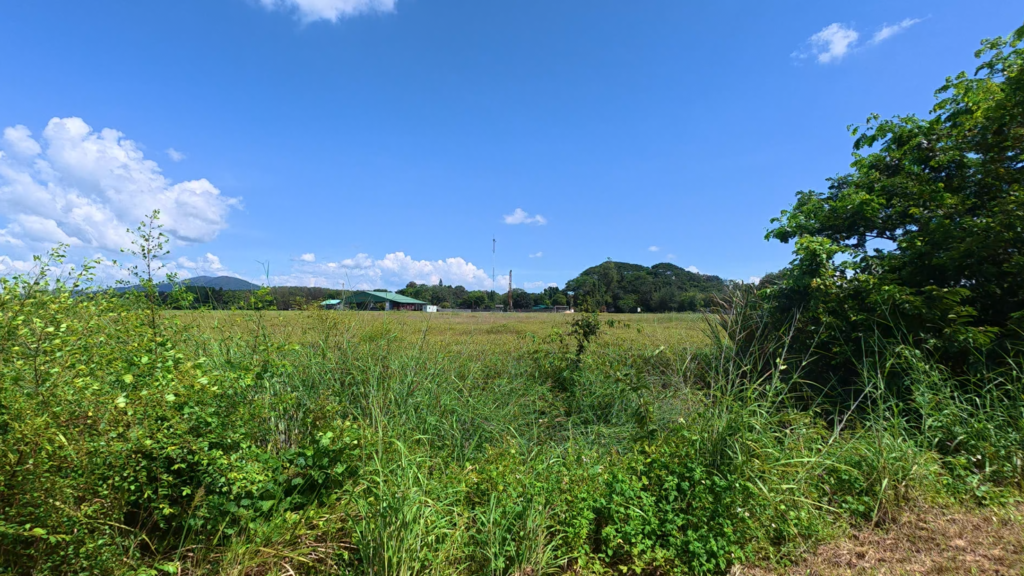
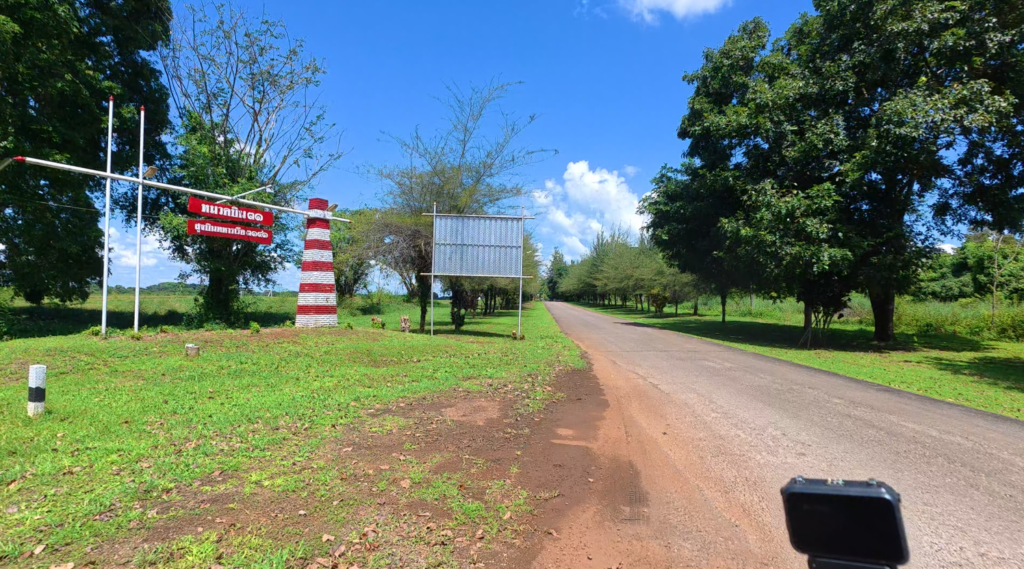
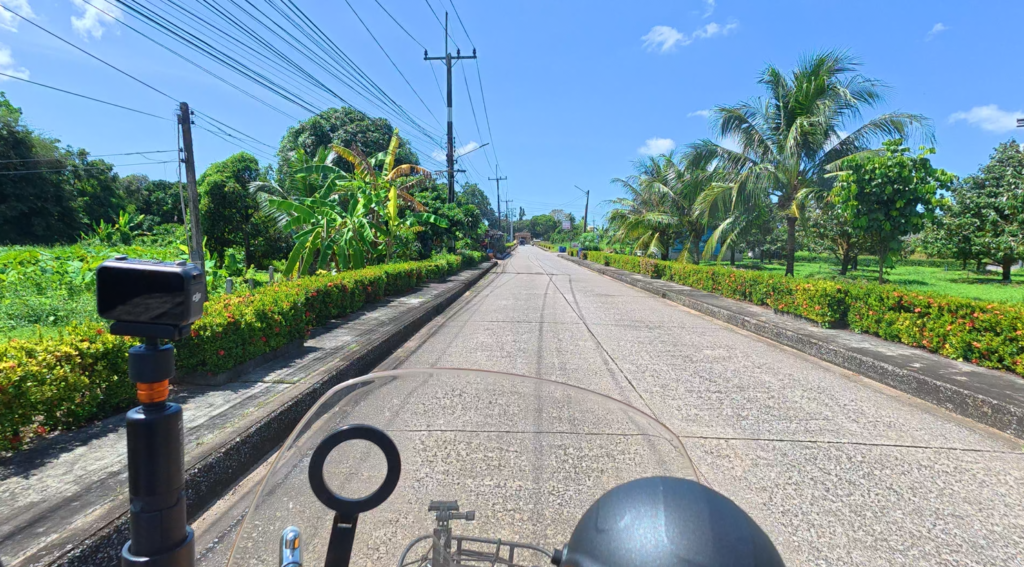
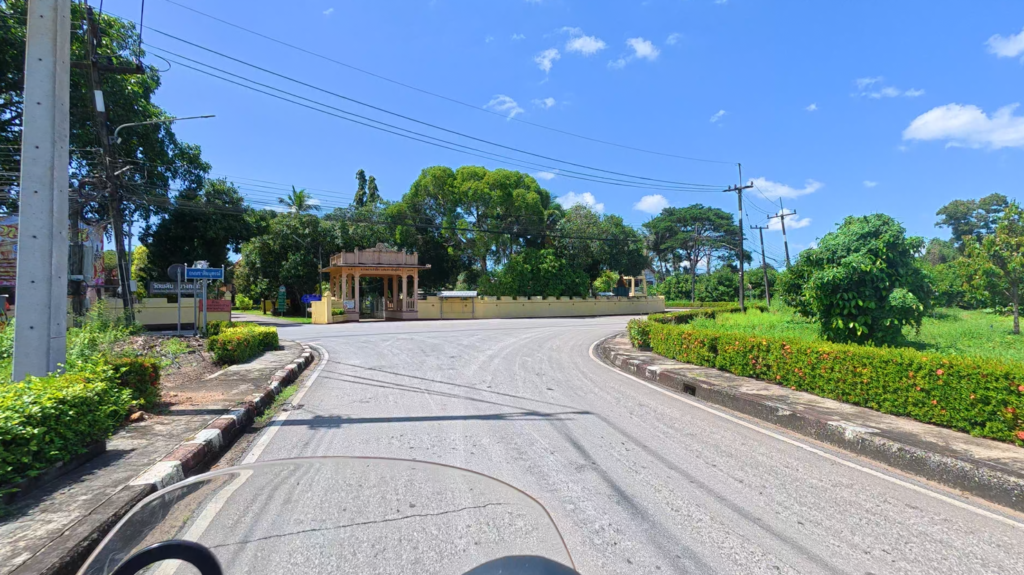
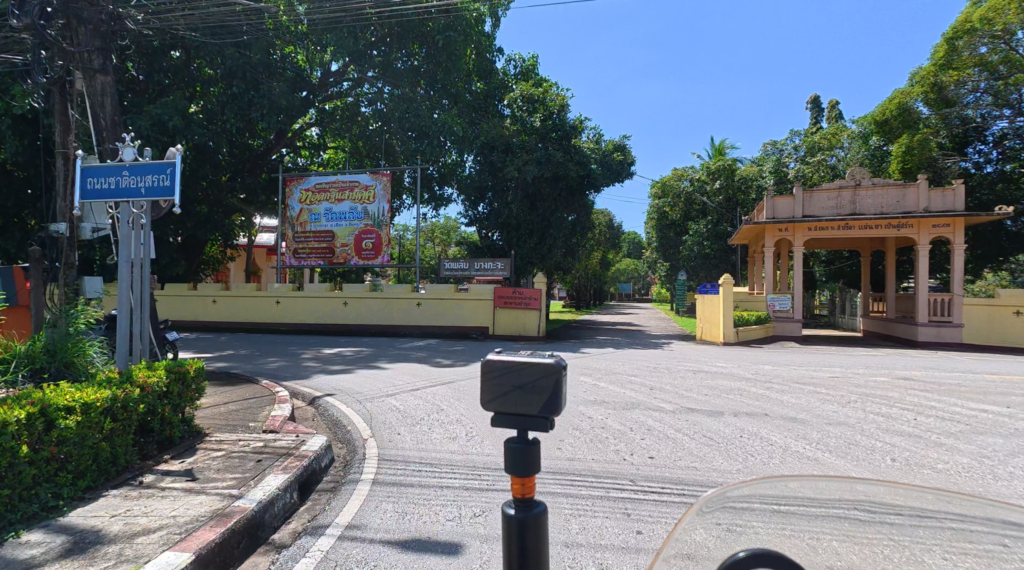
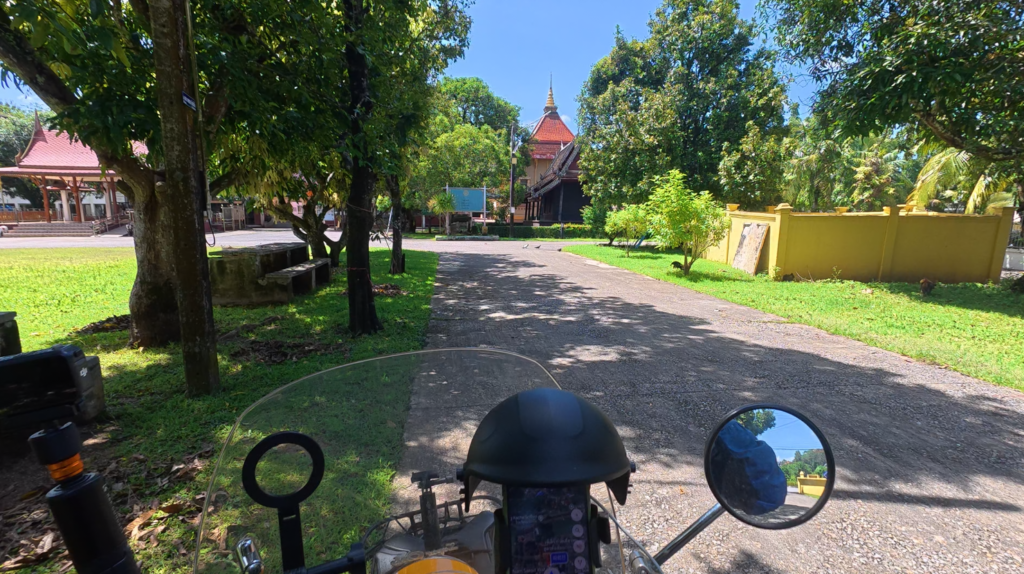

Three hours on the road: open skies and quiet countryside leading to Wat Phlap Bang Kacha.
Taksin’s Campaign and Local Memory
Local accounts connect Wat Phlap and the Bang Kacha area with King Taksin’s campaign to recover Ayutthaya in 1767. The stories say that troops stayed in the area before advancing on Chanthaburi. One tradition tells that the abbot blessed the soldiers with holy water and gave them small Buddha images for protection and encouragement. Bangkacha Subdistrict Municipality: local history
These accounts preserve the temple’s place in local memory, although the precise events and locations within the present temple grounds are not established by contemporary records. I introduce them as traditions associated with the area.
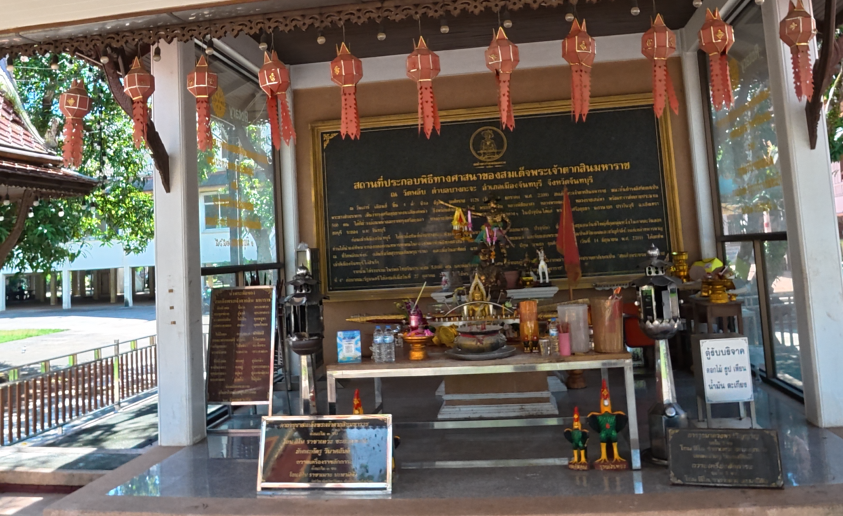
Devotional images and offerings inside the temple.
The Ho Trai: Wat Phlap’s Scripture Hall Above the Pond
The old wooden viharn is one of the most distinctive historic buildings at Wat Phlap Bang Kacha. Its raised position helped protect the Buddhist scriptures once kept inside from dampness, insects, and other damage. The wooden structure has a two-tiered gabled roof and a veranda running around the hall. Carved roof ornaments and traces of traditional lacquer-and-gold decoration preserve details of its craftsmanship. The hall is regarded as very old, although the exact date of its construction has not been confirmed. สิ่งแวดล้อมศิลปกรรม
The ho trai was built to safeguard the temple’s sacred texts. Today, Buddha images occupy the interior, and no old manuscripts were on display during my visit. A monk suggested that the scriptures might be at the Noen Wong museum. I had visited the museum before but did not see them there, so their present location remains uncertain. The monk’s suggestion is a lead, not confirmation that the museum holds the books.
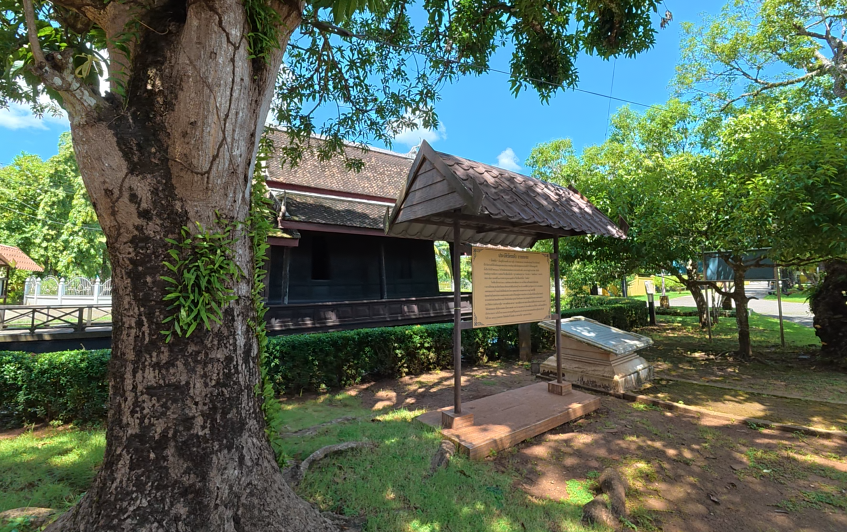


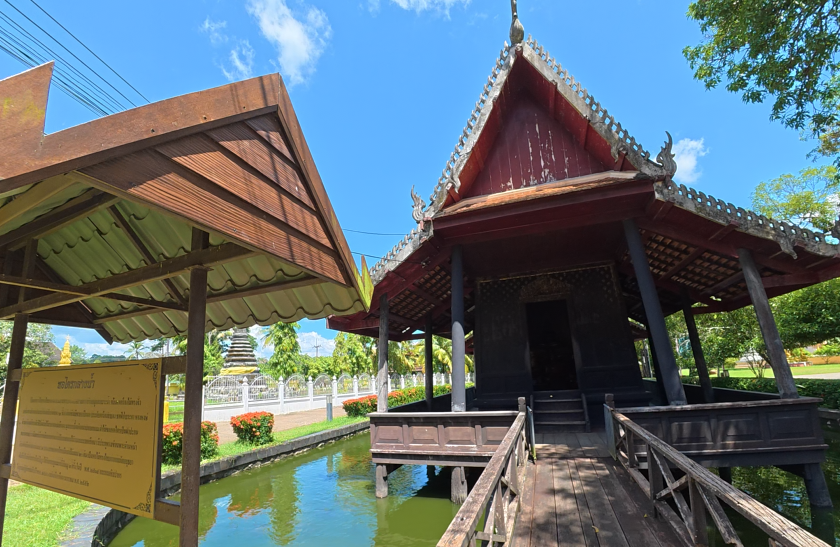

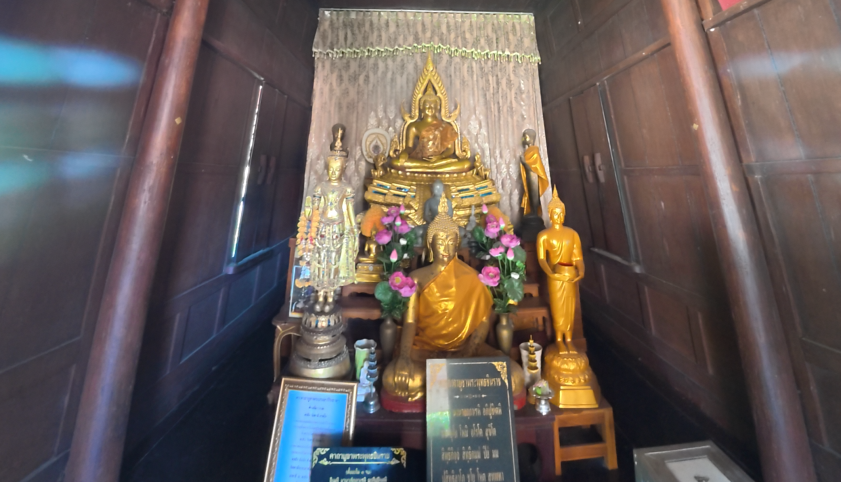
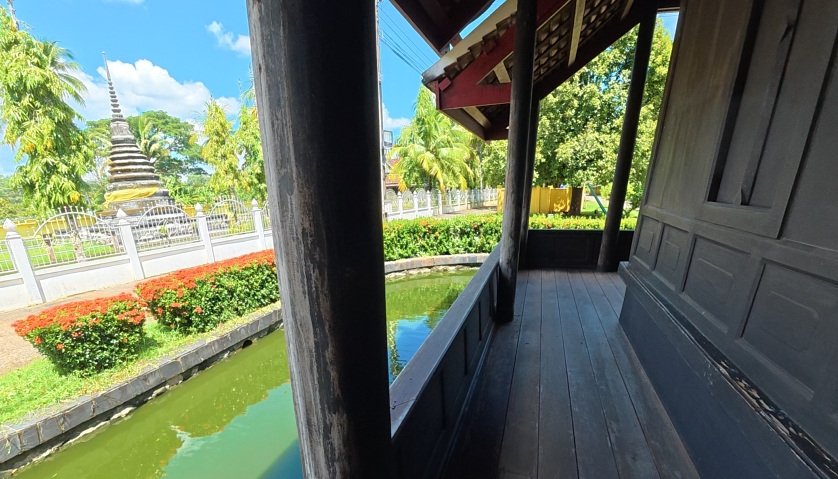
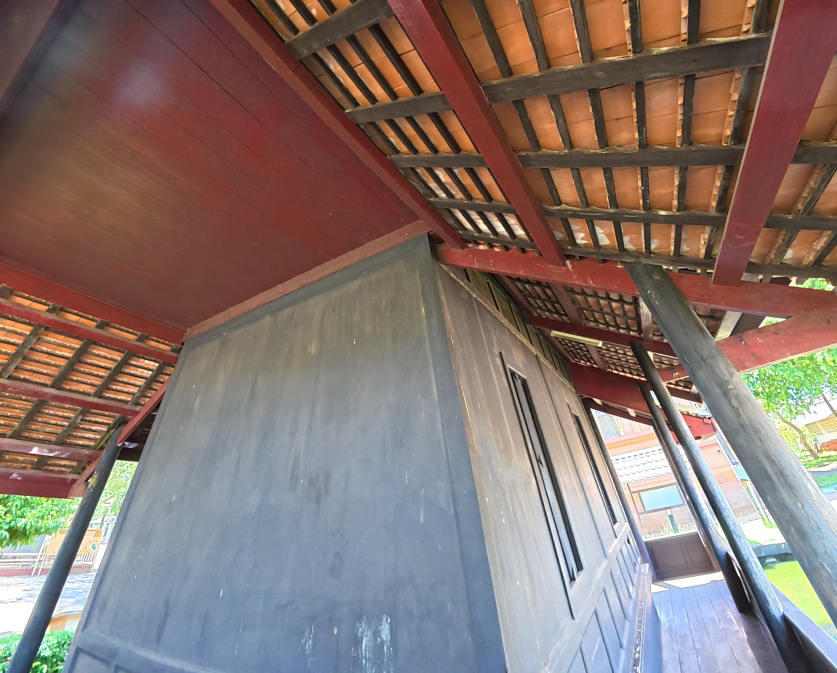
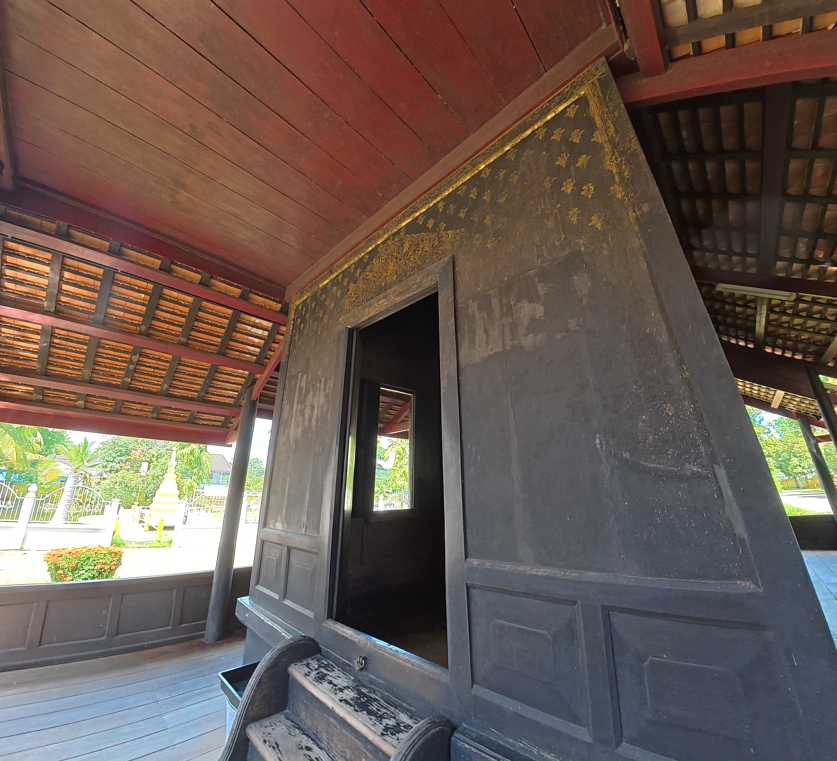
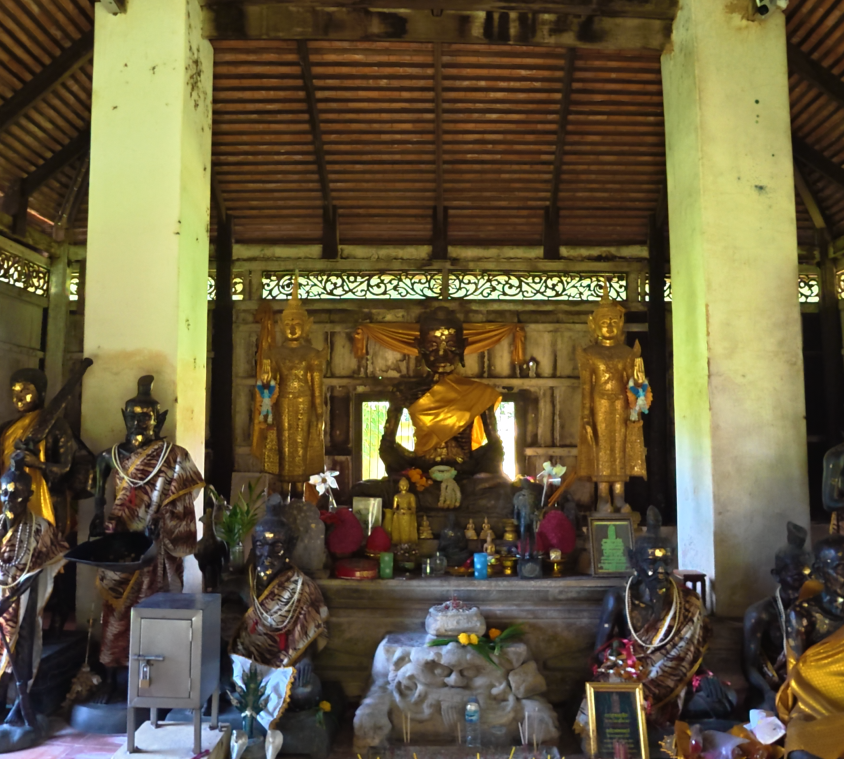
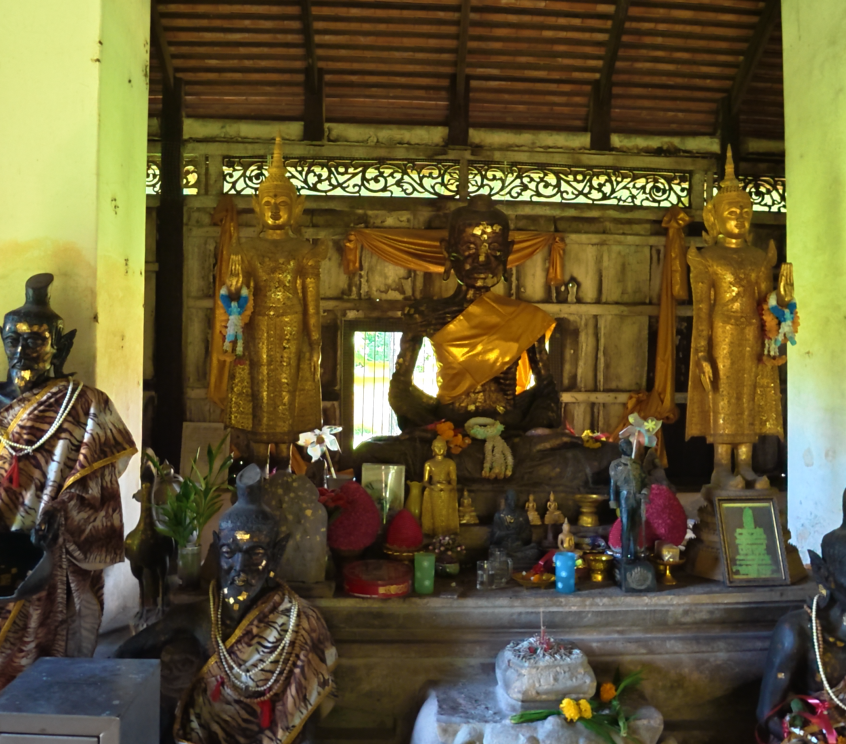
The old wooden building, its structure, and the Buddha images inside
A Monk’s Welcome and a Guide to the Sacred Places
A kind monk welcomed us and offered to show us around the temple grounds. He guided us first toward the wooden viharn where the ascetic Buddha is enshrined, then pointed out the sacred well nearby. His warm hospitality turned our visit into more than a walk among old buildings. With his help, we could approach these places through the stories and traditions still held within the temple.
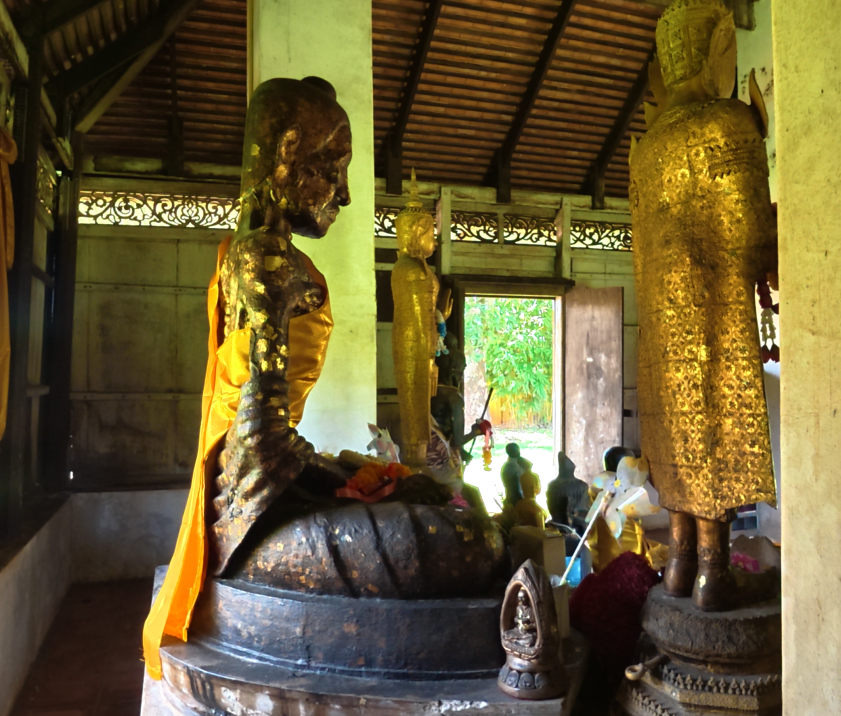
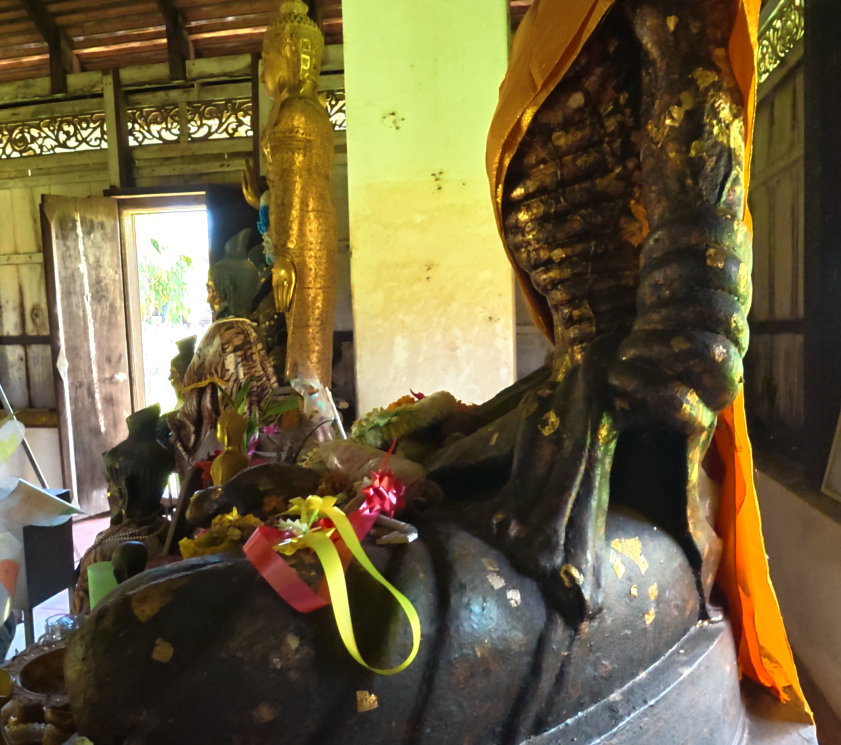
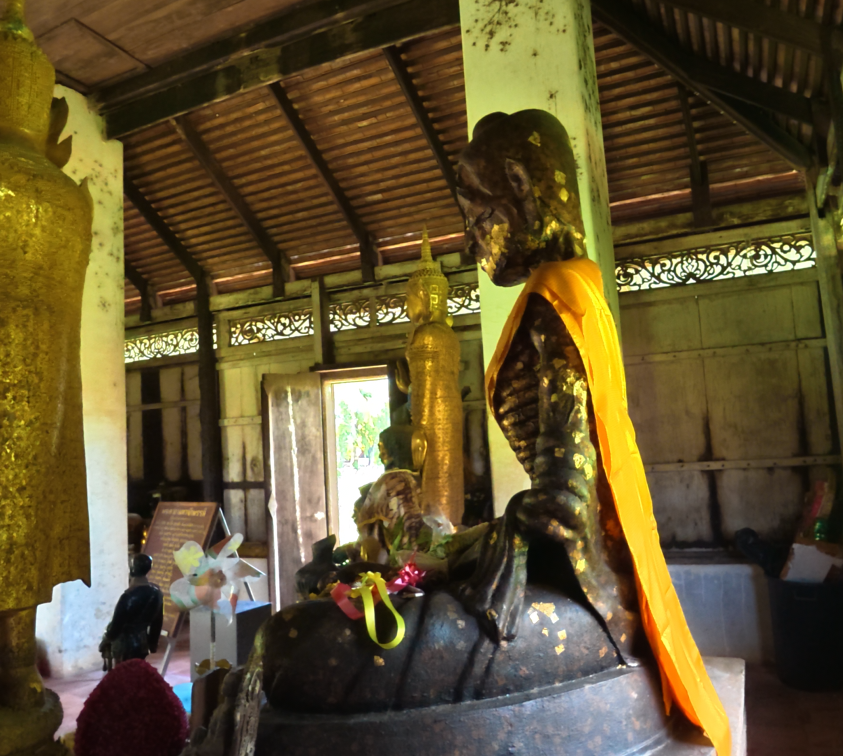
The wooden viharn is a small, square structure raised on a masonry base. Its four-sided roof rises to a small chedi at the center, while carved wooden gable ornaments and openwork panels around the building display the skill of local craftsmen. The structure is made of takhian timber and measures about eight meters on each side.
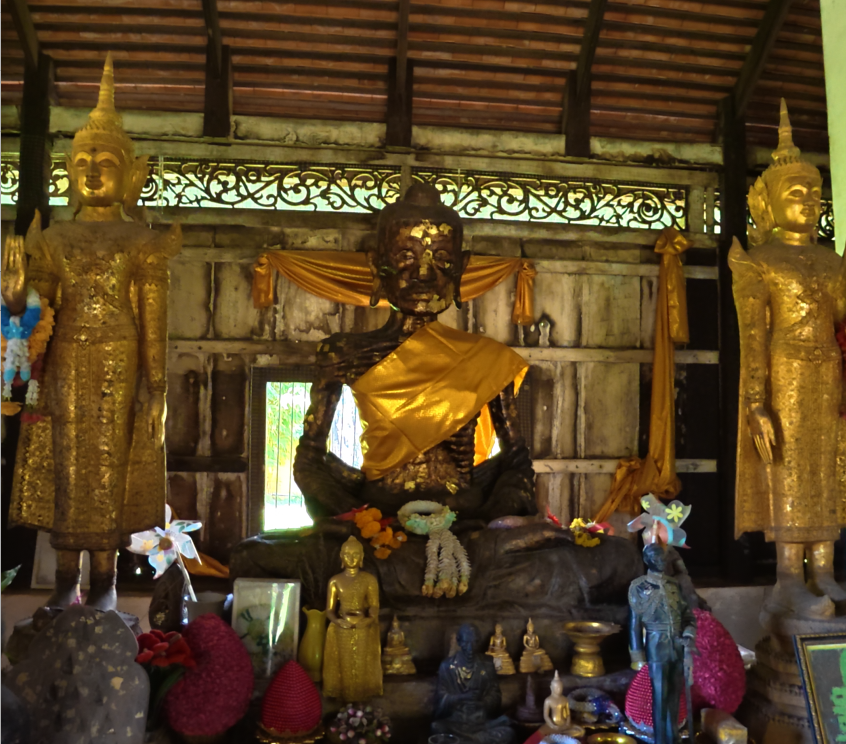
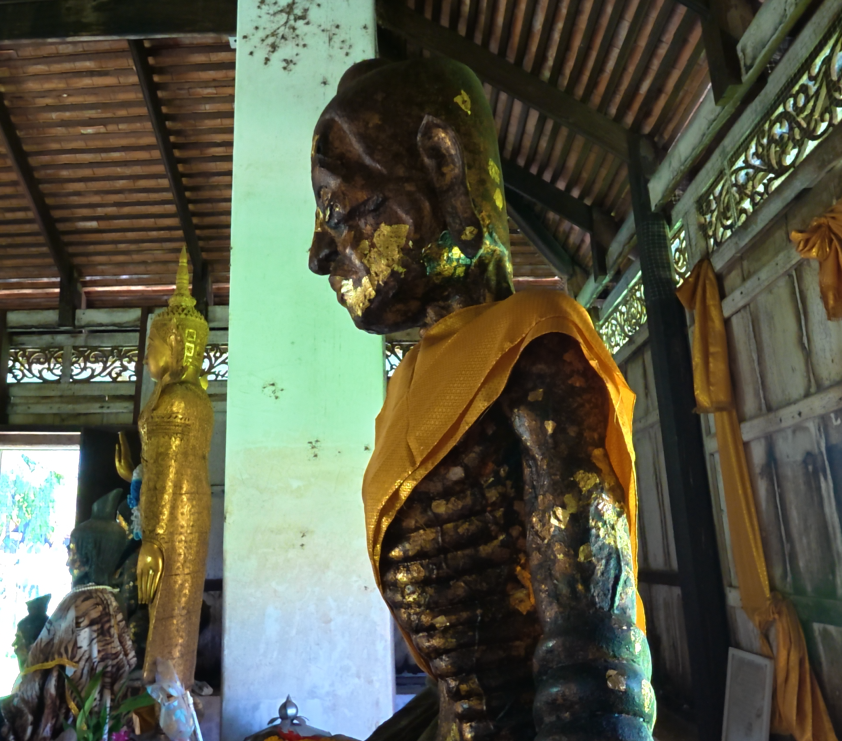
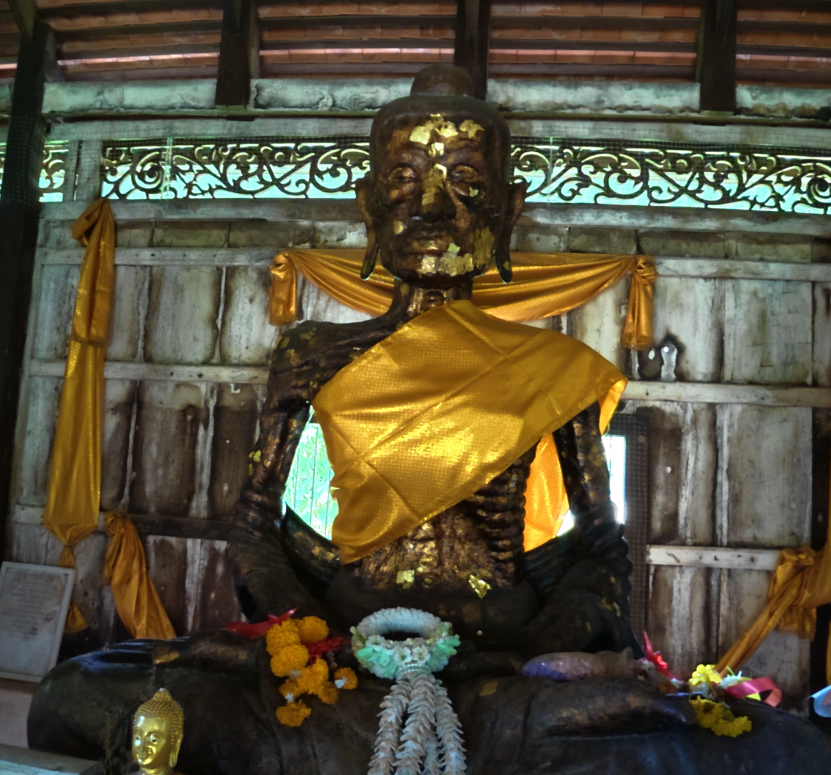
Inside, the main image depicts the Buddha in the practice of extreme asceticism. The quiet, compact interior draws attention to the image and to the old timber frame surrounding it.
The viharn is described as more than a century old, but a precise construction date or record of later additions has not been confirmed. The Fine Arts Department restored the building in April 2003, replacing roof tiles after leaks had damaged the interior wall paintings. Much of that painted decoration had already deteriorated.


The Ascetic Buddha: From Extreme Austerity to the Middle Way
The Spiritual Meaning of the Ascetic Buddha
The image inside the wooden viharn depicts the Buddha before his enlightenment, during the years when he practiced severe austerities. His emaciated form recalls Siddhartha’s determination to overcome suffering through physical discipline. Yet the story does not present self-denial as the final answer. After realizing that extreme austerity could not bring liberation, he turned to the Middle Way—a path of balance between indulgence and self-mortification. The statue therefore invites reflection on the moment when the future Buddha discovered that wisdom and freedom came through understanding, rather than through the punishment of the body. metmuseum.org
The Chedi in the Pond: A Landmark of Wat Phlap
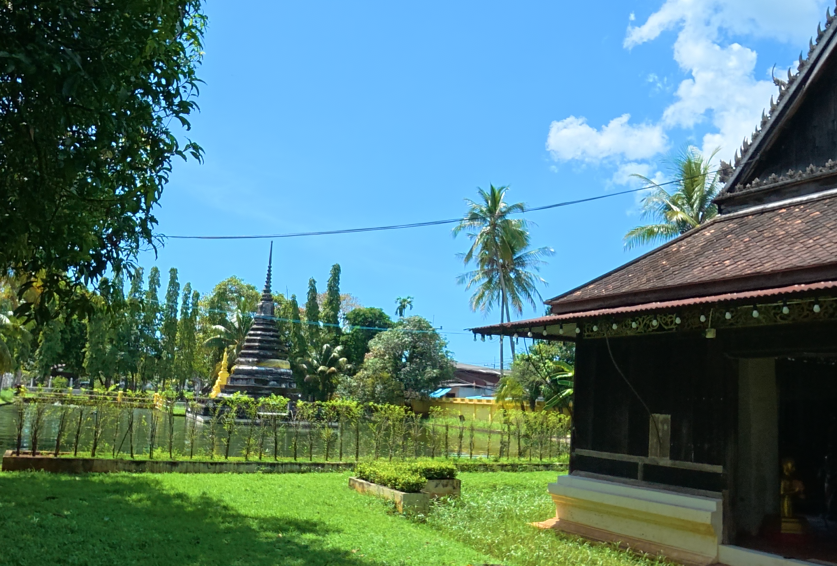
At the center of the pond stands a bell-shaped chedi built of brick and mortar. Its broad, stepped base rises from the water, supporting a plain rounded body and a tall, tapering spire. Reflected among the trees and temple buildings, it forms one of the most striking views at Wat Phlap.
The exact construction date of this chedi is not clearly documented in the sources I found. The DASTA community tourism record describes it as a bell-shaped chedi in the Rattanakosin style, while other local accounts differ in how they classify its period. It is safest, therefore, to describe the visible form and note that its precise date remains uncertain. CBT Thailand
The chedi is often seen within the wider story of Wat Phlap and King Taksin’s campaign in Chanthaburi. Local history recounts that Phra Yod Thong Buddha images were given to the troops for encouragement, and that the remaining images were later placed in a separate chedi in a sandy courtyard. That structure eventually collapsed, revealing many Buddha images. This story belongs to the sand-courtyard chedi; the available accounts do not establish that those images were enshrined in the pond chedi shown here.
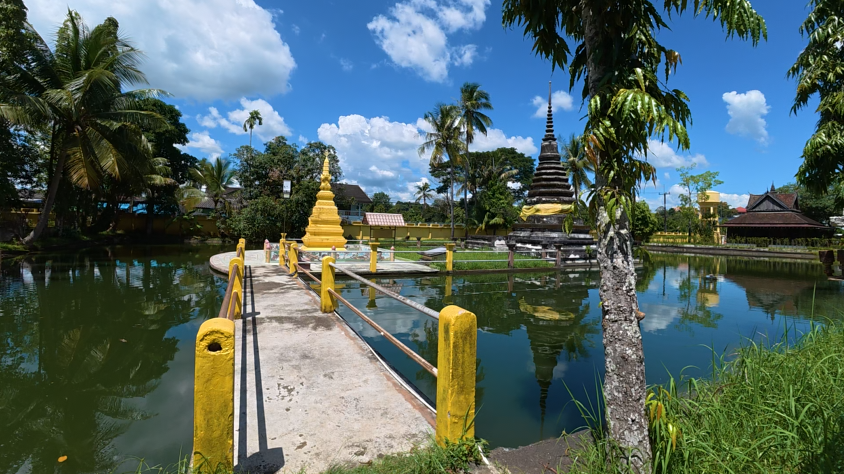

The bell-shaped chedi rising from the pond at Wat Phlap, with the scripture hall beyond
The Sacred Well
Wat Phlap Bang Kacha is also connected with Chanthaburi’s royal water ceremonies. Chanthaburi’s preparations for the King’s 72nd birthday in 2024 included collecting water from the temple’s source and holding a consecration ceremony at Wat Phlap. culturalenvi.onep.go.th
During my visit, I drew a bowl of water from the well and drank it. As I did, I made a quiet wish for the cleansing of both body and mind. It was a personal moment, shaped by the belief and reverence that have long surrounded this sacred source.
The well connects the temple’s local religious life with ceremonies at the provincial and national level. Its ceremonial role is documented, while the current rules for visitors wishing to collect or drink the water have not been confirmed.
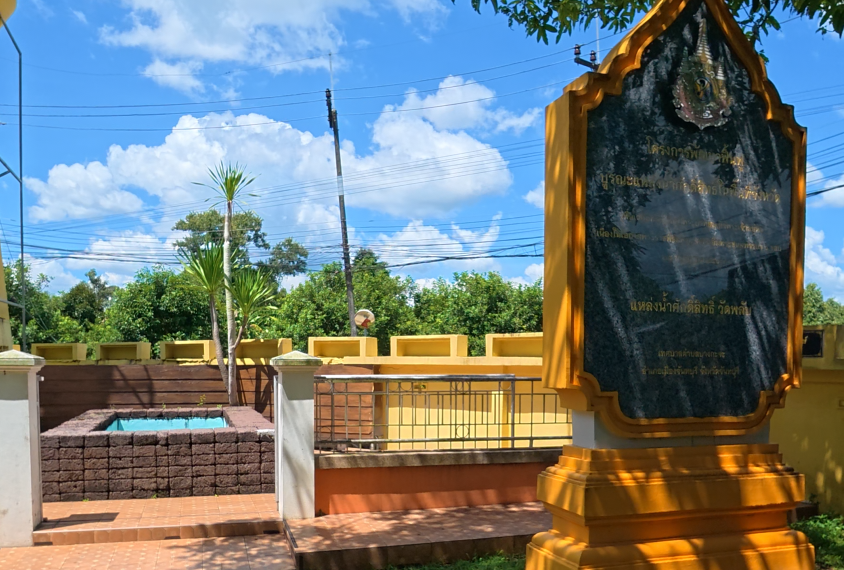
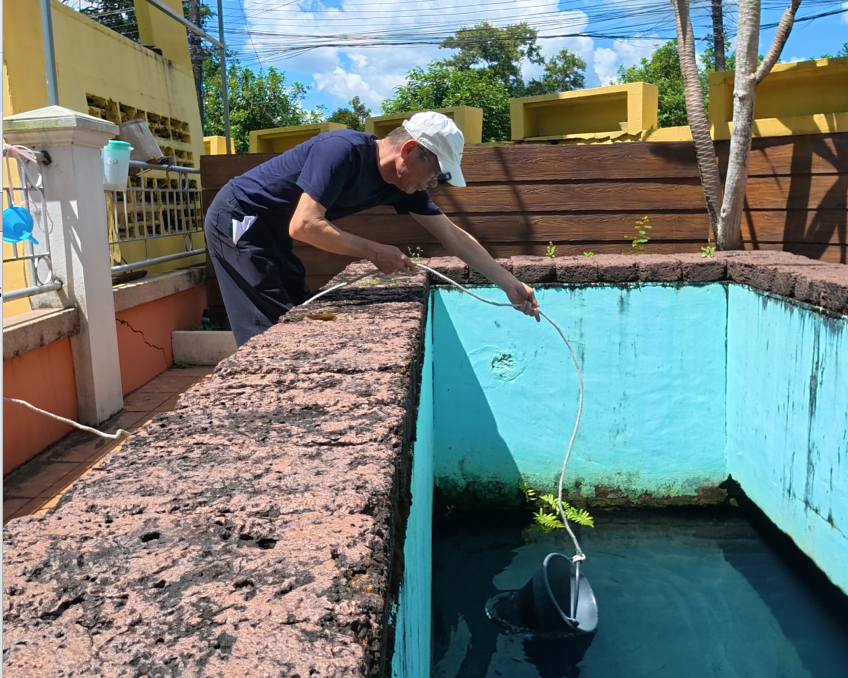
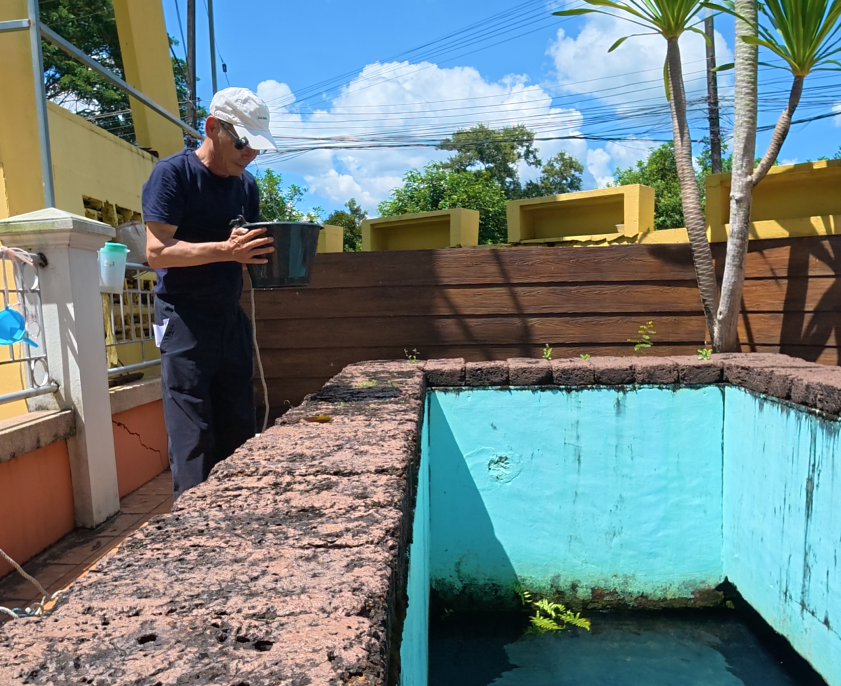
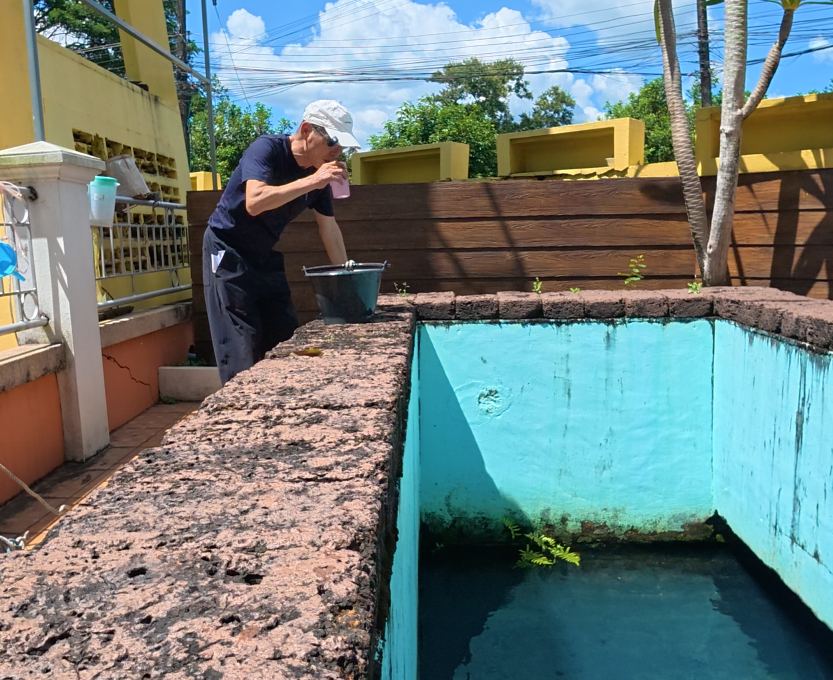
The sacred well and the water-drawing area.
The Sacred Waters of Chanthaburi
Wat Phlap’s sacred well is one of three water sources in Chanthaburi used in royal ceremonies. The other two are Sa Kaeo, at Wat Sa Kaeo in Ploi Waen, and Than Narai, in Khlong Narai. In 2024, water was ceremonially collected from all three sources for the preparation of sacred water marking the King’s 72nd birthday. The collected water was then consecrated at Wat Phlap. chanthaburi.prd.go.th
Than Narai is a natural spring source fed by water flowing from Phra Narai Cave. Its headwaters are connected with Khlong Narai Waterfall on Khao Srapab. The ceremonial source is known as Than Narai; it is more precise to describe it as a spring and stream source than simply as water taken from the waterfall. chanthaburi.prd.go.th
During my visit to Wat Phlap, I drew a bowl of water from the well and drank it. I made a quiet wish for the cleansing of both body and mind. It was a personal moment at one of the three sources whose water carries significance in Chanthaburi’s royal ceremonies.
Wat Phlap’s well connects local religious tradition with provincial and royal ceremonies. The sources document the ceremonial collection of water, though I could not confirm the current rules for visitors wishing to collect or drink it.
Chedis, Temple Buildings, and Everyday Life
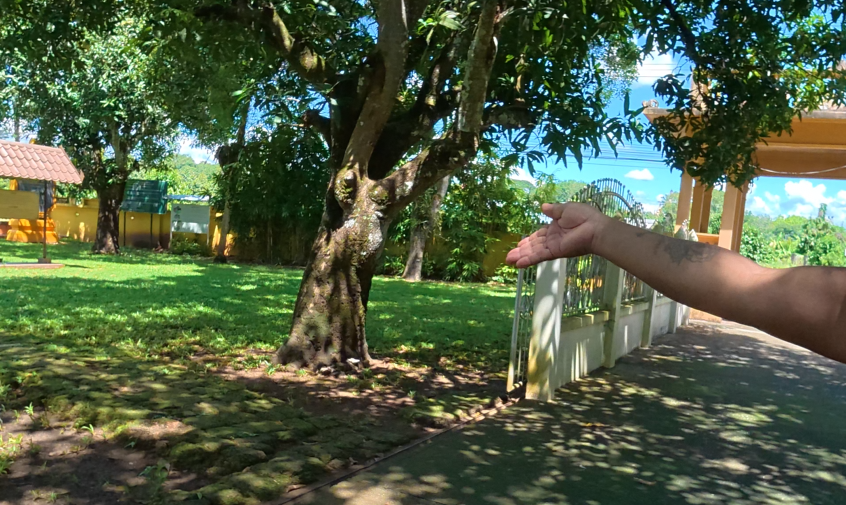
The later part of the visit passes through additional buildings and chedis set among trees and open lawns. The mixture of old and newer structures shows a temple that has continued to develop while remaining part of everyday community life.
The temple also has a history of education. Records list religious instruction in 1931, Pali studies in 1957, and a preschool education center established in 1974. These entries show that Wat Phlap served as a place of learning as well as worship. They do not establish that any one abbot personally founded each program. Temple history and education records
Historical references also mention a traditional cremation structure called a sam sang. I searched the grounds during my visit but could not locate it or find visible remains. Its former presence is recorded, but its exact location and present condition remain unconfirmed.

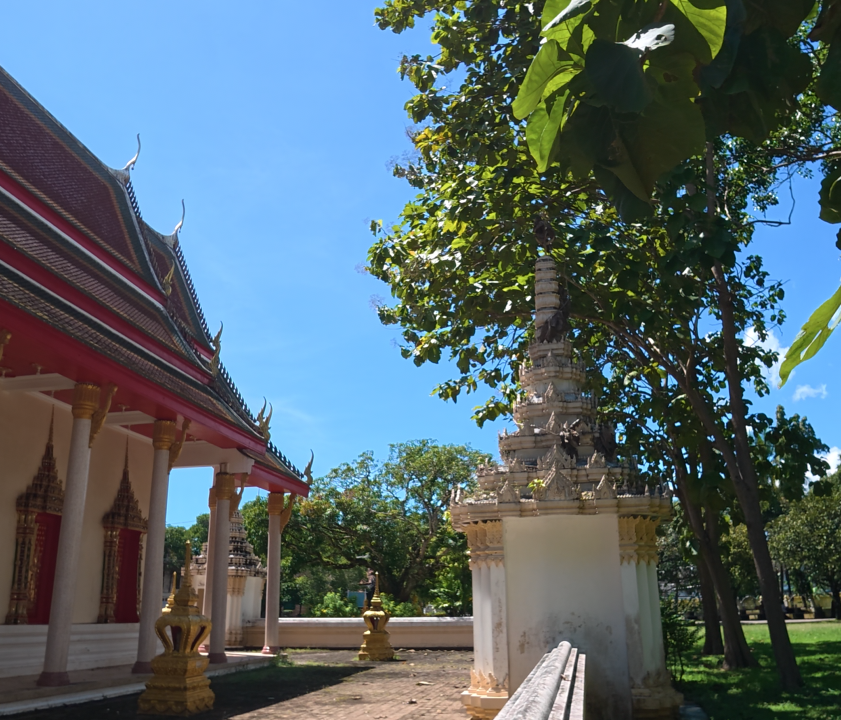
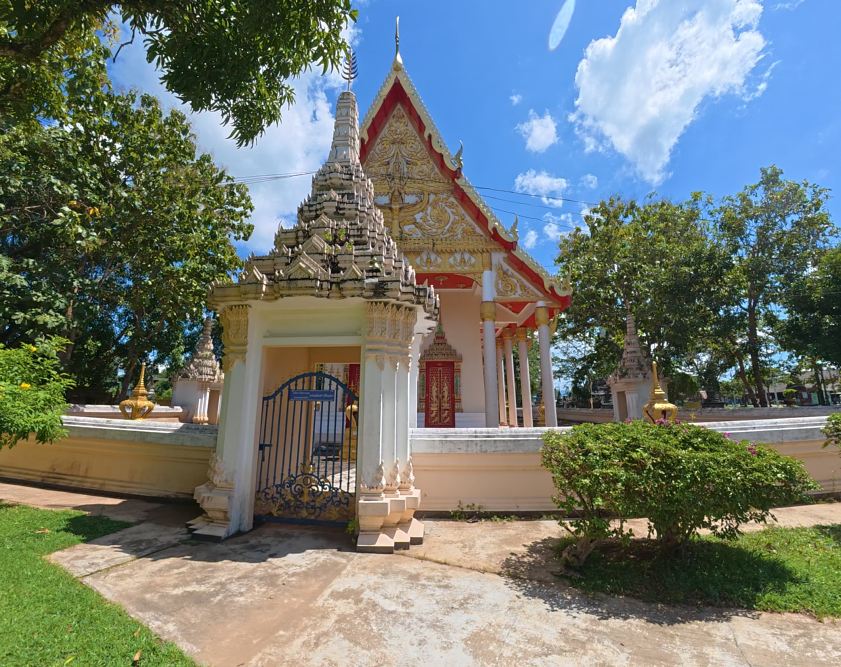
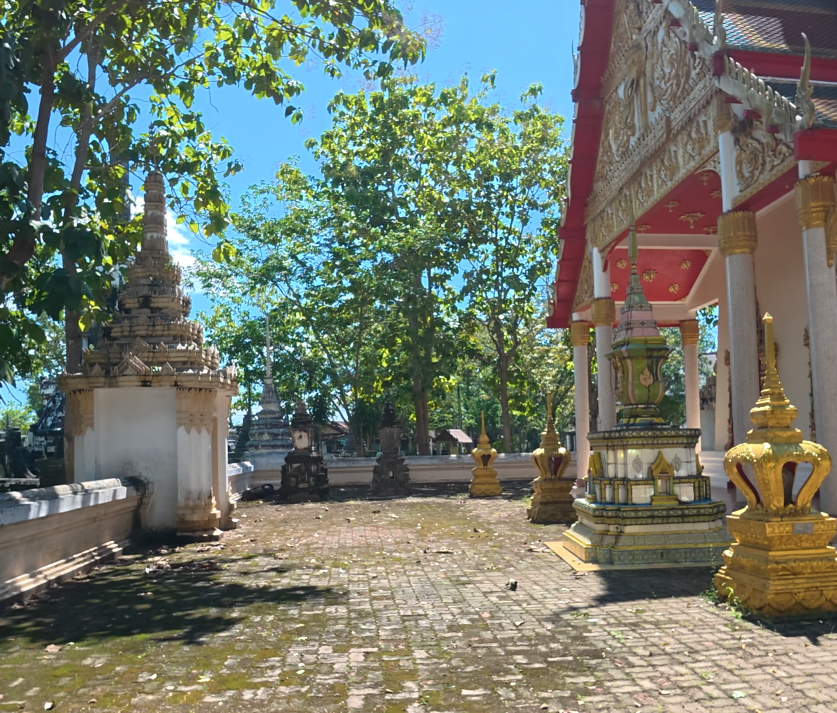
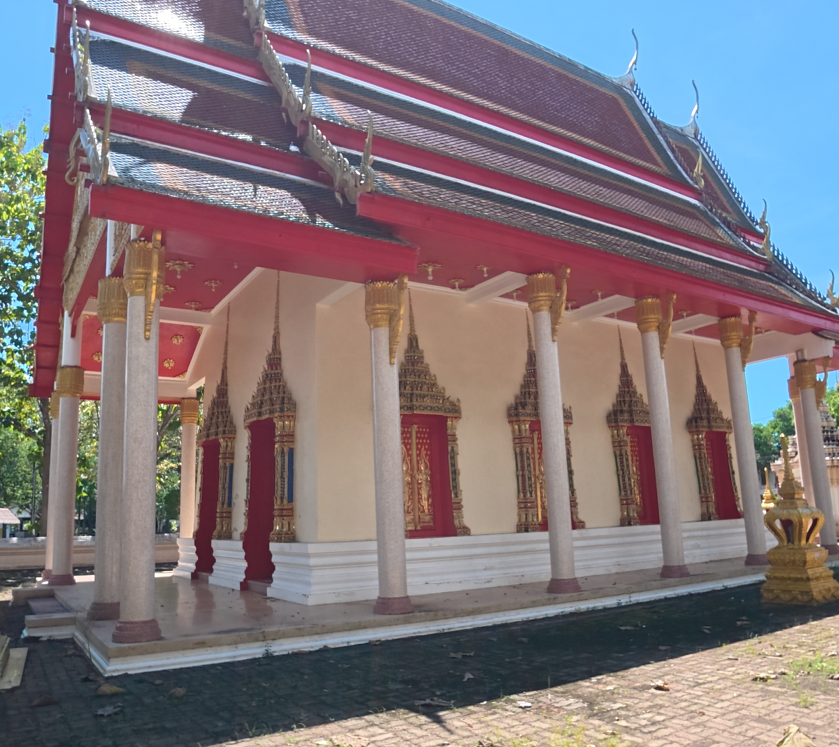
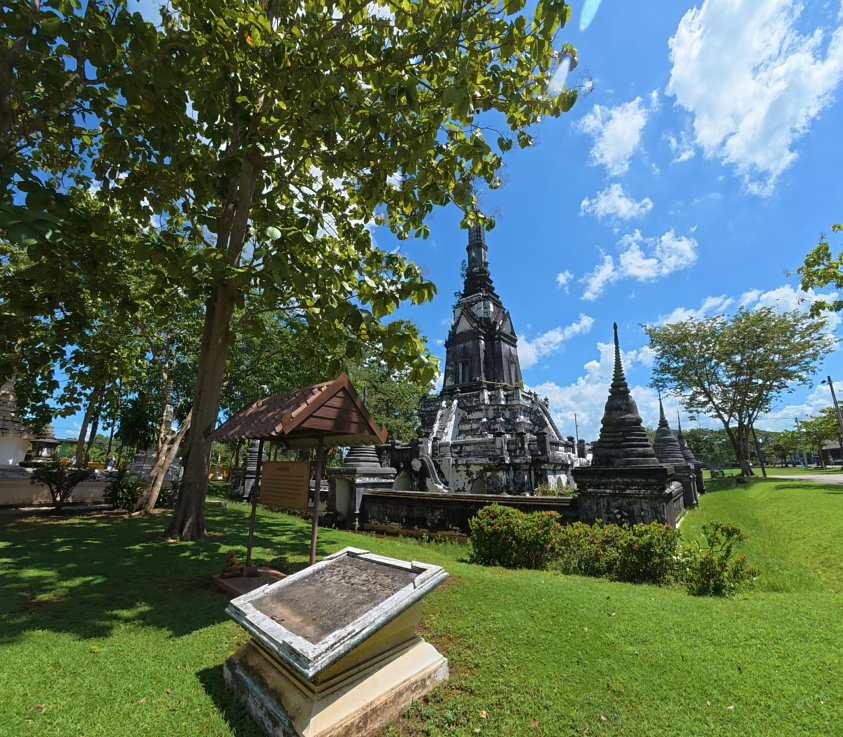


The temple grounds, buildings, chedis, and quiet scenes of everyday life.
The Prang of Wat Phlap: A Landmark from 1898
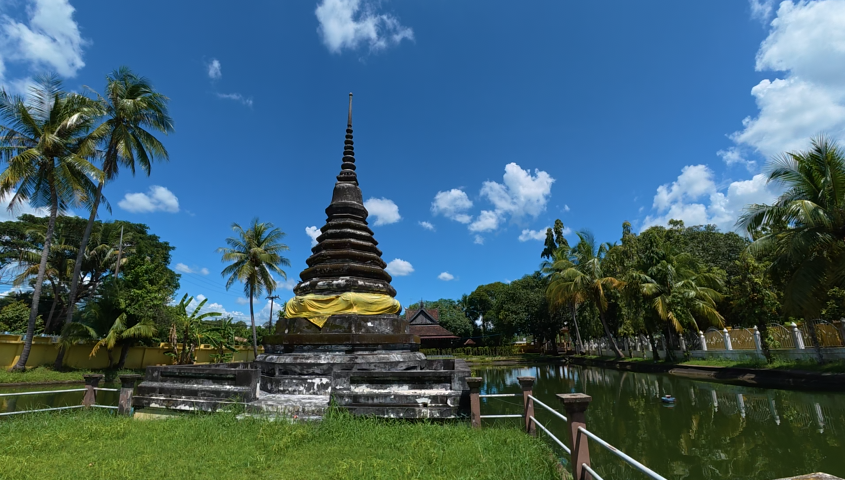
The dark brick structure in these photographs is a separate monument from the bell-shaped chedi in the pond. Local temple records identify it as a prang, a tower-like monument, built in 1898. It stands on a raised, two-tiered platform with stairways leading up from four directions. Its upper section rises in a series of diminishing tiers, with a small prang and a trident-like finial at the top. Elephant-head ornaments mark the four sides, while a relief of Rahu appears above the northern entrance. These features give the monument a distinctive form rarely seen among historic structures in eastern Thailand. อีสานร้อยแปด
The prang belongs to a different chapter of Wat Phlap’s history from the Taksin-era story of the Phra Yod Thong Buddha images. Local accounts connect those images with a separate chedi in the sandy courtyard, which later collapsed. The pond chedi, the prang shown here, and the lost sand-courtyard chedi should therefore be described as three distinct structures.
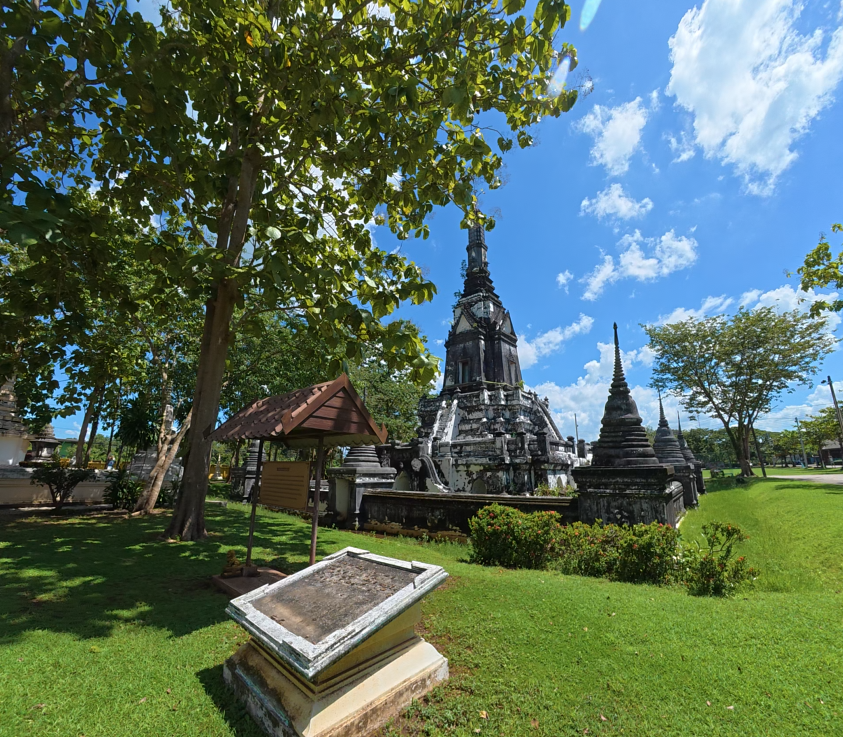
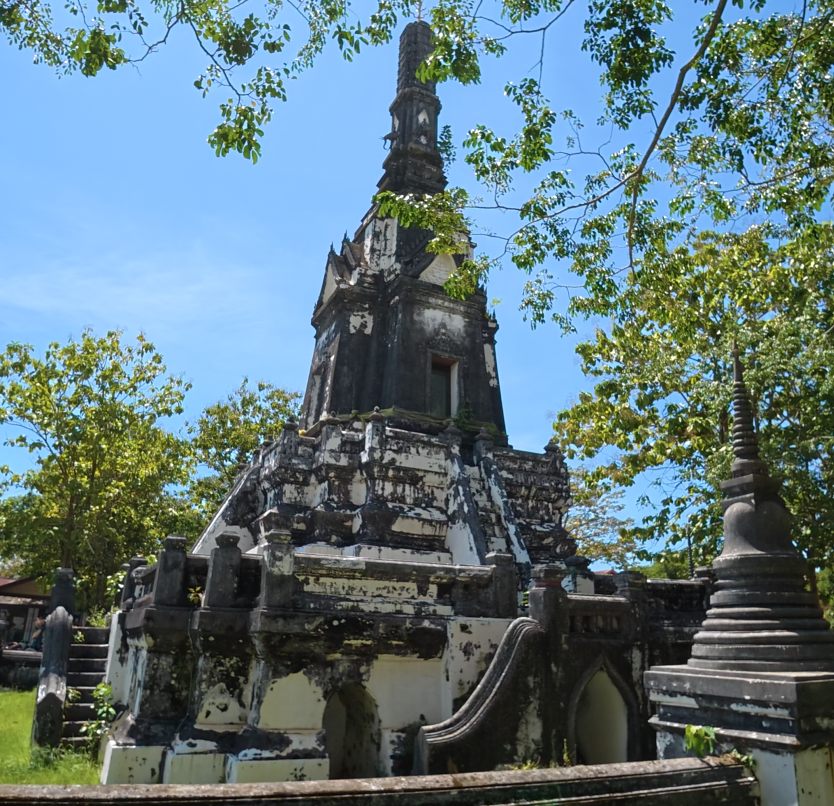
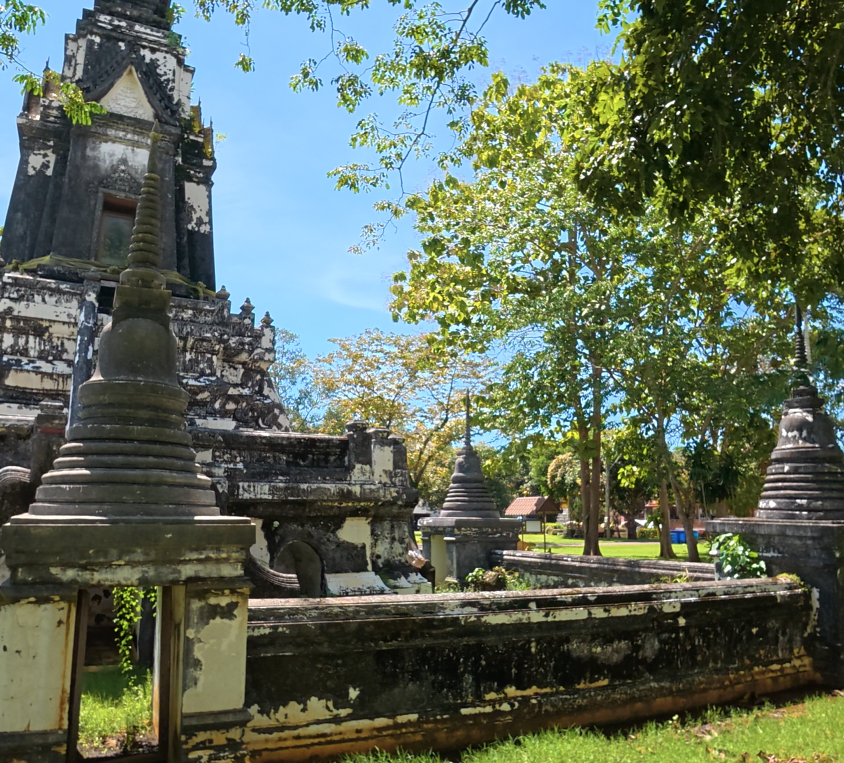
The ancient brick chedi at Wat Phlap, standing beside the temple’s main hall.
A Little Chase in the Temple Grounds
Among the old buildings and shaded paths, the chickens and ducks were busy with their own game of “Catch me if you can.” Watching them dart across the grass brought a lighthearted pause to the visit—and became a short film of its own.
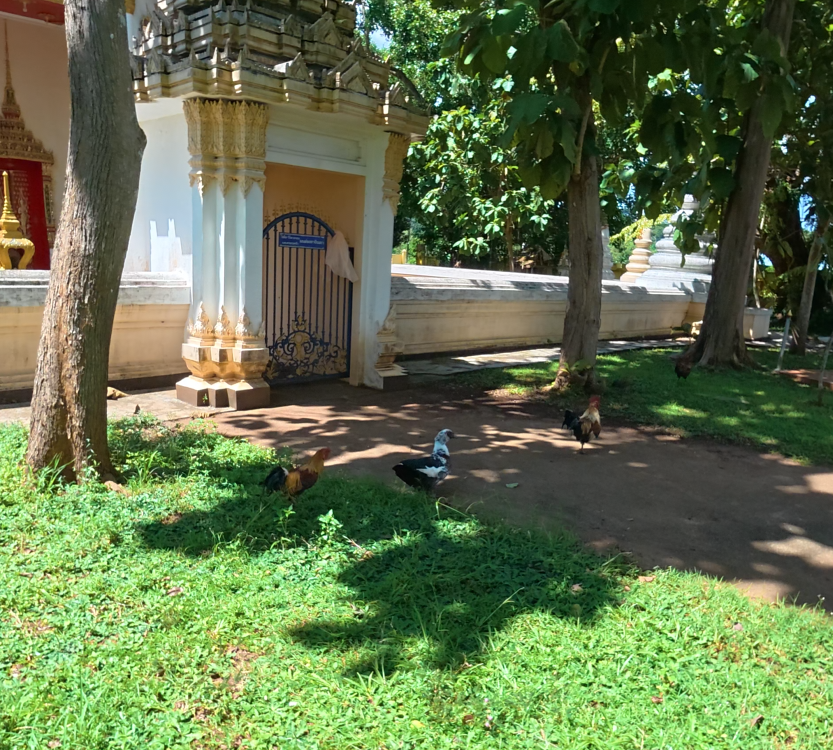
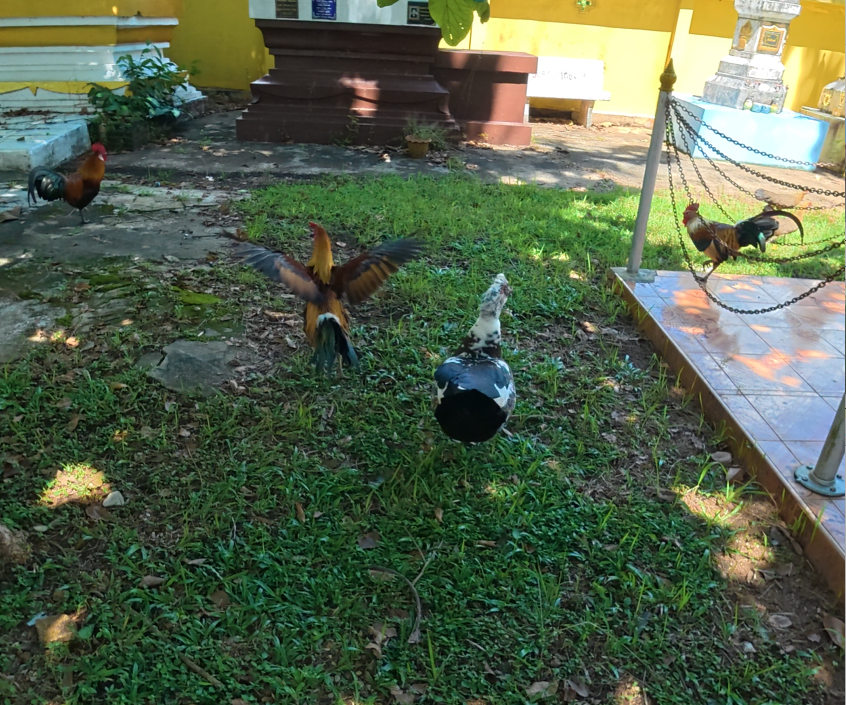
Wat Phlap Bang Kacha brings together sacred traditions, historic buildings, and the quiet rhythms of temple life.
Location & Visitor Information
Wat Phlap Bang Kacha
Bang Kacha Subdistrict, Mueang Chanthaburi District, Chanthaburi, Thailand
Open in Google Maps
Visitor hours and current access to the sacred well or building interiors should be confirmed with the temple before visiting.