A Stop on the Way to Wat Ban Laeng
Wat Taphong Nai was an unplanned stop on my Honda Cub ride to Wat Ban Laeng in Rayong. I had set out with another temple in mind, but finding an old temple along the way was reason enough to pull over. What began as a short visit gradually became a closer look at its buildings, places of worship, and objects preserved inside.
The greatest surprise came later, when I encountered old manuscripts. Until this visit, palm-leaf manuscripts had mostly been something I had read about. Seeing them in front of me—and having the opportunity to touch one—made this small detour especially memorable.
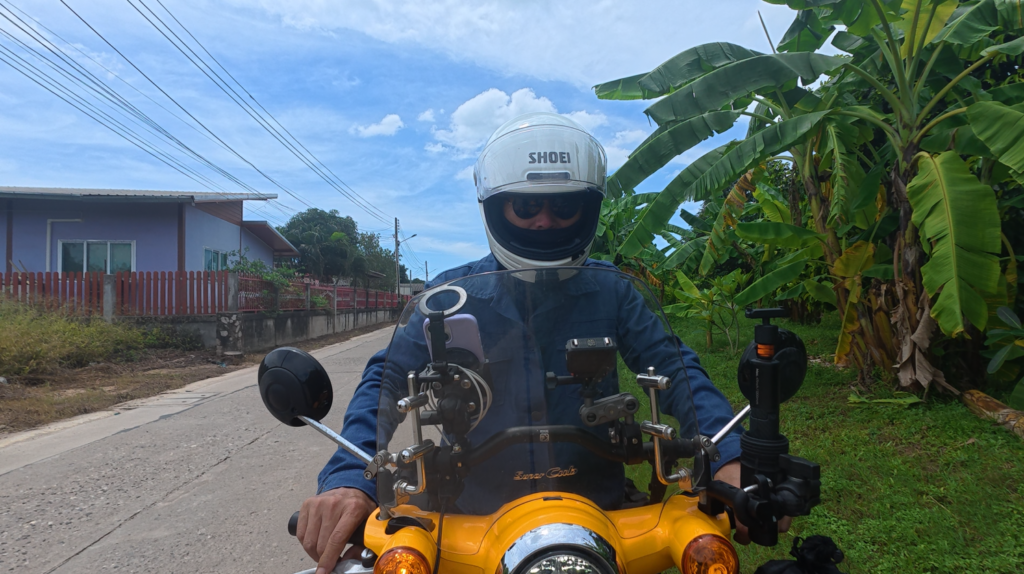
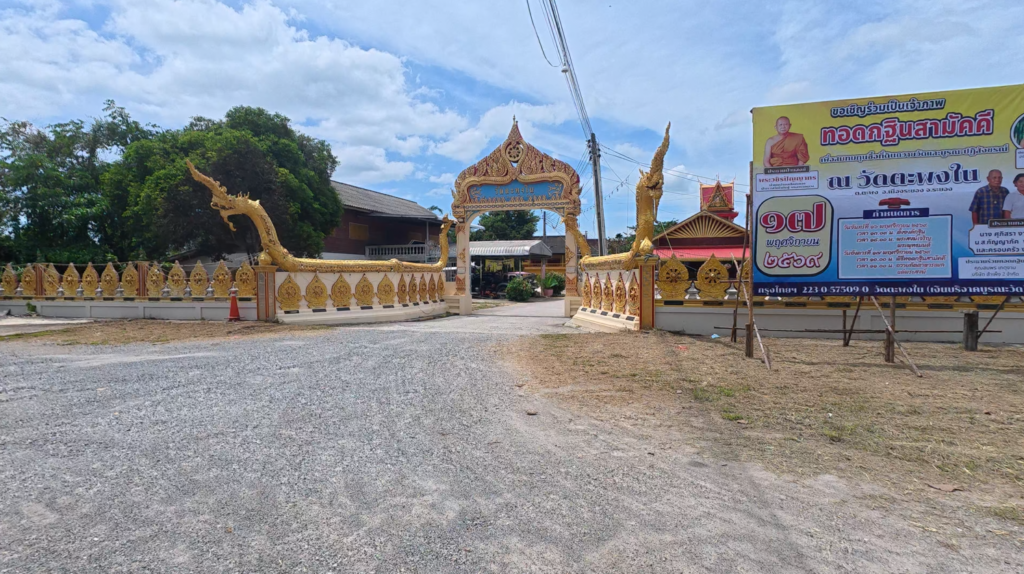
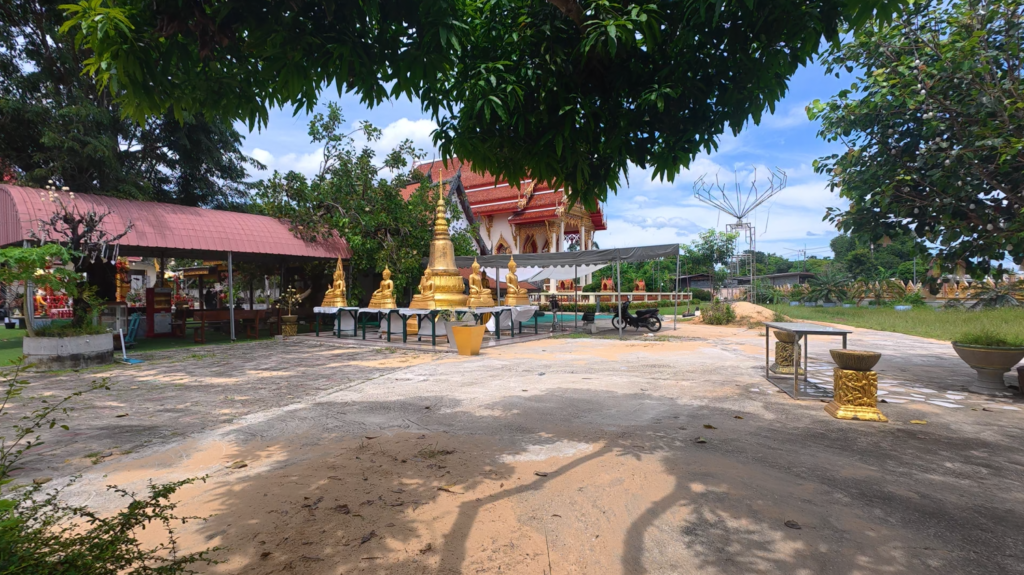
A Honda Cub ride through Rayong becomes an unexpected visit to Wat Taphong Nai.
A Golden Chedi and a Place of Prayer
My walk began around the golden chedi and the nearby worship area. Flowers, offerings, and prayer boards showed that these spaces remain part of the temple’s religious life. Before examining architectural details or looking for historical explanations, I took time to observe how the surroundings were arranged for devotion.
One prayer board was dedicated to the veneration of the Buddha’s relics. Its wording identifies the devotional purpose of the space, although it does not explain when any relics were received or where they came from. That distinction matters: a prayer expresses faith, while a history of enshrinement requires a different kind of record.
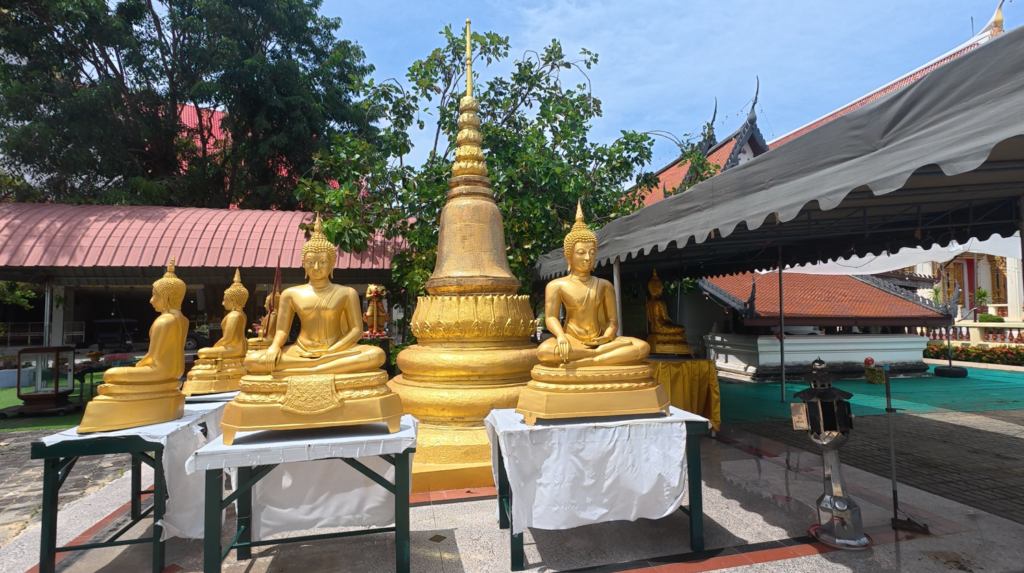
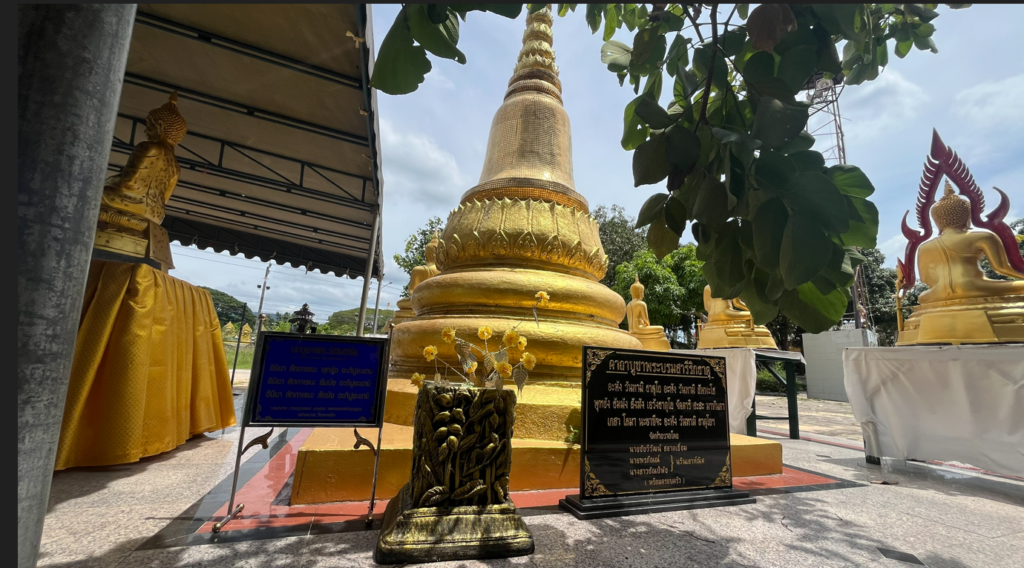
The golden chedi and its surrounding worship spaces at Wat Taphong Nai.
Inside the Old Ordination Hall
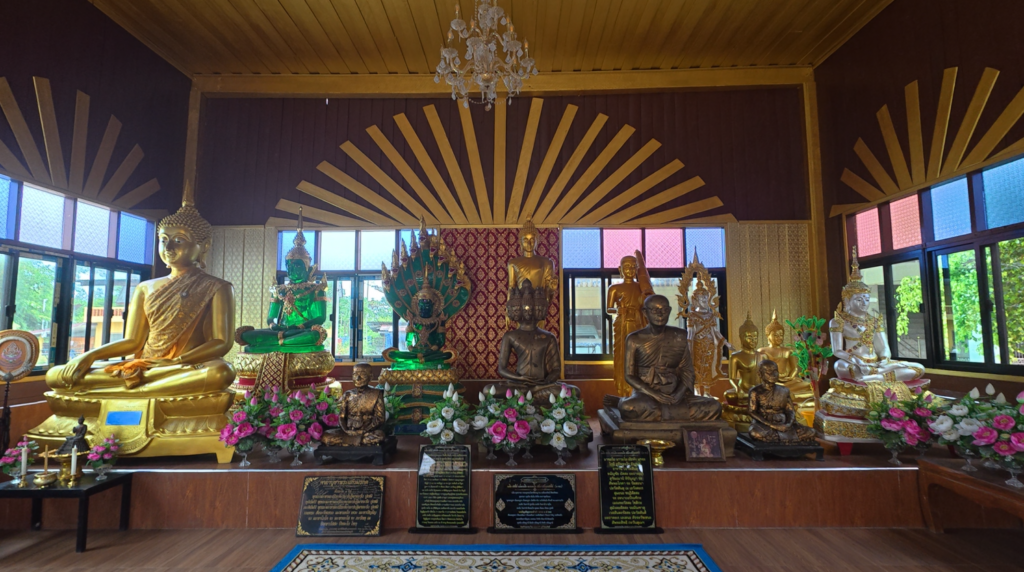
Inside the old ubosot, or ordination hall, Buddha images stood above a small arrangement of offerings and prayer boards. The nameplate of the principal image read “Luang Pho Som Pratthana,” a name expressing the fulfilment of wishes. Other boards guided visitors through homage to the Buddha, Dhamma, and Sangha, while another offered words of repentance and a request for forgiveness.
A separate prayer honoured the Buddha’s footprint. These inscriptions helped me understand the devotional setting, but they were not descriptions of the age or origin of the objects. The hall brought together worship and the preservation of older things, leaving some questions answered and others still open.
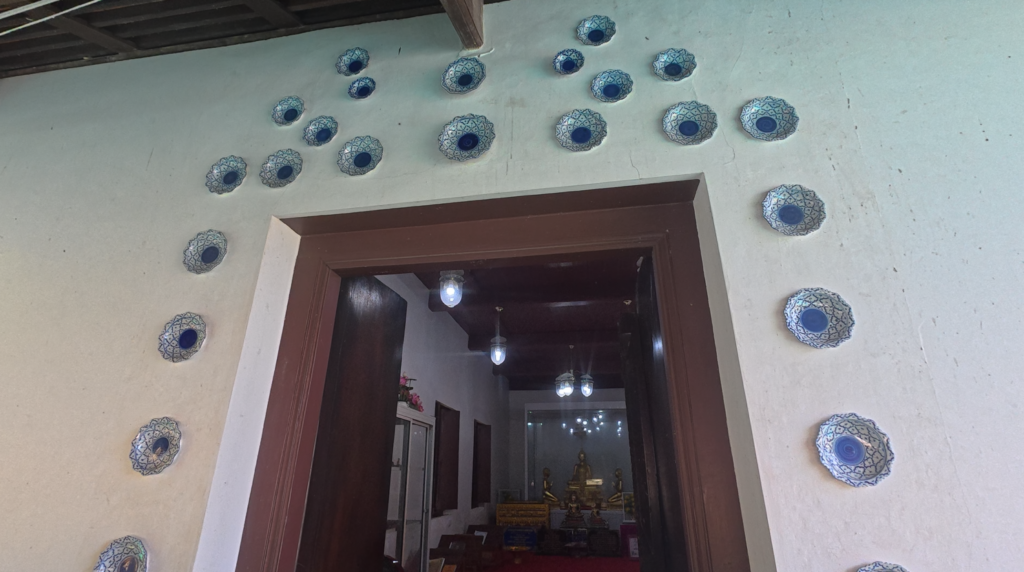
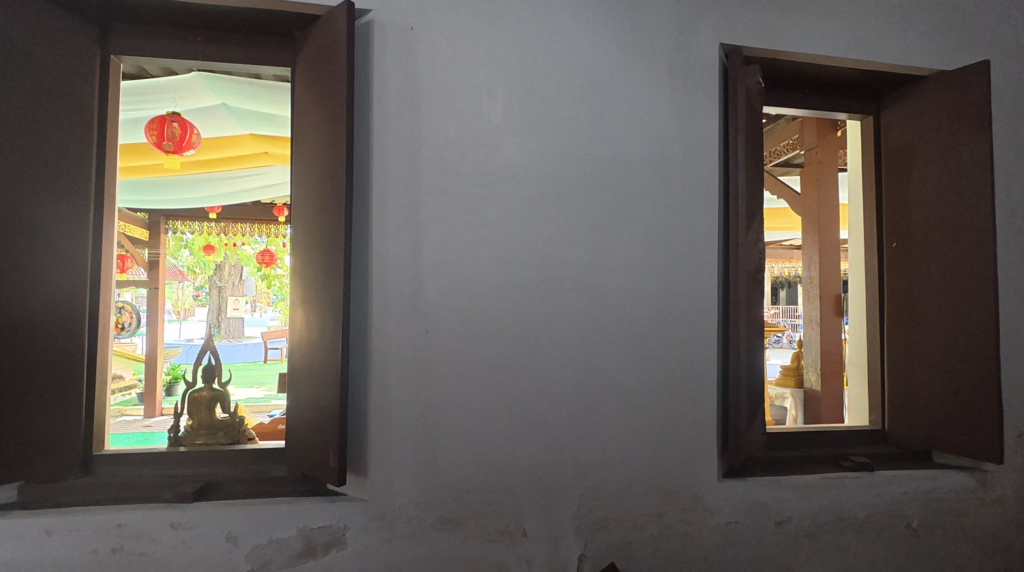
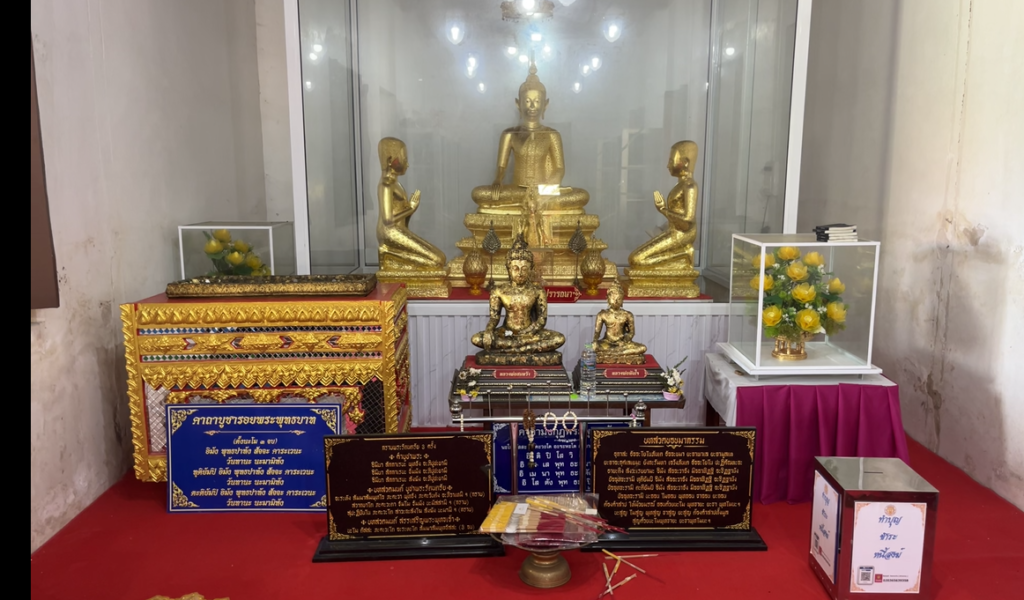
The entrance, window openings, and Buddha images inside the old ordination hall.
The glass enclosure around the principal Buddha and its two attendant figures also caught my attention. A 2022 visitor account explains that it was installed to deter theft and identifies the three bronze images as works from the reign of Rama III, noting the raised floral decoration on their robes. Although the glass creates some distance between the visitor and the images, it allows them to remain objects of worship while providing a measure of protection.
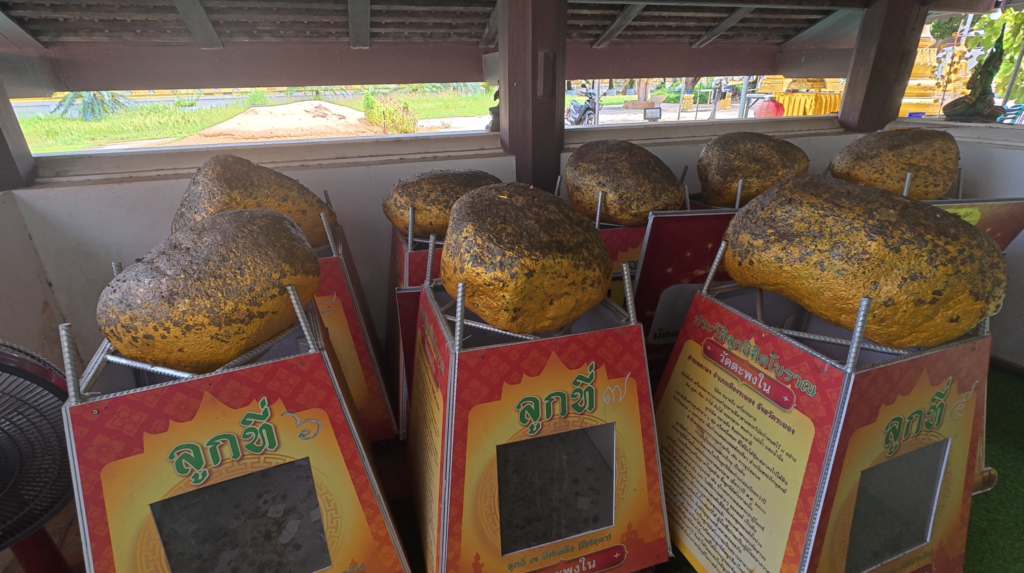
Eight old luk nimit displayed at Wat Taphong Nai—stones traditionally buried to mark the sacred boundary used for monastic ceremonies.
Near the entrance, eight large stones covered with patches of gold leaf caught my attention. The temple identifies them as old luk nimit, stones used to mark the sacred boundary, or sima, within which monks perform ordinations and other formal communal rites. Unlike structural foundation stones, their purpose is ritual: they are traditionally buried at boundary points, while the bai sema mark those positions above ground. www.culture.go.th A nearby sign describes the stones as 265 years old, although it gives no reference year. Their original positions and the circumstances of their removal remain to be confirmed, but seeing them displayed together offered a closer look at something normally hidden beneath the ground.
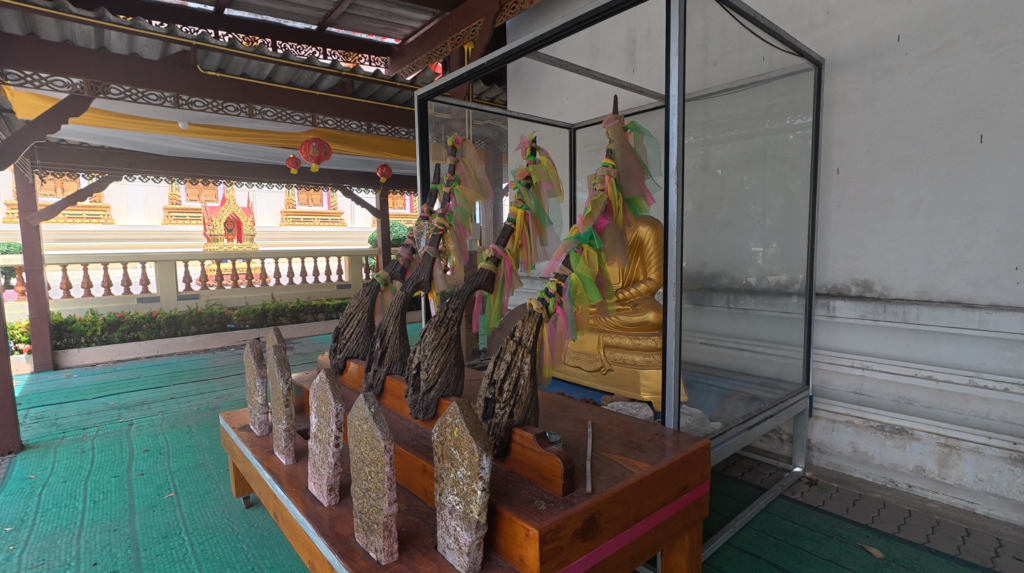
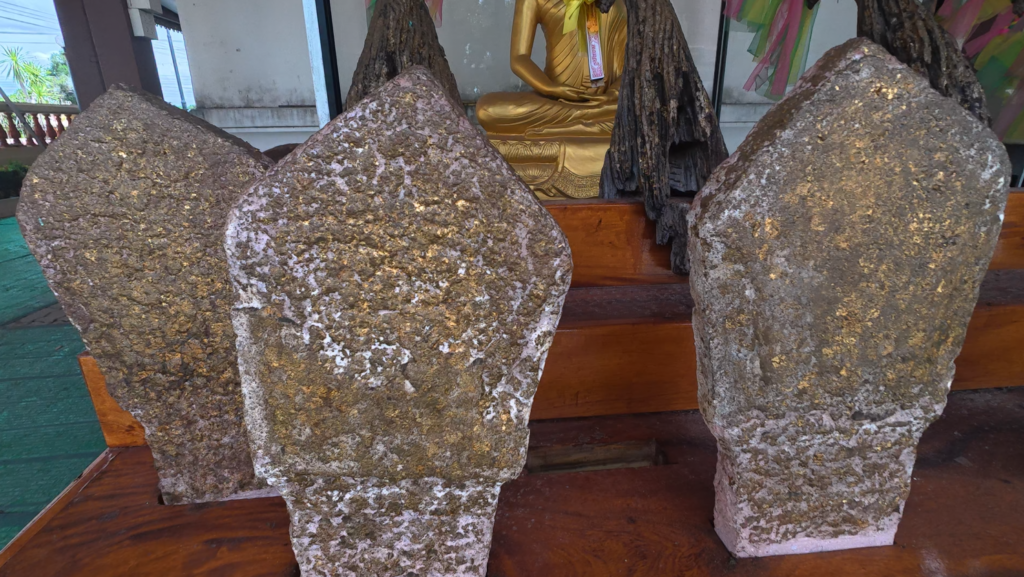
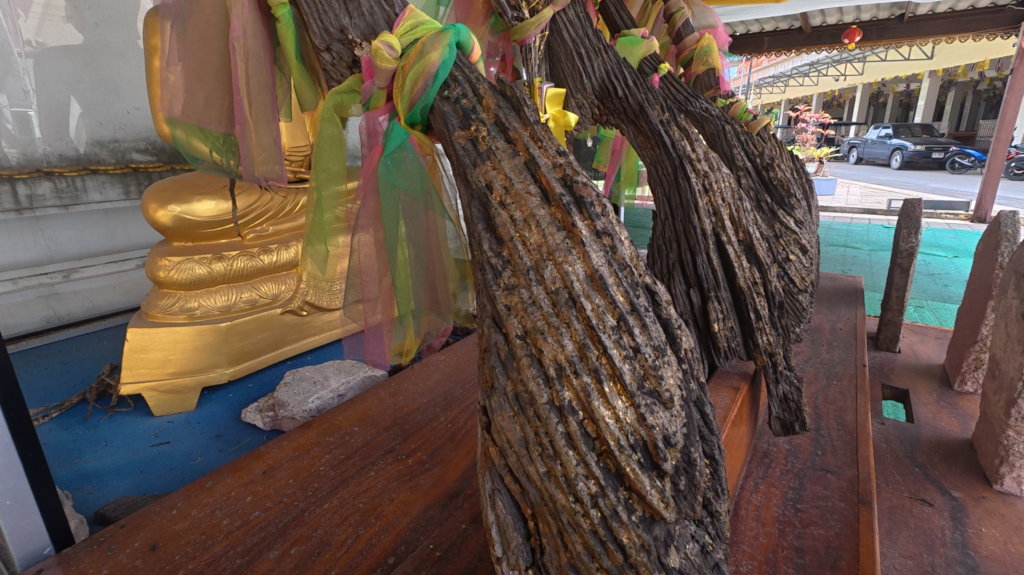
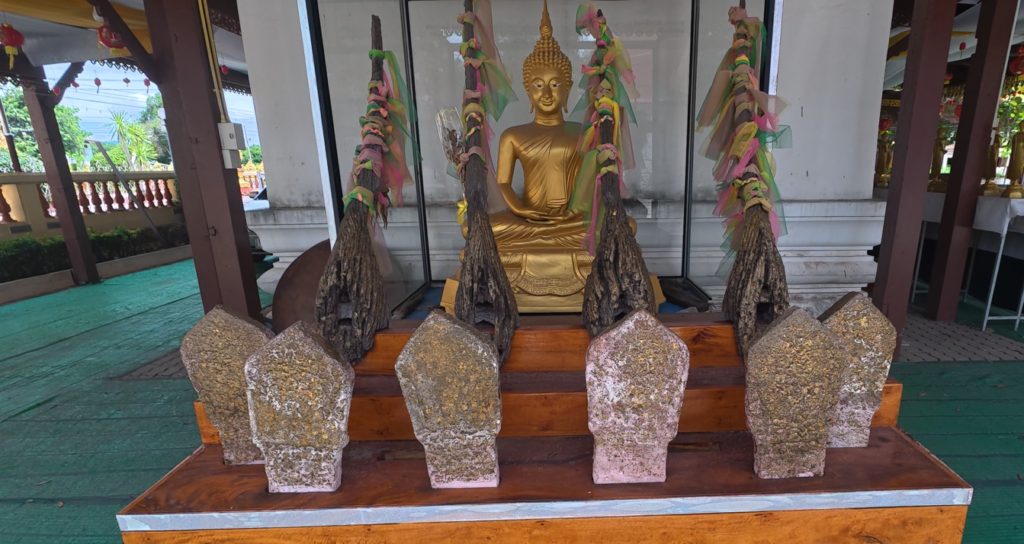
Objects displayed beside the old hall invite a closer look, although their individual histories remain to be confirmed.
Ceramic Plates on a Historic Gable
Walking around the building revealed one of its most distinctive features: blue-and-white ceramic plates set into the pale gable. Smaller pieces continued above the openings, bringing a different texture to the otherwise restrained walls. The roof ornaments, raised base, and surviving decorative details made the exterior worth examining slowly.
The Fine Arts Department records the temple’s traditional founding date as 1757, or Buddhist Era 2300. Its account also preserves a local story that elephant footprints appeared while the ground was being prepared for the ordination hall. The surviving hall is considered later: architectural and archaeological evidence places it in the early Rattanakosin period, approximately during Rama III’s reign. Restoration took place in 2015. These dates concern the temple and its building; they do not establish the age of the manuscripts displayed here. finearts.go.th
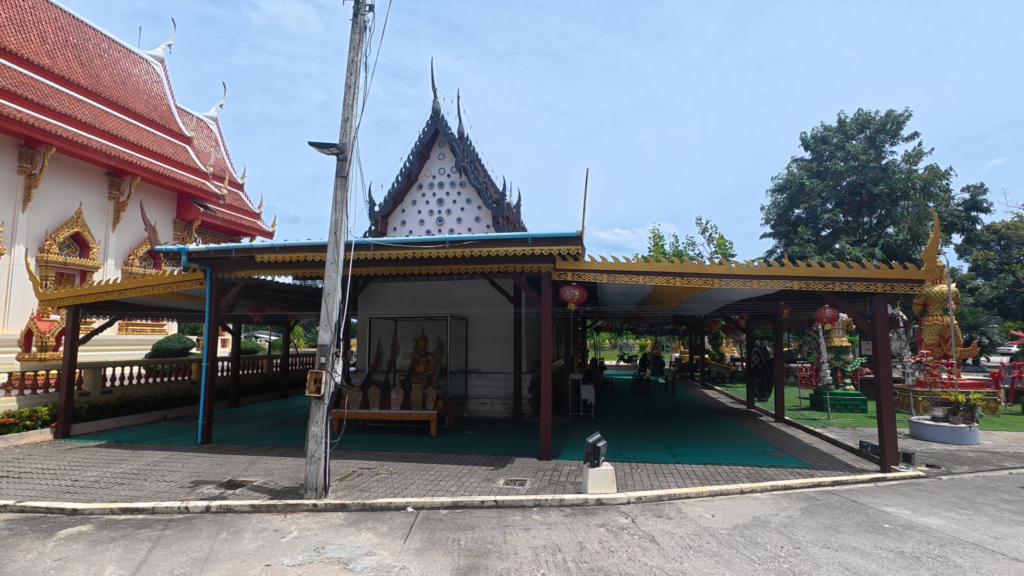
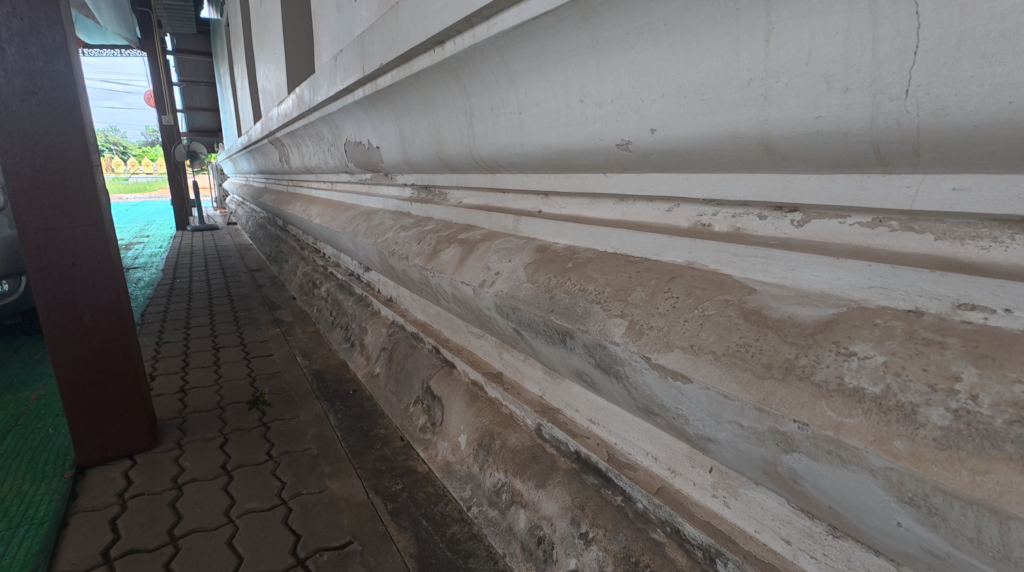
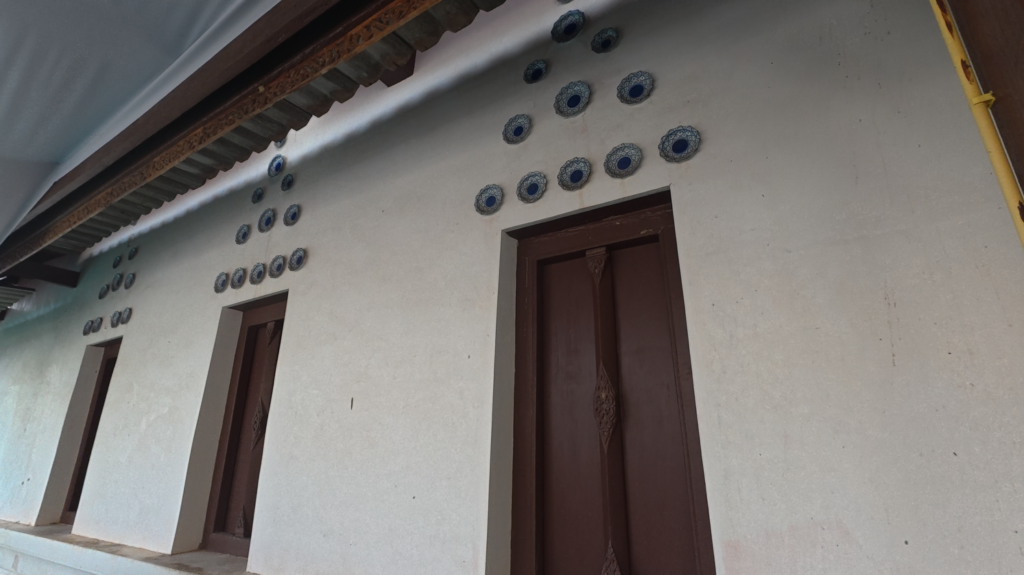
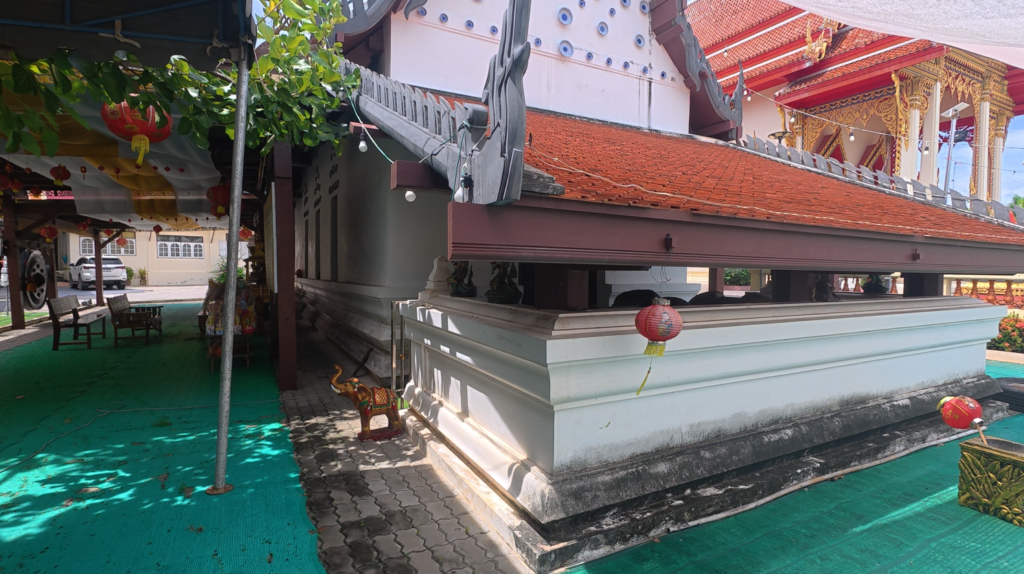
Walking around the old ubosot reveals its raised base, wall openings, and roof structure.
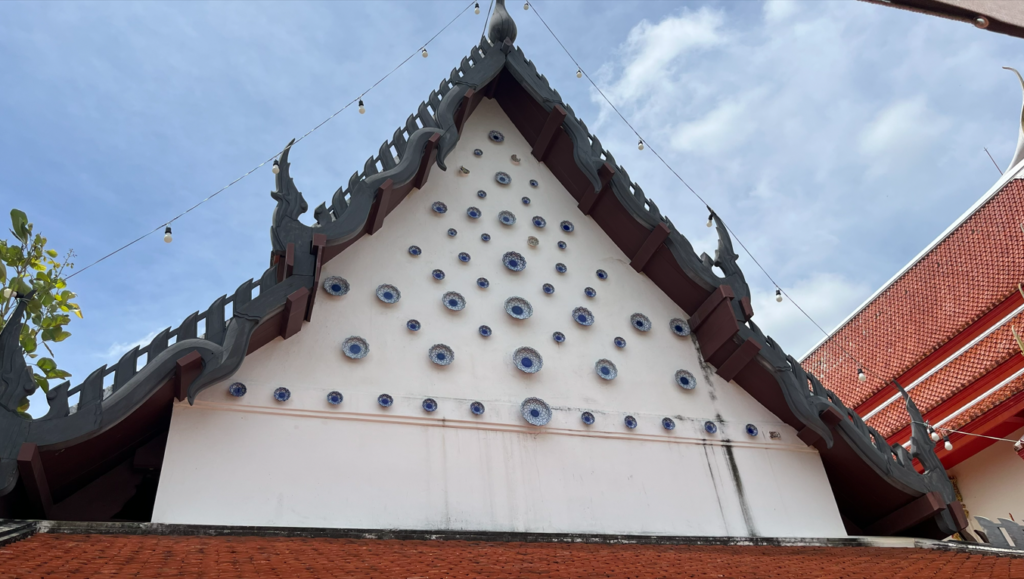
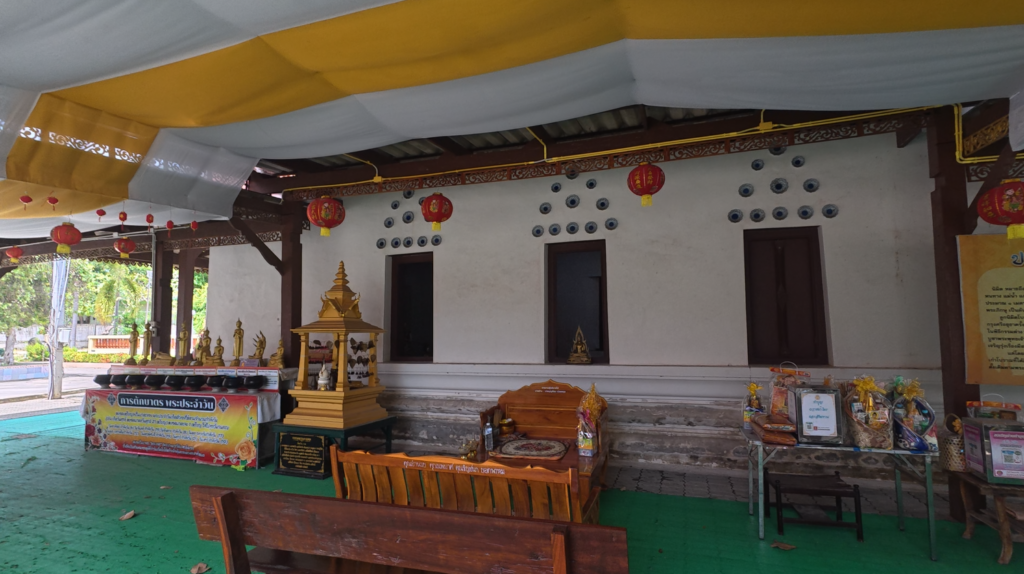
For the official architectural account, see the Fine Arts Department’s introduction to Wat Taphong Nai.
Guardians and Living Belief
Elsewhere in the grounds, the imposing guardian figures added another layer to the visit. Their tall crowns, fierce faces, and upright clubs appear to represent Thao Wessuwan, the northern guardian associated with protection and prosperity. In Thai religious life, such figures can stand alongside Buddhist worship as people seek protection from harm and good fortune in everyday affairs. www.finearts.go.th
Their presence reminded me that a temple is shaped by more than its oldest building. Different forms of devotion continue to gather around it, making the grounds a place where inherited beliefs remain visible.
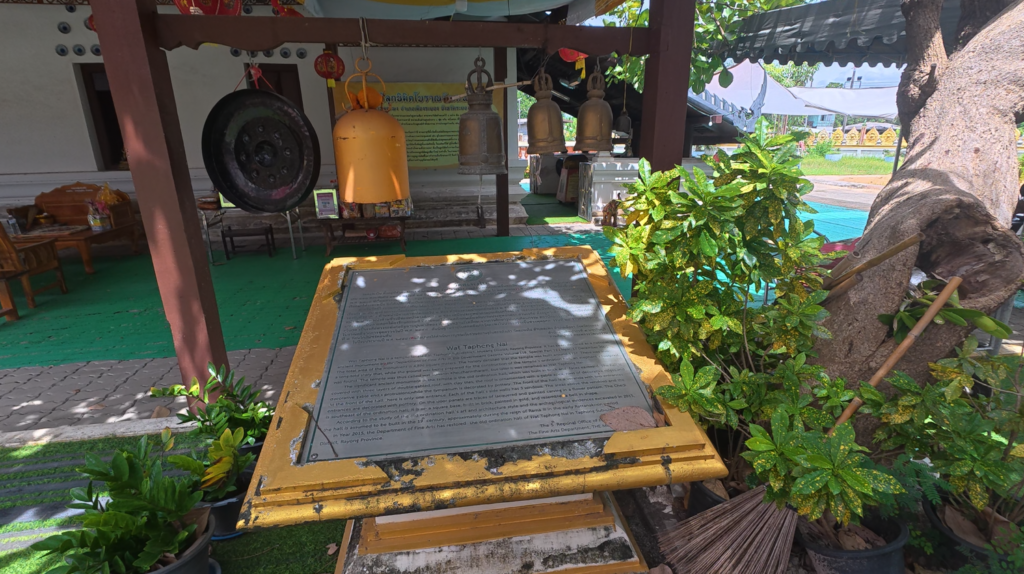
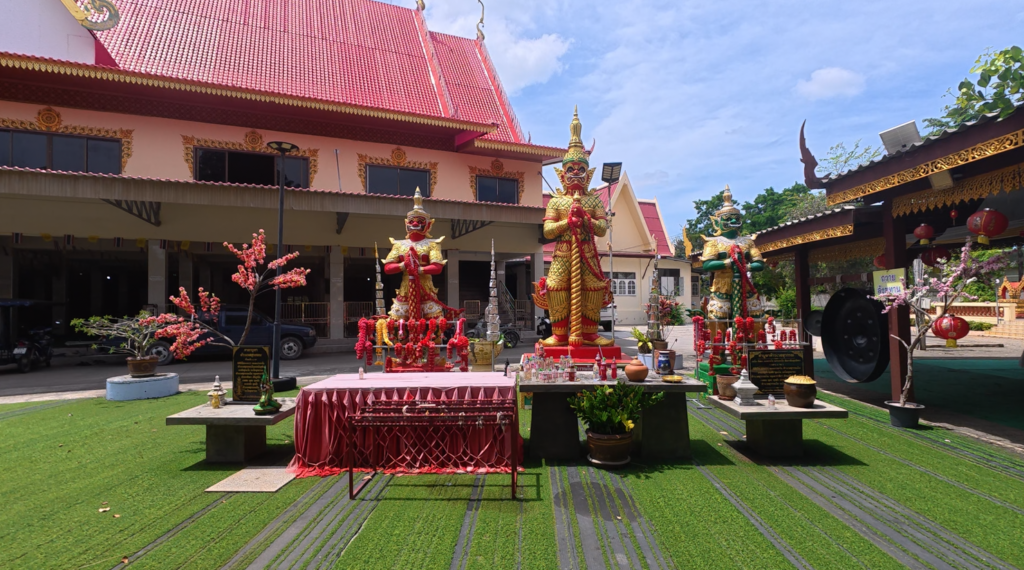
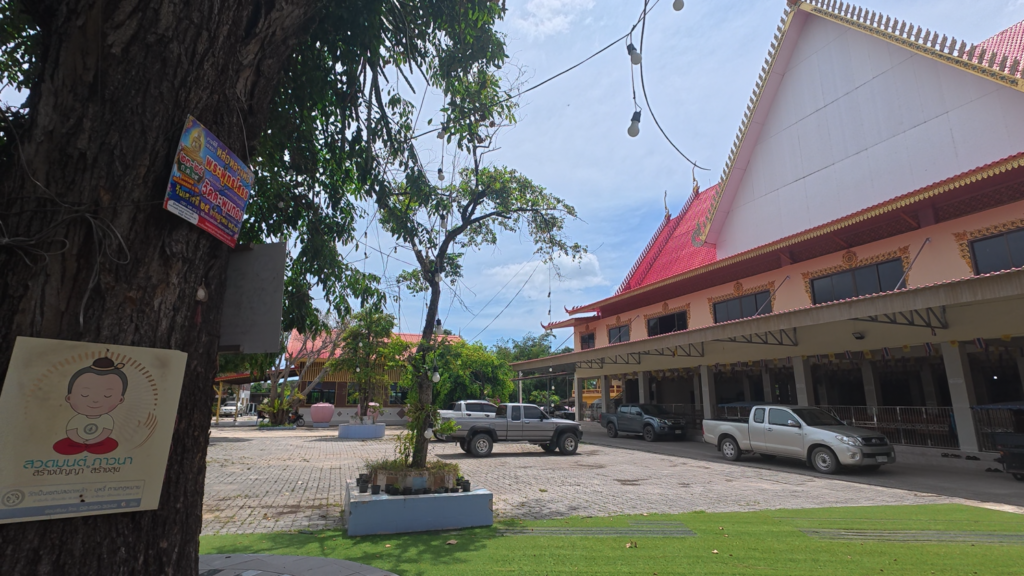
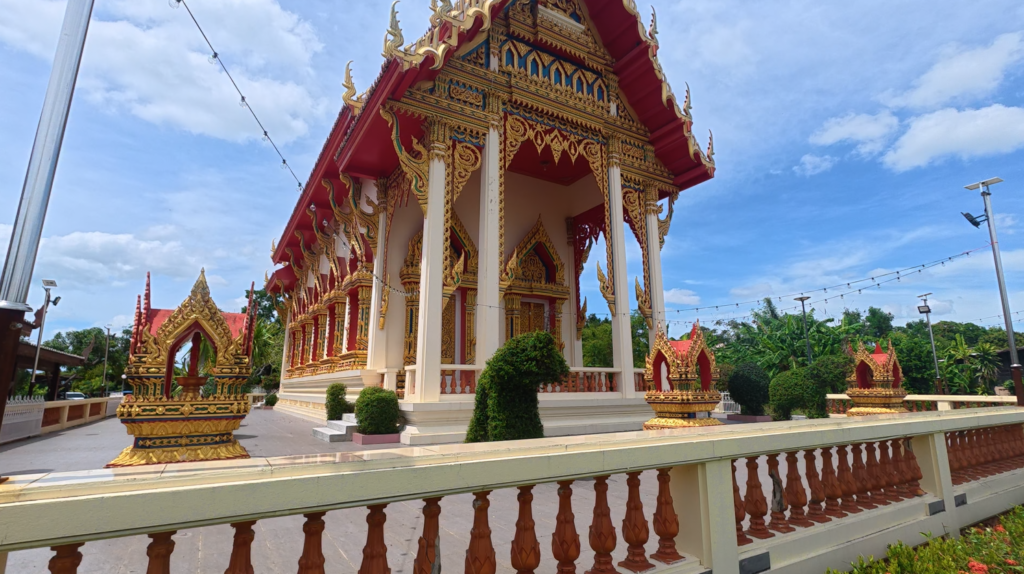
Other buildings and guardian figures reveal the continuing religious life of the temple.
Watch the Visit Unfold
Follow my walk through Wat Taphong Nai, from the old ordination hall to the manuscript displays that made this detour memorable.
A Honda Cub detour to Wat Taphong Nai: an old ubosot, living faith, and an unexpected encounter with traditional manuscripts.
Meeting the Manuscripts
The manuscript displays changed the pace of my visit. Long, narrow leaves were stacked in bundles, while folding paper books opened into broad surfaces of writing and illustration. Their different forms were immediately striking. Palm-leaf manuscripts and folding paper books belong to distinct bookmaking traditions, even when both preserve religious material.
Some leaves were loose or visibly damaged, and the edges of several books were worn. Their condition suggested a long and complicated history of use and storage, but damage alone cannot tell us their age. I could not establish the titles, copying dates, or provenance of the individual manuscripts during this visit.
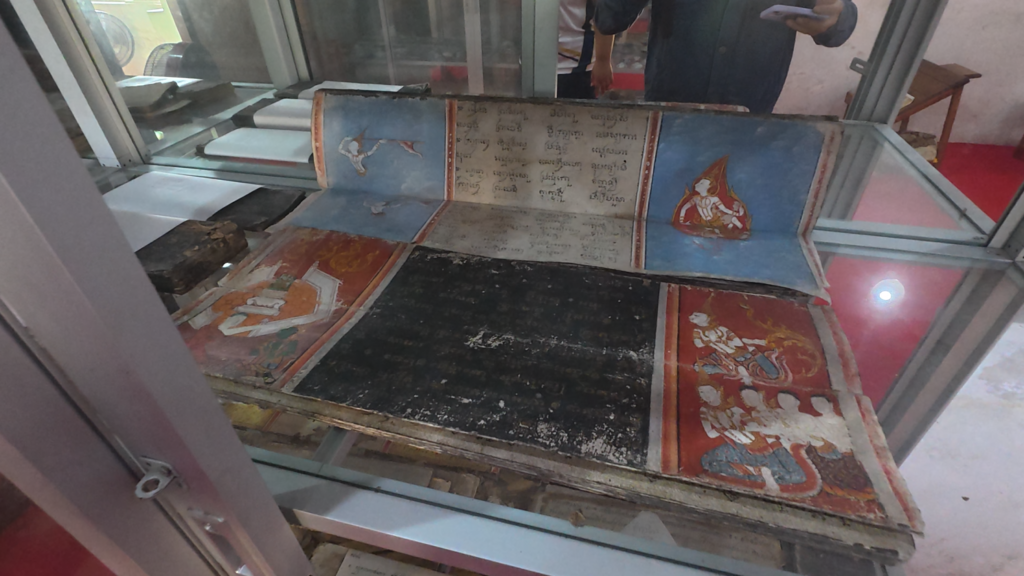
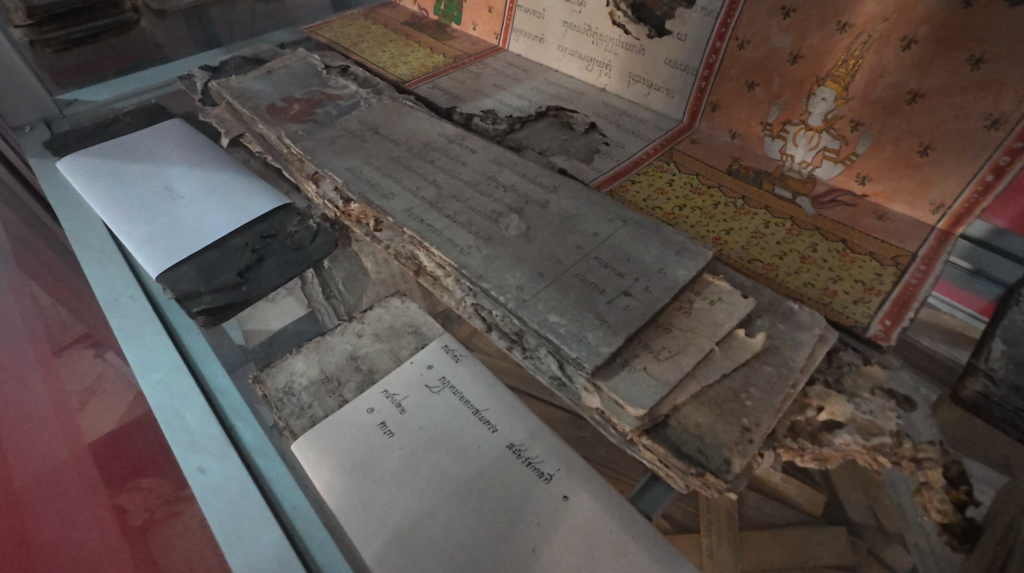
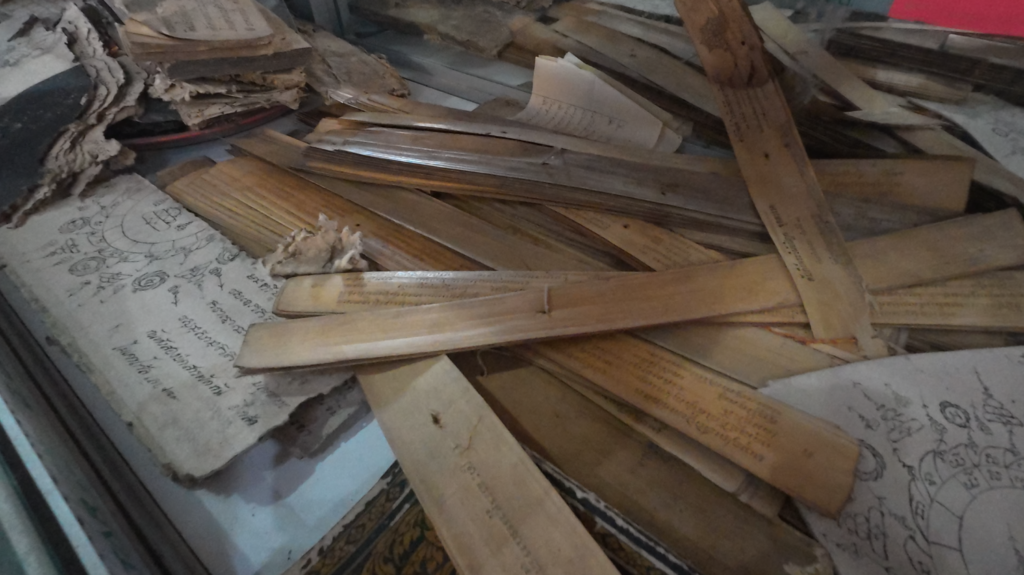
Manuscript bundles and folded books preserved in the temple’s display cases.
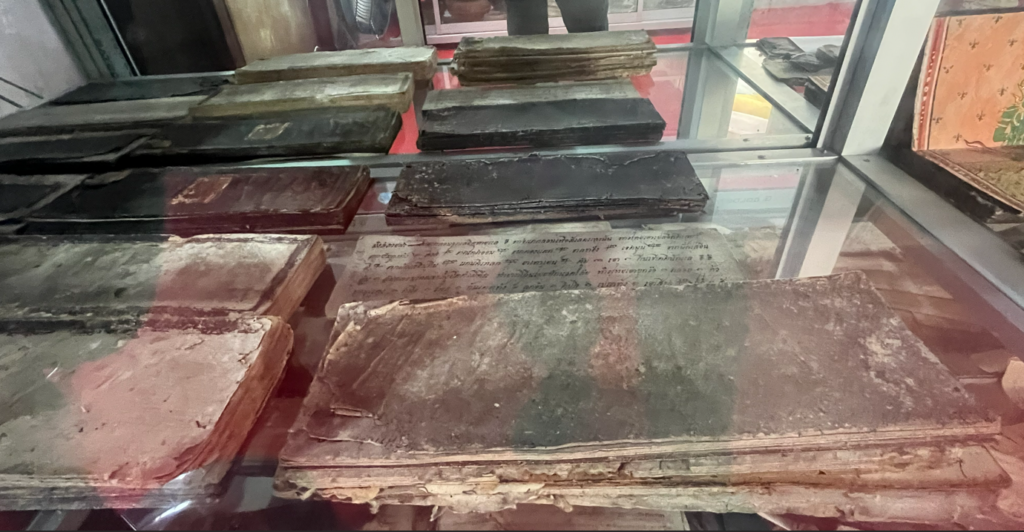
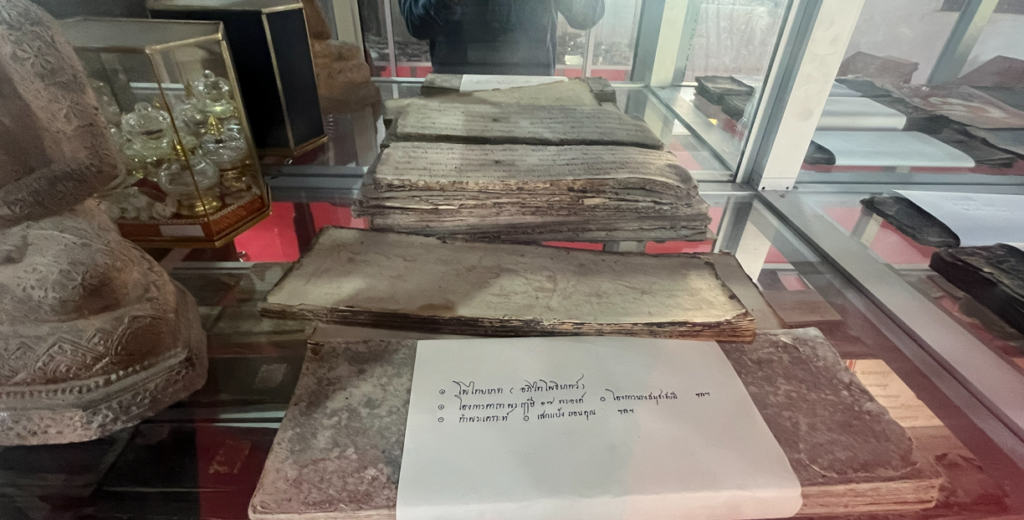
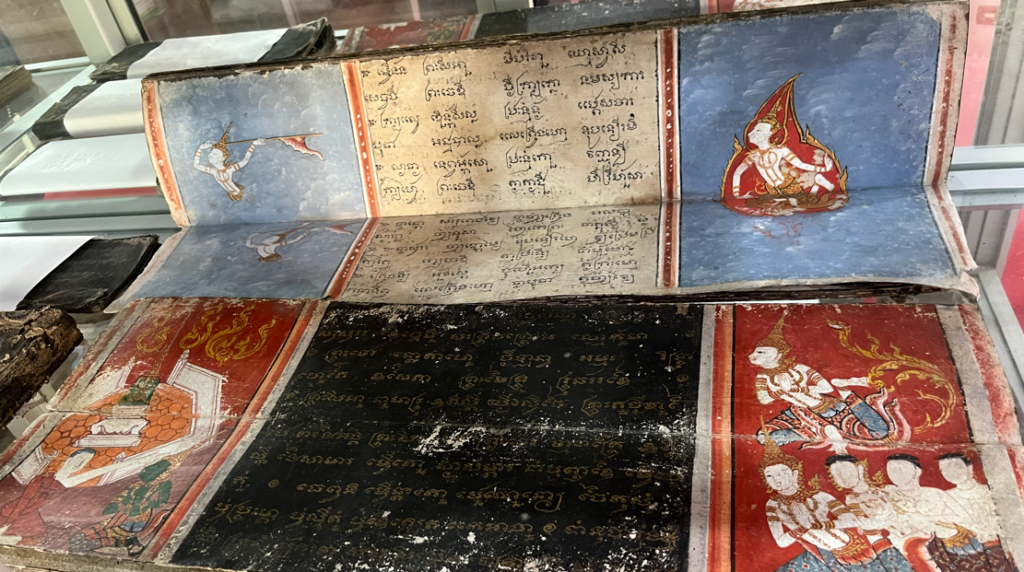
Folded manuscripts and accompanying notes offer clues to the contents of the collection.
Writing, Painting, and Knowledge Beyond Scripture
The illustrated folding manuscript was particularly memorable. Dark writing filled the central panels, with painted figures on either side. The script appears to be Khom Thai, a writing system related to Khmer script and used in Thailand for sacred texts. Script and language should be distinguished: a text written in Khom is not necessarily in the Khmer language. Comparable manuscripts preserve Pali and Thai in Khom script. www.loc.gov
The displays also suggested that the preserved material extends beyond Buddhist scripture. A handwritten contents note included references to consecrating powder and removing harmful magic. Such material offers a glimpse of ritual knowledge preserved alongside religious learning. I could read only parts of that note, so I would not assign a complete title or classification to the book.
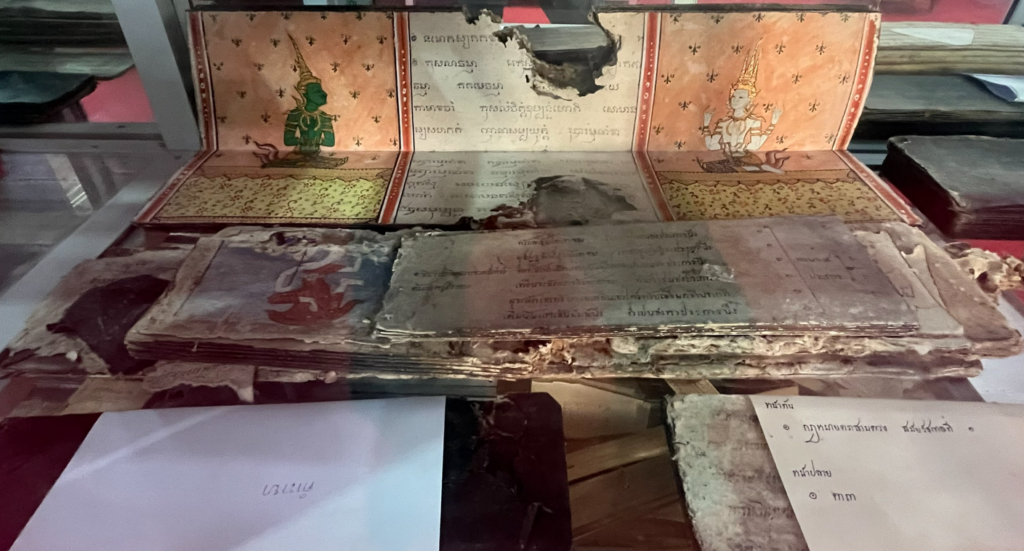
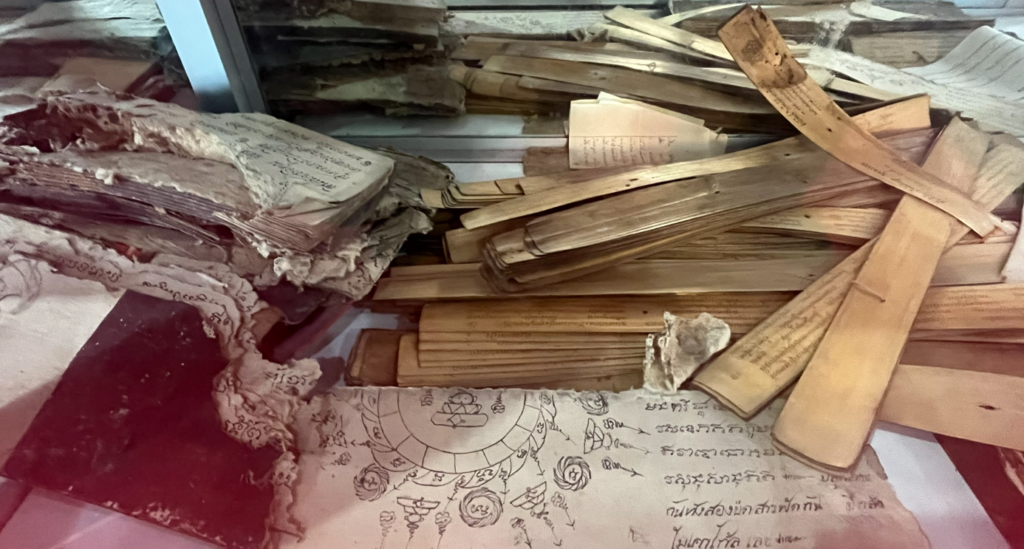
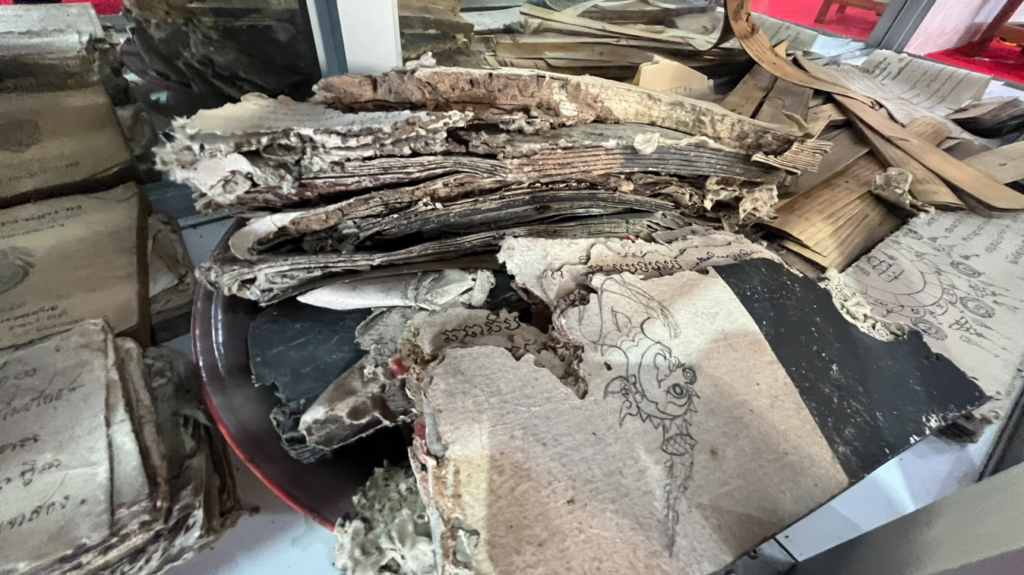
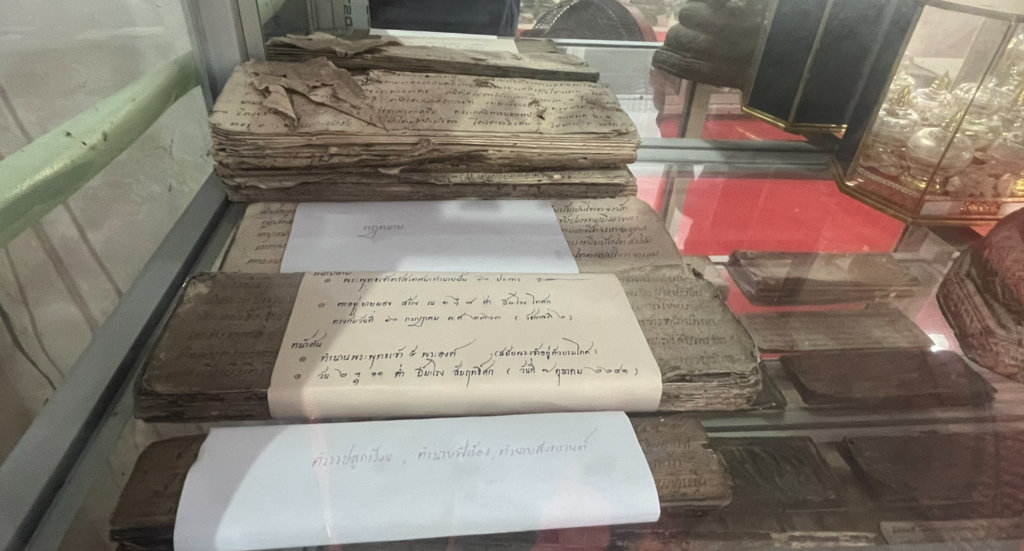
Palm-leaf material, manuscript bundles, and display notes preserve traces of different written traditions.
Other Objects, More Questions
Buddha images and ceramic vessels completed this part of the visit. Together with the manuscripts, they offered a broader impression of the things the temple has retained. Without individual labels or supporting records, however, I could not determine whether particular objects were original temple possessions, later donations, or items gathered from elsewhere.
I left wanting to return with more time. On another visit, I hope to ask about the collection’s origins and whether any inventory or earlier study survives. For now, the experience itself remains clear: on the way to one temple, I stopped at another and encountered objects that made the past feel much closer.
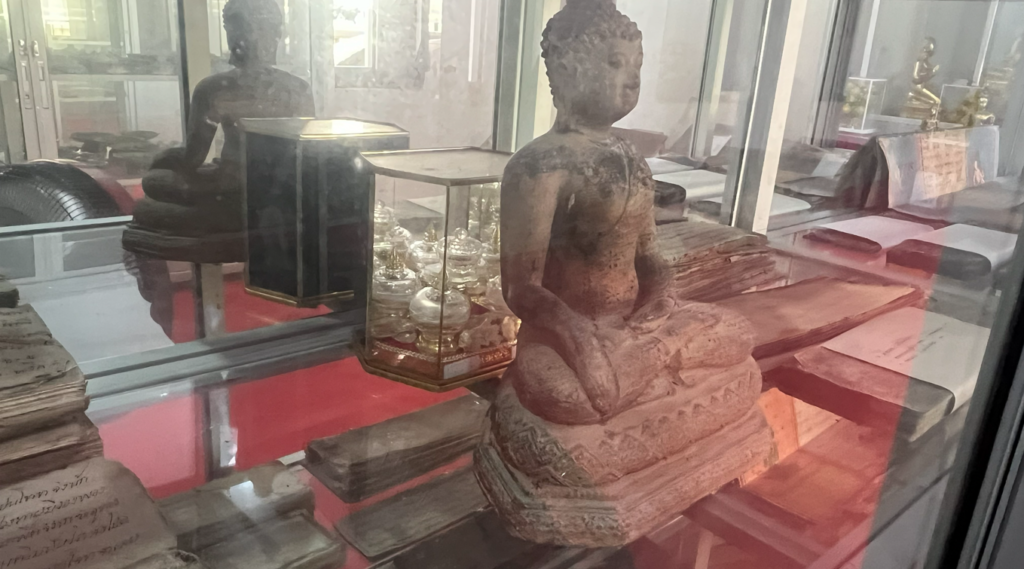
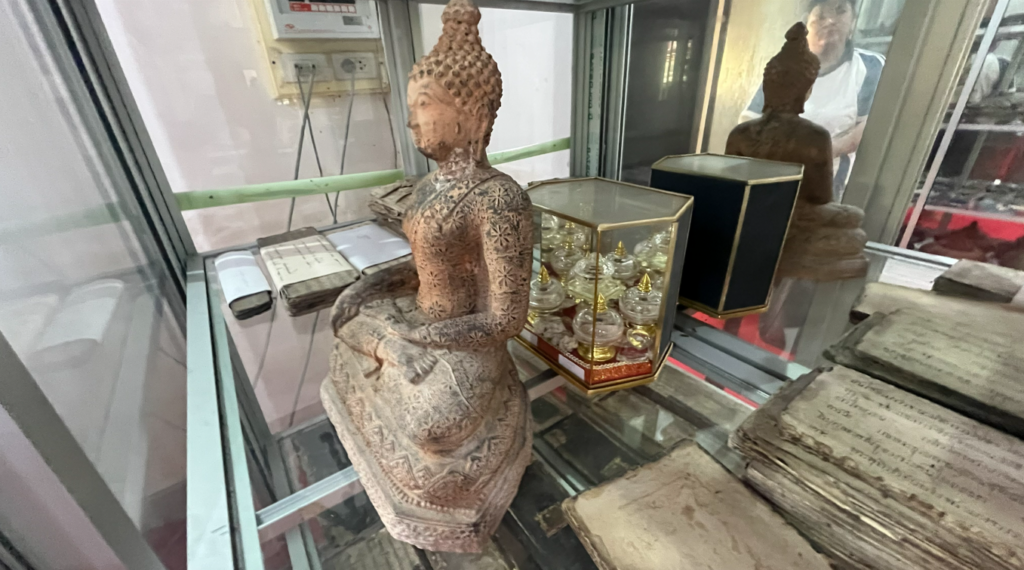
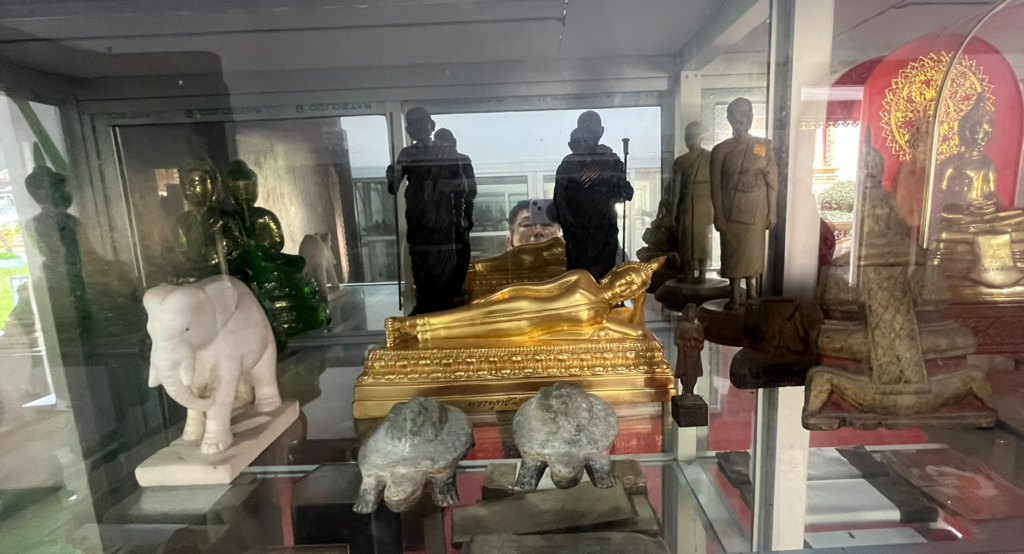
Buddha images and other objects displayed within the temple.
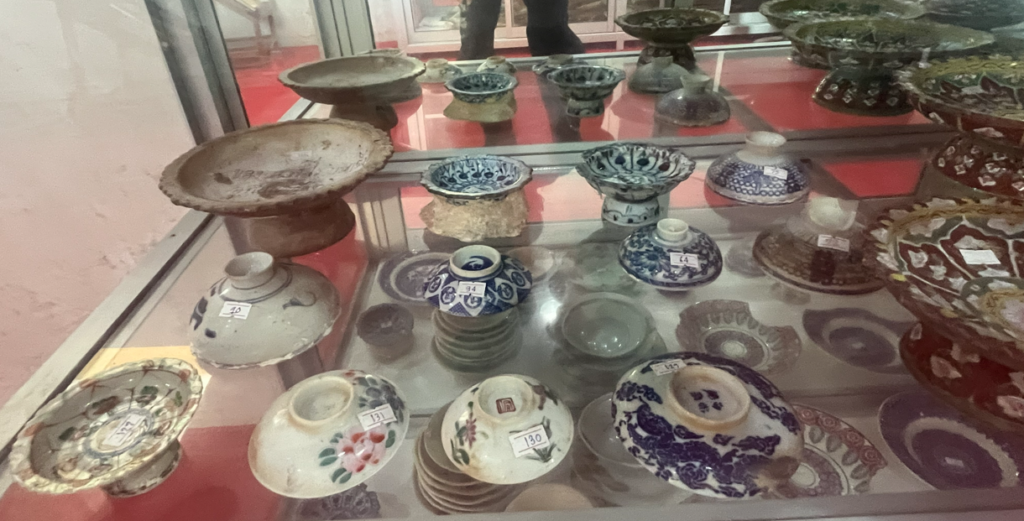
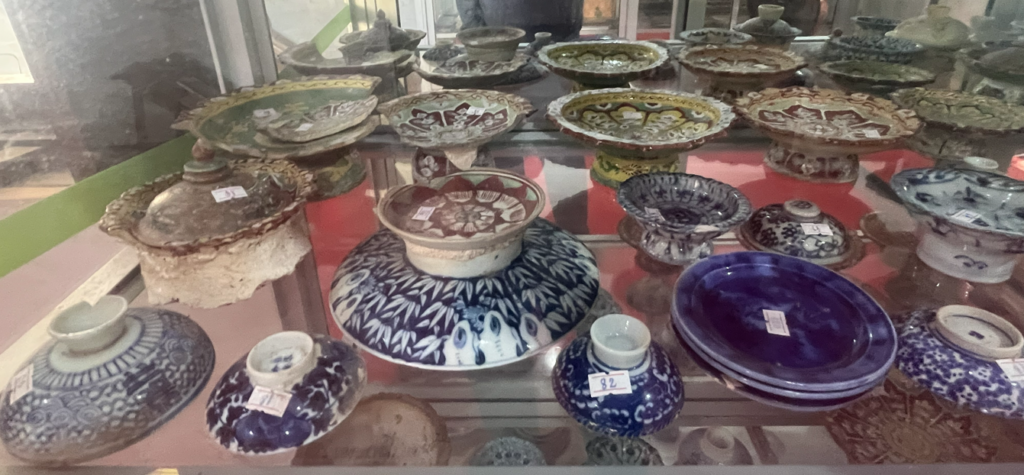
Ceramic vessels form another part of the display, with their individual dates and origins still to be established.
Location and Visitor Information
| Item | Information |
|---|---|
| Location | Wat Taphong Nai, Taphong Subdistrict, Mueang Rayong District, Rayong, Thailand. |
| Admission | A current admission policy has not been verified; ask at the temple about access to the displays. |
| Best time to visit | Morning is a practical choice for a cooler walk. Access to enclosed buildings may depend on temple activities and staff availability. |
| Dress | Wear clothing covering the shoulders and knees. |
| Photography | Ask before photographing inside worship areas or manuscript displays, and avoid flash on old documents. |
| Visit time | Allow approximately 45–90 minutes for the grounds and displays, depending on access and your interest. |
| Footwear | Remove shoes before entering worship halls where indicated. |
| Manuscripts | Ask the custodian before any handling; let staff move or open fragile material. |
| Google Maps | Wat Taphong Nai |
For more visits shaped by local history and faith, explore the Won Cub Life Temples Directory.