A Street Built by the River
Yomjinda Road Rayong is more than an old street in the center of the city. It is a place where the history of migration, trade, and everyday life can still be seen in wooden shophouses, narrow lanes, family businesses, and Chinese shrines. Walking through this neighborhood, I wanted to look beyond the restored buildings and search for the traces left by Chinese immigrants who once arrived by river and built new lives here.
The River That Brought New Lives
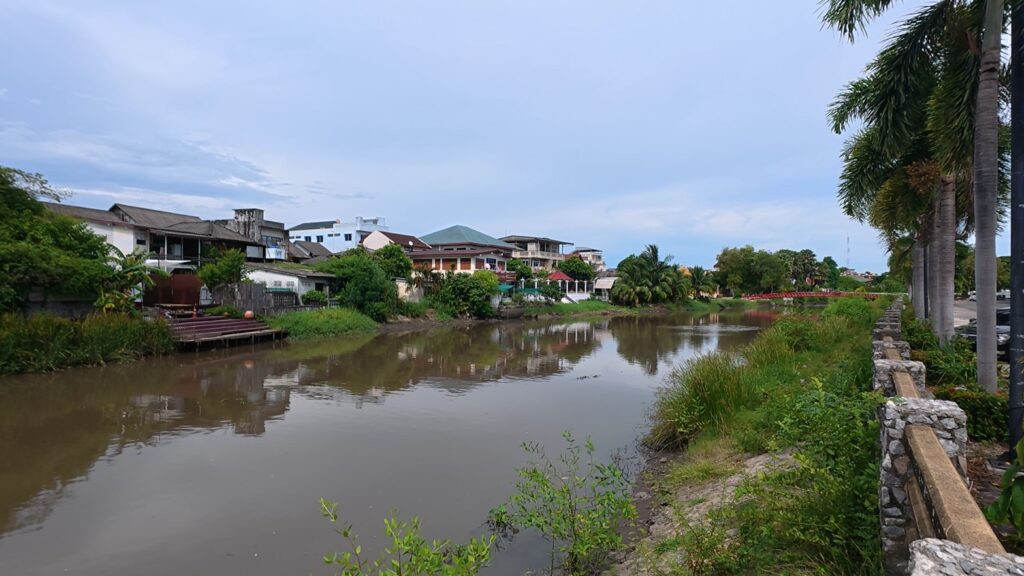
Before roads became the main routes of travel, the Rayong River connected this community with nearby ports, markets, and settlements. Chinese migrants arrived as traders, craftsmen, laborers, and families searching for a more secure future. They settled close to the water, opened small businesses, and gradually helped shape the commercial heart of old Rayong.
The river was not only a route for transporting goods. It was also the beginning of a new life. Looking across the quiet water today, it is easy to imagine boats arriving with people carrying only a few possessions, their skills, and the hope of building a home far from the land of their ancestors.
Homes, Shops, and a Growing Community
The Chinese settlers did not build grand monuments when they first arrived. Their history began in practical wooden houses, small shops, warehouses, and family businesses standing close to the river. The ground floors were often used for trade, while families lived in the rooms above or behind the shop.
Over time, these simple buildings formed a close community. Business, family life, food, language, and religious traditions were all connected within the same narrow streets. Although many buildings have aged and some businesses have disappeared, their structure still reveals how the early residents lived and worked together.
Faith That Held the Community Together
For immigrants living far from their ancestral homeland, Chinese shrines were more than places of worship. They offered protection, comfort, and a sense of belonging. Families gathered there to pray, celebrate festivals, honor their ancestors, and ask the deities to watch over their homes and businesses.
These shared beliefs helped connect people who had arrived from different regions of China. Even as they adapted to Thai society, the community preserved parts of its language, customs, food, and spiritual traditions. The old shrine along Yomjinda Road remains an important reminder that this neighborhood was built not only through commerce, but also through faith and mutual support.
A Street Shaped by Trade
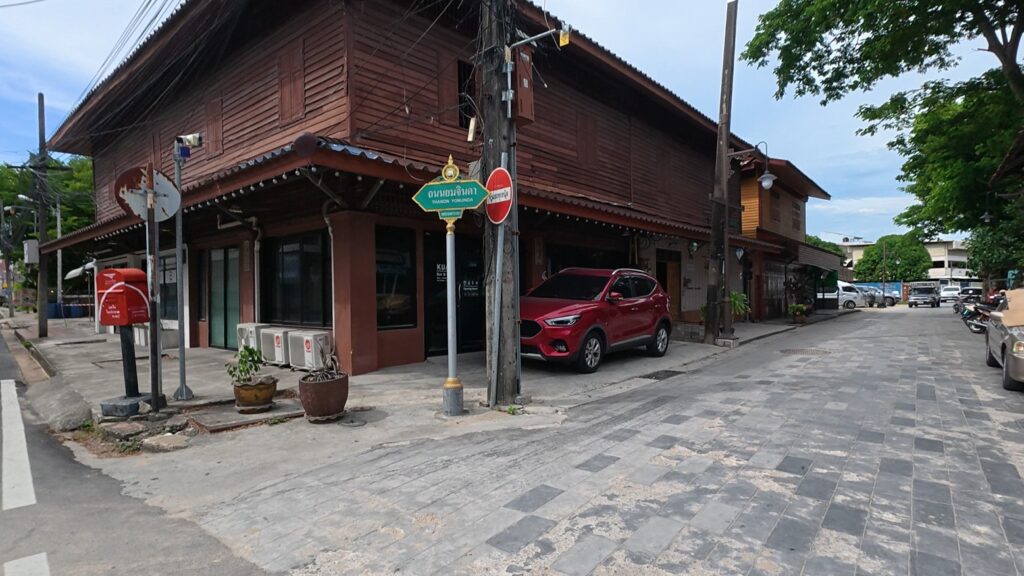
As the community grew, Yomjinda Road became one of old Rayong’s important commercial streets. Goods arrived by river, passed through small warehouses, and were sold from narrow shophouses facing the road. Chinese families often managed these businesses across several generations, with each household contributing to the life of the neighborhood.
The architecture still reflects that history. Wooden façades, folding doors, deep interiors, and connected shopfronts were designed for both business and family life. Even where modern signs and cafés have appeared, the old street pattern continues to reveal the commercial world created by Rayong’s early Chinese settlers.
The Gateway to Rayong’s Chinese Quarter
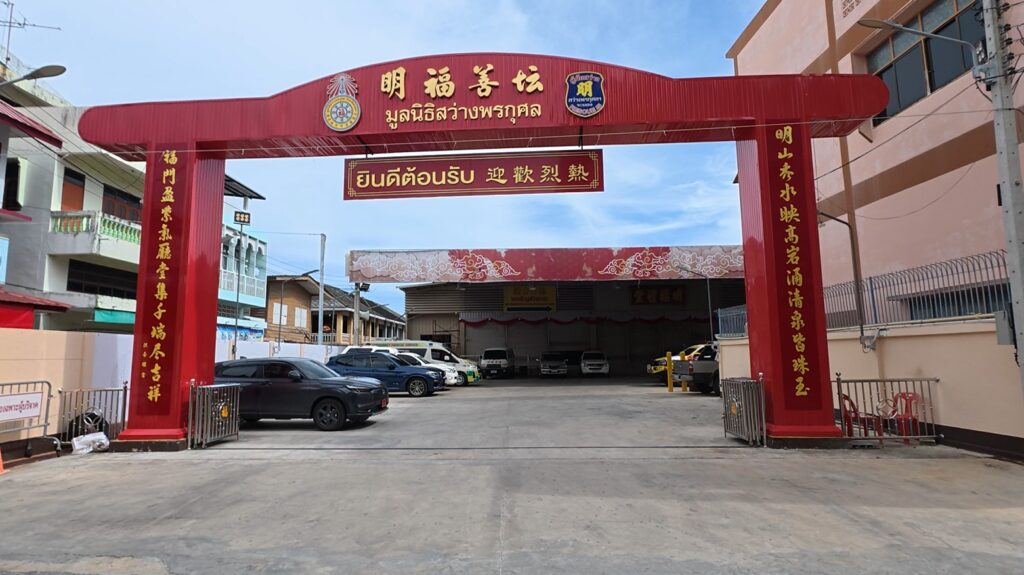
A red Chinese-style gateway now marks the entrance to the old commercial district. It immediately reveals the cultural identity of the neighborhood, but the true history begins beyond the gate—in the narrow streets, weathered wooden buildings, family shops, and memories passed down through generations.
Walking beneath it felt like crossing from modern Rayong into another layer of the city. The traffic and newer buildings were still close, yet the atmosphere changed. Chinese characters, red lanterns, and traditional façades quietly announced that this was once a community shaped by migrants who brought their beliefs, skills, and hopes to a new homeland.
Walking Through the Living Memory of Yomjinda
This journey was not simply about photographing old buildings. I wanted to follow the traces of the Chinese immigrants who settled here and understand how their lives became part of Rayong’s identity.
As I moved through the narrow streets, I found weathered wooden façades, family-run shops, Chinese signs, shrines, and quiet corners that still carried the atmosphere of another generation. Some buildings have been restored, while others continue to age naturally, but together they preserve the memory of a community built through migration, trade, faith, and hard work.
Walking through Yomjinda Road in search of the Chinese immigrant heritage that shaped old Rayong.
Wooden Shophouses That Still Remember
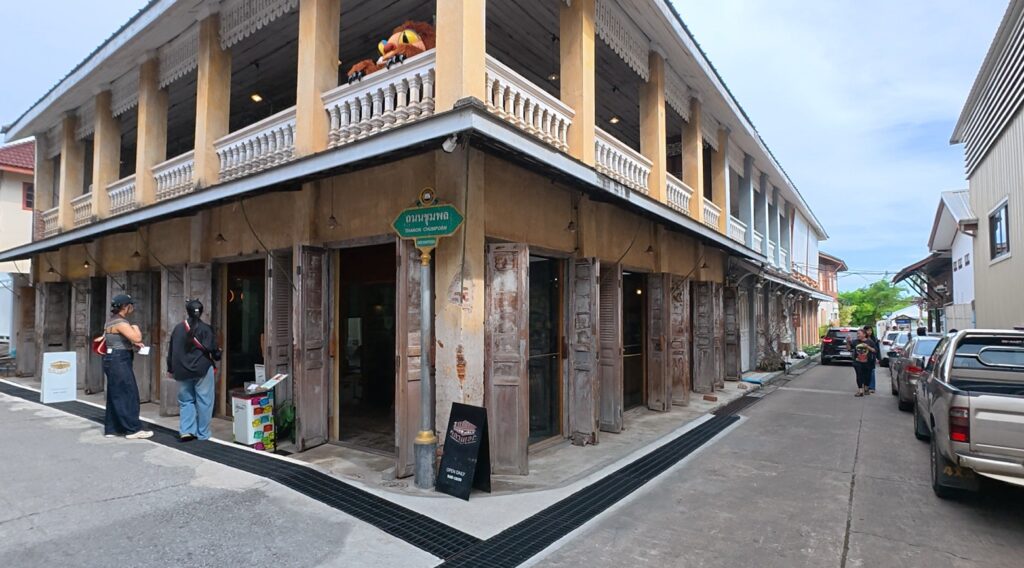
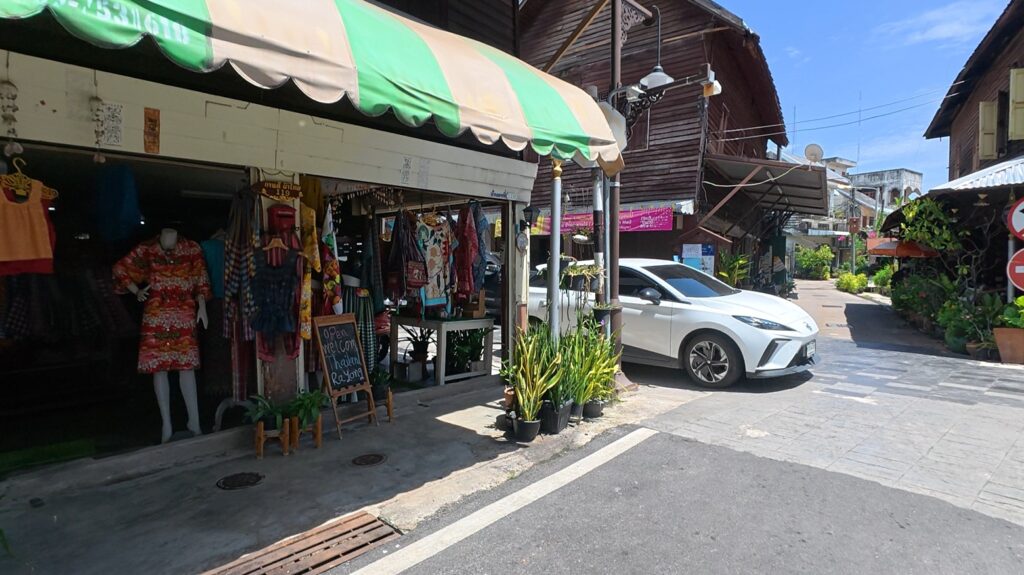
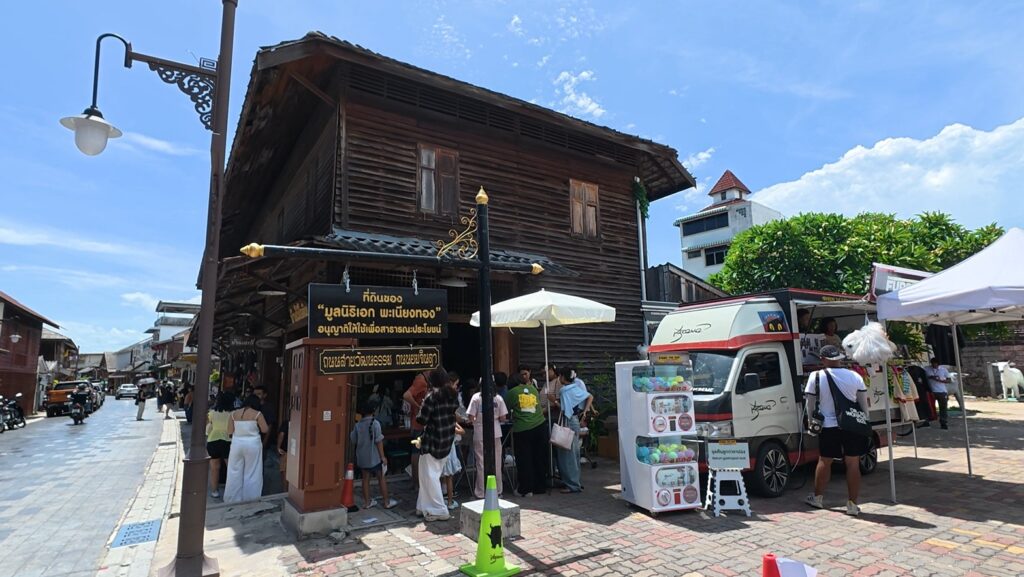
Farther inside the district, the character of Yomjinda Road becomes clearer. Rows of wooden shophouses stand close together, their upper floors projecting slightly over the street while the ground floors remain open to business and daily life.
These buildings were designed for practicality rather than decoration. A family could sell goods at the front, store products deeper inside, and live in the rooms above. Generations passed through the same narrow spaces, and each repaired wall, faded door, and dark wooden beam became part of the neighborhood’s memory.
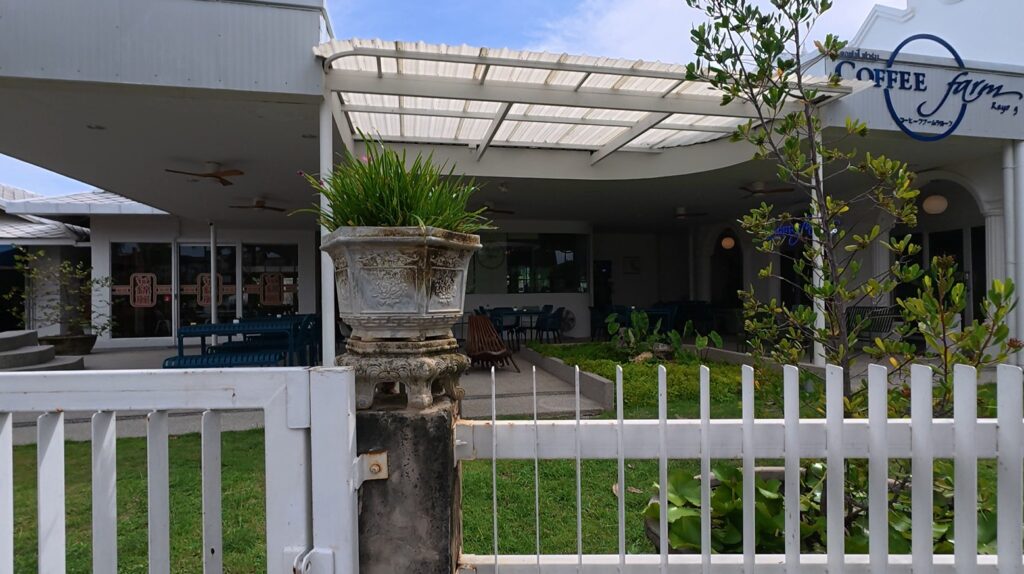
Today, some buildings have been converted into cafés and small shops, while others remain quiet and weathered. Their uses may have changed, but their form still tells the story of a community that once lived and worked in the same place.
The Quiet Lanes Behind the Main Street
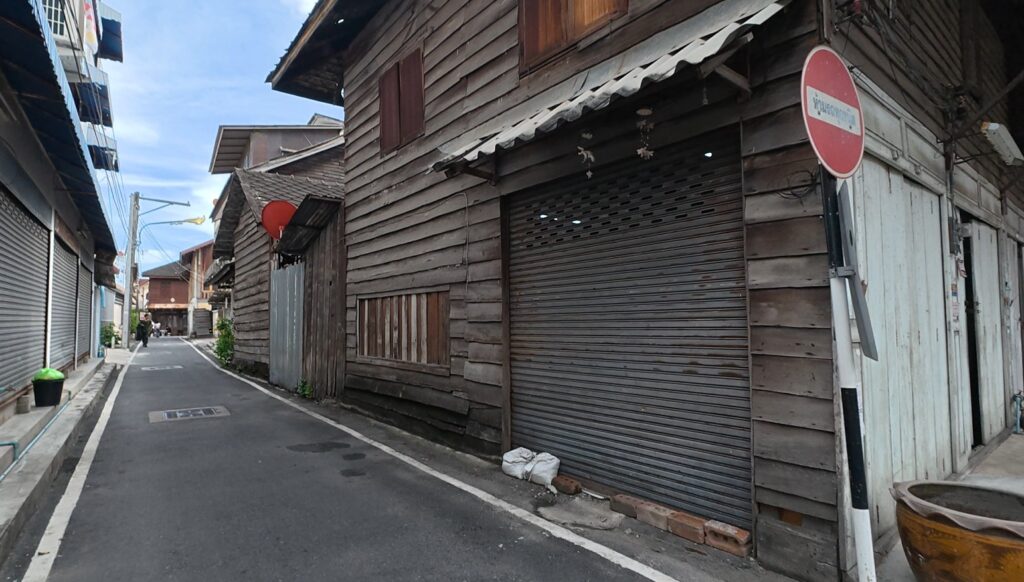
The deeper I walked into Yomjinda, the quieter the neighborhood became. Behind the brighter shopfronts were narrow lanes, closed wooden doors, old walls, and houses that seemed almost untouched by time.
These side streets reveal a different part of the community’s history. They were not designed for visitors. They were the everyday spaces where families cooked, worked, raised children, stored goods, and moved between home and business. Their worn surfaces and simple structures preserve a more intimate memory than the restored buildings on the main road.
Standing there, I felt that the history of Chinese immigration was not written only in temples or important landmarks. It remained in these ordinary lanes, where generations once lived their daily lives.
A Heritage That Continues to Live
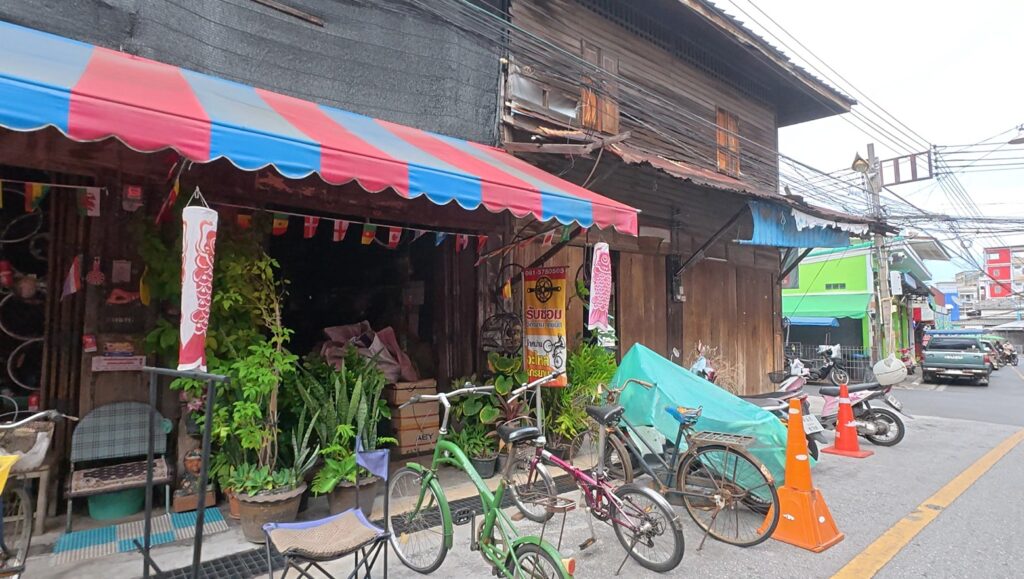
Yomjinda Road is no longer the busiest commercial center of Rayong, but it has not become an empty museum. People still live here, open their shops, prepare food, greet neighbors, and continue family traditions within the old buildings.
That is what makes the street meaningful. Its heritage survives not only in preserved architecture, but also in everyday life. The descendants of Chinese immigrants became part of Thai society while keeping traces of their ancestors’ culture in food, worship, family businesses, and community celebrations.
The neighborhood has changed, but it still carries the identity created by those who arrived with little more than courage and the determination to build a new home.
More Than an Old Street
As I reached the end of the walk, Yomjinda Road felt less like a preserved attraction and more like a living record of migration. The old houses, shrines, shopfronts, and river were all connected by the stories of people who crossed the sea and began again in Rayong.
Their names may not appear in history books, but their influence remains throughout the neighborhood. They helped develop local trade, created family businesses, supported religious traditions, and gradually became part of the wider Thai community.
Yomjinda Road reminds us that history is not always found in palaces or monuments. Sometimes it survives in a wooden doorway, a faded sign, an old family shop, or a quiet street beside the river.
The Footsteps Remain
The Chinese immigrants who came to Rayong were searching for work, safety, and a place to begin again. Through trade, family life, faith, and perseverance, they helped transform this riverside settlement into an important part of the town.
Many of the original residents are gone, and the river no longer carries commerce as it once did. Yet their footsteps remain in the wooden shophouses, Chinese shrines, narrow lanes, old recipes, and family stories of Yomjinda Road.
Walking here made me realize that migration is not only the story of leaving one homeland. It is also the story of creating another. Yomjinda Road stands as a quiet reminder of the people who arrived as strangers and, generation by generation, became part of Rayong.
Gallery
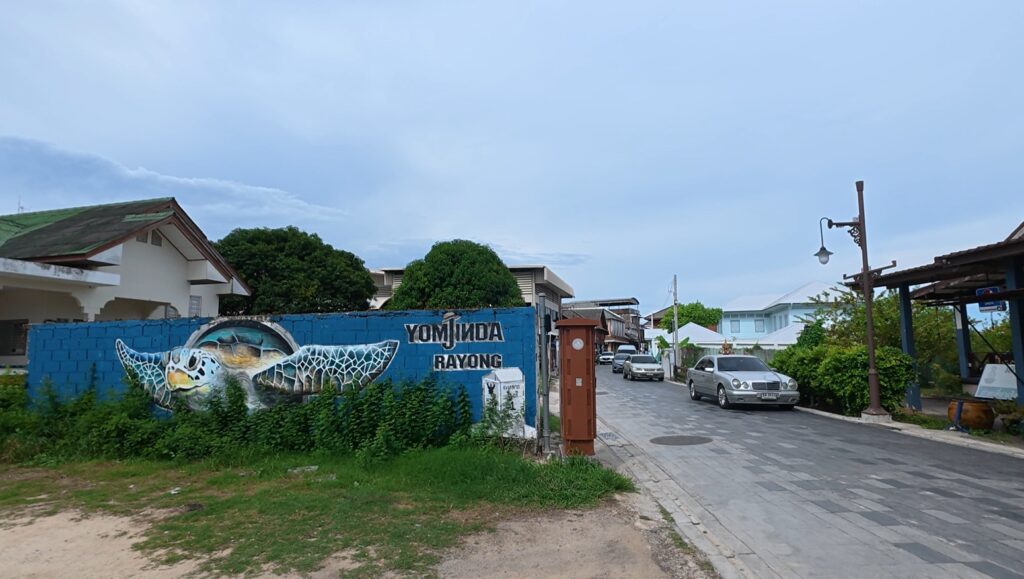
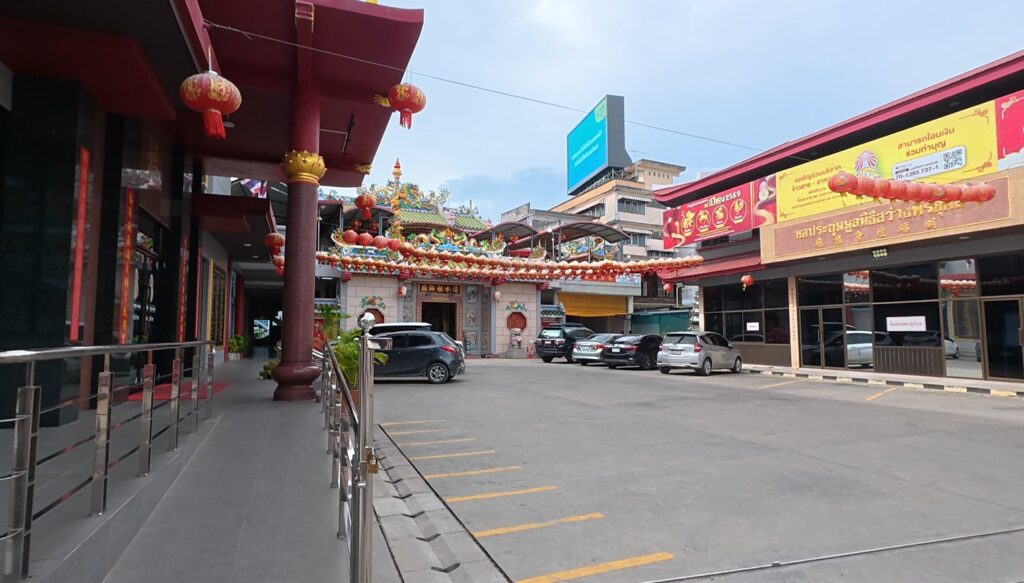
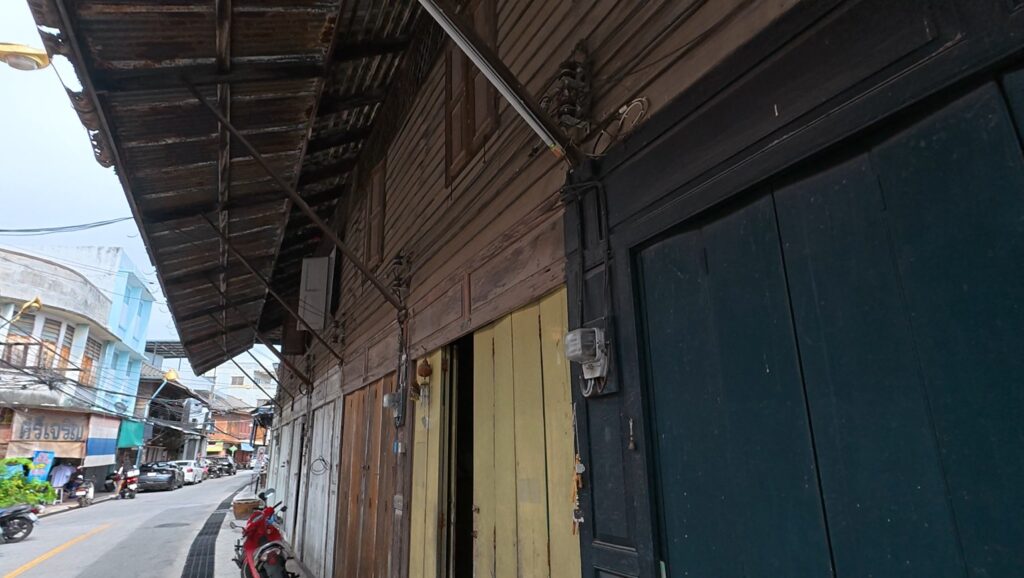
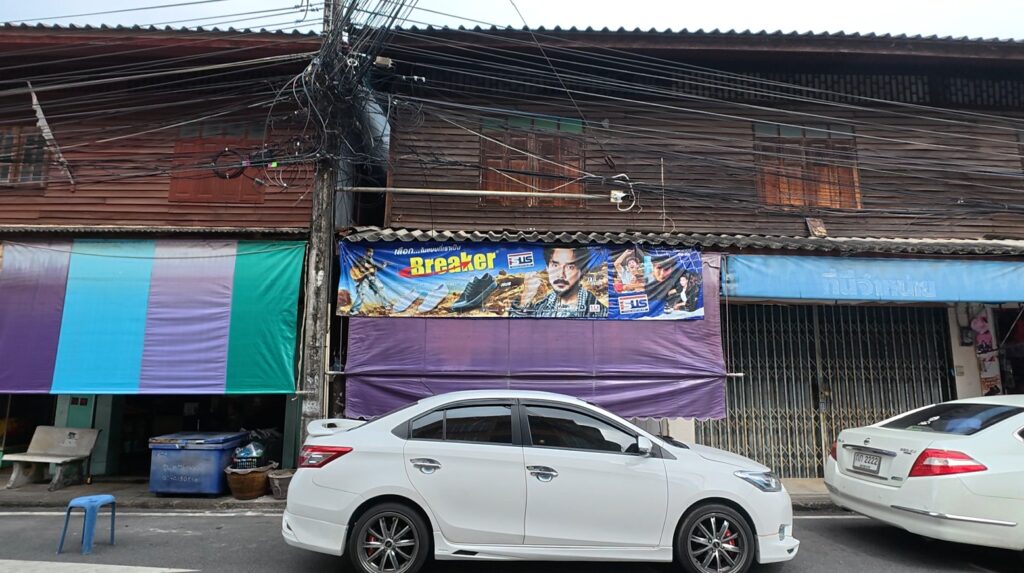
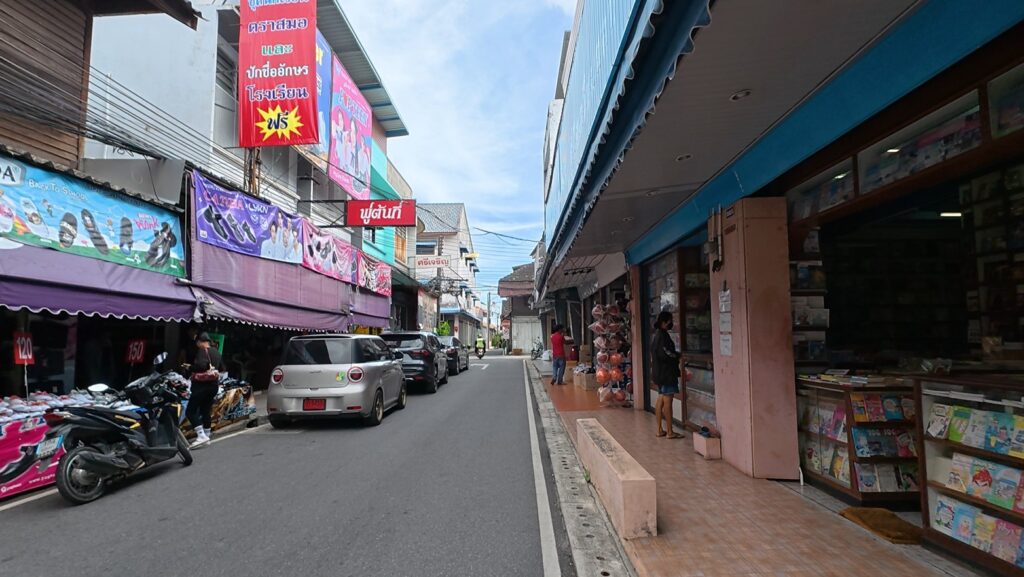
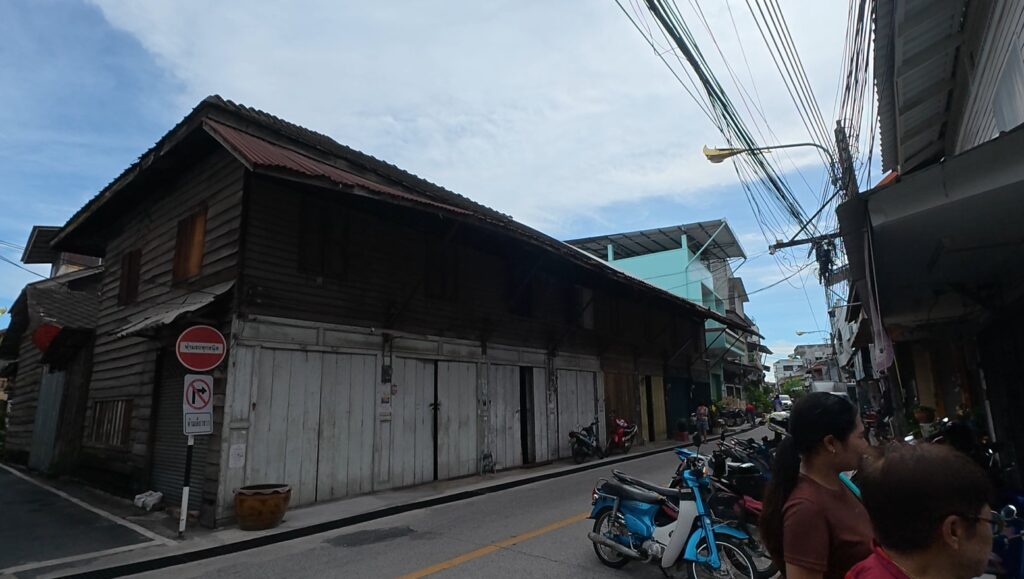
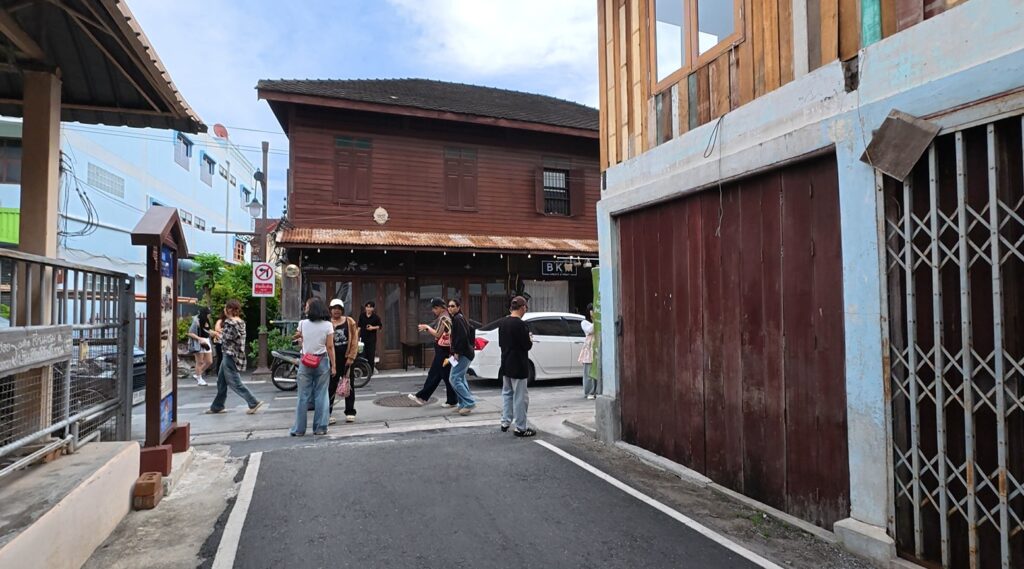
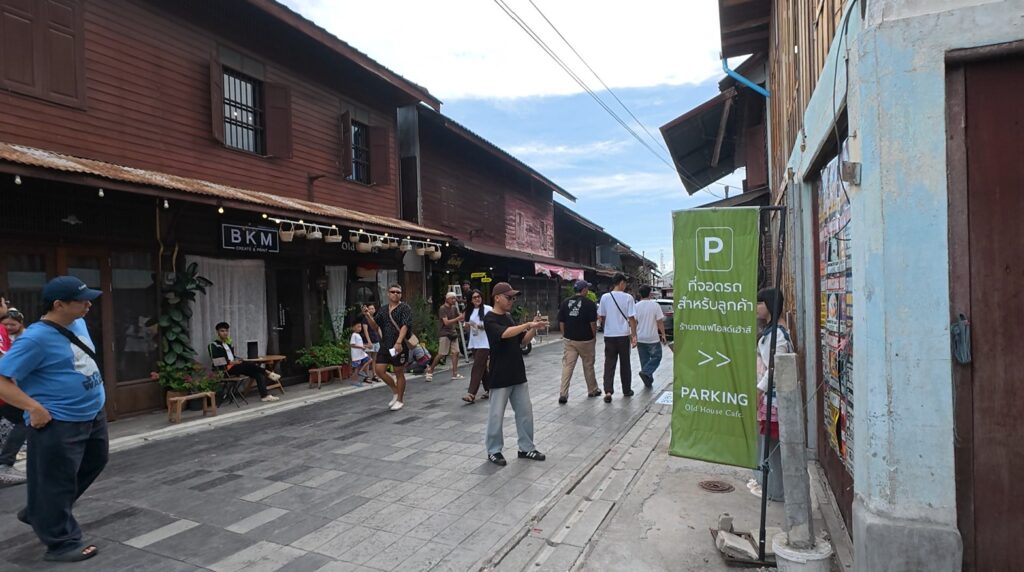
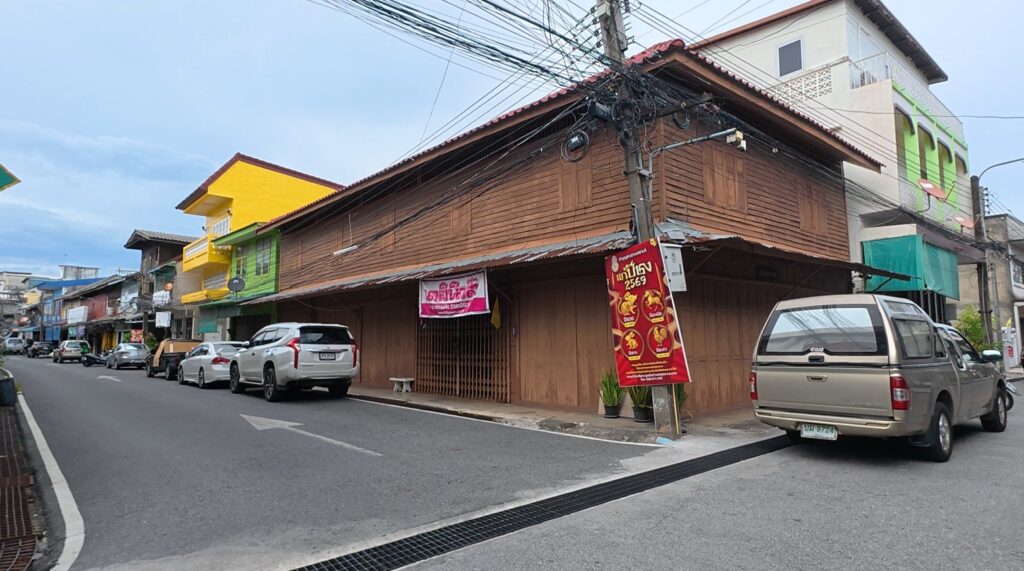
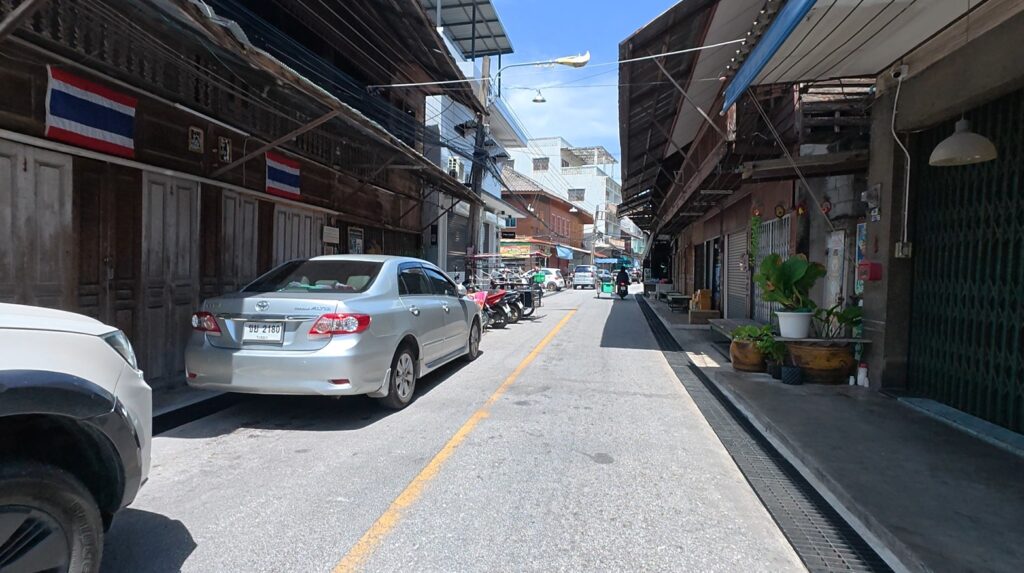
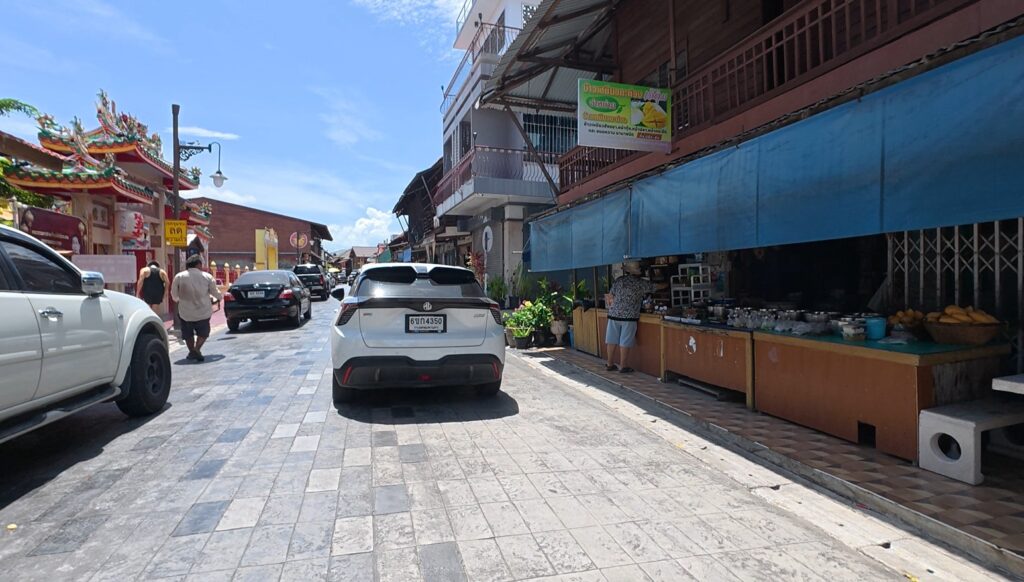
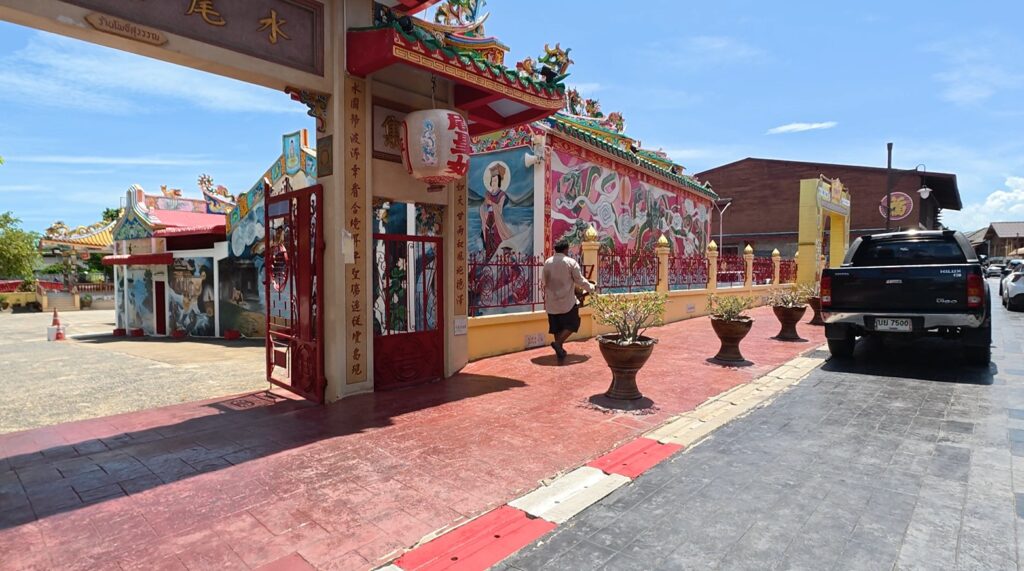
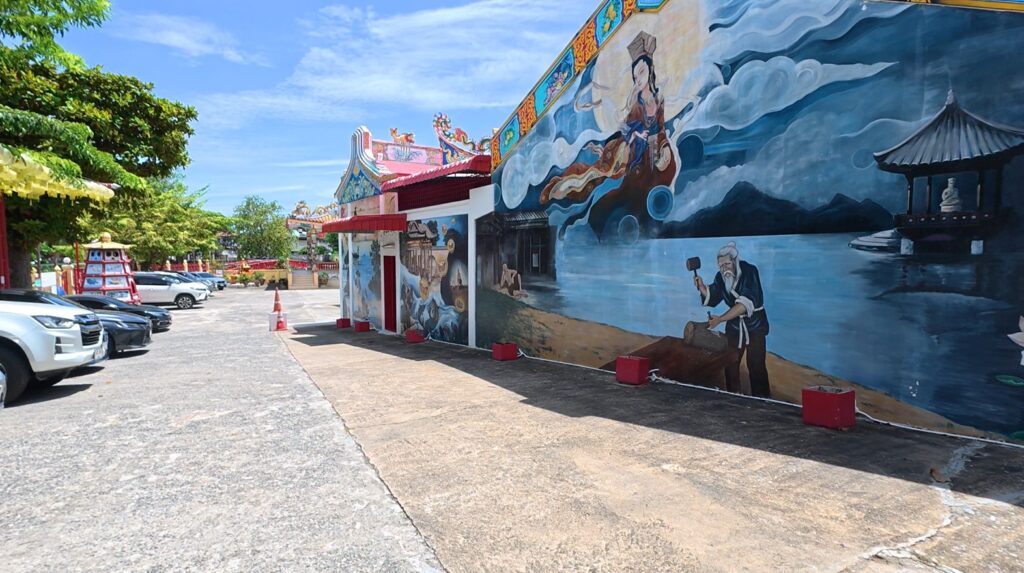
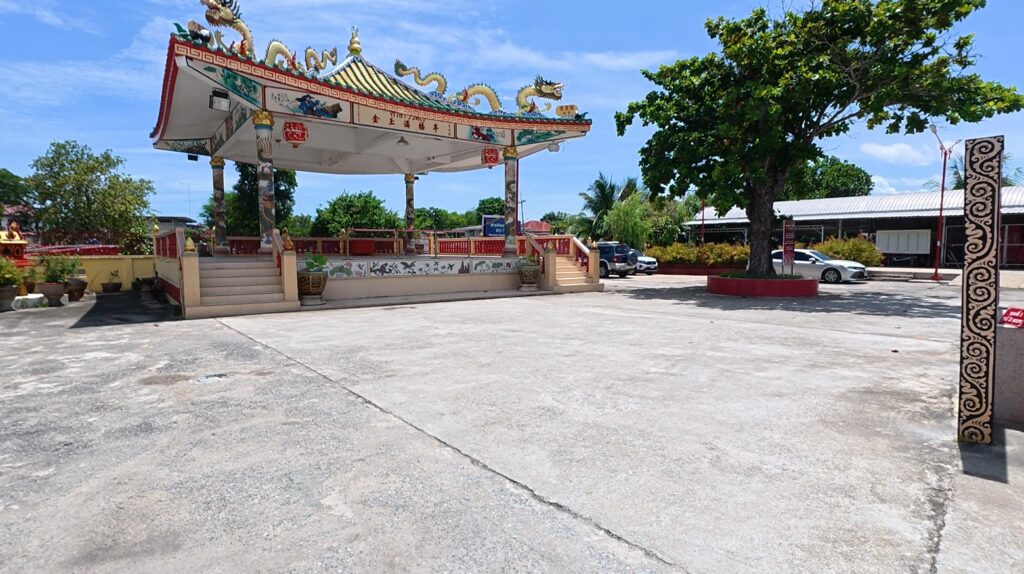
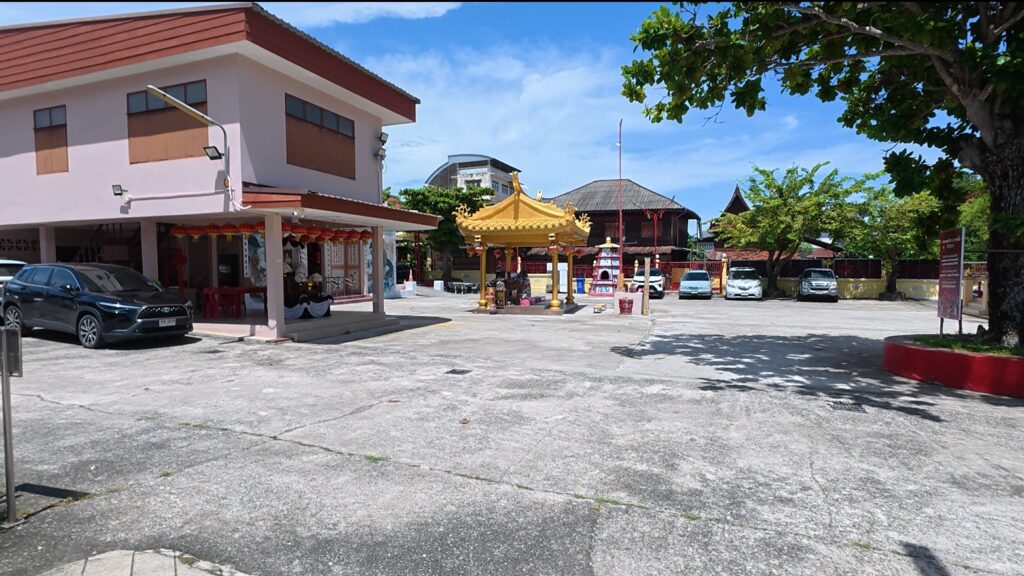
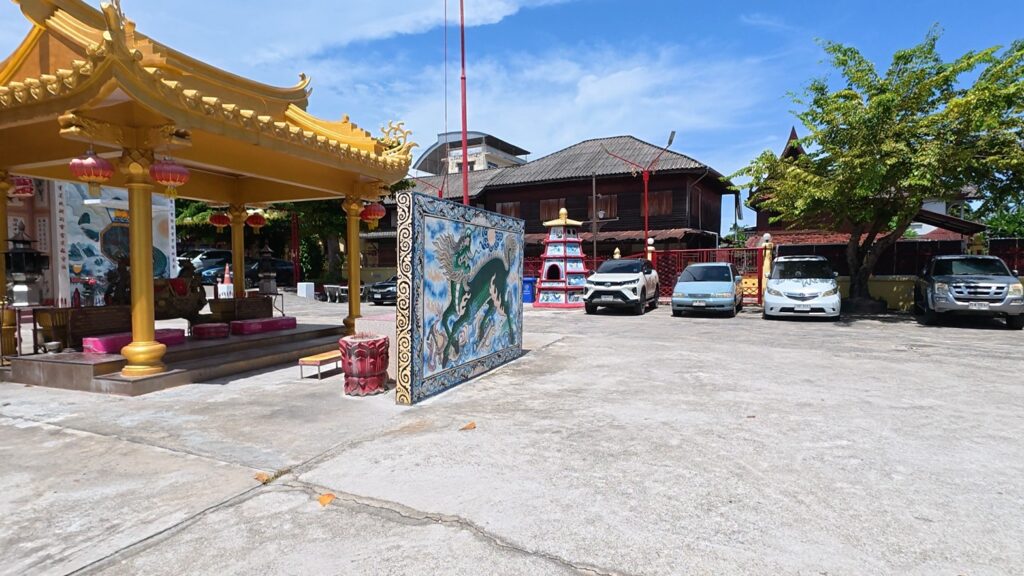
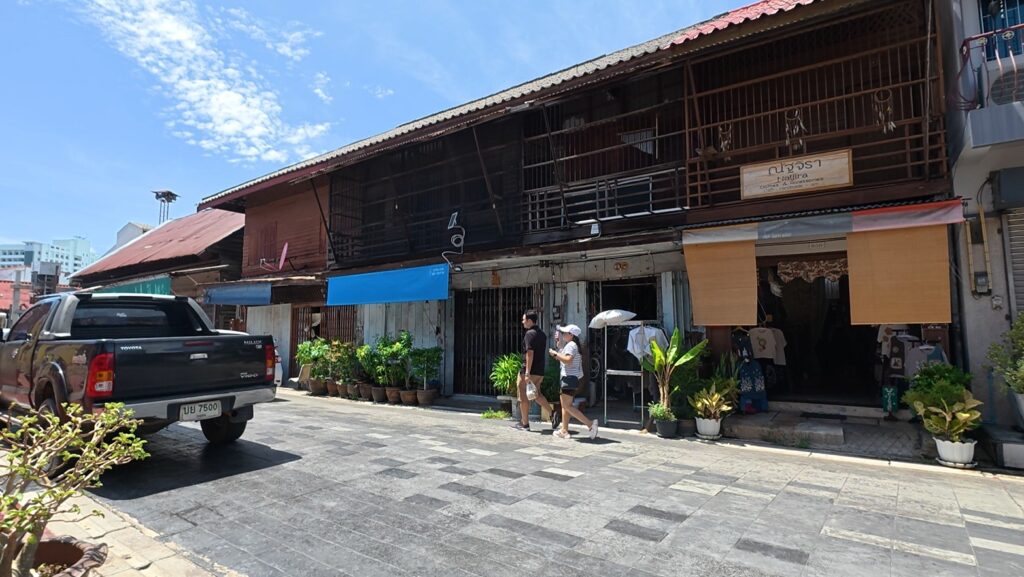
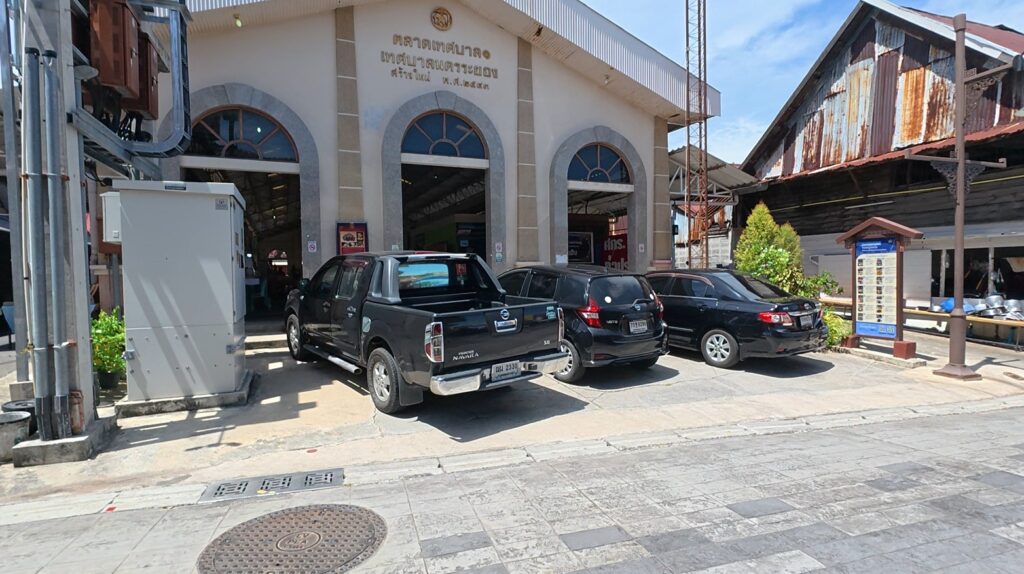
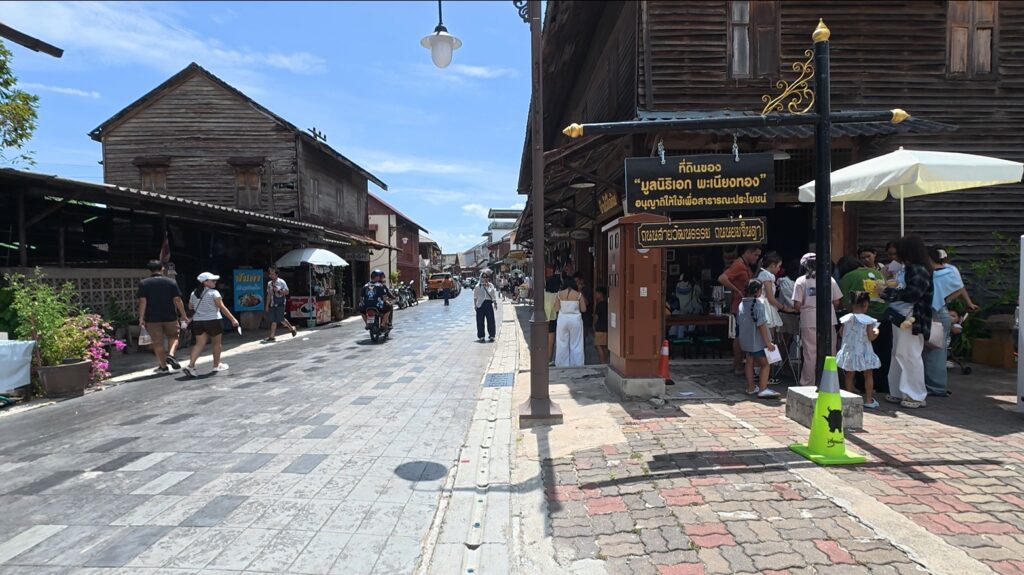
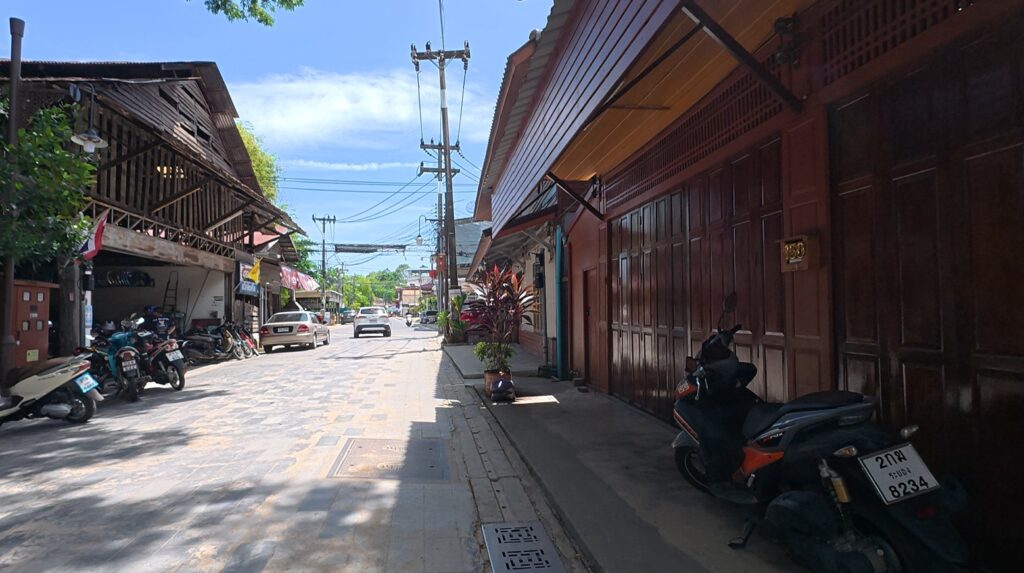
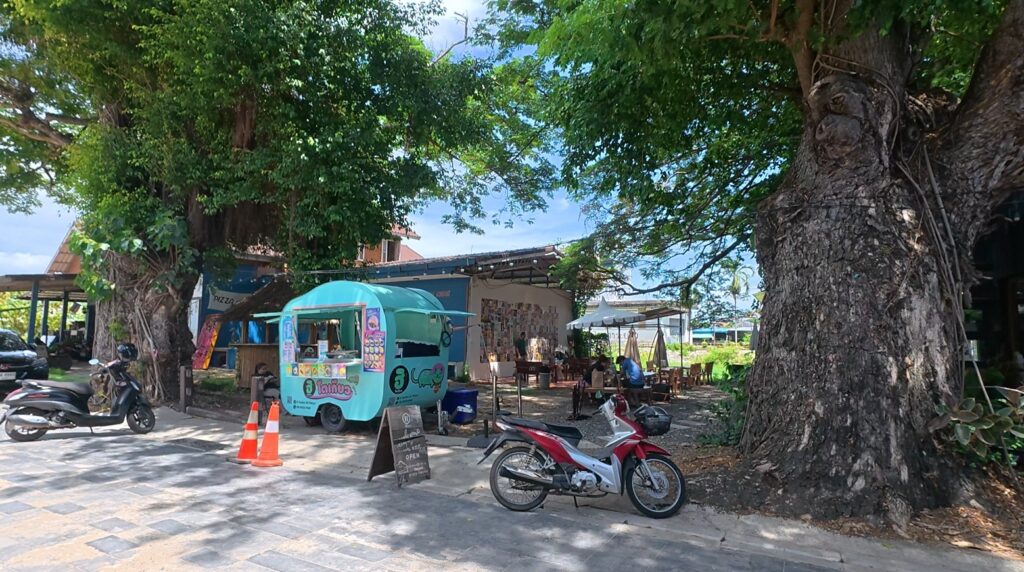
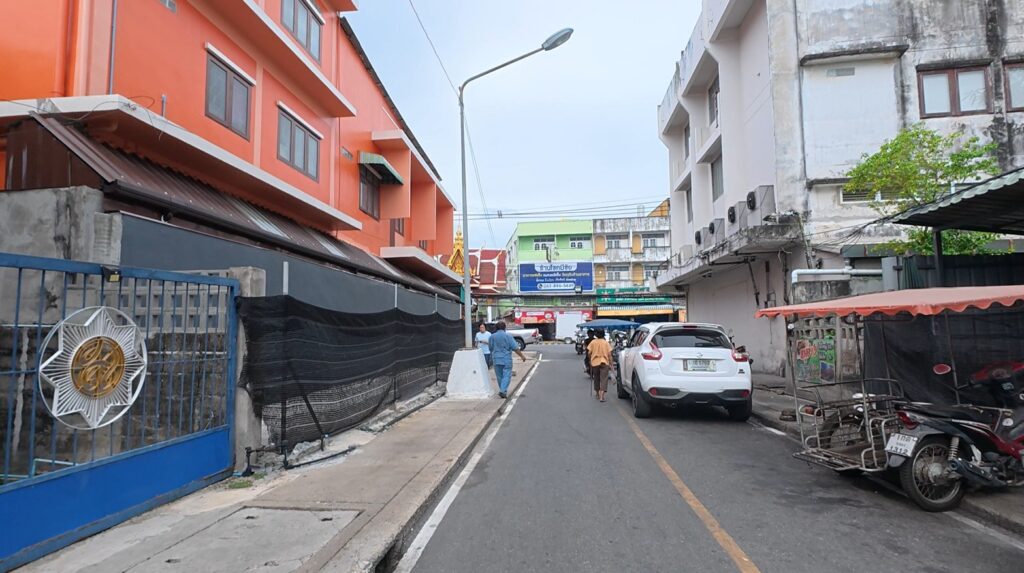
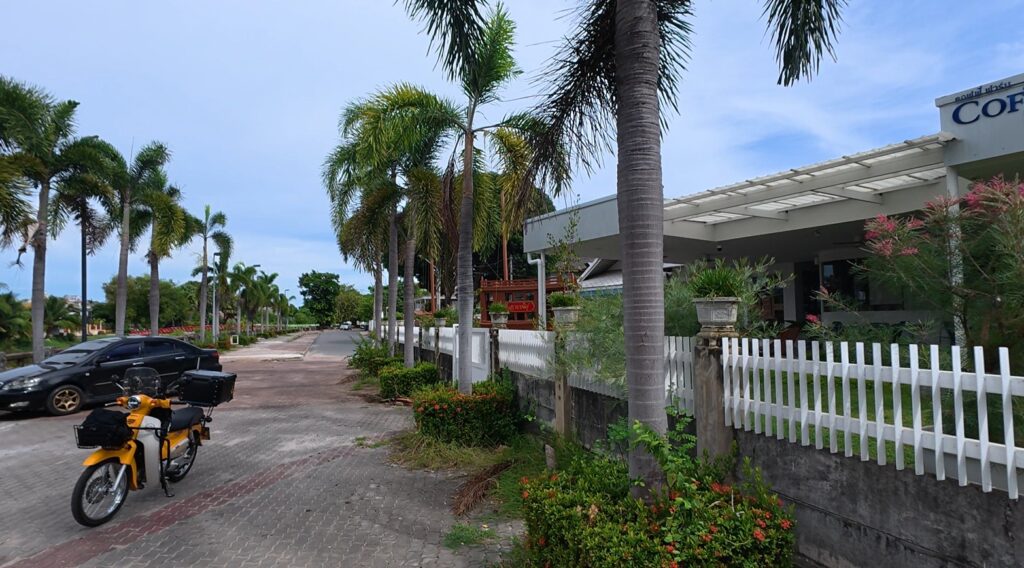
Scenes from Yomjinda Road, where old wooden buildings, Chinese traditions, local shops, and everyday life preserve the heritage of Rayong’s historic immigrant community.
Location
Yomjinda Road is located in the old town area of Rayong, close to the Rayong River. The district is easy to explore on foot, allowing visitors to move slowly between wooden shophouses, Chinese shrines, cafés, local restaurants, and quiet residential lanes.
Continue Exploring Rayong
Yomjinda Road reveals the lives of the merchants and families who built old Rayong. To discover another side of the province’s history and culture, continue exploring the temples, communities, and heritage sites recorded throughout Won Cub Life.
Learn more about travel and cultural attractions in Rayong through the official Tourism Authority of Thailand website.