A Short Ride to an Old Temple
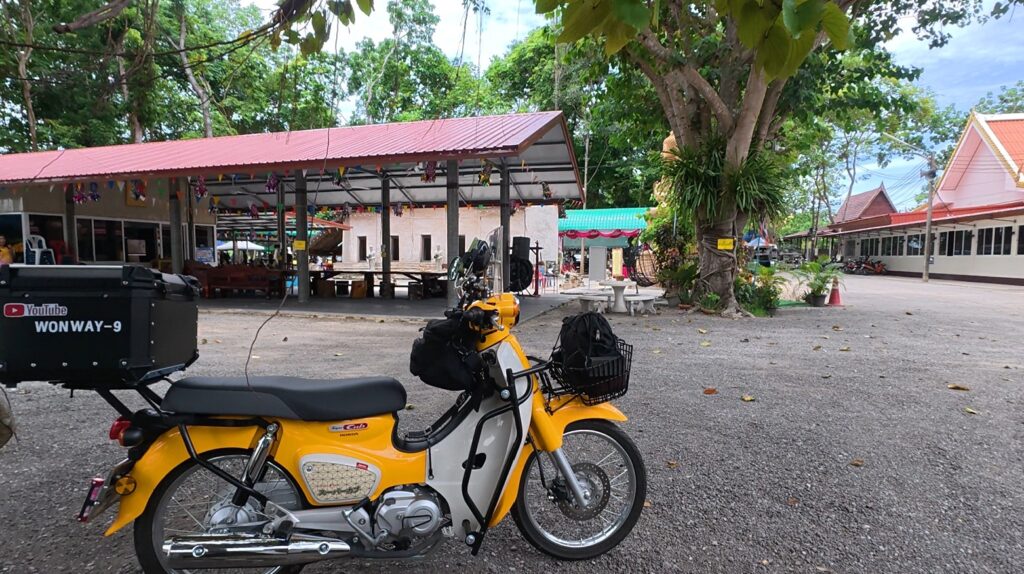
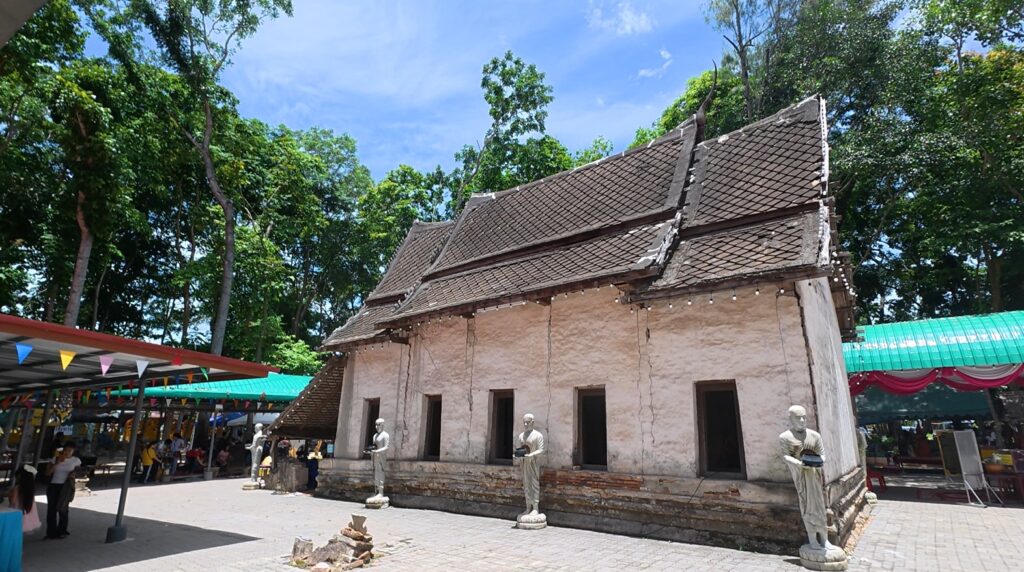
Wat Khao Bot Rayong was the destination of a short ride through familiar roads near home, so the ride began as a simple visit through familiar roads in Rayong. But behind the ordinary temple grounds stood an old ubosot that immediately felt different from the newer buildings around it.
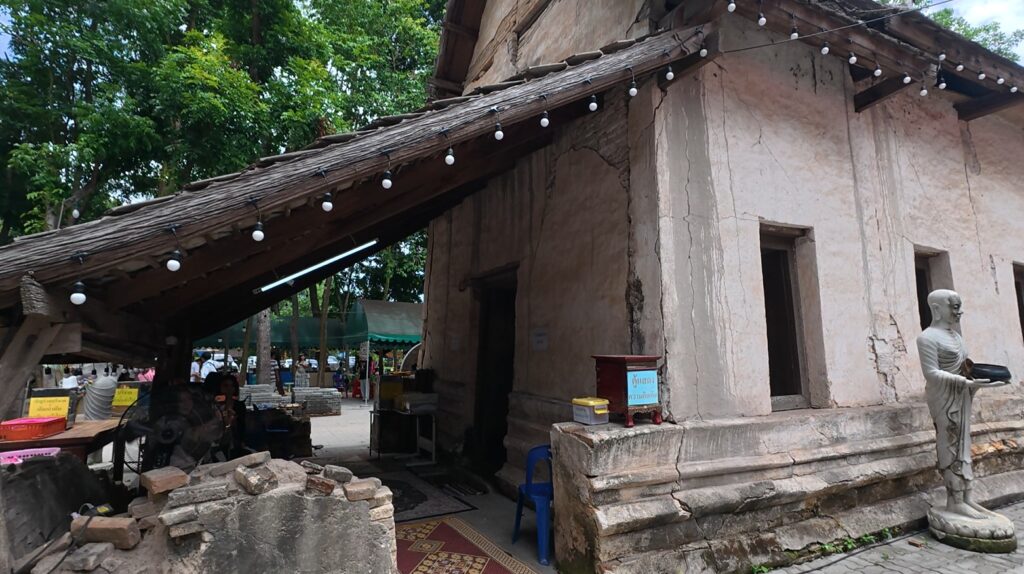
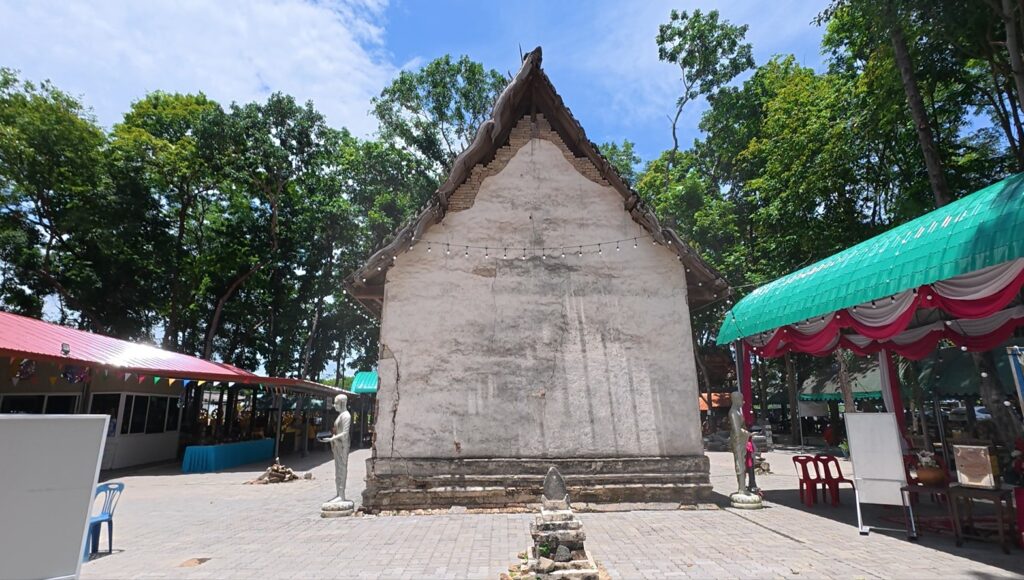
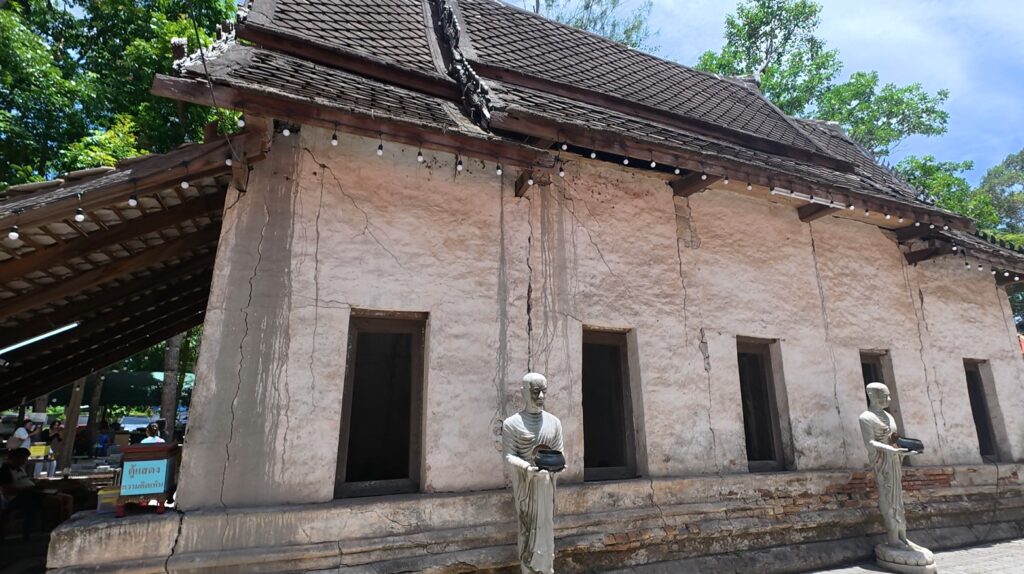
Its weathered walls, dark wooden roof, and uneven surfaces carried the marks of many years. From the outside, it looked fragile and quiet, as though it had been waiting patiently while the world around it changed.
Wat Khao Bot Rayong: A Building Marked by Time
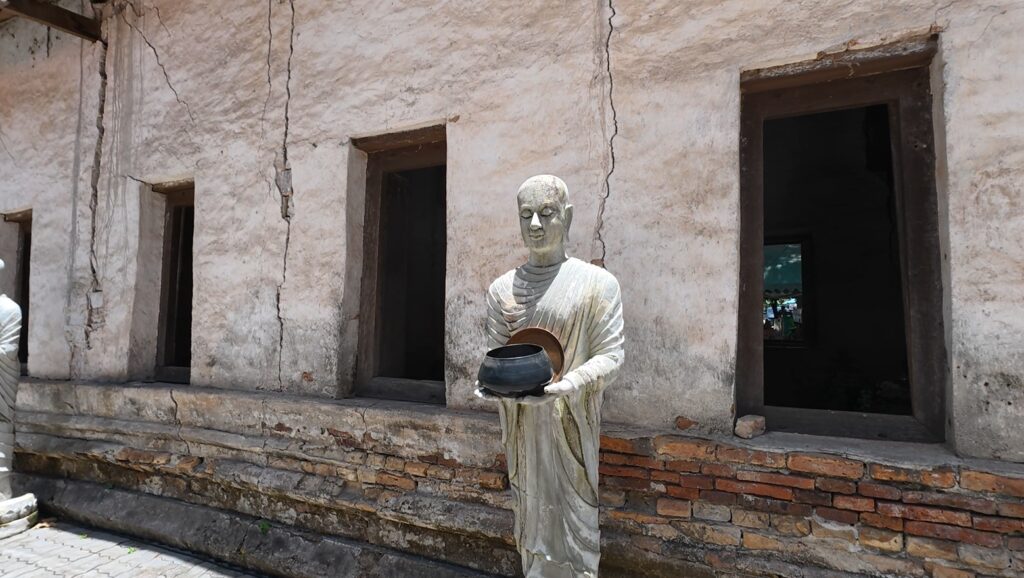
The old ubosot did not hide its age. Cracks ran across the plaster, sections of the surface had faded, and the wooden roof structure showed years of heat, rain, and humidity.
Yet the building did not feel abandoned. Its imperfections gave it character, and every worn surface seemed to preserve a small part of the temple’s long history. Rather than replacing the old structure completely, time had allowed it to remain visible.
Stepping Inside the Old Ubosot
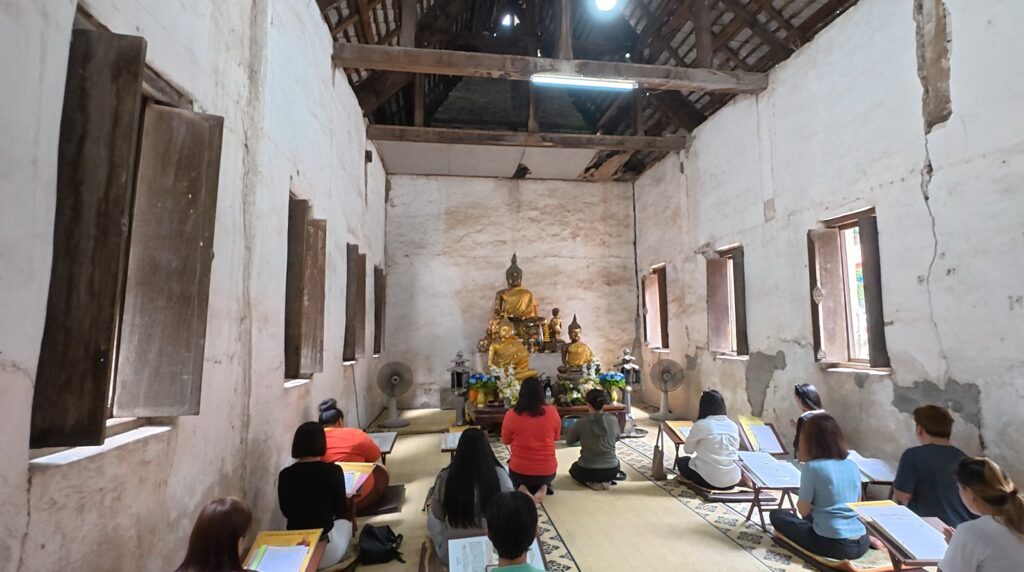
Inside, the atmosphere became quieter and more intimate. The dark wooden beams, aged walls, and soft light created a space that felt separated from the modern world outside.
At the far end, the Buddha image remained the spiritual center of the room. Visitors sat quietly before it, showing that despite the building’s age, the ubosot was still very much alive as a place of worship.
Beneath the Old Wooden Roof
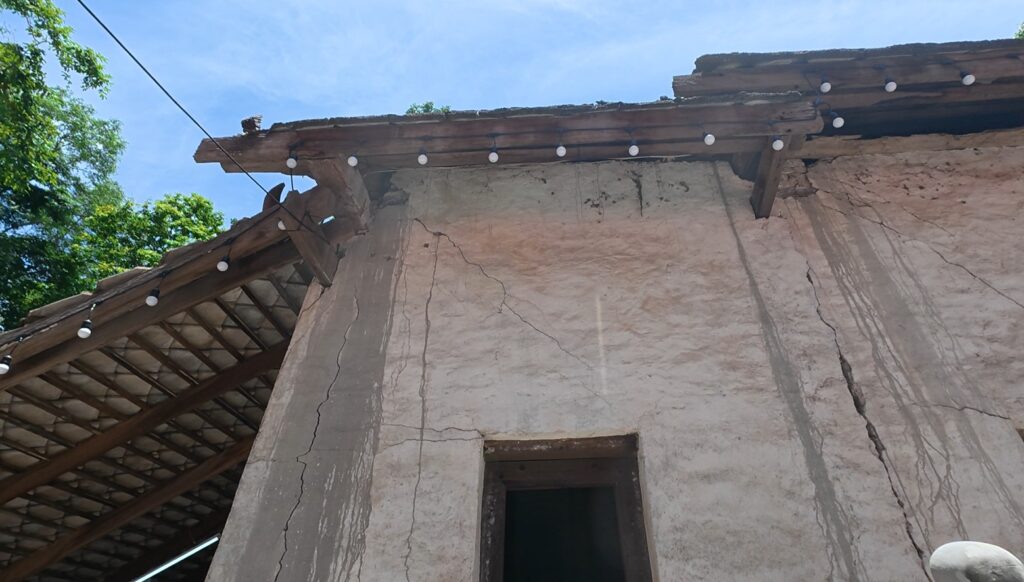
Looking upward, the wooden roof structure revealed another layer of the ubosot’s character. The beams were darkened with age, and the handmade construction felt very different from the clean concrete interiors of newer temples.
Nothing appeared perfectly straight or newly restored, yet the old materials created warmth and dignity. Standing beneath the roof, I could sense how many seasons of rain, heat, prayer, and ceremony had passed through this small sacred building.
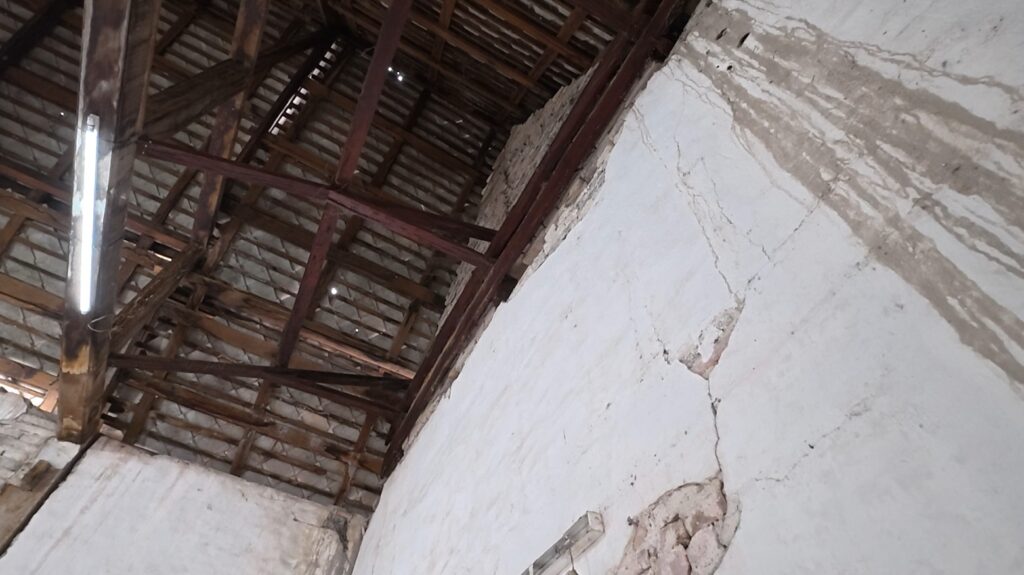
The Silence of the Old Walls
The walls were faded, cracked, and uneven, but they gave the ubosot a presence that a newly painted building could not easily reproduce. Their silence carried the memory of ceremonies, prayers, and ordinary visitors who had entered over many years.
This was not beauty created by perfection. It was beauty created by endurance—the quiet dignity of a sacred place that had survived without losing its purpose.
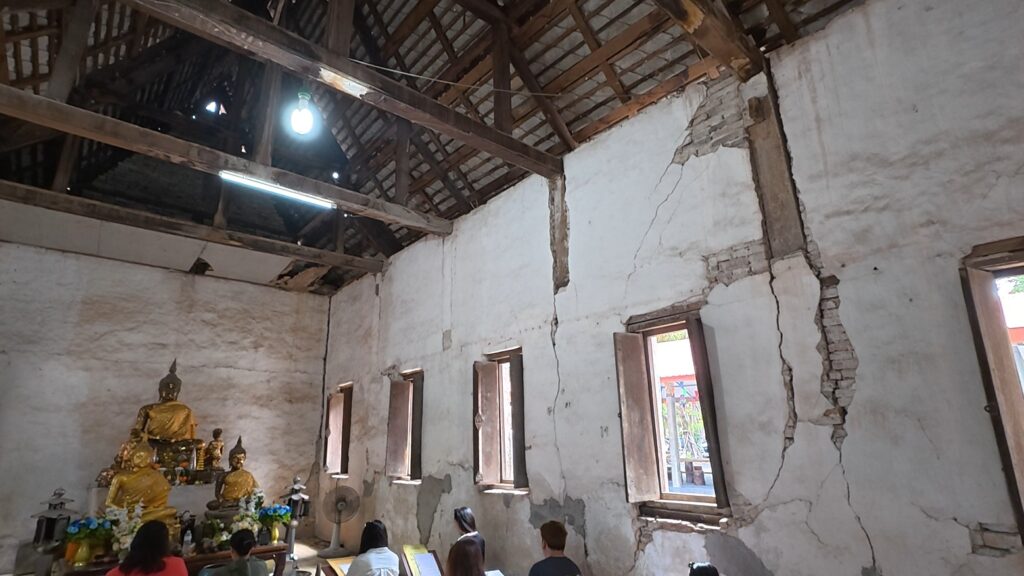
Watch Inside the Old Ubosot
Step inside the weathered old ubosot of Wat Khao Bot, where cracked walls, dark wooden beams, and continuing prayer preserve its quiet beauty.
Leaving the Old Ubosot for the Hillside
After exploring the old ubosot, I continued to a hillside meditation center connected with the Wat Khao Bot area. The setting felt completely different. The cracked walls and dark wooden beams were replaced by open paths, trees, and bright mountain air.
As I walked farther into the grounds, the quiet surroundings prepared me for another side of the temple—one shaped by meditation, elevated views, and the openness of the sky.
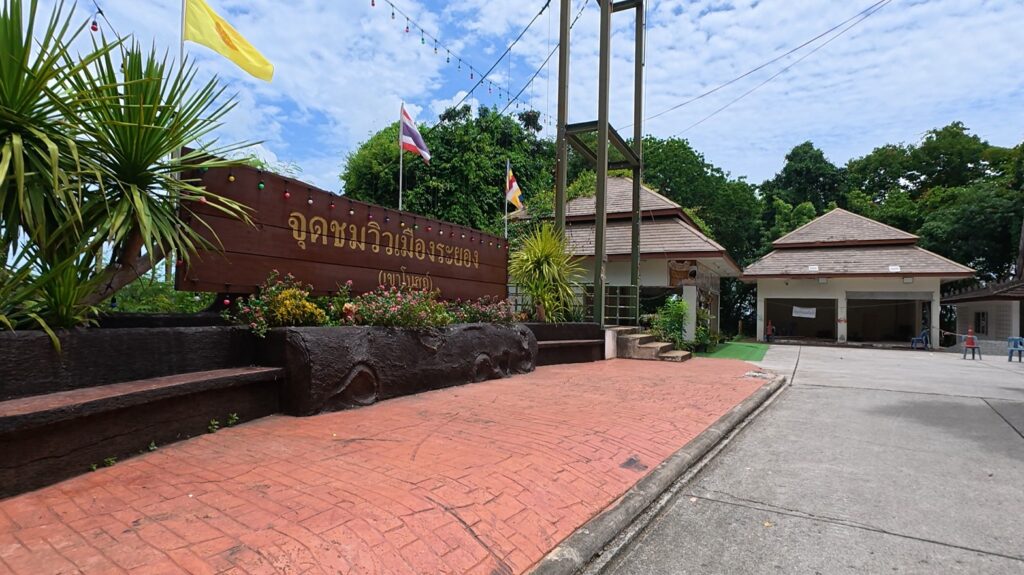
A Quiet Place for Prayer and Meditation
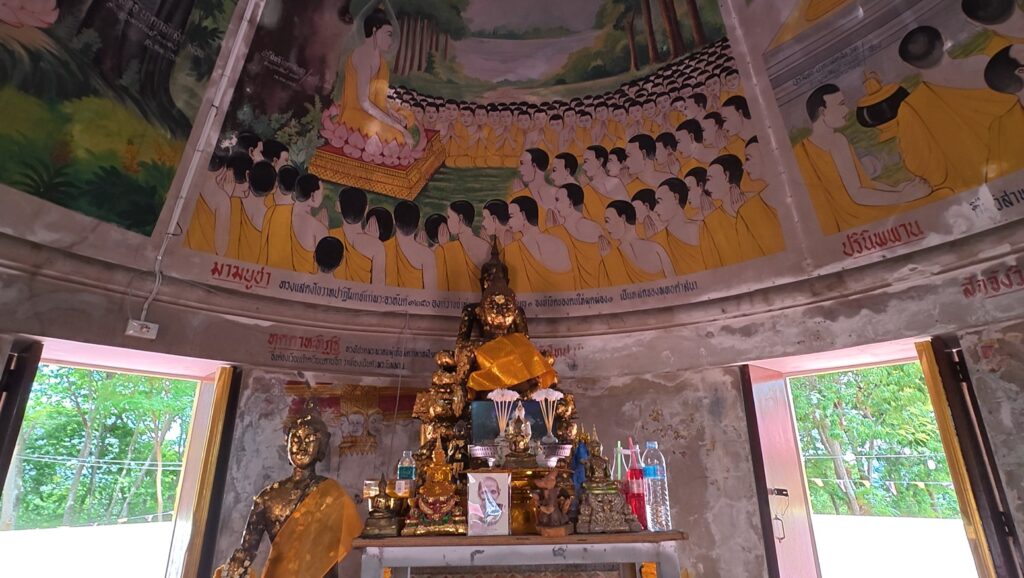
The hillside center was simple and peaceful. Inside the open prayer hall, Buddha images, offerings, and colorful decorations created a calm space for worship and meditation.
Unlike the old ubosot below, this place felt brighter and more open. Yet both spaces shared the same quiet purpose: giving people somewhere to pause, pray, and step away from the noise of everyday life.
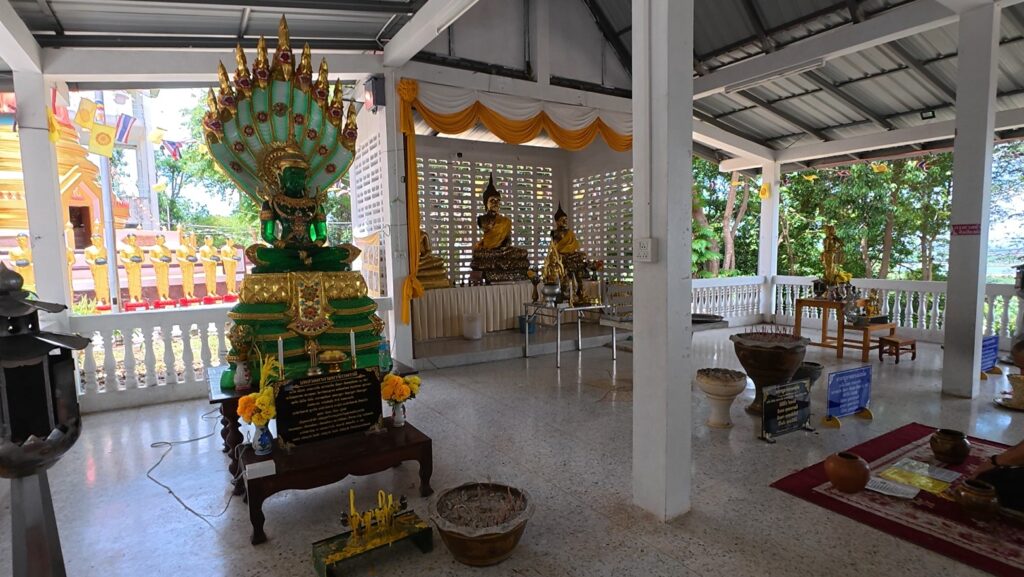
Beneath a Painted Ceiling
Inside the prayer hall, the ceiling paintings added color and warmth to the quiet space. Buddhist figures and decorative patterns surrounded the central Buddha image, creating a very different atmosphere from the faded, undecorated walls of the old ubosot below.
The contrast was striking. One place preserved the beauty of age and endurance, while the other expressed faith through vivid color and careful decoration.
The Golden Stupa Above the Trees
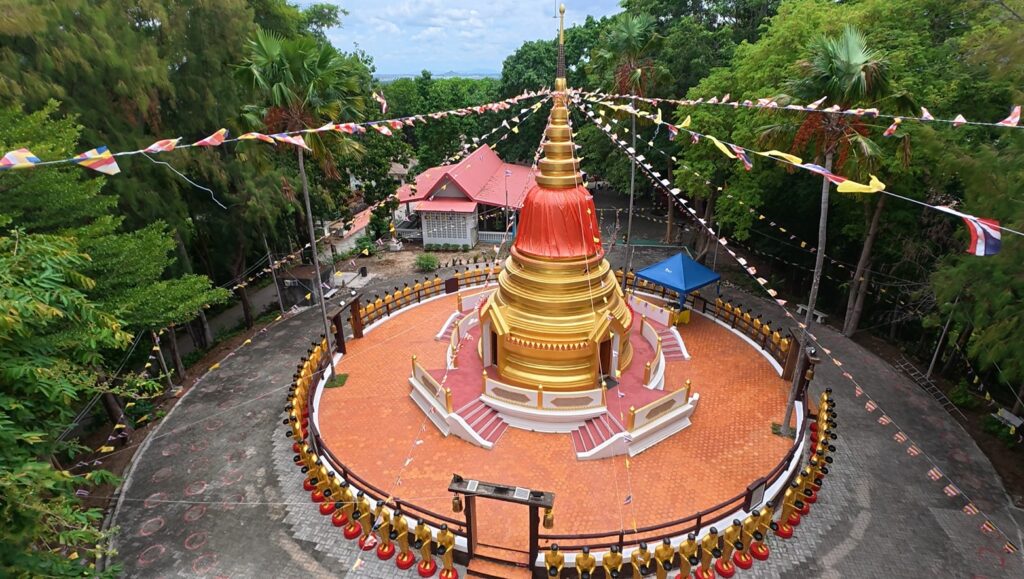
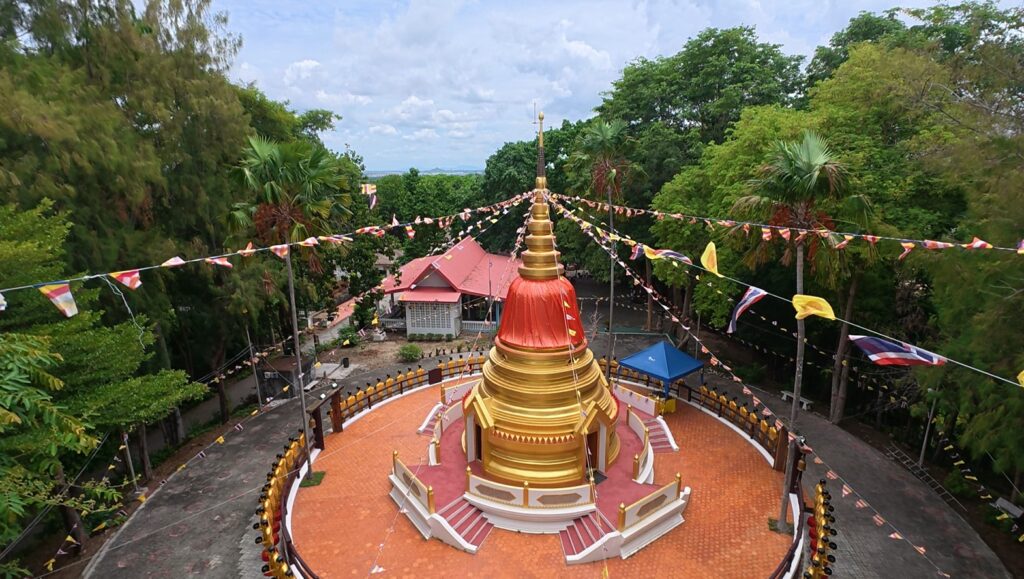
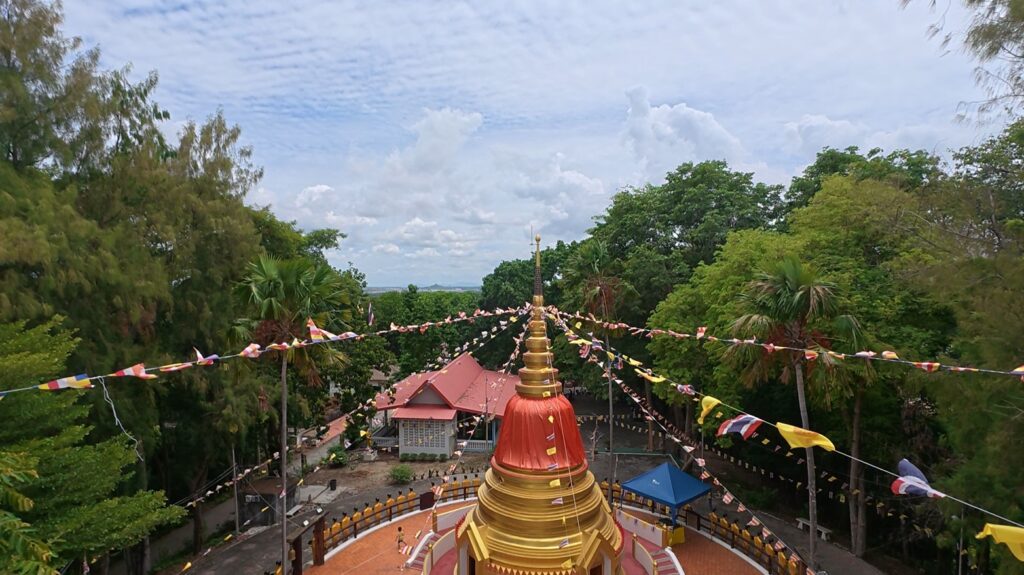
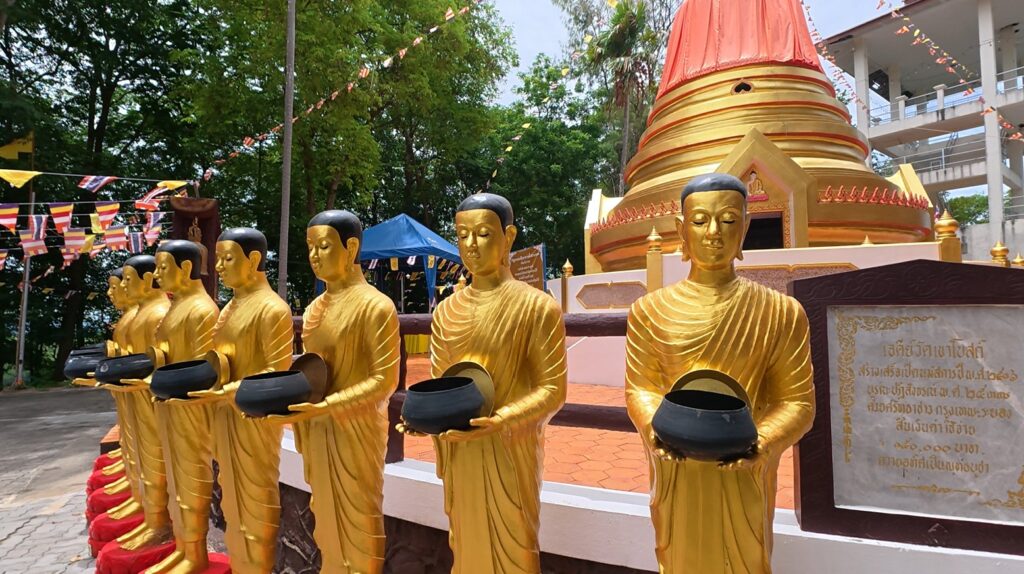
From the upper level, a golden stupa appeared below, surrounded by trees and a circular courtyard. Seen from above, it seemed to rest quietly within the green hillside rather than dominate it.
The view connected the meditation center with the landscape around it. The stupa, the forest, and the open sky together created a feeling of balance and stillness.
The View Opens Across Rayong
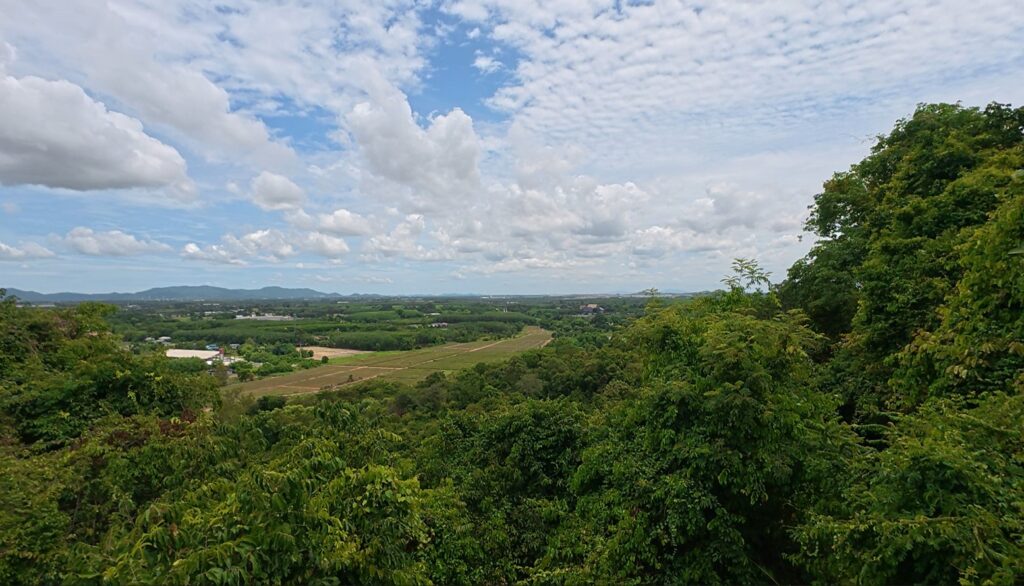
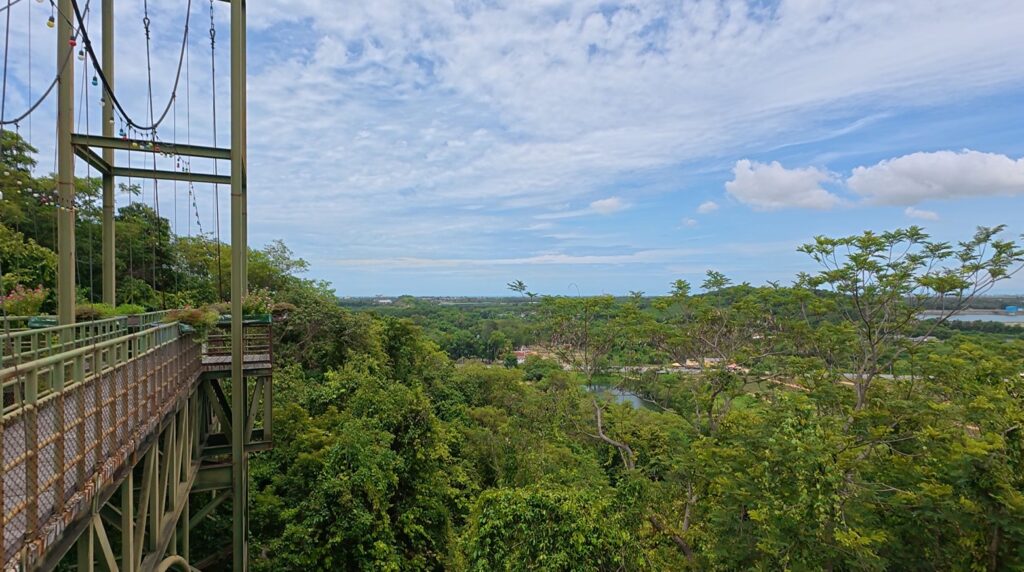
Beyond the stupa, the hillside opened into a wide view across Rayong. Forested slopes stretched toward distant fields and low buildings beneath the broad sky.
After spending time inside the narrow, weathered old ubosot, this open landscape felt especially powerful. The journey had moved from cracked walls and dark wooden beams to sunlight, distance, and air.
Watch the Hillside Meditation Center
From the quiet prayer hall and golden stupa to the wide view across Rayong, the hillside revealed a brighter and more open side of Wat Khao Bot.
From Silent Walls to an Open Sky
The two places offered very different experiences. The old ubosot preserved faith through cracked plaster, dark wooden beams, and generations of continuing prayer. Higher on the hillside, the meditation center expressed the same spiritual purpose through bright decoration, open air, a golden stupa, and wide views across Rayong.
Together, they showed that sacred places do not need to look the same. One draws visitors inward through age and silence, while the other opens the mind toward the landscape and sky.
The journey began inside walls shaped by time and ended beneath an open sky filled with light.
Wat Khao Bot Rayong revealed two very different spiritual spaces within the same journey.
Gallery
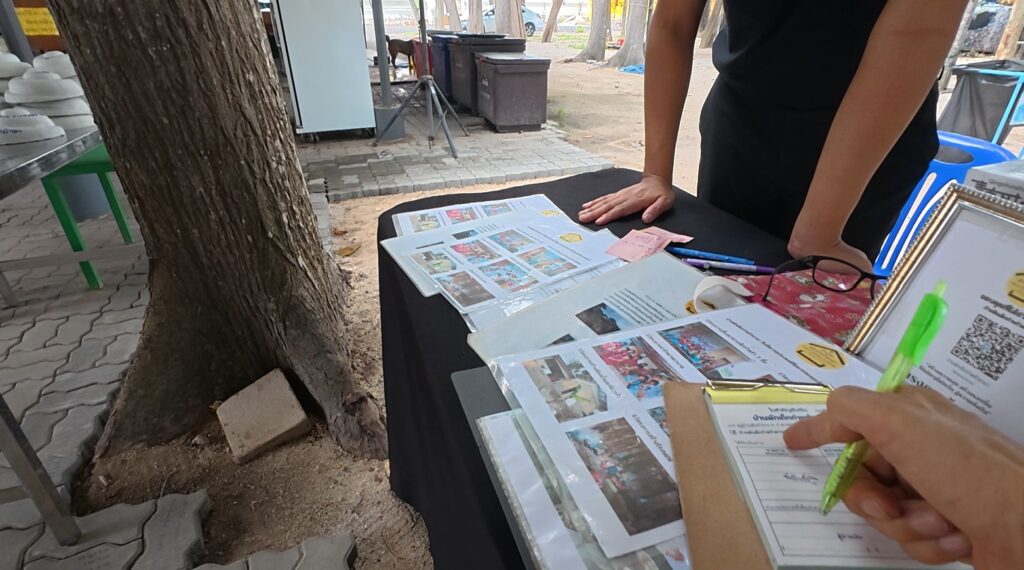
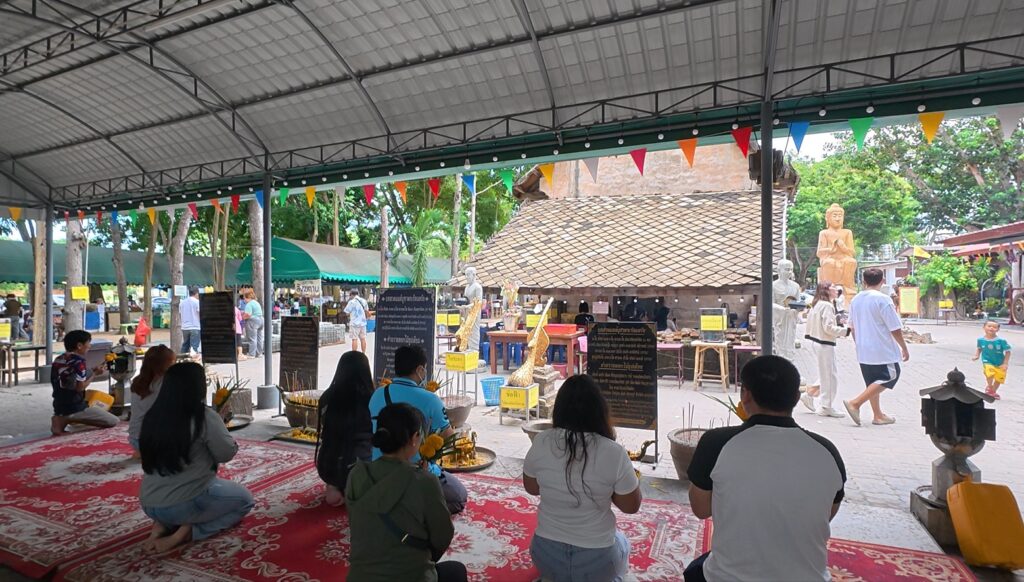
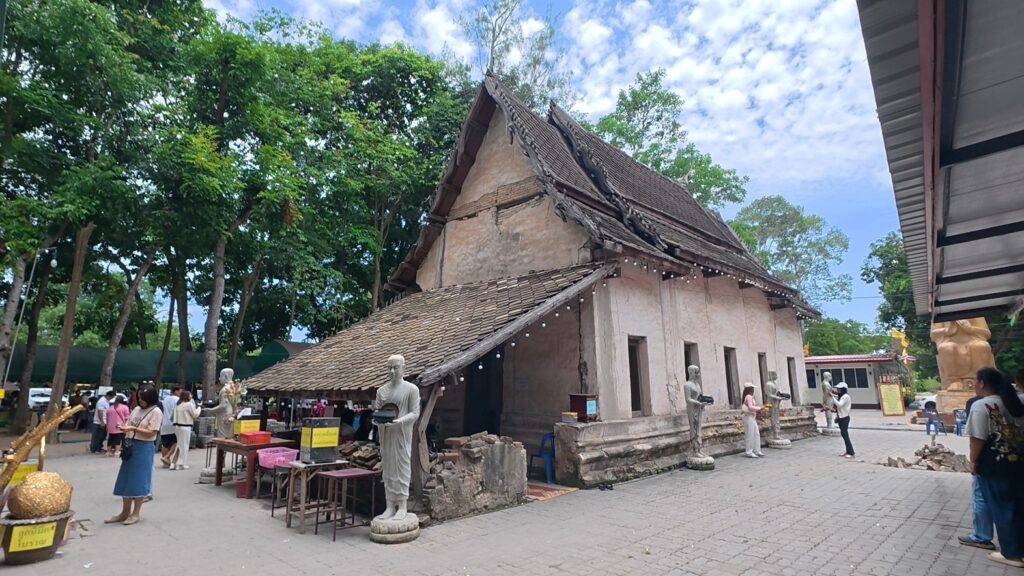
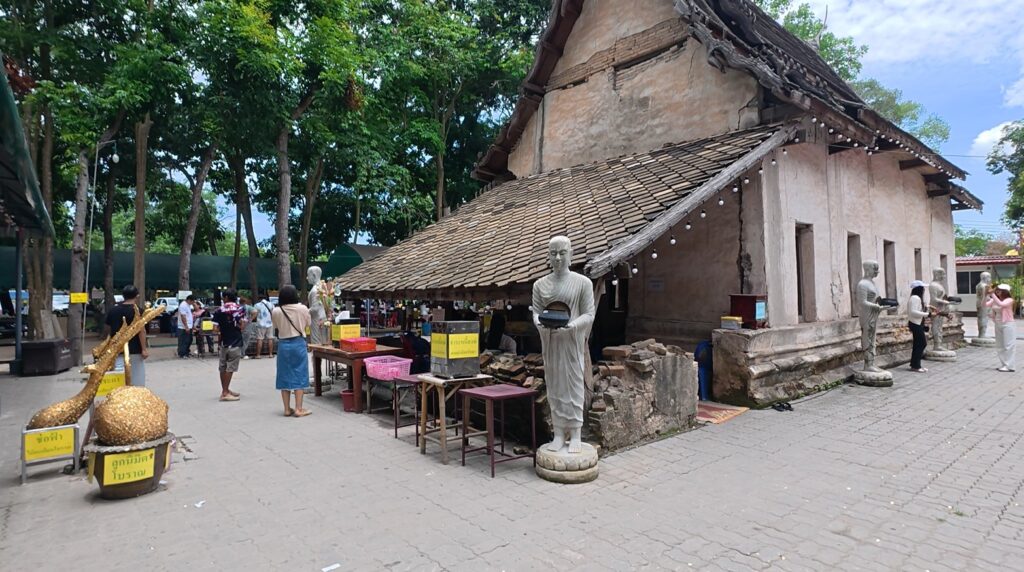
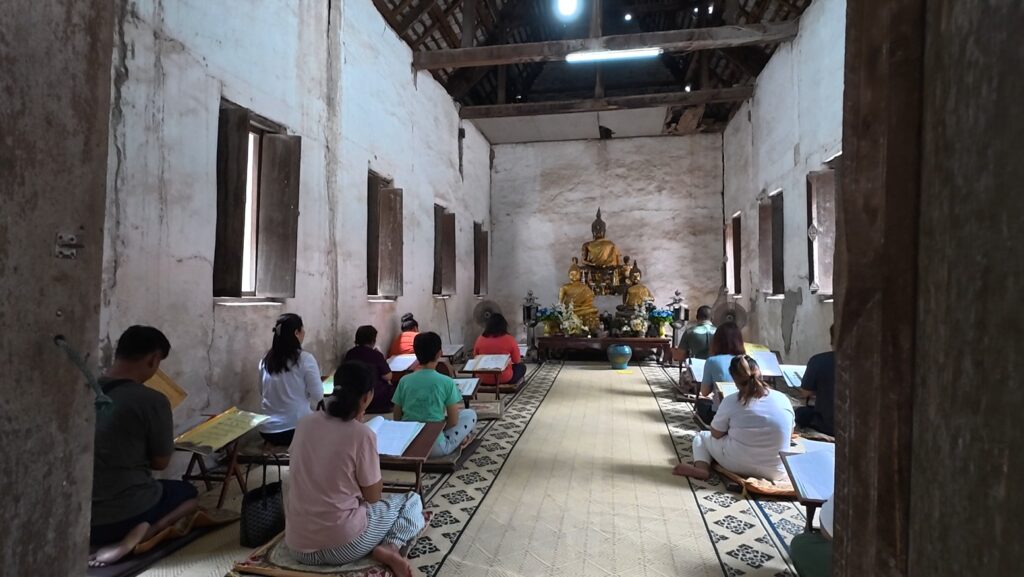
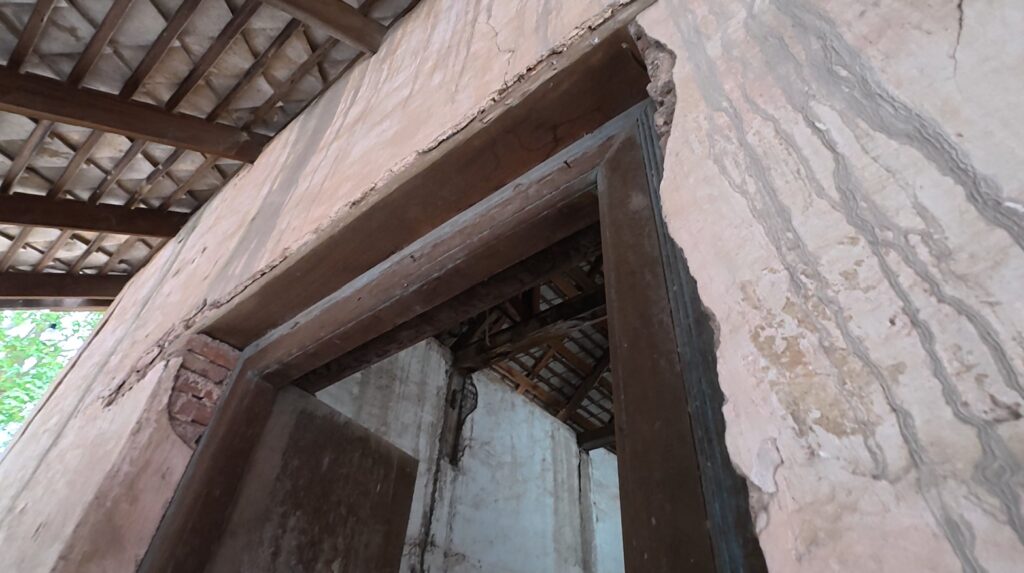
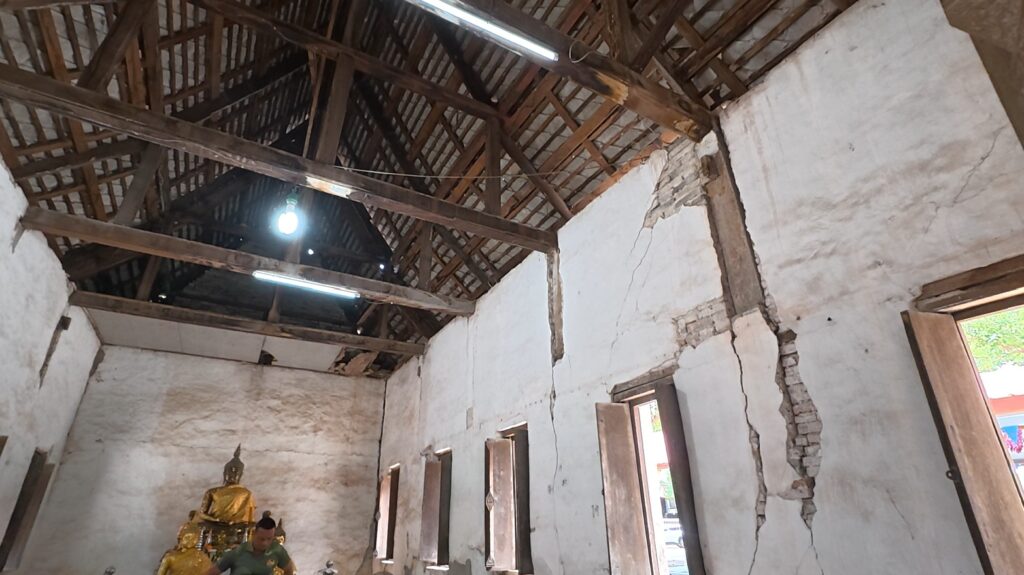
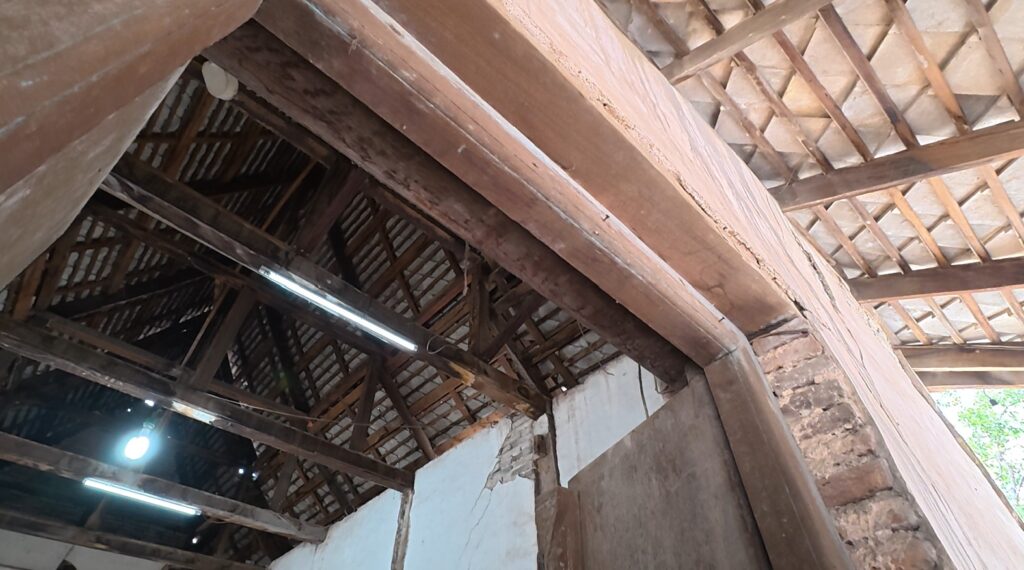
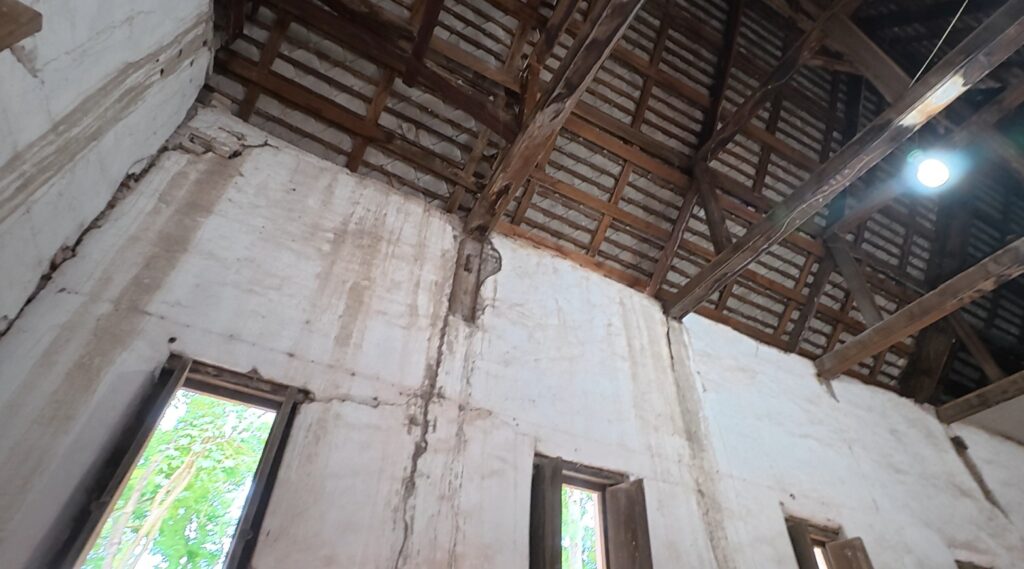
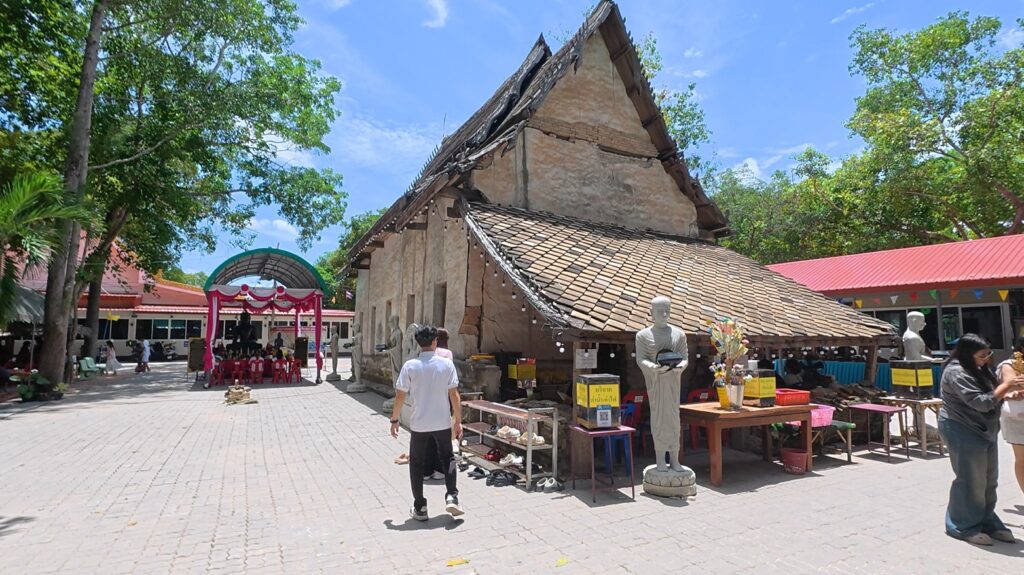
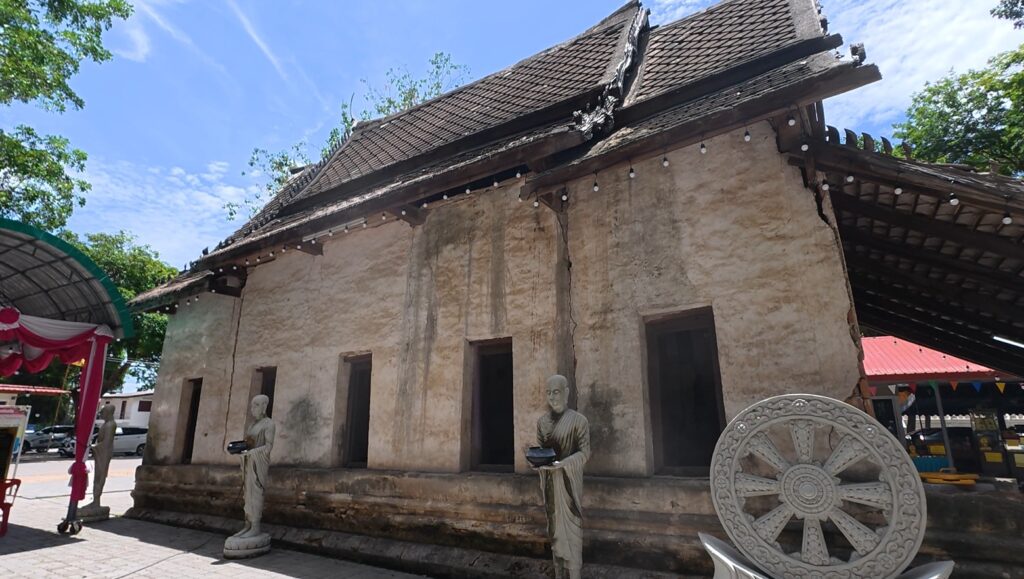
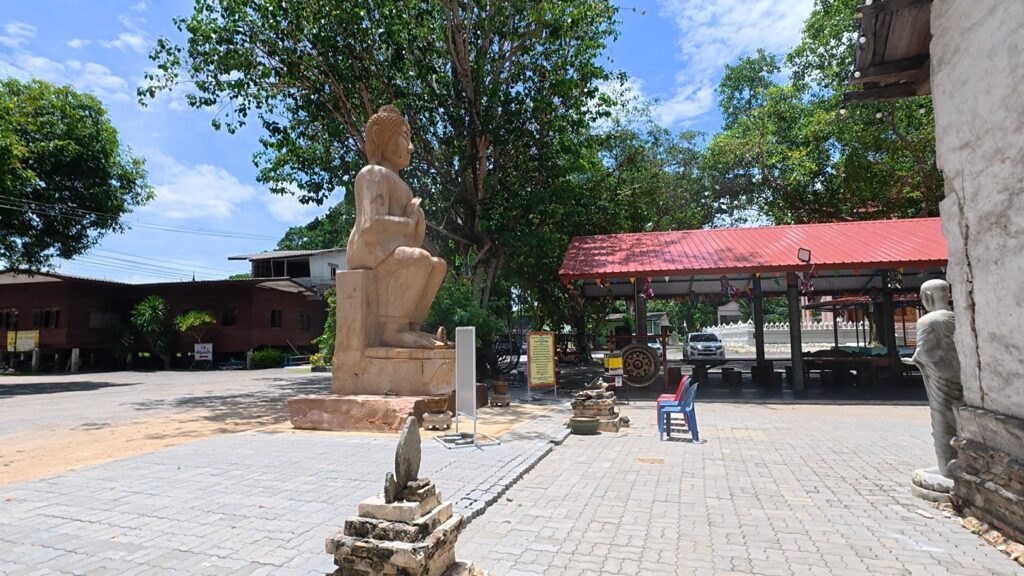
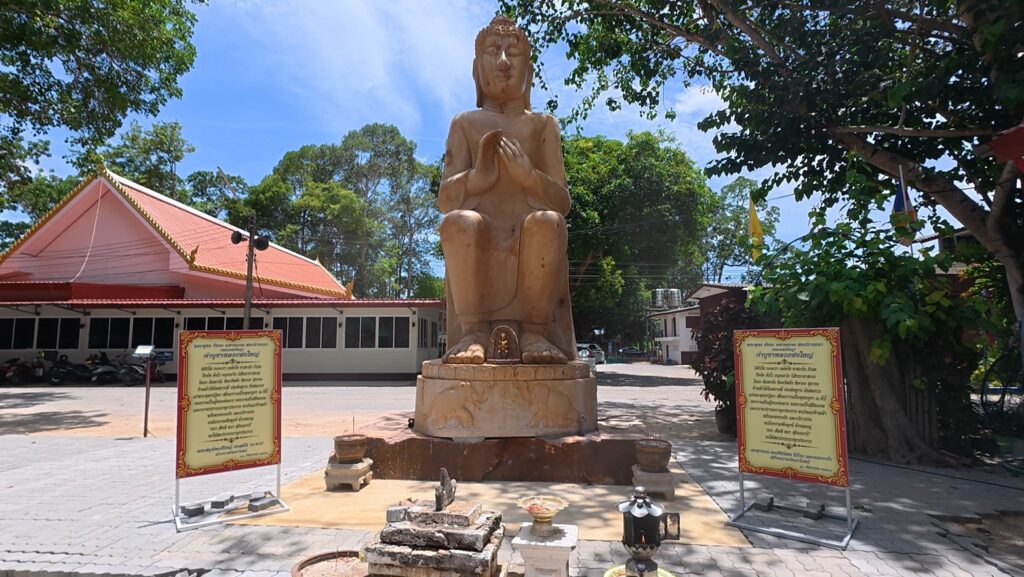
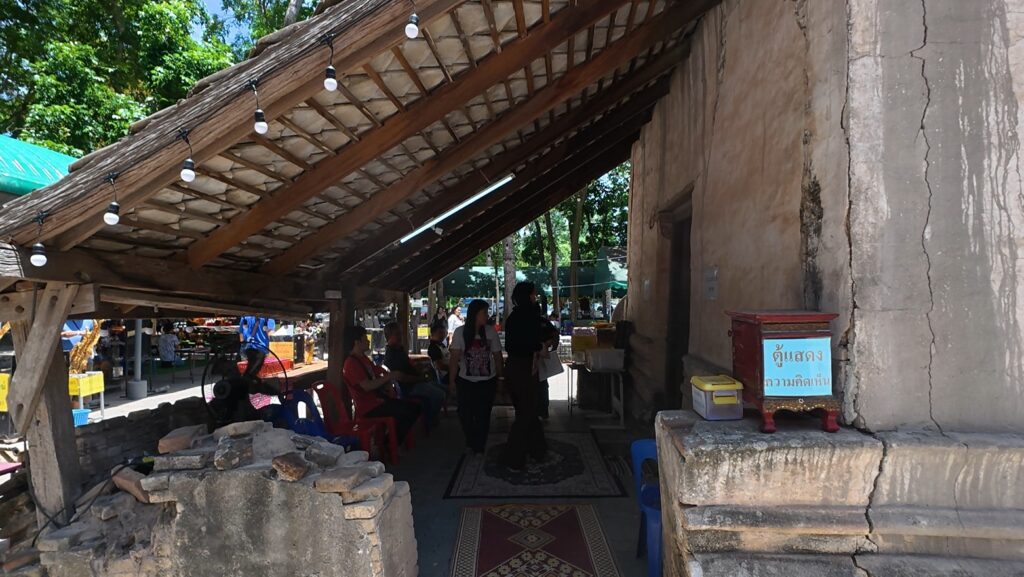
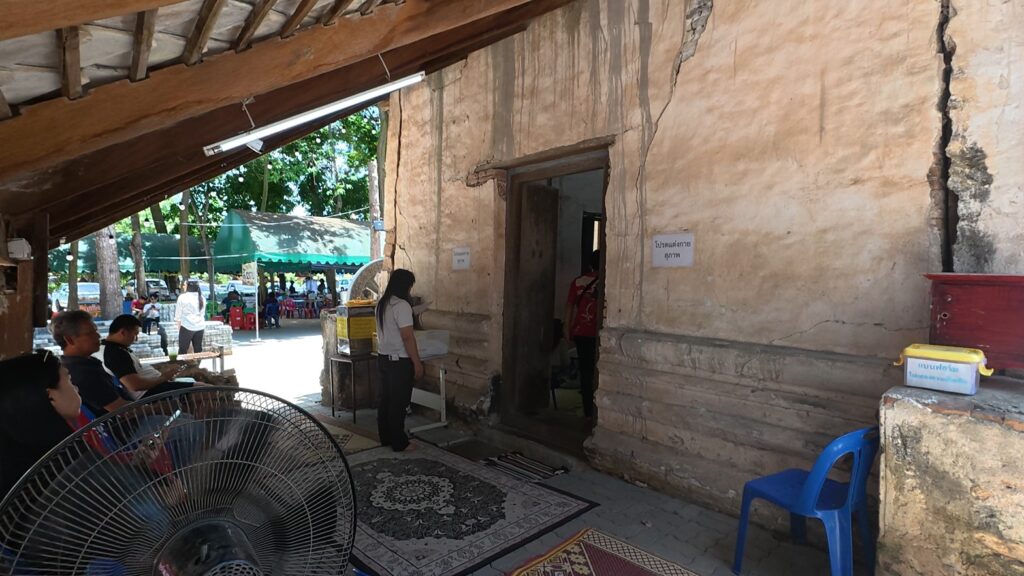
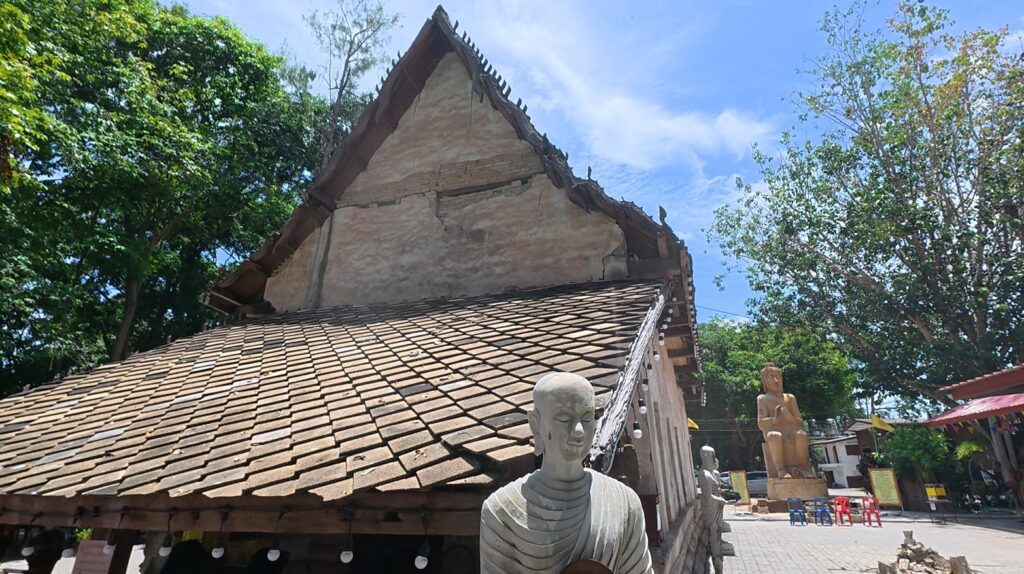
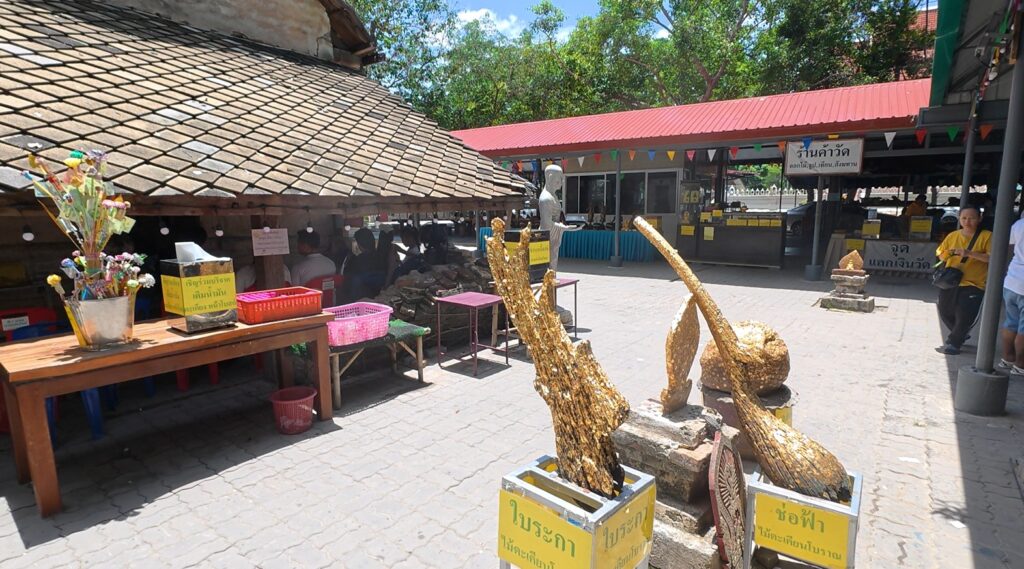

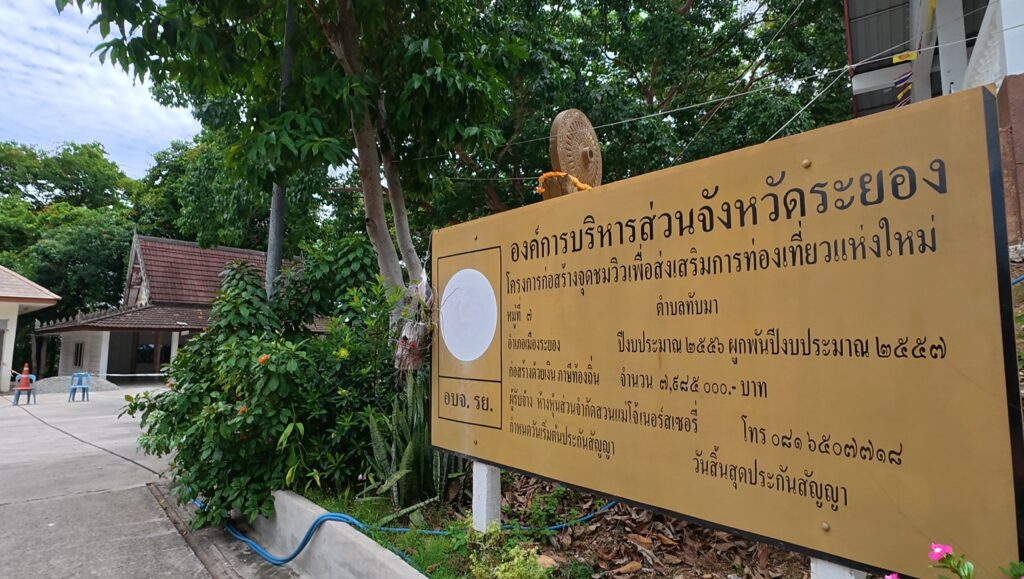
From the weathered old ubosot to the hillside meditation center, these images reveal two contrasting sides of Wat Khao Bot in Rayong.