A School Day Among Ancient Stones
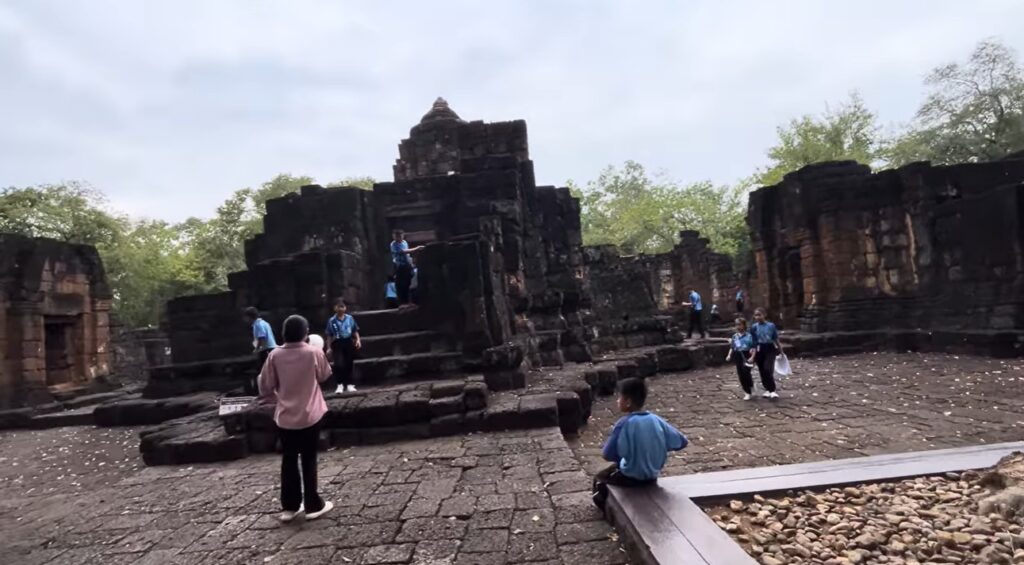
When I arrived at Mueang Sing Historical Park, the ancient city was unusually lively. A group of local students had come on a school excursion, walking through the stone gateways and narrow passages while listening to their teachers.
I quietly joined their path and explored the ruins alongside them. Their voices and footsteps filled spaces that had once been used for worship and ceremony centuries ago. Instead of feeling like a silent archaeological site, Mueang Sing seemed alive again.
Watching the students examine the old walls reminded me that historical parks are not only places where the past is preserved. They are also classrooms where a new generation can meet history with their own eyes.

An Ancient Khmer City beside the River Kwai Noi
Mueang Sing was not simply a temple standing alone in the forest. It was once a fortified ancient settlement built beside the River Kwai Noi, an important natural route through western Thailand.
The surviving sanctuary reflects the influence of the Khmer Empire during the reign of King Jayavarman VII, around the late 12th to early 13th century. Its architecture and religious sculptures show the strong presence of Mahayana Buddhism, which spread widely during his reign.
Although Mueang Sing lies far to the west of Angkor, the stone buildings, city walls, and sacred images reveal that Khmer cultural influence once reached deep into this region. The site therefore provides important evidence of the political, religious, and cultural connections that crossed the borders of present-day Thailand and Cambodia.
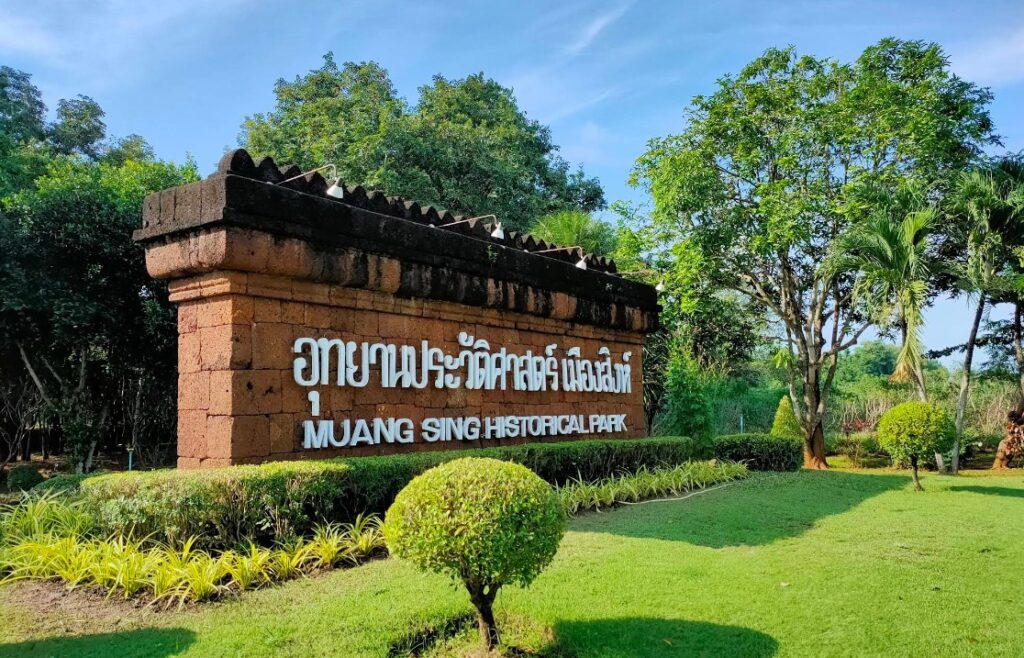
Walking Through the Ancient Sanctuary
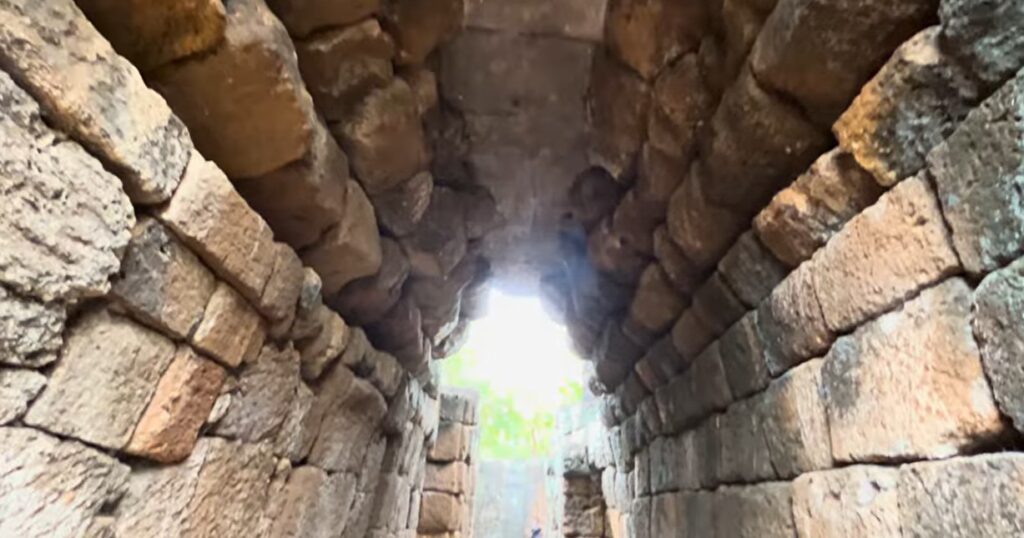
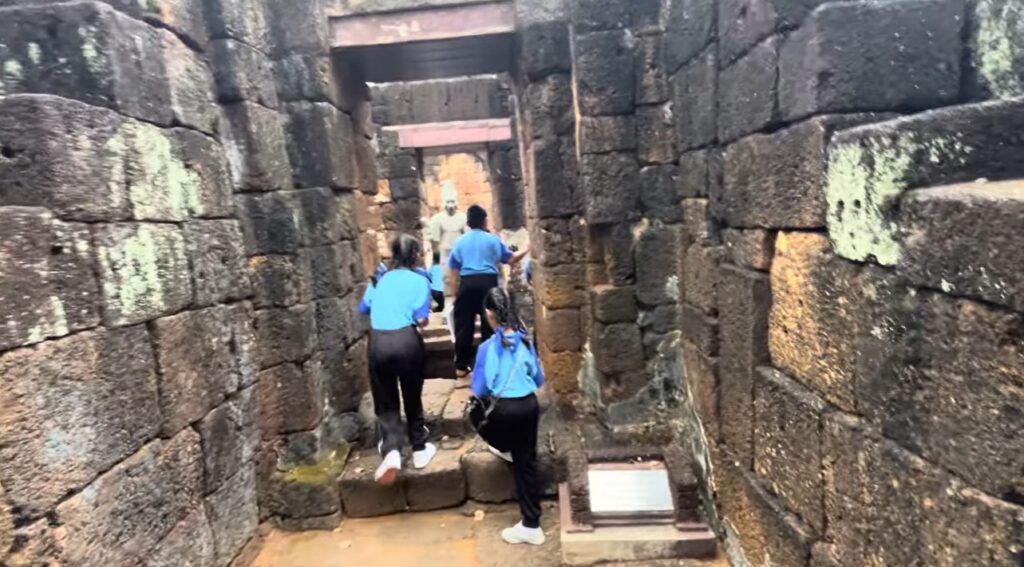
The students moved slowly through the narrow stone entrances, passing beneath heavy lintels and between weathered walls. I followed behind them, observing the same details they had come to study.
From the outside, the sanctuary appears compact and solid. Inside, however, a sequence of doorways, chambers, and small courtyards creates a deeper and more complex space. Each passage seems to lead gradually from the ordinary world toward the sacred center.
Many stones have been damaged or displaced over the centuries, yet the original layout can still be understood. Standing inside these confined passages made the monument feel less like a distant ruin and more like a place once filled with ritual, movement, and human presence.
Mahayana Buddhism at Mueang Sing
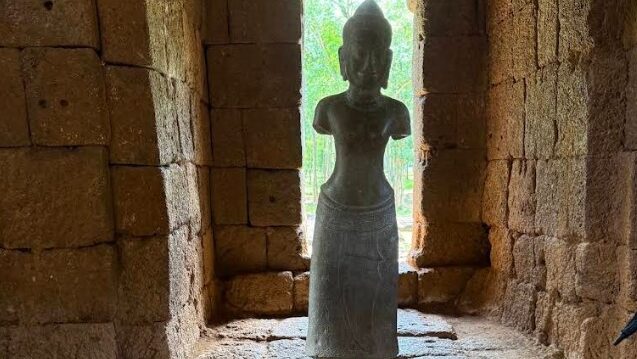
Mueang Sing was more than a defensive settlement or regional center. Its surviving sculptures show that it also served as an important Mahayana Buddhist sanctuary.
Images connected with Avalokiteshvara, the Bodhisattva of Compassion, and Prajnaparamita, the personification of perfect wisdom, reflect the religious world promoted during the reign of King Jayavarman VII.
These sacred figures were not simply decorative objects. They represented compassion, wisdom, protection, and the spiritual authority of the kingdom. Their presence at Mueang Sing shows how religious ideas from the Khmer Empire traveled far beyond Angkor and became part of life in the River Kwai Noi region.
Although many original sculptures are now preserved separately or displayed as replicas, their expressions and surviving details still help visitors imagine the sacred atmosphere that once filled this sanctuary.
The Sacred Center of the Ancient City
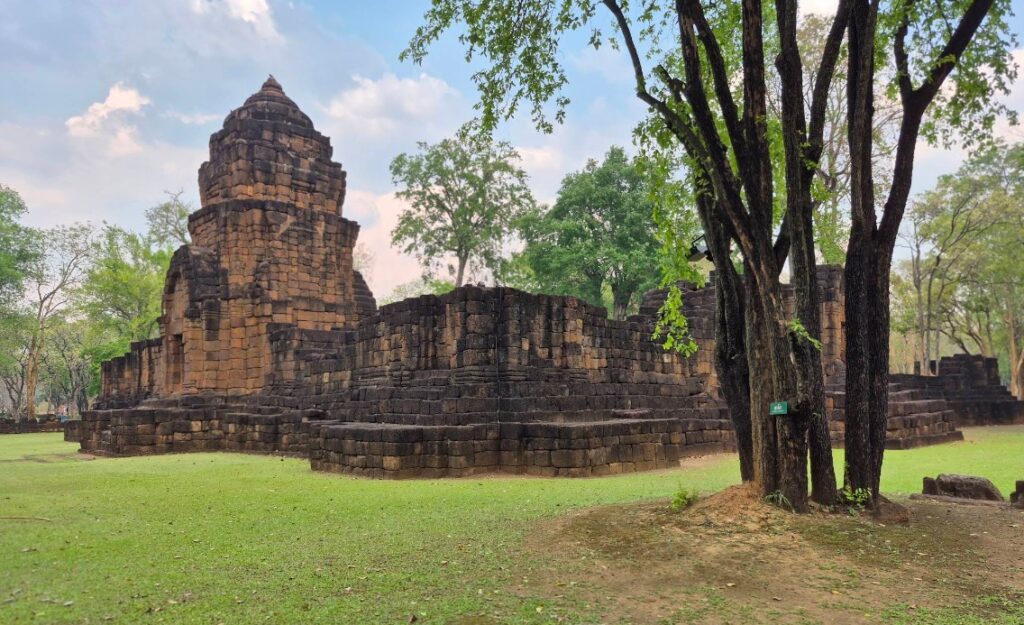
At the heart of Mueang Sing stands the main sanctuary, enclosed by laterite walls and approached through a series of stone gateways. Its compact design creates a strong sense of separation between the outside world and the sacred space within.
The monument was built mainly from laterite, with sandstone used for doorframes, lintels, and important architectural details. Although many upper sections have collapsed, the remaining walls still reveal the careful planning of the original builders.
From different angles, the sanctuary appears to change. Narrow passages open suddenly into courtyards, while doorways align toward the central shrine. This arrangement guided worshippers step by step toward the most sacred part of the complex.
Standing there with the students, I could see them looking upward at the stone structure and trying to imagine how the sanctuary might have appeared when it was complete.
When History Becomes a Living Classroom
The most memorable part of my visit was not only the ancient architecture, but the students moving through it with curiosity.
They gathered around the stone structures, listened to explanations, and looked closely at the carvings and broken walls. For them, history was no longer something printed in a textbook. It stood directly in front of them.
Their presence changed the atmosphere of the park. The ruins were still quiet and dignified, but the voices of the students brought energy back into the ancient city.
Watching them, I felt that preserving a historical site is not only about protecting old stones. It is also about giving the next generation a chance to understand where they came from.
Exploring Mueang Sing with the Students
During this visit, I walked through Mueang Sing Historical Park alongside a group of students on a school excursion.
The video follows us through the stone gateways, narrow passages, central sanctuary, and exhibition areas. Their cheerful voices create a striking contrast with the silent ruins, making the ancient city feel alive once again.
Walking through the ancient Khmer city with students who came to experience history beyond the classroom.
Artifacts That Reveal the Lost City
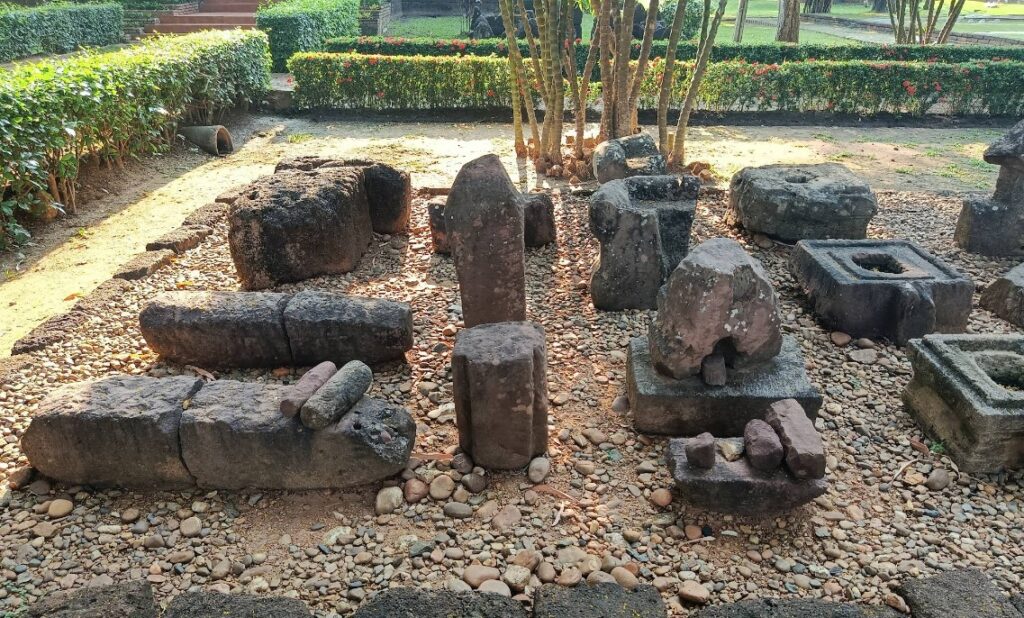
Beyond the surviving architecture, the artifacts discovered at Mueang Sing help explain the religious and cultural life of the ancient settlement.
Stone sculptures, architectural fragments, and decorative pieces reveal the artistic influence of the Khmer world. Even when an object is incomplete, its facial expression, posture, or carved ornament can still communicate the beliefs of the people who once lived here.
The exhibition area also helps visitors understand how archaeologists studied and restored the site. By connecting the objects with the remaining buildings, it becomes easier to imagine Mueang Sing not as an isolated ruin, but as a functioning city with sacred spaces, communities, and regional connections.
Young Voices Among Ancient Stones
As I prepared to leave Mueang Sing, the students were still moving between the ruins, talking with friends and listening to their teachers.
The ancient stones had survived for centuries, but on this day, they were not silent. They were surrounded by questions, laughter, footsteps, and the curiosity of a younger generation.
Mueang Sing Historical Park reminded me that history does not remain alive by preservation alone. It continues when people visit, learn, and carry its story forward.
I arrived expecting to explore an ancient Khmer city. Instead, I also witnessed a new generation meeting the past—and that became the most meaningful memory of the day.
Visitor Information
Mueang Sing Historical Park is located in Sai Yok District, Kanchanaburi Province, beside the River Kwai Noi.
The park includes the main sanctuary, ancient city walls, archaeological remains, exhibition areas, and shaded walking paths. Allow at least one to two hours to explore the site slowly.
The stone surfaces can become hot during the afternoon, so morning hours are usually more comfortable. A hat, drinking water, and comfortable walking shoes are recommended.
Location
View Mueang Sing Historical Park on Google Maps
Gallery – Learning History at Mueang Sing
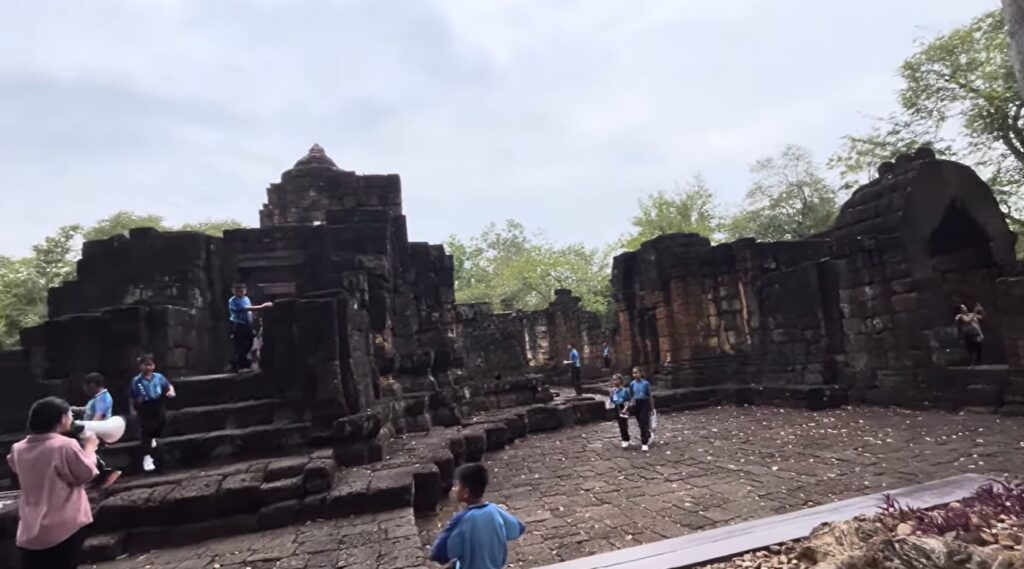
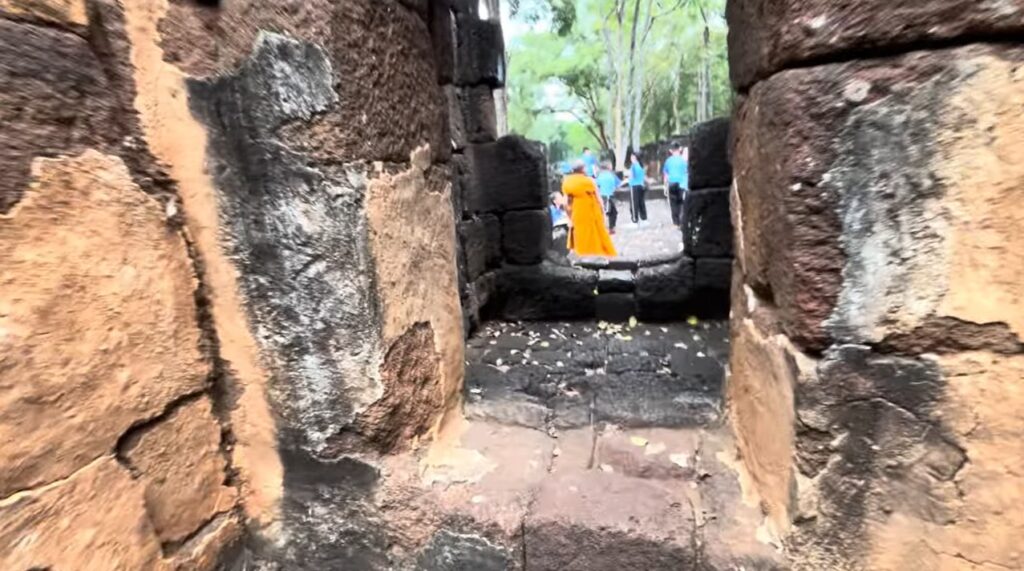
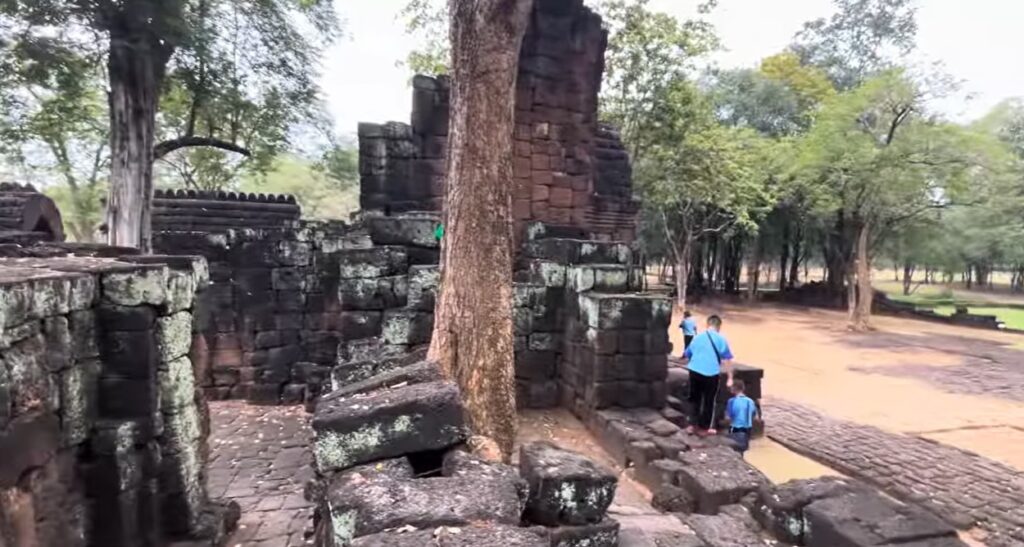
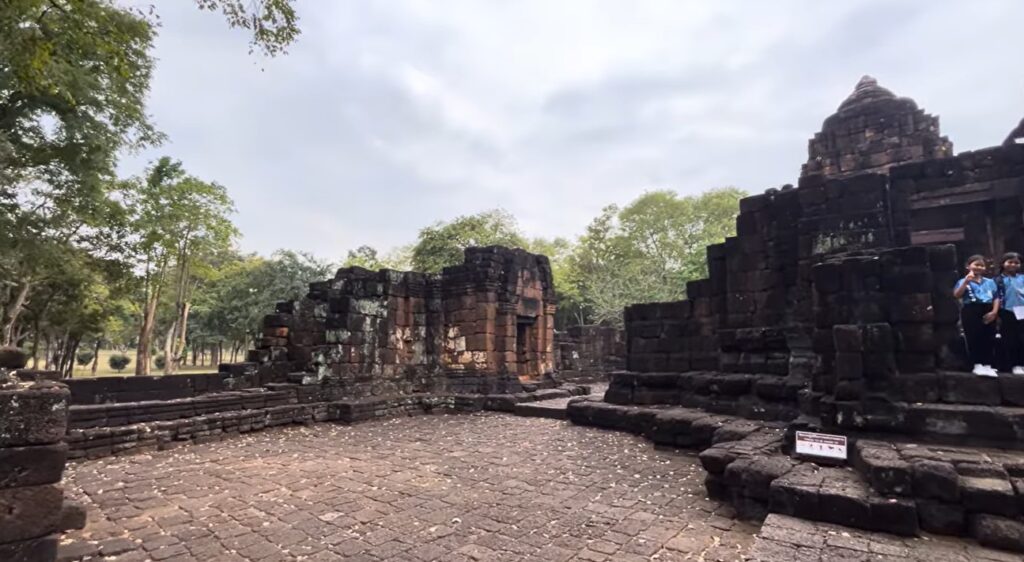
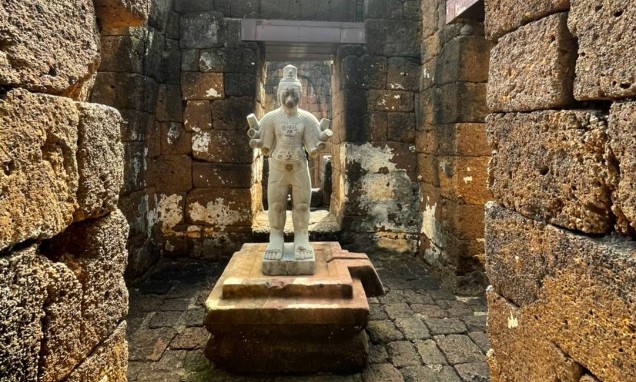
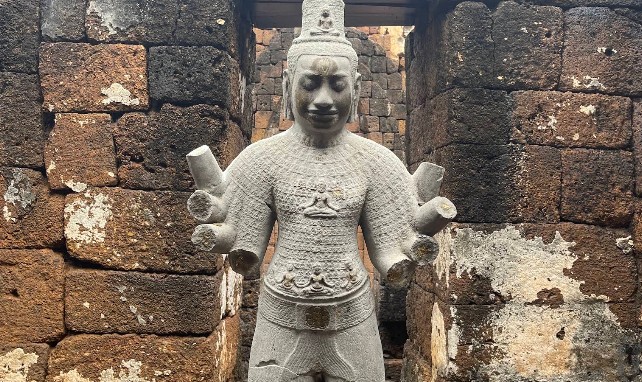
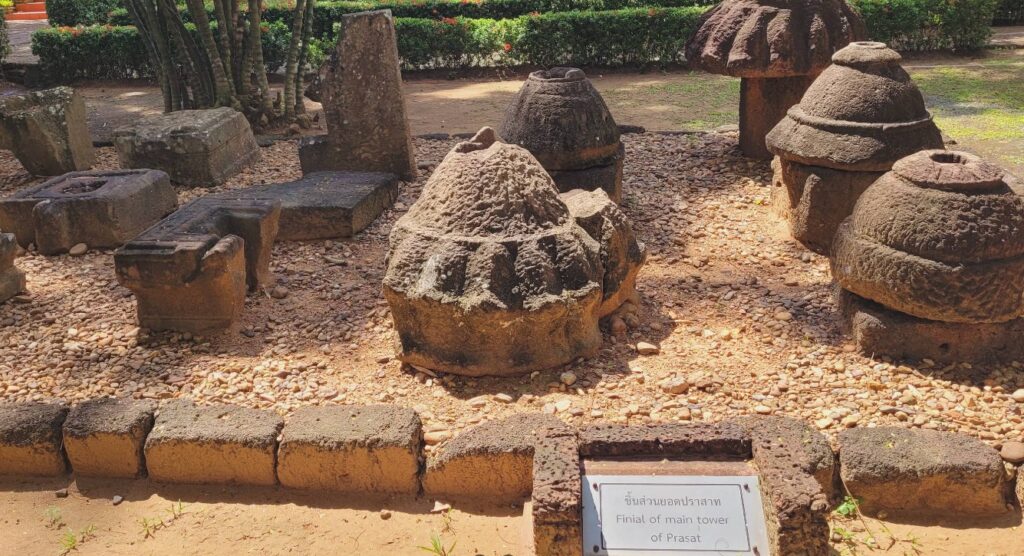
Students explore the gateways, sanctuaries, sculptures, and archaeological remains of Mueang Sing Historical Park.
Continue Exploring Kanchanaburi
Mueang Sing was one part of my journey through Kanchanaburi, a province where rivers, wartime memories, ancient ruins, and quiet riding roads come together.
Continue the journey with my visit to the River Kwai Bridge, another place where the landscape carries a powerful history.
Crossing the River Kwai Bridge – A Ride Through History
Explore more historical journeys and archaeological sites across Thailand in the Won Cub Life History collection.
Return to the History Directory
Historical Reference
For more information about the history, archaeological discoveries, and restoration of Mueang Sing, visit the official Fine Arts Department historical park resource.