Arriving at the River Kwai Bridge
After a long motorcycle journey across Thailand, I finally arrived at the famous River Kwai Bridge in Kanchanaburi.
Standing on this old bridge, I felt that this was more than just a tourist attraction. It is a place that carries the memories of those who suffered and lost their lives during World War II.
The bridge may look small and weathered today, but the quiet river below seems to remember everything that happened here.
As I slowly crossed the bridge, I paused to remember the victims and quietly wished peace for their souls.
The Real Story Behind the River Kwai Bridge
During the Second World War, this peaceful stretch of river became part of one of the most brutal engineering projects in Southeast Asia. The Japanese military needed a land supply route linking Thailand with Burma, and in 1942 construction began on what became known as the Burma–Thailand Railway — later remembered as the Death Railway.
Tens of thousands of Allied prisoners of war and a far larger number of Asian laborers were forced to work along the route under extreme conditions. Disease, malnutrition, exhaustion, violence, and inadequate medical care killed thousands. Around 13,000 Allied prisoners died during the construction and maintenance of the railway, while the losses among Asian civilian laborers were even greater.
At Tamarkan near Kanchanaburi, prisoners were forced to construct bridges across what was then called the Mae Klong River. A wooden bridge was completed first, followed by the steel bridge in 1943. The eleven-span steel structure incorporated sections brought by the Japanese from Java and assembled using prisoner-of-war labor.
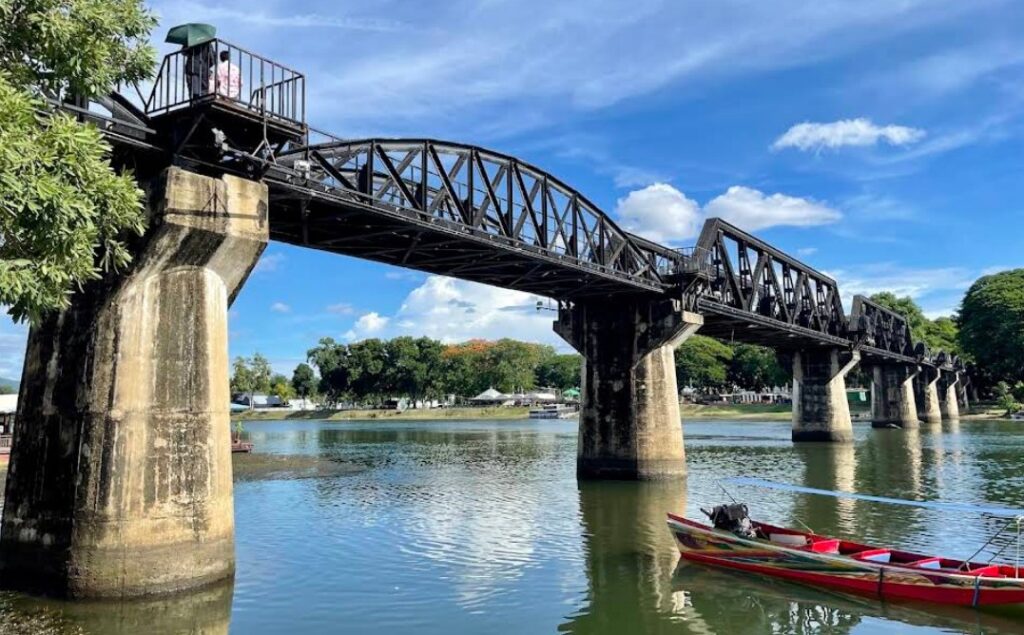
The bridge later became a target for Allied aircraft. Bombing raids in 1944 and 1945 damaged the bridge and nearby prisoner camps, and several spans were destroyed before the war ended.
Standing there today, with tourists walking across the rails and boats moving quietly beneath the bridge, it is difficult to imagine what this place once represented. The calm river hides a history of forced labor, suffering, survival, and death.
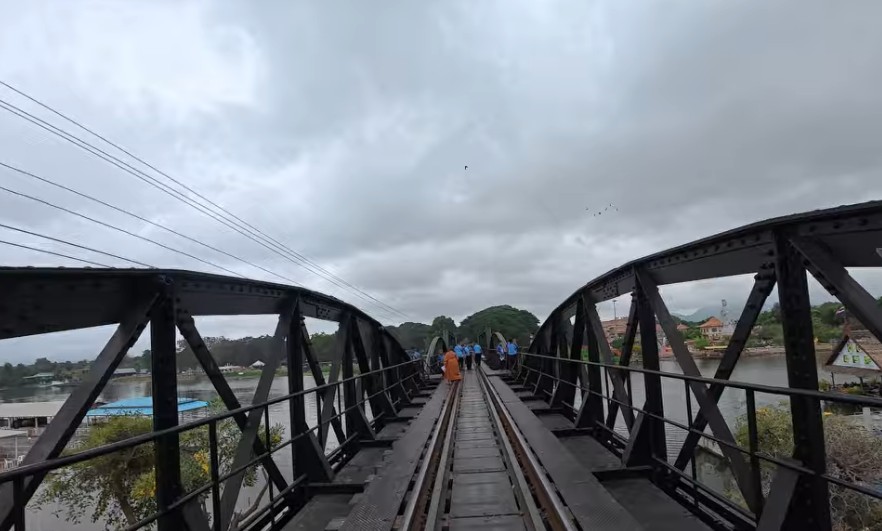
Walking across the bridge, remembering those who never returned.
The Bridge on the River Kwai — The Film and the Reality
For many people around the world, Kanchanaburi first became familiar through David Lean’s 1957 film The Bridge on the River Kwai. The film follows British prisoners of war forced by the Japanese to build a railway bridge and centers on the conflict between Colonel Nicholson, the Japanese camp commander, and an Allied attempt to destroy the bridge.
The movie became one of the most famous war films ever made, but it should not be treated as a literal account of what happened in Kanchanaburi. The characters and central drama were fictionalized, and the real prisoners who built the Burma–Thailand Railway endured conditions far harsher than the film could fully portray.
Even the river name adds another layer to the story. During the war, the bridge crossed the Mae Klong River. The section beside the bridge was renamed the Kwai Yai only years later, in 1960, partly because the film had made the name “River Kwai” famous internationally.
Yet the film had an enormous influence on how the world remembers Kanchanaburi. It transformed an obscure wartime railway bridge into an international symbol of the Burma Railway, even while blending history with fiction.
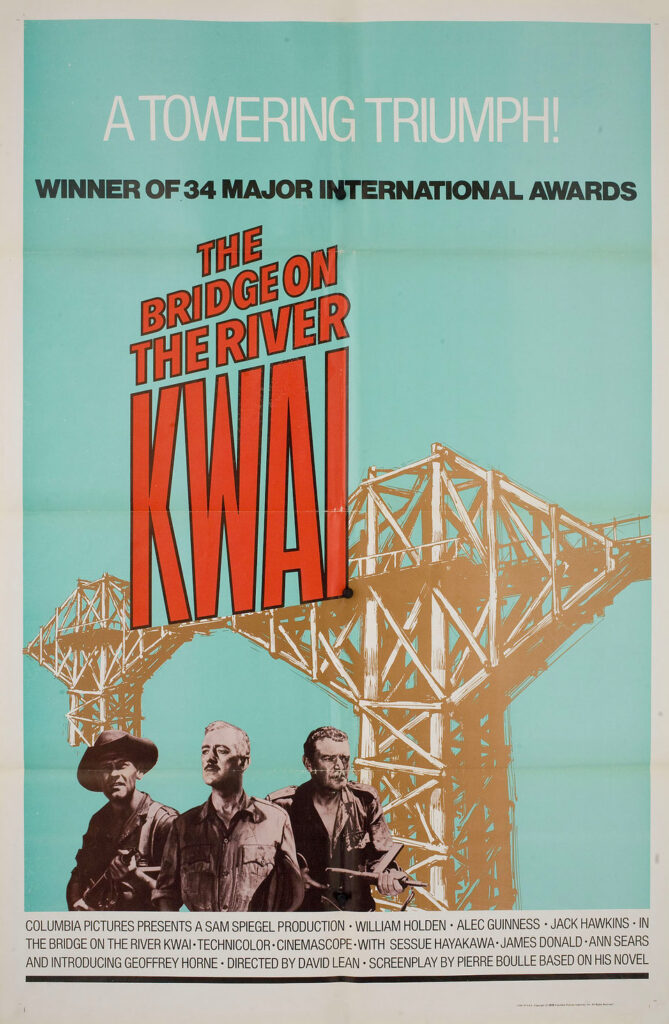
-Film poster used for commentary and historical context.
The Railway Man — A Survivor’s Story
Another film offers a much more personal connection to the Death Railway. The Railway Man, starring Colin Firth and Nicole Kidman, is based on the true story of British Army officer Eric Lomax, who was captured during the war and forced to work on the Burma Railway.
Unlike the grand wartime drama of The Bridge on the River Kwai, this story focuses on trauma, memory, and the long psychological aftermath of captivity. Lomax survived the railway and later confronted one of the men connected with his wartime suffering, eventually forming an extraordinary relationship with him.
For me, knowing these stories changes the experience of standing on the bridge. The steel rails are no longer only a famous tourist landmark or a movie location. They become a physical connection to real people whose lives were permanently changed by the war.
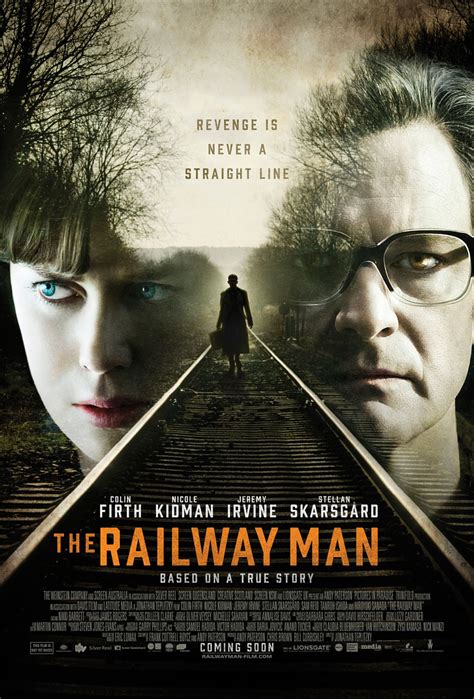
Film poster used for commentary and historical context.
Riding to a Place of Memory
My journey to the River Kwai Bridge was not just a motorcycle trip.
Riding my Honda Cub through the roads of Thailand, I was able to experience the changing landscapes, local villages, and the quiet atmosphere along the way.
After many hours on the road, arriving at this historic bridge felt like reaching a place where the past and present meet.
I slowly crossed the bridge and looked down at the river flowing beneath me.
The water was calm and peaceful, but I imagined the countless stories and sacrifices that this river has witnessed.
For a moment, I was not just a traveler. I was someone paying respect to the memories left behind.
Two Moments, One Memory
A quiet remembrance beside the graves, and another moment on the bridge — two short scenes connected by the same history.
My Reflection at the River Kwai Bridge
Standing on the River Kwai Bridge, I realized that traveling is not only about visiting beautiful places.
Sometimes a journey brings us to places where we can learn, remember, and respect the stories of people from the past.
The sound of the river flowing below the bridge was peaceful, but it also reminded me of the difficult history hidden behind this beautiful scenery.
As a rider exploring Thailand by Honda Cub, I hope to continue discovering places where history, culture, and local life are still alive.
Continue exploring Thailand’s hidden history through my other journeys.
Visitor Information – River Kwai Bridge
River Kwai Bridge is located in Mueang Kanchanaburi District, Kanchanaburi Province, Thailand.
Visitors can walk across the bridge freely and enjoy views of the River Kwai and the surrounding area.
The best time to visit is early morning or late afternoon when the weather is cooler and the atmosphere is peaceful.