Opening
By Won Cub Life / October 19, 2026
Wat Ang Sila caught my attention while I was travelling around Chonburi. Near the coast, I noticed a group of old chedis that seemed remarkably well preserved. The old ubosot stood nearby, and its historic character contrasted with the larger, newer buildings across the temple grounds.
As I walked through the complex, I found a separate shrine dedicated to the Buddha’s footprint, colourful murals, local sacred images, and signs of living devotional practice. Then a sudden downpour kept me under shelter for a while. This visit unfolded slowly, from the old chedis to a quiet prayer in the rain.
A Temple Formed from Two Neighbouring Wats
Wat Ang Sila was formed from two neighbouring temples, Wat Ang Sila Nai and Wat Ang Sila Nok, which were united as Wat Ang Sila in 1916. The former ubosot of Wat Ang Sila Nai became a viharn, while the ubosot of the former Wat Ang Sila Nok continued to serve as the main ordination hall. Archaeological work by Thailand’s Fine Arts Department shows that the historic complex developed over several phases. The temple was registered as a national historic site in 1999, and conservation work on its historic buildings has continued since 2015.
Entering the Temple Grounds
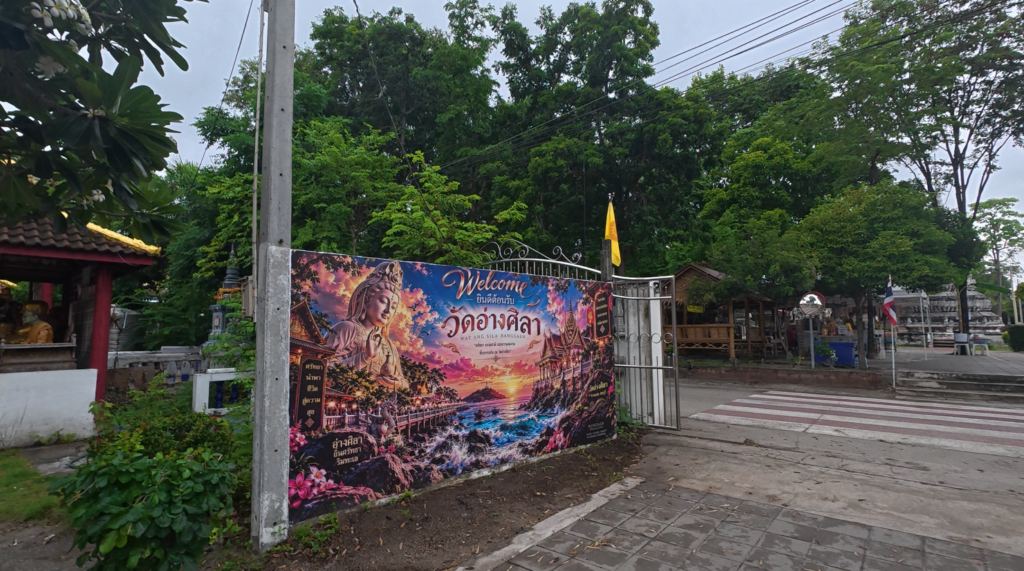
Wat Ang Sila is in a coastal community in Chonburi. The temple complex brings together old and newer spaces, and the change in atmosphere becomes clear as you walk through it. The route begins with the approach to the temple and continues toward the old sanctuary and its chedis.
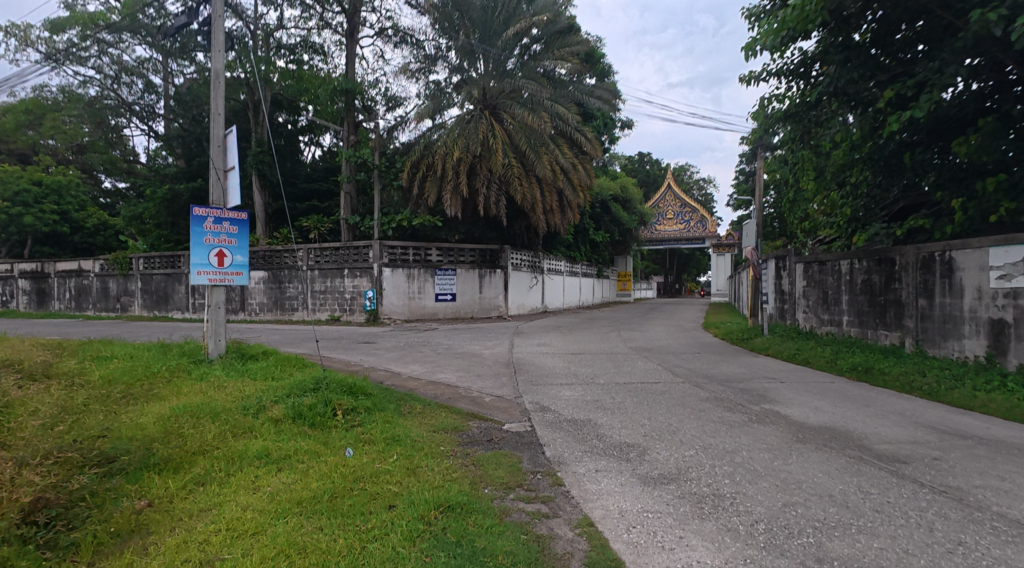
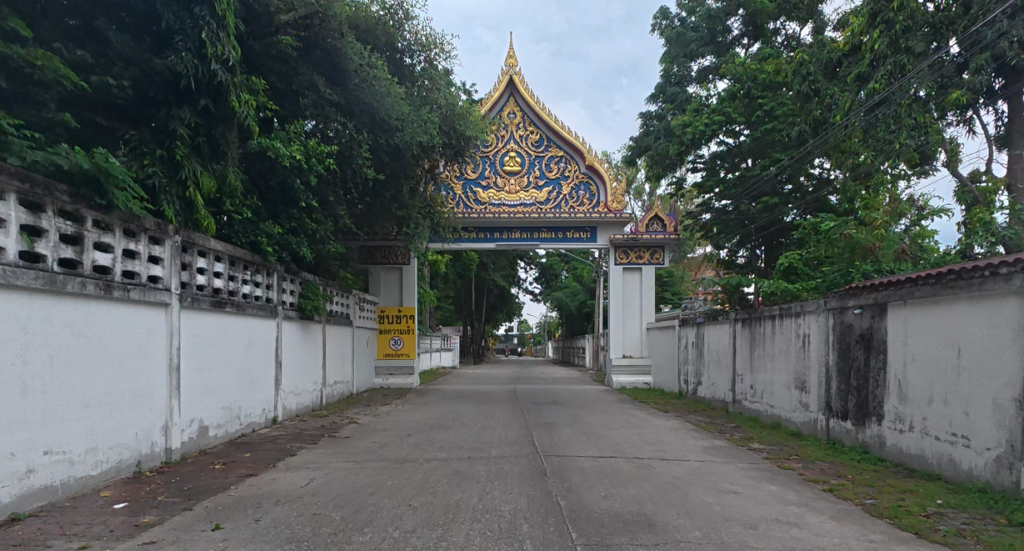
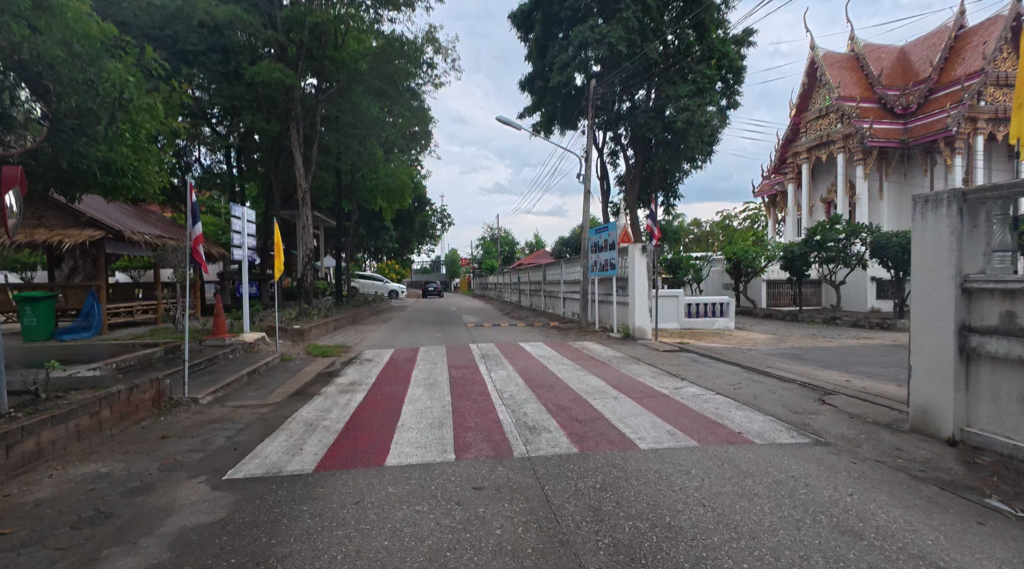
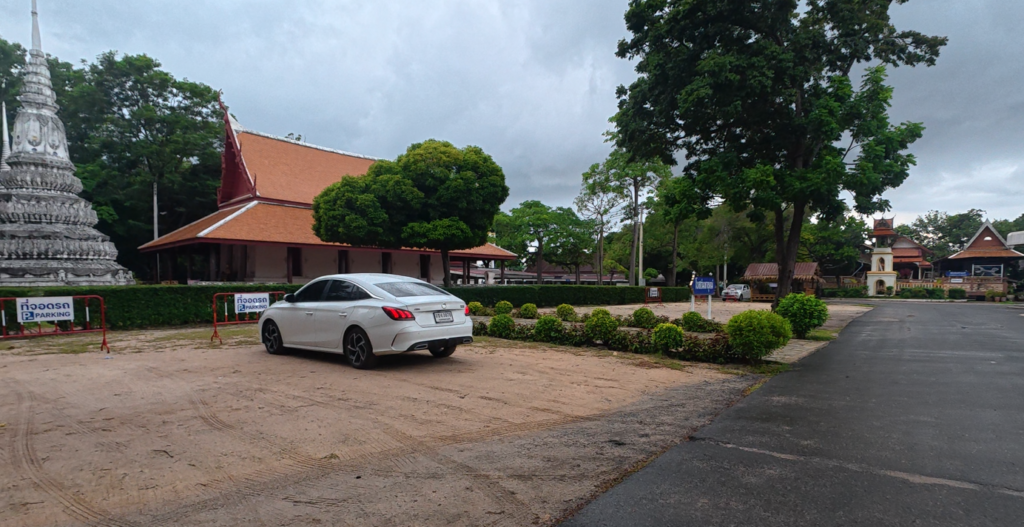
The path into Wat Ang Sila leads from the surrounding neighbourhood toward the temple grounds.
Three Chedis, Three Distinct Forms
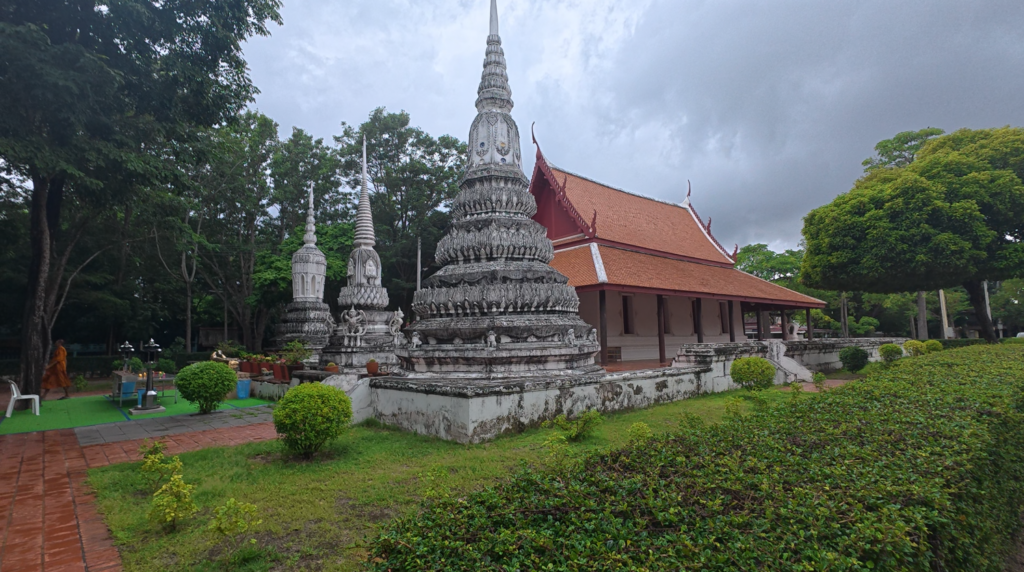
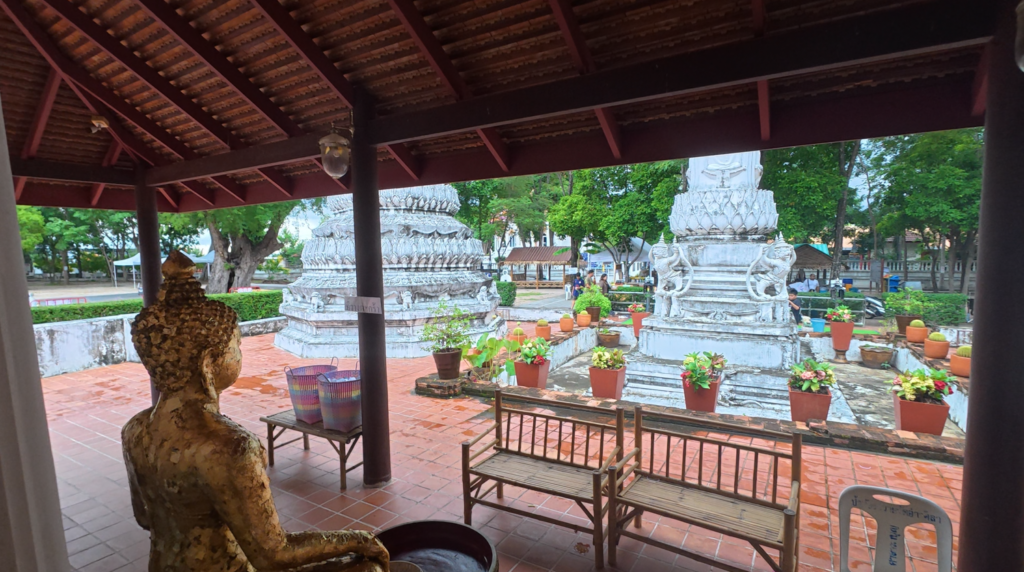
The three chedis in front of the old ubosot do not look like matching copies. Their different shapes and ornaments suggest that the group developed over more than one period.
Local accounts identify the central chedi as the oldest, possibly dating to the late Ayutthaya period. Its square base is decorated with figures described as yaksha and monkeys; Garuda and naga motifs appear higher up. The two flanking chedis have different profiles and decorative features. Local descriptions mention details such as octagonal bases, lion motifs, and ceramic ornament, and suggest that these side chedis may have been added in the early Rattanakosin period. These dates and identifications are best understood as local historical interpretations rather than definitive archaeological conclusions. east.lib.buu.ac.th
Seen together, the chedis are a reminder that a temple’s appearance can take shape over generations. Their variety is part of what makes this group so engaging to look at.
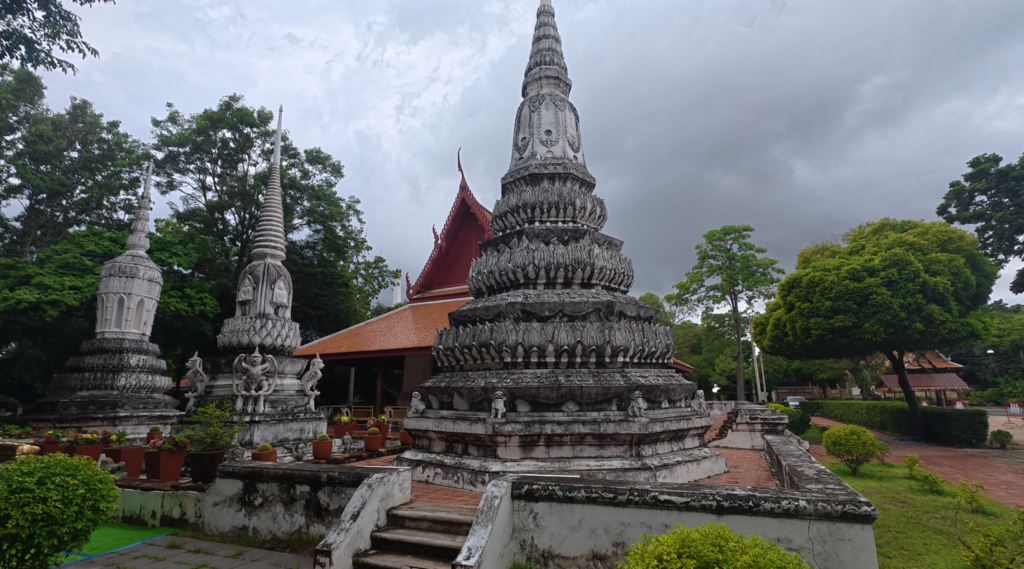
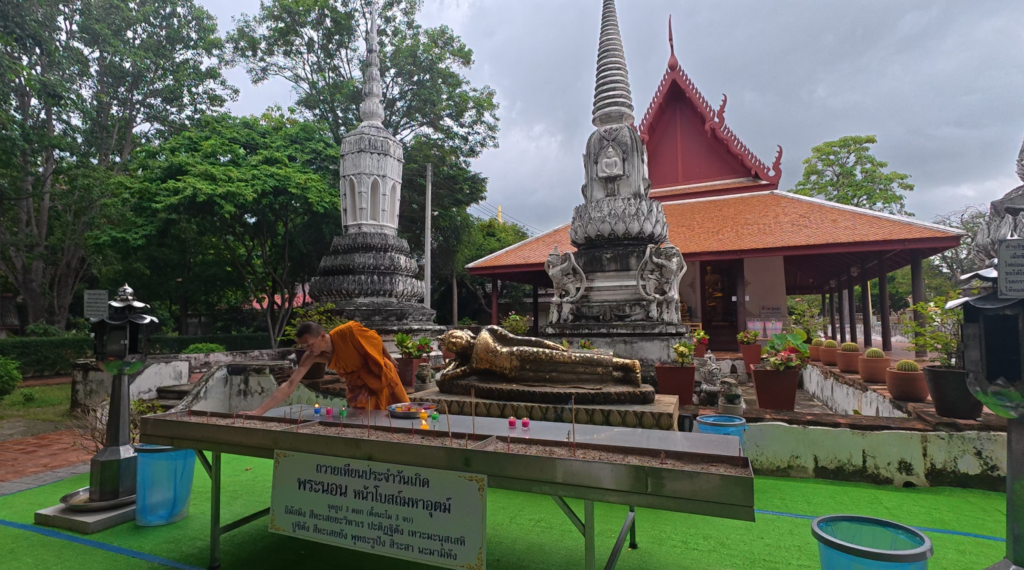
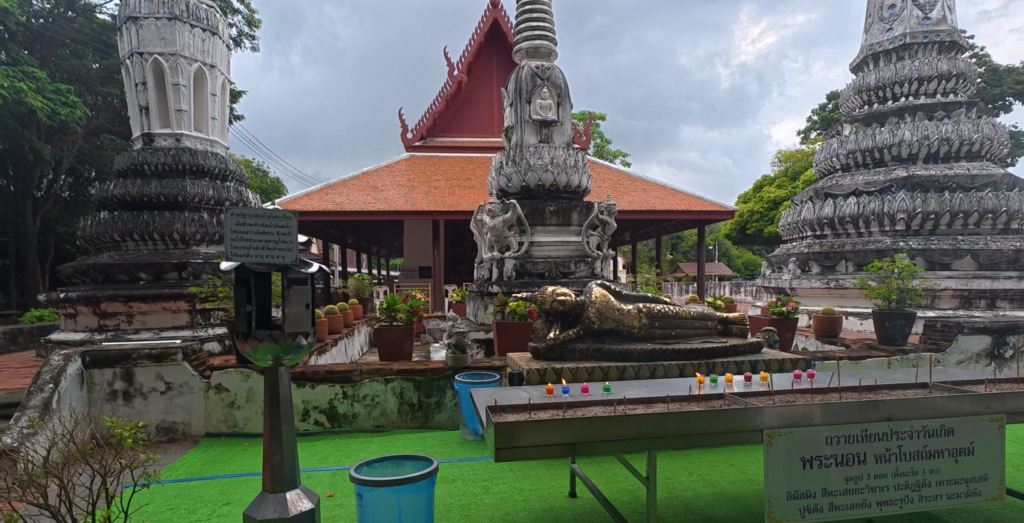
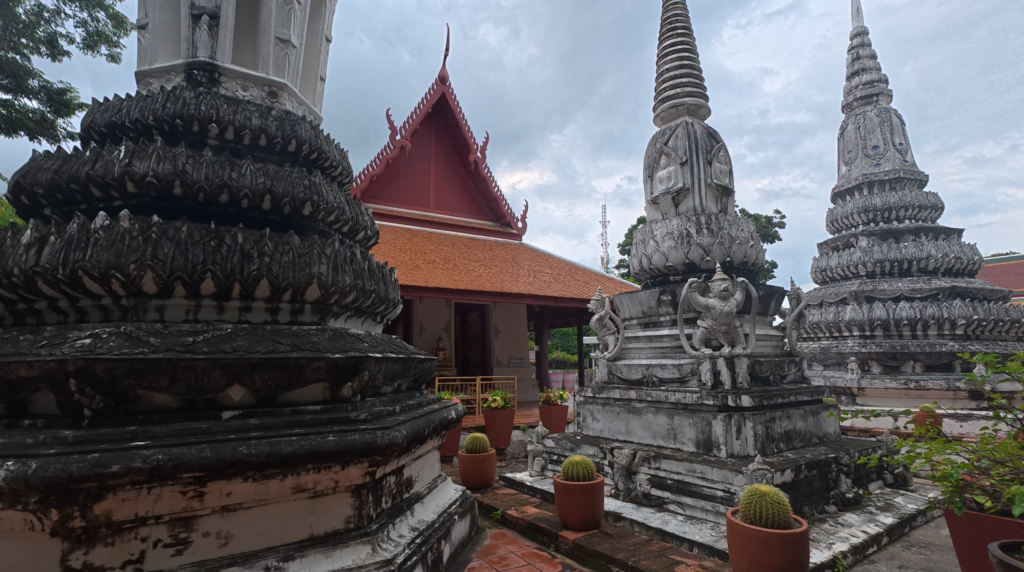
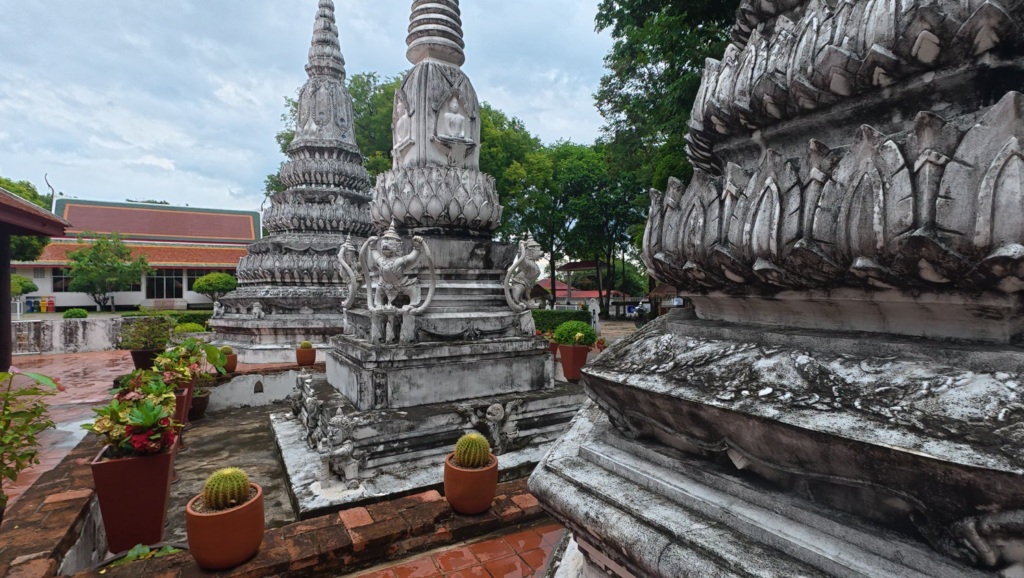
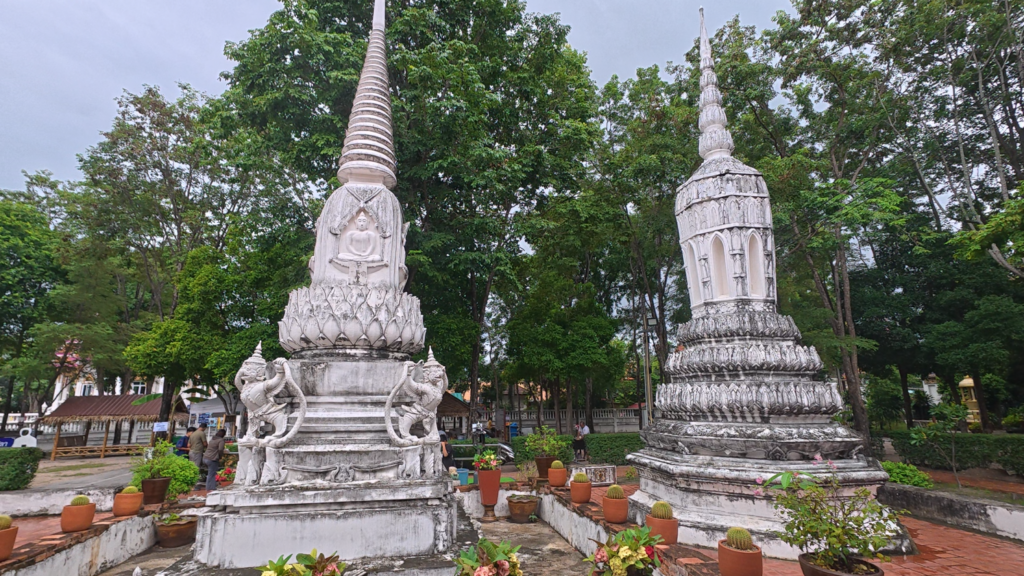
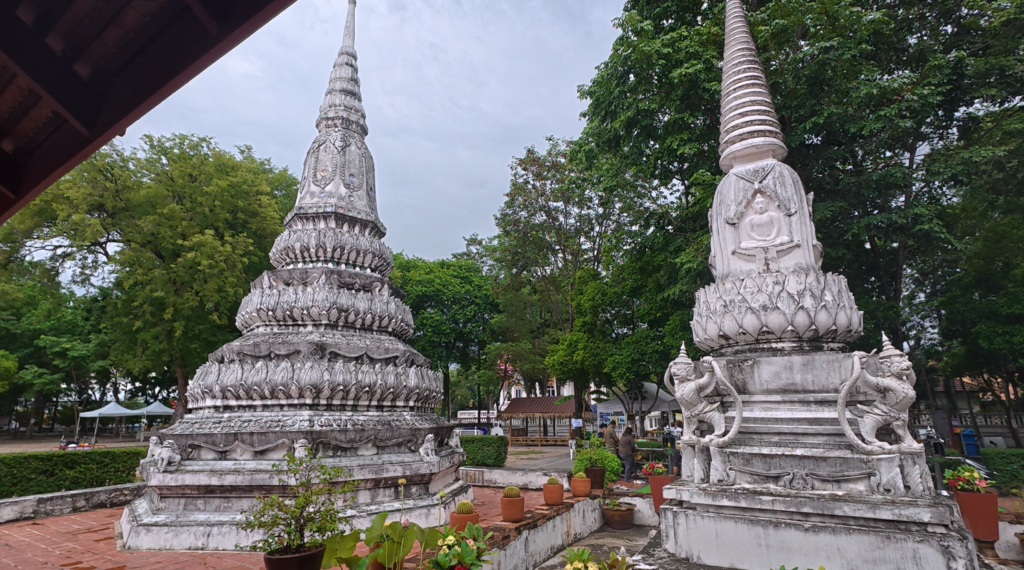
The three chedis differ in their bases, outlines, and decorative details.
Inside the Former Ubosot
The old ubosot has a different scale and feeling from the newer buildings elsewhere in the complex. Inside, Buddha images sit among richly painted walls and columns. The Fine Arts Department describes the old ubosot as part of the historic temple and notes its murals and architectural features. The temple’s two former temple areas were later brought together as one temple. qrcode.finearts.go.th
Among the figures inside are standing images with one or both hands raised. At Wat Ang Sila, these have been identified as Pang Ham Samut, a Buddha image associated with the ocean. Its presence feels especially resonant in a coastal community. The image can be read as an expression of hopes for safety and well-being; the specific idea that it was installed to prevent local disasters should be treated as interpretation, not established historical fact.
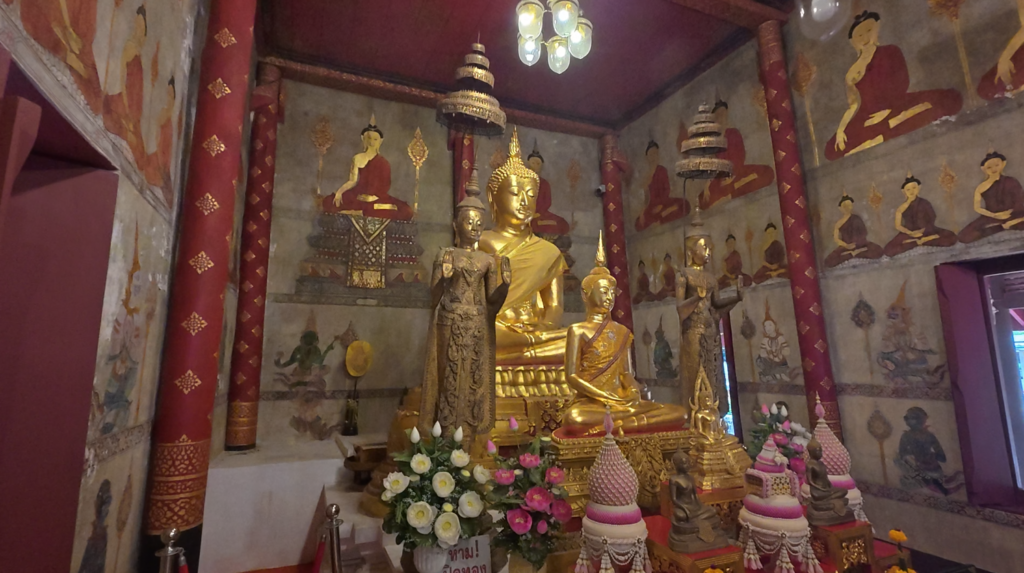
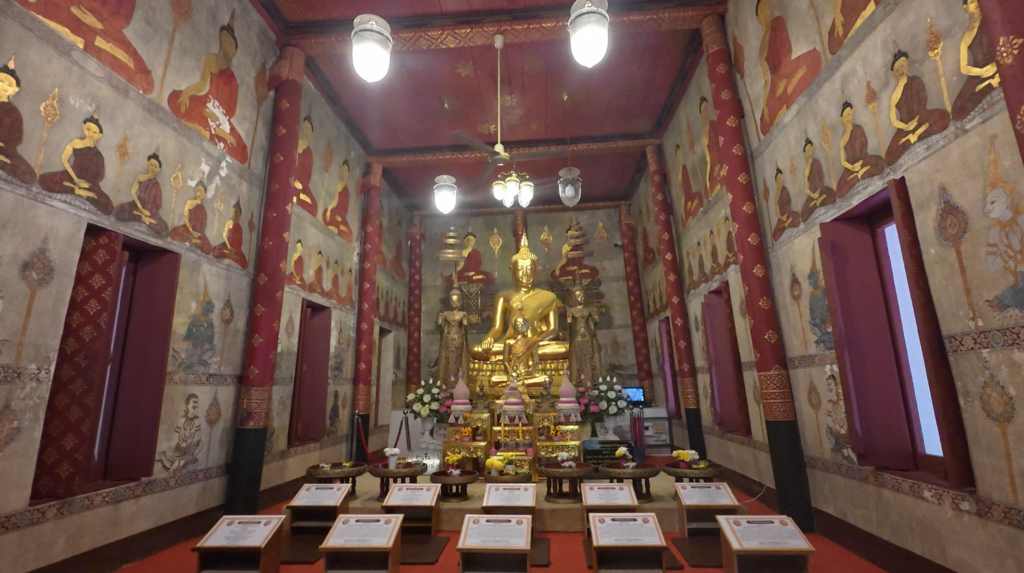
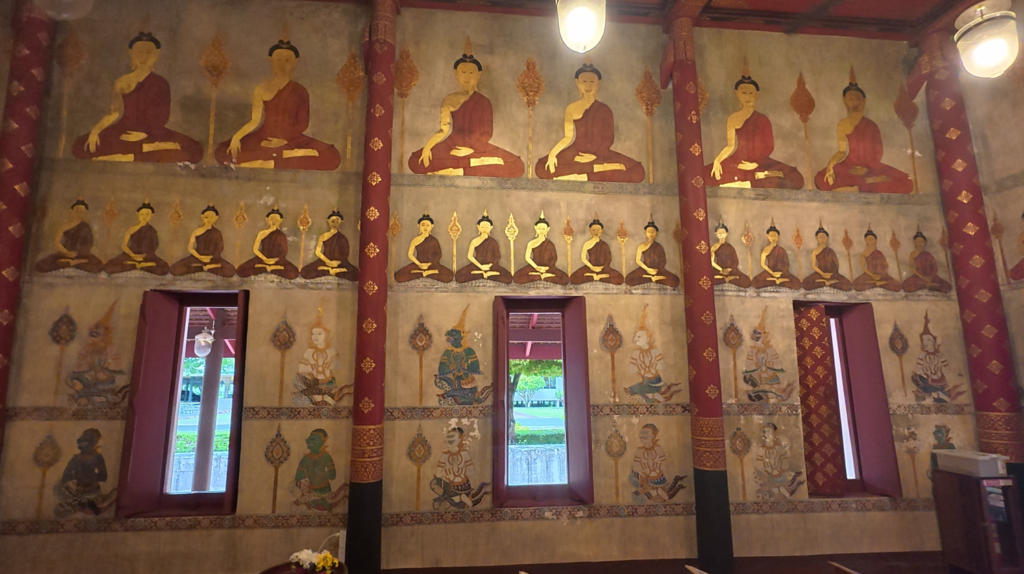
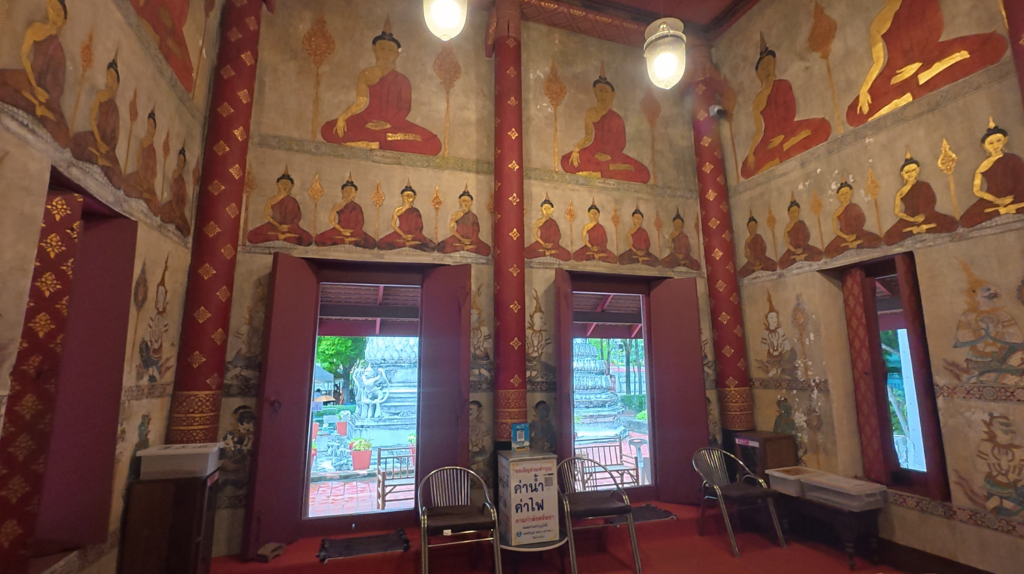
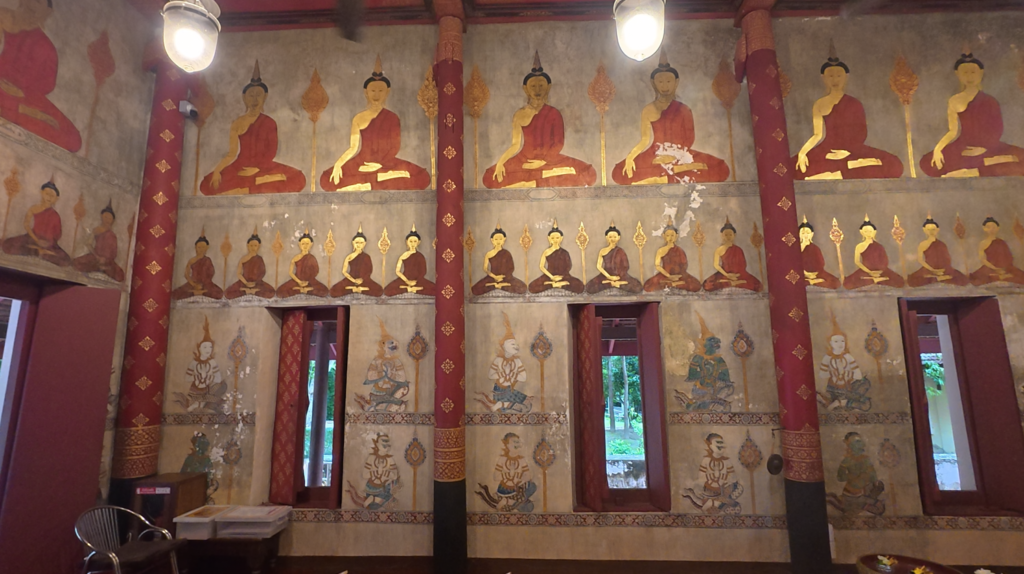
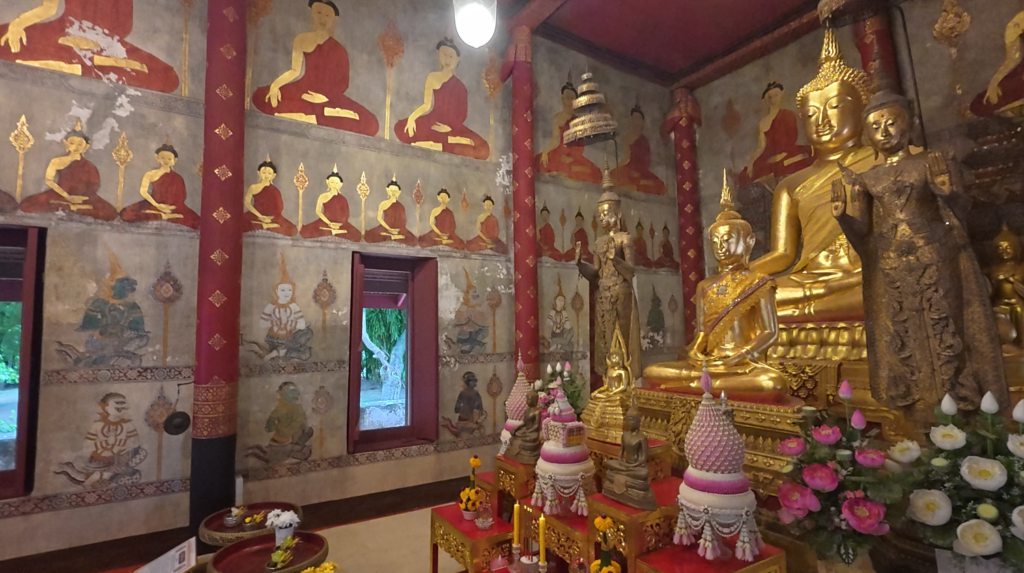
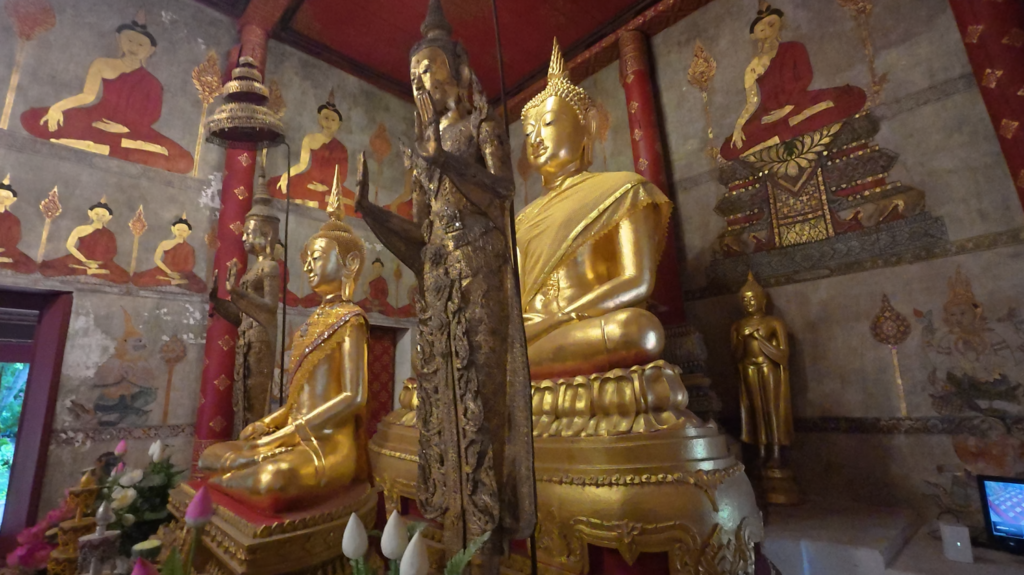
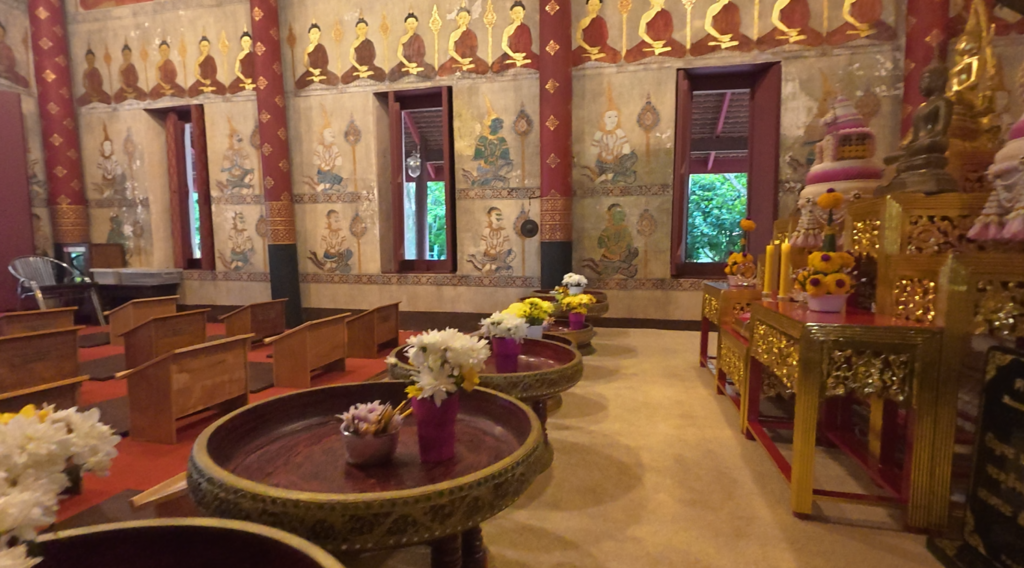
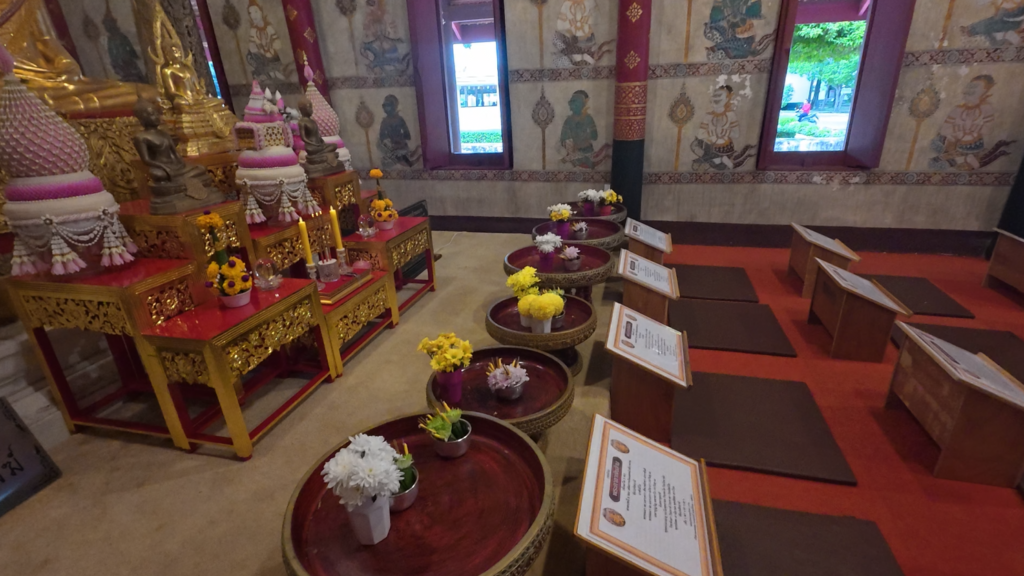
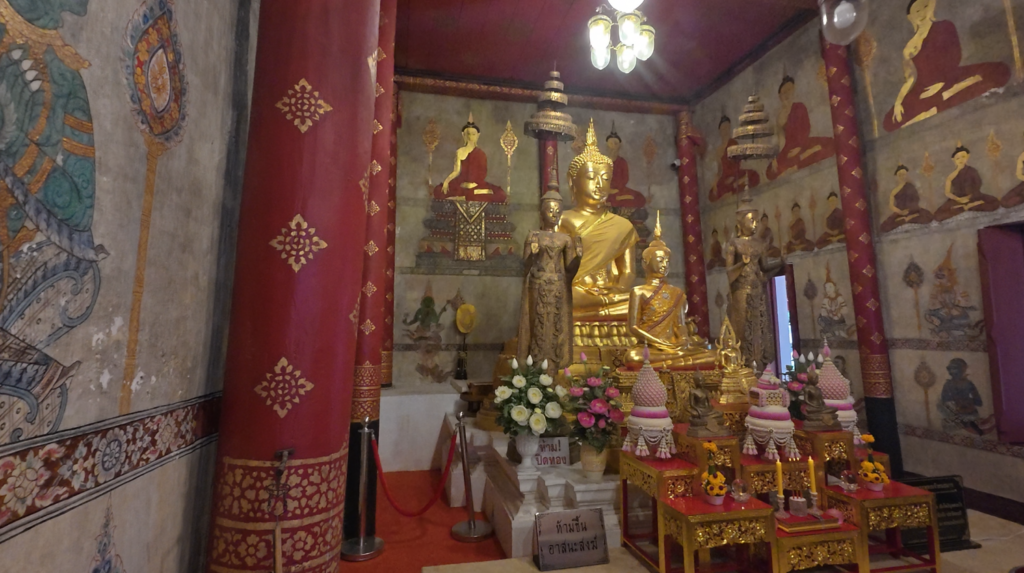
Inside the former ubosot, the principal Buddha is surrounded by vivid murals and two standing Buddha images in the Pang Ham Samut posture.
A Short Guide to Buddha Images and Their Postures
Buddha images can be identified by their posture and hand gestures. These forms carry different stories and meanings in Thai Buddhist art. The table below is a brief guide to several common types; it is not a complete catalogue. The Fine Arts Department has published a reference that records many more Buddha postures. www.finearts.go.th
| Thai name | Common form | Commonly associated meaning |
|---|---|---|
| Pang Mara-vichai | Seated, one hand reaching toward the ground | The Buddha’s victory over Mara and enlightenment |
| Pang Samadhi | Seated with hands resting in the lap | Meditation and concentration |
| Pang Ham Yat | Standing with one hand raised | Calming conflict or restraining danger |
| Pang Ham Samut | Standing with one or both hands raised | A form associated with the ocean and protection |
| Pang Prathan Phon | Seated, hands extended in the gesture of giving a blessing | Blessing and generosity |
| Pang Nak Prok | Meditating beneath the hood of the naga | Protection during meditation |
| Pang Leela | Walking Buddha | Graceful movement and the Buddha’s teaching |
| Pang Sai Yat | Reclining Buddha | The Buddha’s final passing into parinirvana |
| Pang Pathom Thetsana | Seated, hands forming the teaching gesture | The first sermon and the turning of the wheel of Dhamma |
Names and interpretations can vary by region and temple. A hand gesture may have a broad Buddhist meaning, while a particular temple may also preserve its own local explanation.
The Former Ubosot: Architecture and Restoration
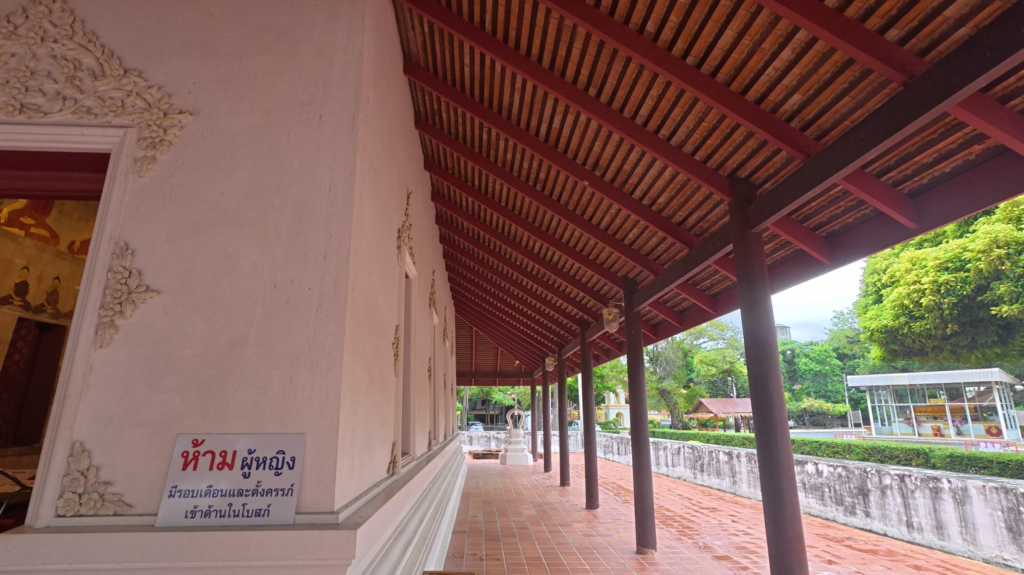
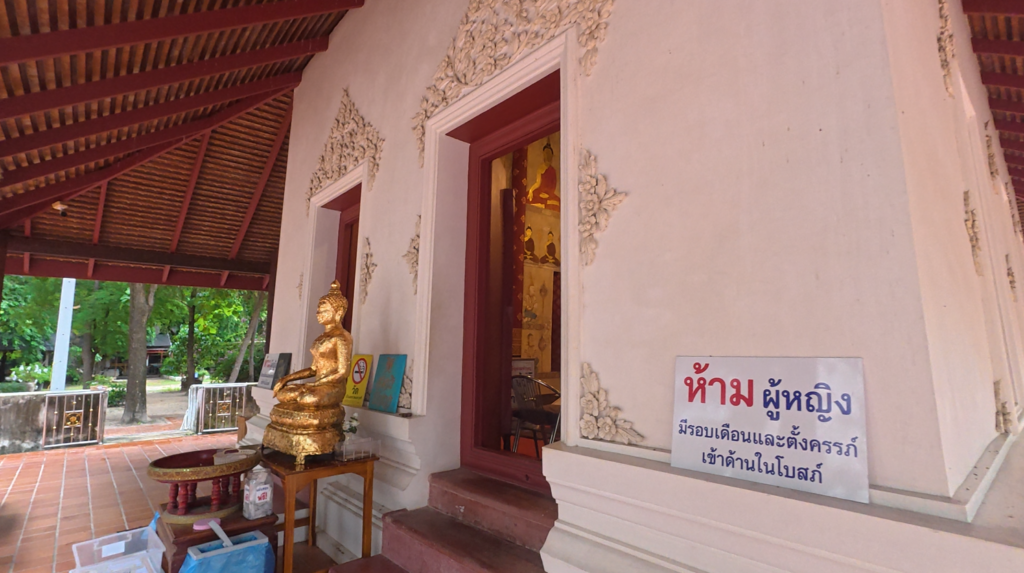
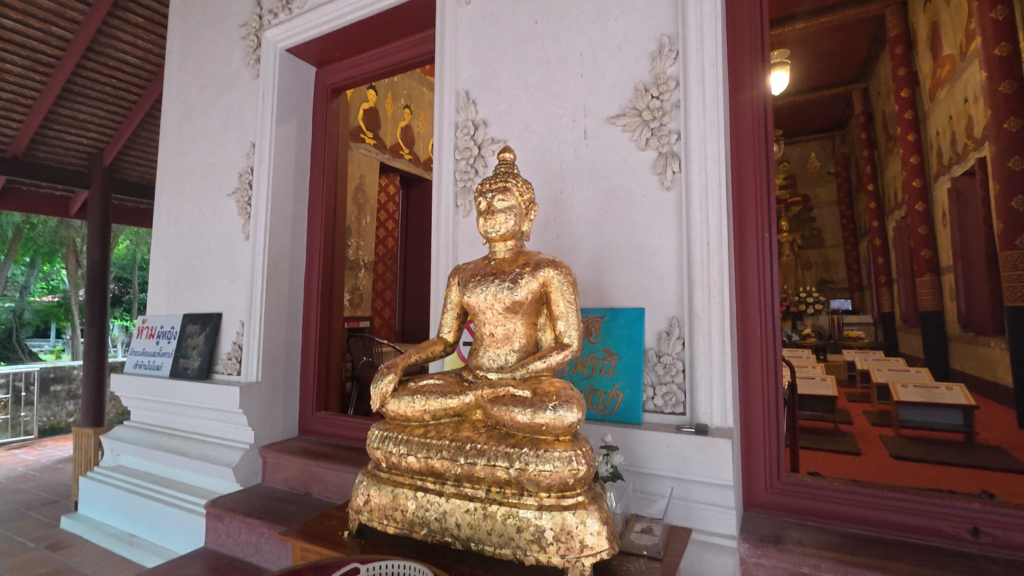
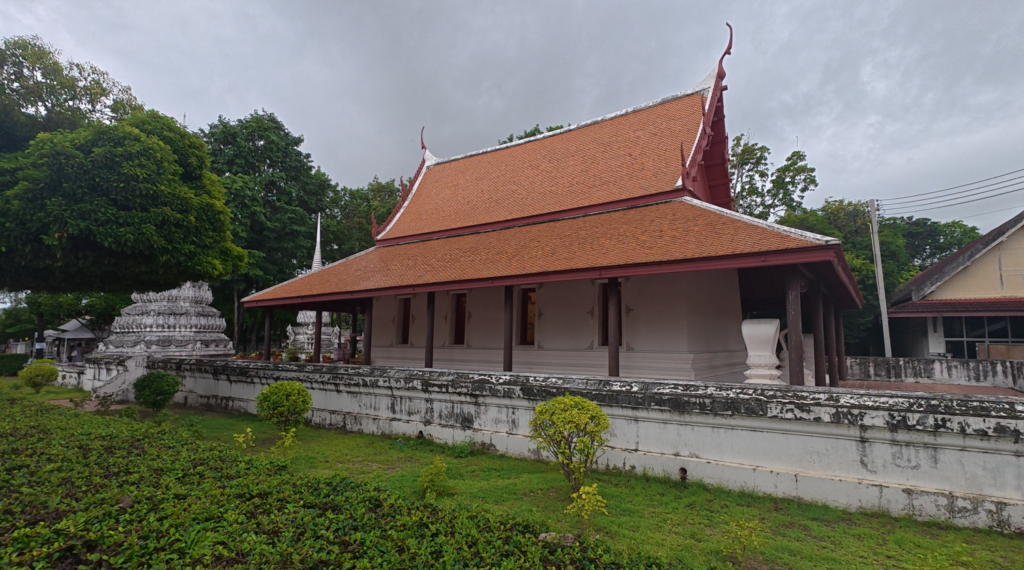
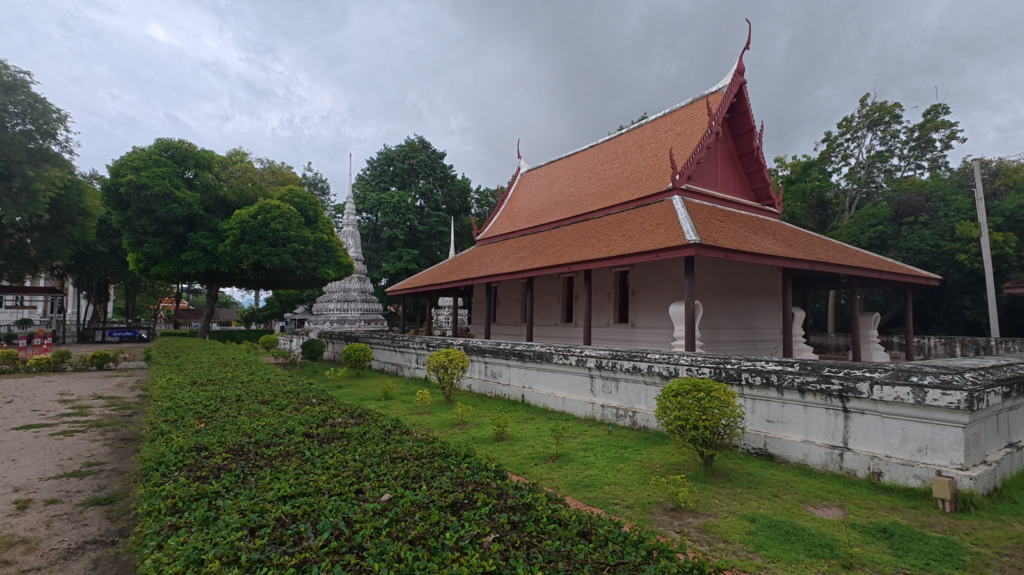
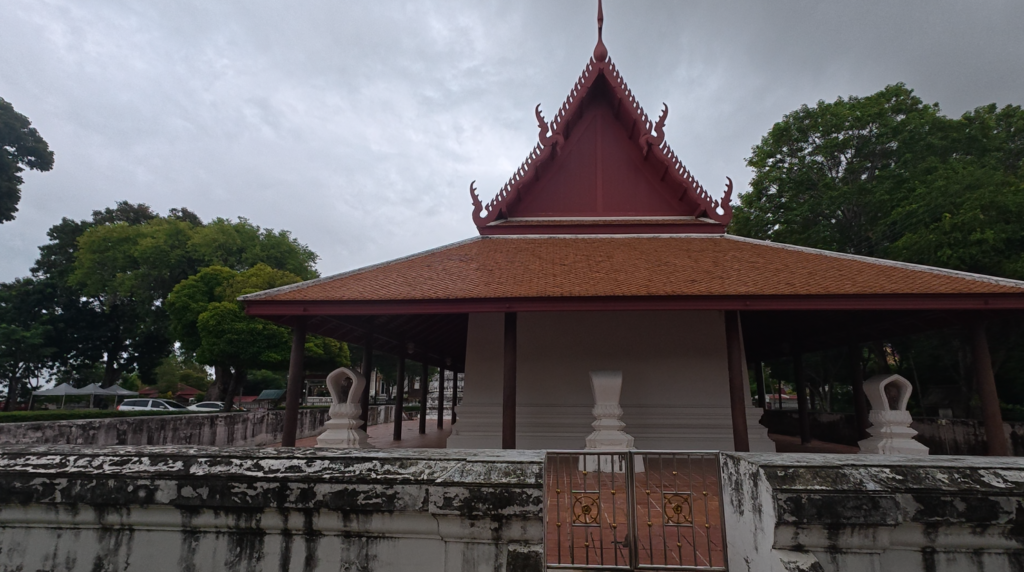
Before stepping inside, pause to look at the former ubosot’s exterior. Its restrained walls, long roofline, and sheltered walkway give the building a quiet, balanced presence.
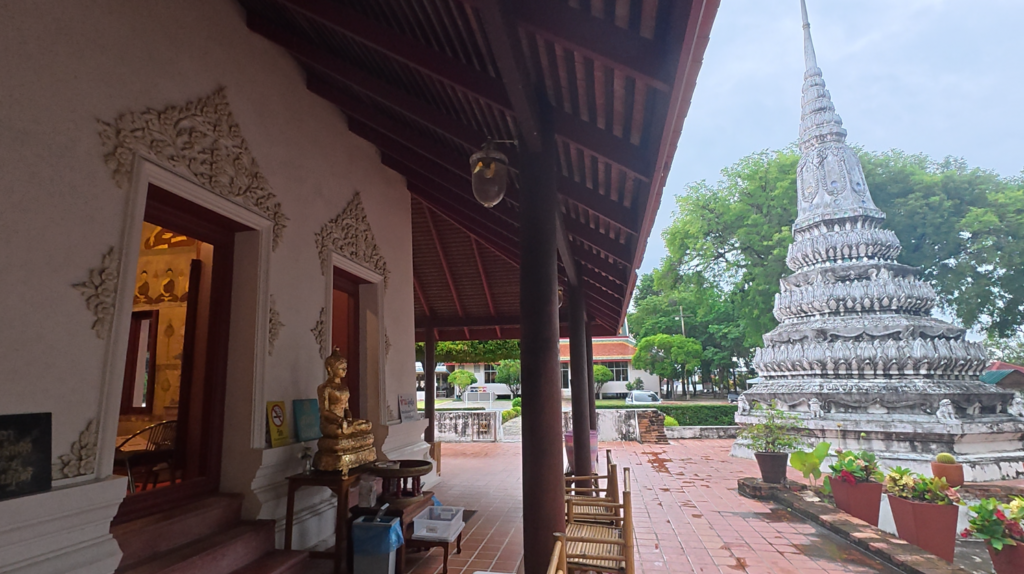
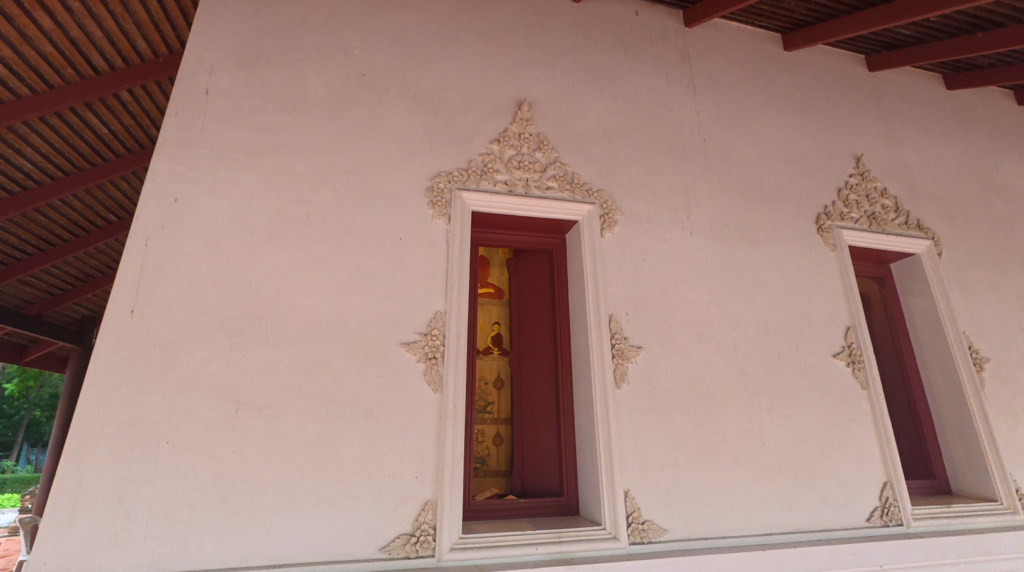
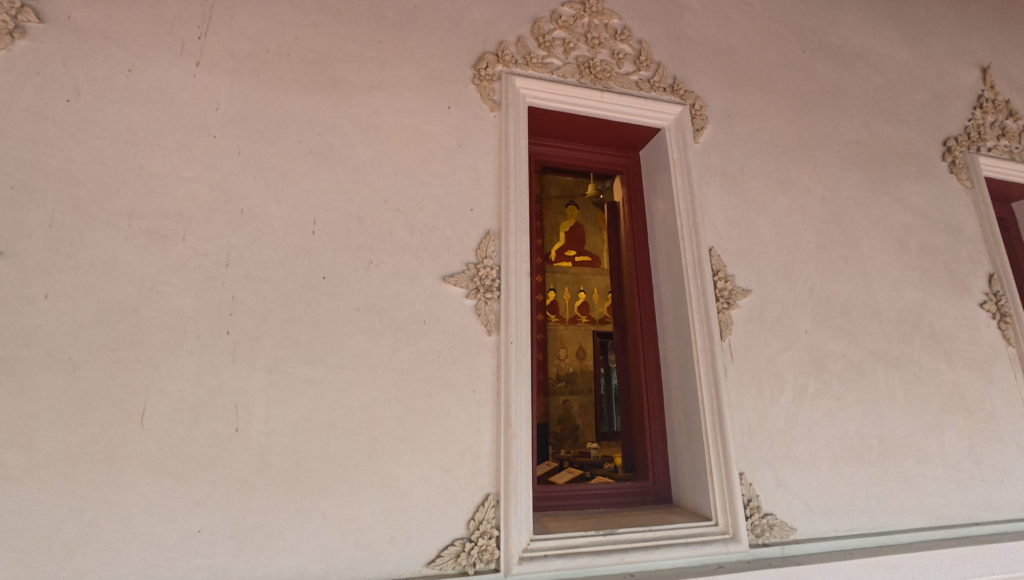
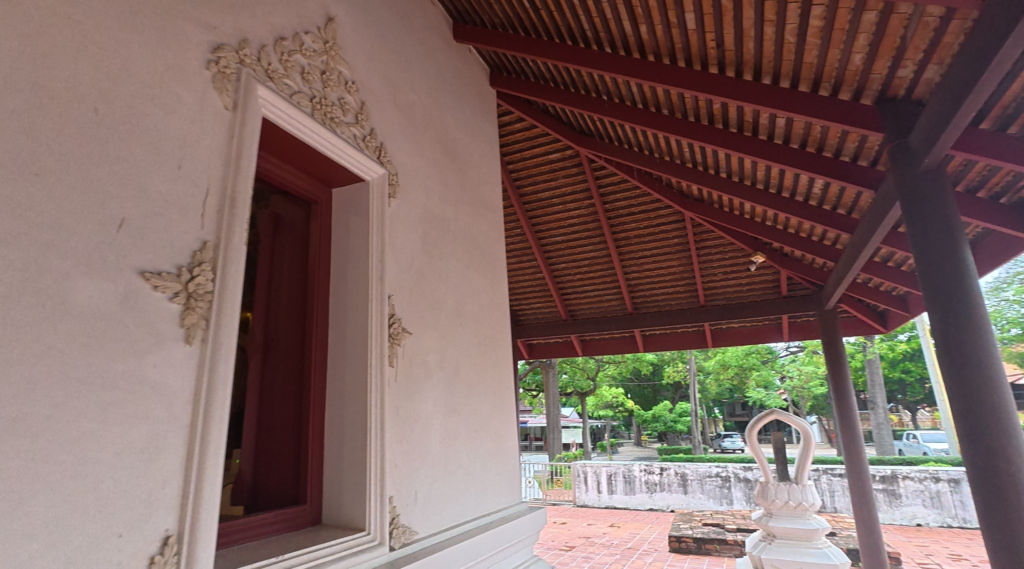
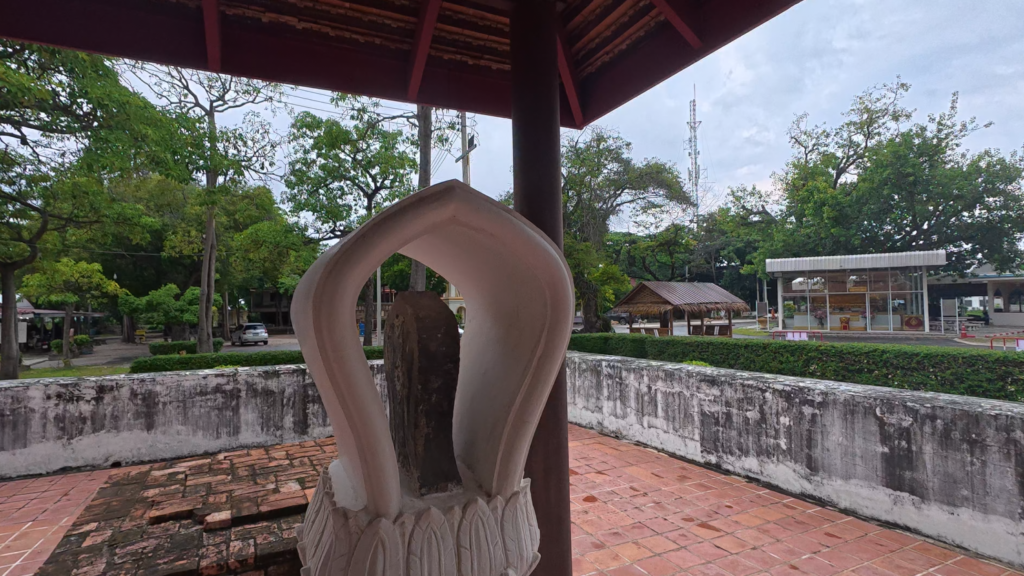
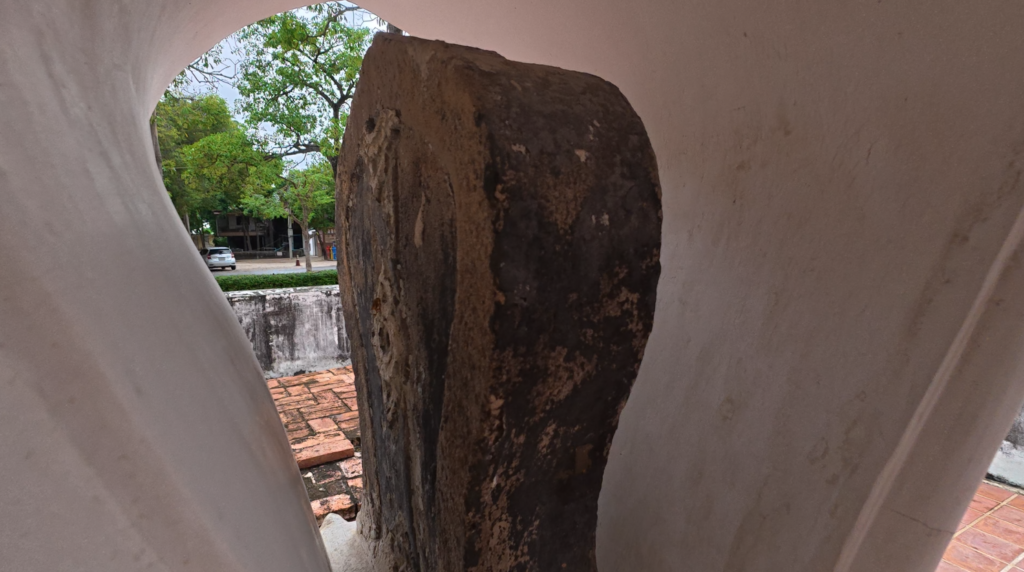
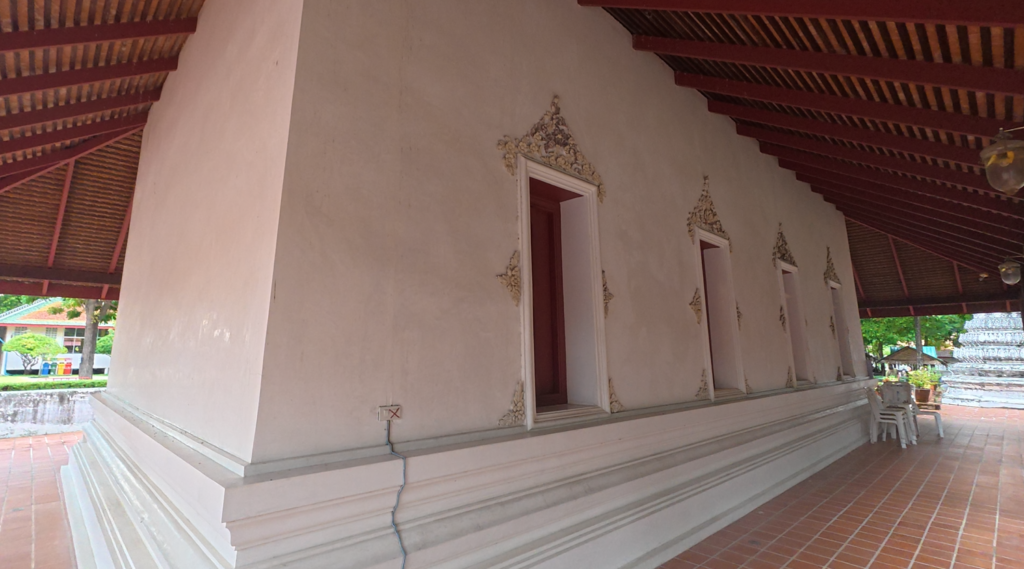
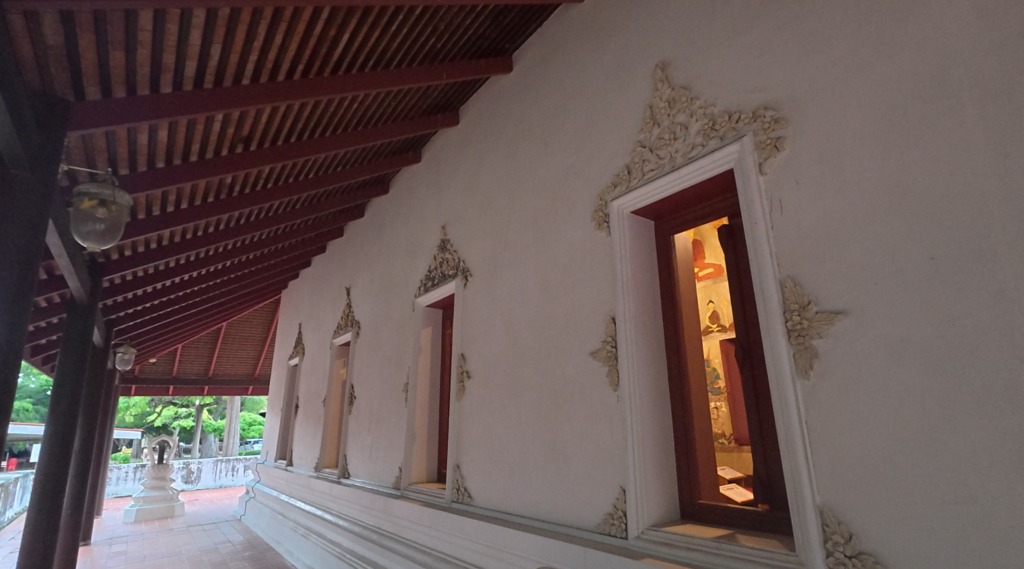
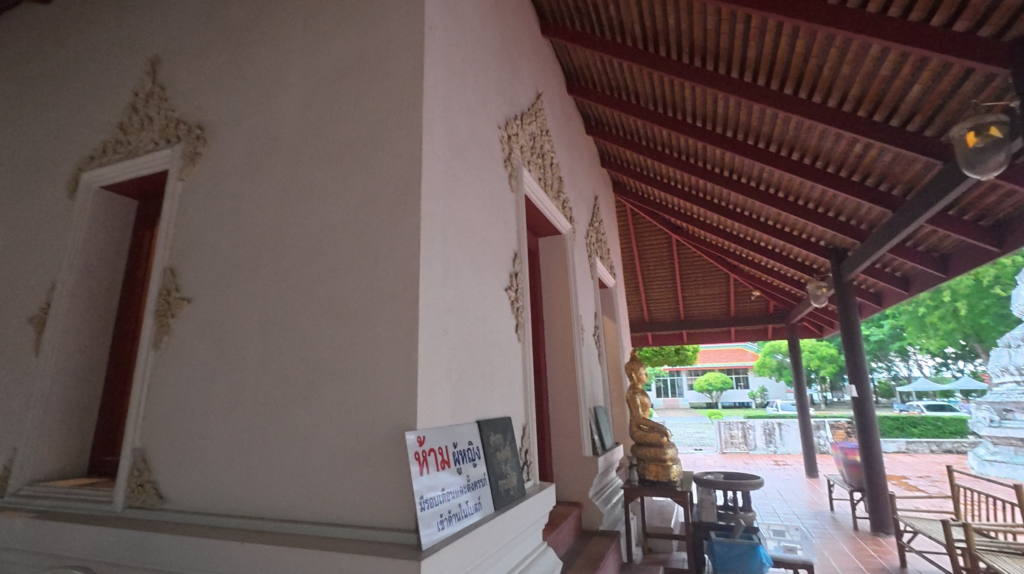
The former ubosot, now used as a viharn, preserves the quiet character of Wat Ang Sila’s historic precinct.
The Fine Arts Department’s archaeological account describes the historic complex as having developed in several phases: an early phase associated with the late Ayutthaya period, followed by Rattanakosin-era expansion and changes to the buildings and surrounding grounds. After Wat Ang Sila Nai and Wat Ang Sila Nok were united in 1916, this former ubosot became a viharn. The Fine Arts Department restored the viharn in 2018–2019. qrcode.finearts.go.th
The Bell-and-Drum Tower
Standing in front of the monks’ quarters, Wat Ang Sila’s bell-and-drum tower rises in three levels. Its lower level is built in masonry and opens through arches on four sides. Above it, timber construction, a tiled roof, carved gables, and glass ornament give the tower a more delicate profile. The structure combines practical purpose with careful craftsmanship, making it one of the memorable landmarks along the walk through the grounds. east.lib.buu.ac.th
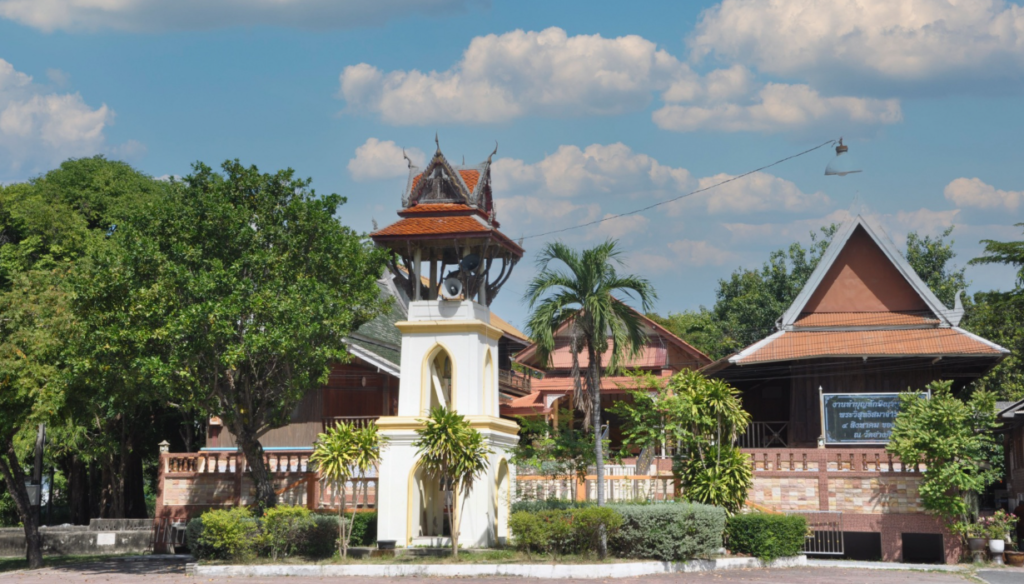
The three-storey bell-and-drum tower stands before the monks’ quarters.
The Old Wooden Monks’ Quarters
Nearby, a group of raised wooden buildings preserves a different side of the temple’s history. The buildings vary in height and roof form: some have carved wooden vents and verandas, while a two-storey house features decorative woodwork along its gables and eaves. Raised walkways link parts of the group, giving the residences a close-knit layout. A wooden inscription bearing the date R.S. 126 corresponds to 1907, during the reign of King Rama V. The date belongs to the marked timber building; it should not be taken as the construction date of every residence in the group.
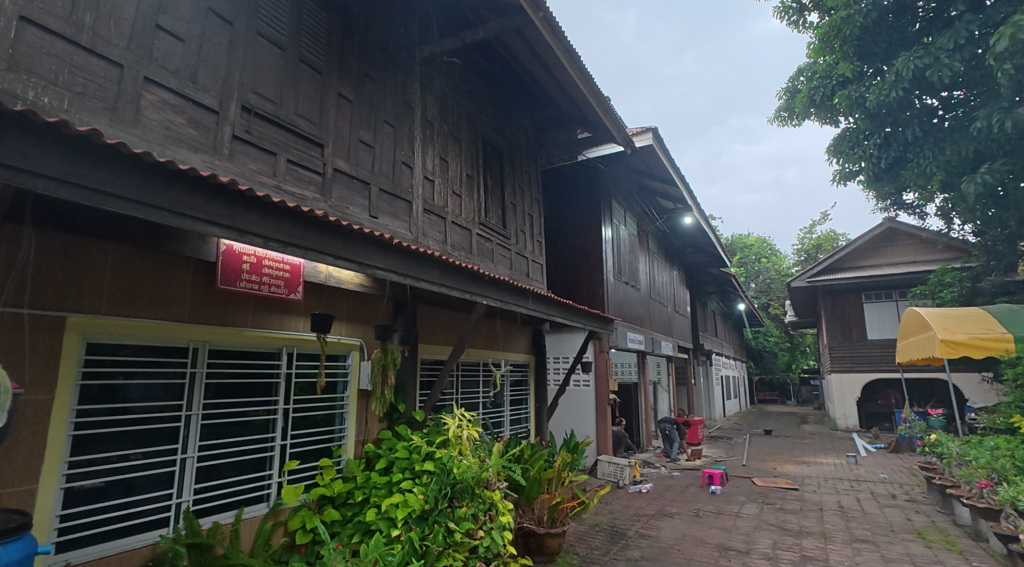
Raised wooden monks’ residences preserve carved details and a dated inscription from 1907.
A Walk Through the Wider Grounds
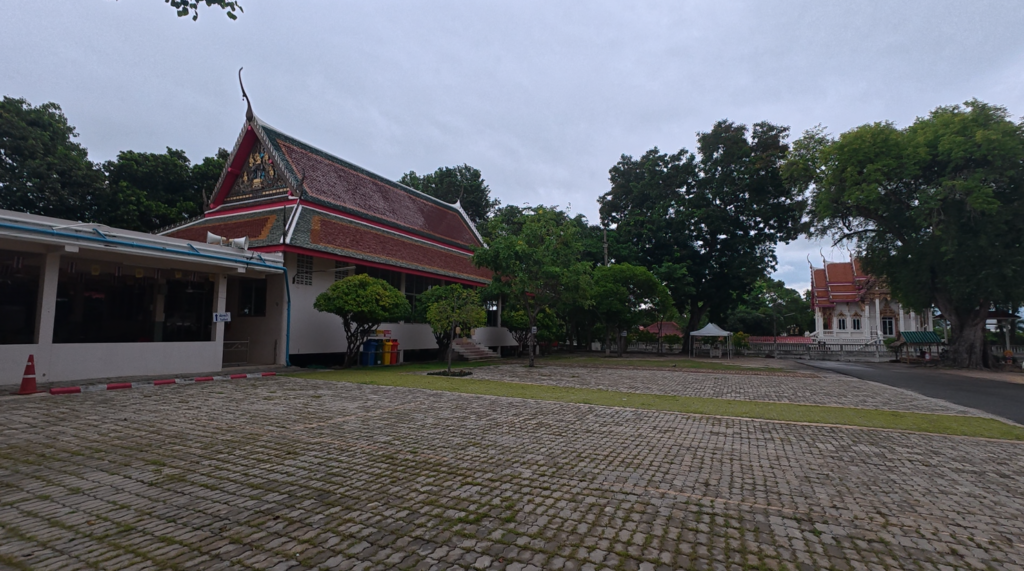
The route passes smaller temple buildings and shaded spaces beyond the historic sanctuary.
Leaving the old sanctuary, I continued through the wider grounds. Smaller buildings, covered spaces, and shaded paths give this part of the visit a more everyday feel. The temple is not experienced through one building alone; its different corners each hold their own atmosphere.
A Grand Building Across the Grounds
Across the grounds, this large building makes a strong impression with its height and elaborate decoration. Its scale and appearance contrast with the low, weathered forms of the old sanctuary and chedis. I have left its specific function unidentified here because I could not verify it from the available sources.
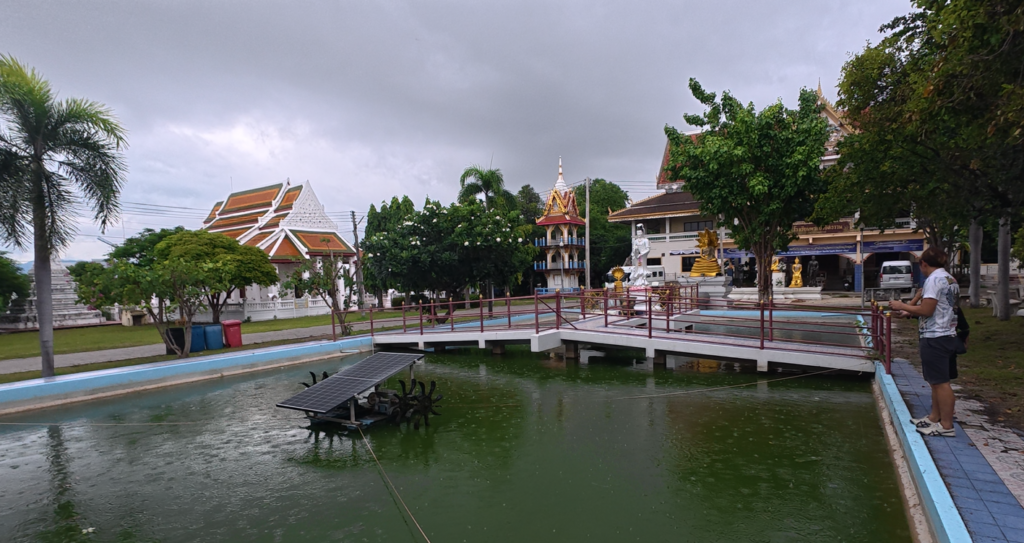
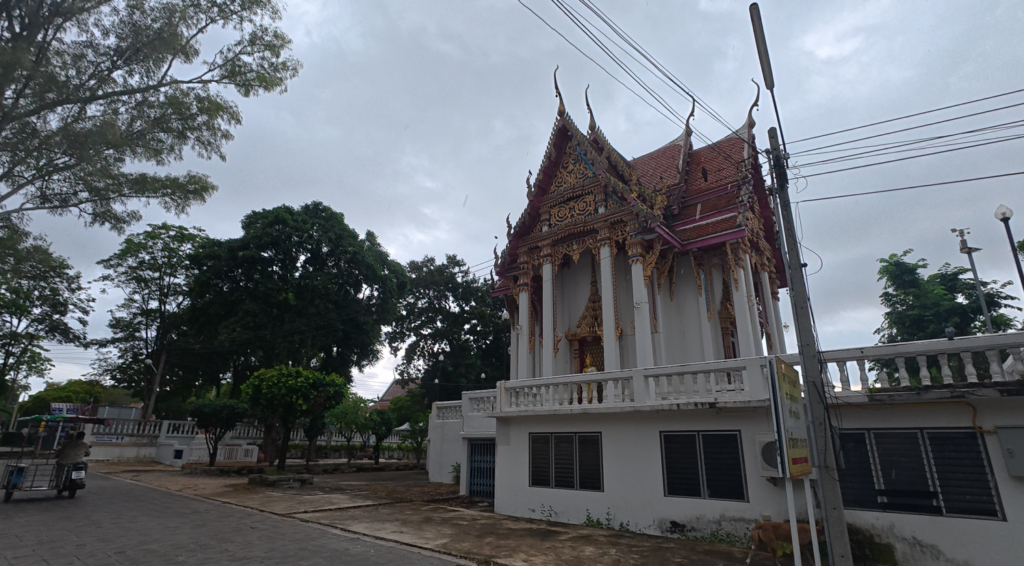
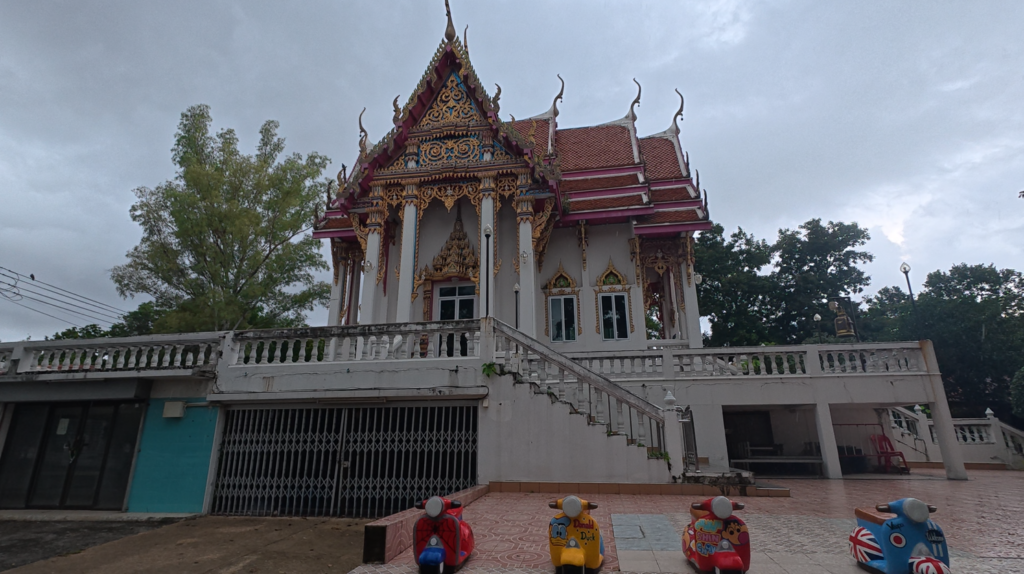
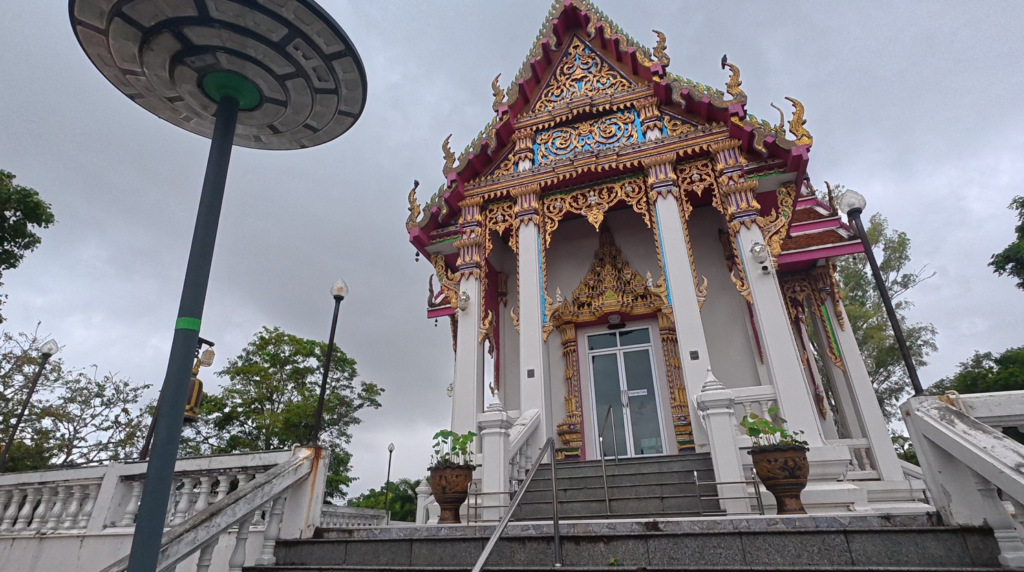
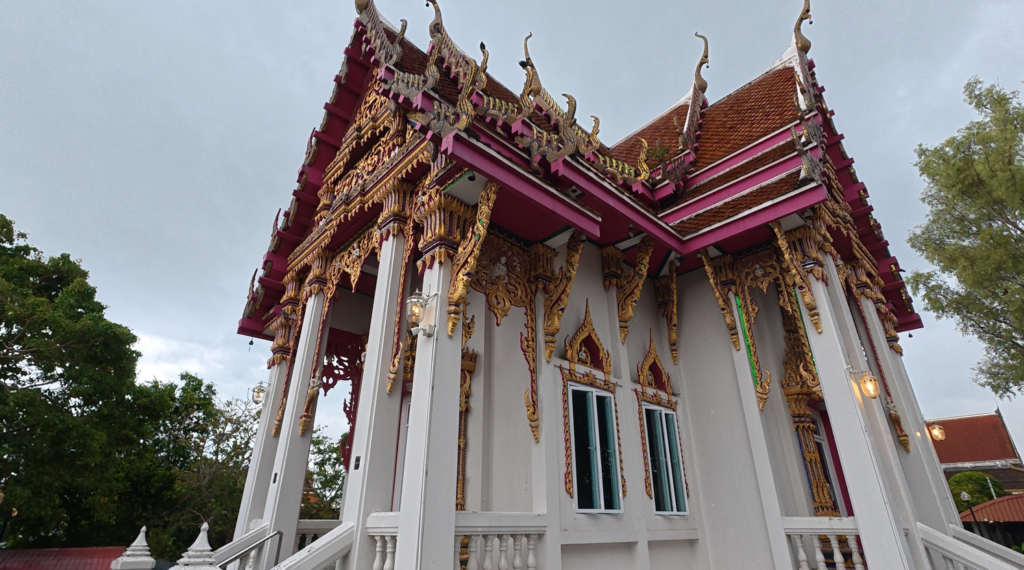
A tall, ornate building rises among the newer structures at Wat Ang Sila.
Rahu Worship and the Memory of Chao Khun Sri
Beside the hall associated with Chao Khun Sri, I came across a shrine to Rahu. This is one example of how Thai popular belief lives alongside Buddhist worship in a temple. Rahu is approached as a powerful planetary deity who may bring both good fortune and misfortune. At Wat Ang Sila, the local cultural record says devotees pray for wealth, good luck, and protection from danger. It describes the traditional offering as eight black items with eight black incense sticks.
The nearby hall also recalls Chao Khun Sri, the revered monk Phra Wisutthisamachan, whose memory remains part of Ang Sila’s religious life. Together, these spaces show two forms of local devotion: seeking help from a protective deity, and honoring a monk remembered as a spiritual guide.
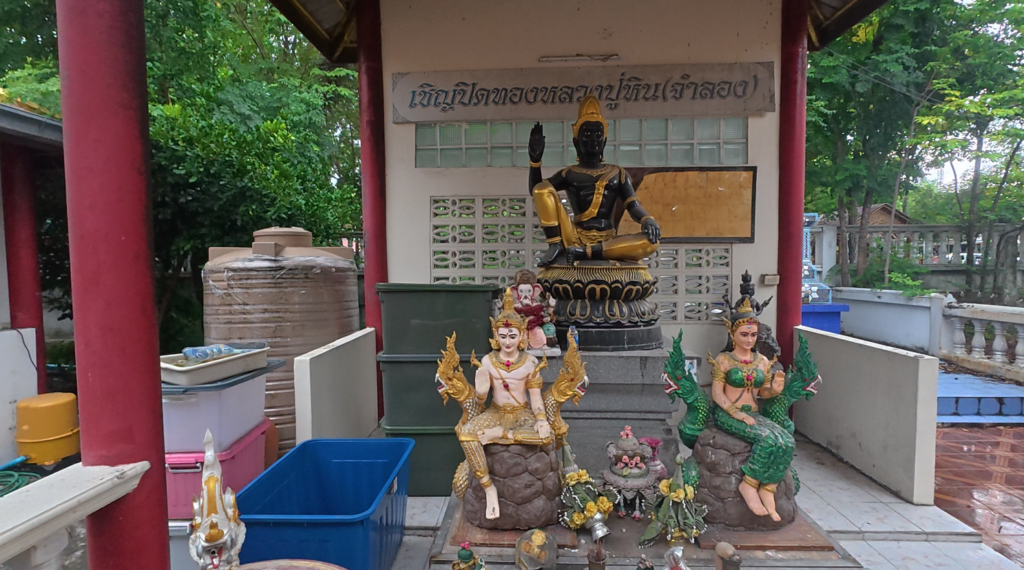
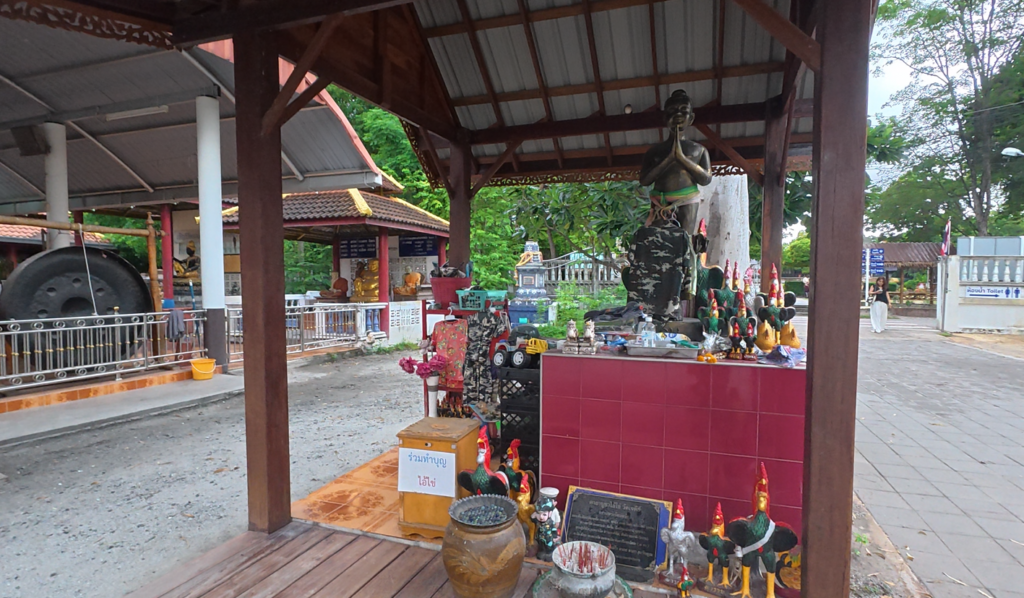
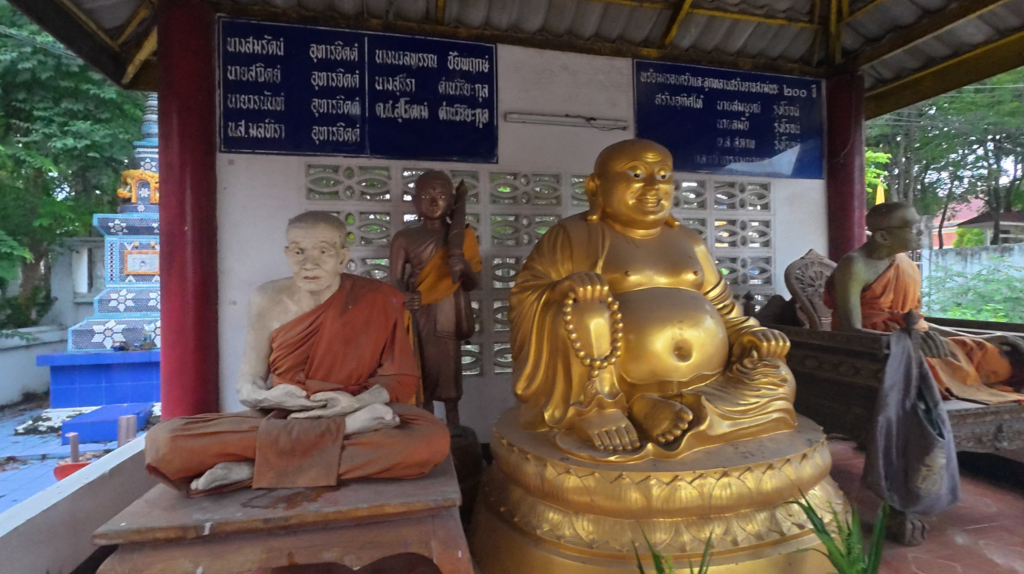
Rahu worship and the memory of Chao Khun Sri reflect the many layers of local devotion at Wat Ang Sila.
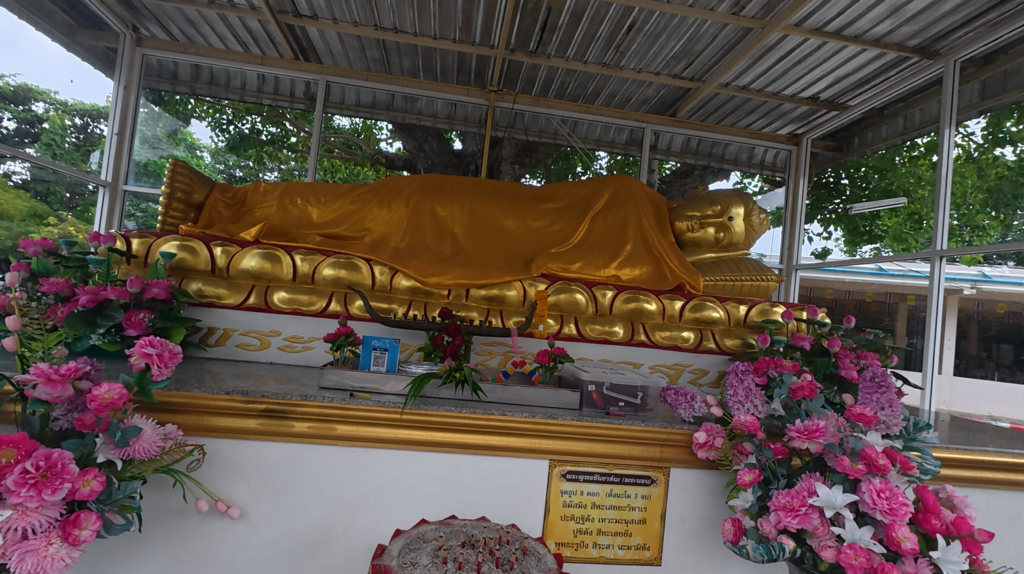
Luang Pho Hin and a Local Story of Belonging
The image of Luang Pho Hin carries a story closely tied to Ang Sila. A local municipal cultural account says that the sacred image floated in on the water and describes the people of Ang Sila as his children. This is a local legend, not a verified account of the image’s historical origin. A university archive notes that the image now at the temple is a replica made after the original disappeared. www.angsilacity.go.th
The story still expresses a strong sense of connection: Luang Pho Hin is remembered as a sacred protector and a shared spiritual ancestor for the local community.
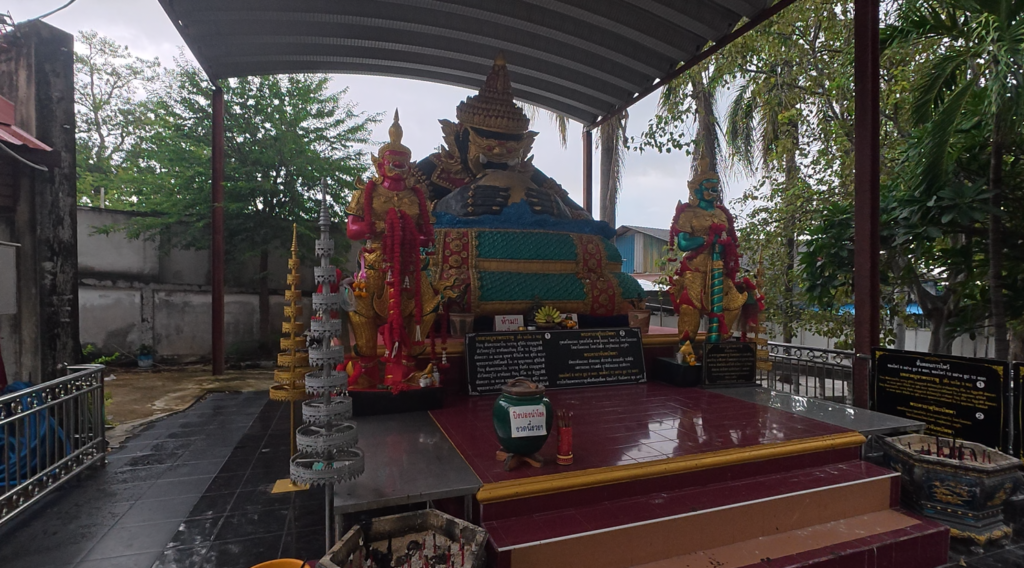
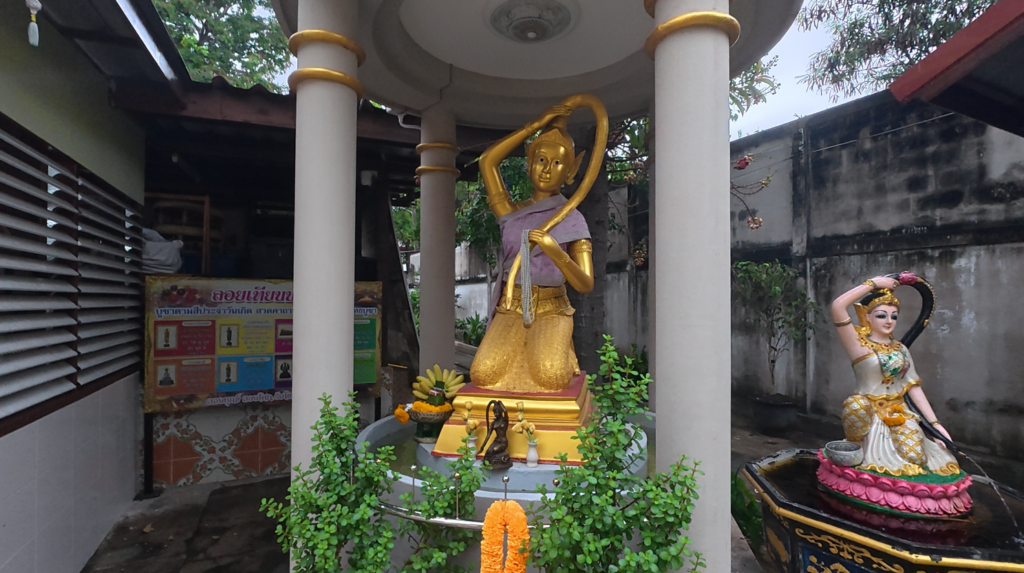
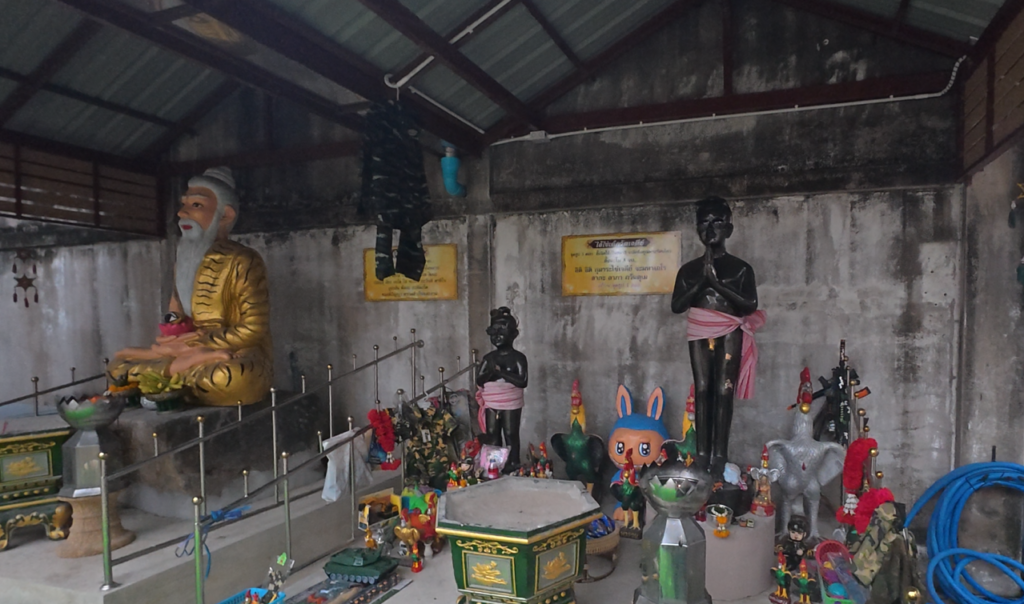
Devotees make offerings at a shrine connected with Luang Pho Hin and local belief.
The Shrine of the Buddha’s Footprint
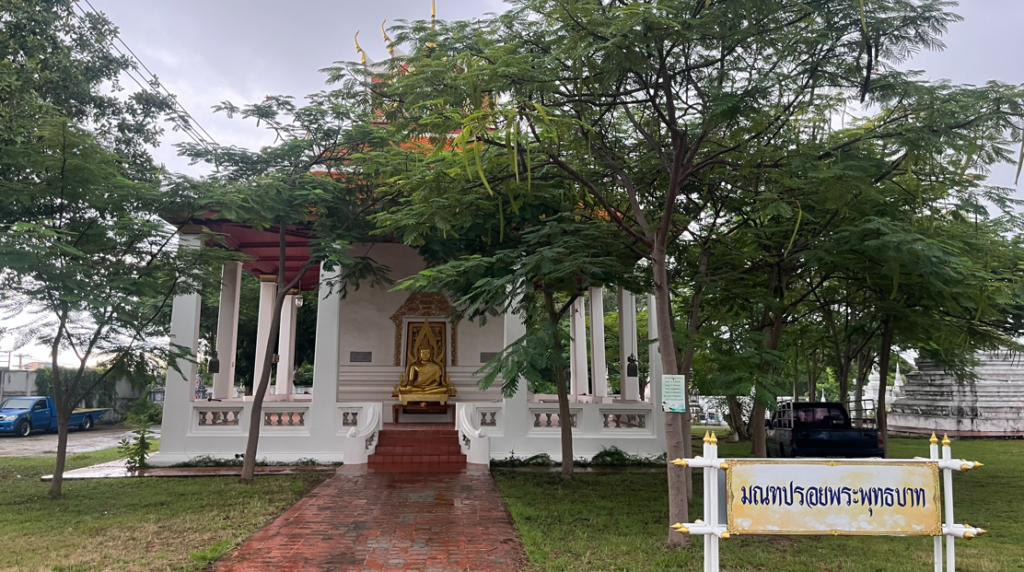
Across from the old ubosot stands a separate shrine dedicated to the Buddha’s footprint. Its vivid murals create a striking contrast with the quieter, older sanctuary. The footprint is revered as an object of devotion; I could not verify a historical account establishing the origin of the particular footprint enshrined here.
The Fine Arts Department also records a mondop associated with the Buddha’s footprint and describes painted scenes in the temple’s historic buildings.
A Painted Devotional Room
This part of the route leads to another painted interior. Buddha images and murals fill the room with colour, while a traditional object on display adds to its quiet, intimate character. The space offers a final look at the temple’s many forms of devotion before the walk turns back outside.
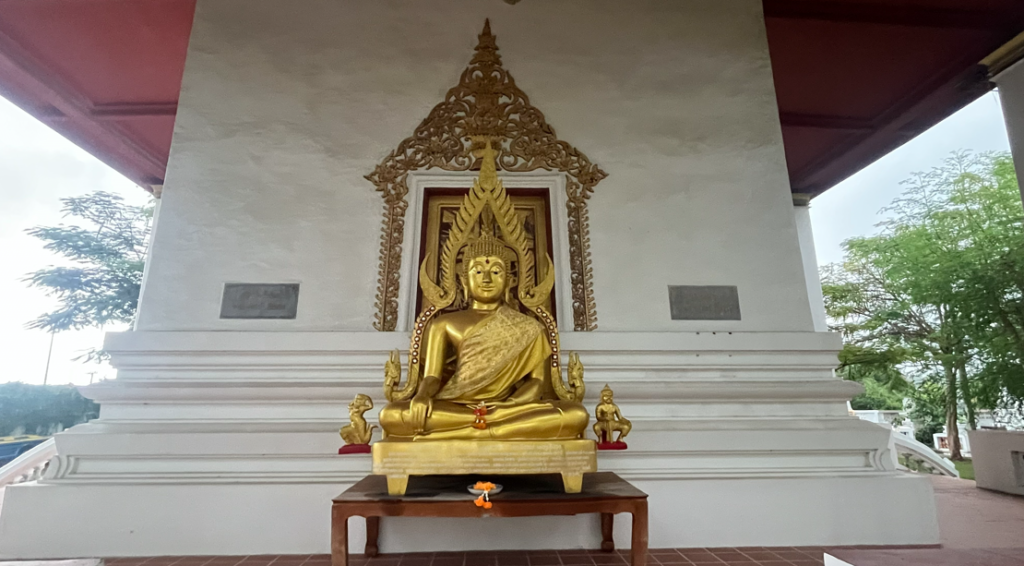
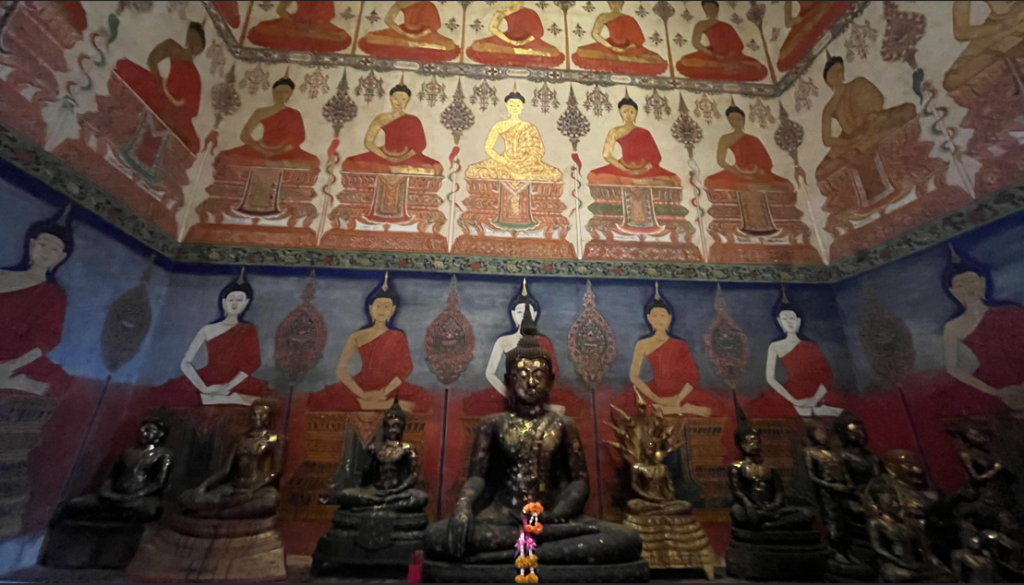
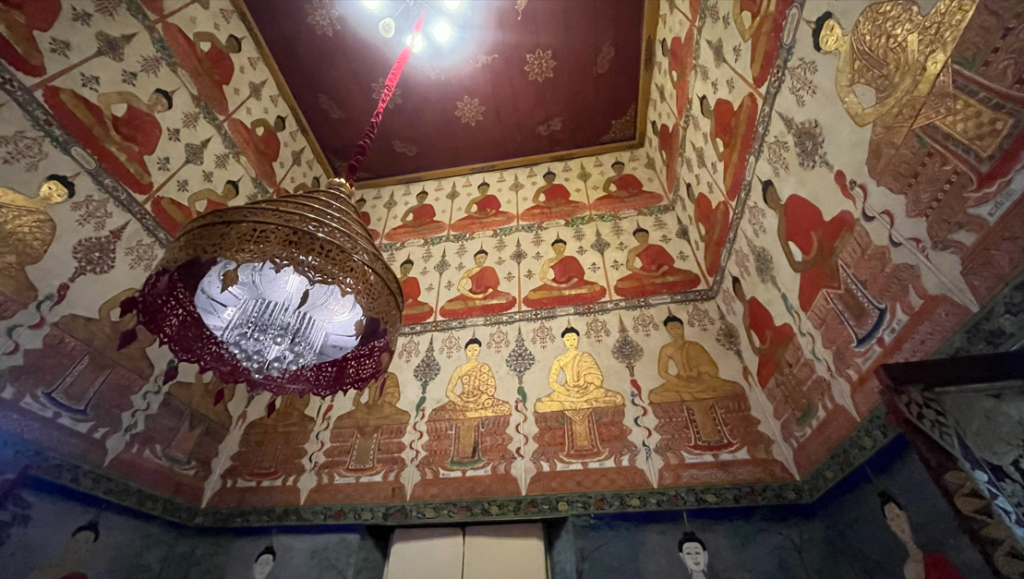
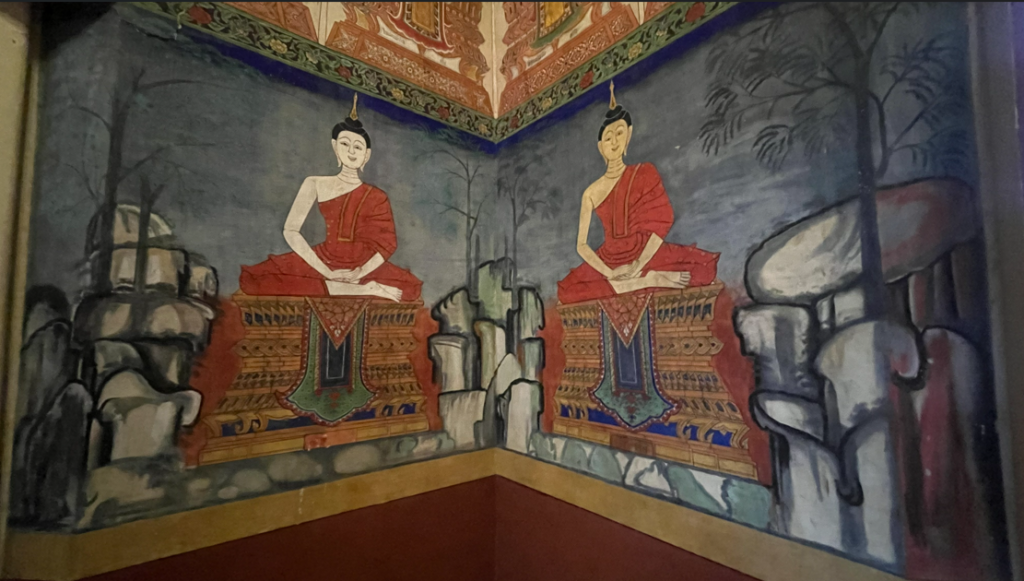
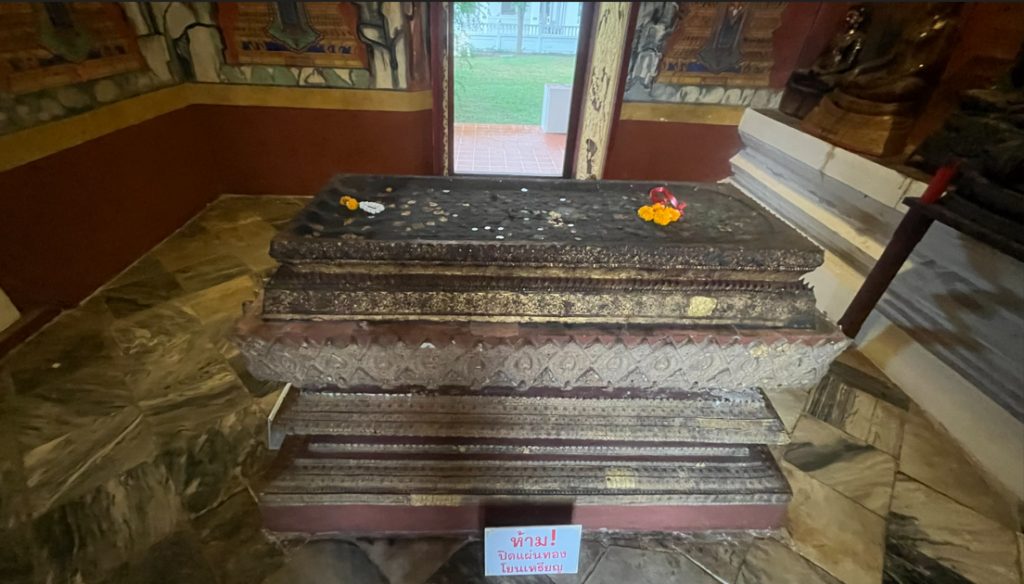
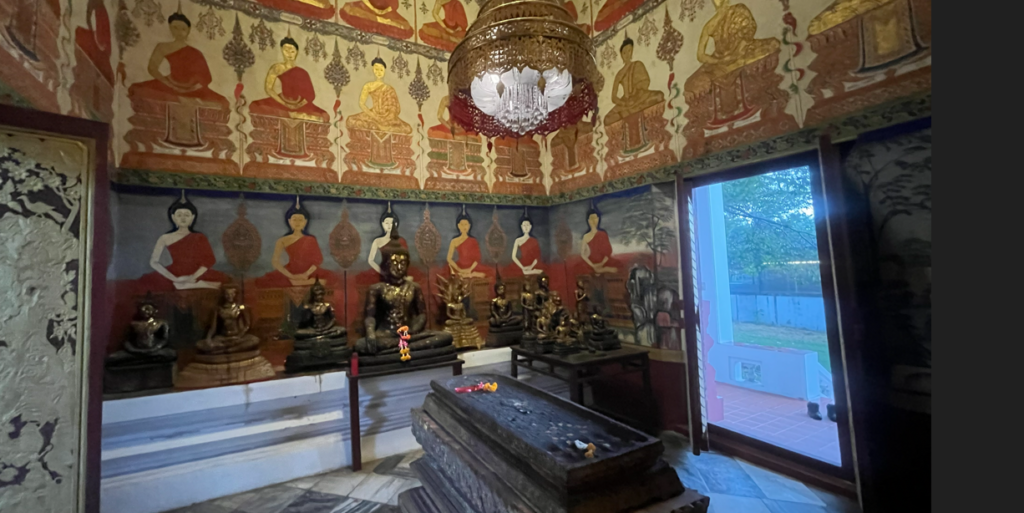
A smaller devotional space combines Buddha images, mural paintings, and traditional objects.
A Prayer in the Rain
At the shrine of the Buddha’s footprint, a sudden downpour began. I stayed under cover for a while, listening to the rain and waiting for it to ease. Before leaving, I rang the bell hanging outside and prayed.
That moment became the quiet ending to my visit: the old chedis, the vivid shrine, the stories carried by local images, and a pause in the rain.
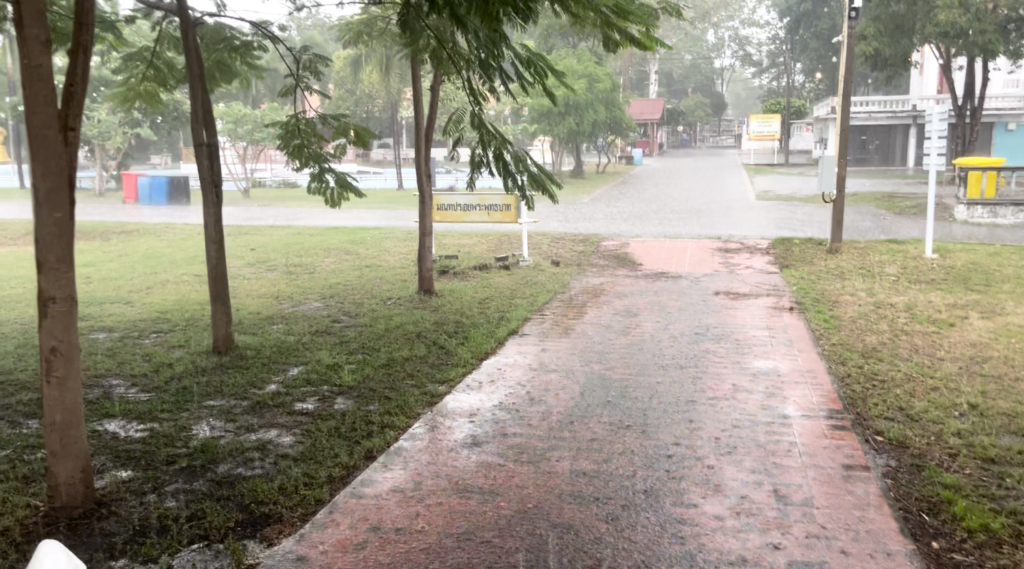
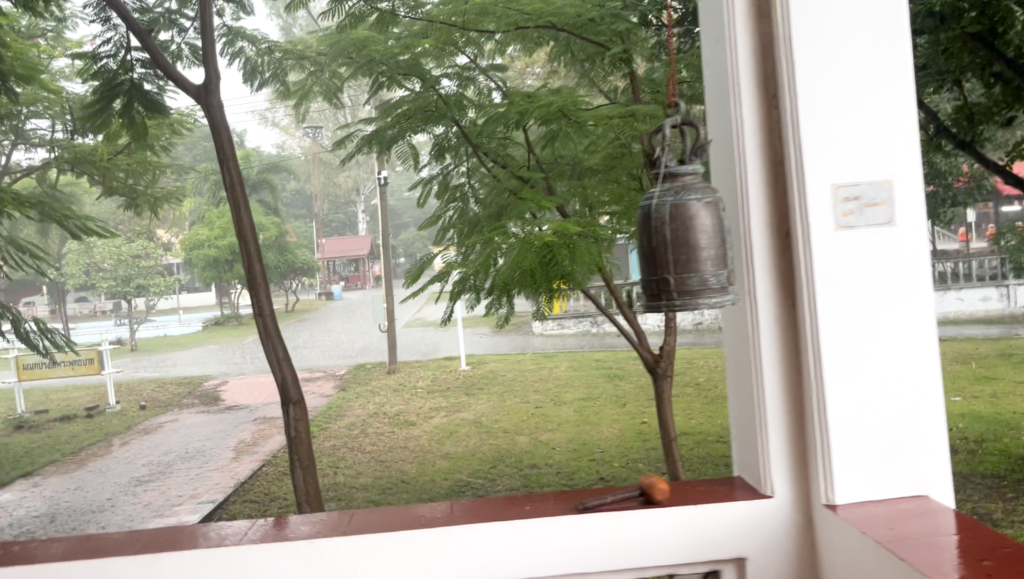
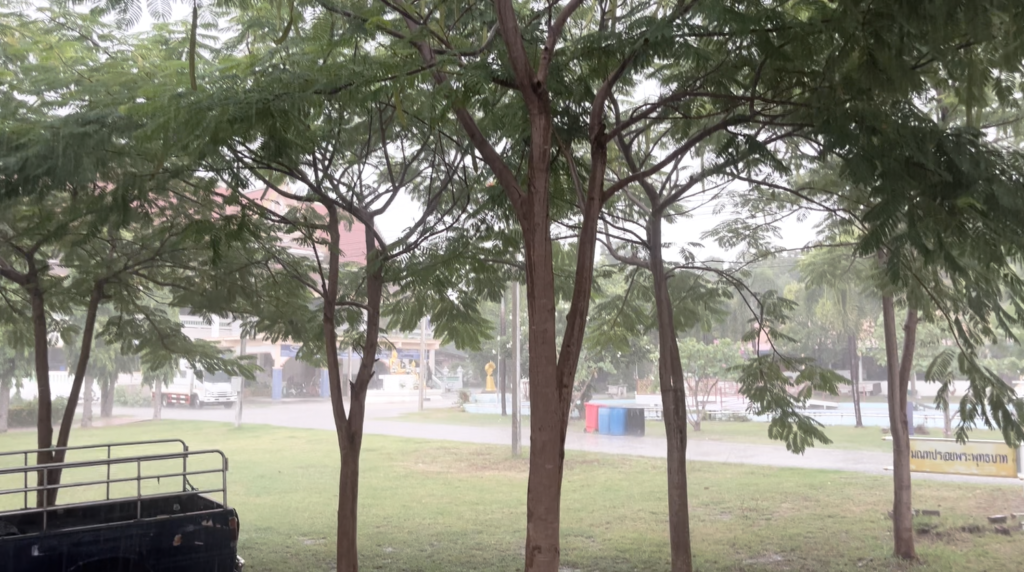
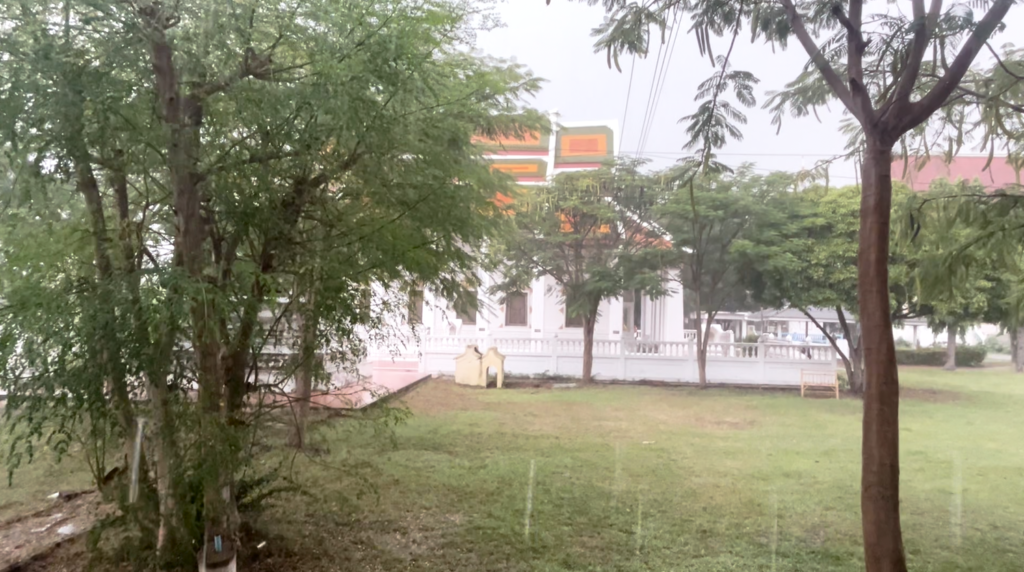
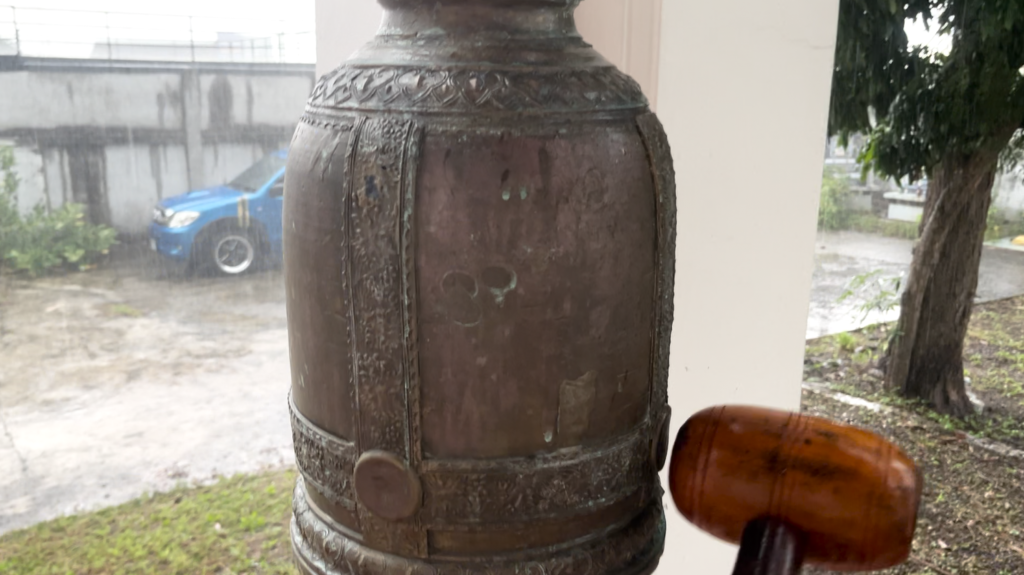
A sudden rain shower brought my visit to a pause. Before leaving, I rang the bell and offered a prayer.
Video: A Walk Through Wat Ang Sila
Wat Ang Sila, Chonburi | Old Ubosot, Three Chedis and a Prayer in the Rain
Join me on a walk through Wat Ang Sila in Chonburi. We visit the old ubosot and its three distinctive chedis, explore the shrine of the Buddha’s footprint, and see the temple’s devotional spaces. A sudden rain shower brings the visit to a quiet close with a bell and a prayer.
Location and Visitor Information
| Temple | Wat Ang Sila |
| Area | Ang Sila, Chonburi, Thailand |
| Map | Open Wat Ang Sila in Google Maps |
| Visitor note | The complex includes historic and newer buildings. Please follow posted signs and local guidance when visiting worship areas. |