A Temple Built for the Gods
Some places preserve history.
Others make you feel as though you have stepped into another world.
Perched high on the rim of an extinct volcano in Buriram Province, Phanom Rung Historical Park is one of the finest Khmer sanctuaries ever built outside Angkor.
For more than a thousand years, pilgrims have walked the same sacred path, climbing stone stairways toward a sanctuary dedicated to Lord Shiva.
Today, I follow that same ancient journey—one step at a time.
History of Phanom Rung
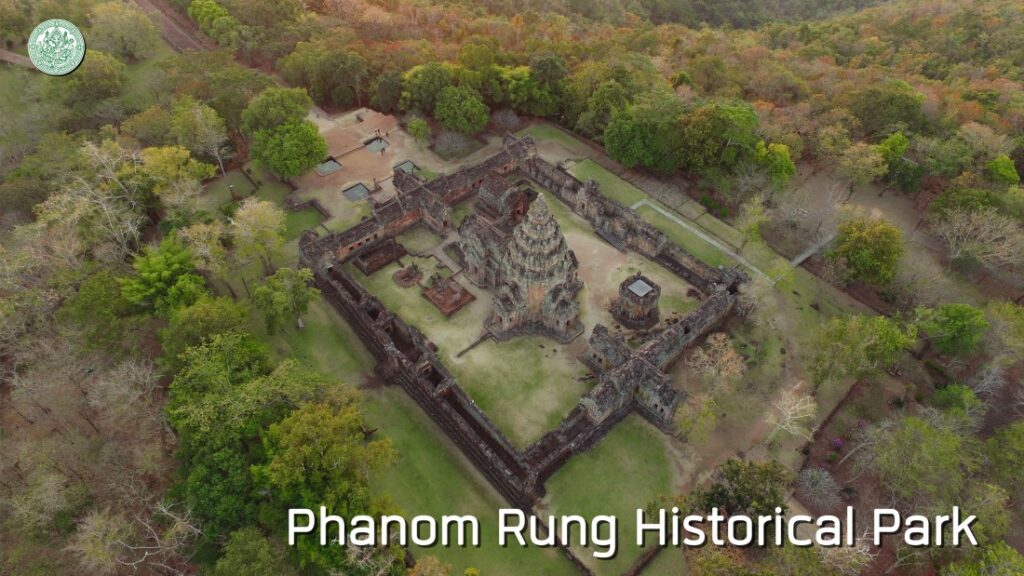
Phanom Rung Historical Park stands atop the rim of an extinct volcano, about 402 meters above sea level in Buriram Province, northeastern Thailand.
Built between the 10th and 13th centuries during the Khmer Empire, the sanctuary was dedicated to Lord Shiva, one of the principal deities of Hinduism.
The name “Phanom Rung” comes from the ancient Khmer words Vnam Rung, meaning “Great Mountain.”
For the Khmer people, mountains were believed to be the dwelling place of the gods. The extinct volcano was therefore transformed into a sacred landscape representing Mount Meru, the mythical center of the Hindu universe.
Every stone, staircase, gateway, and tower was carefully aligned to symbolize the spiritual journey from the human world toward the realm of the divine.
Unlike many ancient temples built simply as places of worship, Phanom Rung was designed as a symbolic path to heaven.
After the decline of the Khmer Empire, the sanctuary was gradually abandoned and hidden beneath forests for centuries before being restored by Thailand’s Fine Arts Department during the twentieth century.
Today, Phanom Rung is recognized as one of Thailand’s greatest masterpieces of Khmer architecture and remains one of Southeast Asia’s most remarkable historical sites.
Today, Phanom Rung Historical Park is one of Thailand’s most important archaeological treasures.
Walking the Sacred Processional Way
The journey into Phanom Rung does not begin at the main sanctuary.
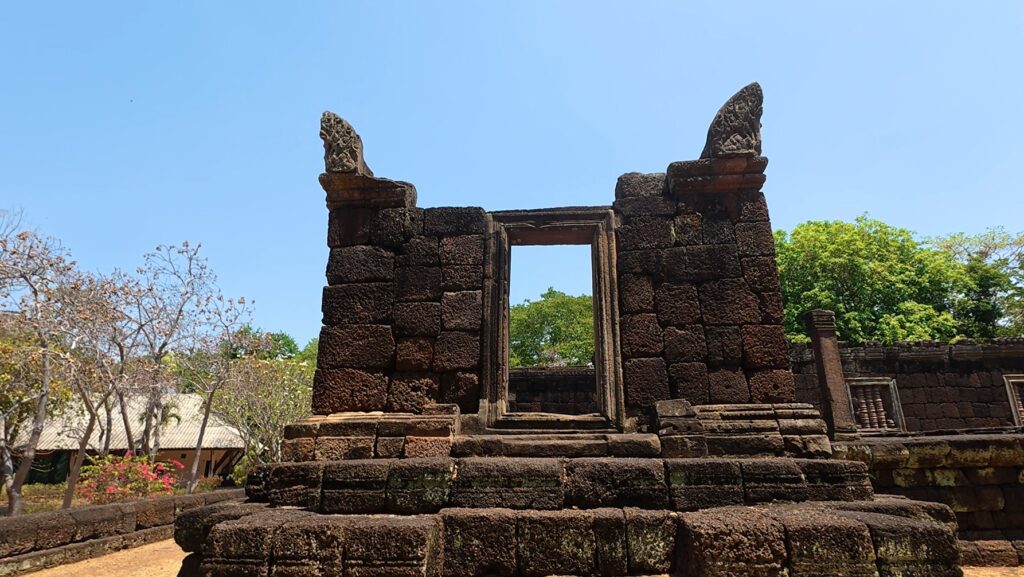
It begins much earlier, at the foot of the sacred hill, where a small cruciform pavilion stands near the entrance.
This structure is traditionally known as the Dressing Pavilion. It is believed to have served as a ceremonial preparation area where rulers, nobles, or religious participants could arrange their clothing before continuing toward the sanctuary.
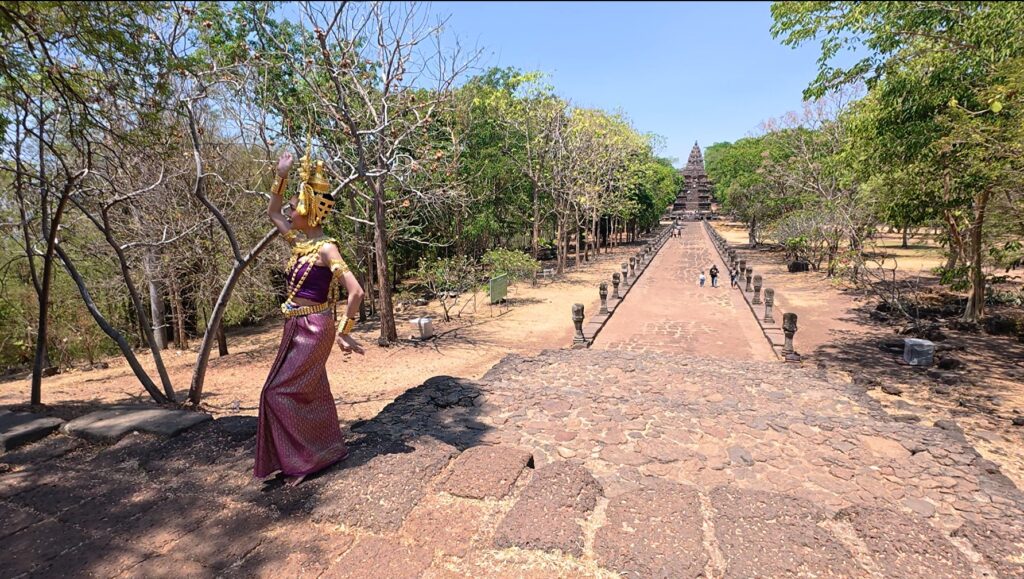
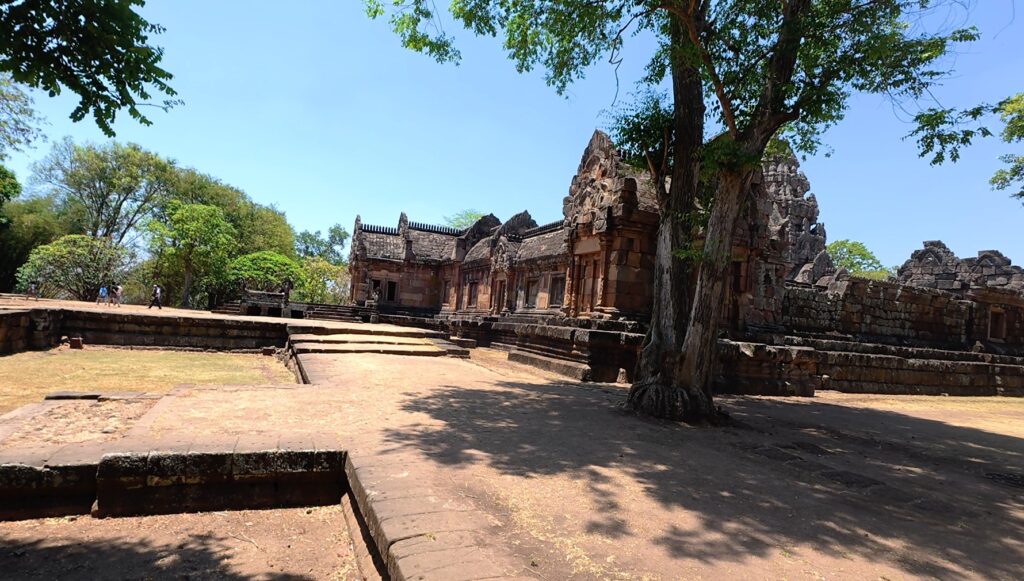
From here, a long stone processional walkway stretches toward the mountain.
The path is lined with sandstone posts topped with lotus-bud designs, creating a strong sense of order and direction. These pillars do more than decorate the walkway. They guide the visitor forward, drawing the eyes toward the distant stairway and the sacred temple beyond.
With every step, the ordinary world seems to fall farther behind.
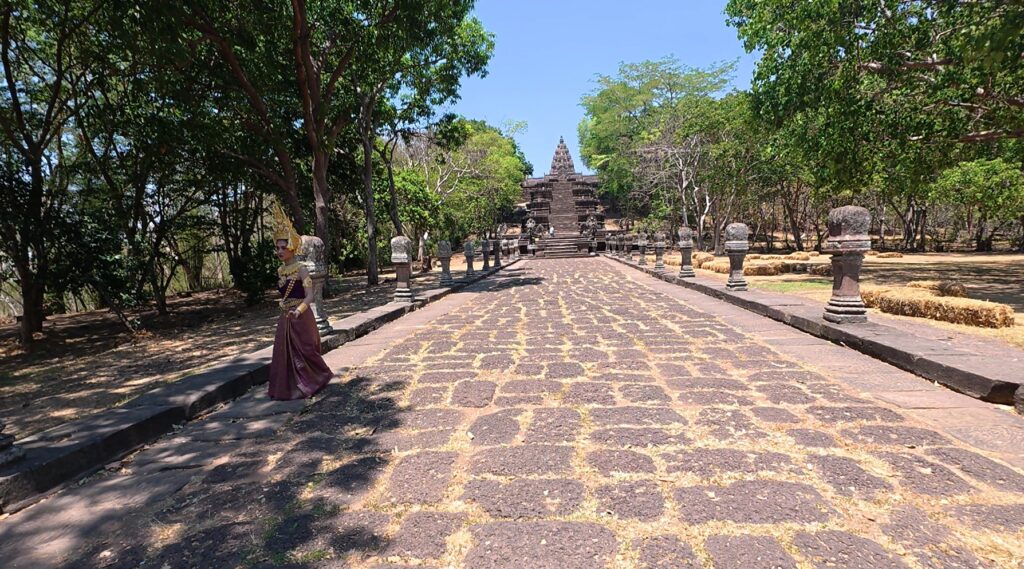
The long approach was designed to slow the visitor down and turn walking into a ritual. The sanctuary is not revealed all at once. Instead, it appears gradually—through distance, symmetry, and rising ground.
At the end of the processional way stands the first Naga Bridge.
Its serpent-shaped balustrades represent the mythical Naga, a powerful being associated with water, protection, and the boundary between worlds.
Crossing this bridge symbolizes leaving the human realm and entering sacred space.
Beyond it, the great stone stairway climbs toward the summit of the extinct volcano.
The ascent is steep and deliberate.
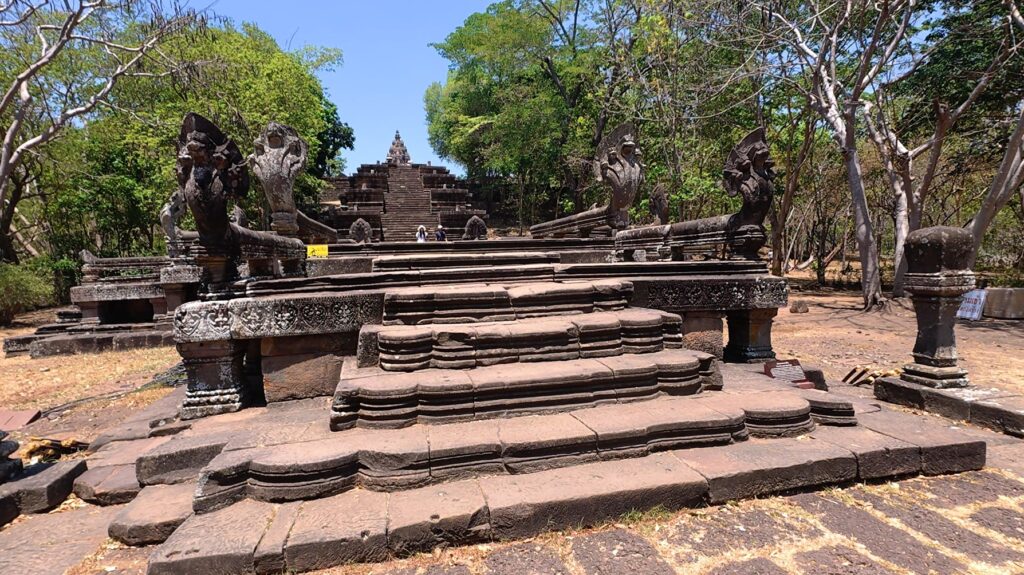
As the visitor rises higher, the temple towers begin to dominate the horizon. The architecture creates the feeling of approaching not merely a building, but the dwelling place of a god.
This carefully planned route—from the entrance pavilion, along the processional road, across the Naga Bridge, and up the monumental stairway—transforms the visit into a spiritual journey.
At Phanom Rung, the road itself is part of the temple.
It leads not only toward the main sanctuary, but symbolically from the world of humanity toward Mount Meru, the sacred mountain at the center of the Hindu universe.
Crossing the Three Naga Bridges
One of the most remarkable features of Phanom Rung is its three Naga Bridges.
These bridges are far more than beautiful stone structures. In Hindu belief, they represent the passage between the human world and the realm of the gods.
The Naga is a sacred serpent that serves as both protector and guardian. It is believed to watch over holy places while guiding those who seek spiritual enlightenment.
As visitors move through the temple, they cross three separate Naga Bridges, each marking a new stage in the sacred journey.
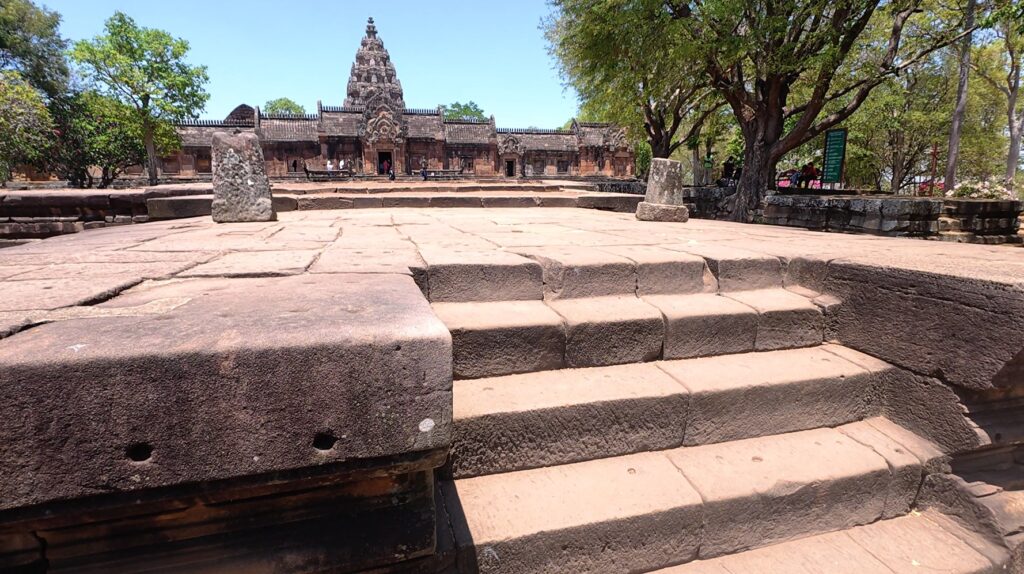
The first bridge welcomes pilgrims as they leave the ordinary world behind.
The second bridge stands higher on the mountain, bringing them closer to the sanctuary.
Finally, the third bridge leads directly into the heart of the temple, where the main sanctuary rises before them.
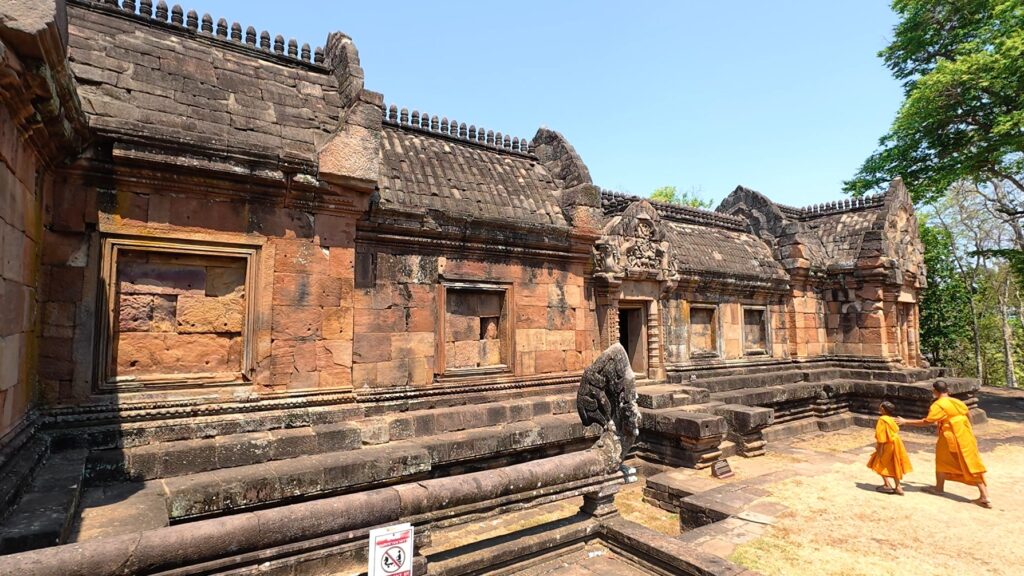
Each bridge is decorated with finely carved sandstone balustrades ending in the heads of five-headed Nagas.
The elegant curves of the serpents appear almost alive, as though they continue to guard the temple after more than a thousand years.
Standing on these ancient bridges, it is easy to imagine the ceremonies once held here.
Kings, priests, and pilgrims would have walked the very same stones, believing that every step carried them closer to the divine presence of Lord Shiva.
Even today, crossing the Naga Bridges feels less like entering an archaeological site and more like walking into another world.
They remind every visitor that this temple was never intended to impress with its size alone.
It was built to inspire awe, devotion, and the belief that the path to the gods begins with a single step.
The Main Sanctuary — Mount Meru on Earth
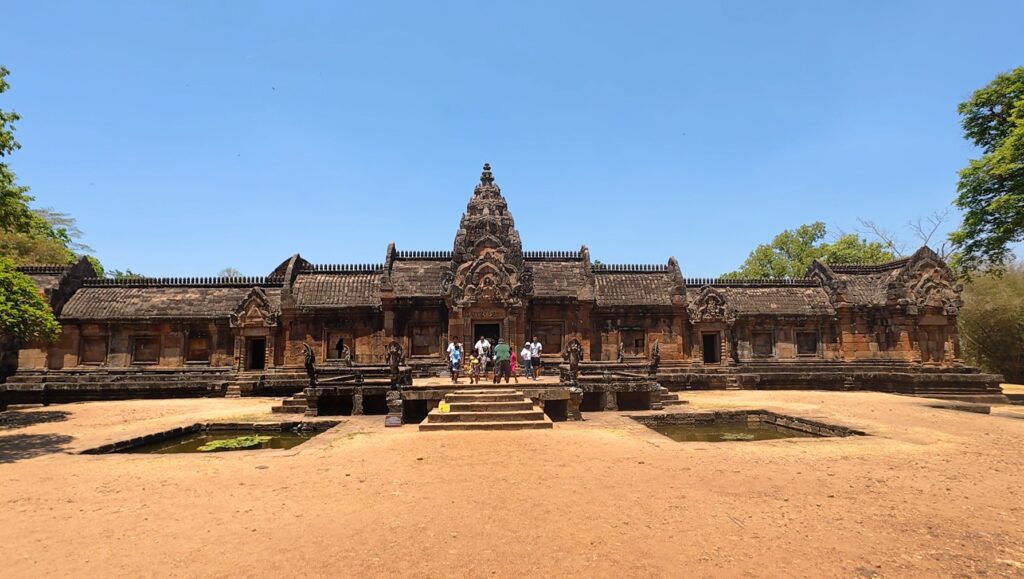
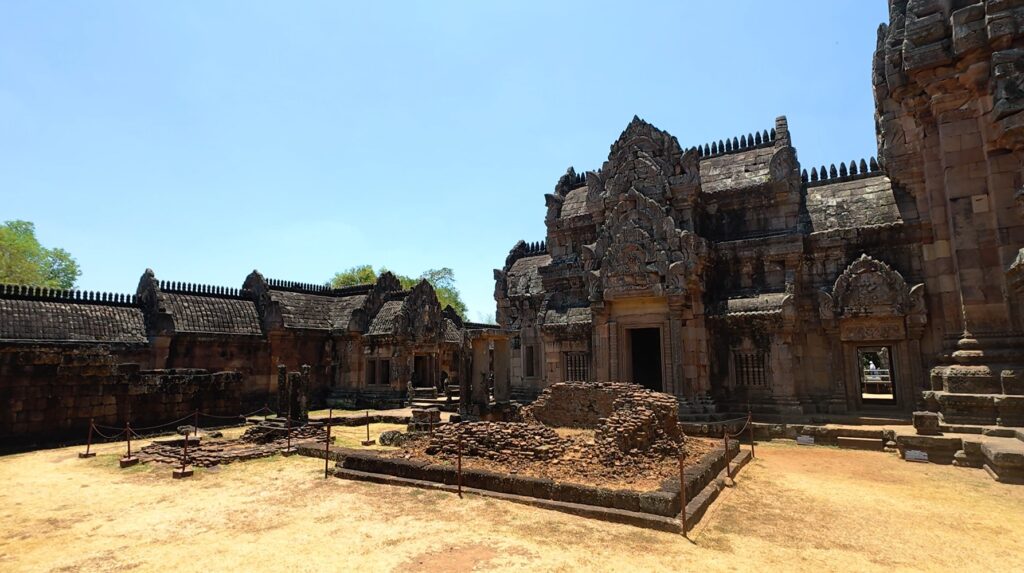
At the summit of the extinct volcano stands the Main Sanctuary, the spiritual heart of Phanom Rung.
From a distance, its soaring central tower dominates the skyline.
As you walk closer, every surface begins to reveal extraordinary craftsmanship.
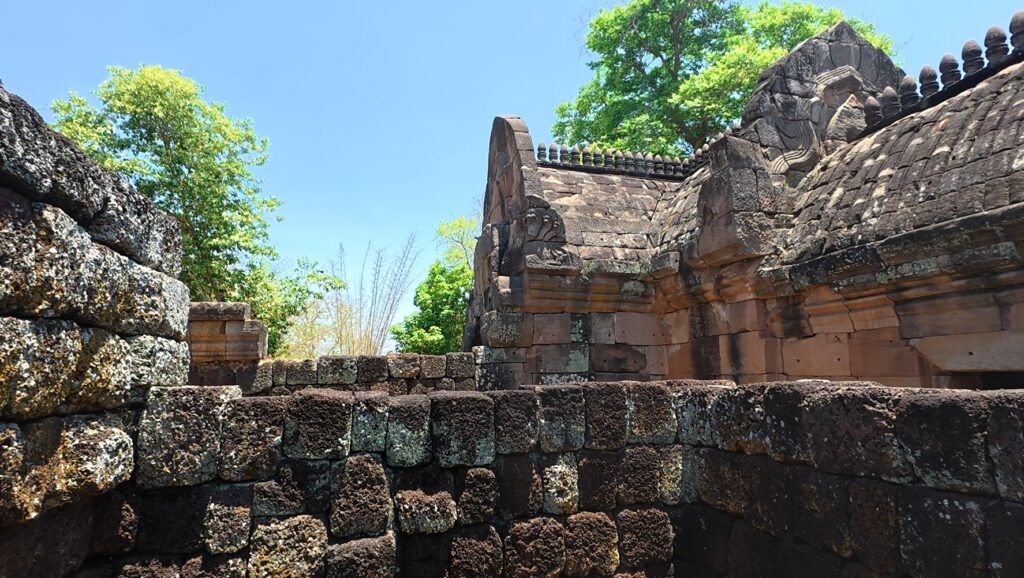
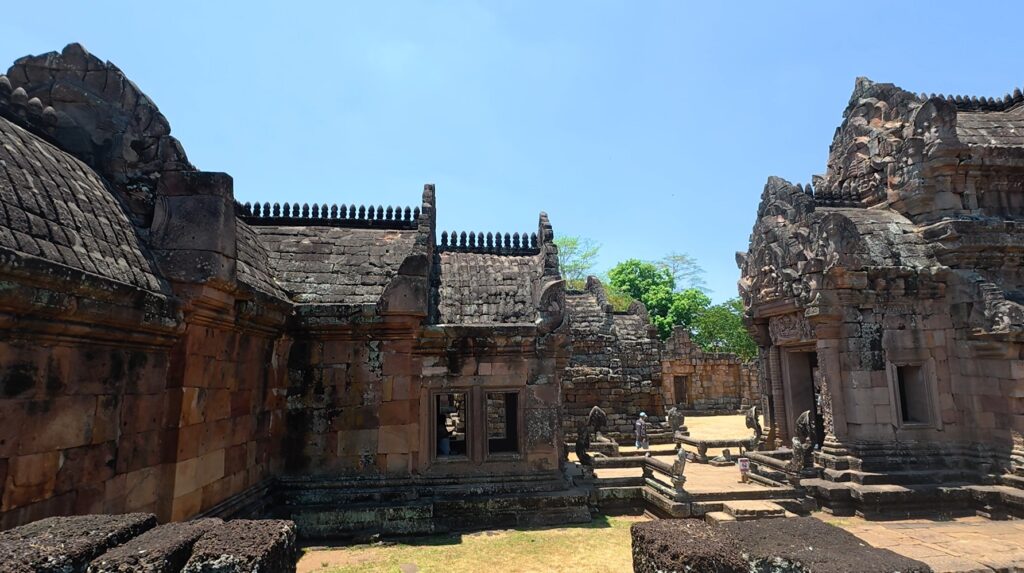
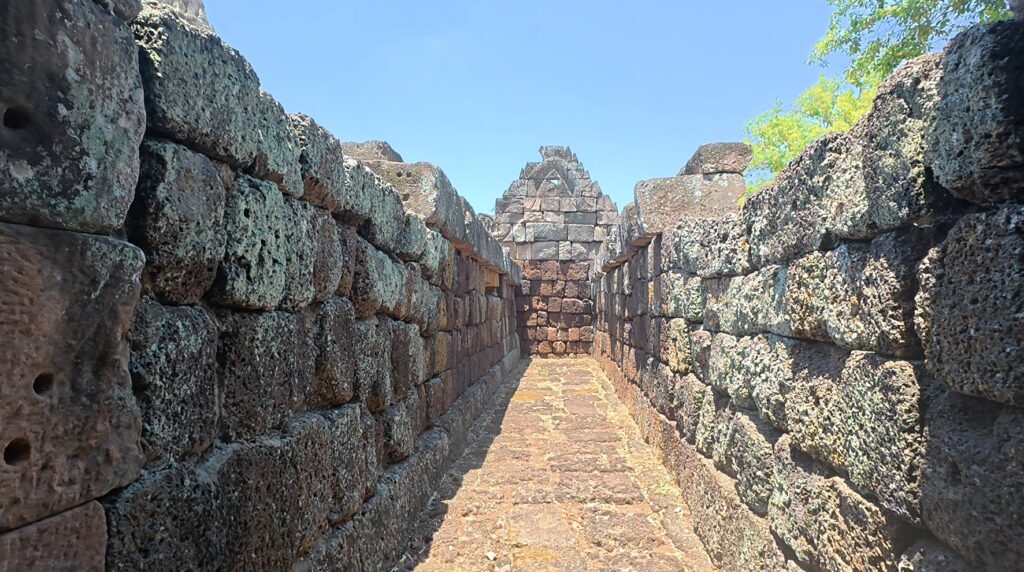
Finely carved sandstone walls, intricate lintels, and bas-reliefs filled with scenes from Hindu mythology surround the sanctuary.
Gods, celestial beings, guardians, and legendary creatures seem almost alive, frozen in stone yet filled with movement.
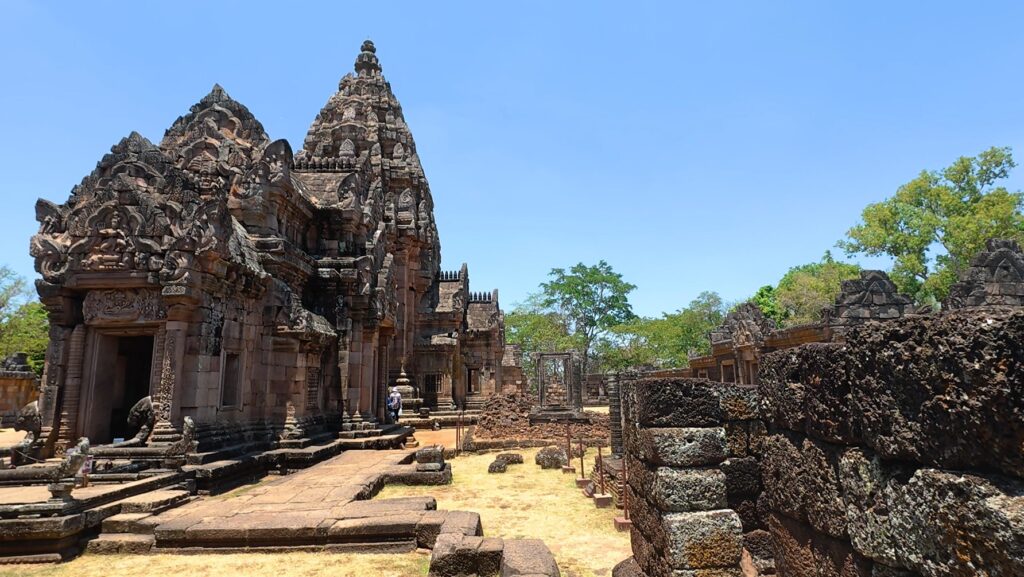
Every carving tells a story.
Every doorway invites visitors to step deeper into a world shaped by faith and imagination.
This is not merely architecture.
It is the Hindu vision of the universe carved into stone.
The sanctuary was designed to represent Mount Meru, the sacred mountain believed to stand at the center of the cosmos and the eternal home of the gods.
For the Khmer builders, reaching the summit of Phanom Rung symbolized ascending from the earthly world into the divine realm.
The central tower was dedicated to Lord Shiva, one of Hinduism’s supreme deities.
Inside the sanctuary once stood a sacred Shiva Linga, representing Shiva’s infinite creative power and the unity of heaven and earth.
Even after more than a thousand years, the temple continues to inspire awe.
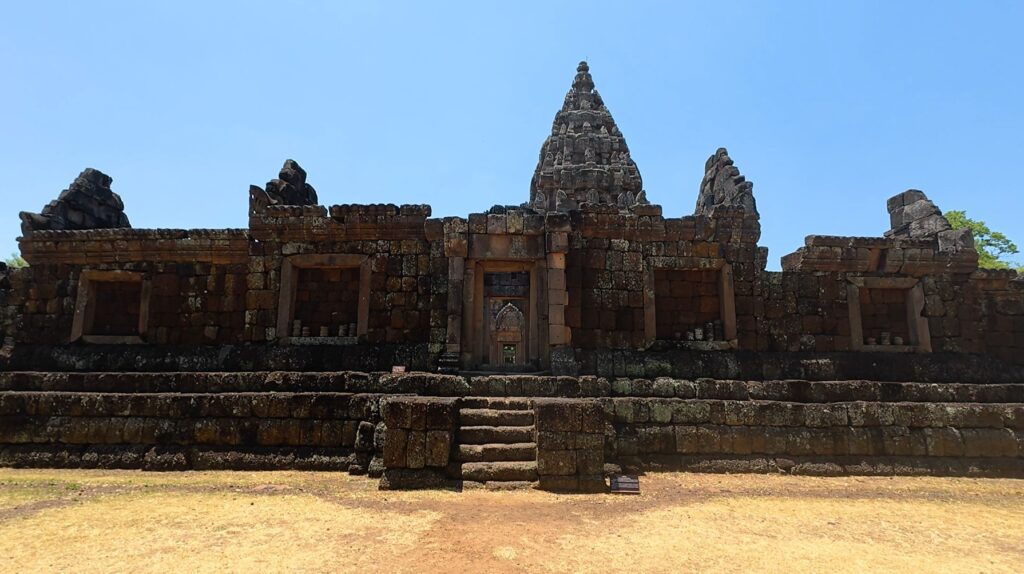
The precision of its stonework, the perfect proportions of its towers, and the remarkable preservation of its sculptures remain among the greatest achievements of Khmer architecture.
Standing before the sanctuary, it is impossible not to wonder how medieval craftsmen, working with simple tools, created such extraordinary beauty.
Phanom Rung is more than an ancient monument.
It is a masterpiece where engineering, religion, astronomy, and art come together as one timeless expression of human devotion.
The Miracle of the Fifteen Doorways
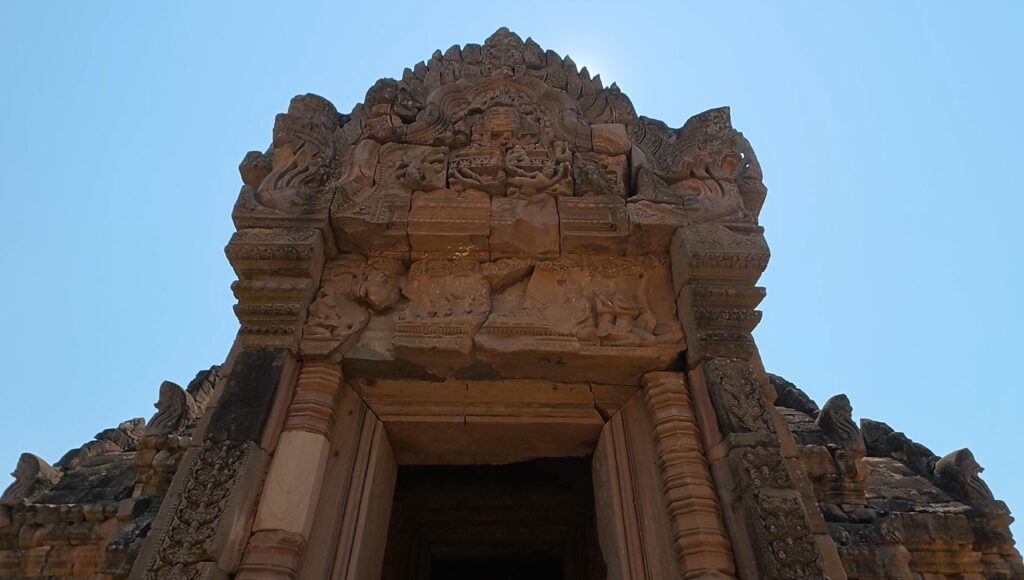
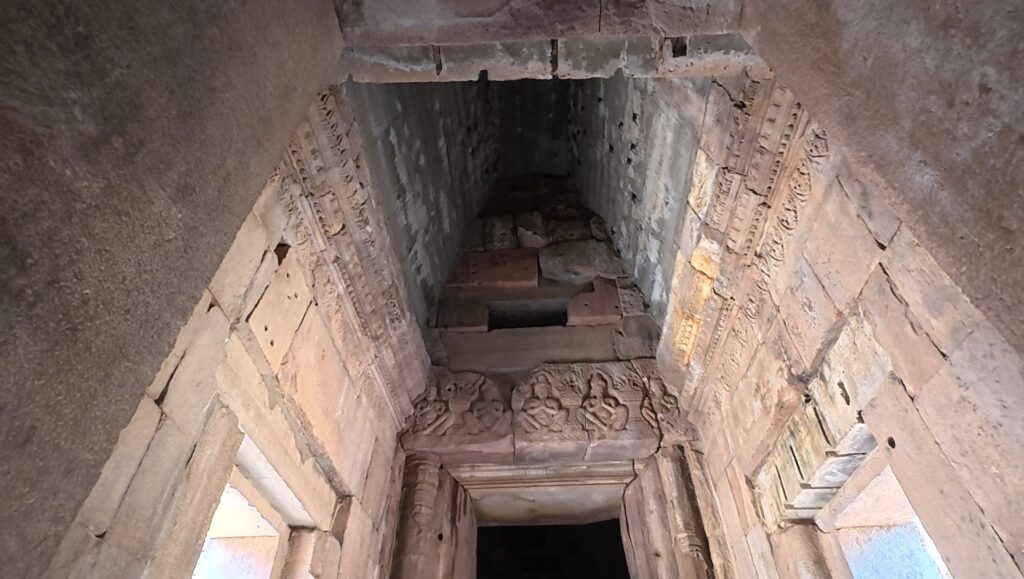
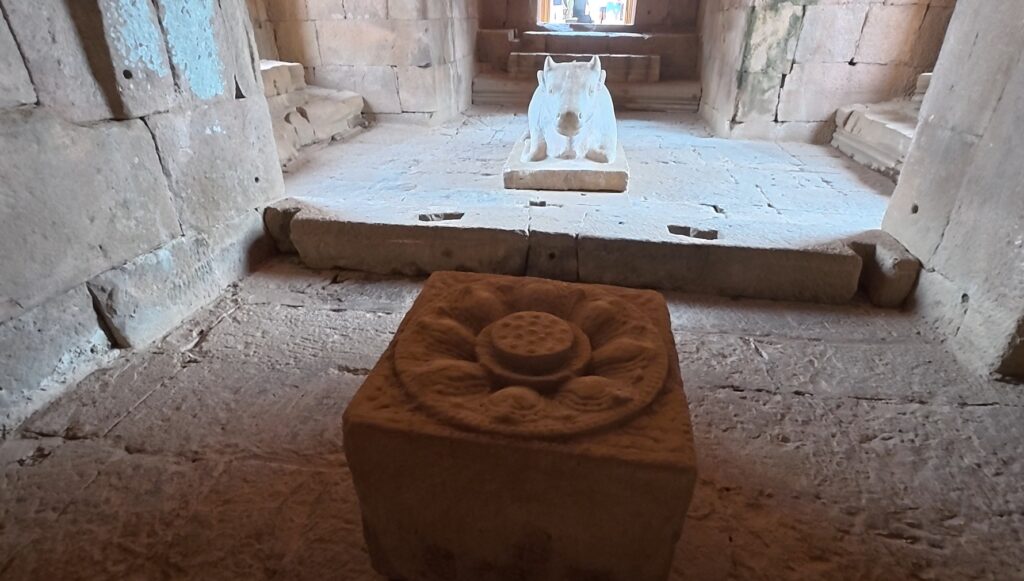
Among all the wonders of Phanom Rung, one phenomenon has fascinated visitors for centuries.
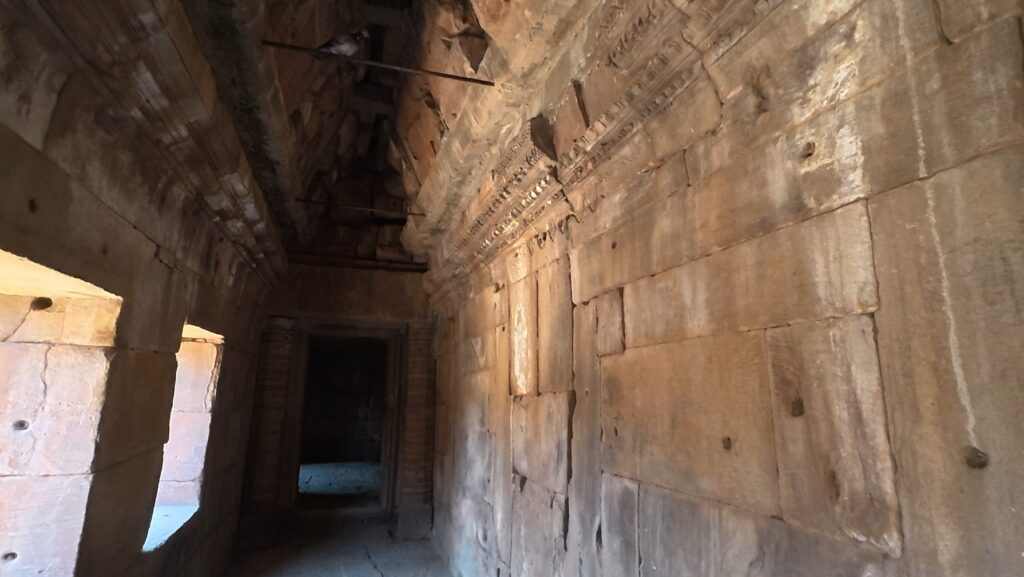
Twice each year, the rising sun shines perfectly through all fifteen doorways of the sanctuary.
For only a few precious moments, a single beam of golden light travels from the eastern entrance to the western end of the temple, illuminating every doorway in perfect alignment.
This breathtaking event is no coincidence.
It reflects the extraordinary knowledge of astronomy, mathematics, and architecture possessed by the Khmer builders more than a thousand years ago.
The entire sanctuary was carefully designed so that the sunrise would align with the temple during specific times of the year, creating a powerful connection between heaven and earth.
For the ancient Khmer people, the movement of the sun represented cosmic order and divine power.
When the sunlight passed through every doorway, it symbolized harmony between the universe, the gods, and humanity.
Even today, thousands of visitors gather at Phanom Rung every April and September to witness this rare spectacle.
As the first rays of sunlight slowly enter the sanctuary, silence falls across the temple.
For a brief moment, time itself seems to stand still.
Standing there, watching the ancient stones glow beneath the morning sun, it becomes clear that Phanom Rung was never meant to be simply admired.
It was designed to be experienced.
It is a place where architecture becomes astronomy, where religion becomes art, and where history continues to speak through light
A Journey Beyond Time
Leaving Phanom Rung, I looked back one last time at the ancient sanctuary standing proudly atop the extinct volcano.
For more than a thousand years, kings, priests, pilgrims, and travelers have climbed these same stone steps in search of something greater than themselves.
Today, the prayers have faded.
The ceremonies have ended.
Yet the temple remains.
Its silent stones still tell stories of faith, devotion, and remarkable human achievement.
As the wind moves gently across the ancient sandstone, it feels as though the voices of the Khmer Empire still echo through the corridors.
Phanom Rung is far more than one of Thailand’s greatest historical parks.
It is a timeless reminder that civilizations may disappear, but their dreams can endure for centuries.
Some places are remembered because of history.
Others are remembered because of beauty.
Phanom Rung is remembered because it is both.
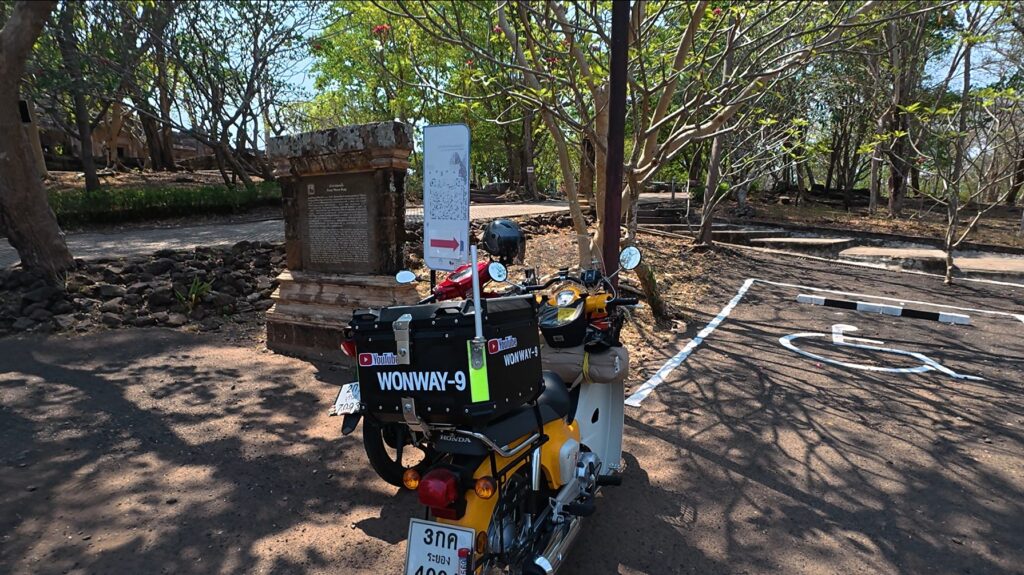
And as I rode away on my Honda Cub, I realized that this journey had not simply taken me to an ancient temple.
It had taken me across a thousand years of human imagination, faith, and craftsmanship.
Some roads lead to destinations.
This one led to the gods.
Photo Gallery
Visitor Information
📍 Location
Phanom Rung Historical Park is located in Chaloem Phra Kiat District, Buriram Province, northeastern Thailand, approximately 120 km south of Buriram City.
Visitors from around the world come to Phanom Rung Historical Park to admire its remarkable Khmer architecture.
🕒 Opening Hours
Daily: 6:00 AM – 6:00 PM
The best time to visit is early in the morning when the temperature is cooler and the soft sunlight beautifully illuminates the sandstone carvings.
If you visit in April or September, you may have the rare opportunity to witness the famous sunrise shining through all fifteen doorways of the sanctuary.
🎟 Admission
- Thai Citizens: 100 THB
- Foreign Visitors: 200 THB
(Admission fees may change. Please check the official website before your visit.)
🏍 Travel Tip
The road leading to Phanom Rung is smooth and enjoyable, making it one of the finest motorcycle destinations in northeastern Thailand.
The climb toward the extinct volcano offers beautiful countryside views, and the peaceful atmosphere makes every kilometer worthwhile.
Whether arriving by motorcycle or car, Phanom Rung is a destination that rewards both the journey and the arrival.
📍 Google Maps
View Phanom Rung Historical Park on Google Maps: https://maps.app.goo.gl/HvoY1x9w1LX2huSL7
Learn More About Phanom Rung
Learn more about the history, architecture, and visitor information of Phanom Rung through these official sources
Fine Arts Department (Thailand)
Tourism Authority of Thailand (TAT)
Continue Exploring Ancient Thailand
Continue your journey through Thailand’s ancient temples, archaeological sites, and historic landmarks with Won Cub Life.
The Long Road to Prasat Muang Tam – Riding Through Buriram, Thailand
Prasat Muang Tam – Ancient Khmer Temple and Night Festival in Buriram
Leaving Phanom Rung Historical Park, I understood why it remains one of Southeast Asia’s greatest historical monuments.