A Quiet Ride into an Ordinary Temple
Wat Tan Lom in Chonburi did not immediately appear to be a temple hiding an important piece of local history.
From the road, Wat Tan Lom did not immediately appear to be a place hiding an important piece of Chonburi’s history. I rode through the colorful entrance and passed the newer temple buildings, a bell tower, a Dharma wheel, and an active monastic compound shaded by old trees.
Everything looked like a peaceful neighborhood temple. Yet behind the newer buildings stood a much smaller and quieter structure. Its walls had lost their color, its plaster was cracked, and a wide protective roof had been added around it. This was the old ubosot of Wat Tan Lom, built in 1833 during the reign of King Rama III.
The closer I walked toward it, the further I seemed to travel back in time.
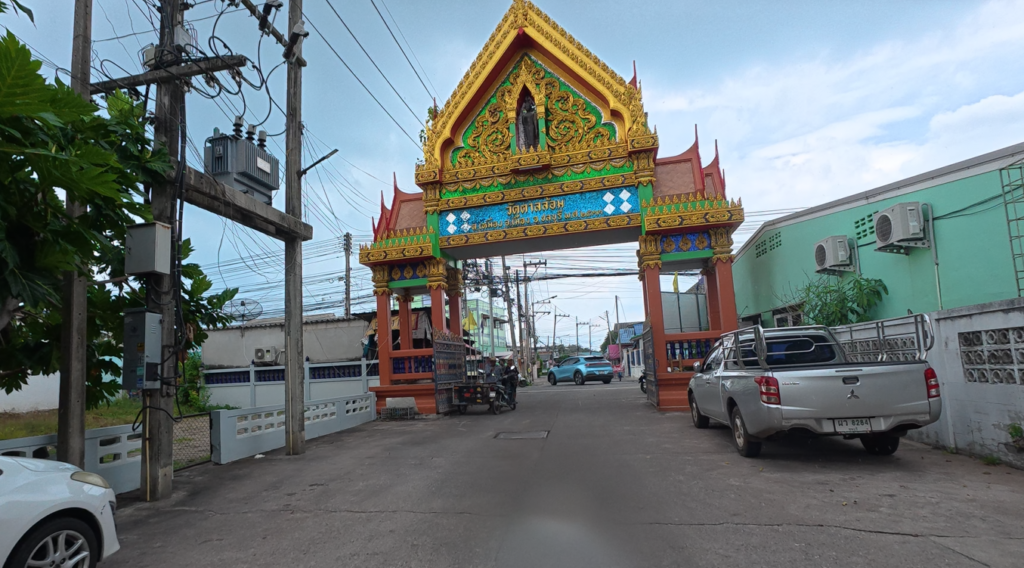
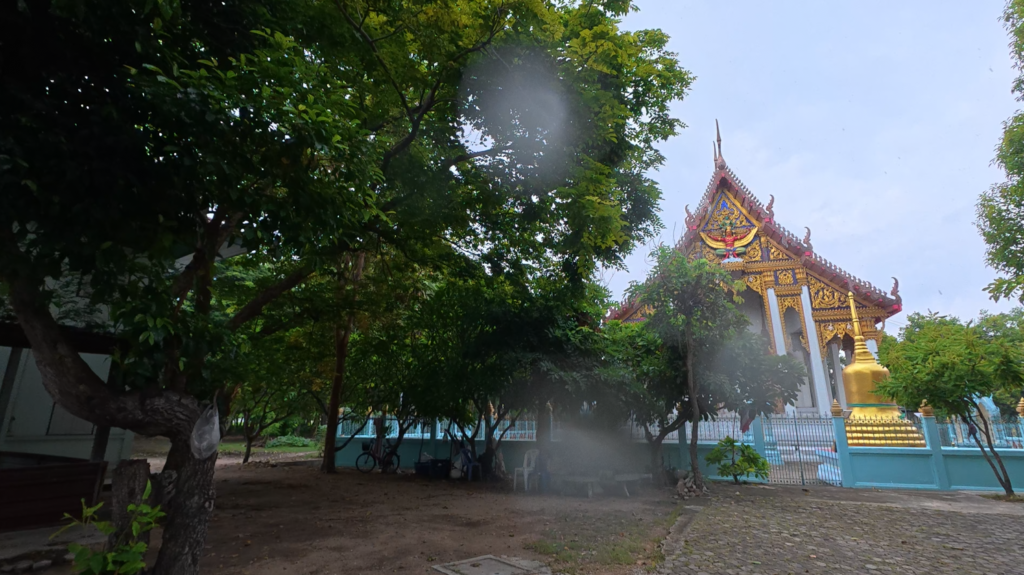
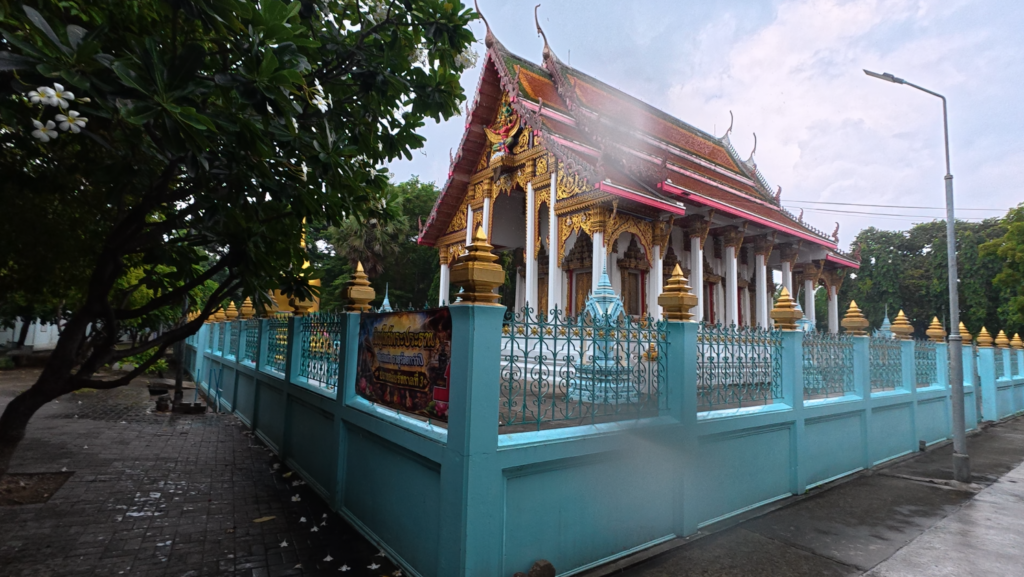
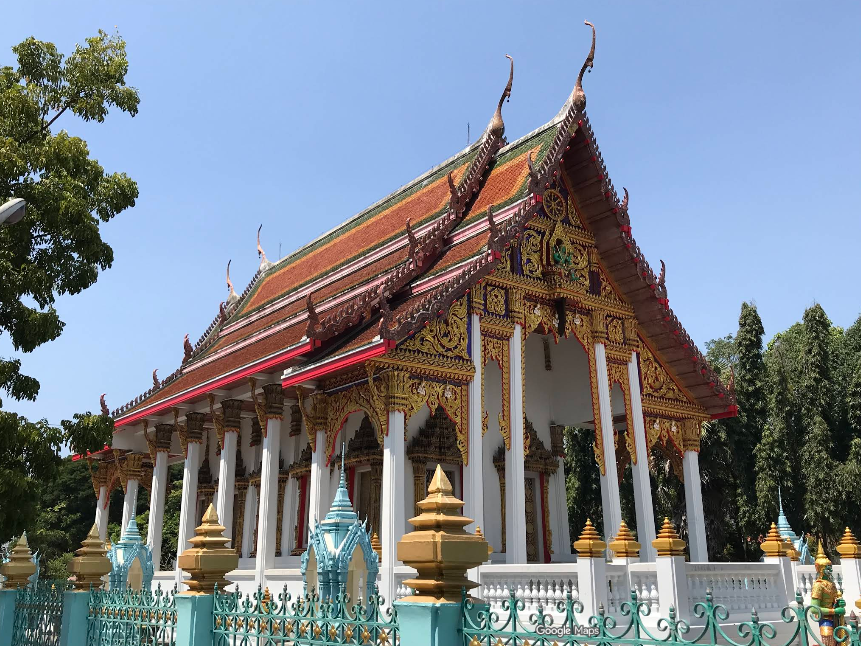
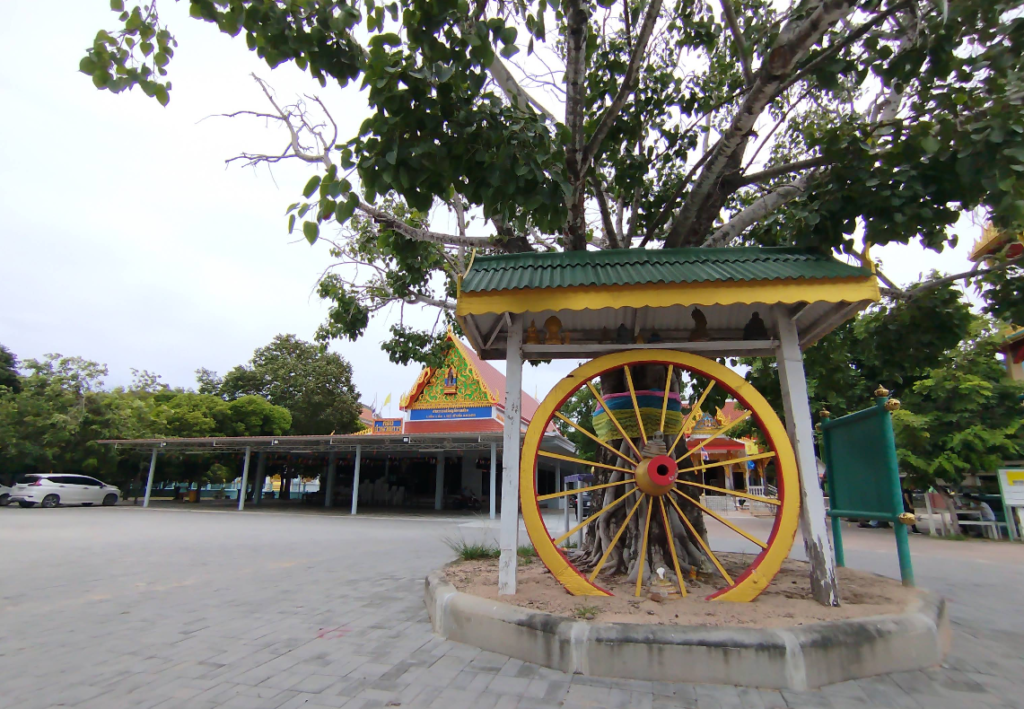
Riding through the entrance of Wat Tan Lom and passing its newer halls, bell tower, and Dharma wheel before discovering the historic ubosot behind the trees.
From Wat Narong to Wat Tan Lom
The community around Wat Tan Lom is believed to have roots extending back to the Ayutthaya period. According to local history, the temple was originally known as Wat Narong, named after Khun Narong Chom Suwan, a local leader who donated land for its construction.
As the settlement grew, the original temple grounds became too confined. Access between the village and the temple was also difficult, so the temple and local residents moved the religious center to another piece of land belonging to Khun Narong.
The new site was surrounded by palmyra palms. This landscape gave the temple its present name: Wat Tan Lom, a temple encircled by palm trees.
An information board at the site states that Khun Narong supervised the construction of the old Thai-style ubosot in 1833. Its walls were built of brick covered with lime plaster, while paintings illustrating Buddhist themes were created inside.
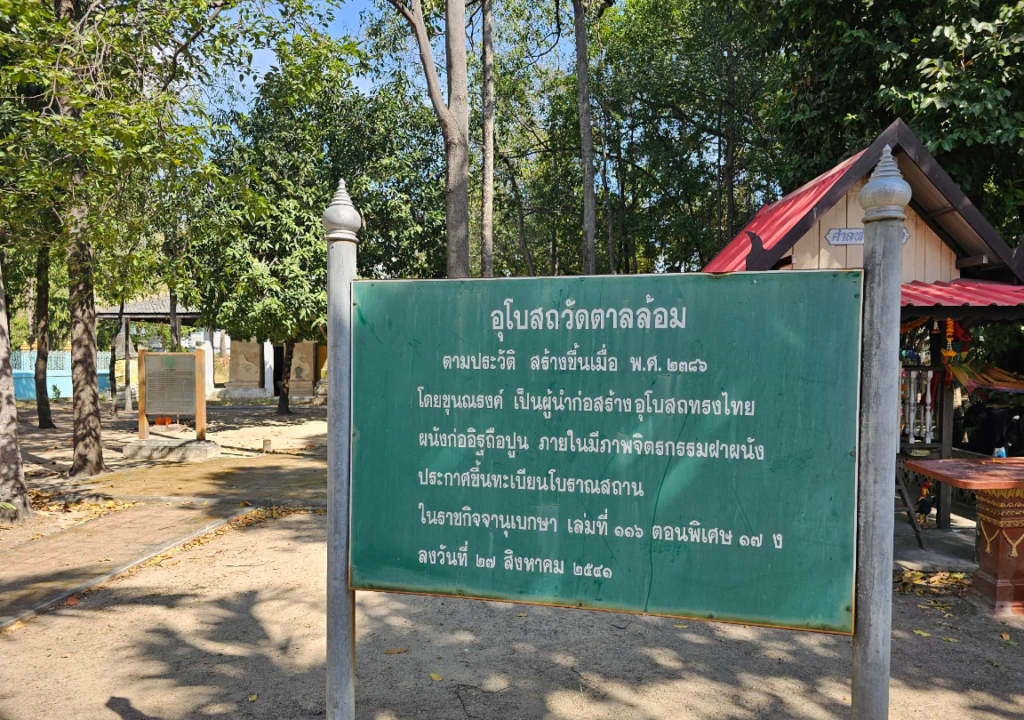
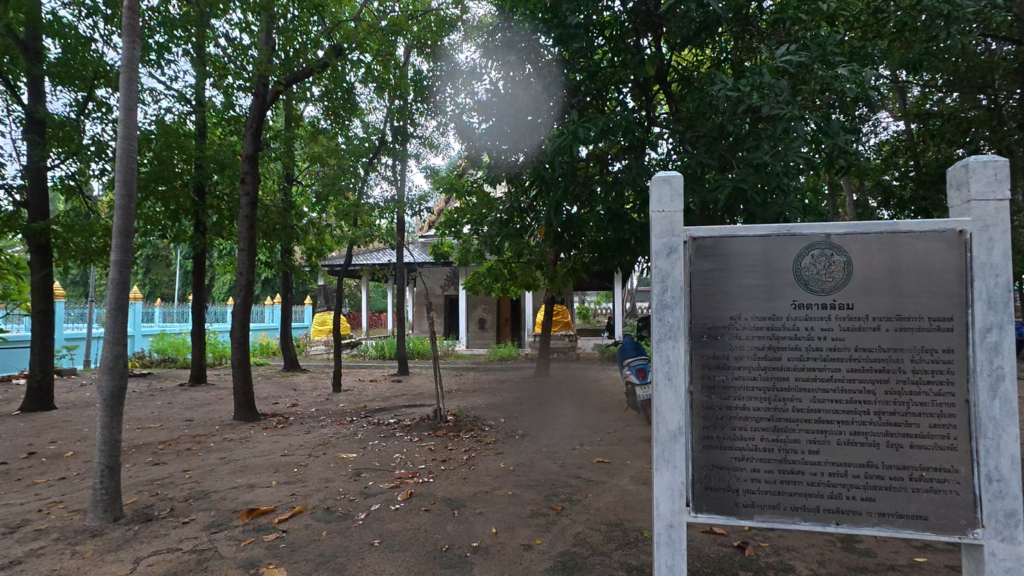
On-site records describe the construction of the old ubosot and its official registration as a historic monument.
Older Beliefs Beneath the Trees
Before entering the historic ubosot, I found another layer of Thai religious life beneath the trees.
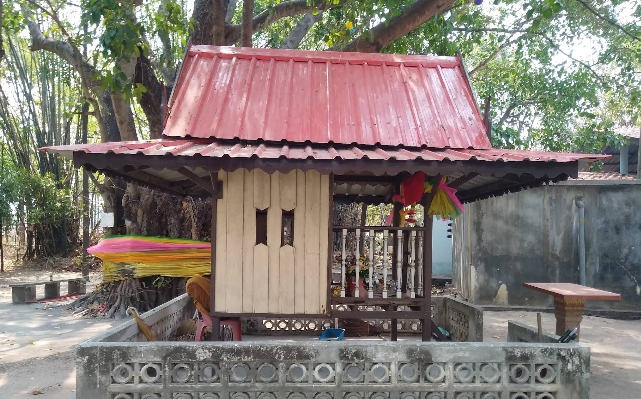
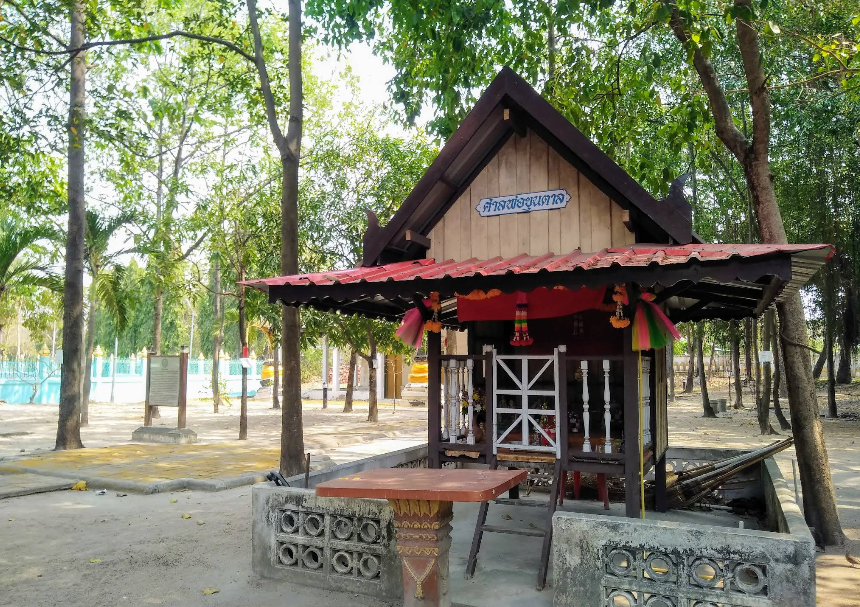
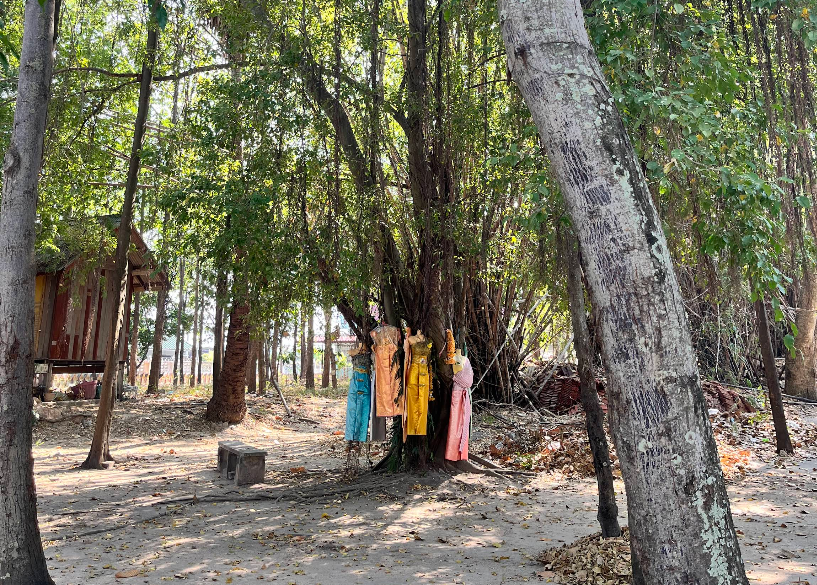
Small spirit shrines and sacred trees preserve beliefs that existed alongside Buddhism for generations.
A small wooden shrine stood beside an old sacred tree. Colorful cloth had been wrapped around its trunk, while traditional women’s dresses, dolls, flowers, sweet drinks, and other offerings had been placed nearby.
This practice is better understood as animism rather than Buddhism in its strict doctrinal form. Many Thai people believe that certain trees, bodies of water, and pieces of land are inhabited or protected by spirits. A female tree spirit is generally called a nang mai, although the particular identity of the spirit cannot be confirmed without knowing the local oral tradition.
Traditional dresses are often presented after a prayer or wish is believed to have been fulfilled. The offerings show how Thai Theravada Buddhism did not entirely replace the older spiritual world. Instead, local guardian spirits and reverence for nature were allowed to continue within the wider moral and sacred space of the temple.
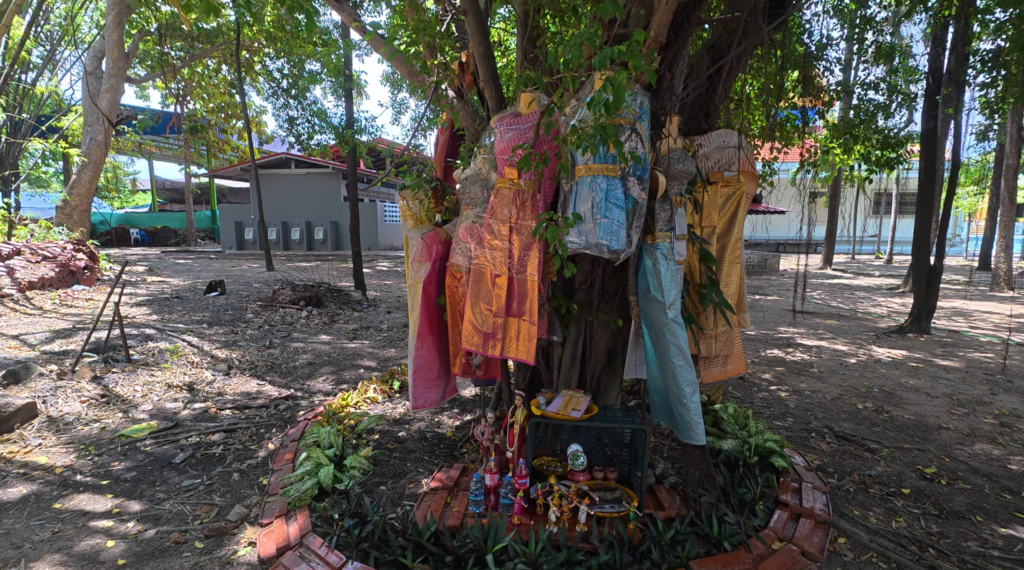
Wat Tan Lom therefore contains more than Buddhist architecture. It preserves the memory of how people understood the land before formal temples, written history, and modern roads arrived.
Luang Pho Poon and the Life of the Community
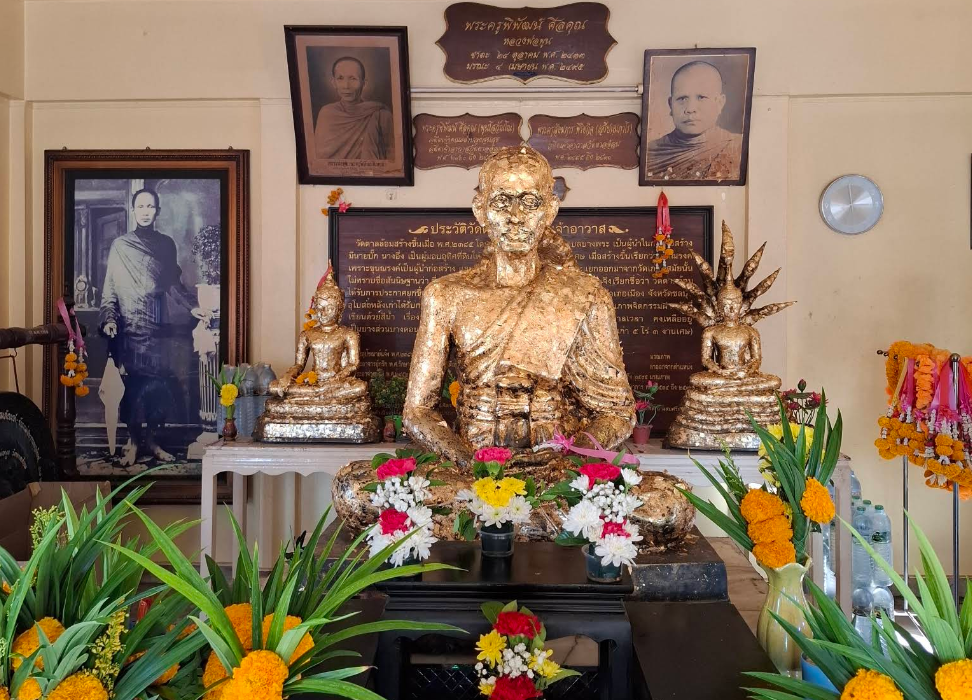
Another shrine honors Luang Pho Poon Sovanno, formally known by his ecclesiastical title, Phra Khru Phiphat Silakhun.
He served as abbot of Wat Tan Lom from 1916 until his death in 1952. He later became the monastic head of Saen Suk Subdistrict and was authorized to act as an upajjhaya, a senior preceptor responsible for conducting monastic ordinations.
Luang Pho Poon’s influence reached beyond religious ceremonies. Believing that education was essential to the community, he encouraged villagers to donate money and labor for a permanent school building. A two-story concrete school was constructed during the 1930s and became an important center of public education for local children.
After his death, his disciples created a memorial statue in 1963. Today, visitors continue to place flowers and gold leaf upon it. The statue is not an image of the Buddha but a memorial to a monk remembered as an abbot, teacher, healer, spiritual adviser, and community leader.
The Old Ubosot and Its Unusual Boundary Stones
The exterior of the old ubosot is restrained and heavily weathered. Its low base stands almost level with the surrounding ground, while the pediments retain fragments of floral stucco decoration. Government heritage records describe these designs as Western-influenced plant motifs, suggesting how foreign decorative ideas had begun to enter Thai religious architecture.
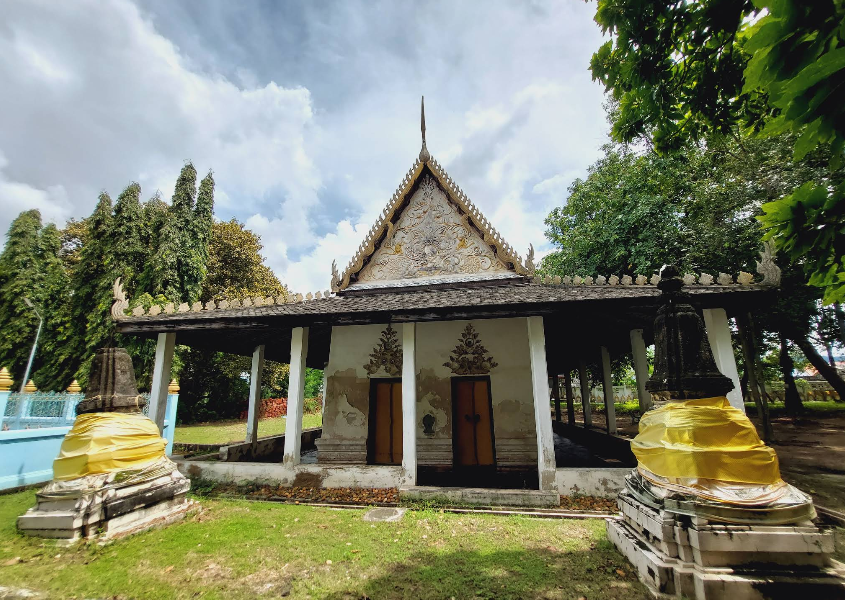
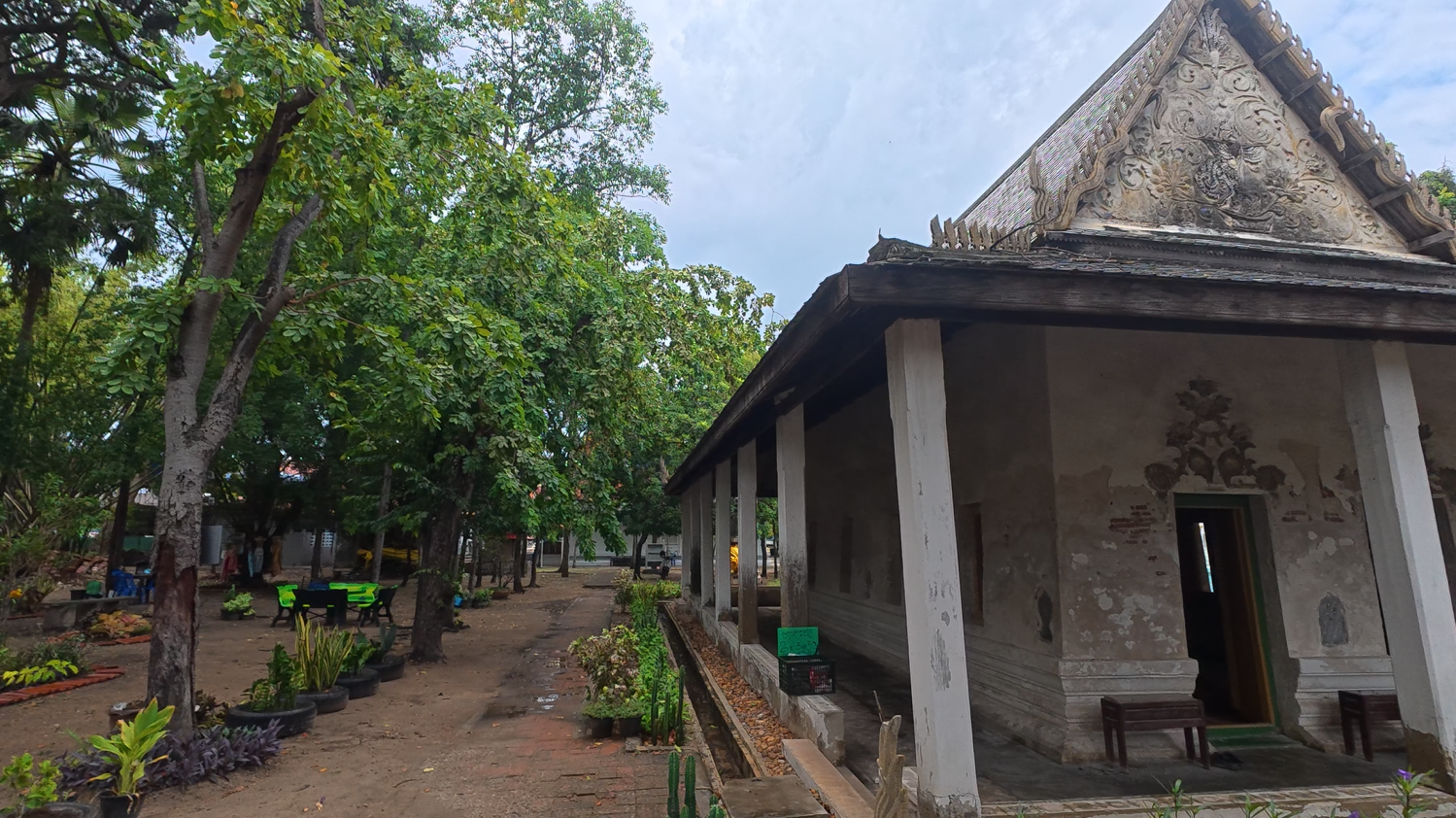
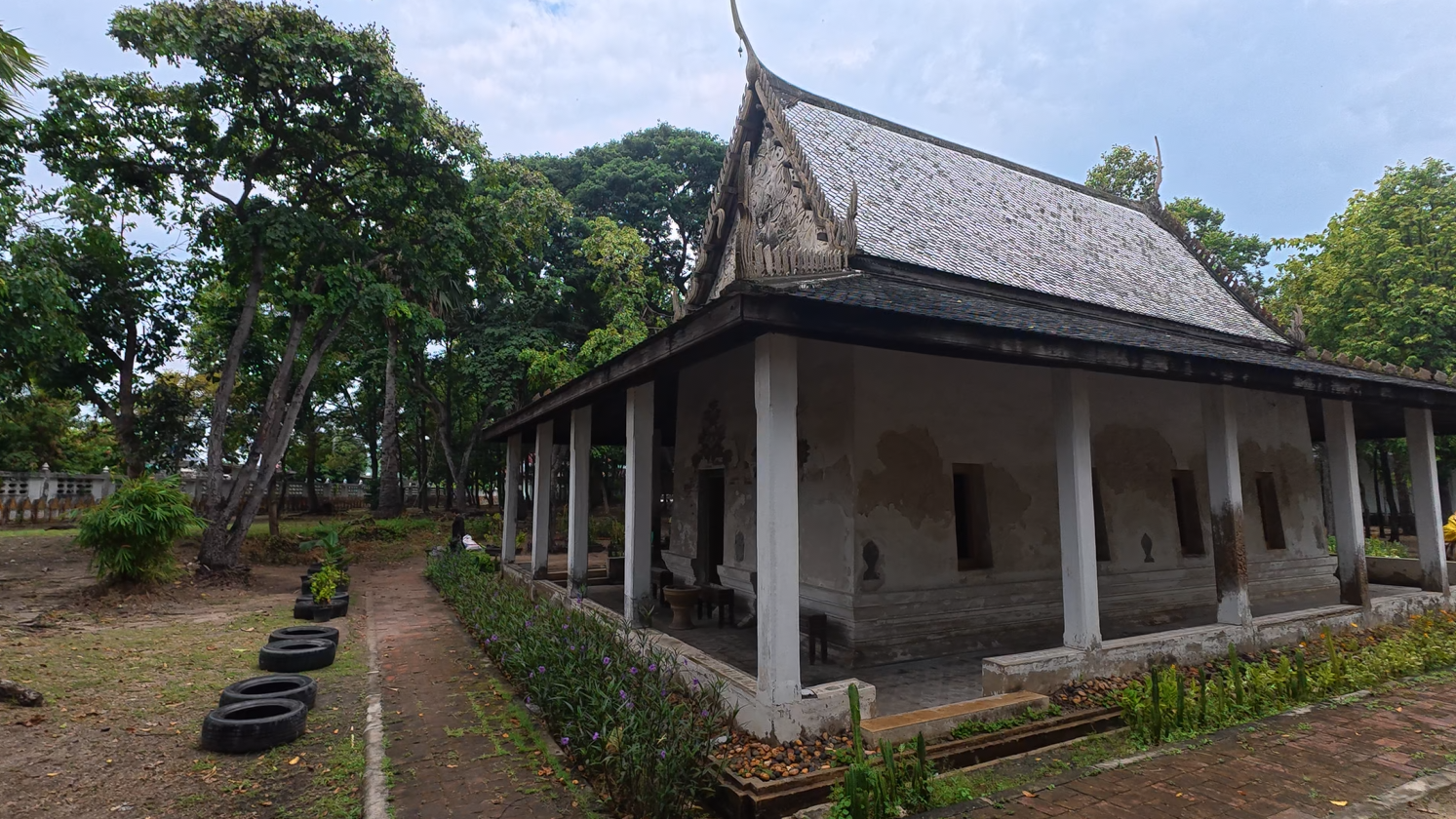
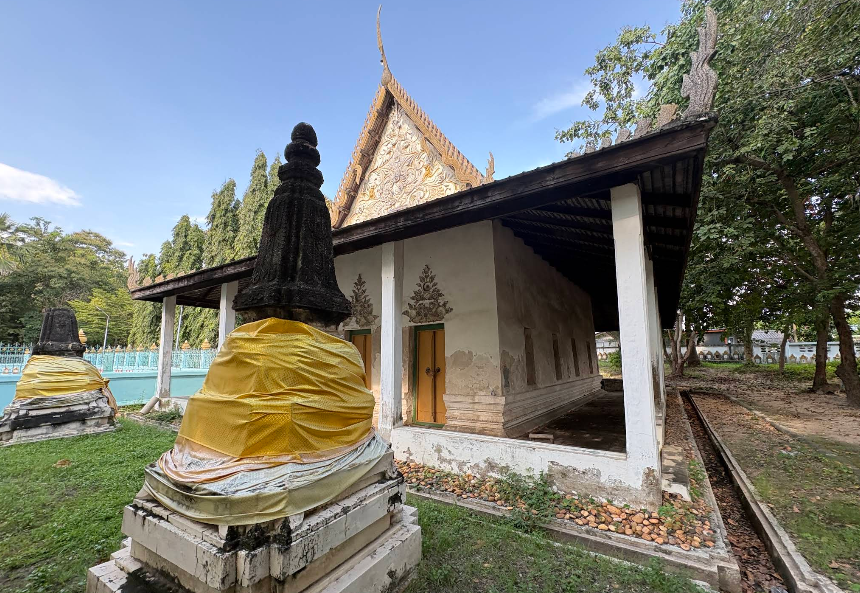
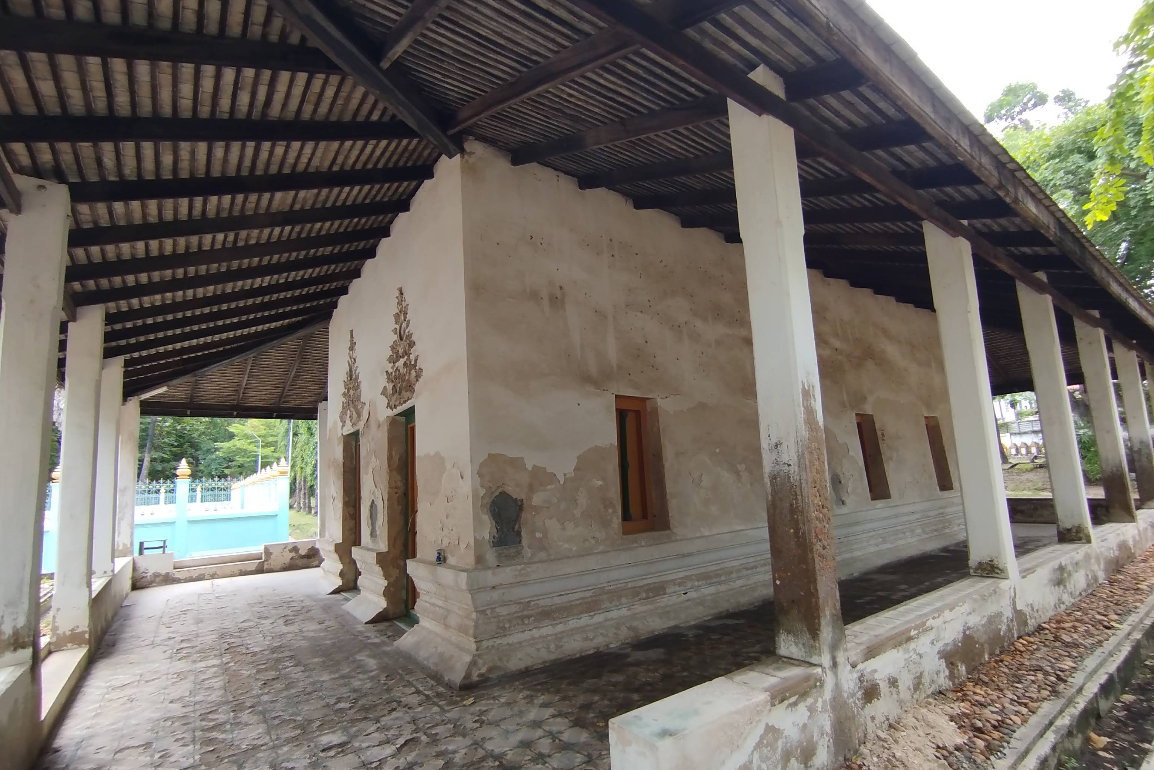
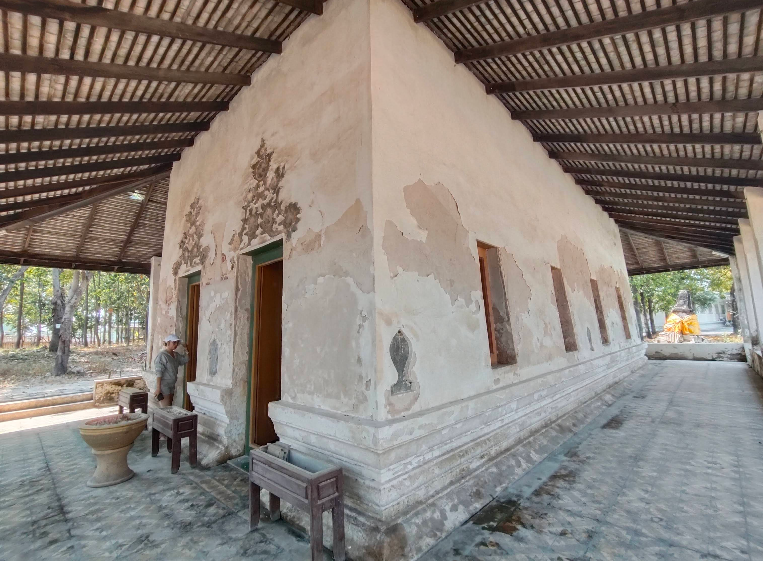
The small historic ubosot stands beneath a protective roof, its weathered walls and low foundation revealing its age.
Sacred Boundaries Built into the Walls
The most unusual feature is the placement of the bai sema.
Bai sema are sacred boundary markers defining the consecrated ground of an ubosot, where important monastic ceremonies such as ordination can be performed. They are normally installed as freestanding stones around the building.
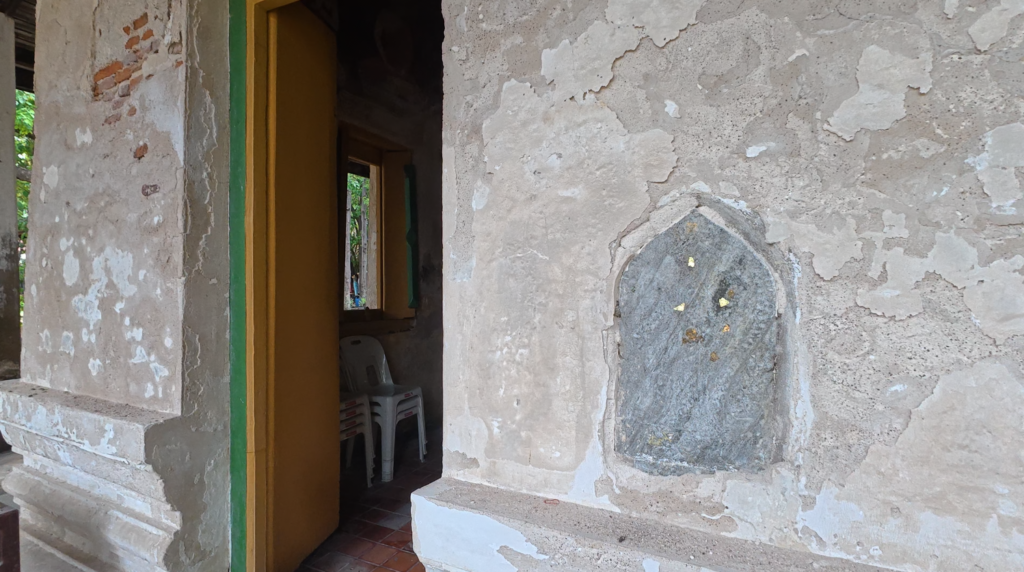
At Wat Tan Lom, however, several bai sema appear to be embedded directly into the exterior walls. One can be seen between the front doorways, while others are set into the side walls. Whether this arrangement formed part of the original 1833 design or resulted from later restoration is not clearly documented, but it gives the building a character unlike most ordination halls I have visited.
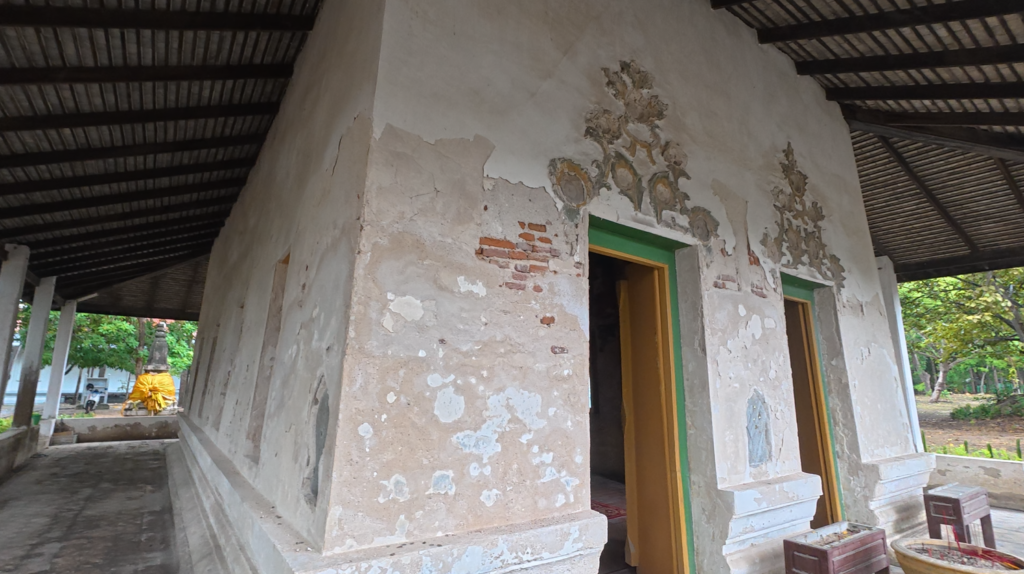
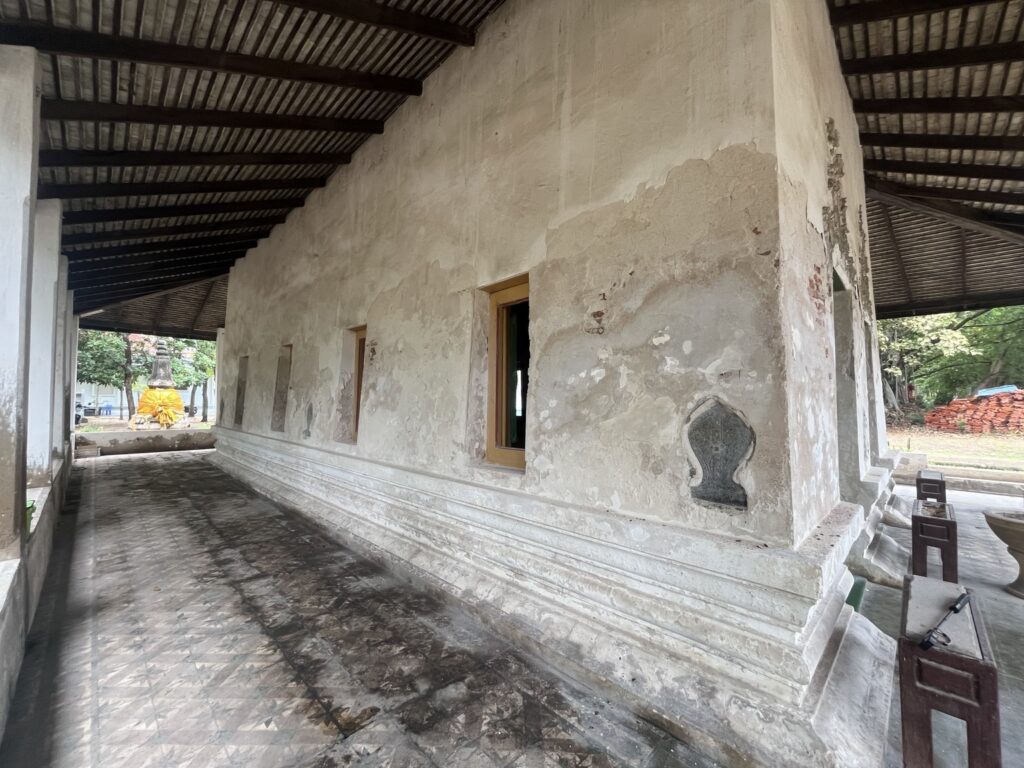
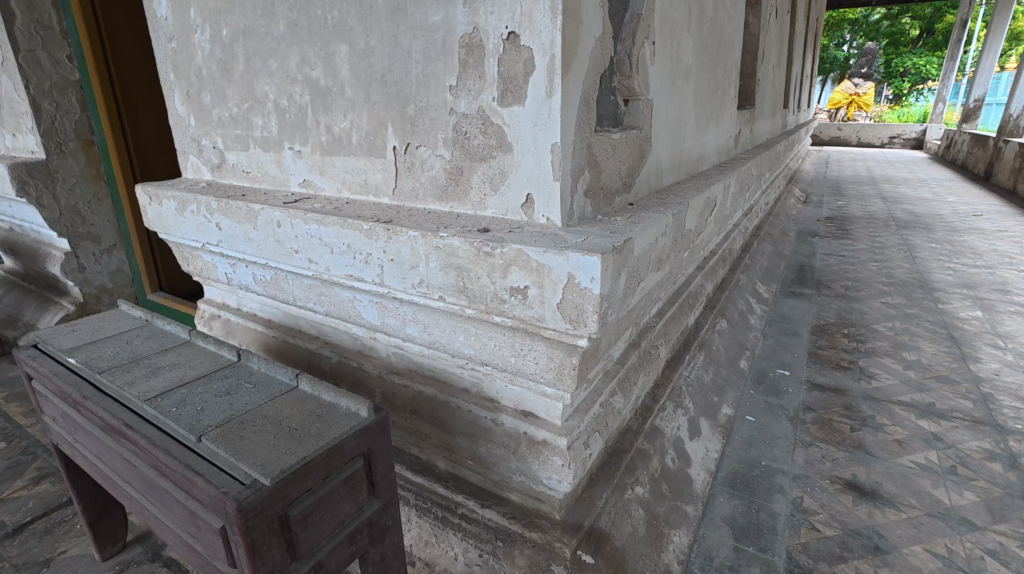
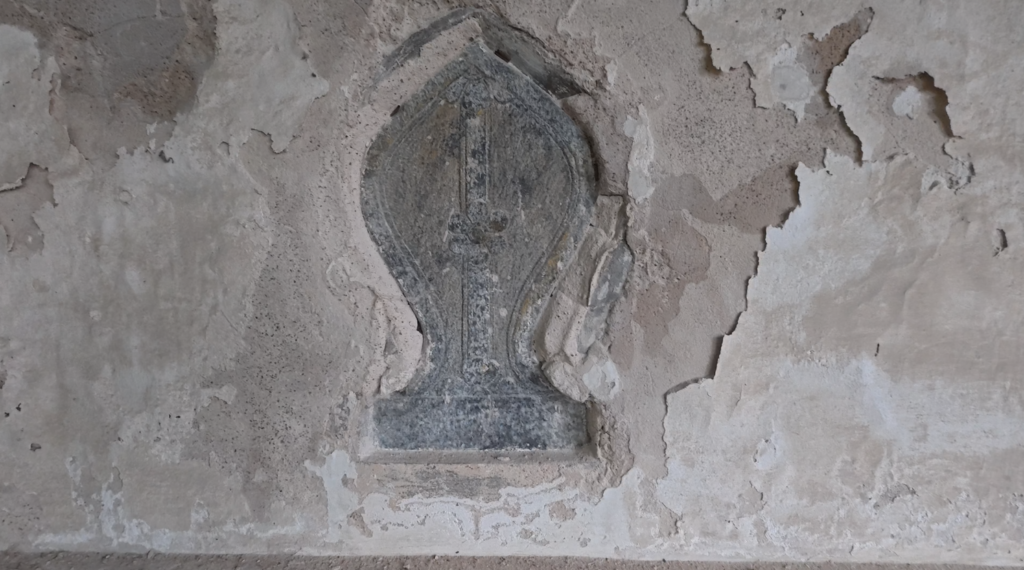
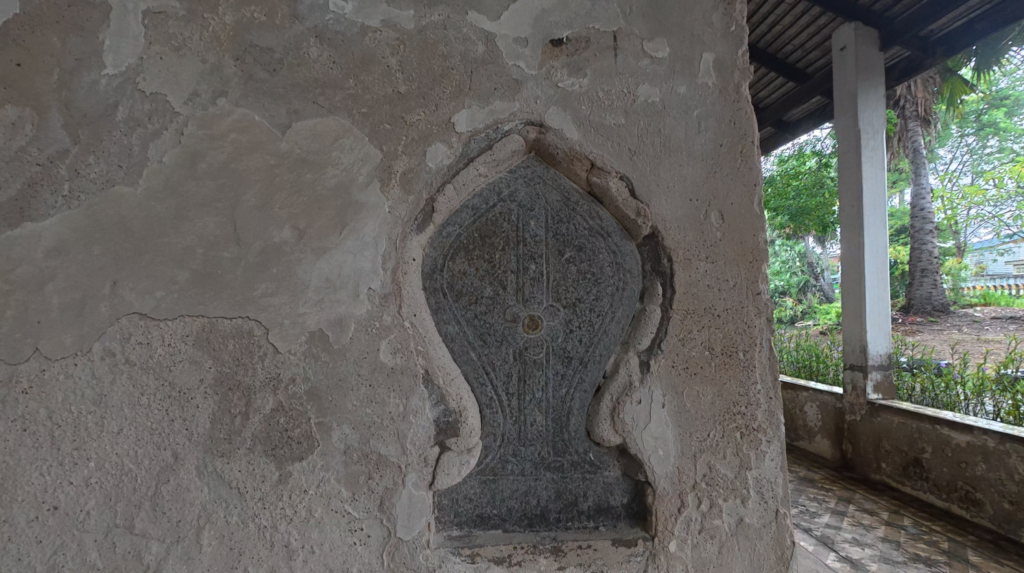
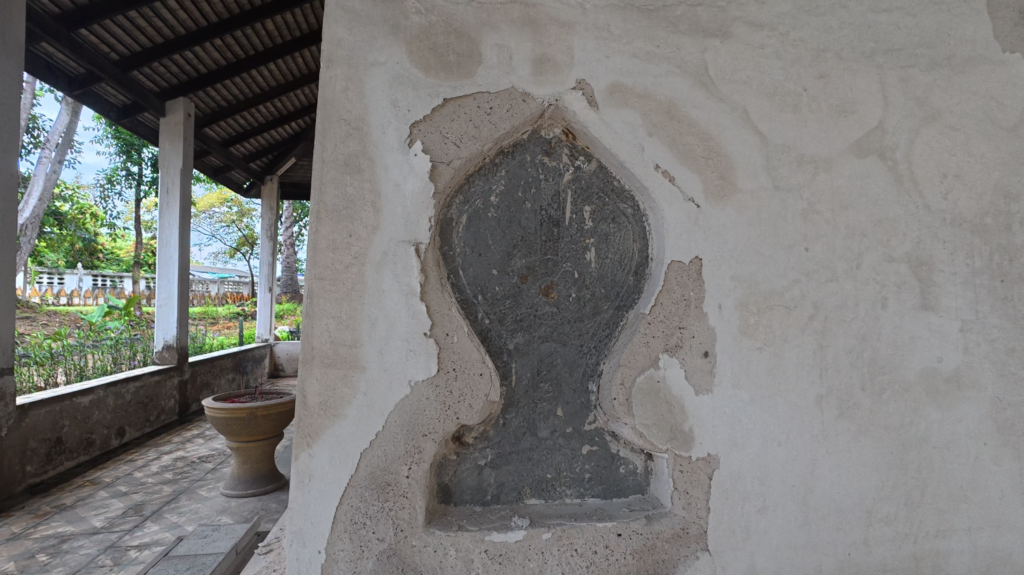
Additional bai sema markers appear at several points along the exterior walls, defining the sacred boundary of the ordination hall.
The old ubosot and its protected area were officially registered as an archaeological monument in the Royal Gazette on March 17, 1999.
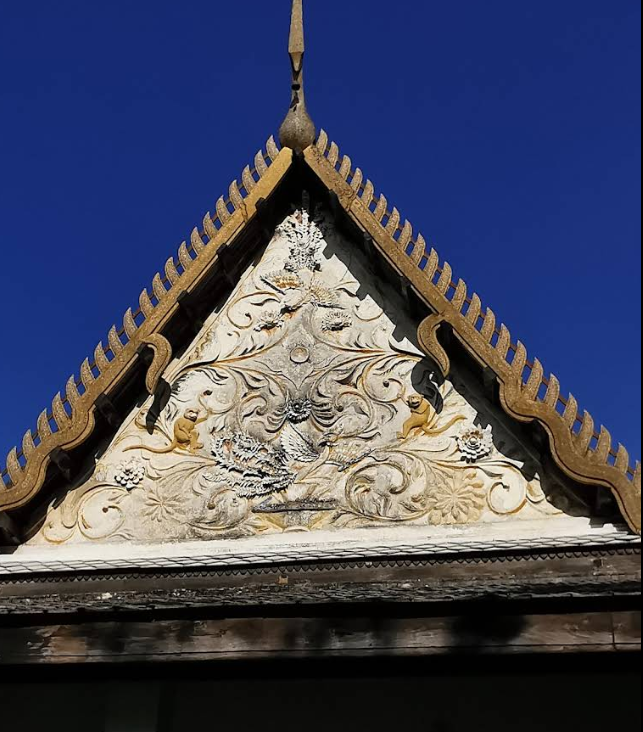
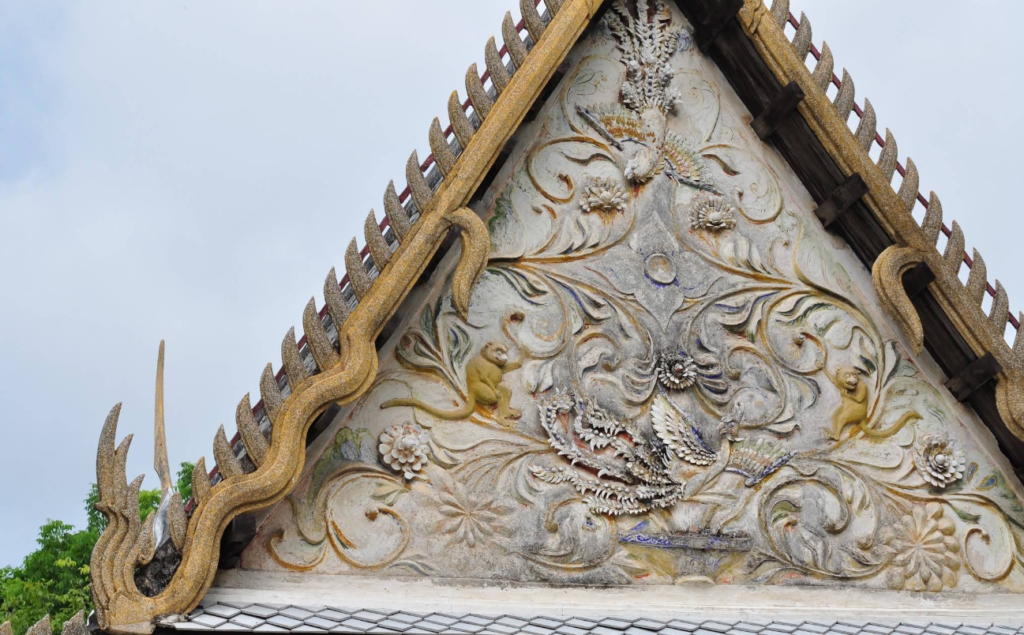
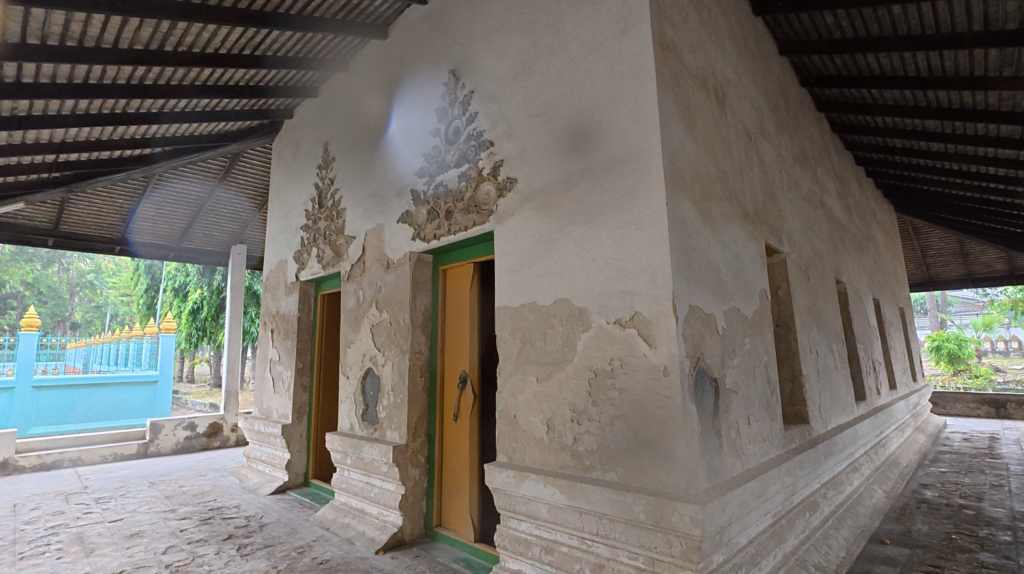
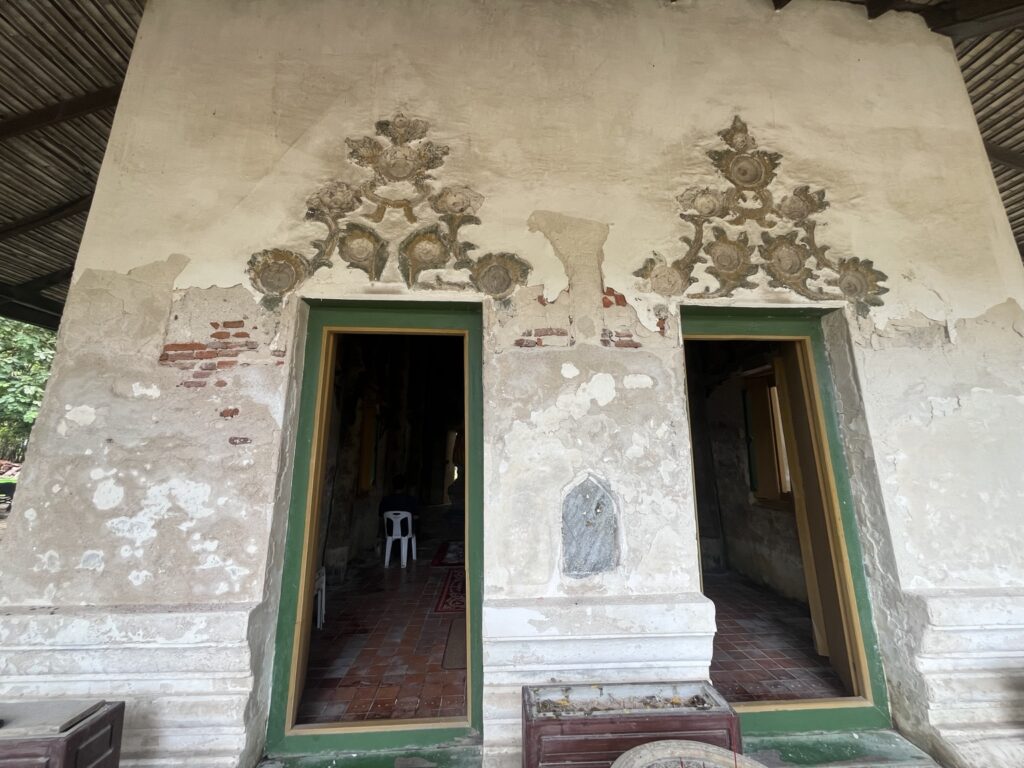
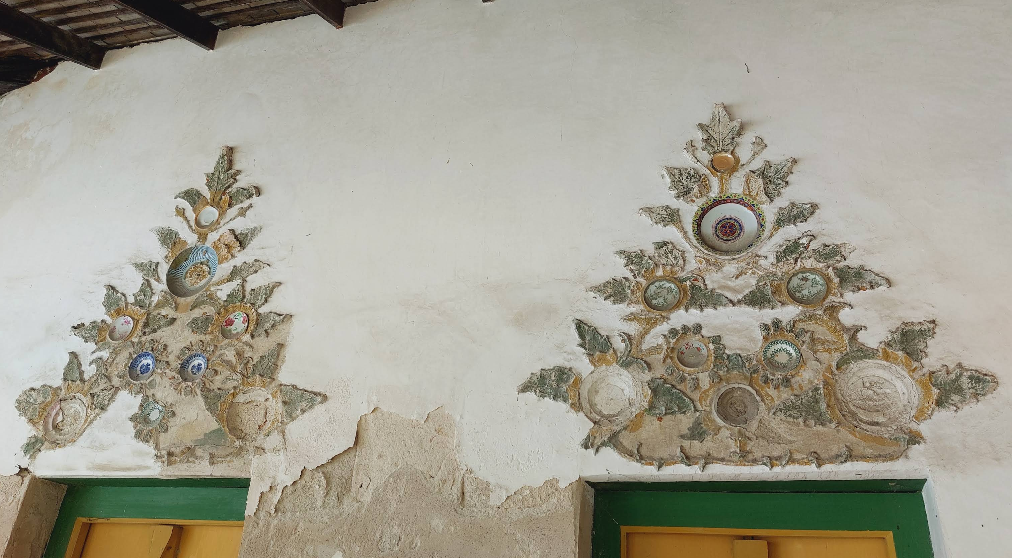
Surviving floral stucco and worn entrance details preserve the modest architectural character of the 1833 ubosot.
Inside the Old Ubosot of Wat Tan Lom
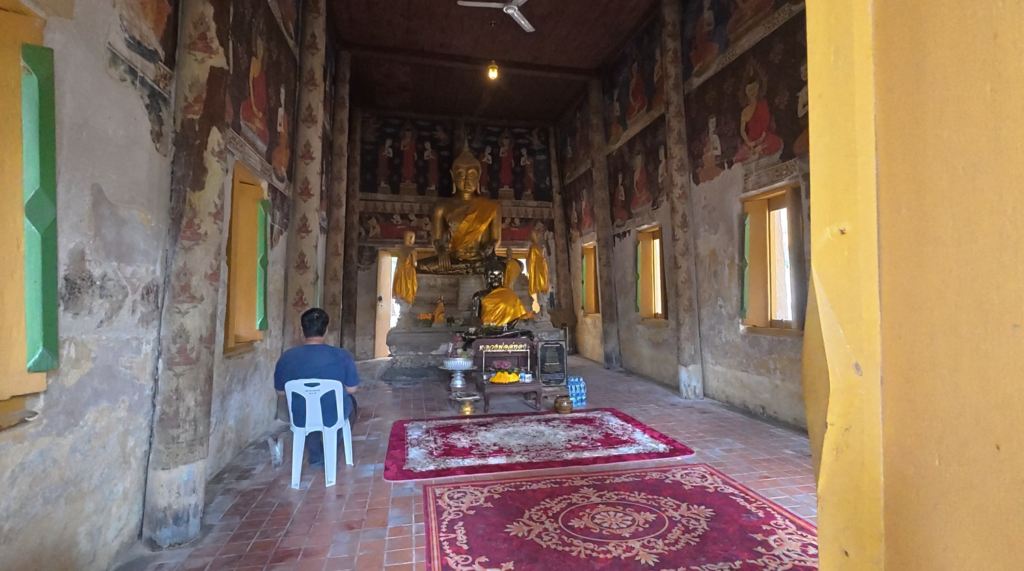
Stepping inside felt very different from entering a brightly restored Thai temple.
The light was dim. A high wooden ceiling rose above old brick walls, and faded murals covered the upper sections between the columns and windows. The interior retained the texture of age—cracked plaster, exposed material, darkened surfaces, and colors softened by humidity and time.
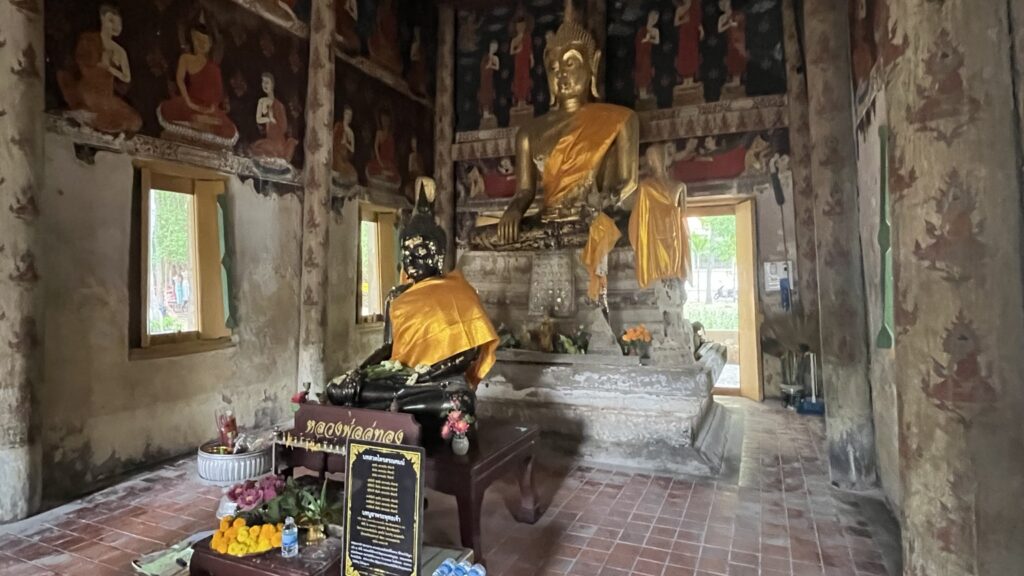
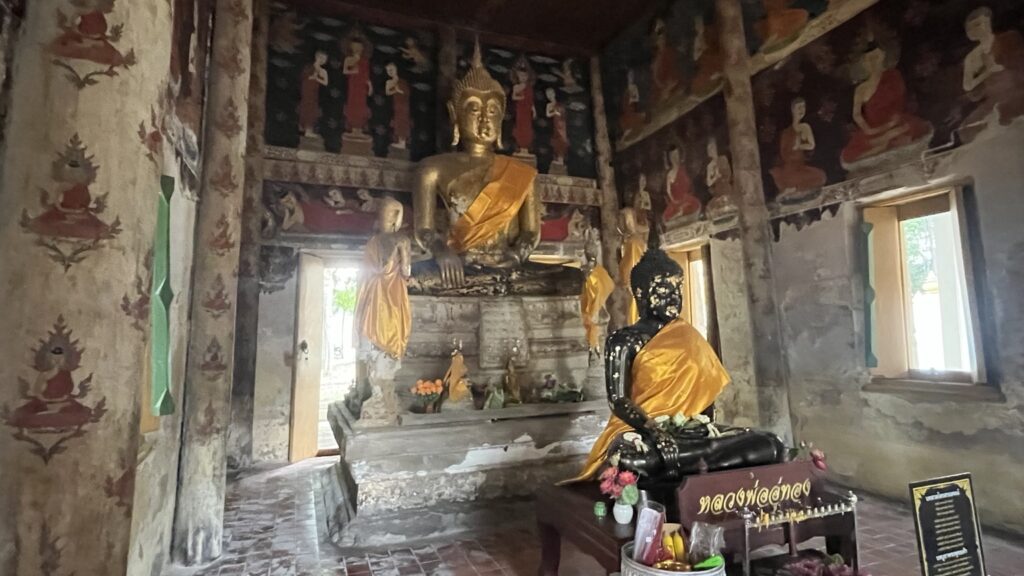
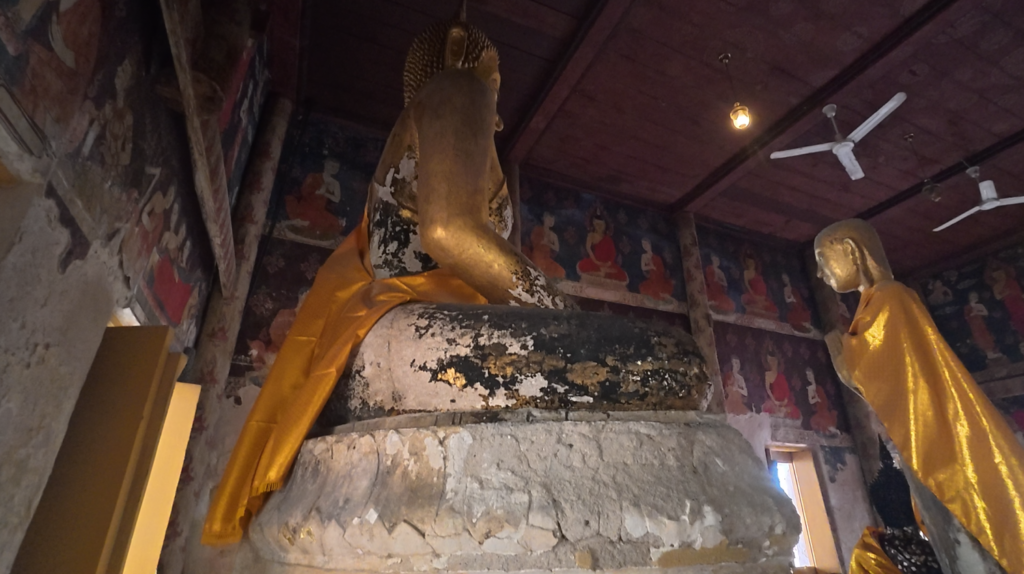
The principal Buddha, altar, and surrounding murals emerge slowly from the dim interior of the old ubosot.
At the center stood a large stucco Buddha image in the earth-touching posture, representing the moment when the Buddha called the earth to witness his victory over Mara. A smaller dark Buddha image was placed in front, while standing monastic figures flanked the principal image.
I could not confirm the individual identity or date of every figure, but together they formed a sacred assembly that has watched over this hall for generations.
Murals That Continue to Speak
The murals are arranged in horizontal sections around the interior. Repeated images of seated and standing Buddhas appear beside attendant figures, while other panels seem to represent episodes from the life of the Buddha.
Some scenes remain surprisingly clear. In other areas, faces and bodies are fading into the wall. Lower sections have been lost almost completely, while the surviving upper paintings retain deep reds, black backgrounds, pale skin tones, and floral patterns.
The paintings should not be viewed merely as decoration. In an age when many villagers could not read religious texts, temple murals served as visual teaching. Stories of the Buddha, merit, morality, suffering, and liberation could be understood through images.
Today, the fading surfaces also teach another lesson: even sacred art is impermanent.
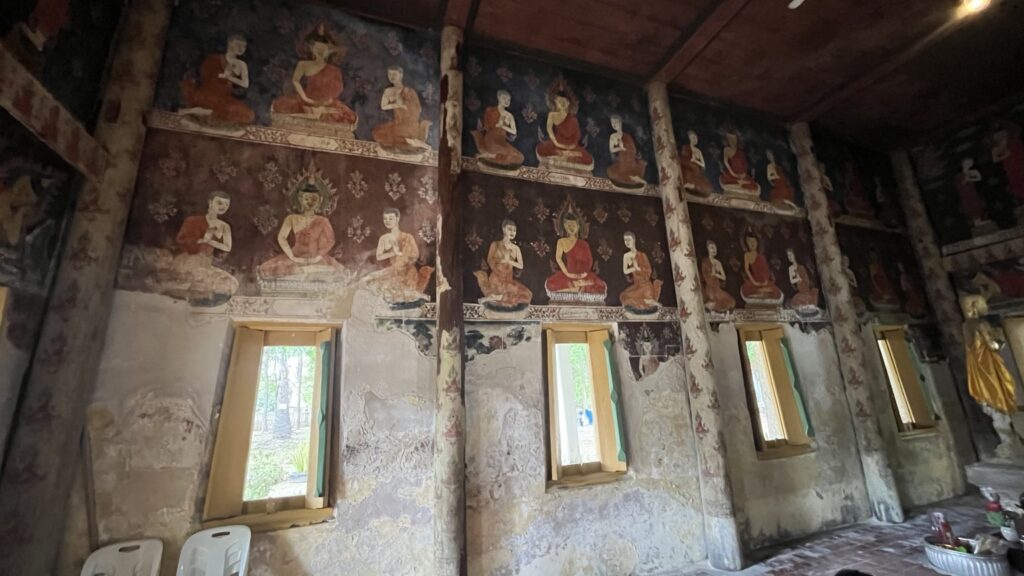
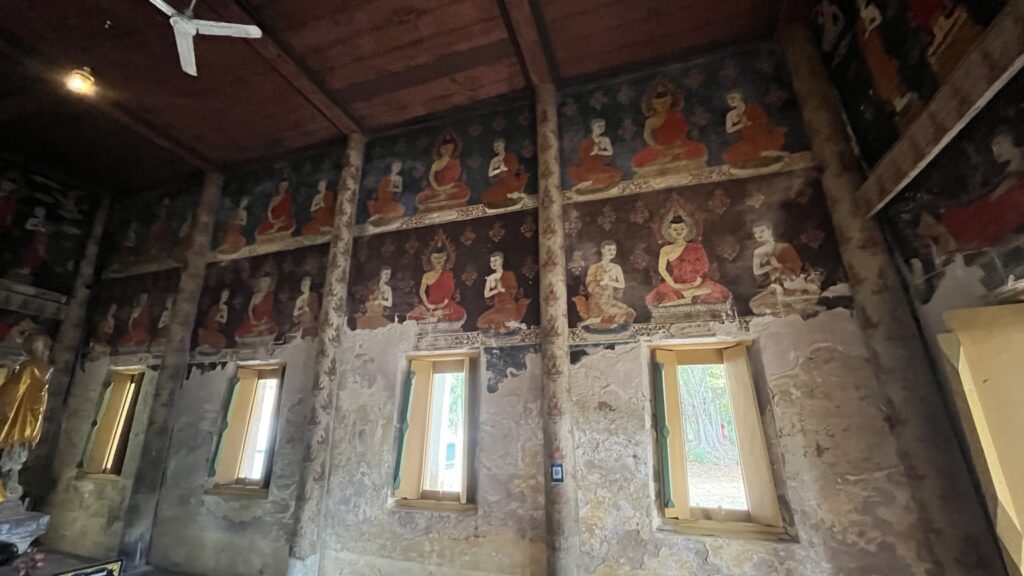
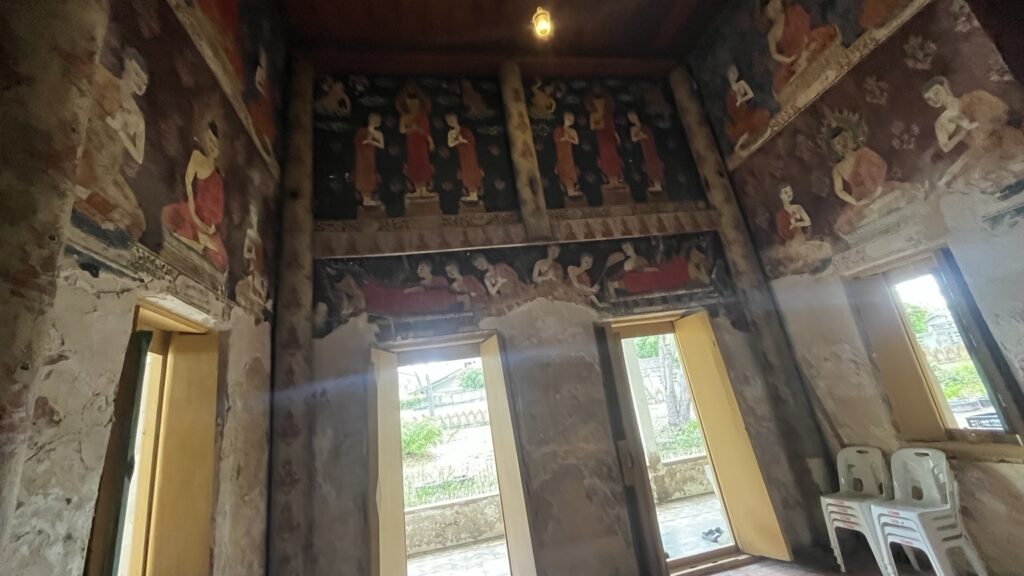
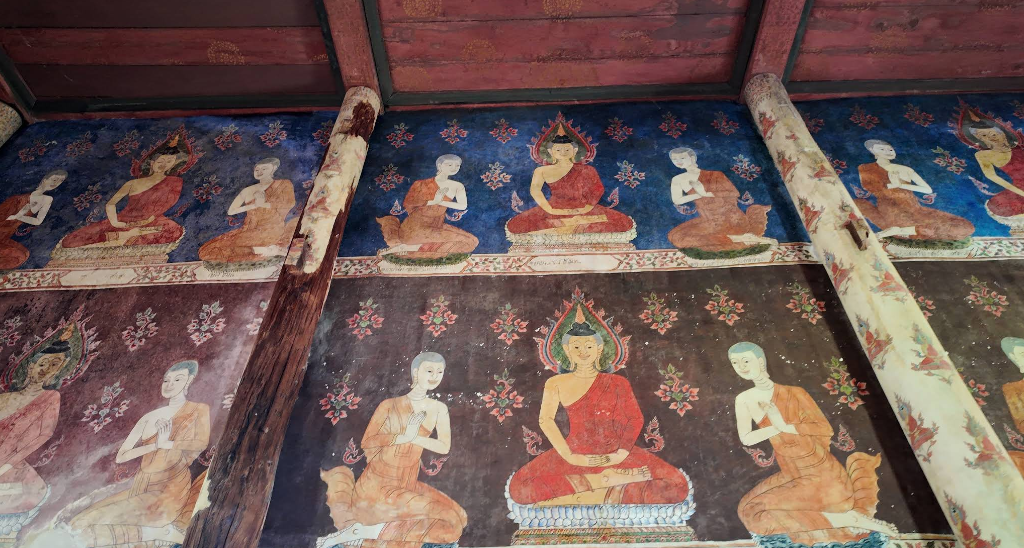
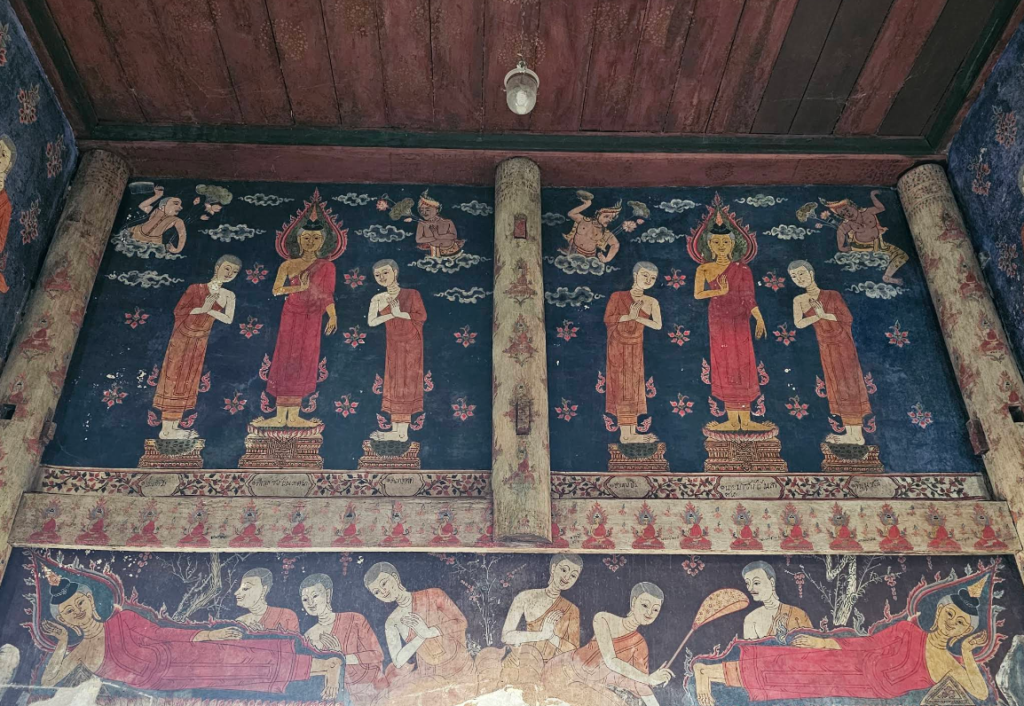
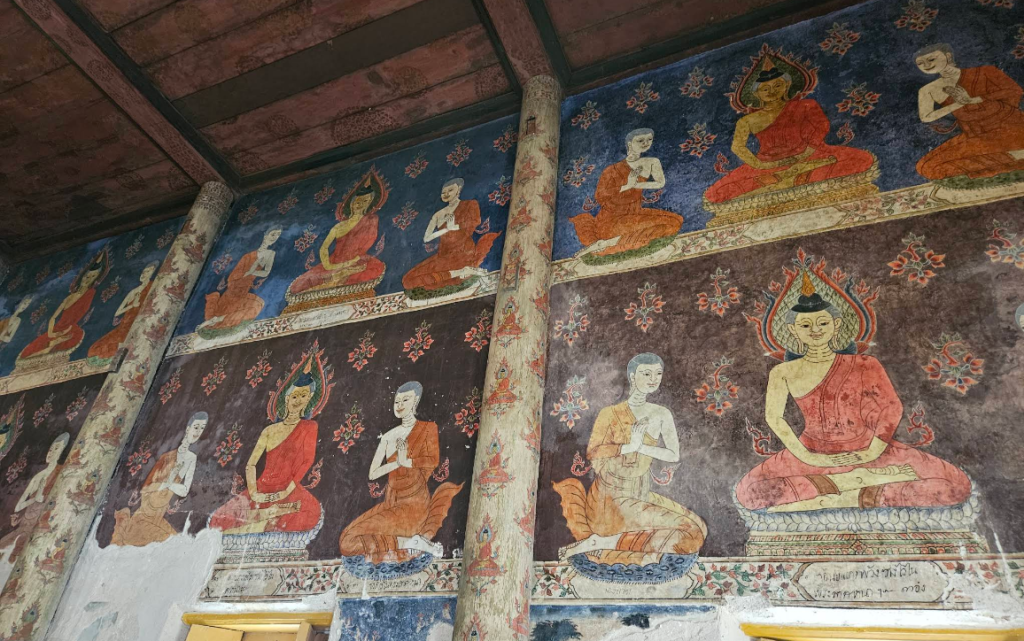
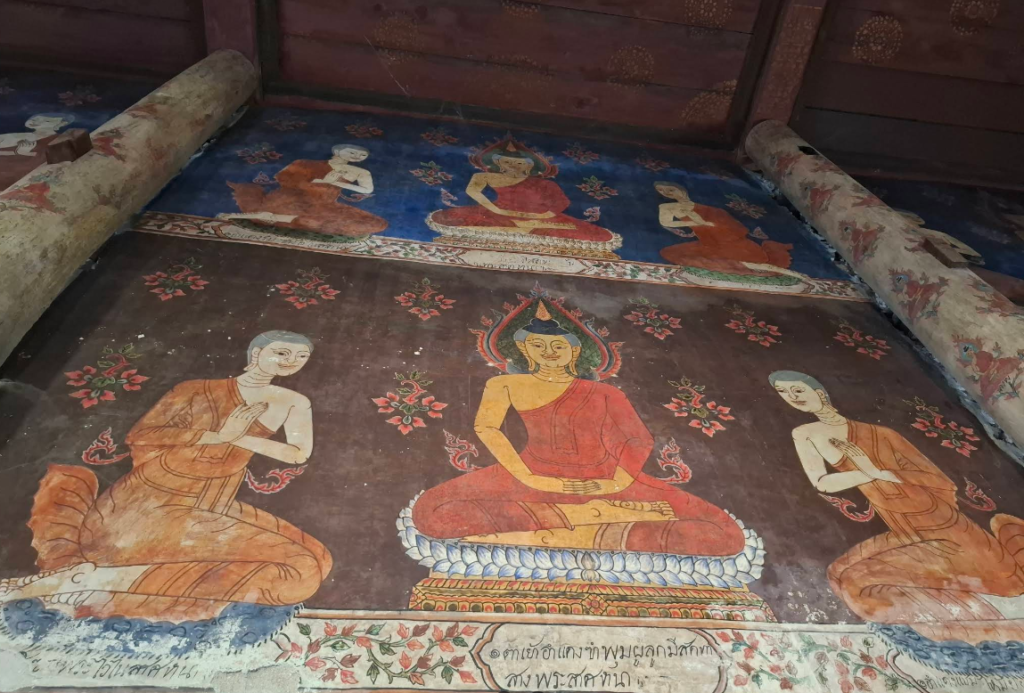
Fading scenes of seated and standing Buddhas continue around the upper walls, preserving fragments of Buddhist teaching and local artistic memory.
Buddha Images Surrendering to Time
The most powerful impression inside Wat Tan Lom was the condition of its Buddha images.
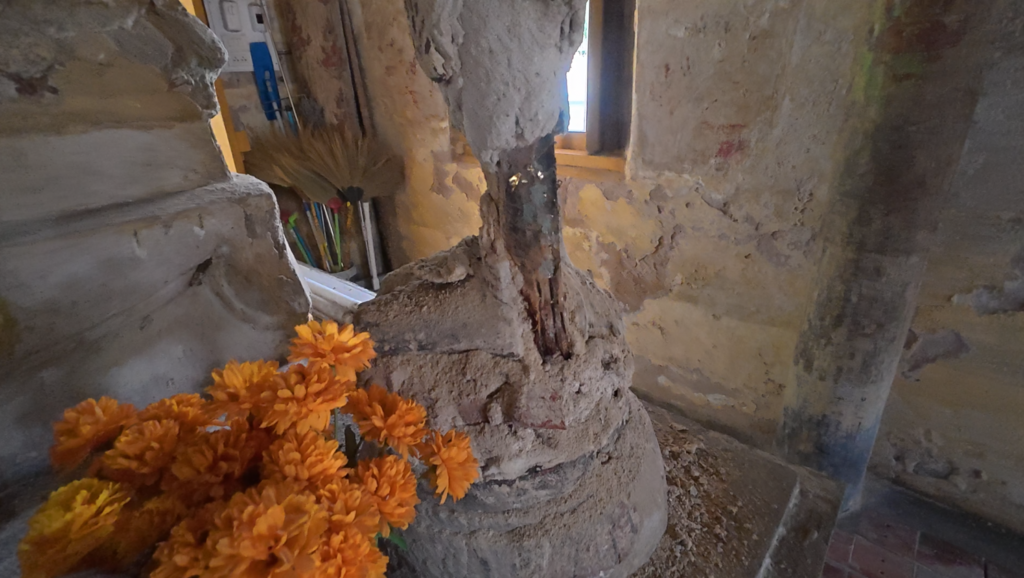
Gilding had fallen away from the principal image. Plaster had cracked across the pedestal, and portions of the standing figures had disappeared, exposing their inner structure. Walls and columns carried deep scars left by moisture, age, and repeated repair.
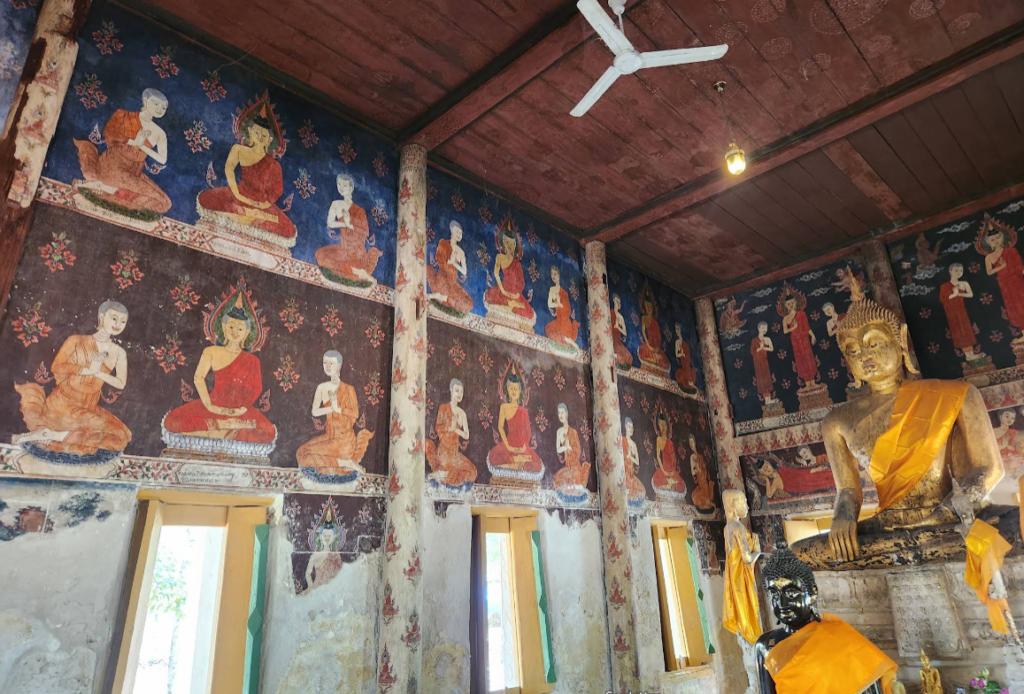
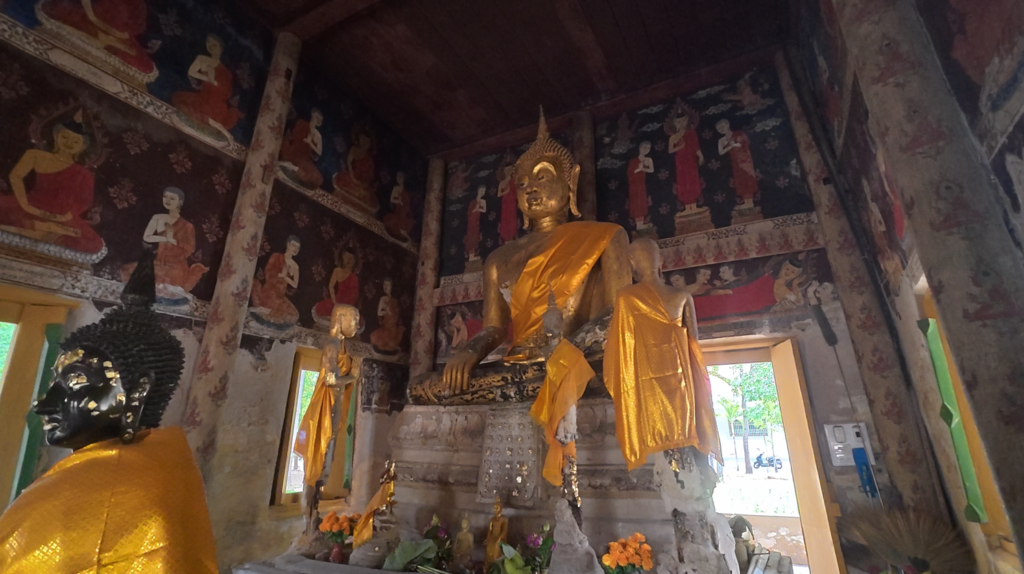
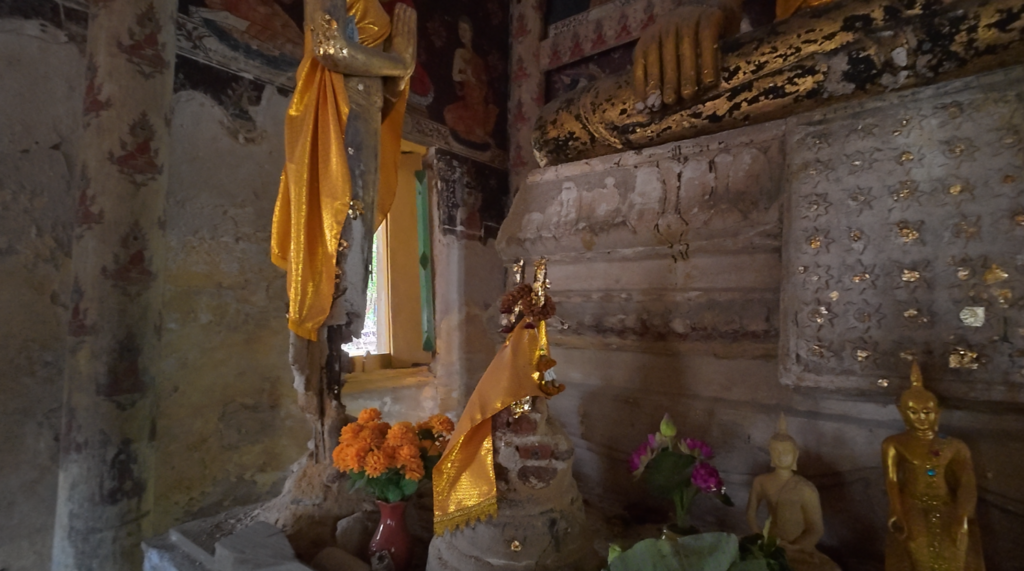
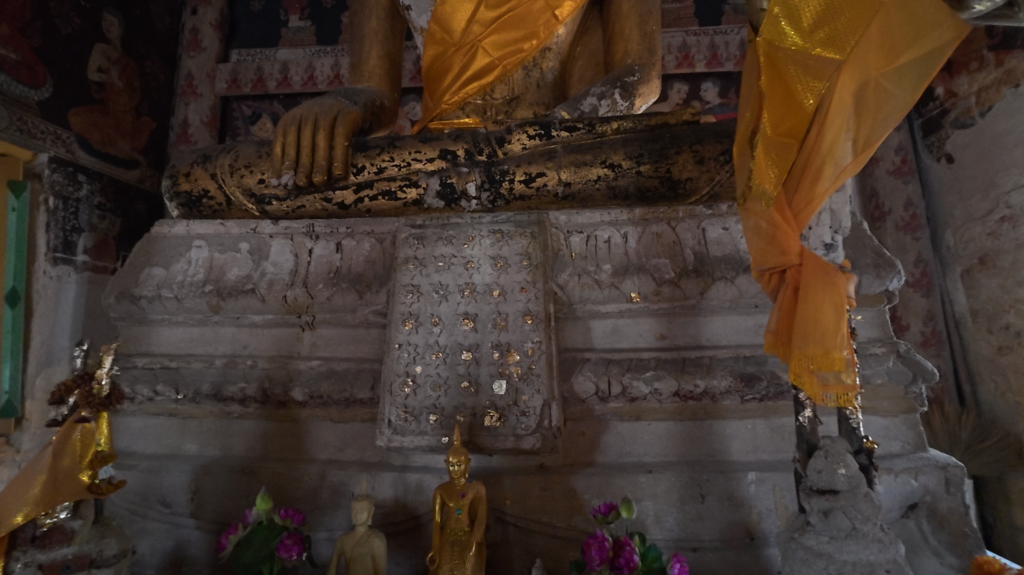
Lost gilding, cracked plaster, and a weathered altar reveal the physical decline of the historic Buddha images
Yet fresh golden robes still covered parts of the damaged figures. Flowers stood at the altar, and small pieces of gold leaf continued to appear on their surfaces.
The statues were growing old, but the faith surrounding them was still alive.
Their condition should not automatically be described as abandonment. This is a registered historic monument, and conservation of such a structure requires more than repainting damaged surfaces. Aggressive restoration could erase the original material and evidence of its age.
What I saw was therefore both beautiful and unsettling: a sacred place still in use, but also a fragile heritage site waiting for careful protection.
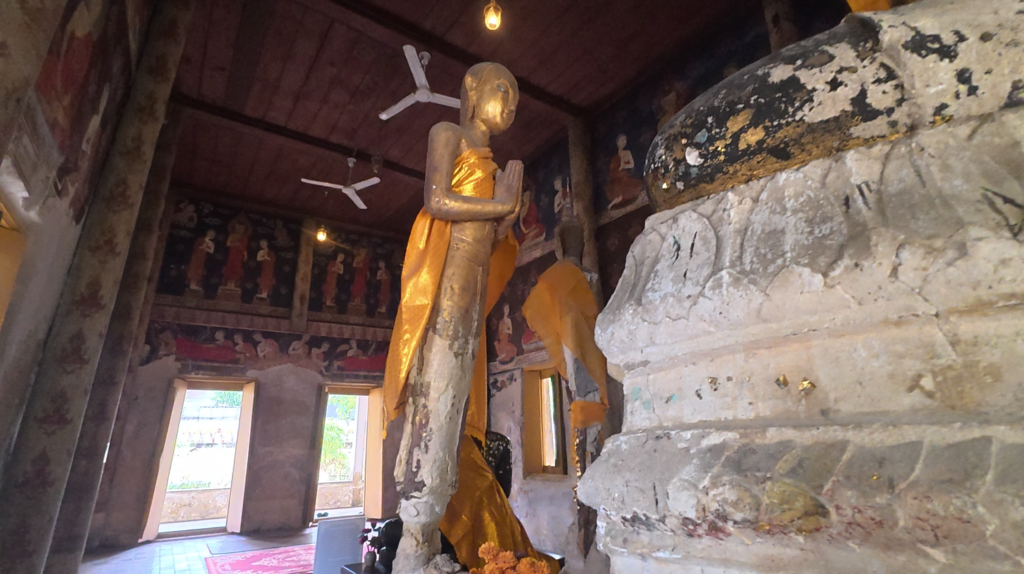
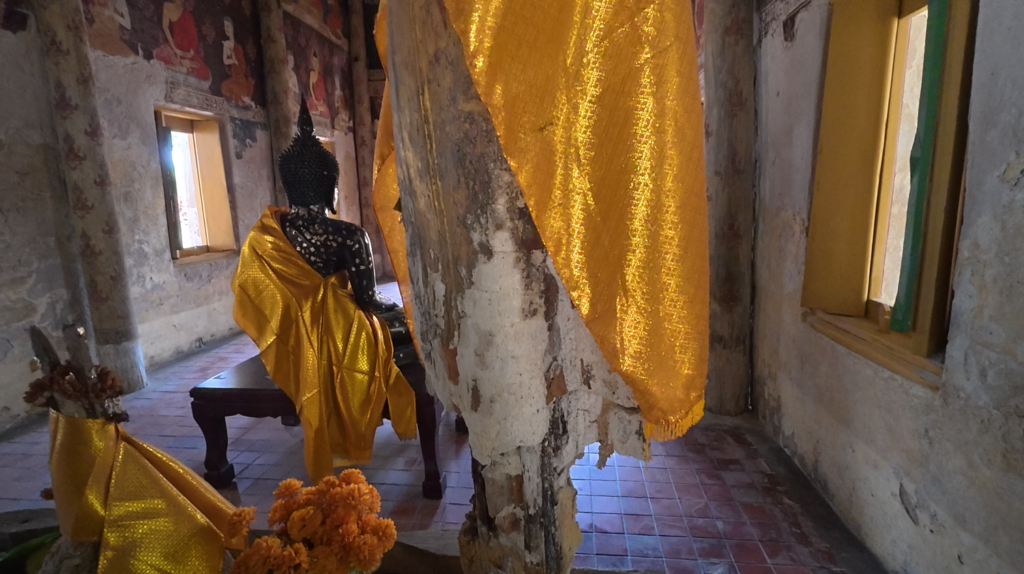
Standing figures beside the principal Buddha have lost large sections of plaster, yet fresh golden robes show that devotion continues.
Watch the Journey Inside Wat Tan Lom
The video below follows my ride through Wat Tan Lom, from its sacred trees to the fragile interior of the 1833 ubosot.
Inside Wat Tan Lom—an old Chonburi temple where fading art and living faith remain side by side.
A Small Act of Merit Before Leaving
Before leaving the temple, I stopped beside the pond and fed the fish. In Thailand, feeding animals at a temple is often regarded as a simple act of compassion and merit-making.
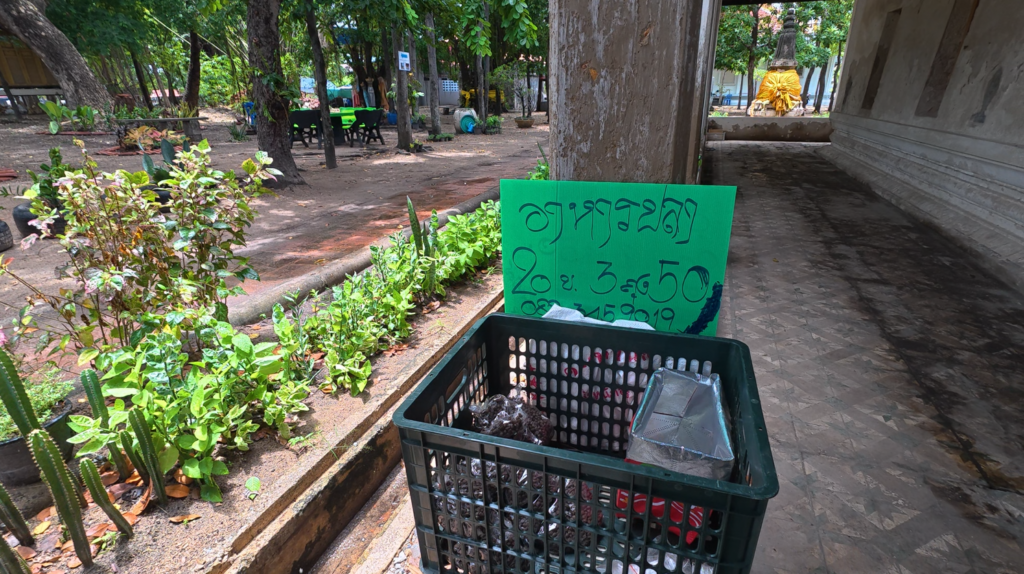

A small packet of fish food led me to the temple pond for one final and simple act of merit.
Then something unexpected happened.
With the woman who takes care of the temple grounds, I planted a young tree. I had arrived to see an old temple and its sacred trees, but before leaving, I was able to place one small living memory of my own into the soil.
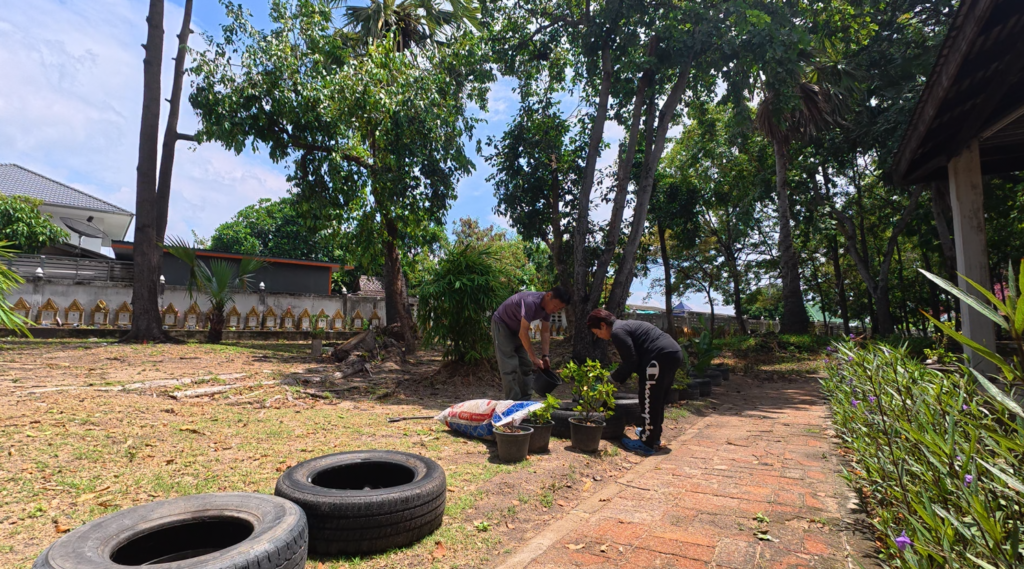
Perhaps years from now, that tree will grow tall enough to provide shade for another visitor. I may never meet that person, but this is also part of merit: leaving behind something useful without expecting to receive it back.
Wat Tan Lom reminded me that heritage is not only what survives from the past. It is also what we choose to protect—and what we quietly plant for the future.
Location and Visitor Information
Location: Wat Tan Lom, Mueang Subdistrict, Mueang Chonburi District, Chonburi, Thailand
Admission: No fixed admission fee was observed; respectful donations are welcome.
Best time to visit: Morning, when the compound is cooler and natural light enters the old ubosot.
Dress: Cover shoulders and knees and dress respectfully within the temple grounds.
Photography: Generally possible, but avoid flash near the historic murals and ask permission during ceremonies or private worship.
Visit time: Approximately 45–75 minutes for the temple grounds, historic ubosot, sacred trees, and pond.
Footwear: Remove shoes before entering the ubosot or any active worship hall.
Google Maps: Wat Tan Lom, Chonburi
For further historical background, see the Wat Tan Lom community record from the Princess Maha Chakri Sirindhorn Anthropology Centre and the official cultural-environment record for the old ubosot.