A Different Ride to Laem Chabang
The USS Abraham Lincoln Laem Chabang visit gave me a rare reason to ride toward Thailand’s largest deep-sea port on September 6, 2026. I rode my little Honda Cub toward Thailand’s eastern coast with an unusual goal — to catch one last glimpse of the nuclear-powered aircraft carrier before she left Thailand.
Finding one of the largest warships in the world sounded easy. USS Abraham Lincoln is more than 330 meters long and carries thousands of sailors, Marines and aviation personnel. Somewhere inside the enormous Laem Chabang Port, a floating city of steel was preparing to return to sea. The problem was that almost none of it could be seen from the public roads.
Laem Chabang is a working deep-sea port, not a sightseeing harbor. I followed one road after another around the industrial area, only to encounter security gates, barriers and restricted entrances. The closer I seemed to get to the port, the less I could actually see. A 100,000-ton aircraft carrier was somewhere behind those fences — yet from my little Cub, she might as well have been invisible.
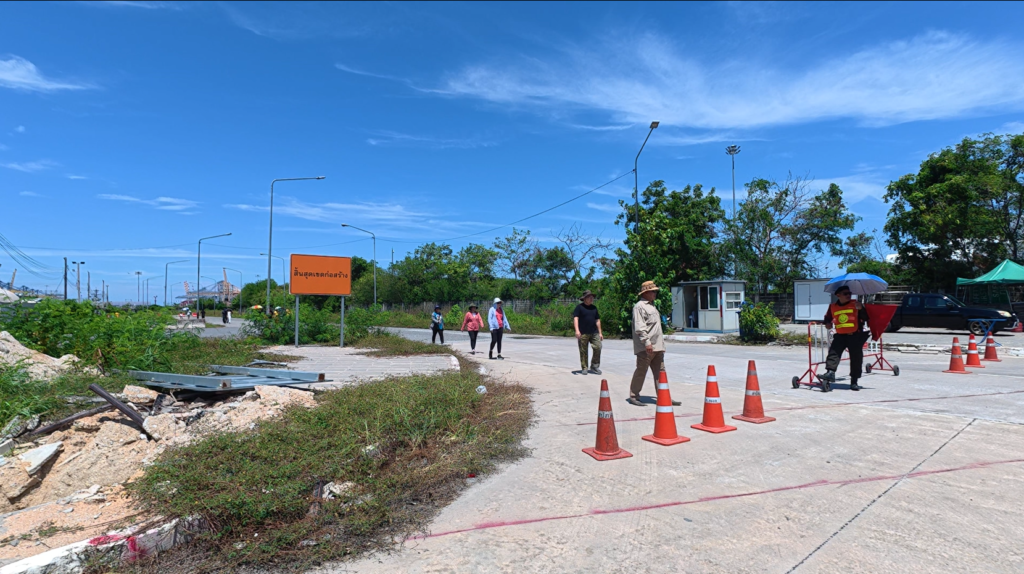
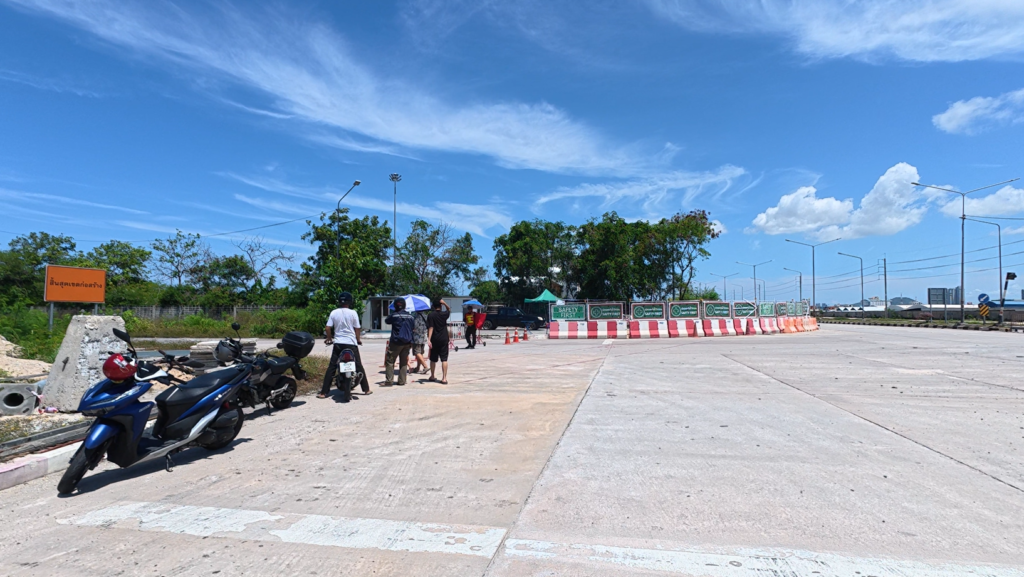
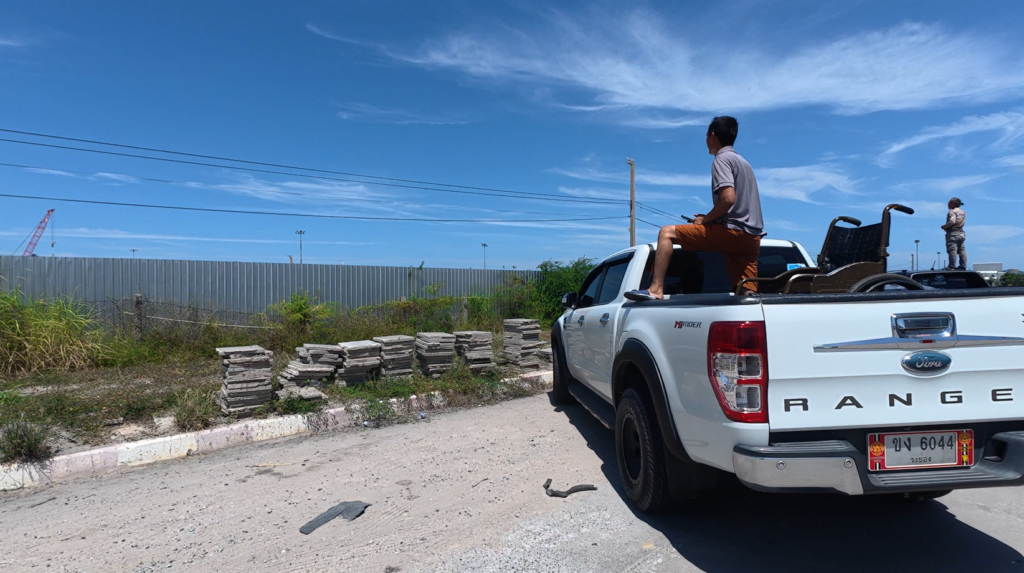
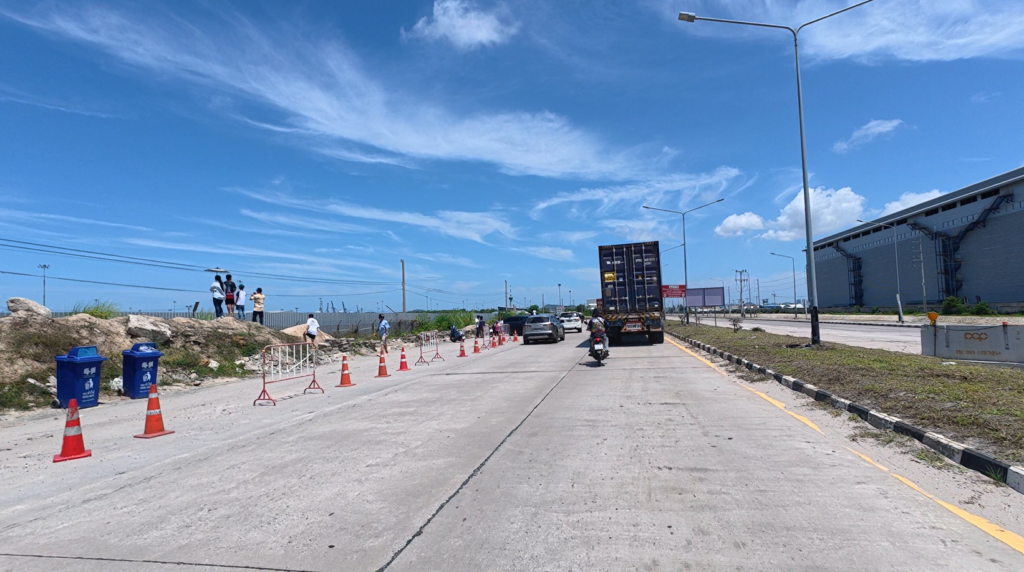
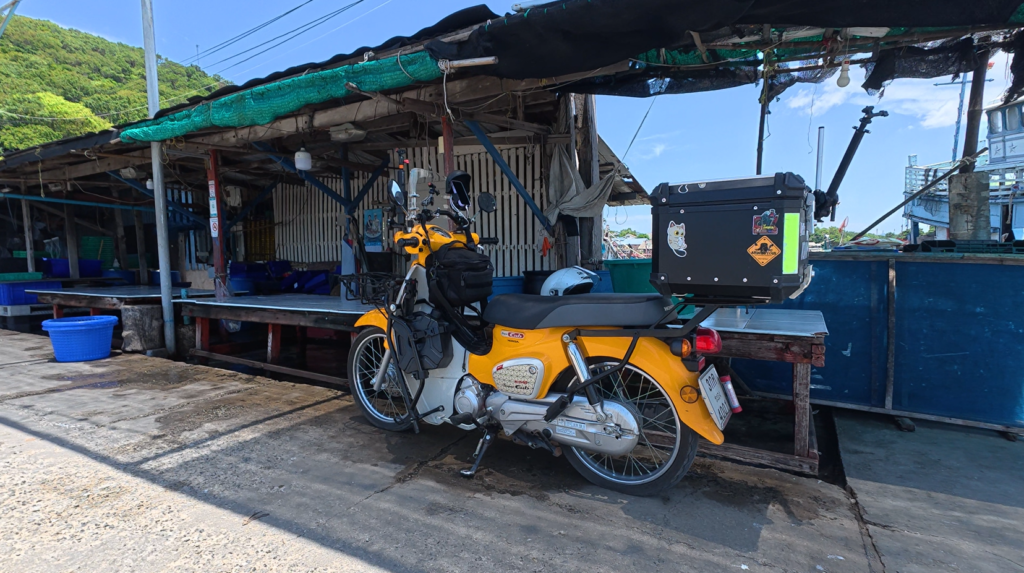
Searching for USS Abraham Lincoln around Laem Chabang Port. What looked like a simple ride soon became a search through industrial roads, security zones and restricted entrances.
Thailand’s Gateway to the World
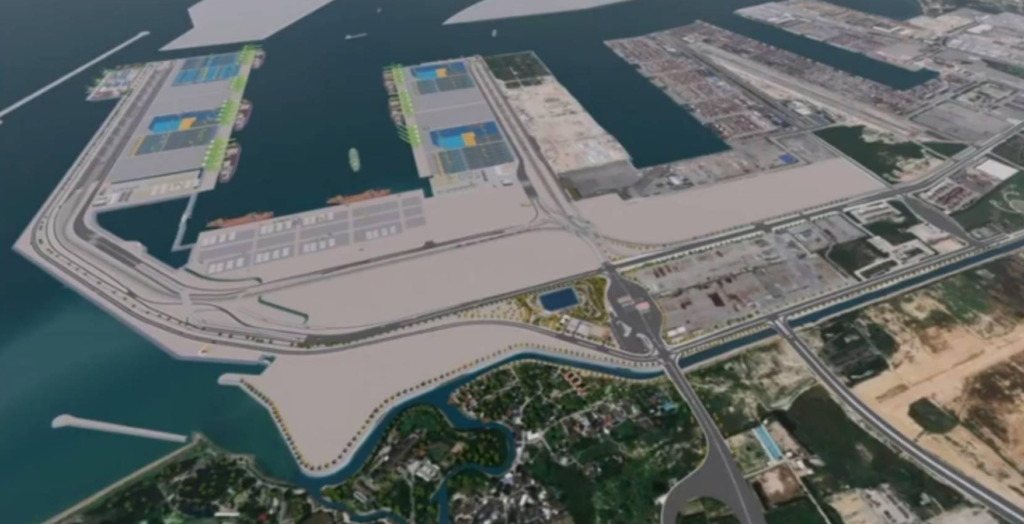
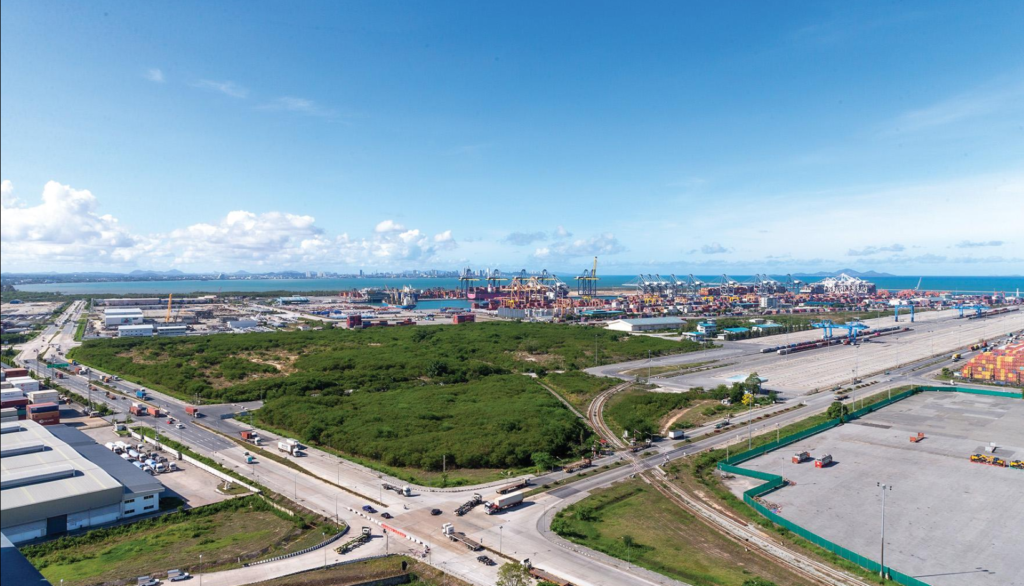
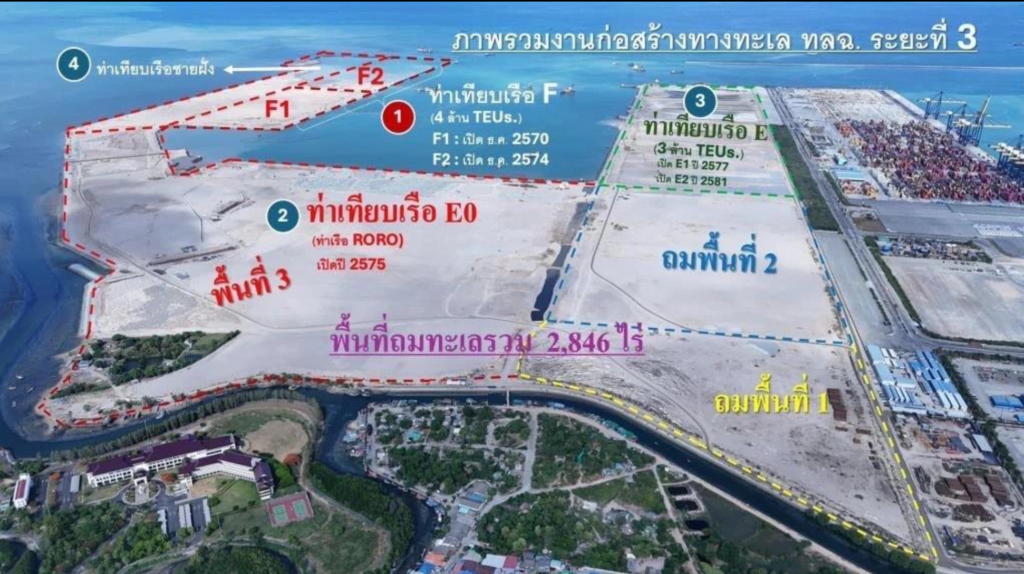
Laem Chabang Port itself is part of the story. For decades, Bangkok Port on the Chao Phraya River had served as Thailand’s principal maritime gateway, but its river location limited access for increasingly large ocean-going vessels. As Thailand industrialized, the country needed a true deep-sea port. Construction at Laem Chabang began in 1987, and the new port officially opened in January 1991.
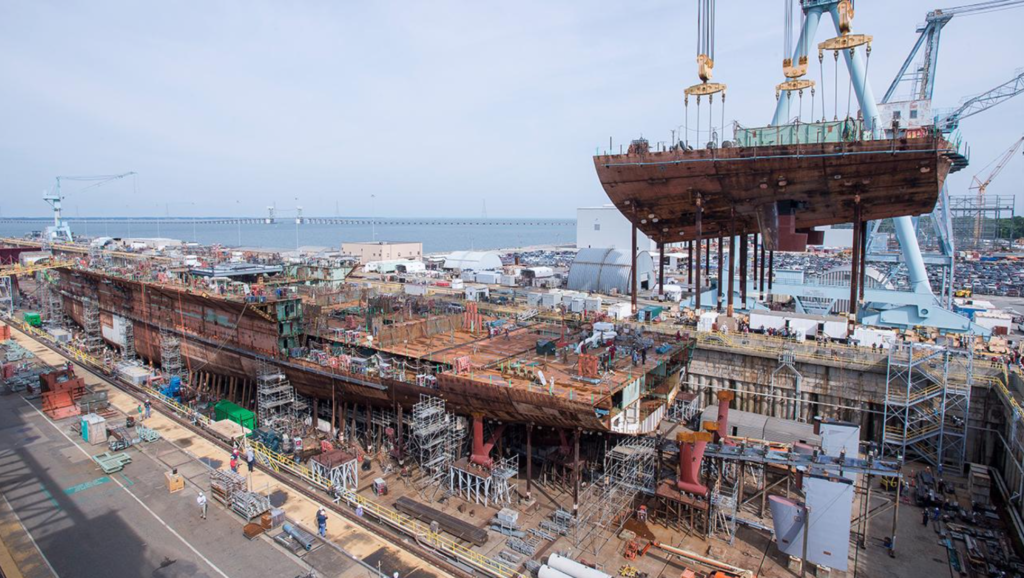
The timing was remarkable. While Laem Chabang was being built, USS Abraham Lincoln was also taking shape on the other side of the world. Her keel had been laid in Virginia in November 1984, and she was commissioned into the U.S. Navy on November 11, 1989. In a sense, the carrier and the port belonged to the same generation — products of the final years of the Cold War and the rapidly changing global economy that followed.
Laem Chabang eventually became Thailand’s principal deep-water international port. Today its vast complex handles containers, automobiles, bulk cargo and other international shipping, connecting the industrial eastern seaboard of Chonburi and Rayong with markets around the world.
Born in the Same Era – USS Abraham Lincoln
While Laem Chabang was emerging as Thailand’s new deep-sea gateway, another enormous engineering project was taking shape thousands of kilometers away in Virginia. The keel of USS Abraham Lincoln (CVN-72) was laid at Newport News on November 3, 1984. She was commissioned on November 11, 1989 as the fifth Nimitz-class aircraft carrier.
Lincoln was built for a very different world. The Cold War had shaped the concept behind the Nimitz class: a nuclear-powered mobile airbase capable of projecting American air power across the oceans without depending on a nearby land airfield. Yet by the time Lincoln entered service, the Cold War itself was approaching its end. The ship would spend the following decades adapting to conflicts and missions that her original designers could not have fully anticipated.
The scale remains extraordinary. Current U.S. Navy figures list Lincoln at 1,092 feet — about 333 meters — in length, with a flight deck covering about 4.5 acres. The ship carries roughly 2,800 ship’s personnel plus around 2,000 personnel associated with the embarked air wing, with more than 65 aircraft in a typical modern configuration.
Yet the numbers alone do not explain an aircraft carrier. Lincoln is effectively a small city and airbase moving together across the ocean. Beneath the flight deck are workshops, aircraft maintenance areas, kitchens, medical facilities, accommodation, communications systems and the machinery required to keep this enormous community operating far from land.
From the Cold War to a Changing World
Lincoln’s first deployment in 1991 immediately demonstrated how quickly her mission could change. She deployed in response to the crisis created by Iraq’s invasion of Kuwait, but while crossing the Pacific she was diverted to the Philippines after the catastrophic eruption of Mount Pinatubo. During Operation Fiery Vigil, Lincoln led a 23-ship effort that helped move nearly 45,000 military personnel and family members from Subic Bay to Cebu. She later continued to the Arabian Gulf for operations over Kuwait and Iraq.
Over the decades that followed, Lincoln became associated with operations around Iraq and Afghanistan and with the long American naval presence in the Middle East and Indo-Pacific. The aircraft operating from her deck changed, technology evolved and the geopolitical landscape shifted, but the carrier remained in service.
This longevity was intentional. Nimitz-class carriers were designed around an approximately 50-year service life, including a major mid-life refueling and overhaul. Lincoln underwent that enormous modernization process before returning to operational service.
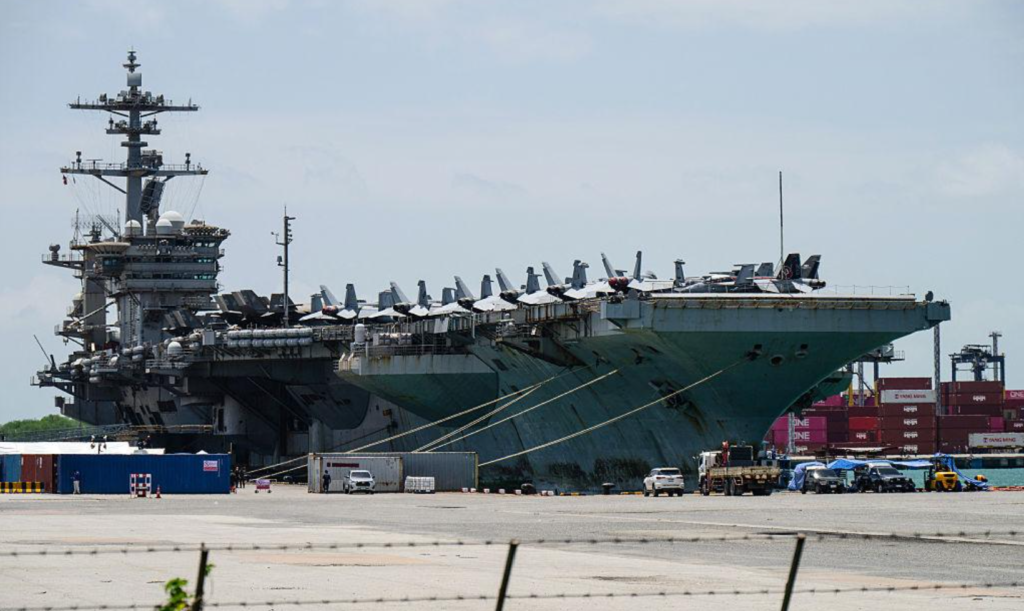
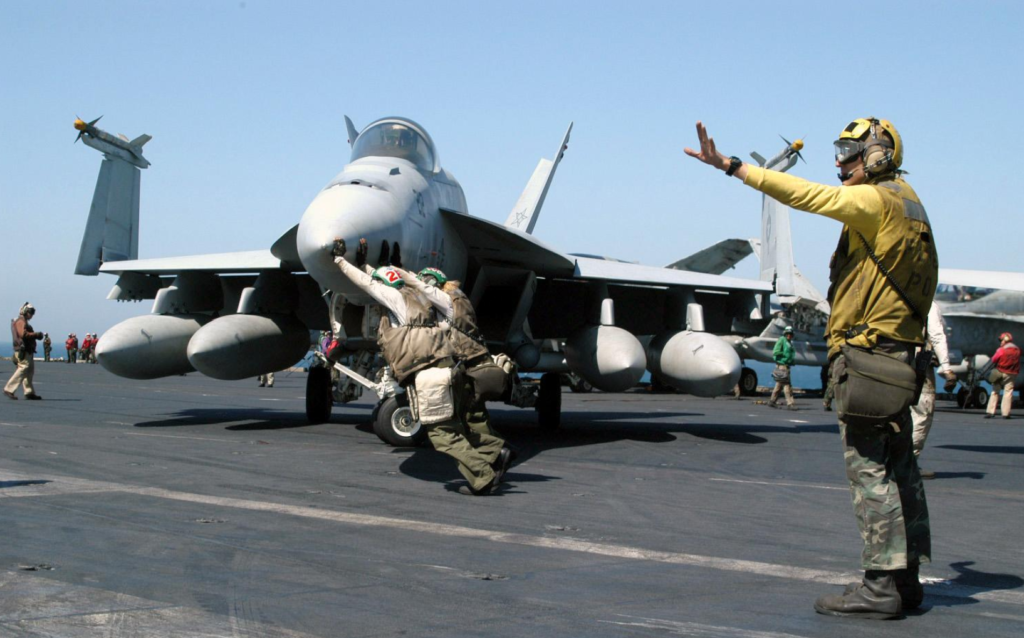
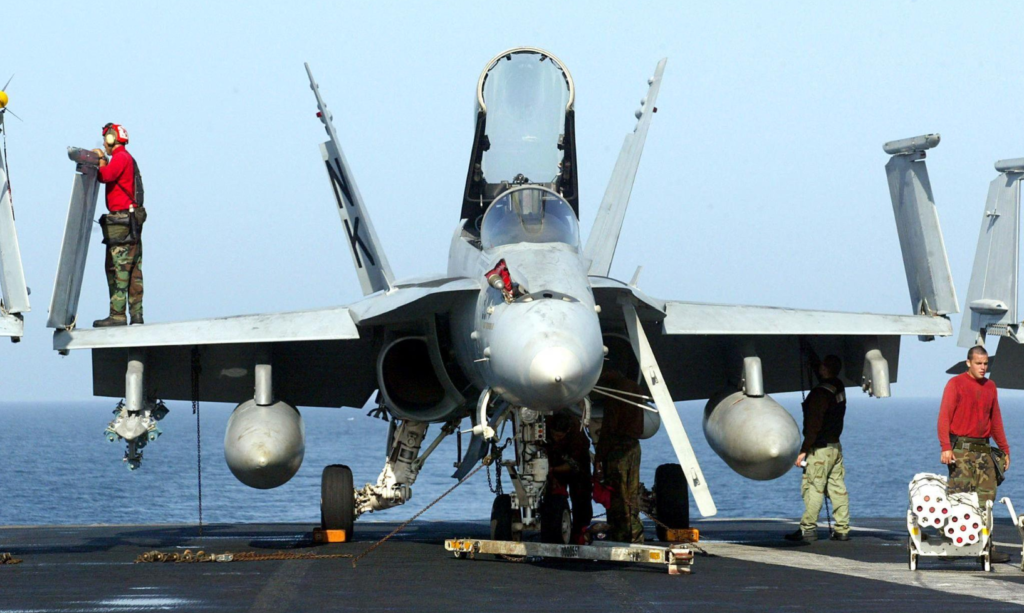
USS Abraham Lincoln is more than a ship. Her flight deck, aircraft, crew and support systems operate together as a mobile airbase capable of remaining far from home for extended periods.
When a Warship Became a Relief Base
One of the most important chapters connecting USS Abraham Lincoln with Southeast Asia did not begin with a war.
On December 26, 2004, a massive undersea earthquake off Sumatra triggered the Indian Ocean tsunami. The disaster devastated communities around the region, particularly Aceh in northern Indonesia. Carrier Strike Group Nine, led by Abraham Lincoln, was dispatched to support Operation Unified Assistance.
Lincoln’s helicopters carried purified water, food and other critical supplies into communities that had been isolated by the destruction. During the wider 47-day U.S. relief operation, American forces airlifted an average of more than 500,000 pounds of food, water and essential supplies per day.
For a ship designed primarily for combat, the mission revealed another side of its enormous capability. A nuclear-powered aircraft carrier could become a floating logistics center and airfield, sending helicopters repeatedly ashore while supporting thousands of people and aircraft operations at sea.
For Southeast Asia, this became a very different image of Abraham Lincoln — not simply a symbol of military power, but part of an international humanitarian response to one of the region’s worst natural disasters.
Abraham Lincoln Comes to Laem Chabang
Two years after the tsunami mission, Abraham Lincoln returned to Southeast Asian waters. During her 2006 deployment, the carrier operated with regional partners and conducted a passing exercise with the Royal Thai Navy. U.S. Navy records also note that Thai officials and the U.S. ambassador to Thailand were hosted aboard during this period.
Then came a small but significant moment in Laem Chabang’s own maritime history.
USS Abraham Lincoln became the first aircraft carrier to moor pierside at Laem Chabang.
For a port that had officially opened only fifteen years earlier, accommodating a Nimitz-class nuclear carrier demonstrated how far Laem Chabang had developed as a deep-water maritime gateway.
And there is something particularly satisfying about this history when standing on the coast today.
2006 — Abraham Lincoln came to Laem Chabang.
2026 — twenty years later, the same ship returned.
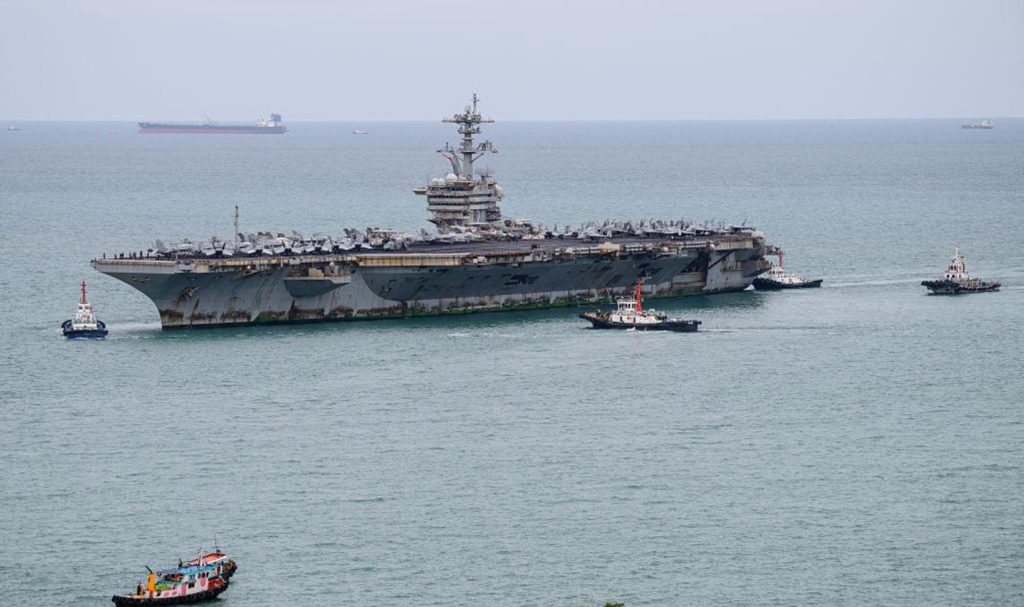
USS Abraham Lincoln Laem Chabang – Twenty Years Later
Twenty years after that earlier visit, USS Abraham Lincoln returned to Laem Chabang once again. On September 2, 2026, the carrier arrived in Thailand as part of the Abraham Lincoln Carrier Strike Group after an exceptionally long deployment. The U.S. Navy described the visit as an opportunity for nearly 5,000 sailors and Marines to rest and recharge while also reinforcing the long-standing relationship between the United States and Thailand.
For the crew, those few days in Thailand meant something very different from life aboard a carrier. After months of operations at sea, they could walk on land, eat outside the ship and spend a little time away from the tightly organized world of flight decks, machinery spaces and military routines.
The Thai government also made clear that the port call was not a joint combat exercise. The principal purpose was crew rest and recreation. After several days ashore, the sailors returned aboard and Lincoln prepared to leave Laem Chabang on September 6.
The 2026 USS Abraham Lincoln Laem Chabang visit brought the carrier back to the Thai coast twenty years after her notable 2006 visit.
For me, that departure was the reason for this ride.
Searching for a 100,000-Ton Ship
By then I had already discovered something rather amusing: finding a 100,000-ton aircraft carrier can be surprisingly difficult.
I continued riding around the edges of Laem Chabang, following narrow roads and looking for any opening toward the waterfront. Occasionally I could see the sea or the industrial port beyond the buildings, but every promising route seemed to end in another restricted area, private property or security checkpoint.
There was nothing wrong with the port. This was simply a working industrial and strategic facility doing exactly what it was designed to do. The problem was mine — I had arrived on a little Honda Cub expecting to find a convenient place to watch one of the world’s largest warships depart.
Eventually, I stopped trying to get closer.
If I could not reach the carrier from sea level, perhaps I needed to go higher.
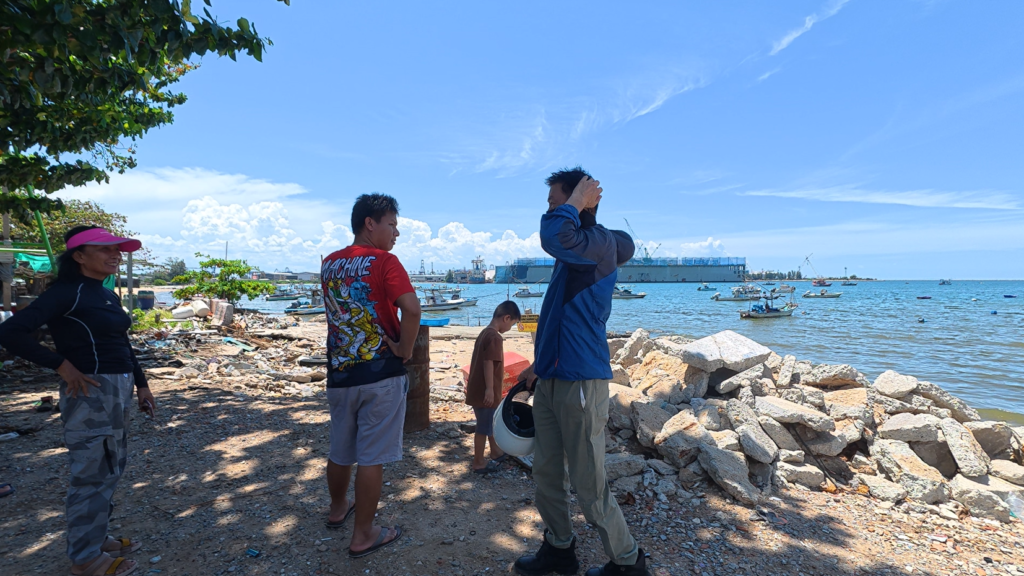
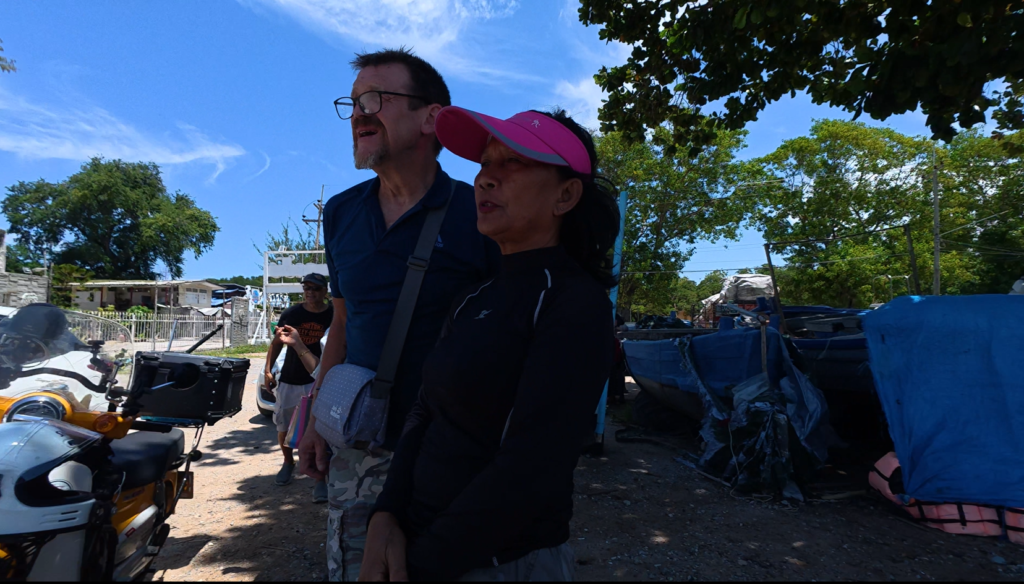
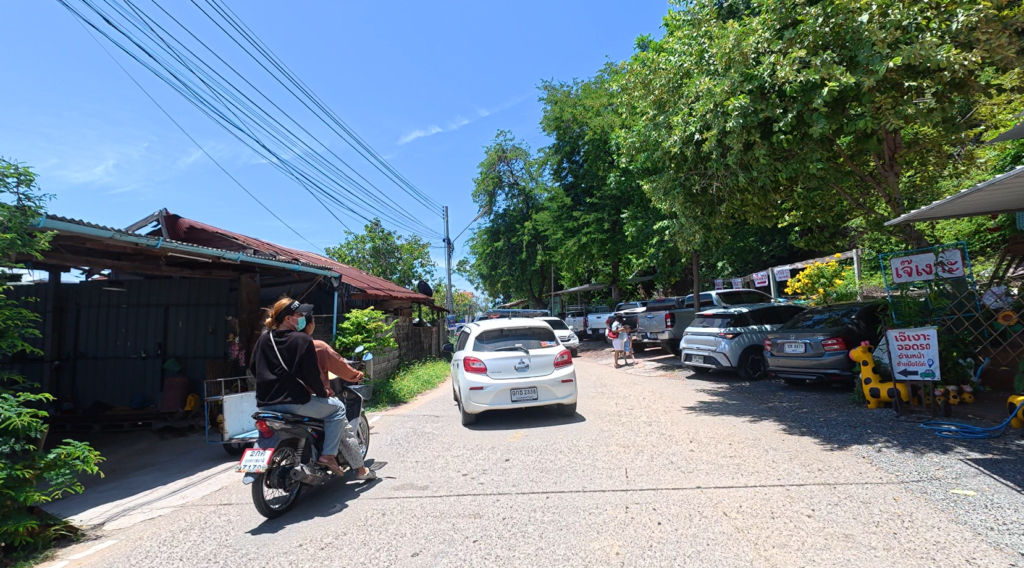
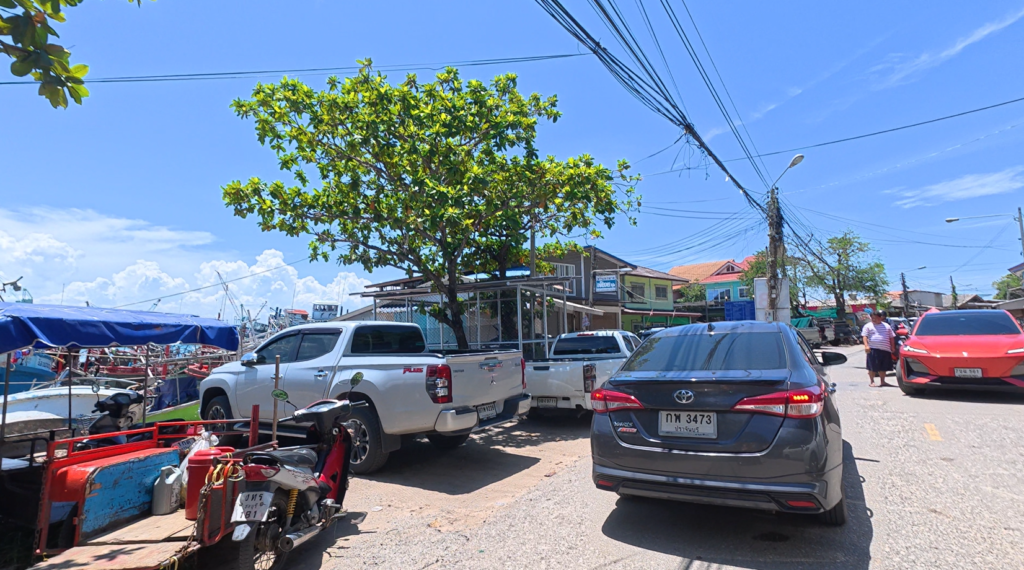
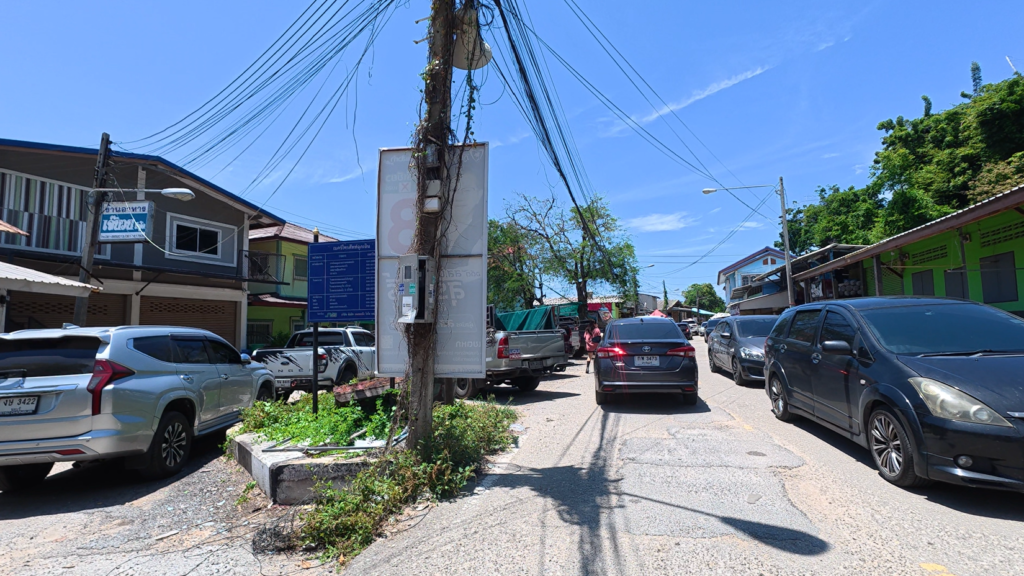
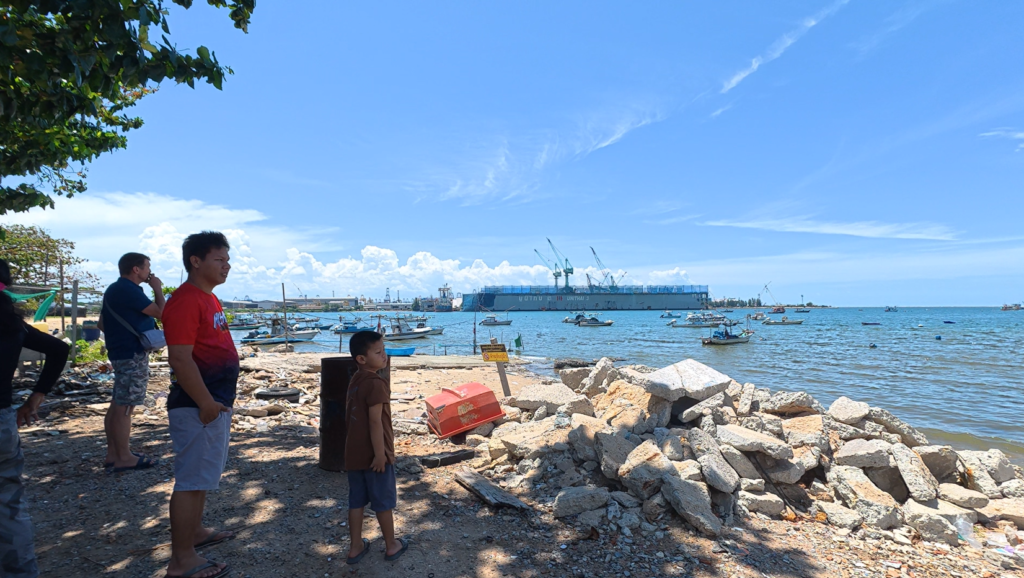
Still searching for the carrier. Around Laem Chabang, narrow local roads and restricted port areas made reaching the waterfront far more difficult than expected.
Khao Laem Chabang: Finally, There She Was
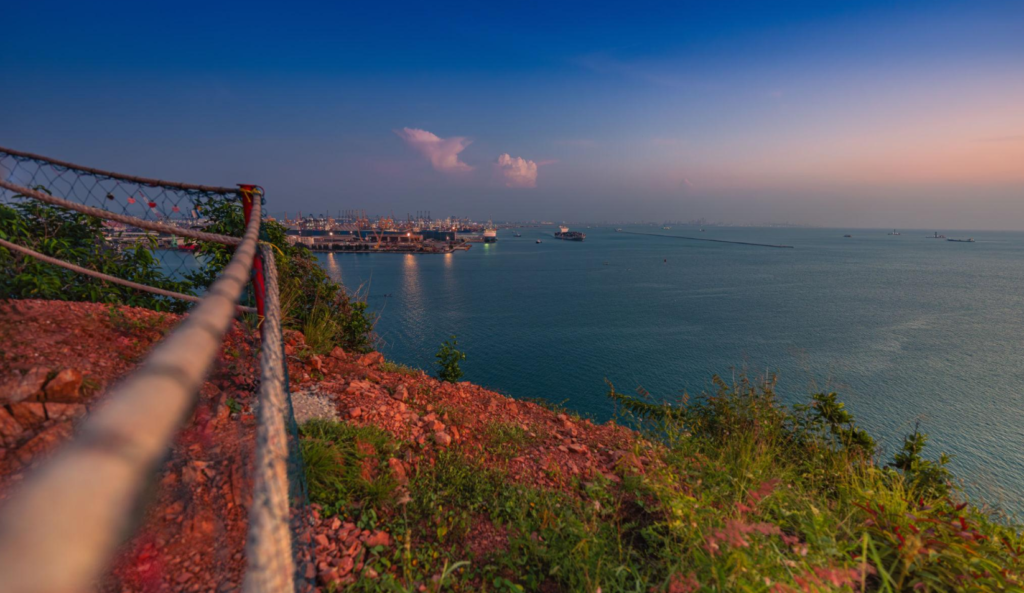
The search eventually led me to Khao Laem Chabang (เขาแหลมฉบัง), a rocky coastal viewpoint overlooking the Gulf of Thailand. When I arrived, I immediately knew I had finally found the right place. I was not alone. People were standing along the coast with cameras, phones and umbrellas, all looking toward the same distant point on the horizon.
And there she was.
After all those roads, barriers and wrong turns, USS Abraham Lincoln appeared surprisingly small. From this distance, the immense carrier was reduced to a dark silhouette between the blue sea and sky.
But knowing what was inside that silhouette changed the view completely. This was a ship commissioned in 1989, a veteran of more than three decades of deployments, wars and humanitarian missions. It had visited this same Thai coast twenty years earlier. Now thousands of sailors were back aboard, and the carrier was preparing to leave Thailand once again.
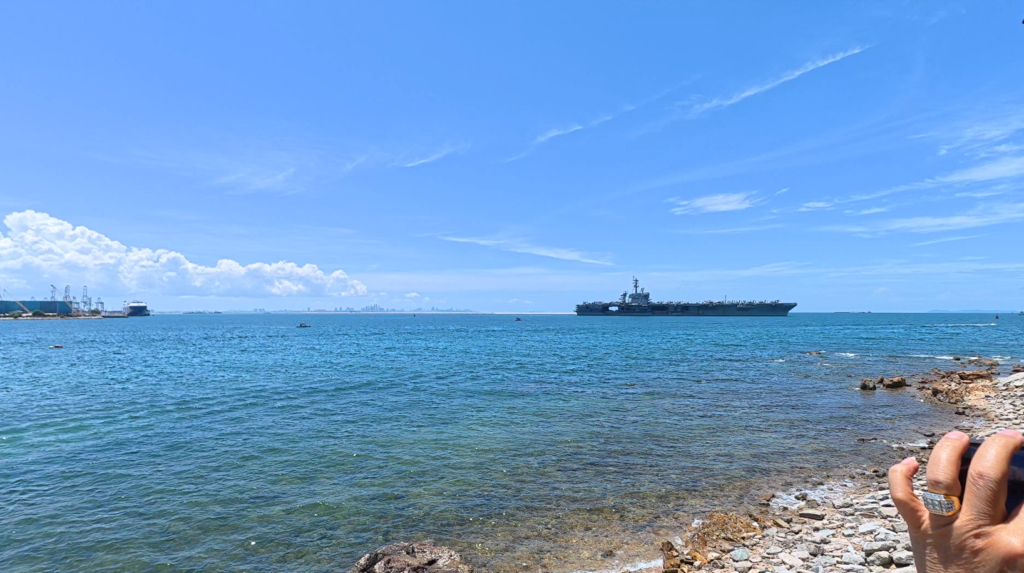
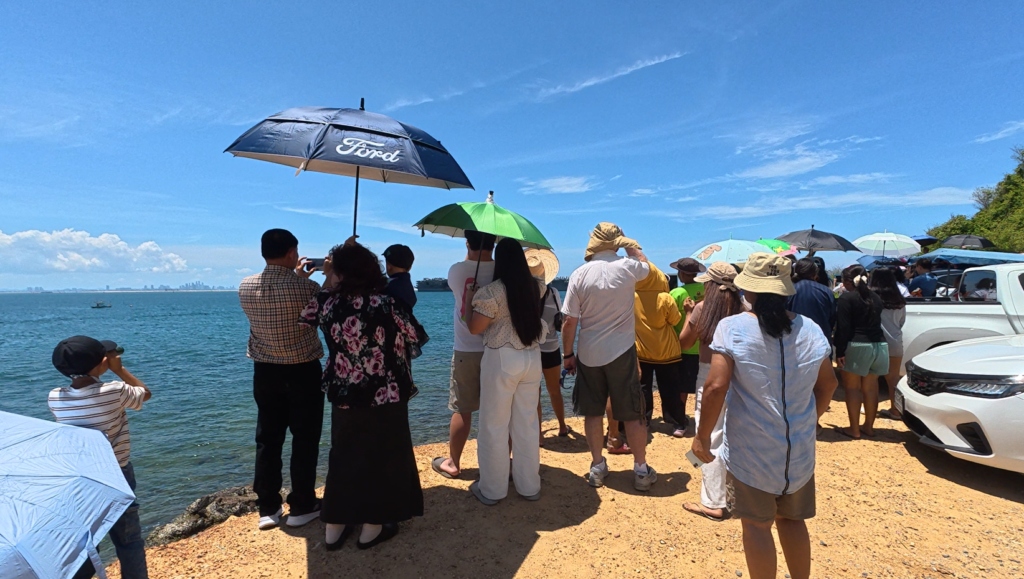
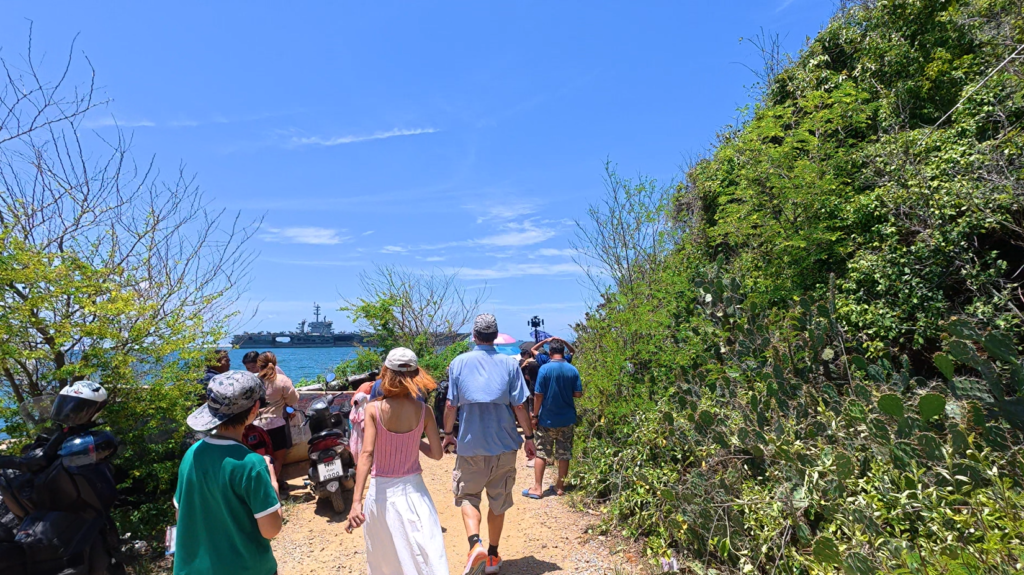
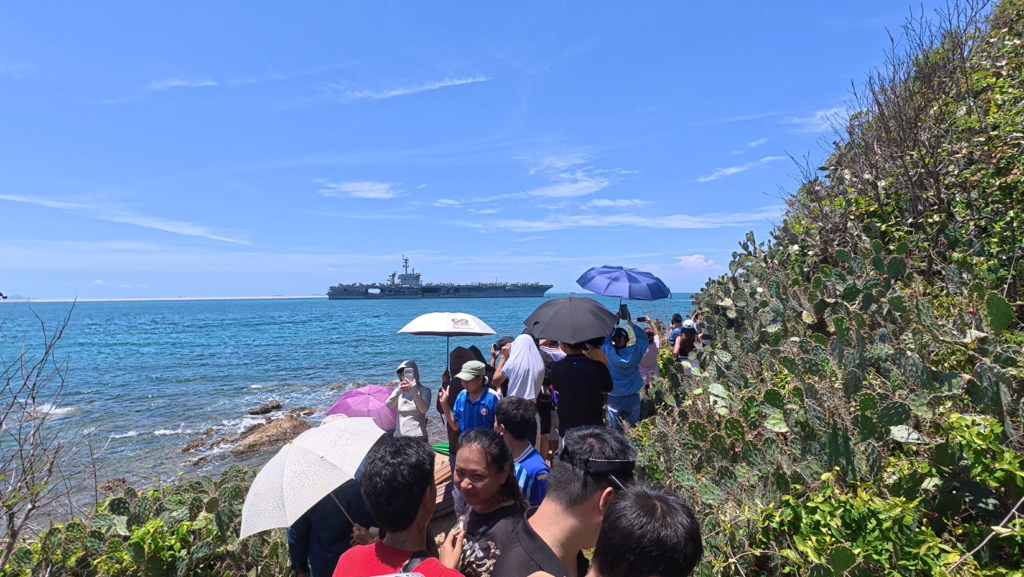
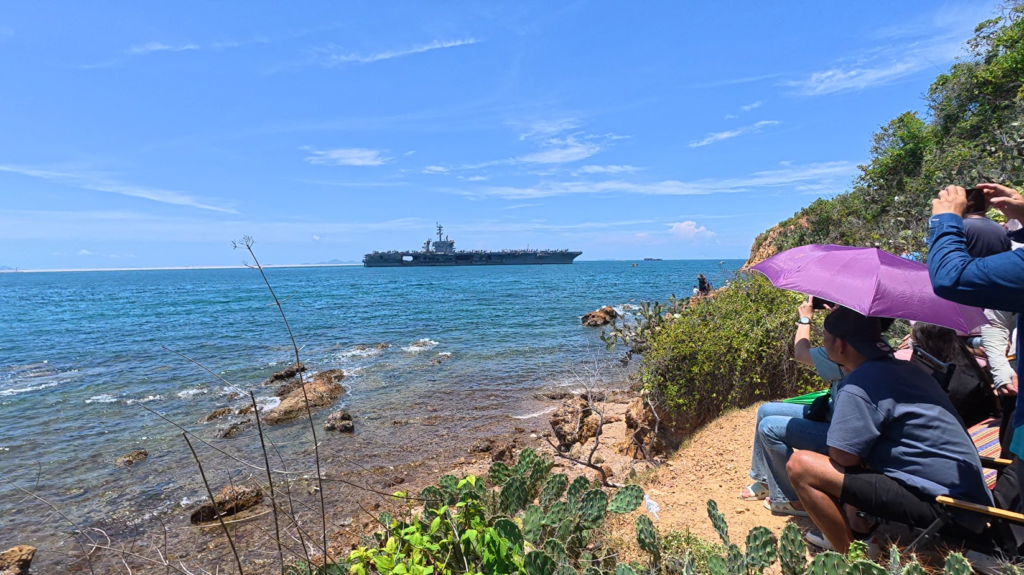
I was not the only one waiting. Visitors gathered along the rocky coast of Khao Laem Chabang to watch USS Abraham Lincoln prepare to leave Thailand.
Watching Abraham Lincoln Sail Away
There was no dramatic ceremony from where I stood. No aircraft launched overhead and no great announcement reached the hillside. We simply watched the sea.
Slowly, the carrier moved farther from Laem Chabang. Harbor vessels could be seen around the distant ship, while cameras along the shoreline followed her progress. One of the most powerful warships ever built was leaving almost quietly.
Perhaps that was what made the moment memorable. History does not always happen directly in front of us. Sometimes it is a small shape on the horizon, watched from a rocky hillside by ordinary people who happened to be there on the right day.
On September 6, Lincoln’s five-day visit to Thailand came to an end. The U.S. Seventh Fleet said the carrier strike group would continue operations in the Seventh Fleet area rather than immediately sailing straight home.
I had hoped to see the ship much closer. Instead, after spending the day searching for her, I saw only the departure from a distance.
And somehow, that felt enough.
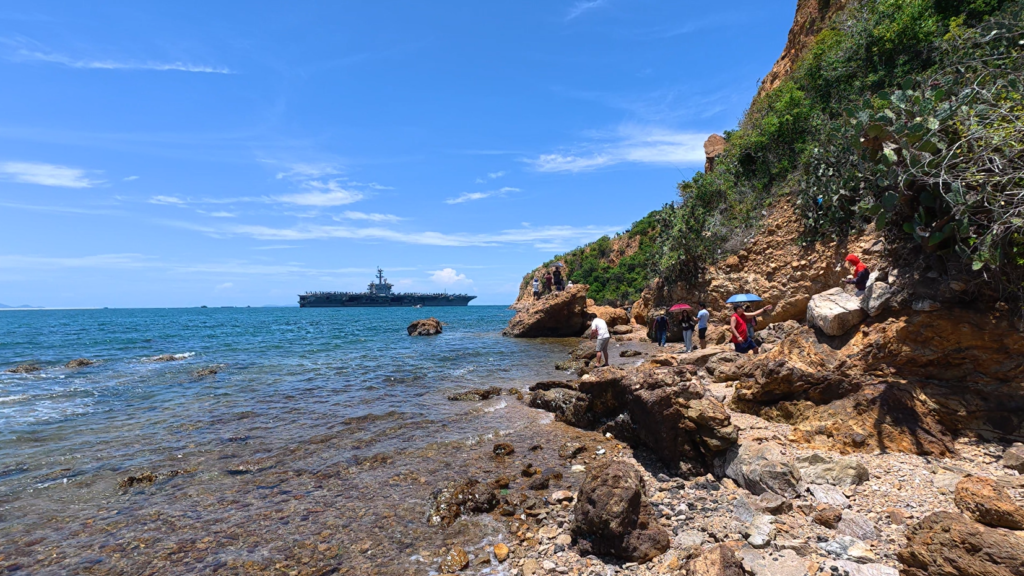
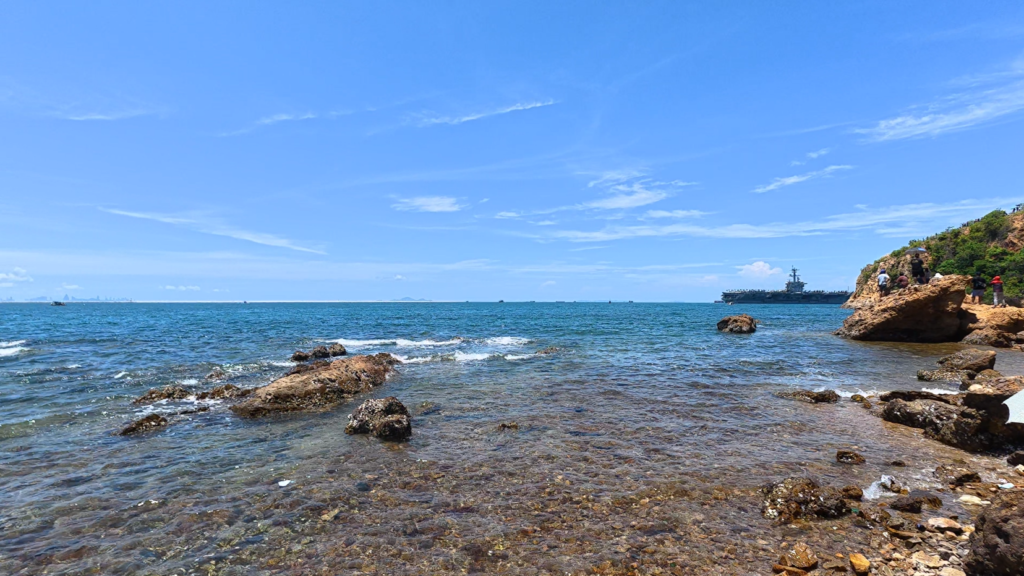
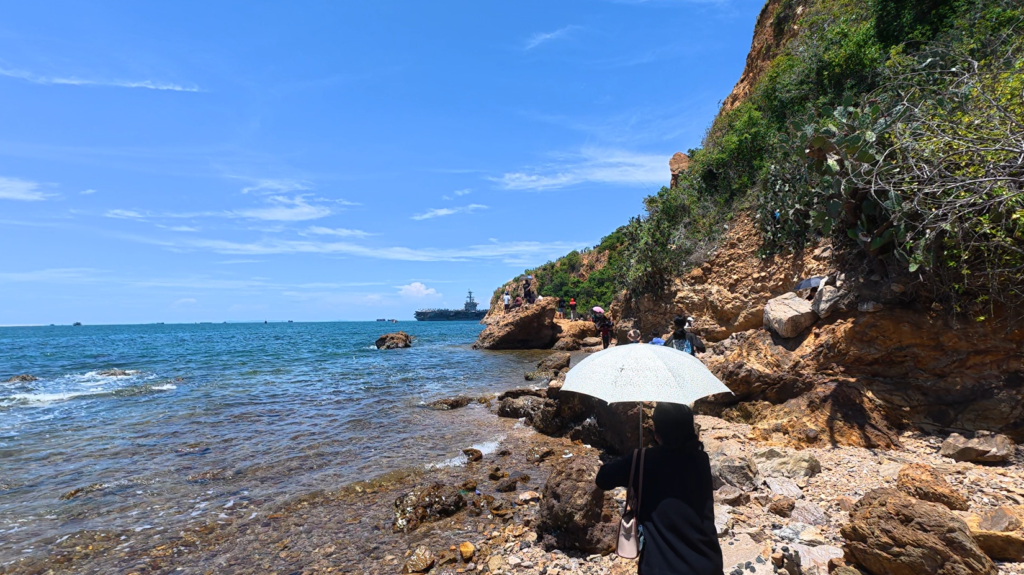
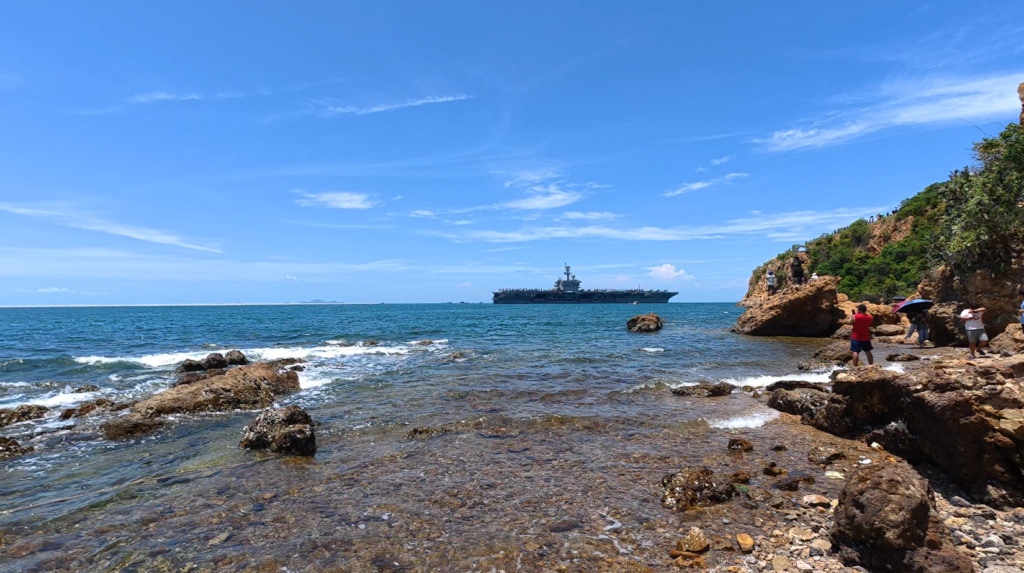
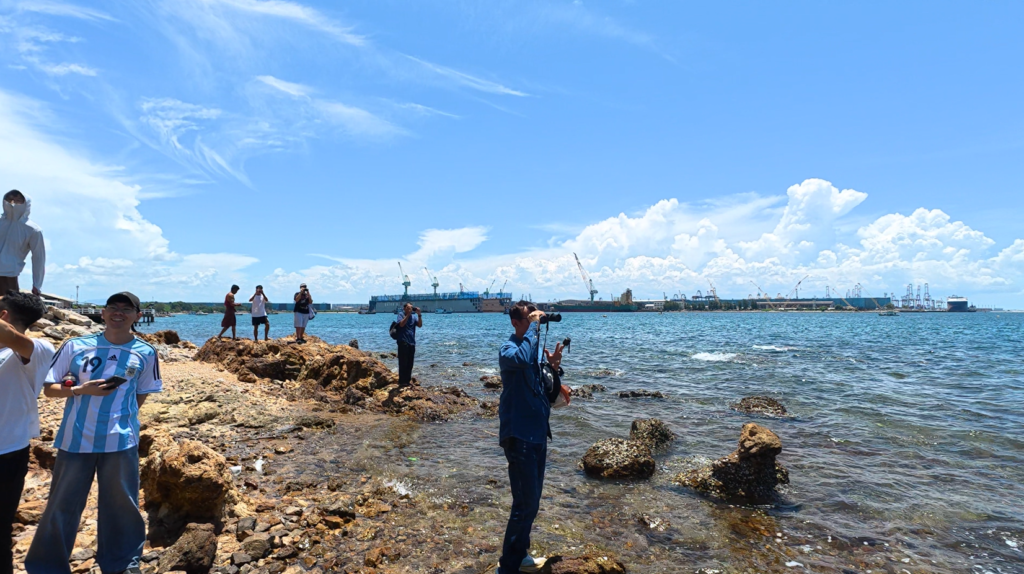
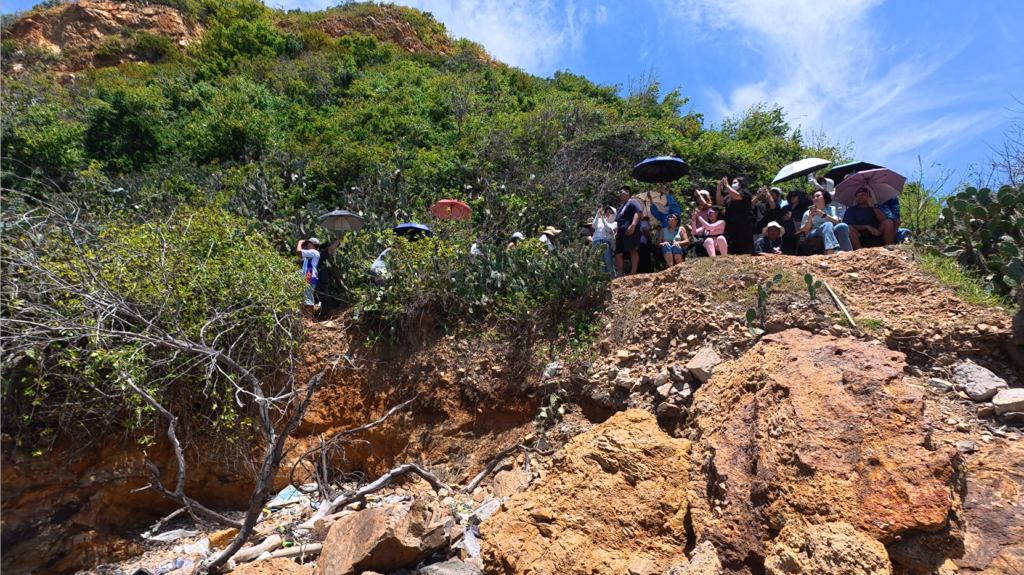
September 6, 2026 — USS Abraham Lincoln slowly leaves Laem Chabang. After a five-day visit to Thailand, the carrier returned to sea while people watched from the rocky coastline.
YouTube Video
The photographs captured only a few moments of the day. This 24-minute ride follows the full search around Laem Chabang — from blocked port roads to the distant farewell from Khao Laem Chabang.
Won Cub Life: Chasing USS Abraham Lincoln at Laem Chabang — a 110cc Cub ride to watch the nuclear-powered carrier leave Thailand.
After the Carrier – Life by the Same Sea
After watching USS Abraham Lincoln disappear farther into the Gulf of Thailand, I headed back down from Khao Laem Chabang. The main purpose of the ride had been accomplished. I had not managed to get close to the carrier, but at least I had seen her leave.
Just below the viewpoint, however, another side of Laem Chabang was waiting. Away from the container terminals, security gates and enormous ships was a small coastal community where fishing boats were tied beside simple piers and local people went about their ordinary afternoon.
The contrast was difficult to ignore. Only minutes earlier, I had been watching a nuclear-powered aircraft carrier carrying thousands of people and dozens of aircraft. Here there were old fishing boats, ropes, nets and small engines. People stood by the water with fishing rods while others worked around their boats.
One coast, two completely different worlds.
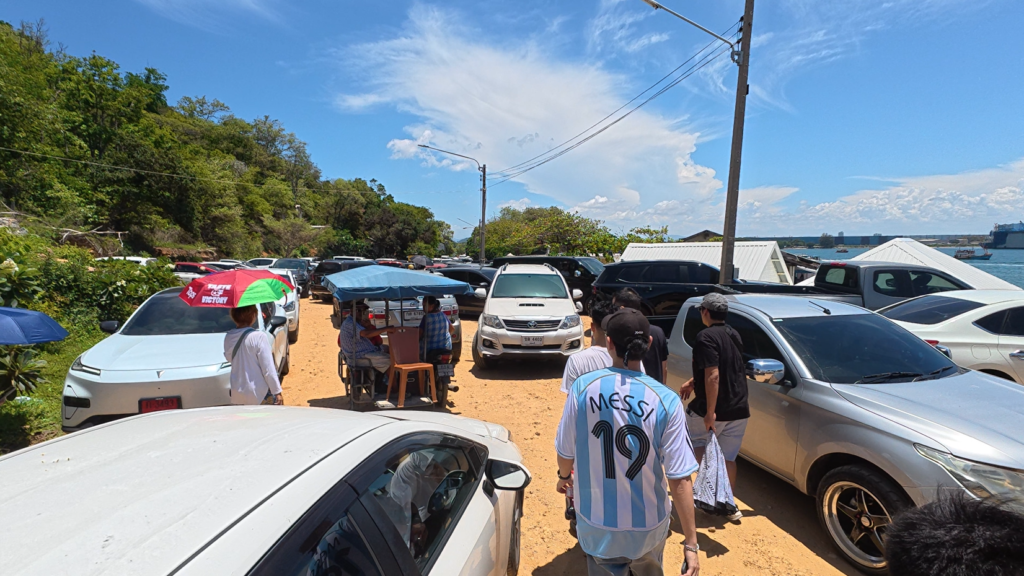
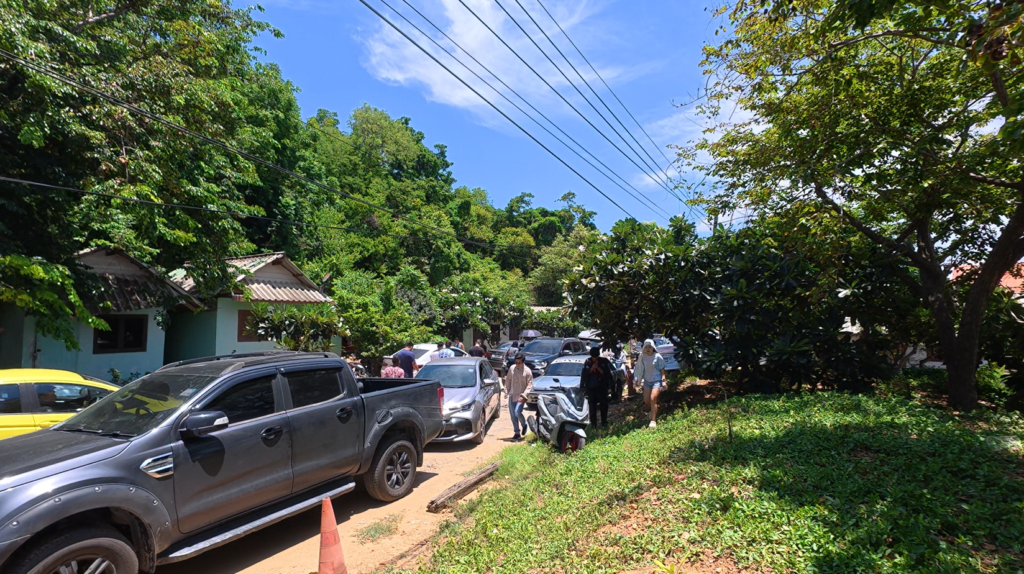
Leaving the crowded viewpoint behind, I followed the local road downhill toward the quieter fishing community below Khao Laem Chabang.
From Nuclear Carriers to Fishing Boats
Laem Chabang is often described through numbers — cargo volumes, container terminals, industrial investment and ever-larger ships. Yet communities along this coastline existed long before the modern deep-sea port transformed the area.
The sea that allows Thailand to connect its factories with global markets is also the same sea from which local fishermen have made their living for generations. Industrial development has changed the landscape dramatically, but small boats and everyday coastal life remain beside that modern infrastructure.
Standing here made the scale of the day feel almost absurd.
A few kilometers away was a port capable of receiving a Nimitz-class aircraft carrier. Somewhere beyond the horizon was a warship of around 100,000 tons. Beside me were fishermen waiting patiently beside boats small enough to be pulled against a simple local pier.
Technology, military power and global trade had passed through these waters. Yet the rhythm of fishing remained wonderfully ordinary.
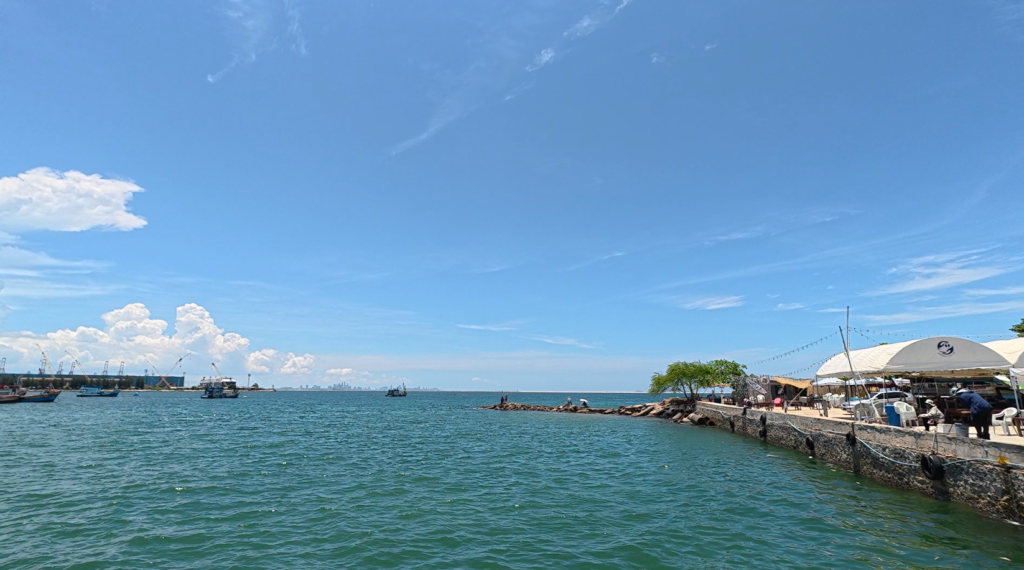
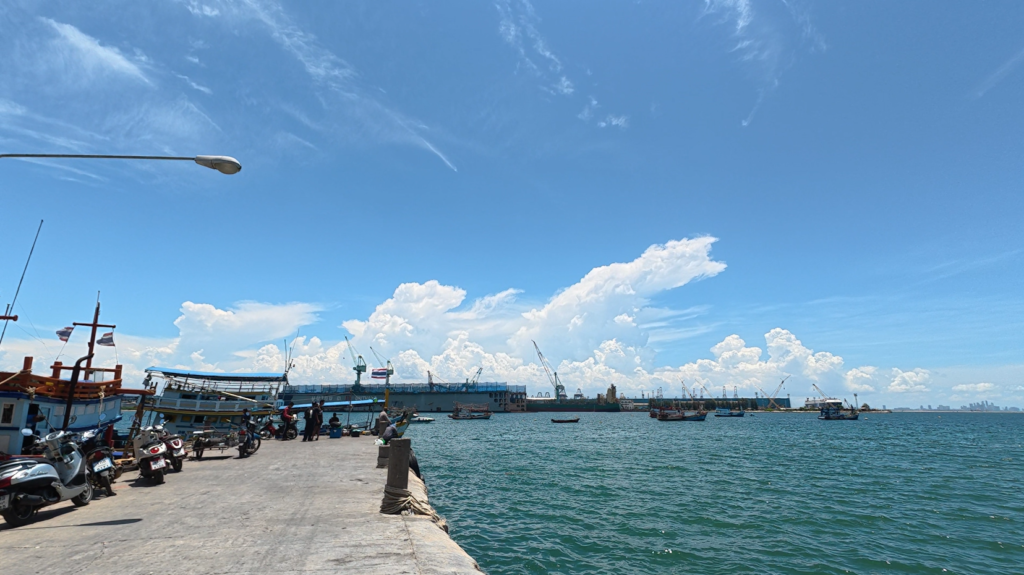
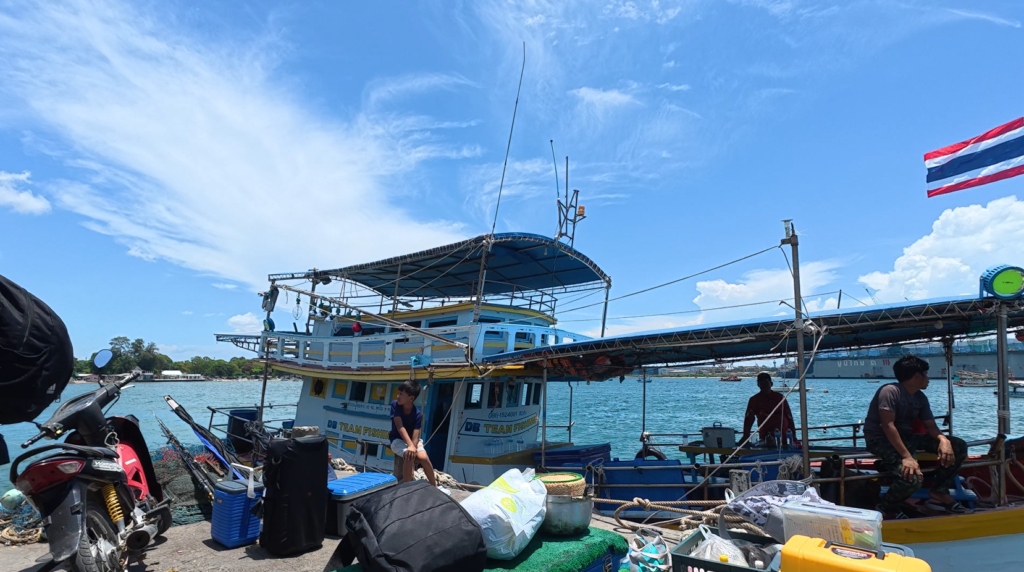
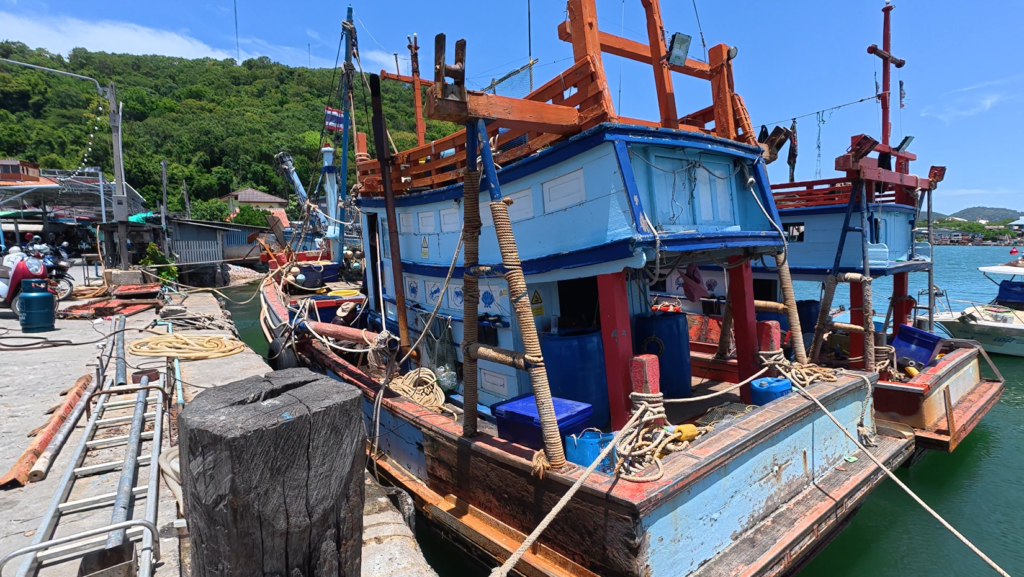
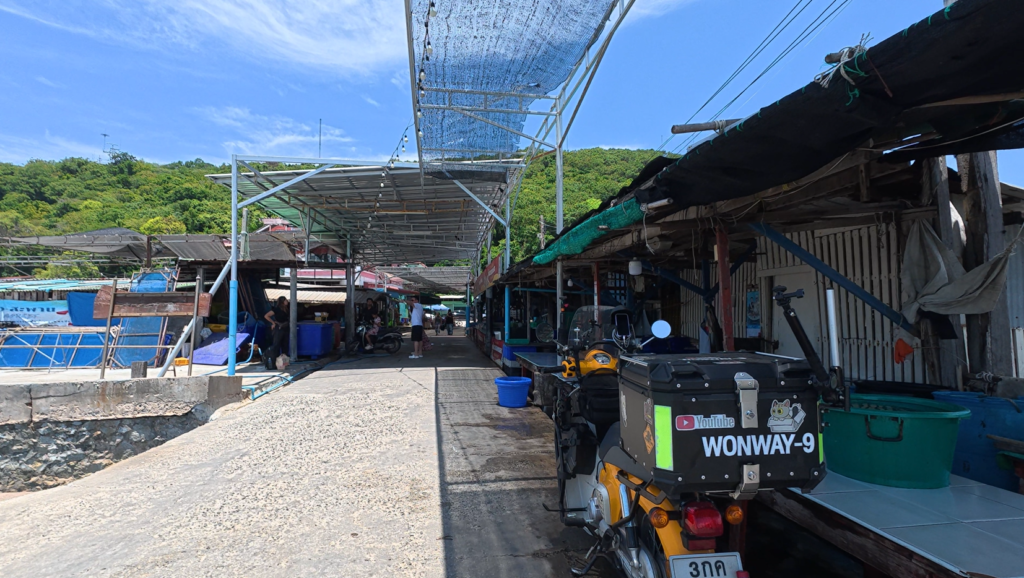
Small piers, working boats and local fishermen reveal another face of Laem Chabang — far removed from the container terminals and the nuclear-powered carrier that had just sailed away.
USS Abraham Lincoln – From Construction to Laem Chabang
| Year | Event |
|---|---|
| 1982 | Construction contract awarded for USS Abraham Lincoln (CVN-72). |
| 1984 | Keel laid at Newport News Shipbuilding, Virginia. |
| 1988 | Launched and christened. |
| 1989 | Commissioned into the U.S. Navy on November 11 as the fifth Nimitz-class aircraft carrier. |
| 1991 | First major deployment. Diverted to the Philippines after the Mount Pinatubo eruption, supporting Operation Fiery Vigil and the evacuation of tens of thousands of military personnel and family members. |
| 1991 | Continued to the Arabian Gulf following the Gulf War and supported operations connected with Iraq and Kuwait. |
| 1993 | Deployed off Somalia, supporting Operation Restore Hope. |
| 1990s | Repeated deployments to the Persian Gulf supporting enforcement of the Iraqi no-fly zones, including Operation Southern Watch. |
| 2002–03 | Supported Operation Enduring Freedom and then Operation Iraqi Freedom. Aircraft from Lincoln’s air wing flew combat missions over Iraq. |
| May 2003 | President George W. Bush landed aboard Lincoln; the controversial “Mission Accomplished” event became one of the best-known images of the Iraq War. |
| 2004–05 | After the Indian Ocean tsunami, Lincoln supported Operation Unified Assistance, with helicopters delivering food, water and other relief supplies to devastated communities in Indonesia. |
| 2006 | Visited Laem Chabang, Thailand, becoming the first U.S. aircraft carrier to make a pierside visit there. |
| 2008 | Returned to the Middle East and supported operations connected with Iraq and Afghanistan. |
| 2011–12 | Further deployment supporting operations over Afghanistan and maintaining U.S. naval presence in the Arabian Sea and Persian Gulf. |
| 2013–17 | Underwent Refueling and Complex Overhaul (RCOH) — nuclear refueling and extensive modernization intended to prepare the carrier for the second half of her service life. |
| 2019 | Deployed to the Middle East amid heightened U.S.–Iran tensions, demonstrating the carrier’s continuing strategic role three decades after commissioning. |
| 2020s | Continued Indo-Pacific and Middle East deployments with a modernized air wing, including newer aircraft such as the F-35C Lightning II. |
| 2024–26 | Continued operational deployments involving the Middle East and Indo-Pacific, including combat-related missions and regional deterrence operations. |
| Sept. 2, 2026 | USS Abraham Lincoln returned to Laem Chabang, twenty years after her notable 2006 visit. Nearly 5,000 sailors and Marines received several days of rest in Thailand. |
| Sept. 6, 2026 | Departed Laem Chabang and returned to sea. From Khao Laem Chabang, I finally watched the carrier sail away. |
Nearly four decades separate the laying of Abraham Lincoln’s keel from the afternoon I watched her leave Laem Chabang. During those years, the same hull has carried generations of sailors through the end of the Cold War, conflicts in the Middle East, humanitarian relief after one of Asia’s greatest natural disasters, and repeated deployments across the Pacific and Indian Oceans.
Her return to Laem Chabang in 2026 was therefore more than the arrival of another visiting warship. It brought together several layers of history — an aircraft carrier commissioned in 1989, a Thai deep-sea port opened in 1991, a relationship established here in 2006, and another farewell from the same coastline twenty years later.
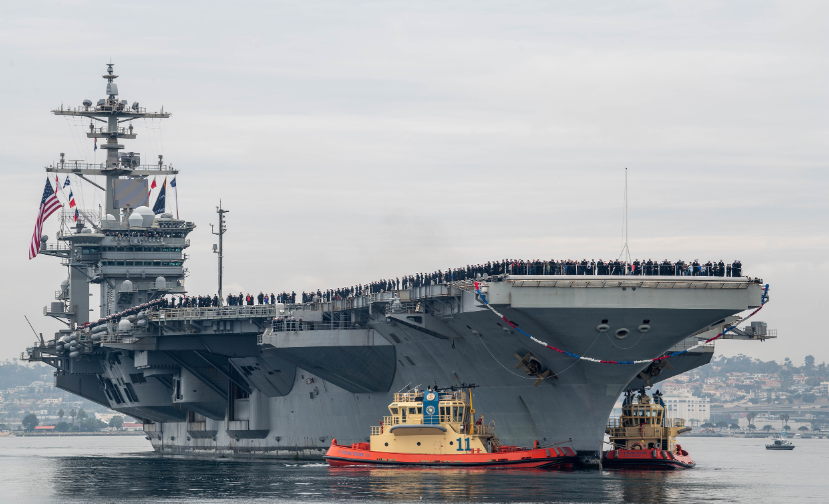
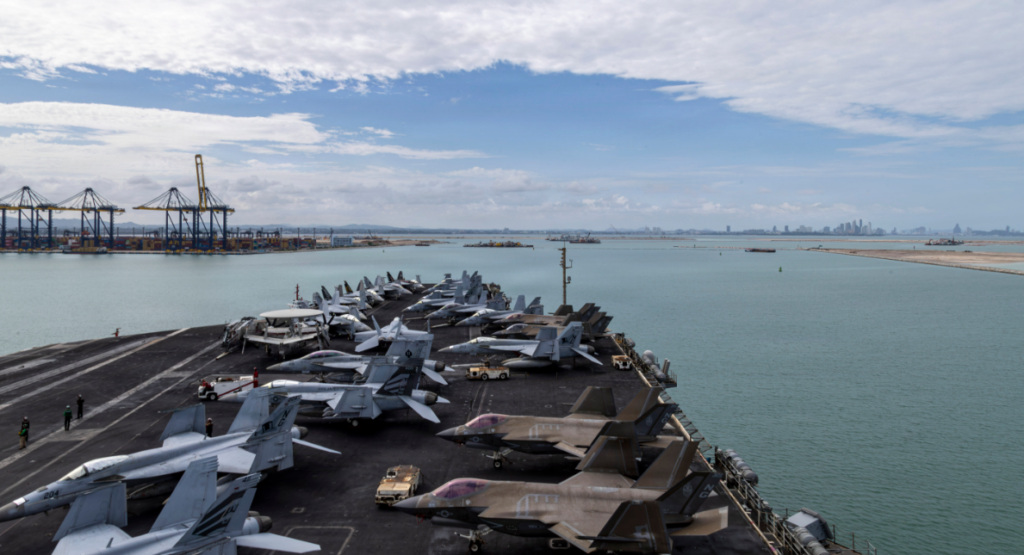
USS Abraham Lincoln and Laem Chabang — two products of the same era, brought together again on the Thai coast in September 2026.
A 100,000-Ton Carrier and a 110cc Cub
USS Abraham Lincoln was commissioned in 1989. Since then, she has crossed oceans, operated through decades of conflict and changing geopolitics, supported humanitarian relief in Southeast Asia, and visited Thailand more than once. Twenty years after her notable 2006 visit to Laem Chabang, the same carrier returned to this coast in 2026.
I had come with much simpler machinery.
One nuclear-powered aircraft carrier, around 100,000 tons. One yellow Honda Cub, 110cc.
Different machines, different missions and very different journeys. Yet for a few minutes on this September afternoon, we shared the same coastline.
Perhaps that is what I will remember most about this ride. I never got close to Abraham Lincoln. Most of the day was spent searching for a ship I could not see. But eventually, from a rocky hill above Laem Chabang, I watched a small silhouette move slowly toward the horizon.
Then I returned to the fishing village, started the Cub and continued my own journey.
Goodbye, Abraham Lincoln. Fair winds and following seas.
Won Cub Life continues.
Location and Visitor Information
Location: Khao Loem Chabang, Thung Sukhla, Si Racha District, Chonburi, Thailand
Admission: No formal admission fee for the public coastal viewpoint area
Best Time to Visit: Late afternoon, when the heat is lower and visibility across the Gulf is often more comfortable
Footwear: Comfortable shoes are recommended because parts of the shoreline and viewpoint area are rocky and uneven
Photography: Excellent for coastal, harbor and long-distance ship photography. A telephoto lens is useful for vessels inside or beyond Laem Chabang Port.
Visit Time: About 30–60 minutes for the viewpoint; longer if exploring the nearby fishing community
Important: Laem Chabang Port is an active commercial and security-controlled facility. Do not attempt to enter restricted port areas simply to obtain a closer view.
Laem Chabang is Thailand’s principal deep-water international port, located in Thung Sukhla, Si Racha District. The Port Authority of Thailand records that construction began in 1987 and the port officially opened on January 21, 1991.
Google Maps : Khao Laem Chabang – Google Maps
Learn More About Laem Chabang
For more about the development of Thailand’s principal deep-sea port, visit the official Port Authority of Thailand.t
Explore more journeys where Thailand’s modern landscape, local communities and history meet on the road.