A Mountain Temple Above the World
Wat Phra Phutthachai rises dramatically from the rocky hills of Saraburi. Before reaching the sacred summit, I was welcomed by groups of monkeys wandering freely around the entrance, which is why many visitors remember this place simply as the “Monkey Temple.”
But the playful animals were only the beginning. Above them stood a steep stairway carved between massive rocks, leading toward an ancient sanctuary high on the mountain. From below, the temple seemed to hang between the cliffs and the sky, while a standing Buddha looked silently over the people and the wide landscape beneath him.
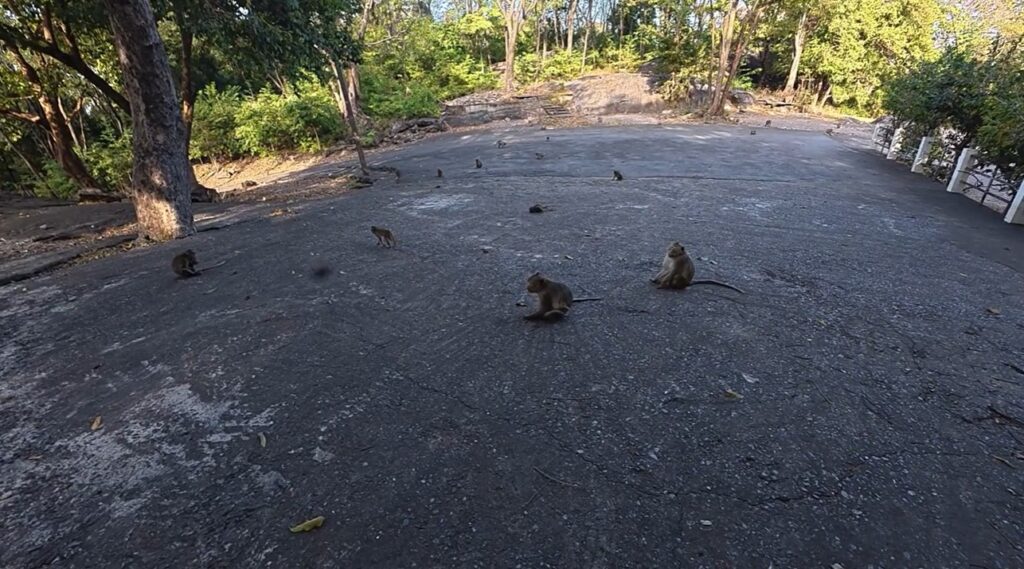
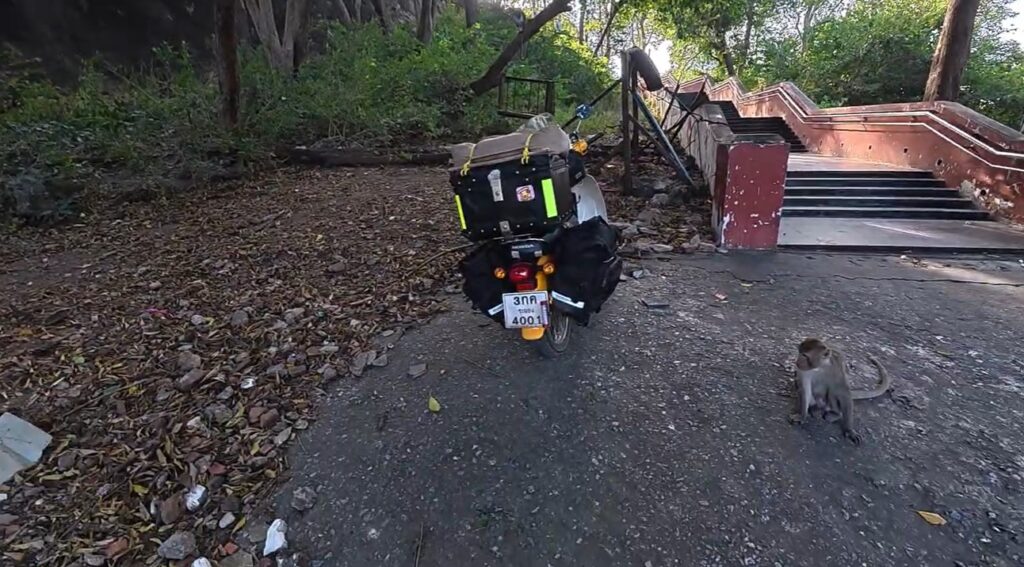
The journey begins among the monkeys living freely around the foot of the sacred mountain.
The Climb Begins
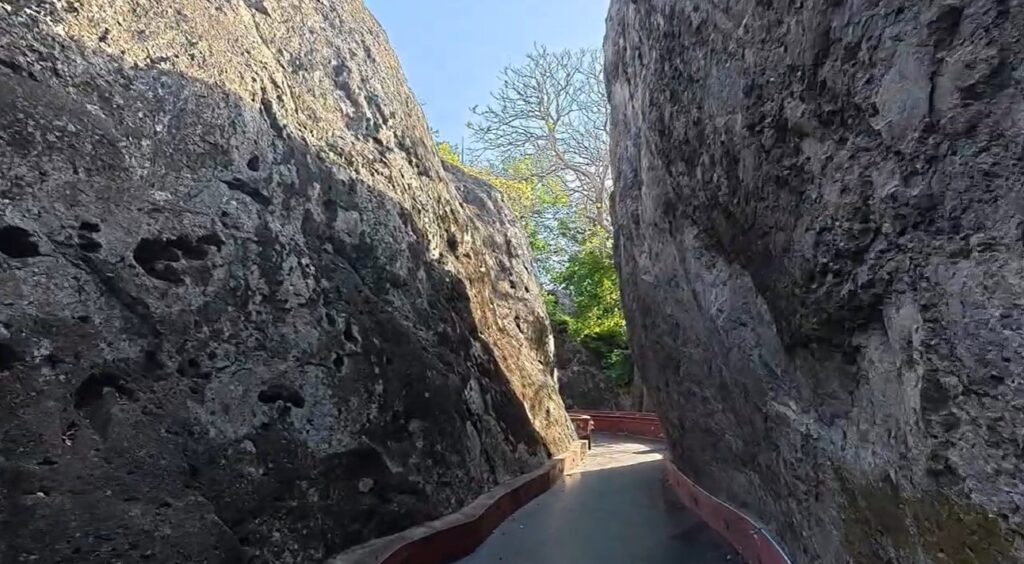
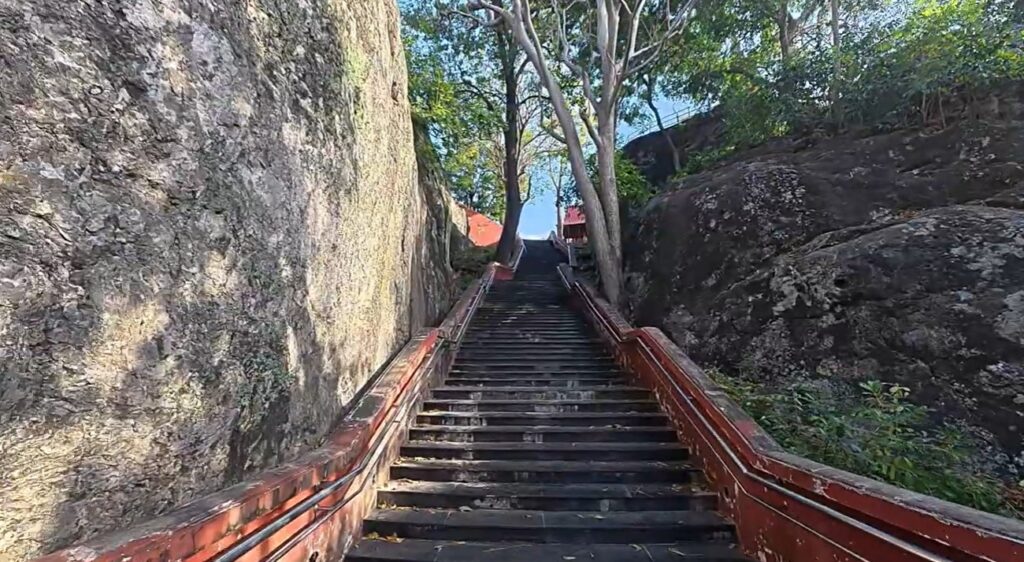
From the entrance, the path quickly became steeper. Stone steps rose between enormous rock walls, leading higher into the mountain. The climb was tiring, but every turn revealed another view of the temple above, appearing almost suspended against the sky.
The monkeys remained below, while the atmosphere gradually changed from lively and playful to quiet and sacred. Step by step, the outside world seemed to fall away.
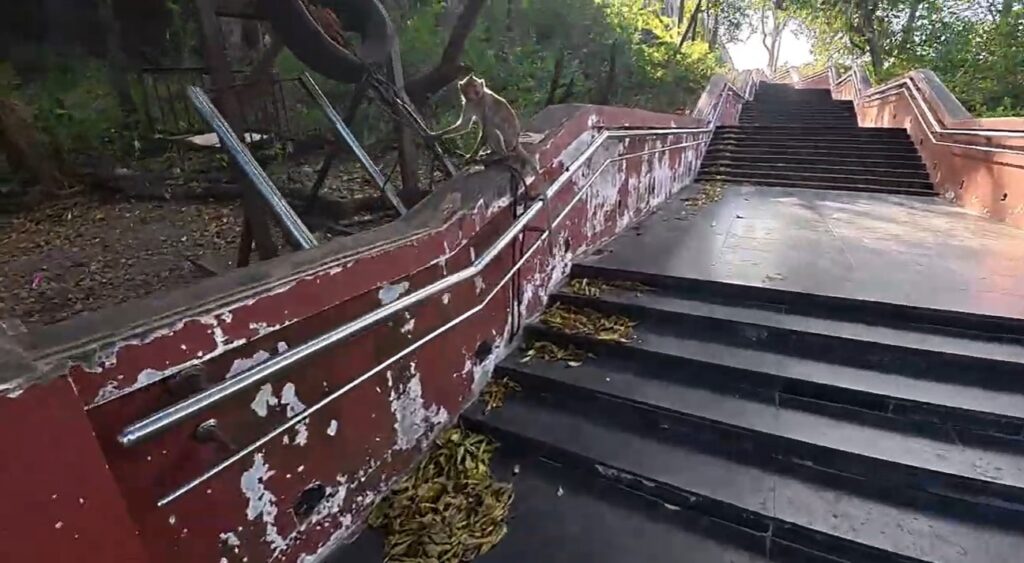
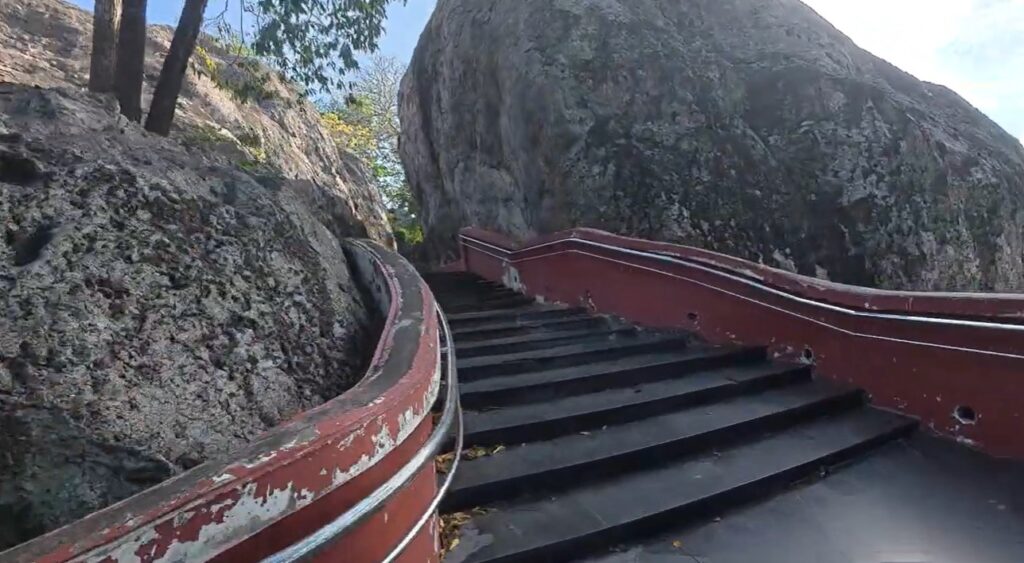
A steep passage through the rocks leads toward the sanctuary high above the valley.
A Sacred Place from the Ayutthaya Era
Wat Phra Phutthachai is much more than a mountain temple known for its monkeys. Its history is traditionally connected with the reign of King Songtham of Ayutthaya in the early 17th century. According to local belief, a shadow-like image resembling the standing Buddha was discovered upon the cliff and became known as Phra Phutthachai, meaning the Buddha’s shadow.
For generations, pilgrims have climbed this mountain to pay respect to the sacred image on the rock. The temple also preserves a revered Buddha footprint on the upper mountain, making the entire climb part of the pilgrimage rather than merely a path to a scenic viewpoint.
What impressed me most was how this centuries-old faith still remained alive. The sanctuary stood high above the land, while the figure of the Buddha seemed to look down quietly upon every person approaching from below.
High above the path, the Buddha appears to watch silently over those climbing toward the ancient sanctuary.
Beneath the Buddha’s Gaze
As I climbed higher, the most unforgettable sight came into view. A large standing Buddha rose above the temple buildings, facing outward from the mountain. From below, the figure seemed not simply to stand on the summit, but to watch quietly over the people approaching the sanctuary.
The scale of the mountain made the Buddha appear even more powerful. The cliffs, stairways, roofs and human figures below all seemed small beneath him. Yet the feeling was not intimidating. It was calm and protective, as though the Buddha had been looking across this land for generations.
Standing there, I understood why the temple had been built so high above the ordinary world. The long climb, the silence of the mountain and the Buddha’s gaze combined to create a feeling that could not be experienced from the road below.
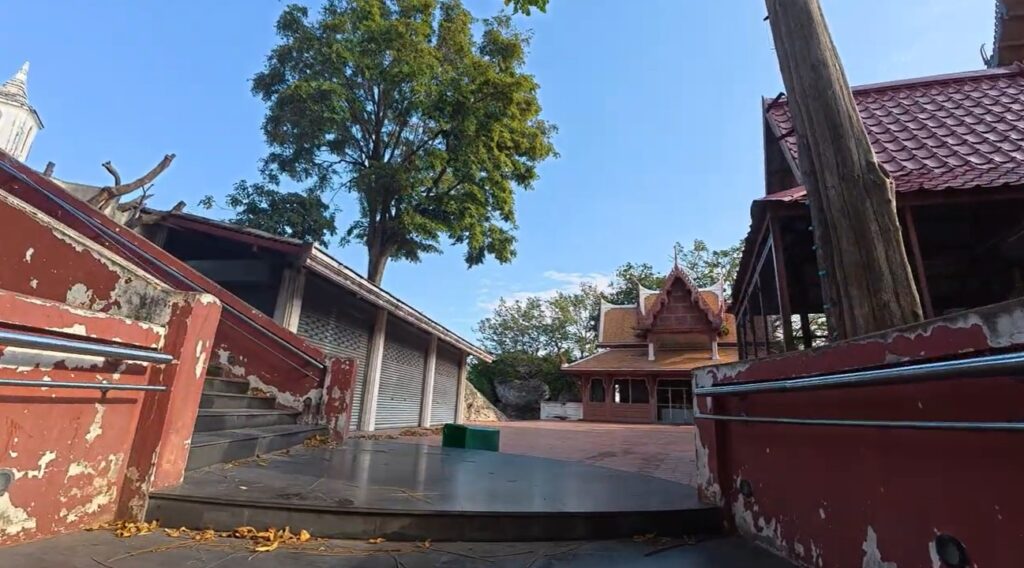
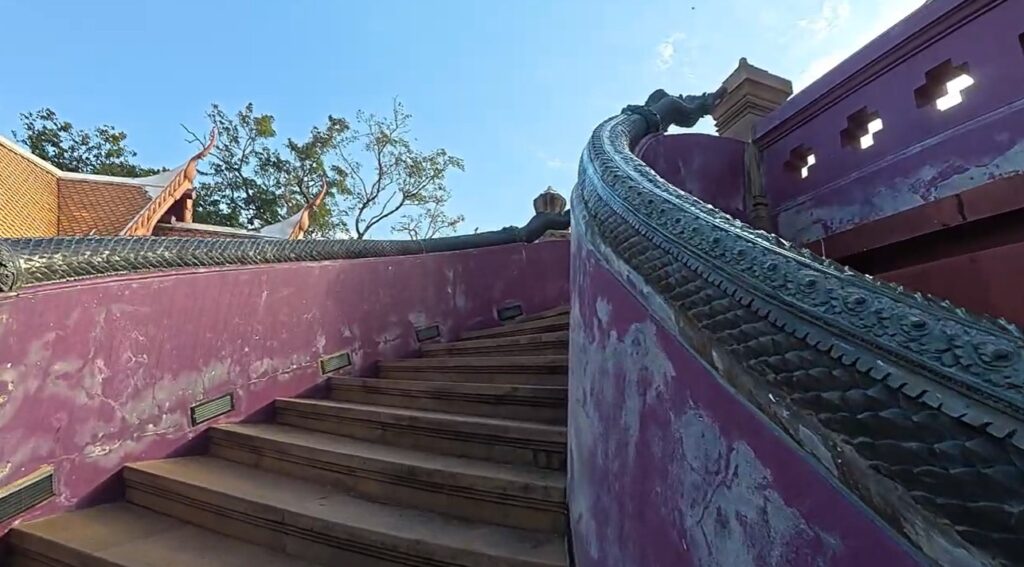
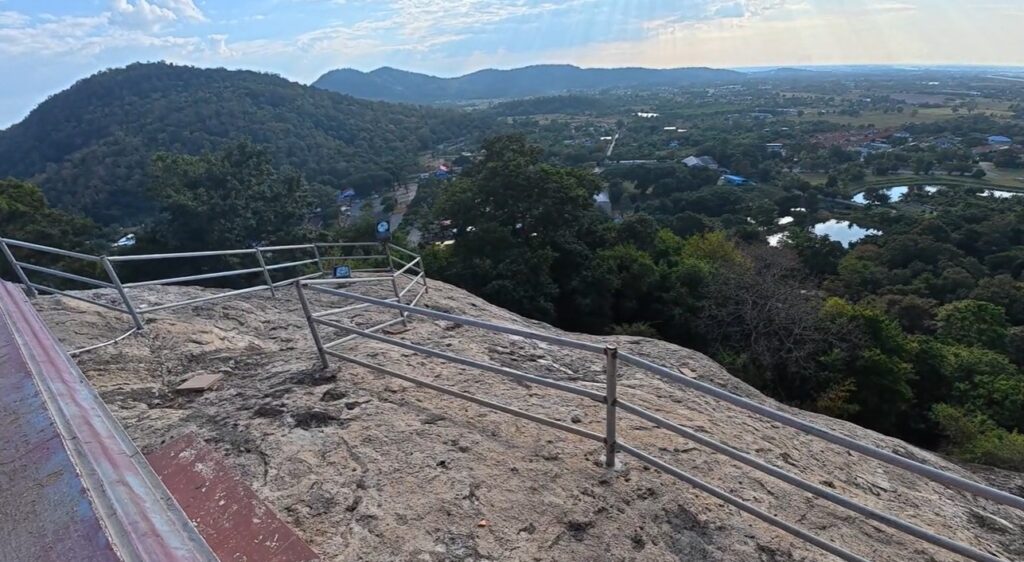
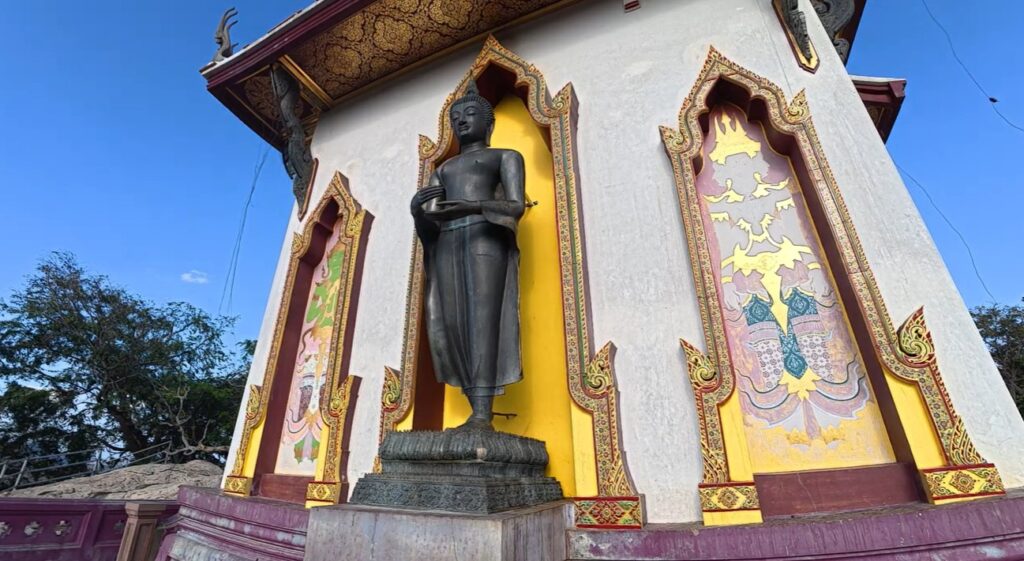
From the high mountain sanctuary, the standing Buddha appears to watch peacefully over every visitor below.
The Temple Above the Valley
At the upper level, the temple opened toward a wide view of the surrounding countryside. From there, the roads, forests and buildings below appeared distant and quiet. The long climb suddenly felt worthwhile.
The sanctuary seemed to rise directly from the mountain itself. Its roofs followed the shape of the cliffs, while stairways and terraces connected one sacred space to another. Rather than standing apart from nature, the temple appeared to have grown together with the rocks.
Looking back across the valley, I felt both the height of the mountain and the depth of the faith that had brought people here for centuries. The view was beautiful, but the strongest impression remained the Buddha standing above, silently watching over the world below.
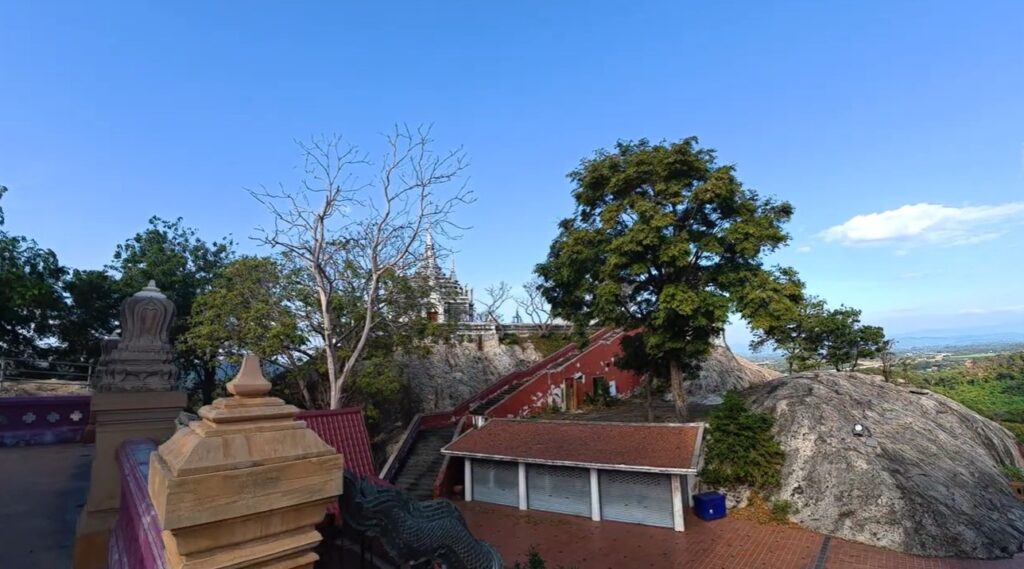
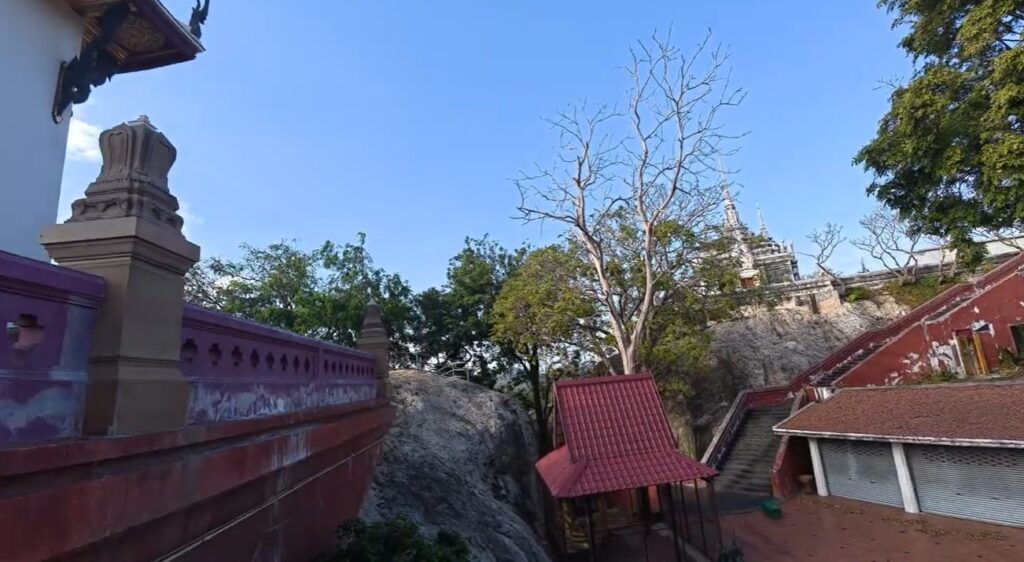
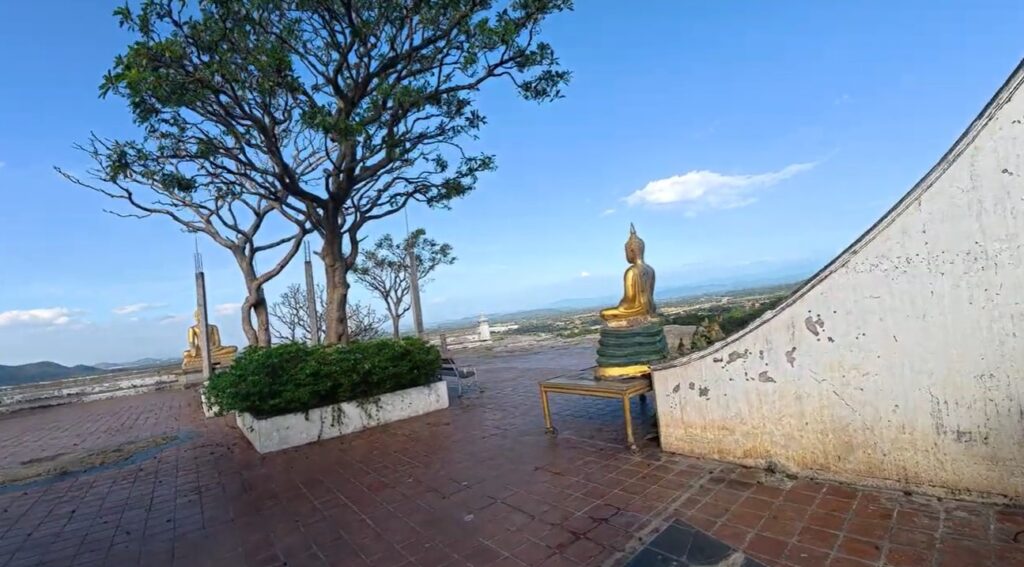
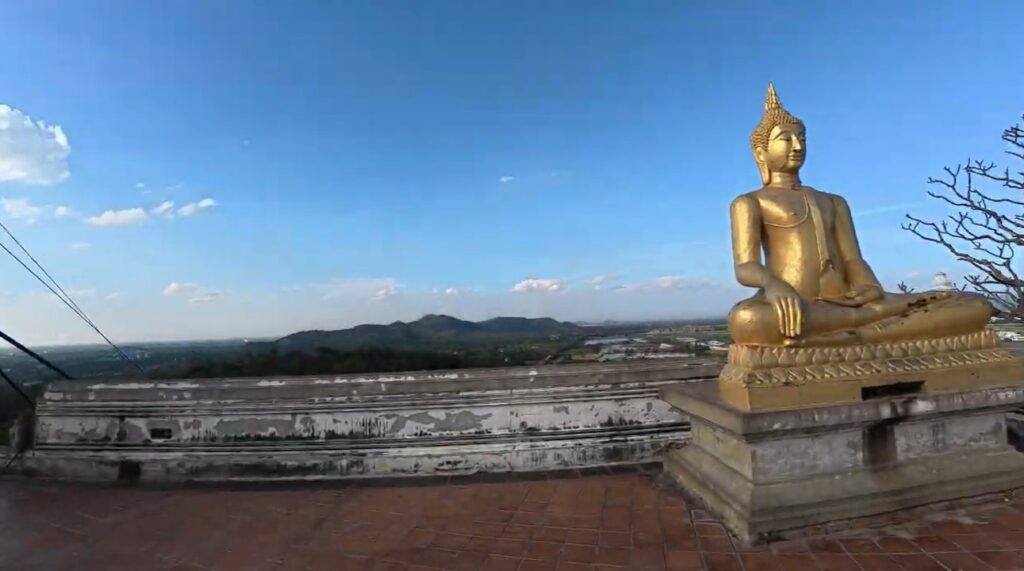
The sanctuary rises from the mountain, opening toward the vast and peaceful landscape of Saraburi.
Where Faith Meets the Mountain
Beyond the main sanctuary, the path continued along the mountain ridge. Small buildings, old structures and quiet corners appeared between the rocks, each one shaped by the steep terrain.
Some parts looked worn by time, but that made the place even more moving. This was not a temple created only for convenience or easy access. Generations of worshippers had climbed the same mountain, carrying their faith upward one step at a time.
From the edge of the temple grounds, I could see the reservoir and the long mountain ridges below. The landscape felt peaceful and distant, while the sanctuary remained suspended between the earth and the sky.
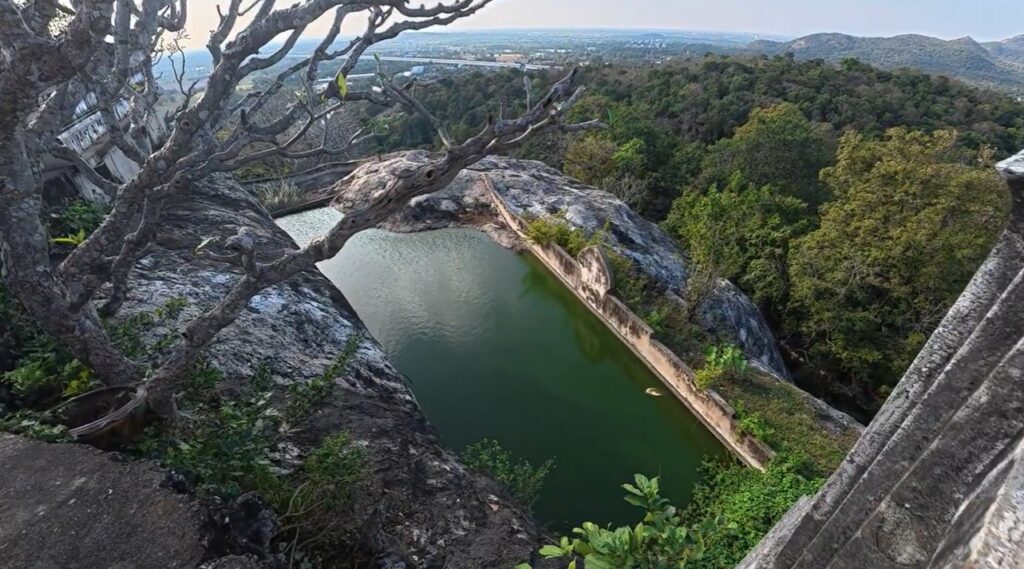
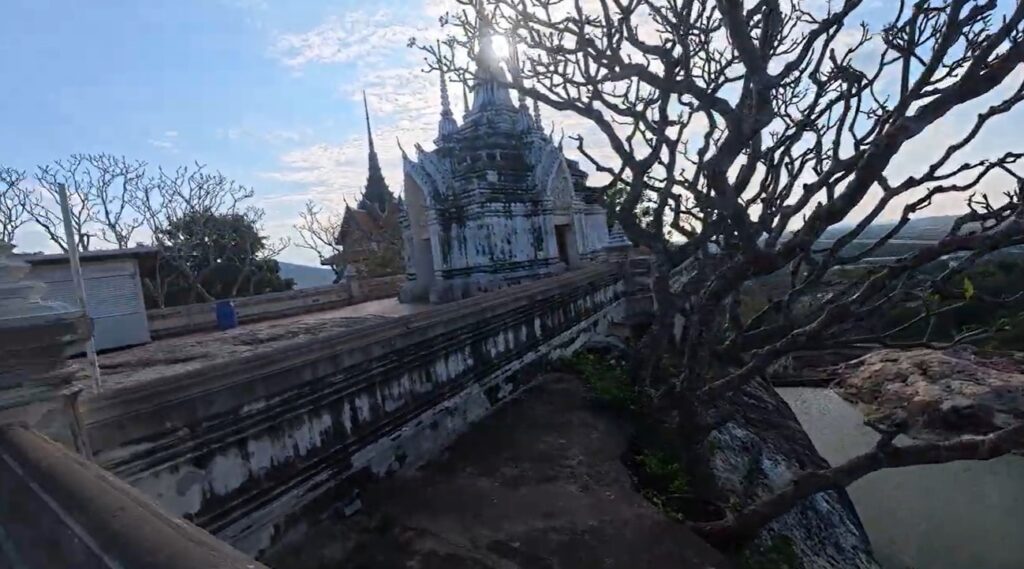
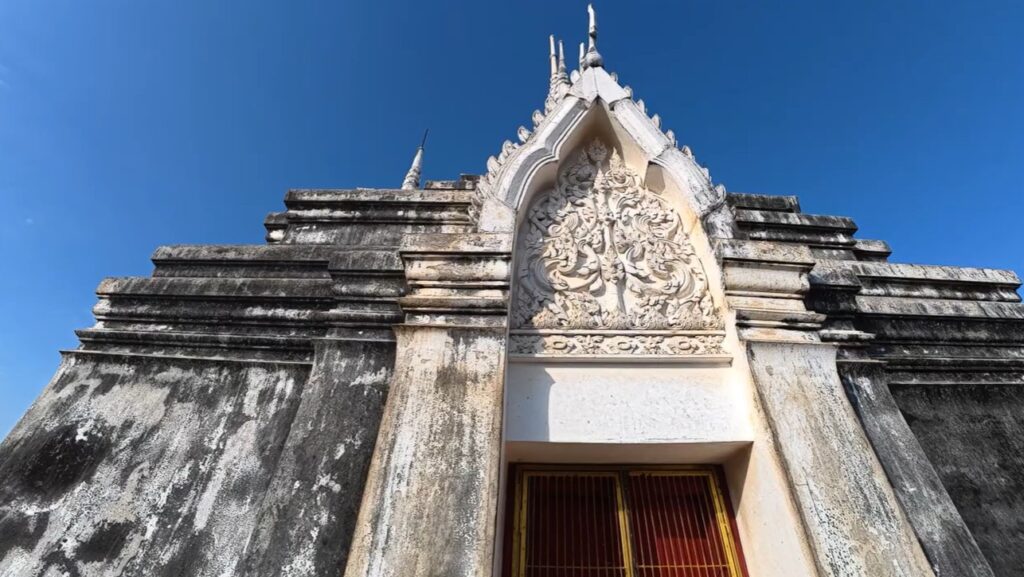
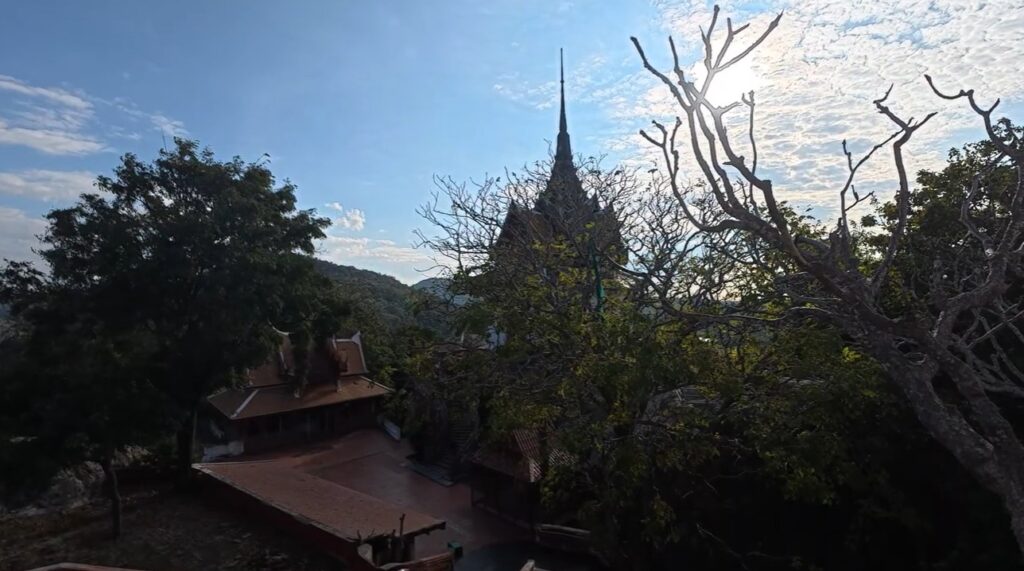
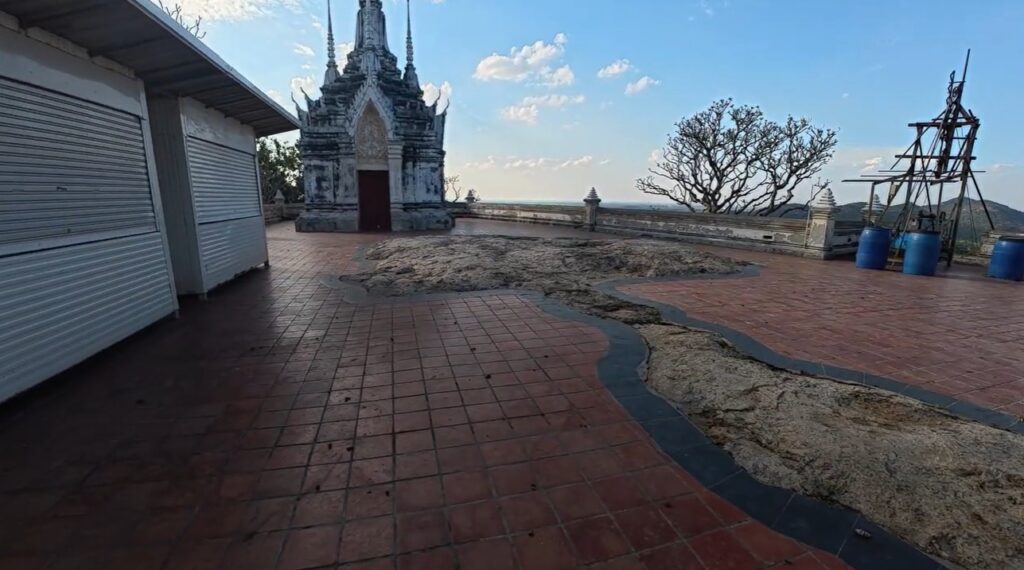
Ancient structures, rocky paths and distant mountain views reveal how deeply the temple has become part of the landscape.
A Temple Still Watching Over the Land
From a distance, Wat Phra Phutthachai looked almost impossible—temple roofs and sacred structures rising from the summit of a steep rocky mountain. Even after centuries, the sanctuary still stood high above the surrounding land, carrying the faith of the past into the present.
What stayed with me most was the Buddha above the temple. From below, he seemed to look directly toward the people climbing the mountain. His presence was calm, silent and protective, as though he had watched over countless pilgrims long before my arrival and would continue watching after I left.
Many people may remember this place as the “Monkey Temple,” but the monkeys were only the entrance to a much deeper experience. Beyond them waited an ancient mountain sanctuary, a demanding climb and a powerful moment beneath the Buddha’s gaze.
Wat Phra Phutthachai was not simply a temple built on a mountain. It felt as though the entire mountain had become a sacred place.
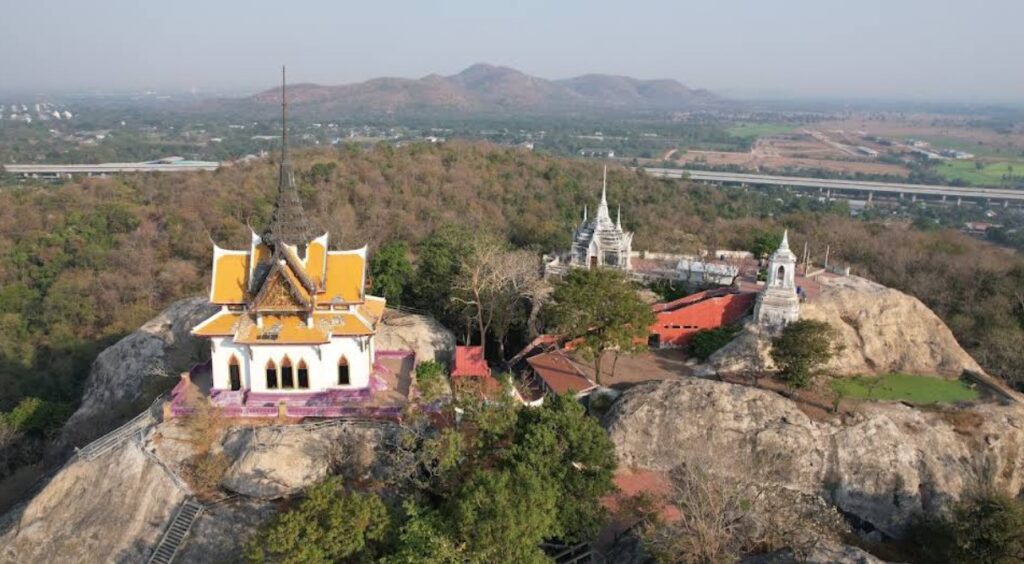
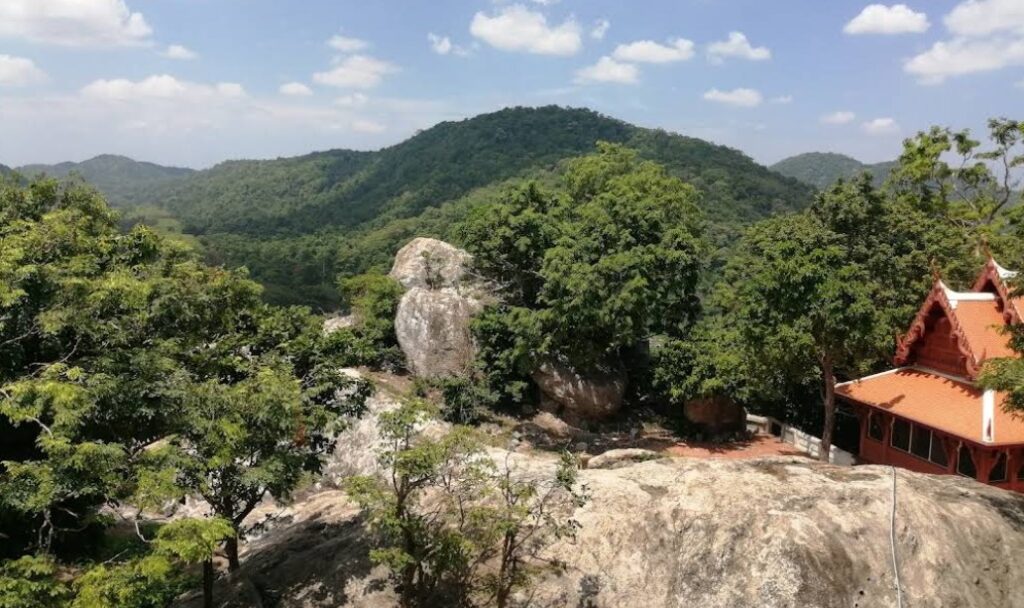
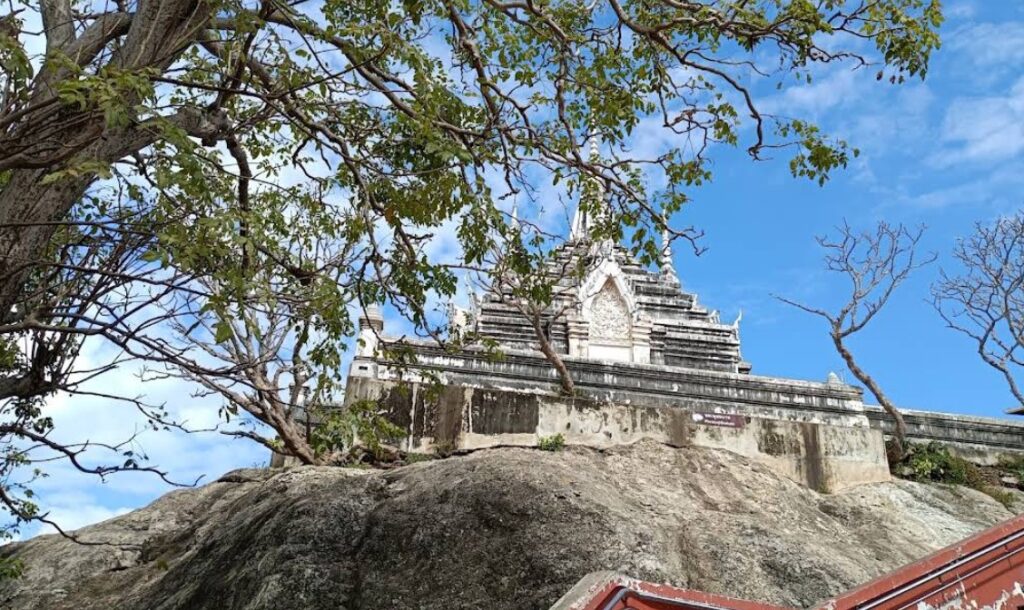
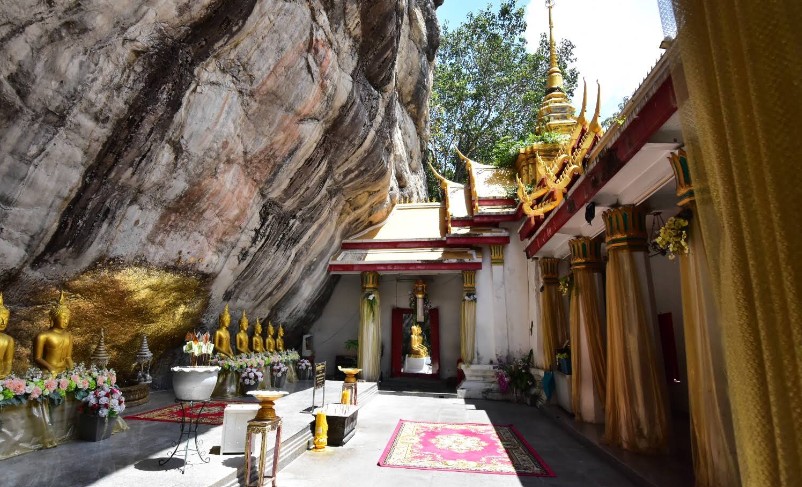
High above Saraburi, the ancient sanctuary continues to watch silently over the land below.
Visitor Information
Temple: Wat Phra Phutthachai
Thai name: วัดพระพุทธฉาย
Province: Saraburi, Thailand
Known for: The sacred Buddha shadow, mountain sanctuary, Buddha footprint and monkeys around the lower temple
Admission: Temple access is generally free, though donations are welcomed
Best time to visit: Early morning, before the heat becomes intense
What to prepare: Comfortable shoes, drinking water and sun protection
Caution: Do not carry food openly near the monkeys, and keep small belongings secure.
Location
Add the Google Maps link below:
Wat Phra Phutthachai on Google Maps
Related Temple Stories
Wat Nong Waeng — The Golden Temple of Khon Kaen
Wat Pa Pradu — The Mystery of the Left-Reclining Buddha