I arrived at Wat Mai Ket Ngam expecting another quiet community temple on the edge of Ang Sila. What I found was a place with several layers of memory: an old temple moved because of repeated flooding, a nearly 200-year-old ubosot, rows of Buddha images and bells, and monks still gathering inside for daily chanting.
This was not a monument preserved only for visitors. It was a living temple where old architecture, restored paintings, local beliefs, and present-day Buddhist practice continued side by side.
Arriving at Wat Mai Ket Ngam
The entrance stood beside a busy road, but the atmosphere changed as soon as I rode through the gate. Traffic noise softened beneath the trees, and the temple grounds opened into a quiet collection of halls, shelters, shrines, and old structures.
There was no grand tourist reception or fixed route to follow. I parked the Cub and began walking slowly, allowing the layout of the temple to reveal itself. Signs pointed toward different areas, while the shaded road led farther into a compound that clearly served both religious and community life.
At first, the oldest building was not immediately obvious. I had to look beyond the larger roofs and newer structures to find the low, weathered ubosot waiting deeper inside the grounds.
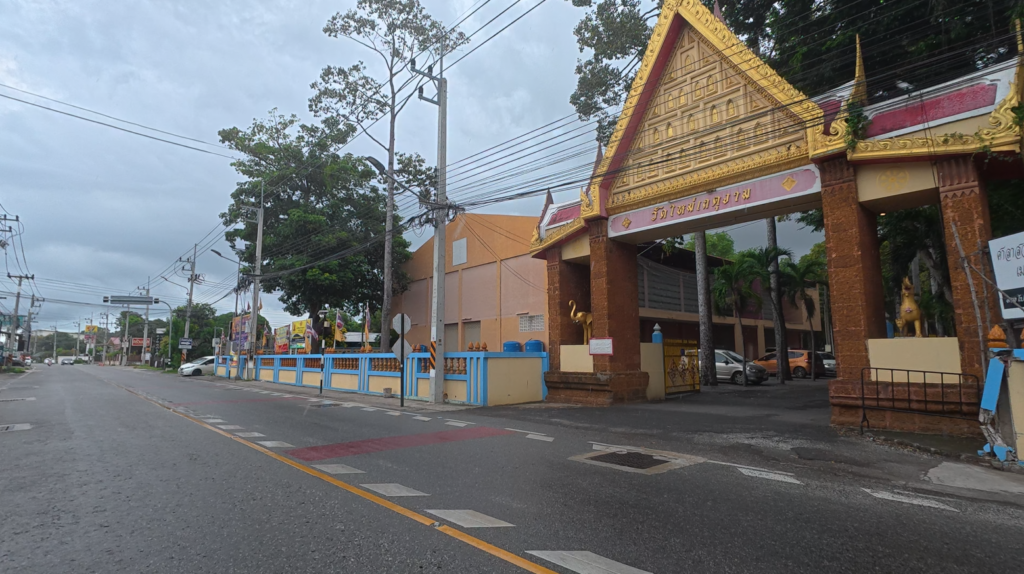
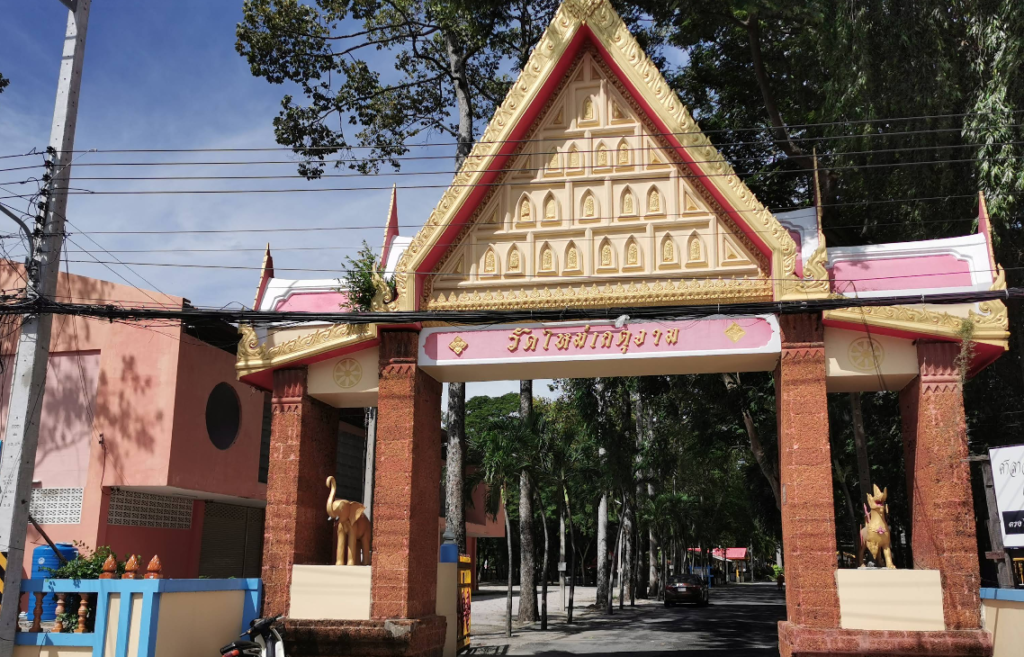
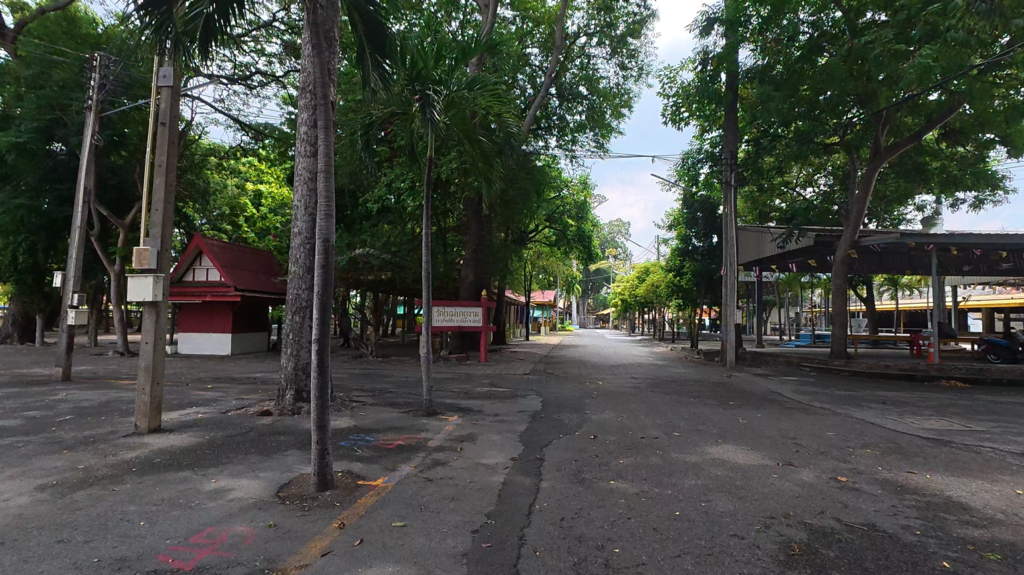
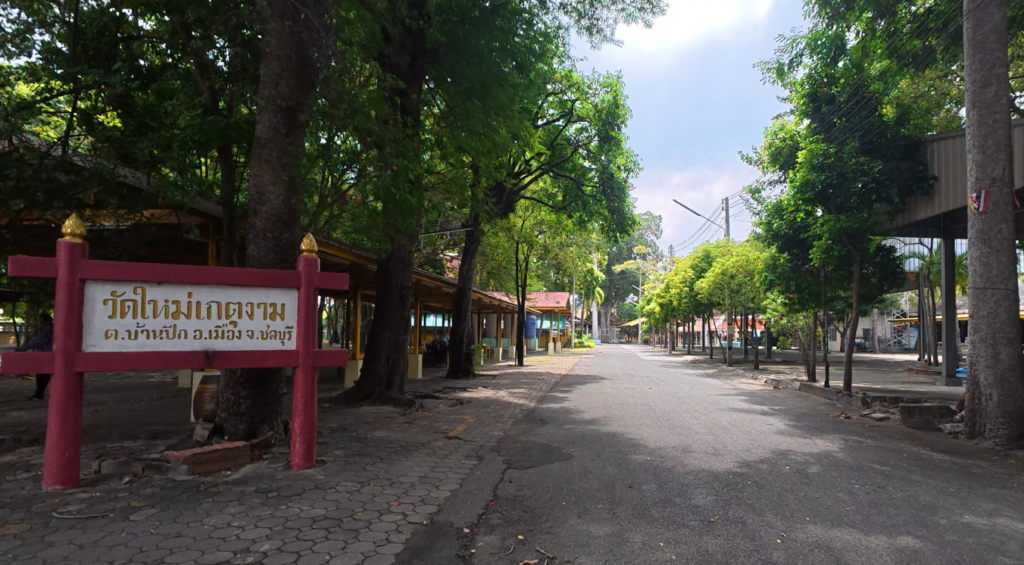
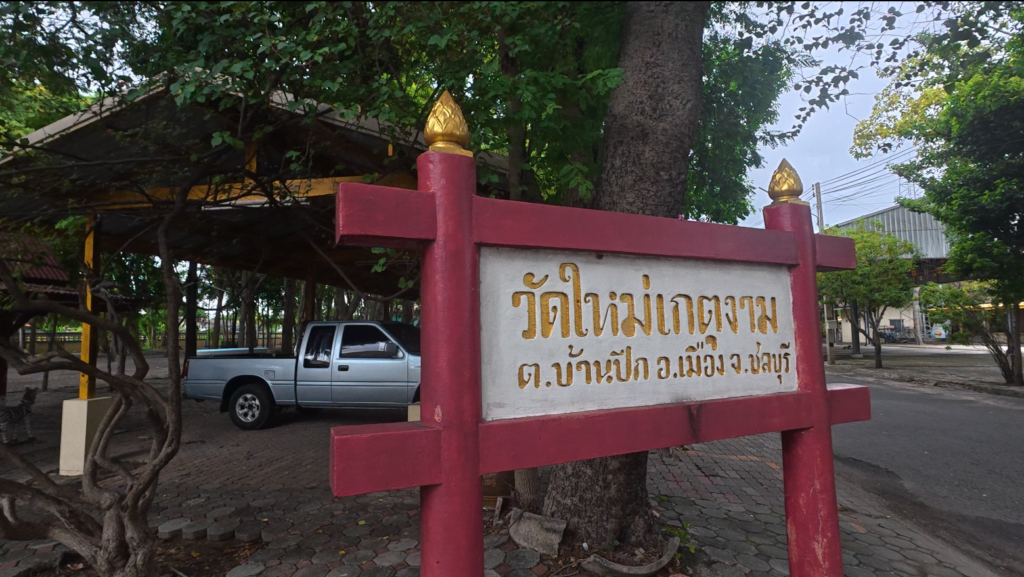
Entering Wat Mai Ket Ngam from the roadside and following the shaded path into its quiet community grounds.
A Temple That Moved Away from the Flood
Wat Mai Ket Ngam was once known simply as Wat Ket. Local accounts say that many ket trees grew around the original temple, giving the monastery its first name.
The temple originally stood in Moo 7 of Ban Puek, but repeated flooding made the site difficult to maintain. The community eventually moved the temple to its present location in Moo 2 and renamed it Wat Mai Ket Ngam—the “new” temple carrying the memory of Wat Ket into a safer place.
Official temple records give 1892 as the year Wat Mai Ket Ngam was formally established. However, the old ubosot is locally believed to be more than 200 years old. This difference suggests that the temple’s religious history may have begun before its official registration.
The surviving records do not explain whether the old ubosot itself was transferred from the former site or constructed after the relocation. What remains clear is that the temple was created and sustained by the local community in response to the landscape around them.
Spirit Beliefs Beneath the Trees
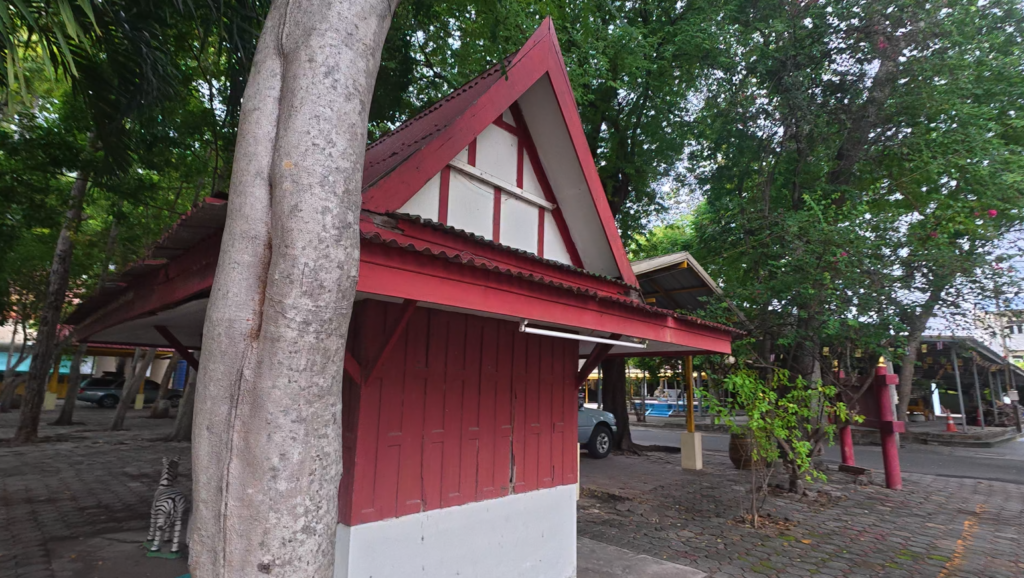
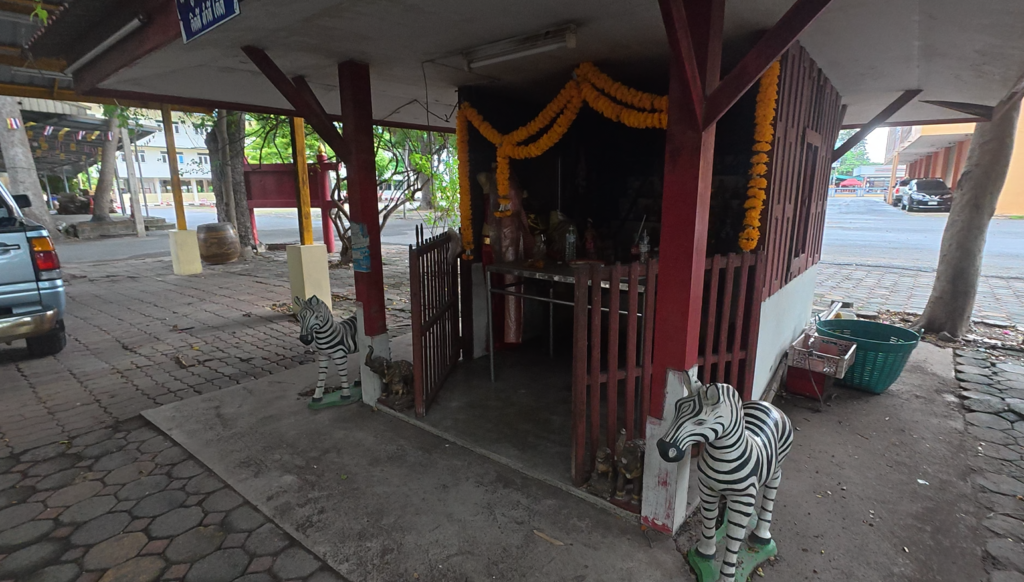
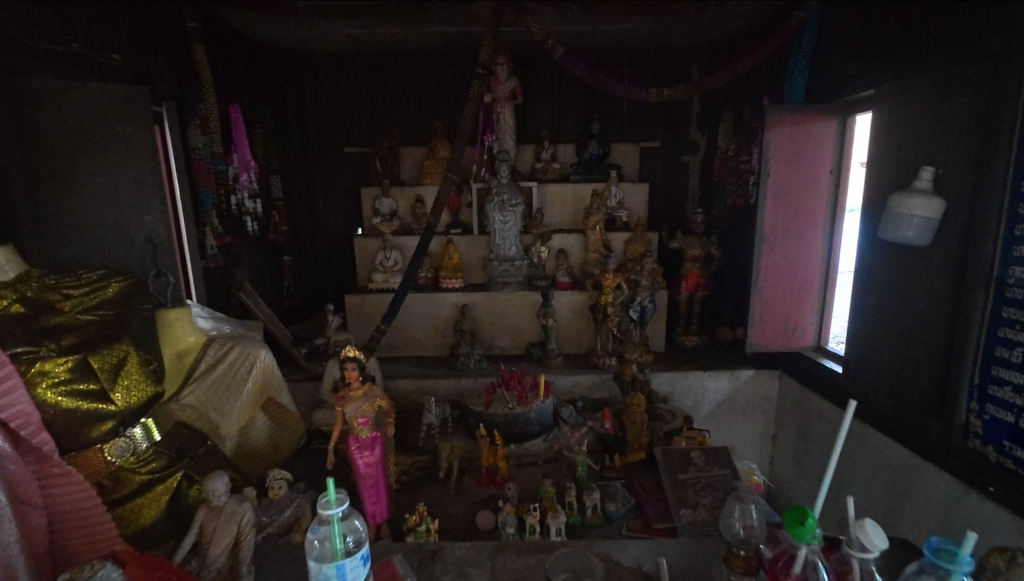
Before reaching the old ubosot, I came across a small shrine beneath the trees. Inside and around it were numerous figures, offerings, and objects left by worshippers over time.
Such places reflect the older spirit beliefs that continue alongside Theravada Buddhism in Thailand. Local people may honour guardian spirits connected with the land, trees, or the temple grounds, asking for protection, health, or good fortune.
These practices are not part of the central teachings of Buddhism, yet Thai temples have long provided space for them. Rather than removing older beliefs, the temple allows them to remain beside Buddhist worship.
The crowded figures and offerings showed that this was not merely a decorative corner. It was a place repeatedly visited and cared for by people whose personal hopes had become part of the temple landscape.
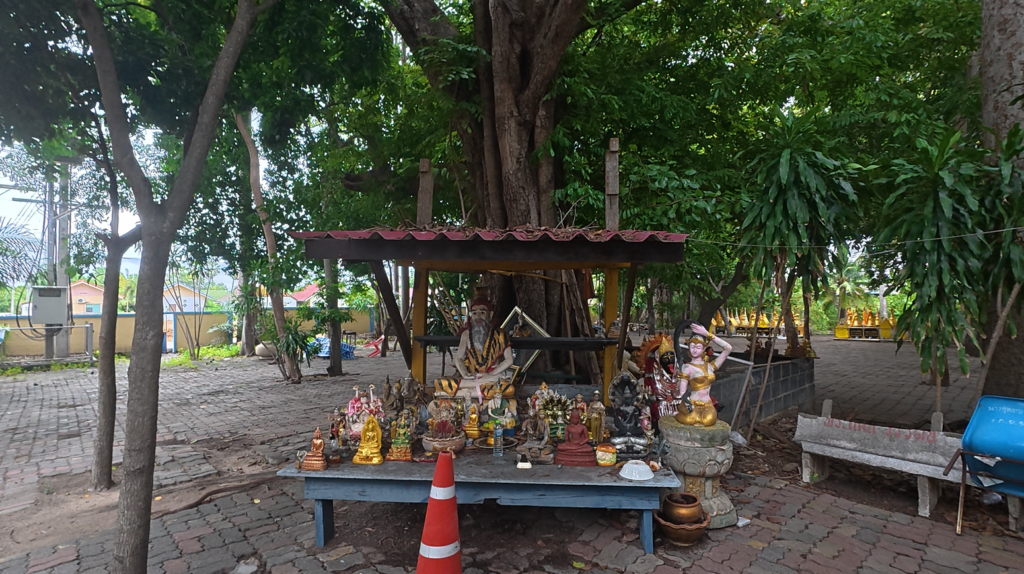
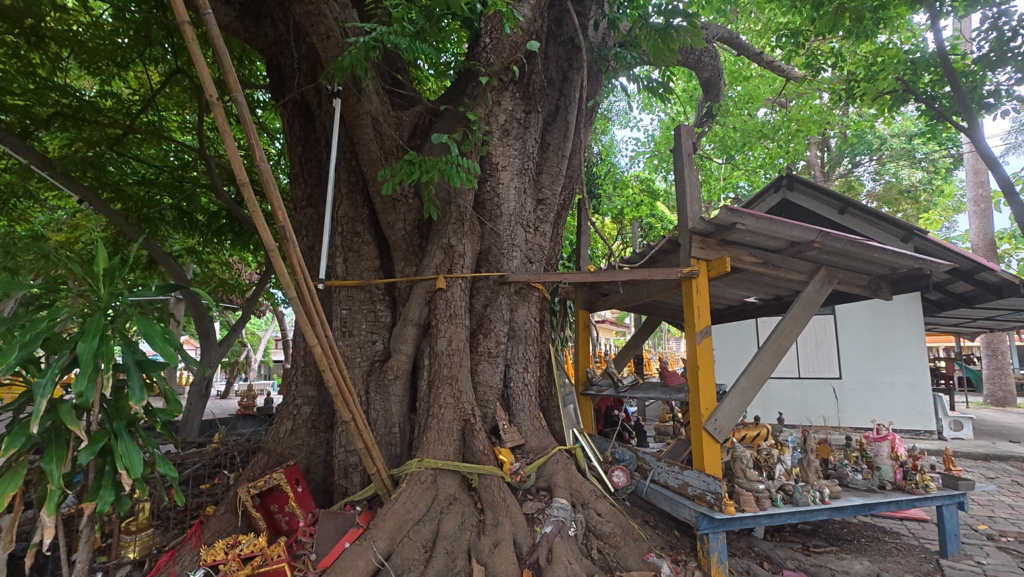
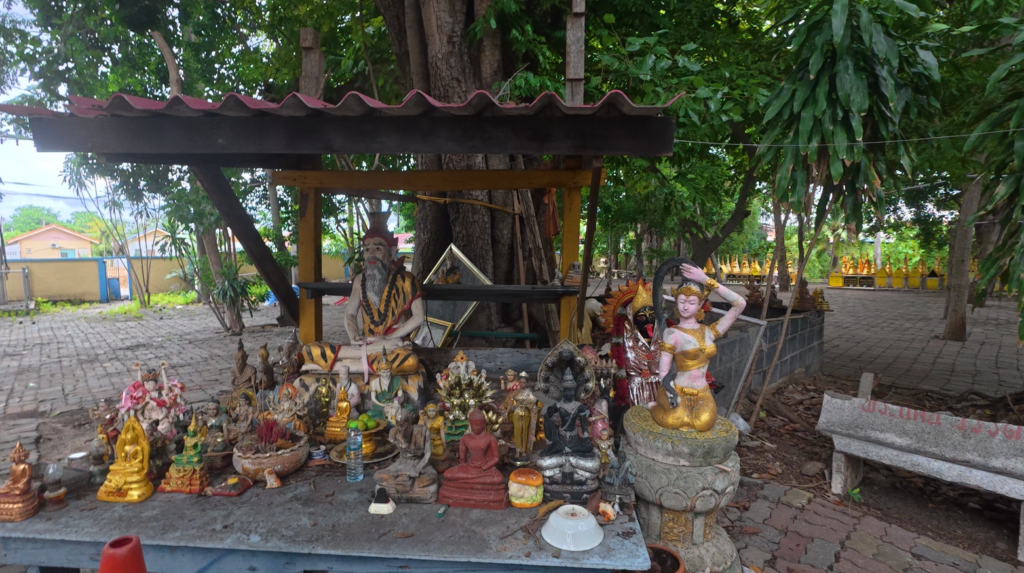
A small spirit shrine and layers of offerings beneath the trees, showing how local beliefs continue beside Buddhist practice at Wat Mai Ket Ngam.
Through a Living Community Temple
Continuing deeper into the grounds, I passed a series of open halls, covered gathering spaces, and buildings used in the temple’s daily life.
Wat Mai Ket Ngam is not arranged as a historical park. Newer roofs, community structures, monks’ quarters, and older religious buildings stand close together. Their different ages show how the temple has expanded whenever the community needed another place for worship, education, ceremonies, or communal gatherings.
The large open-sided halls were practical rather than decorative. They offered shade from the tropical heat and space for festivals, merit-making ceremonies, funerals, and other occasions when many residents gathered at the temple.
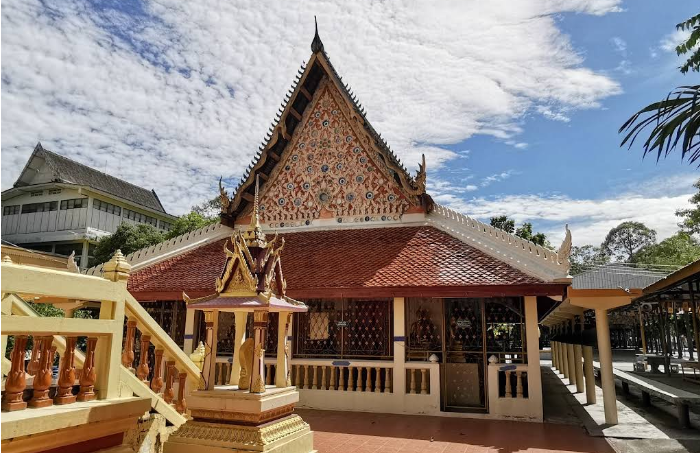
Beyond these working spaces, a smaller building with an old tiled roof gradually came into view. Its proportions were quieter and lower than those of the newer structures. This was the old ubosot I had come to see.
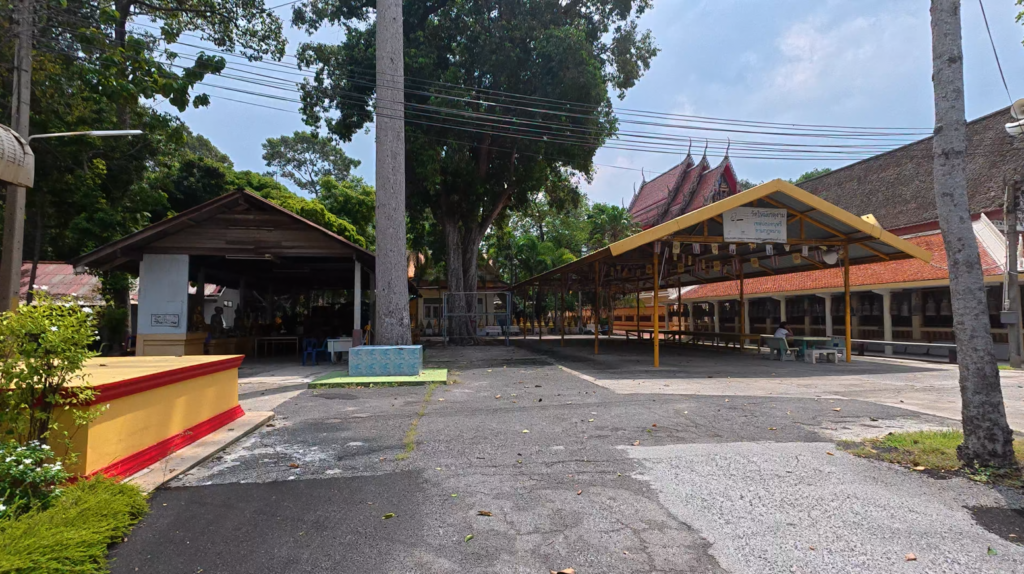
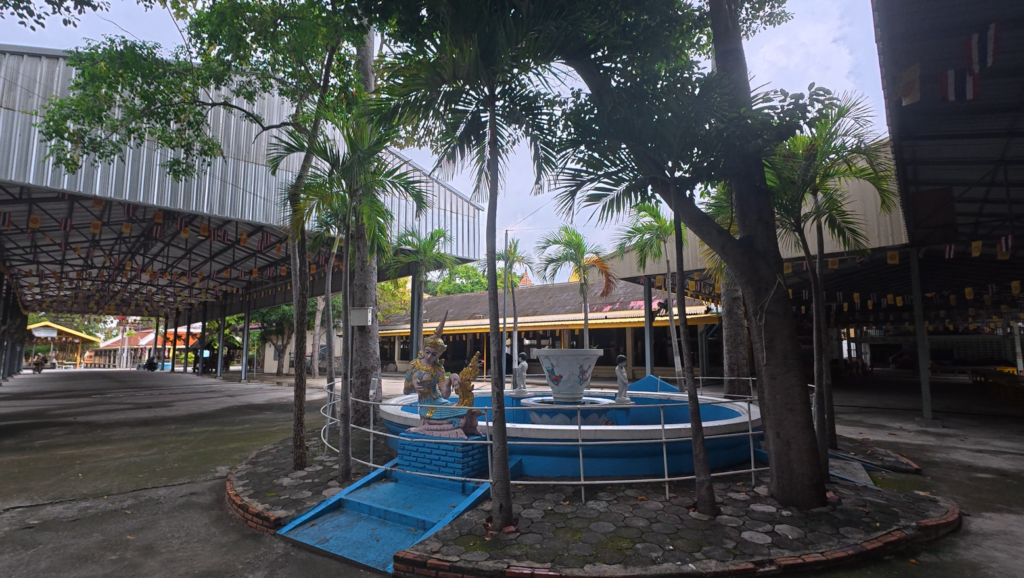
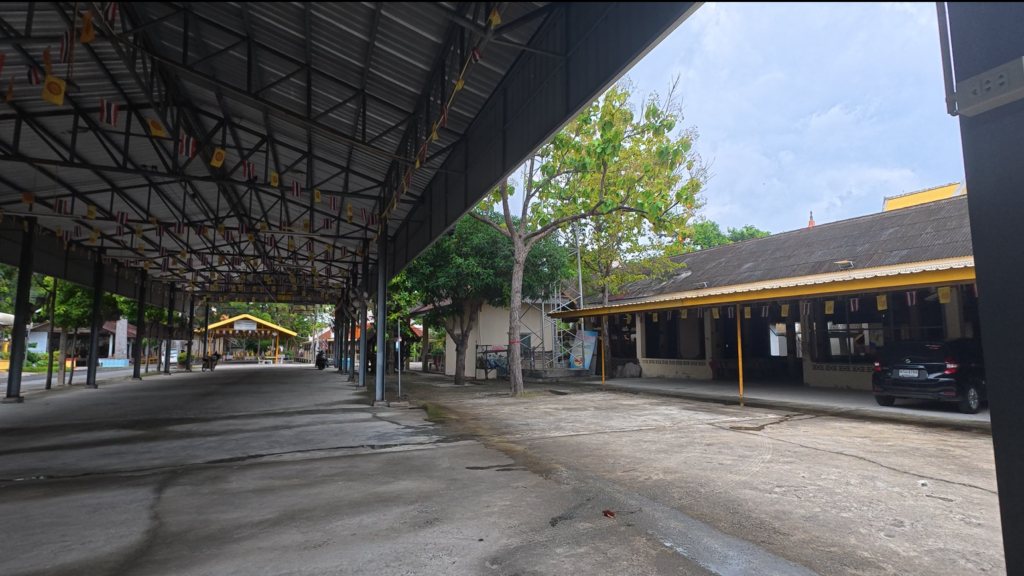
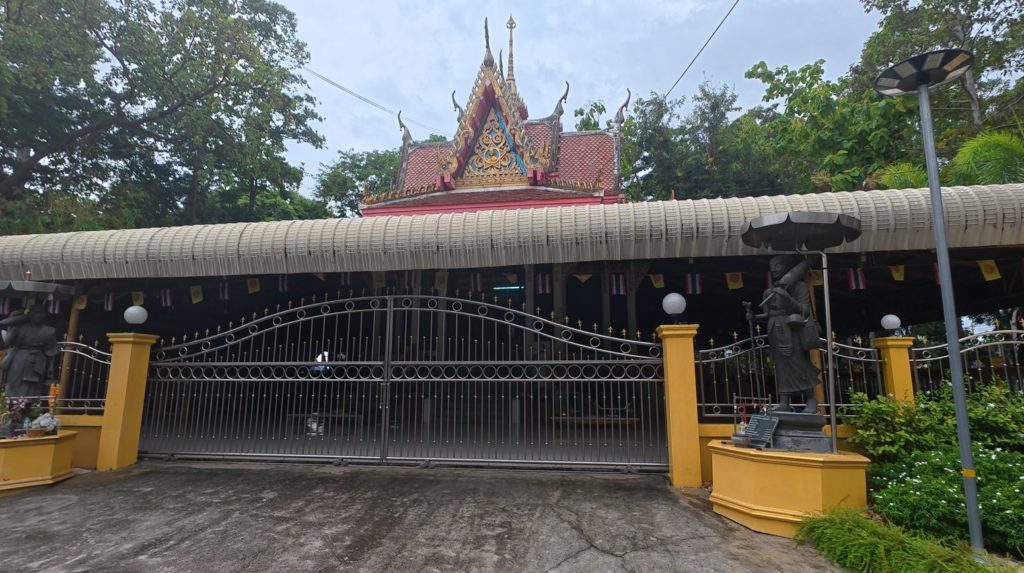
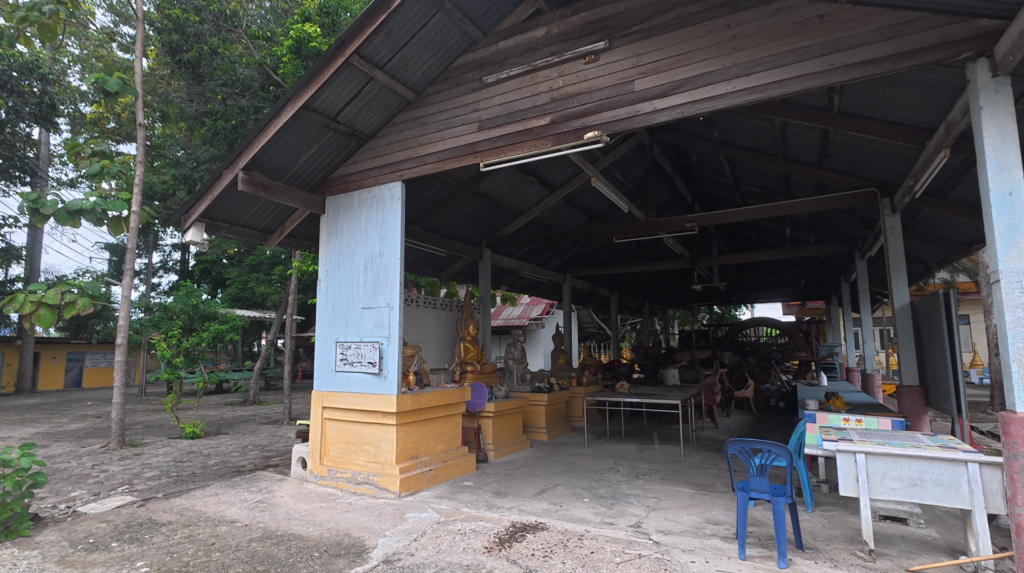
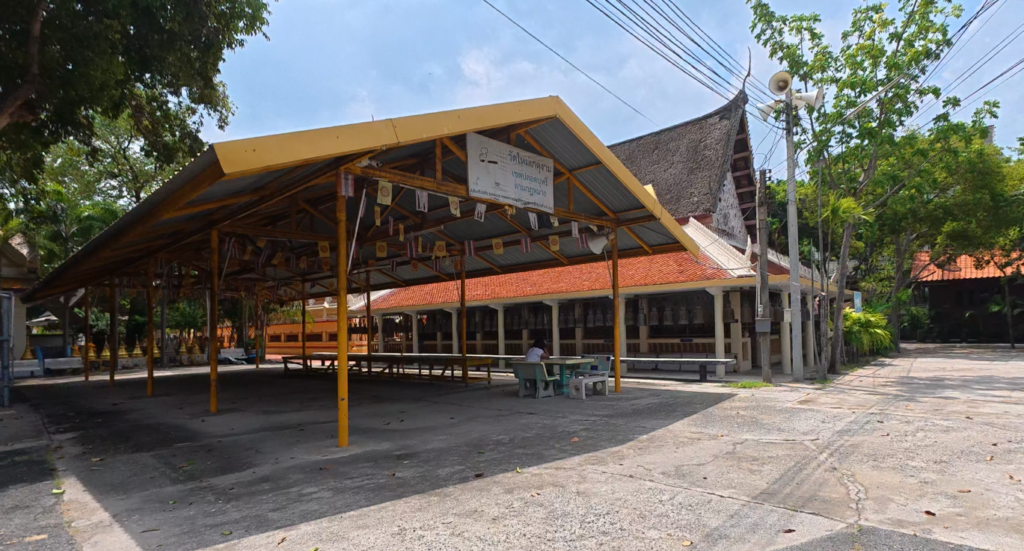
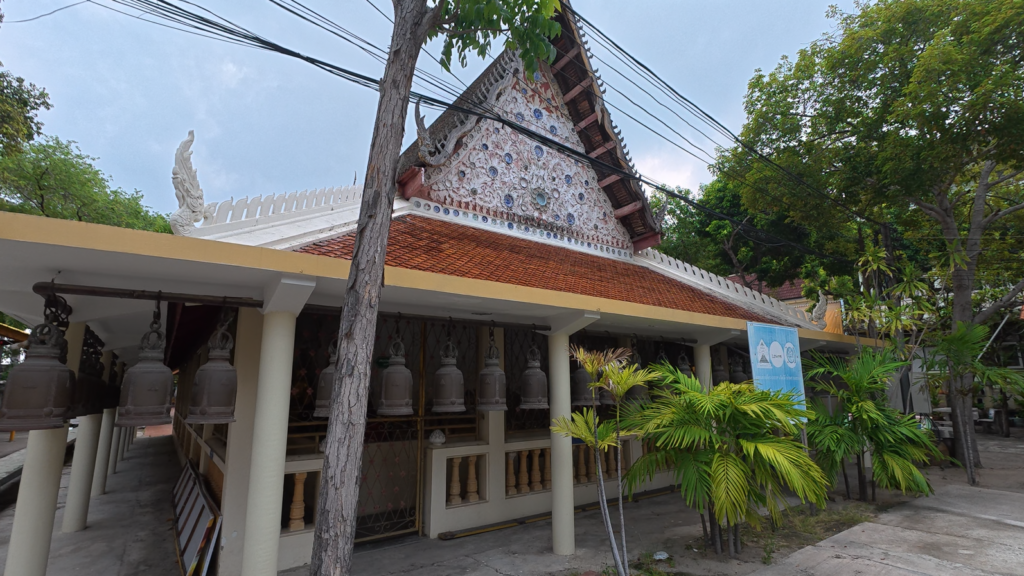
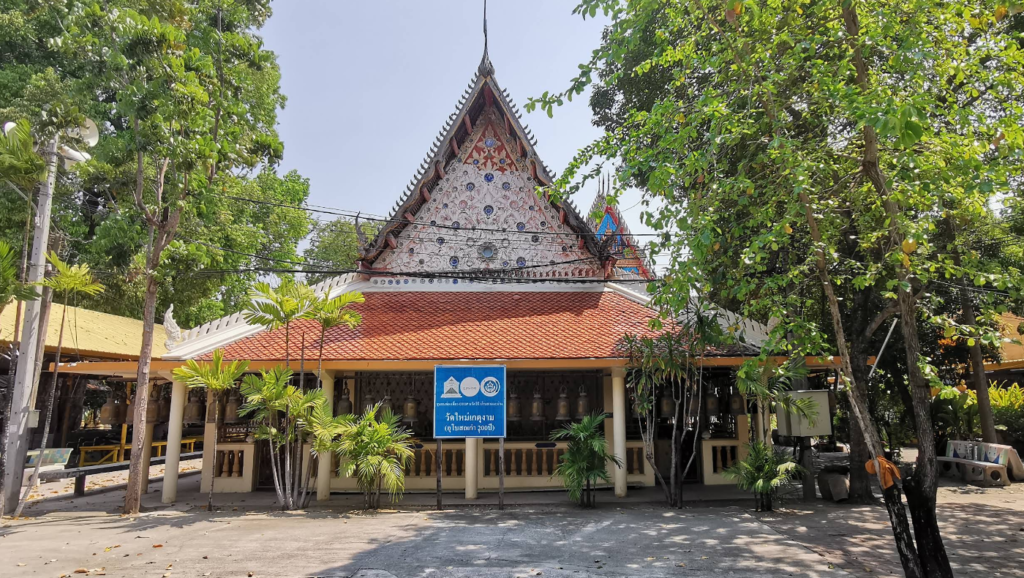
Passing the open community halls and everyday temple buildings before the old ubosot gradually appears deeper inside the grounds.
The 200-Year-Old Ubosot
The old ubosot is believed to be more than 200 years old, although its exact construction date has not been confirmed. Its low proportions, deep surrounding veranda, and aged clay-tiled roof distinguish it clearly from the newer buildings nearby.
The structure was built of brick covered with plaster, with a phalai—a roofed veranda—running around the exterior. This shaded passage protected the walls from sun and rain while allowing worshippers to walk around the sacred hall.
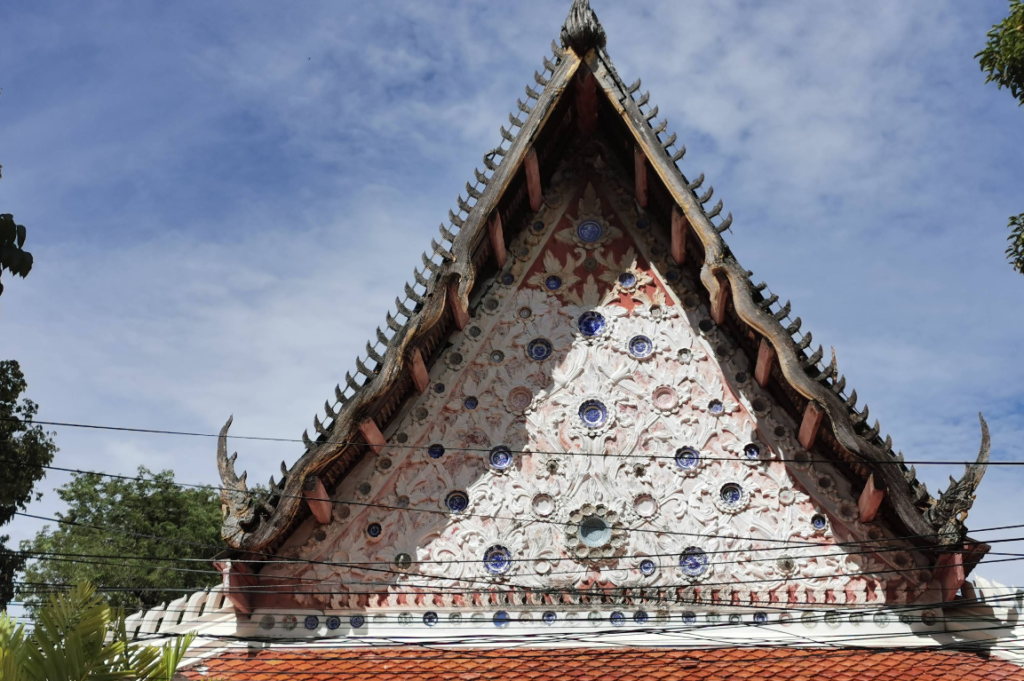
Its most remarkable feature is the front pediment. Floral stucco patterns are combined with pieces of Chinese ceramics, a decorative style associated with the royal architectural preference of the Rama III period. During that era, Chinese porcelain and ceramic fragments were frequently incorporated into Siamese temple decoration.
The building should not automatically be dated to the reign of Rama III solely because of this style. Nevertheless, its architecture places Wat Mai Ket Ngam within the wider cultural world of early Rattanakosin Chonburi, when coastal trade and Chinese artistic influences were increasingly visible in Thai religious buildings.
The Old Ubosot
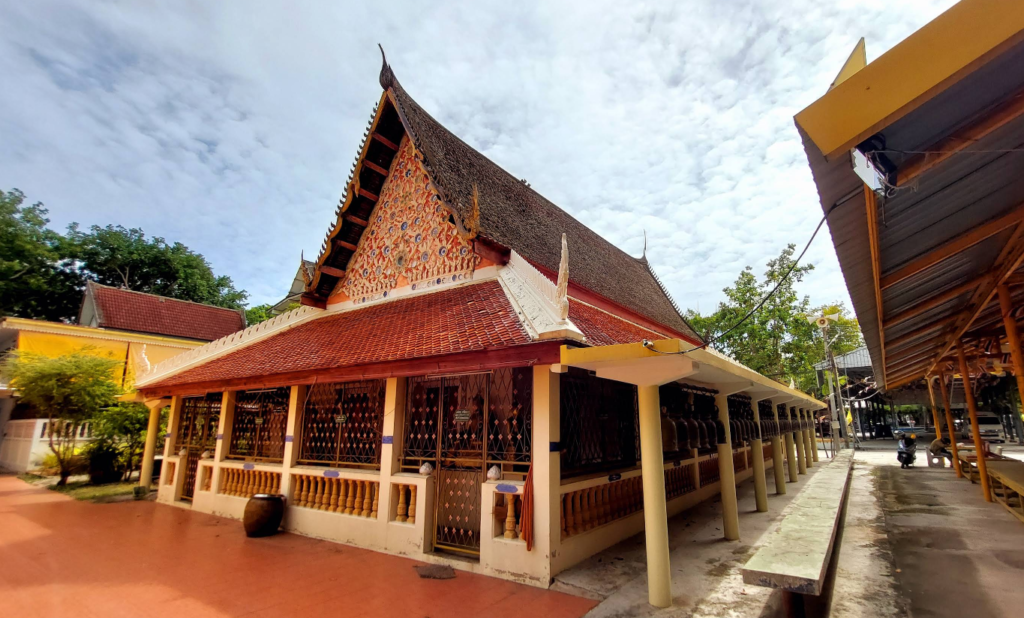
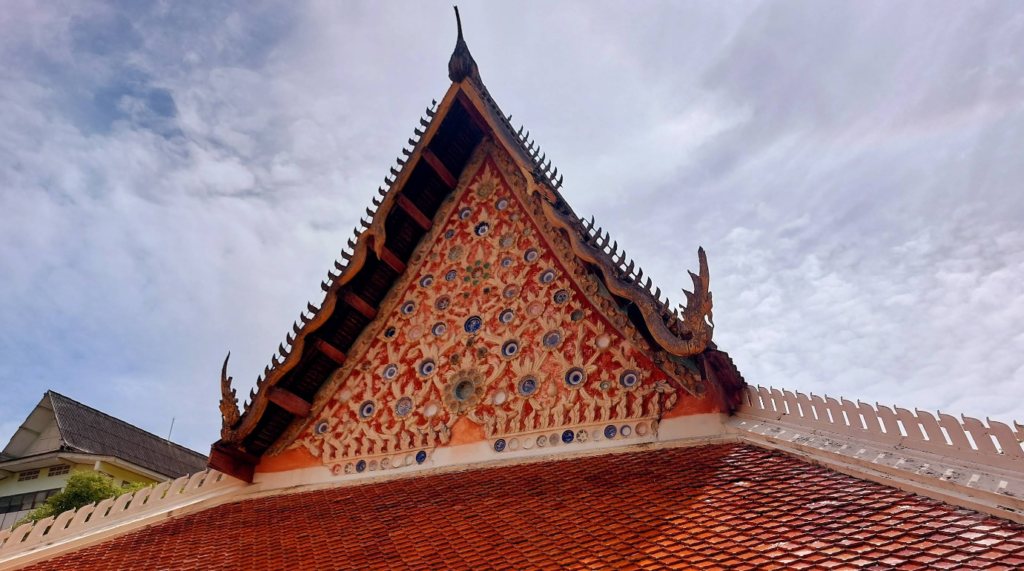
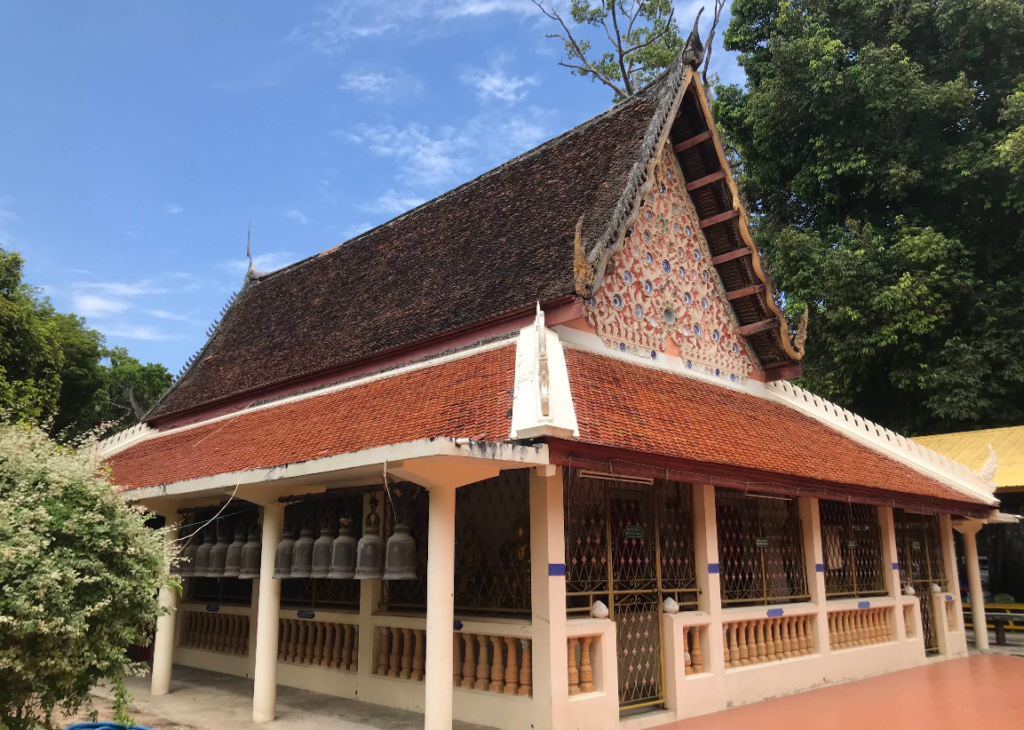
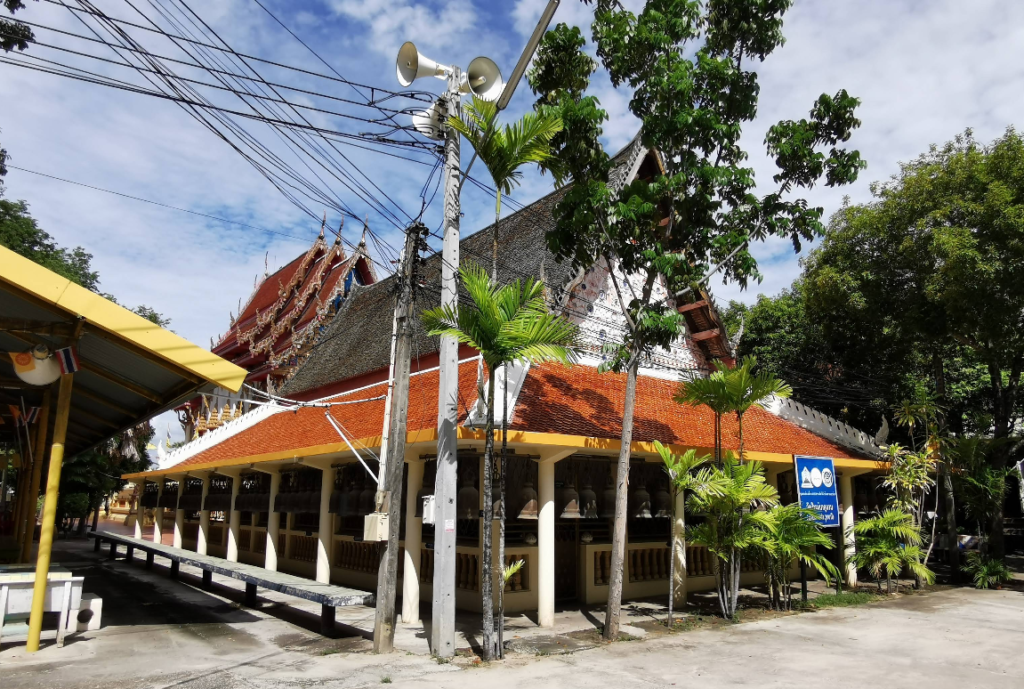
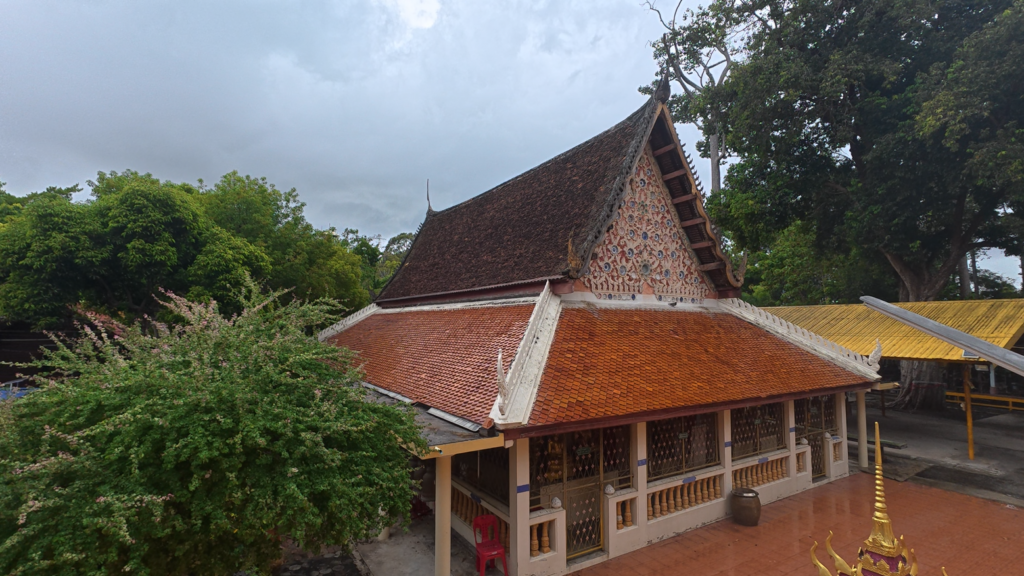
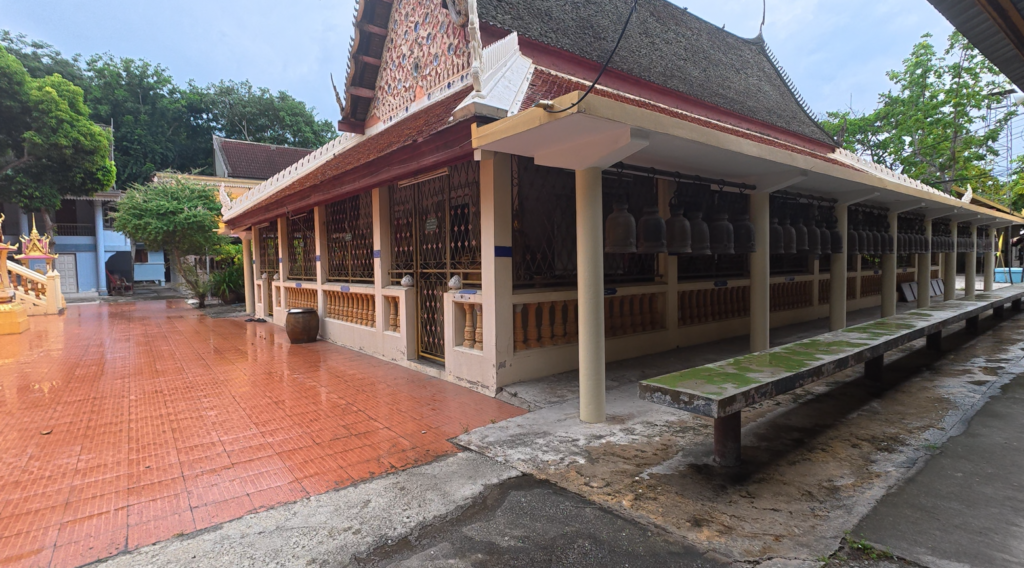
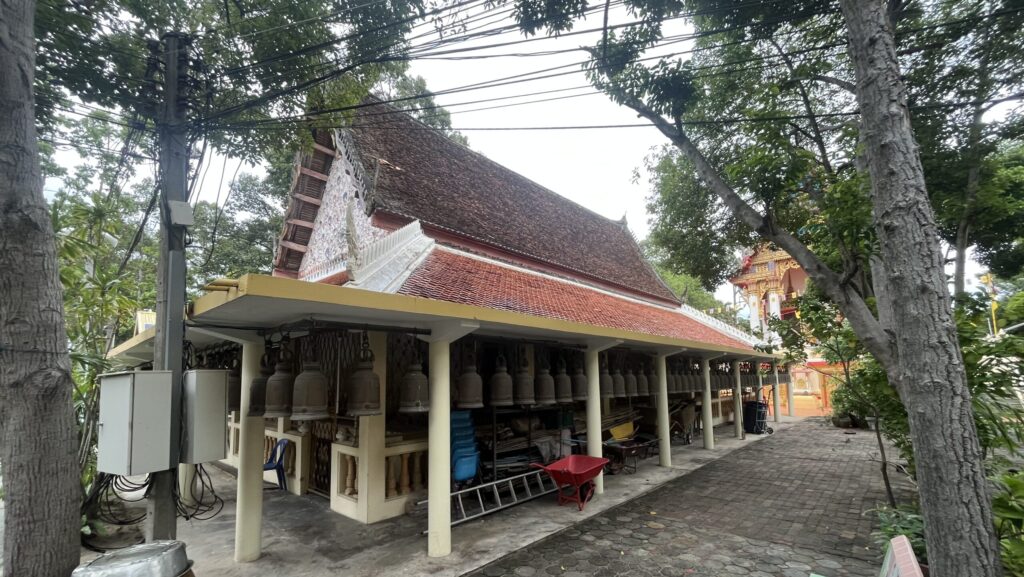
The low roof, surrounding veranda, weathered plaster, and quiet proportions of Wat Mai Ket Ngam’s old ubosot.
Bells and Buddha Images Around the Sacred Hall
The old ubosot was surrounded by two unusual layers. Along the outside of the fence hung rows of bells, while the inner veranda was lined with Buddha images of different sizes and styles.
At first, the repeated arrangement of bells reminded me of Tibetan prayer wheels. But these bells belong to a different tradition. A Tibetan prayer wheel contains written mantras and is rotated as an act of devotion. These are actual bells connected more closely with Thai Buddhist merit-making.
In Thai religious belief, the sound of a bell may represent the spreading of merit and the Buddha’s teaching. Worshippers also donate bells to temples in memory of family members or as an expression of faith. The bells around this ubosot appear to be later additions rather than part of its original 200-year-old architecture.
Bells Around the Ubosot
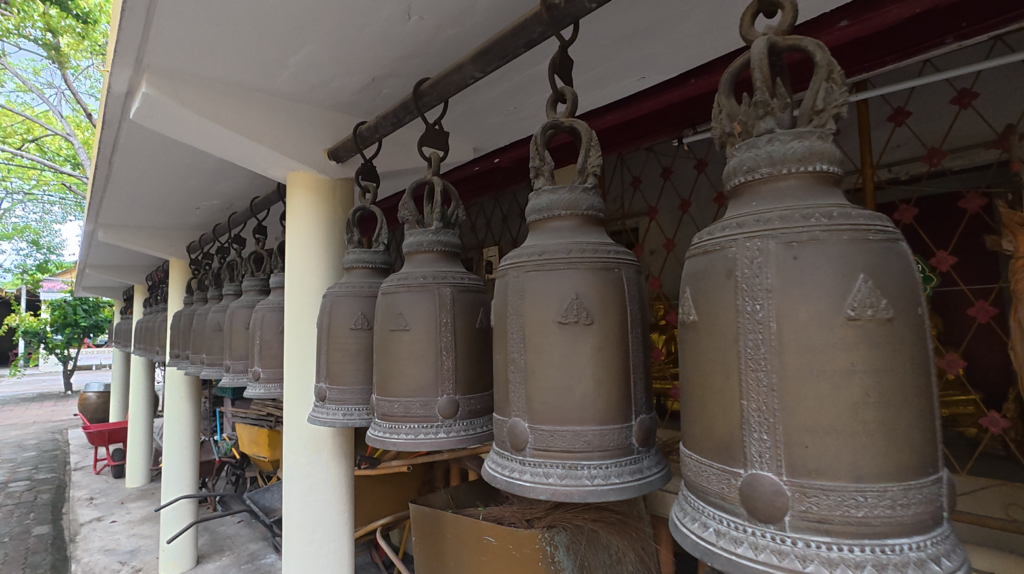
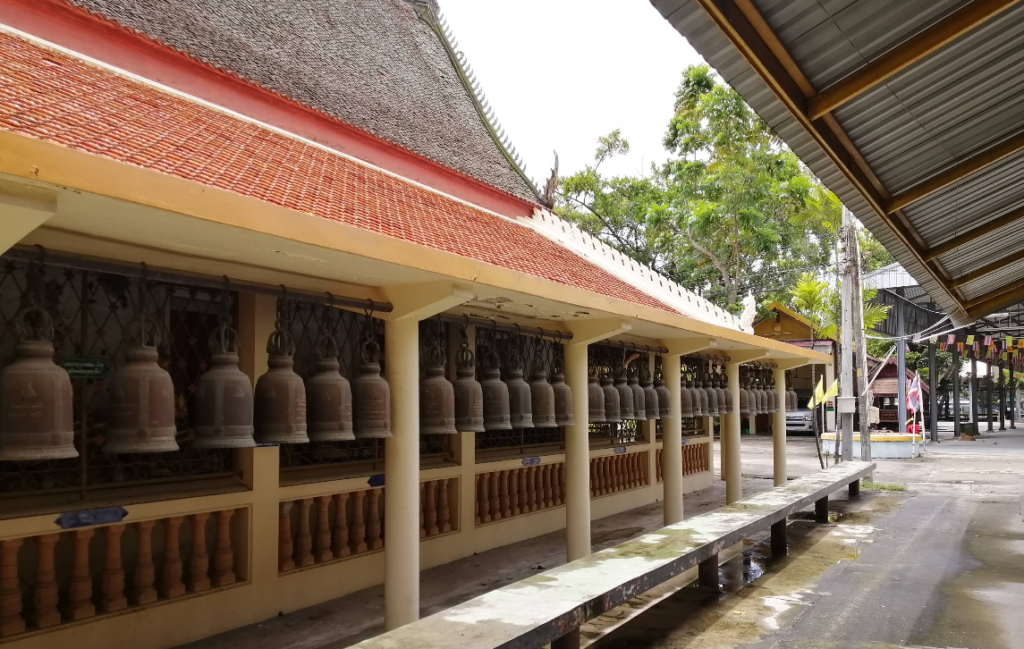
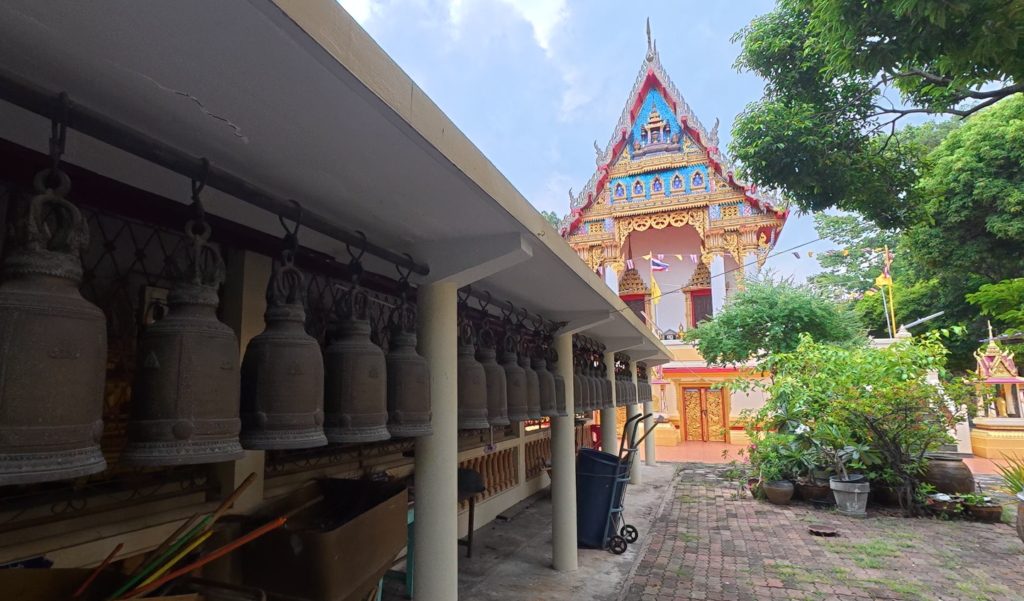
Rows of donated bells surround the old ubosot, carrying the sound and symbolism of merit beyond its walls.
Inside the surrounding veranda, Buddha images formed another circle around the sacred hall. Some were large and carefully gilded, while others were smaller, older, or darkened by time.
Their different forms suggest that they were not installed as one original architectural set. They were likely accumulated through successive donations and periods of restoration. Together, they transformed the passage around the ubosot into a continuous space of devotion.
The arrangement was not a Tibetan mandala. It was closer to the Thai tradition of donating Buddha images, allowing generations of worshippers to leave a visible expression of faith around the central sanctuary.
Buddha Images Along the Veranda
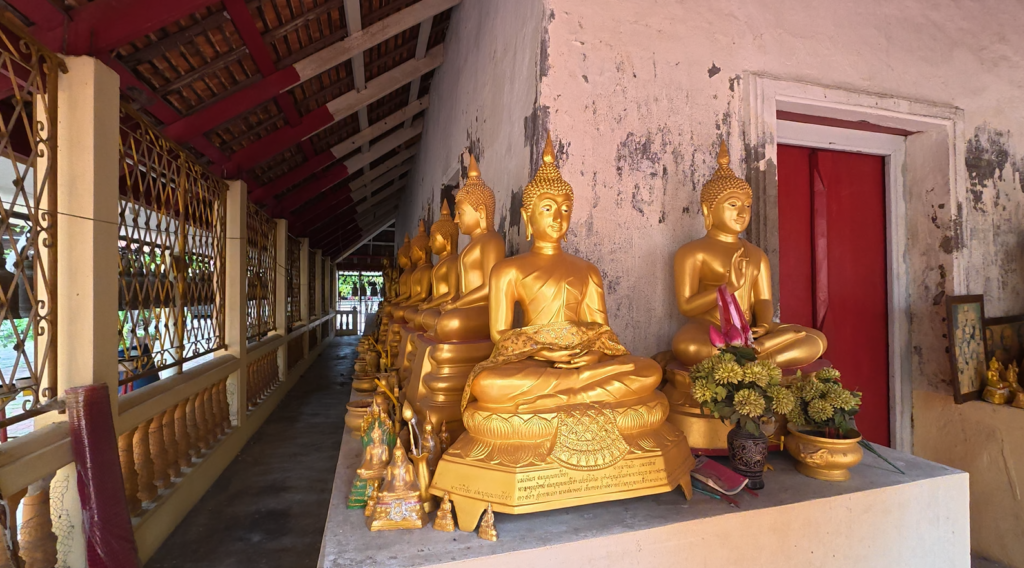
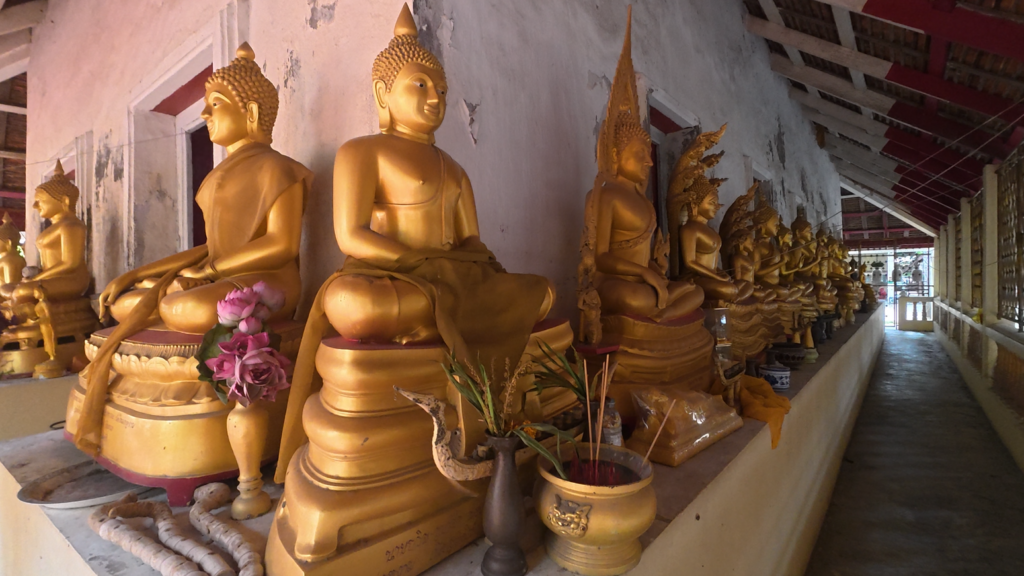
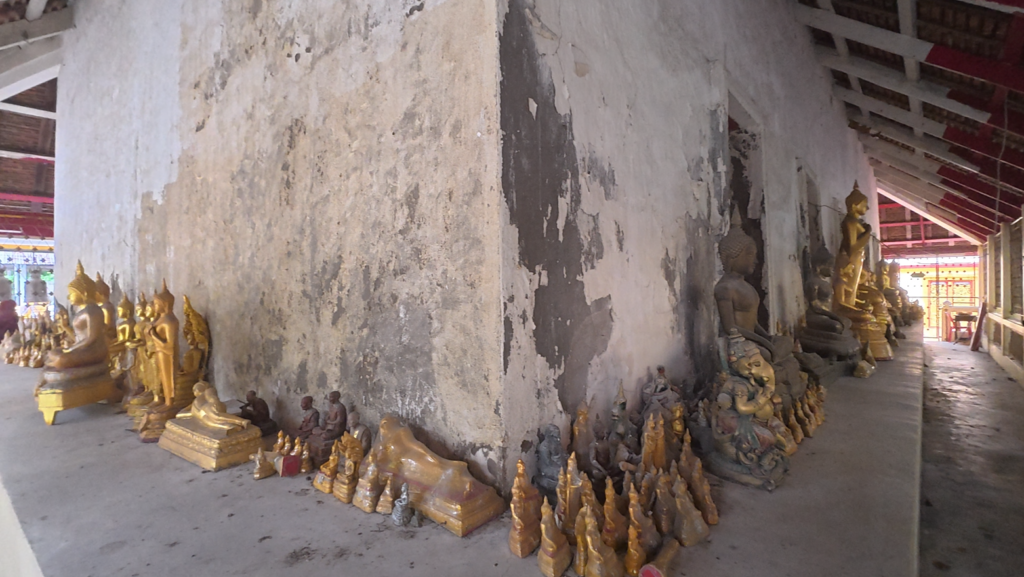
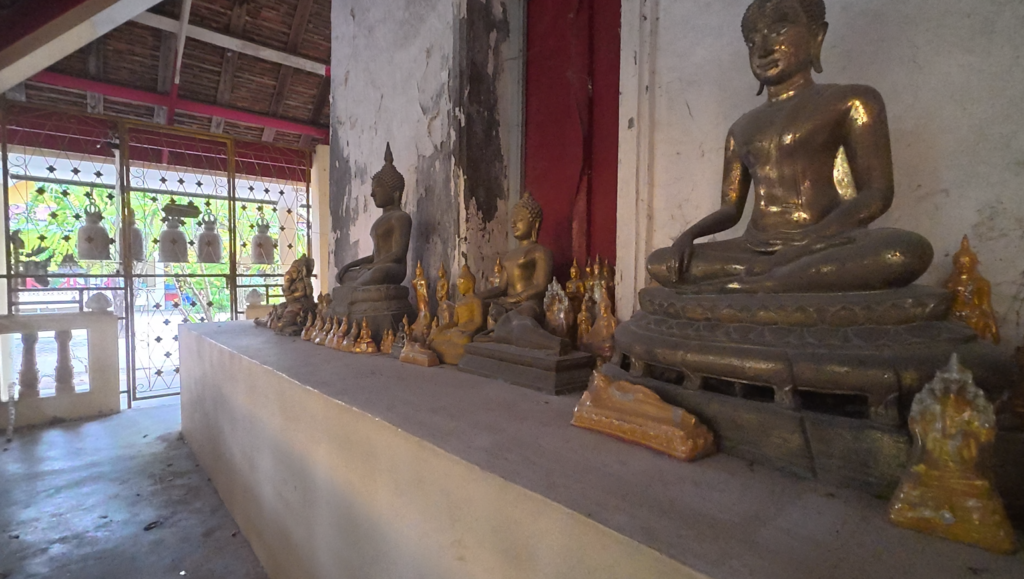
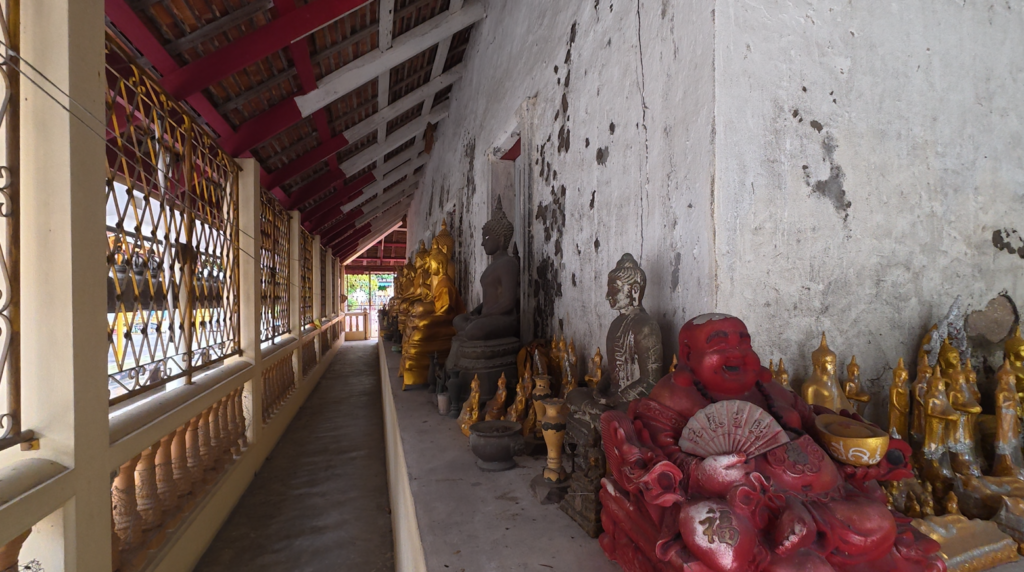
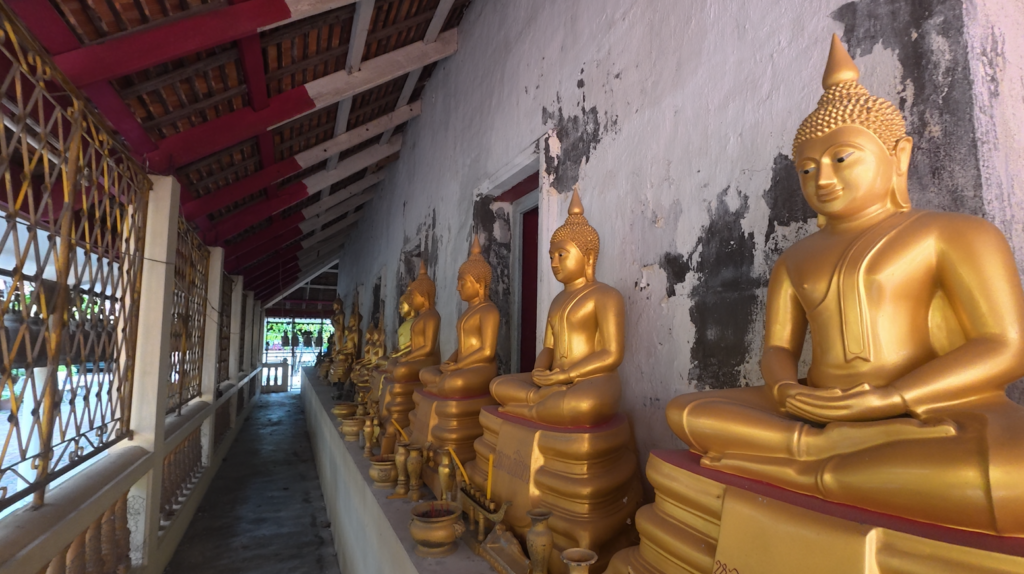
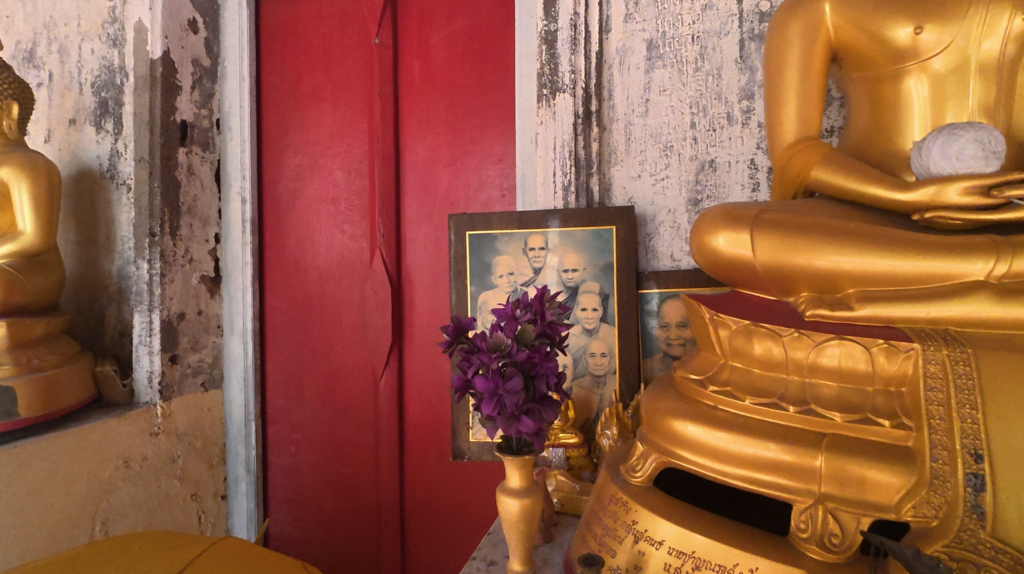
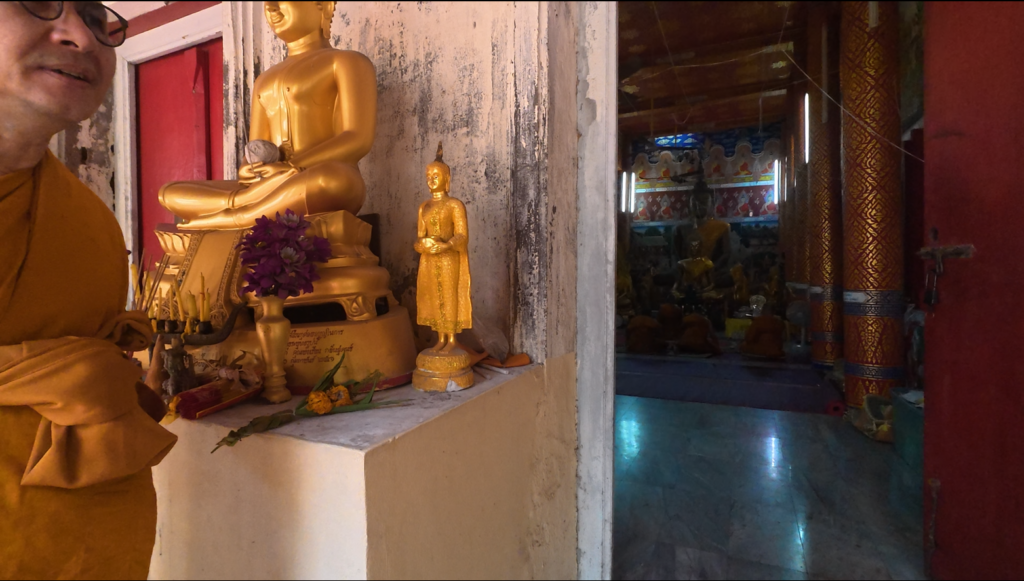
Buddha images of different sizes, styles, and ages line the shaded veranda around the old sacred hall.
Entering with the Monk’s Permission
The doorway into the old ubosot was open, but monks were already gathered inside for chanting. I did not want to enter simply as a visitor carrying a camera, so I waited near the entrance and asked for permission.
A monk quietly allowed me to come inside. I removed my shoes, lowered the camera, and entered without interrupting the ceremony.
From the shaded veranda, the interior had appeared dark and distant. Once I crossed the threshold, however, the old hall opened into a vivid space filled with Buddha images, red columns, painted walls, and the steady rhythm of monastic voices.
This was no longer only an architectural visit. For a short time, I was allowed to sit within the religious life that the old ubosot had sheltered for generations.
At the Threshold
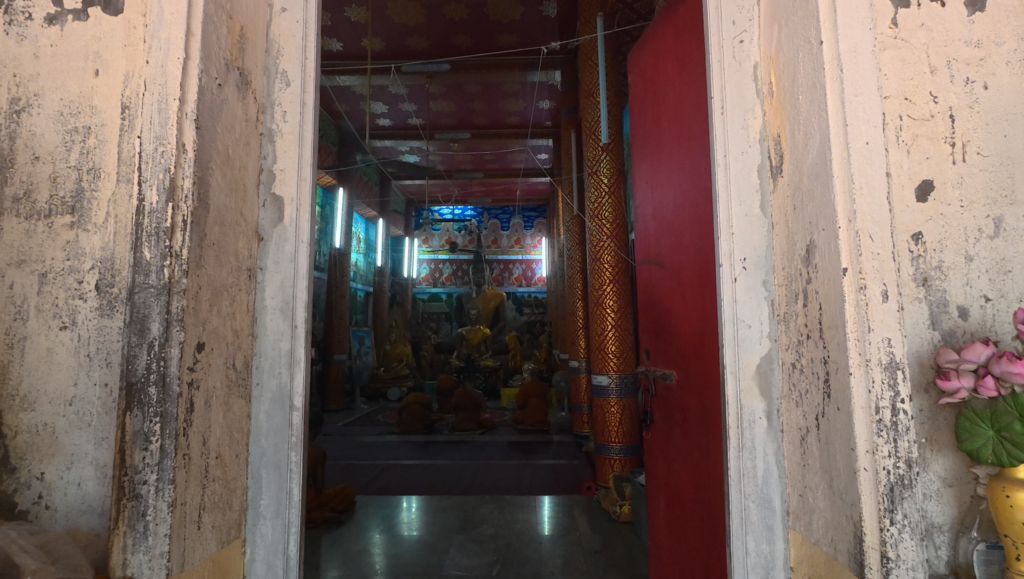
Chanting Inside the Living Heritage
I sat quietly behind the monks as their voices filled the small hall. The chanting followed the measured rhythm of Thai Theravada Buddhist practice, most likely using Pali liturgical verses, although the exact text could not be identified from the recording alone.
There was no background music and no performance for visitors. The voices rose and fell together, carrying through the old interior and returning as a soft echo from the painted walls.
Outside, the ubosot could be studied as architecture: old roof tiles, Chinese ceramic decoration, bells, and weathered plaster. Inside, its meaning became clearer. This building had survived because people still used it.
For a few quiet minutes, I participated by sitting respectfully and listening. The ceremony connected the old structure with the present—not through a museum display, but through the continuing voices of the monks.
Chanting Inside the Old Ubosot
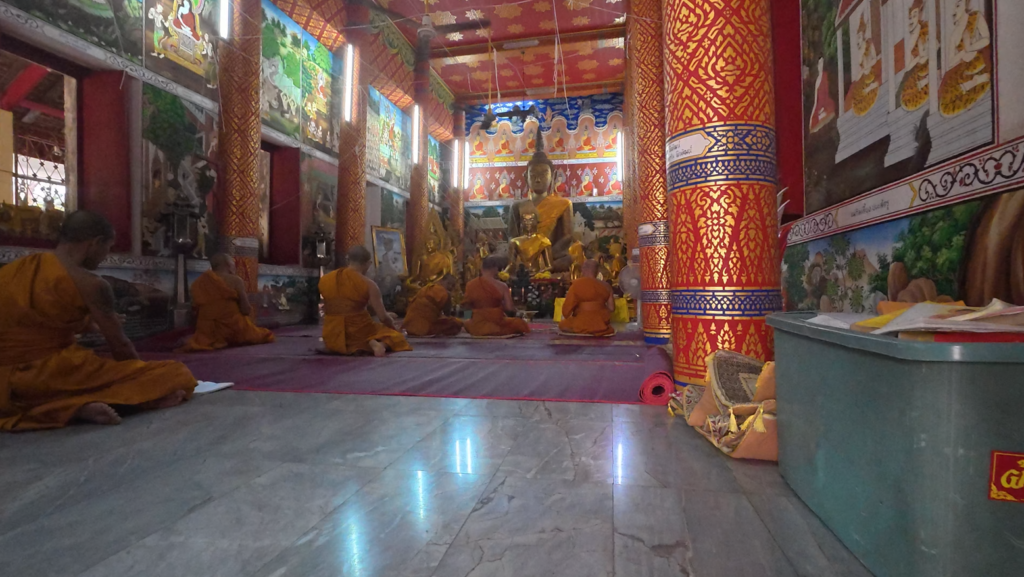
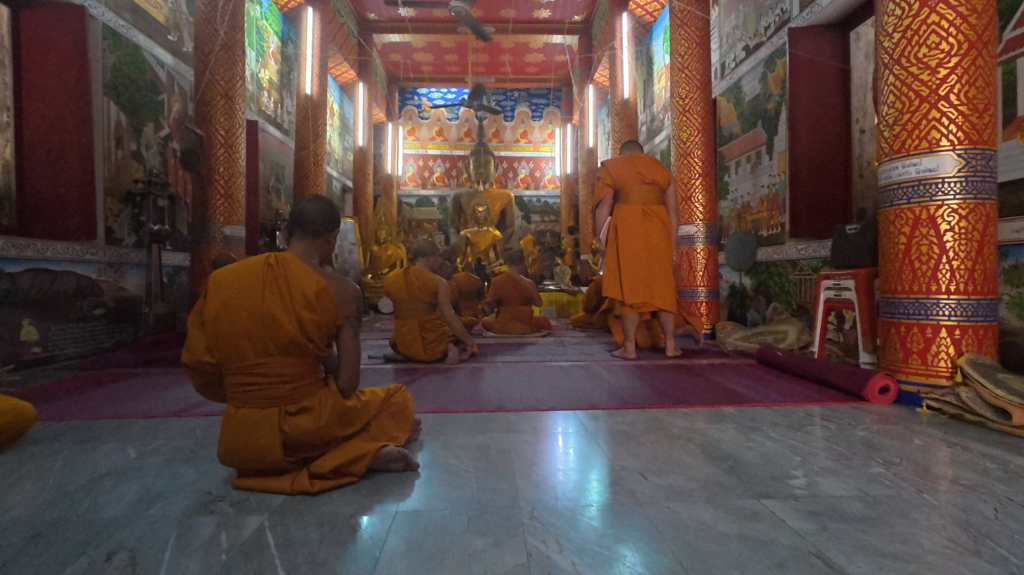
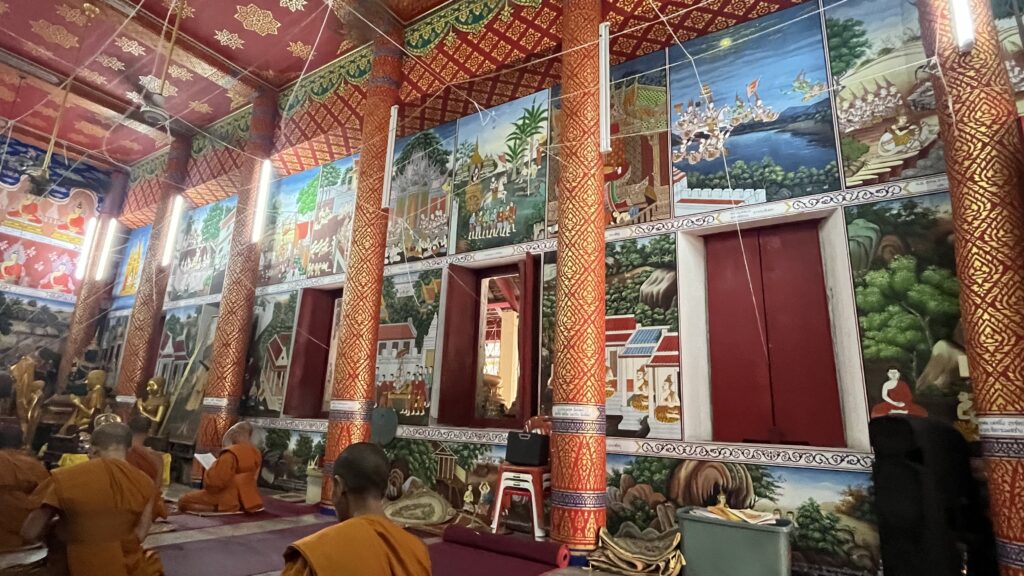
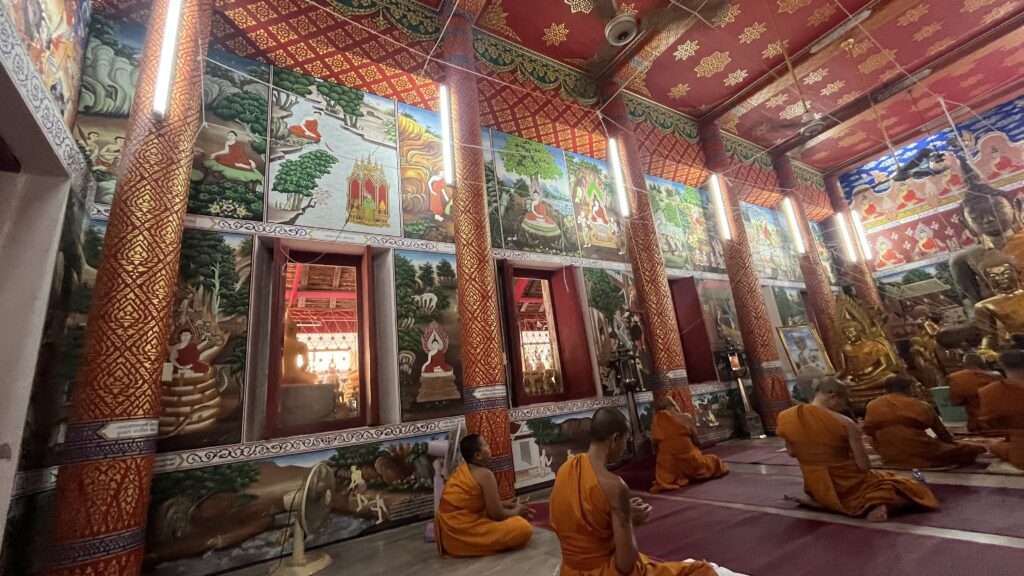
Monks chant before the principal Buddha image as their voices echo through the old ubosot of Wat Mai Ket Ngam.
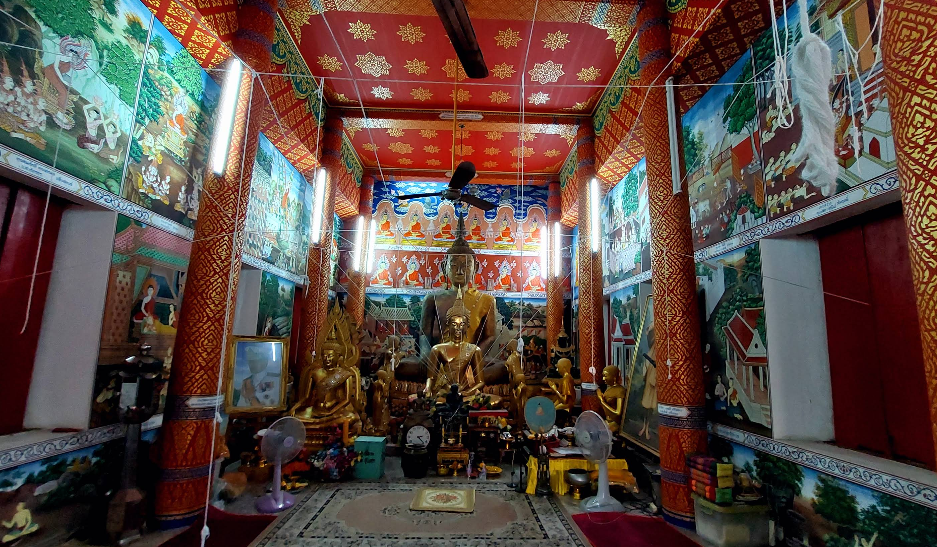
Old Walls and Newly Painted Murals
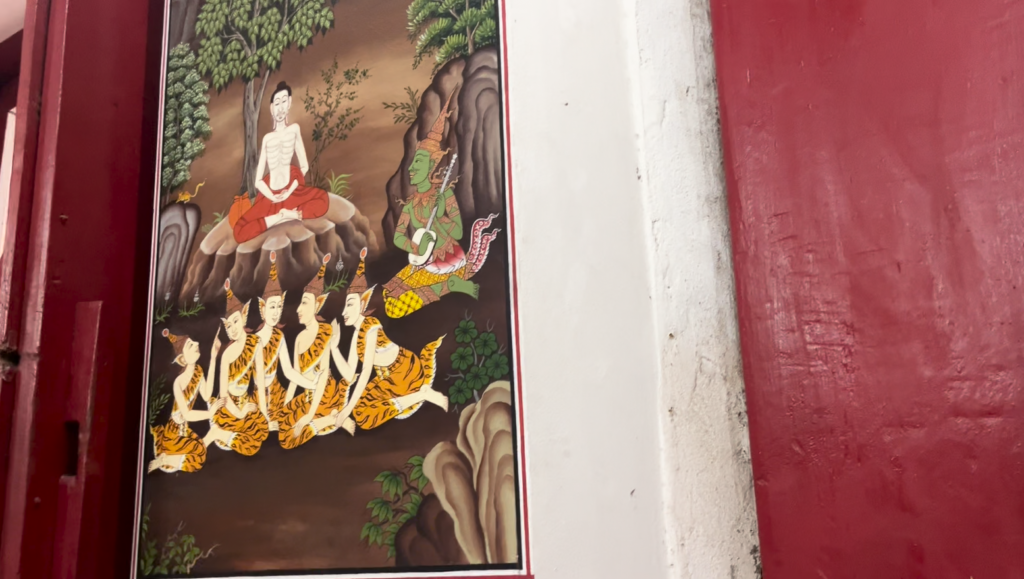
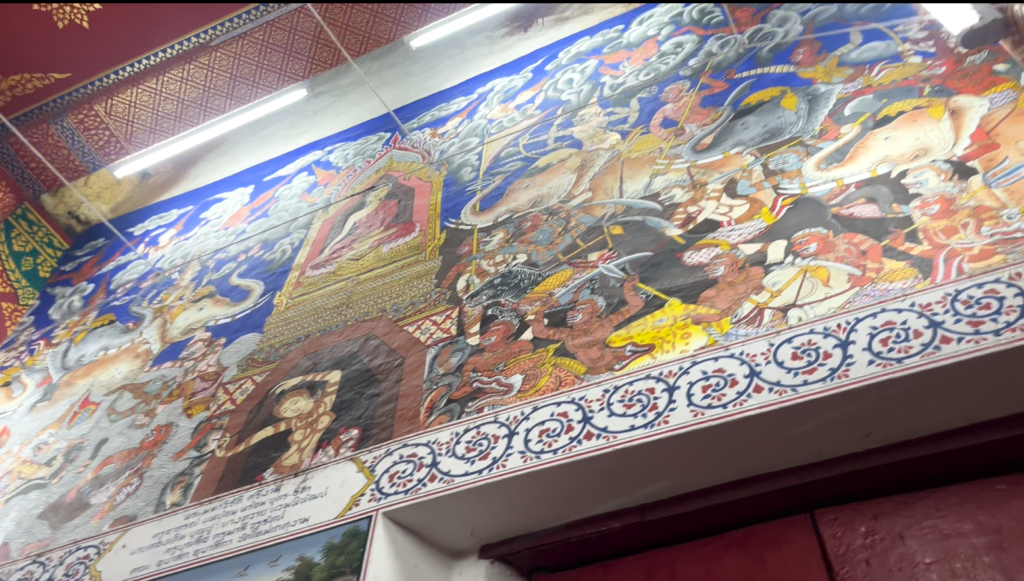
The walls told a more complicated story than the exterior. Parts of the plaster showed age, stains, cracks, and uneven surfaces, but the mural colours were unexpectedly bright and fresh.
My first impression was that the paintings had been restored or repainted recently. Later research supported that observation. A study of Ang Sila’s cultural heritage concluded that modern painters had likely repaired and painted over parts of the earlier murals, based on the techniques and colours now visible.
Older local accounts mention murals produced by community craftsmen. Therefore, the present paintings should not be described as completely original 200-year-old works. They are better understood as layers of old local painting and later restoration, although the date and extent of the repainting have not been clearly recorded.
The bright red columns, colourful scenes from Buddhist tradition, and painted ceiling now give the interior a lively appearance. Yet the worn surfaces beneath them remain visible, revealing the tension between preserving an old building and keeping it meaningful for present worshippers.
Inside the Painted Ubosot
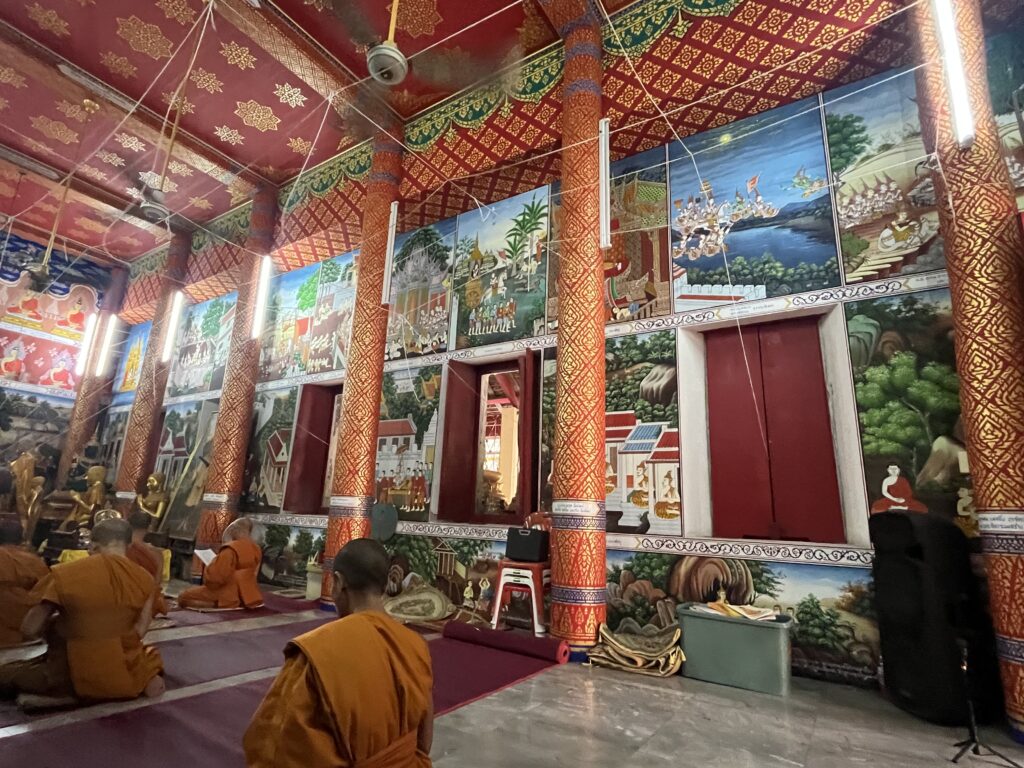
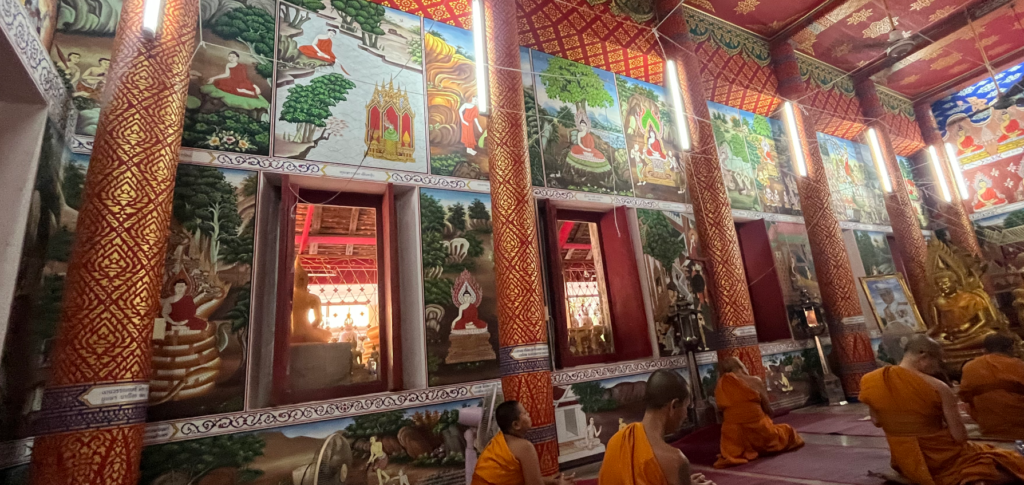
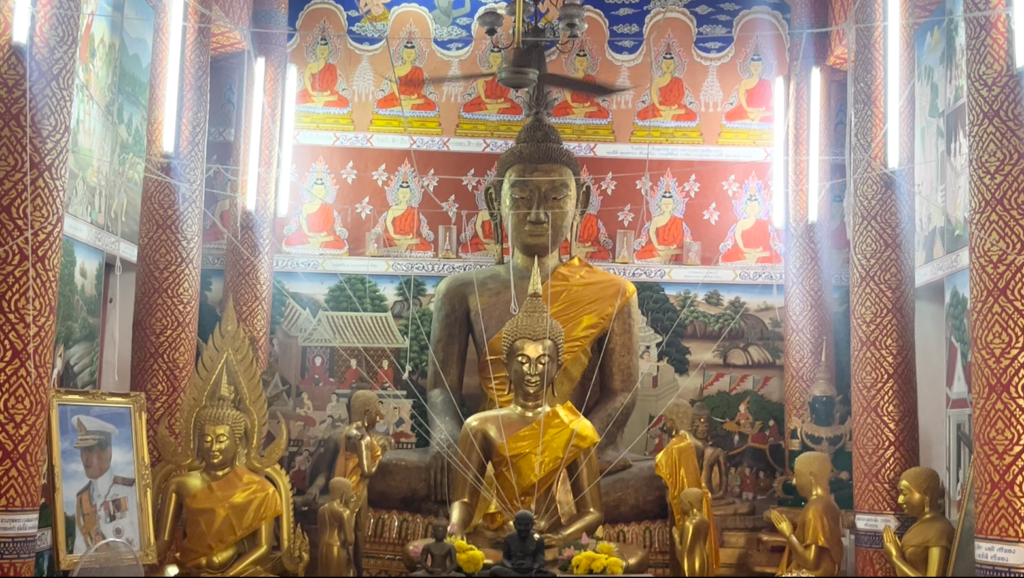
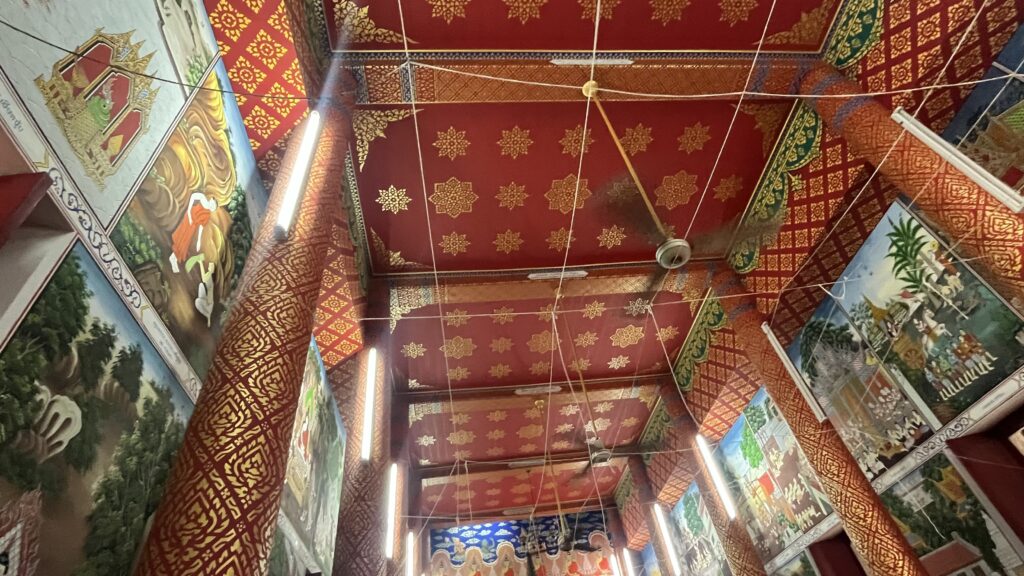
The principal Buddha image, red columns, painted ceiling, and vivid murals inside the old ubosot.
Layers of Restoration
Painted Ceiling
Stepping Back into the Daylight
As the chanting came to an end, the monks slowly rose and began leaving the old ubosot. The ceremony ended without announcement or performance; daily temple life simply continued.
I remained inside for a moment, looking once more at the Buddha images, restored murals, and worn walls. The building carried several periods at once—the original structure, generations of donated images, later repairs, and the voices I had just heard.
Outside, the daylight felt unusually bright after the dark interior. The monks crossed the courtyard toward the other temple buildings, while I walked around the old ubosot one final time.
It was this continuing use that gave the historic hall its deepest value. Wat Mai Ket Ngam’s old ubosot had not survived by remaining untouched. It had survived because the community continued to pray inside it, repair it, and pass it forward.
Leaving the Old Ubosot
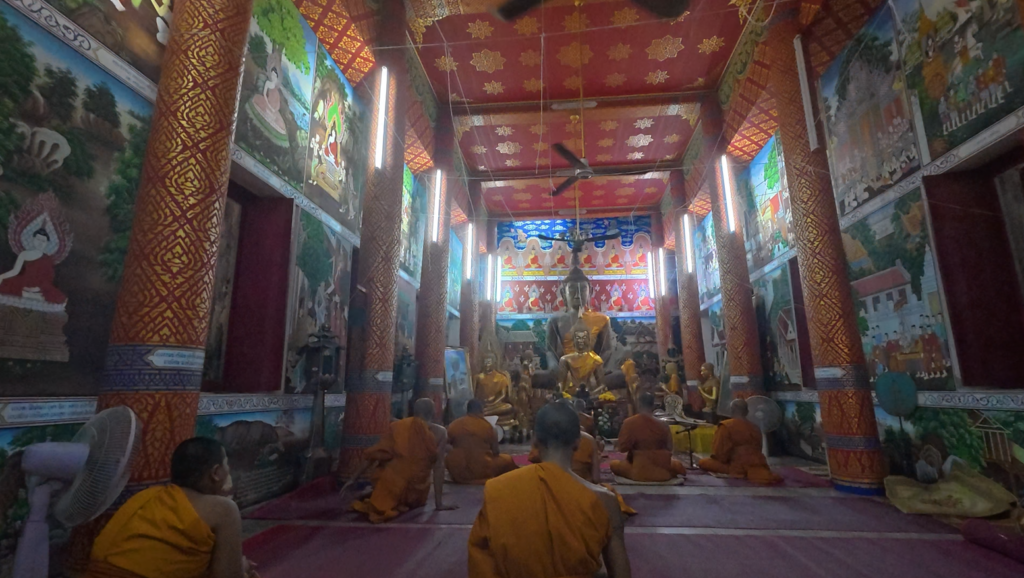
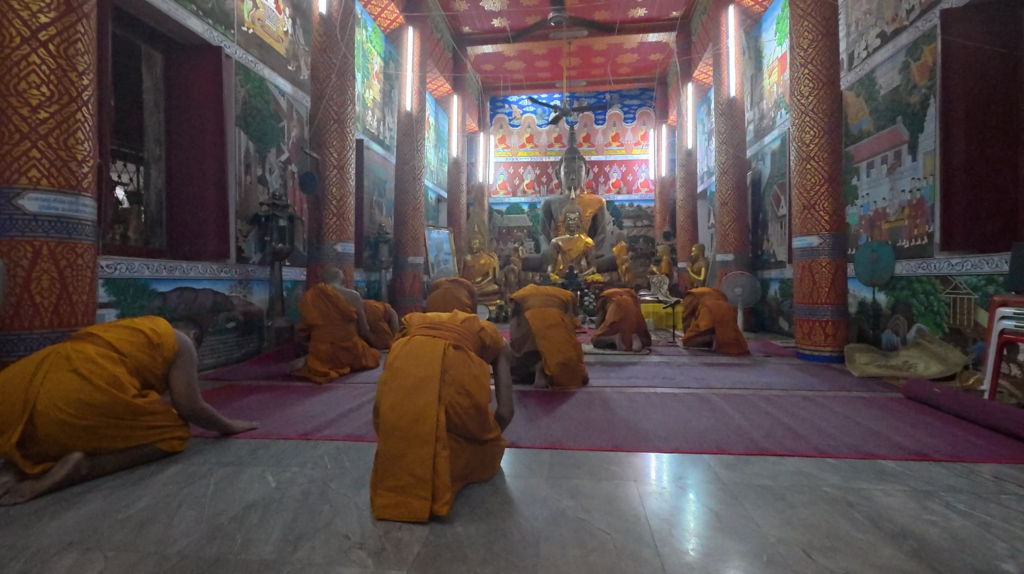
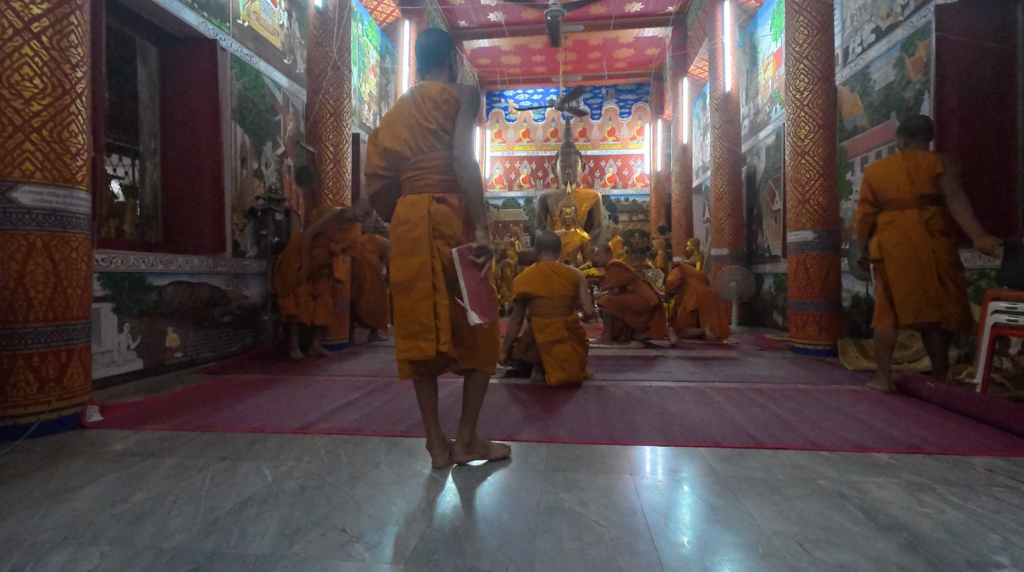
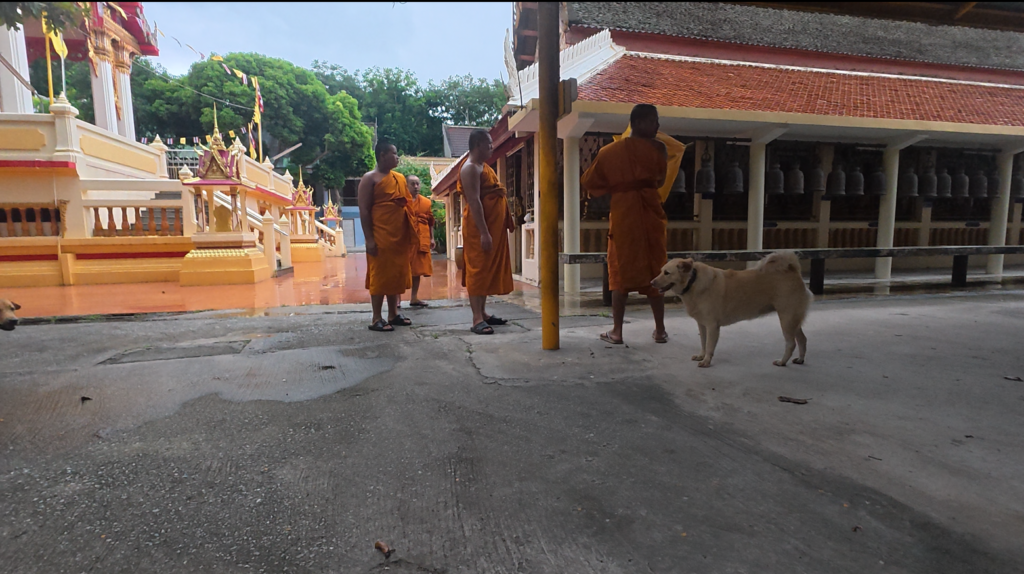
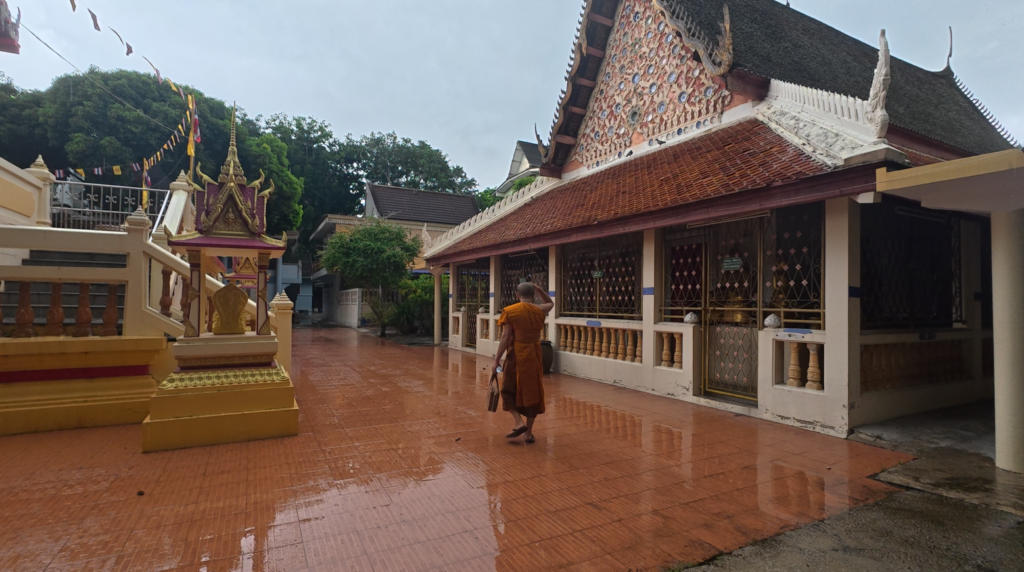
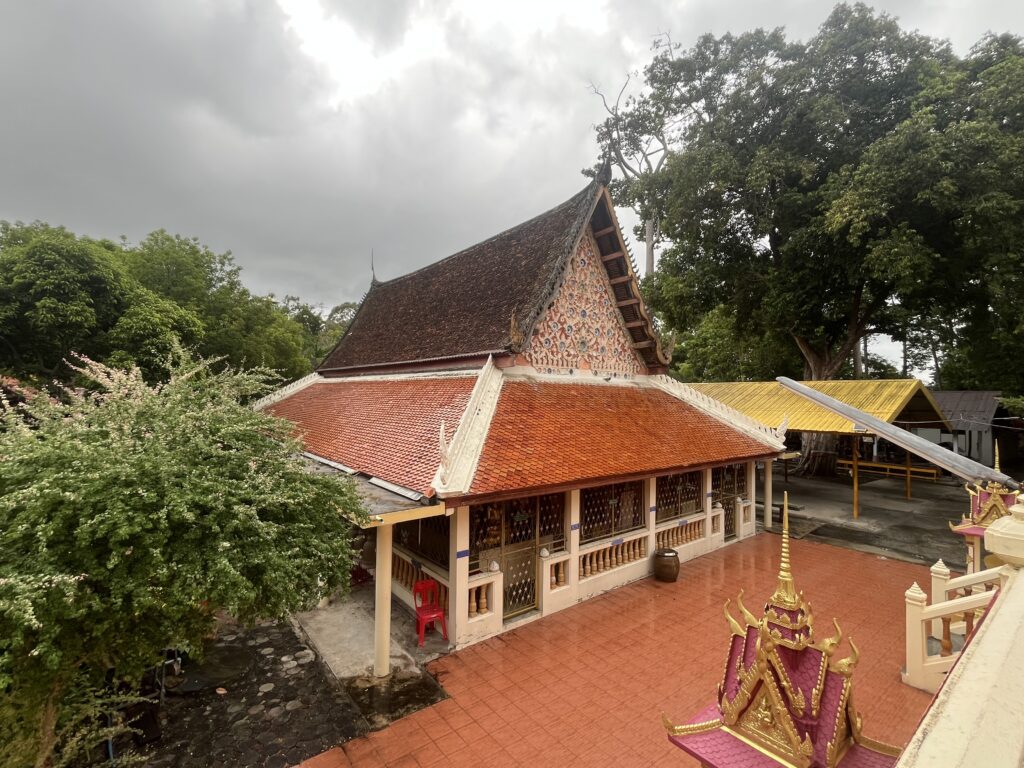
The chanting concludes, the monks return across the courtyard, and I take a final look at the old ubosot before continuing through the temple.
The New Ubosot
A short distance from the historic hall stood the temple’s newer ubosot. Its taller walls, elevated platform, bright colours, and elaborate roofline contrasted sharply with the low and weathered form of the old building.
The new ubosot represents the temple’s continuing development. As the community grew and religious activities expanded, a larger and more durable ceremonial space became necessary. Its construction date was not clearly recorded in the sources I found, so it should be understood as a later addition rather than assigned an uncertain year.
Decorative guardian figures stood near the entrance, while red-and-gold doors and window frames gave the building a more formal appearance. The raised terrace also separated the sacred hall visually from the everyday movement of the surrounding grounds.
The presence of two ubosots does not mean that the older one has lost its purpose. Instead, the buildings show two stages in the same temple’s life: one preserves the memory and craftsmanship of the earlier community, while the other serves its changing needs.
The New Ubosot
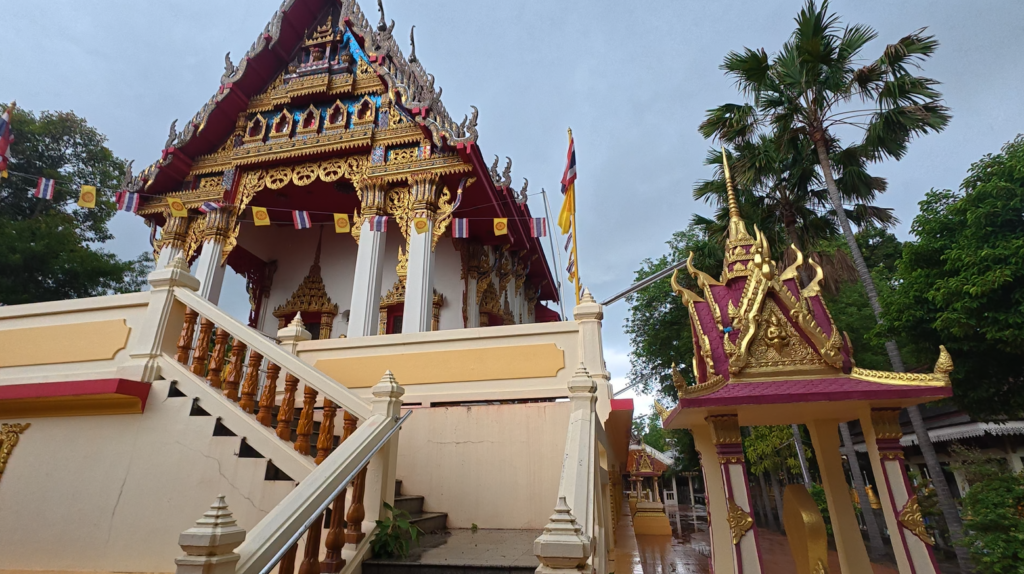
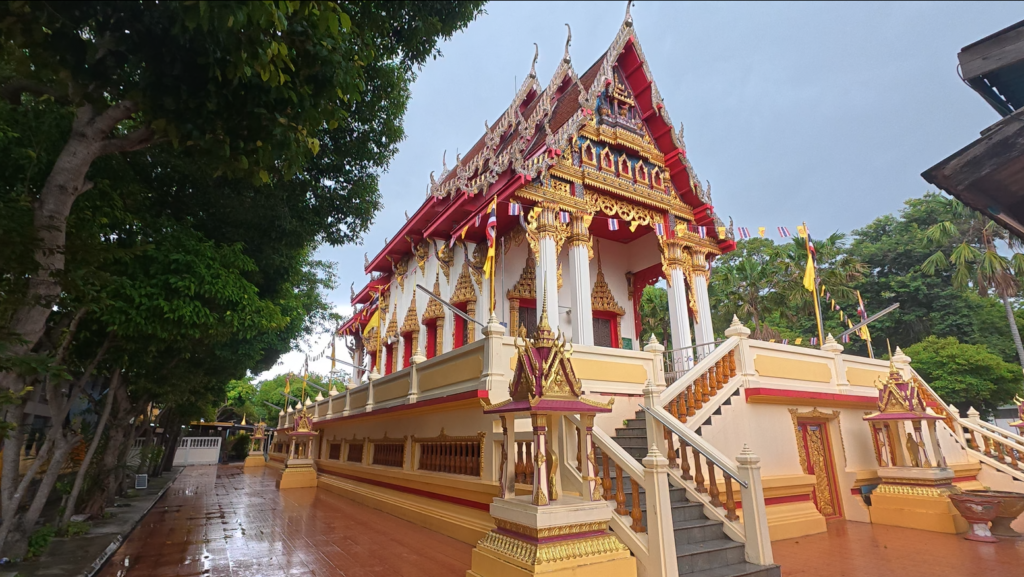
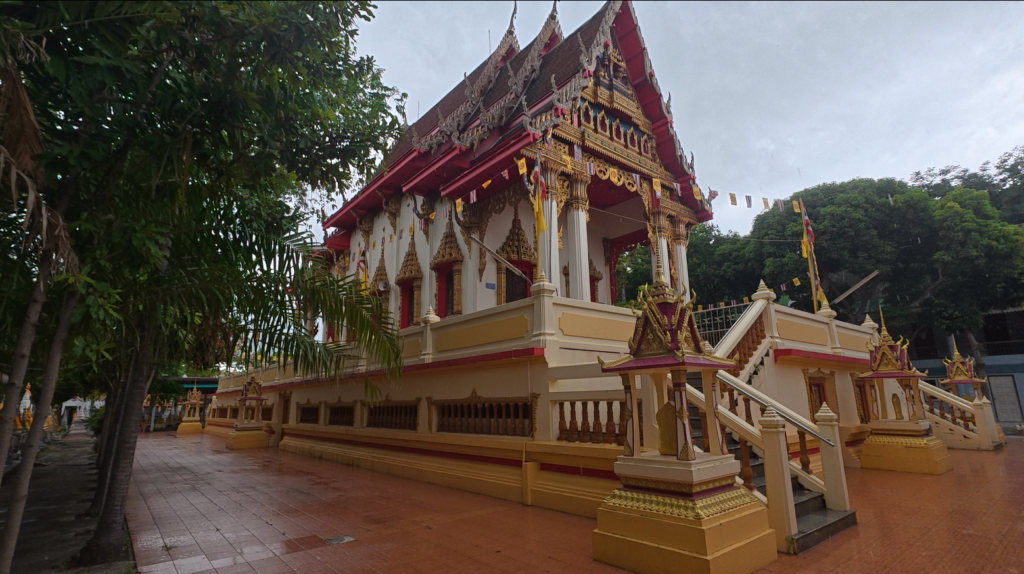
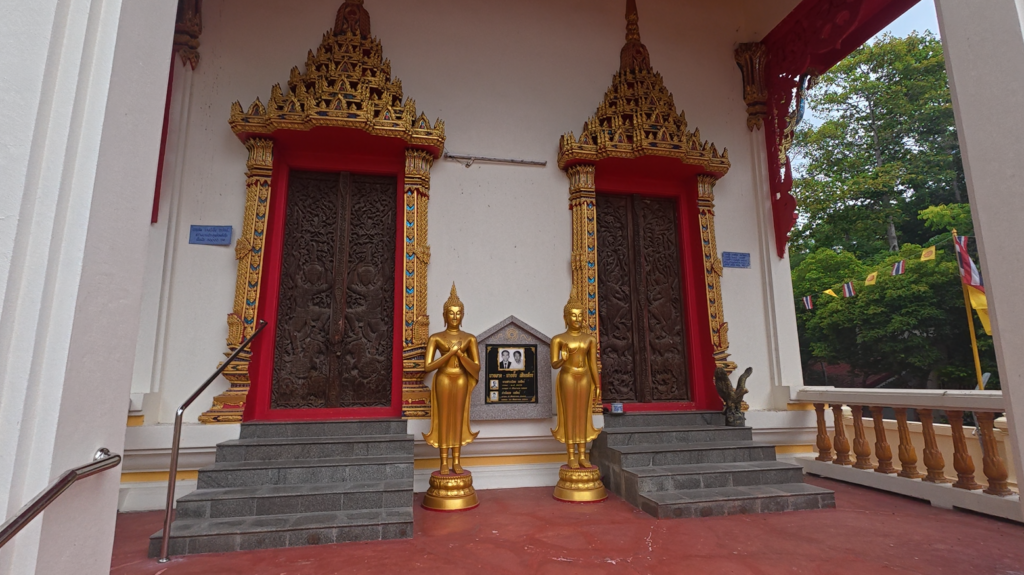
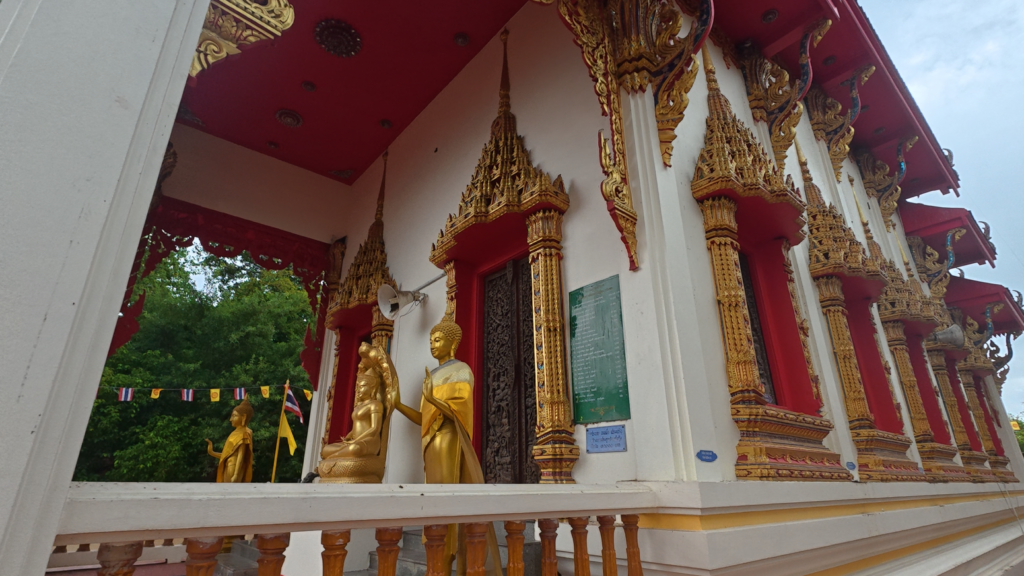
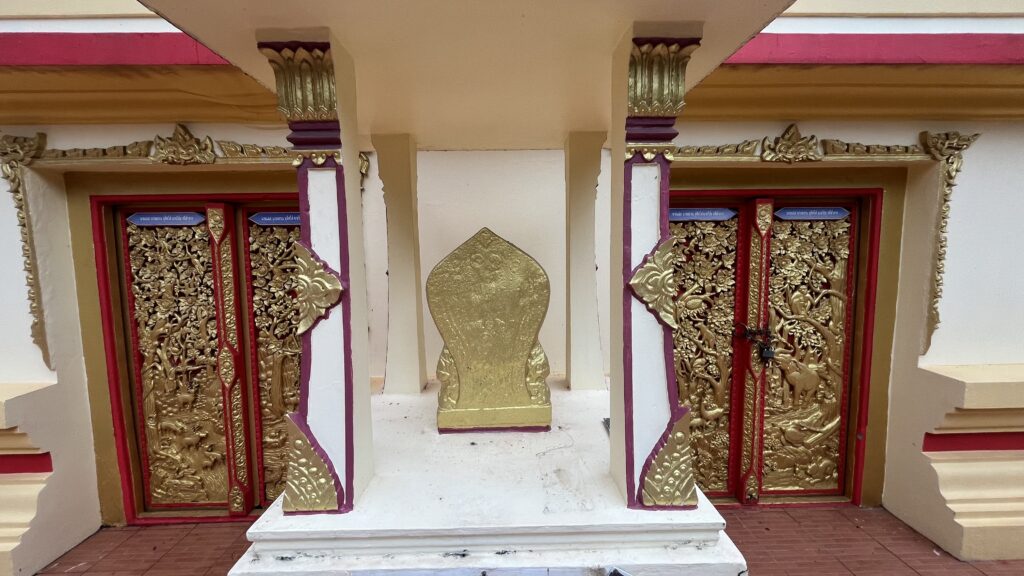
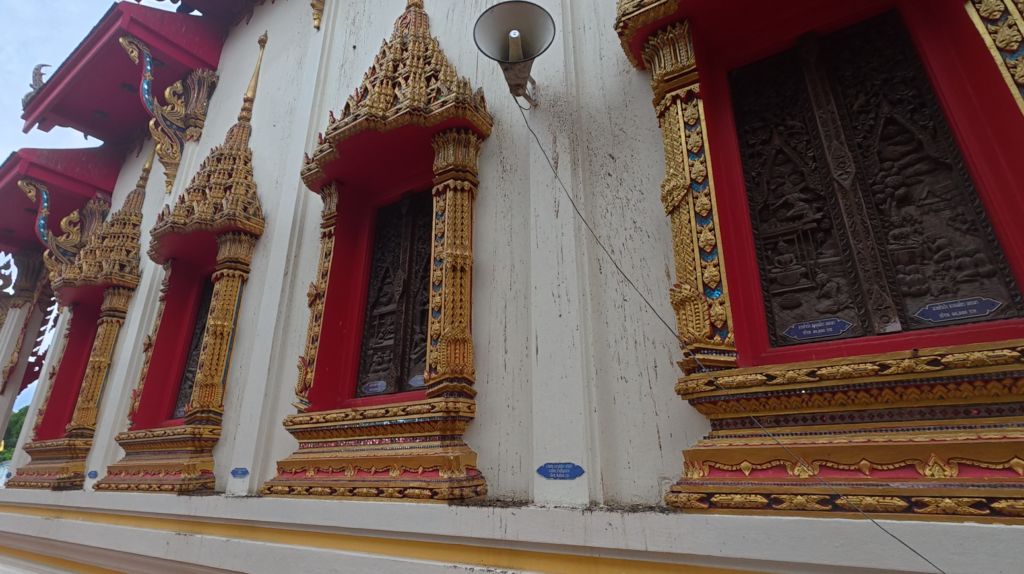
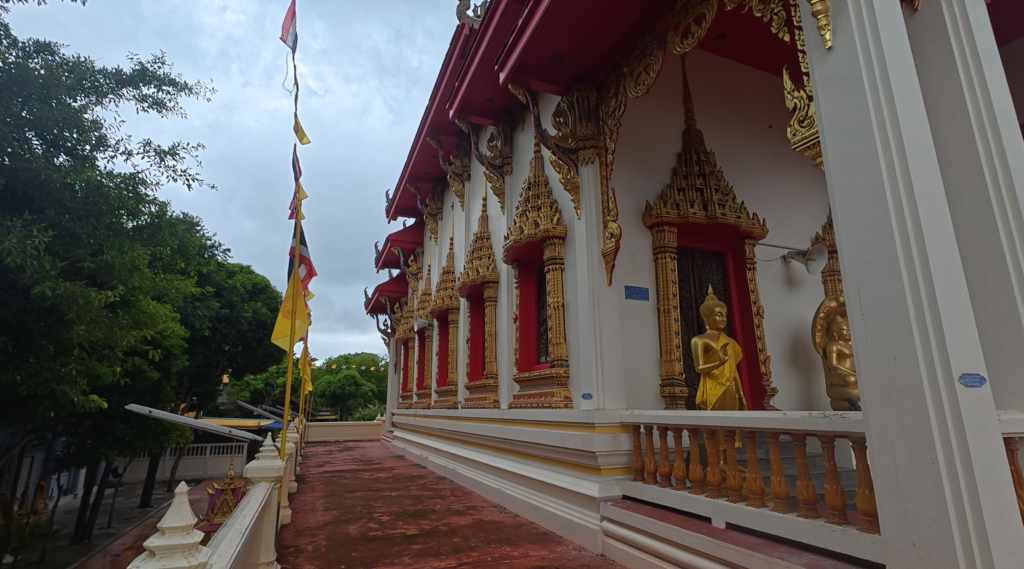
The newer ubosot rises above the courtyard with bright walls, red-and-gold details, and a more formal contemporary design.
A Place for the Dead and the Living
Beyond the newer ubosot, the path led toward a quieter part of the temple grounds. Beneath the trees stood rows of small chedis and memorial structures associated with the ashes and remembrance of the deceased.
In many Thai temples, spaces for the dead are not completely separated from everyday religious life. Memorial chedis may contain cremated remains, while relatives return to make merit, offer flowers, and remember family members.
The location beside active temple buildings reflects the Buddhist understanding of impermanence. Death is not hidden outside the sacred compound; it remains close to chanting, ordination, merit-making, and the daily movement of monks and residents.
The small structures differed in age and condition. Some were carefully maintained, while others showed the effects of weather and time. Together, they formed a quiet archive of local families whose lives remained connected to Wat Mai Ket Ngam.
Memorials Beneath the Trees
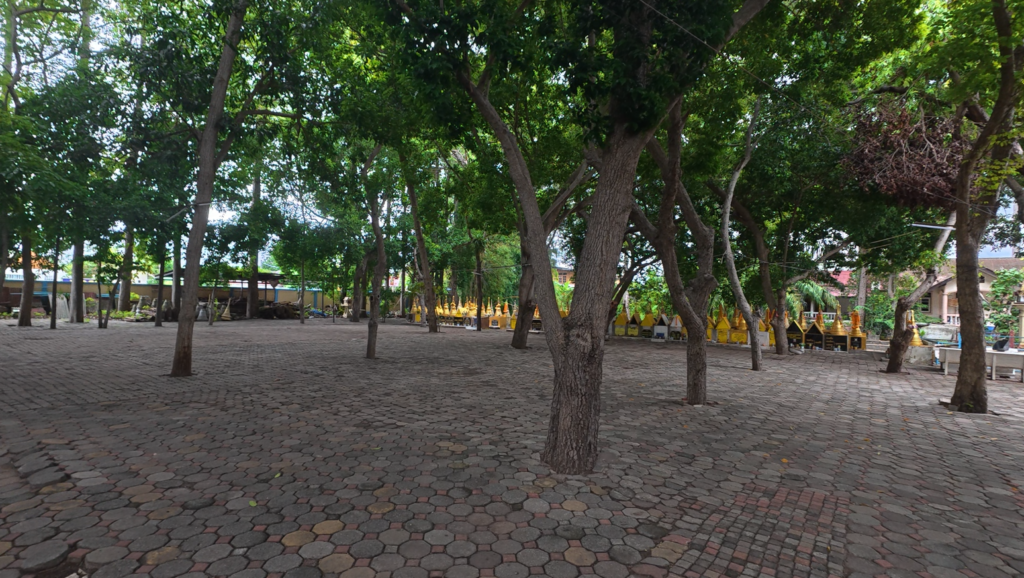
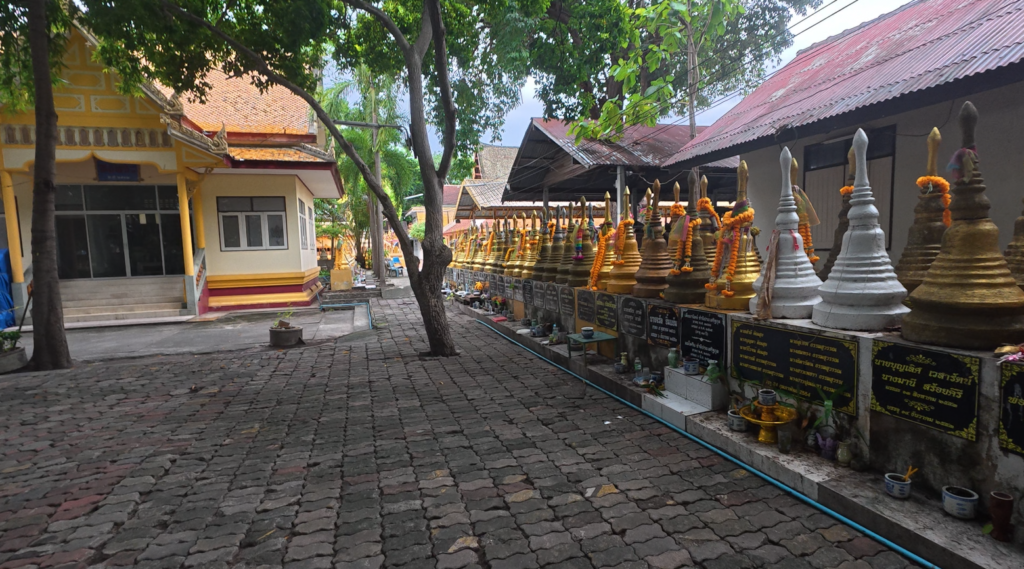
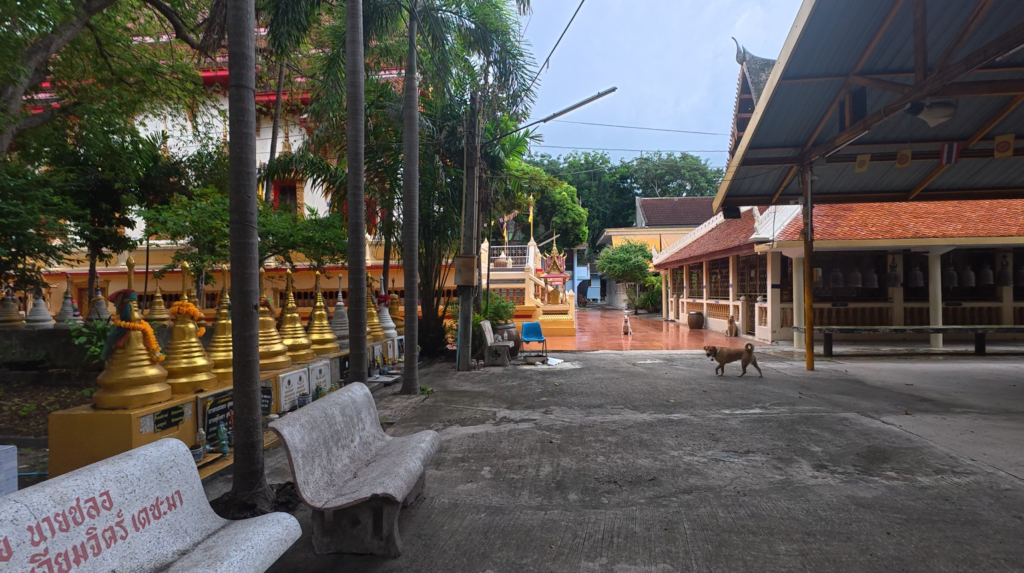
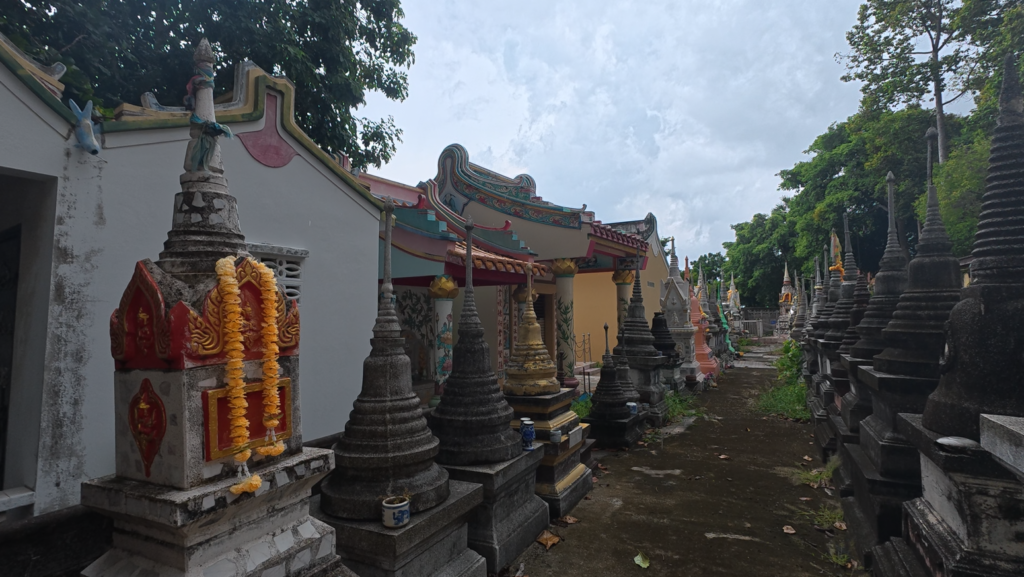
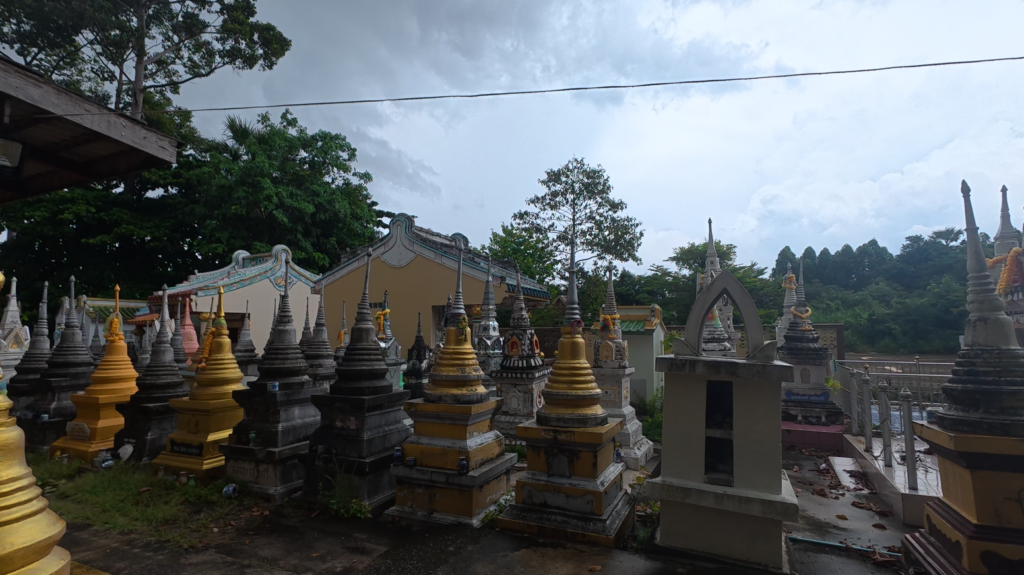
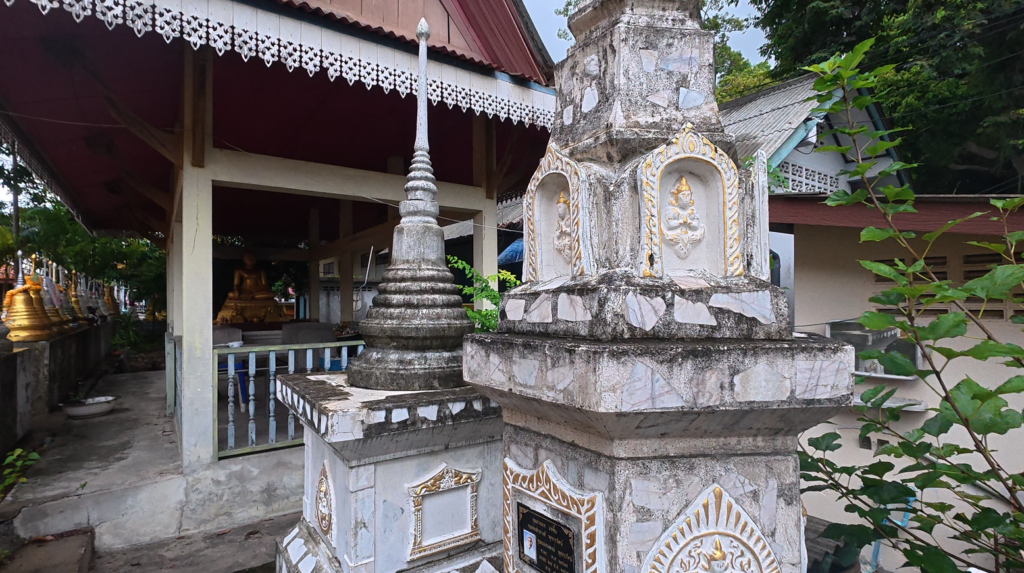
Small memorial chedis and spaces for cremated remains stand quietly among the trees, keeping the memory of local families within the temple grounds.
One Final Walk Before Returning to the Cub
My final walk took me past the temple’s service and ceremonial buildings. A large drum rested beneath its shelter, ready to mark time, announce ceremonies, or call the monastic community together.
Nearby structures served the practical cycle of temple life, including funerary and cremation-related functions. These buildings may appear separate from the ubosots, yet they belong to the same religious landscape—from ordination and chanting to death, cremation, remembrance, and the making of merit.
When I finally returned to the yellow Cub, the temple no longer felt like a collection of unrelated buildings. The old ubosot, fresh murals, donated bells, rows of Buddha images, new ceremonial hall, and memorial chedis all represented different generations caring for the same sacred ground.
Wat Mai Ket Ngam was not preserved by freezing it in time. It survived by moving away from floodwater, rebuilding, repainting, and continuing to welcome the voices of monks and residents.
The road was waiting outside the gate, but the sound of chanting remained with me as I prepared to ride away.
This is Won Cub Life. The journey continues.
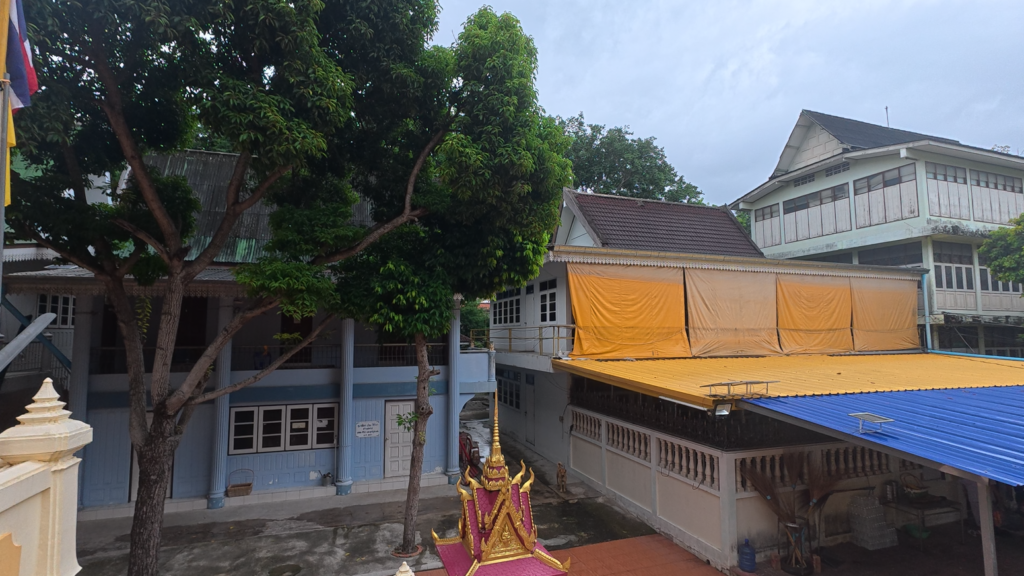
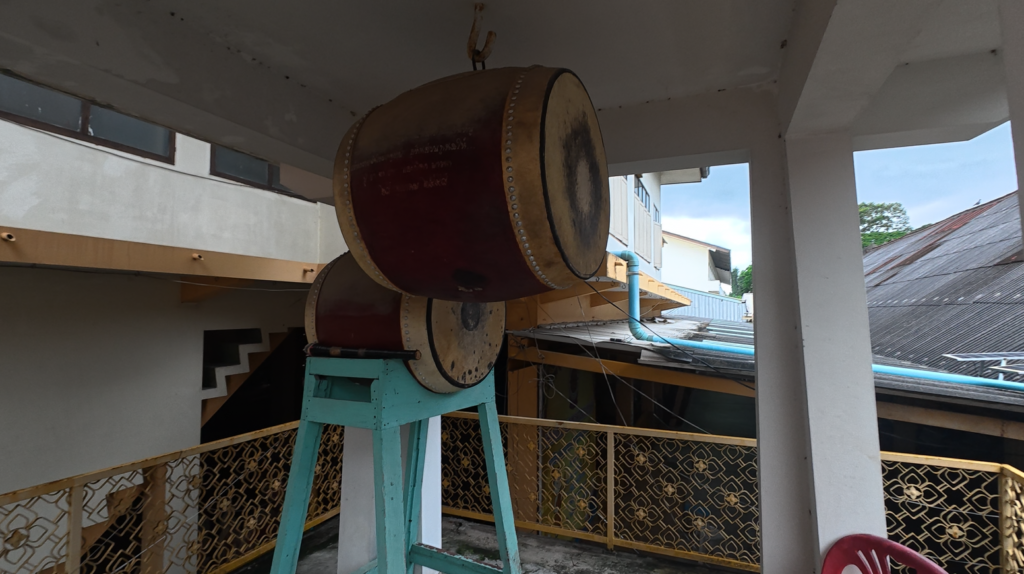
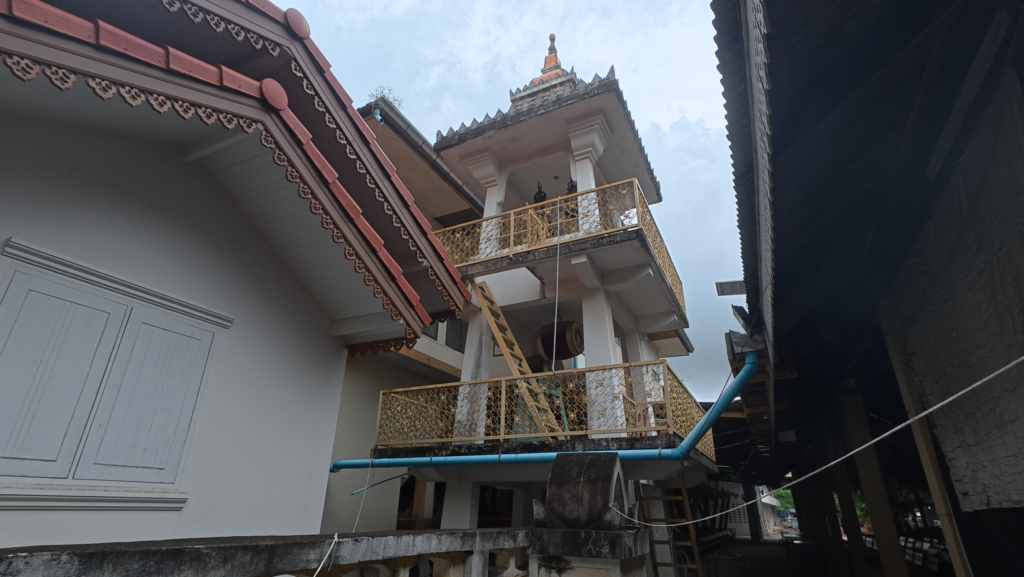
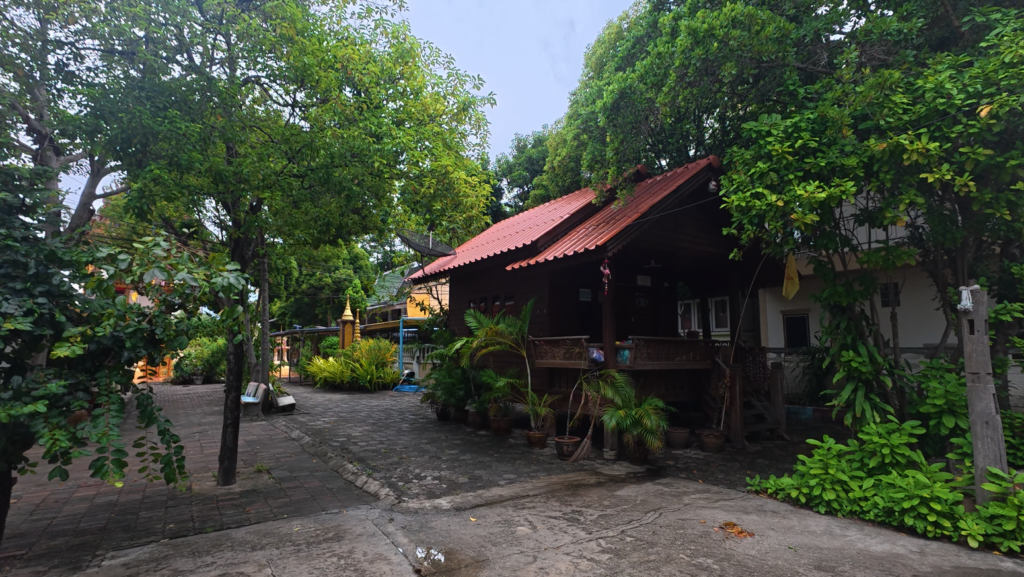
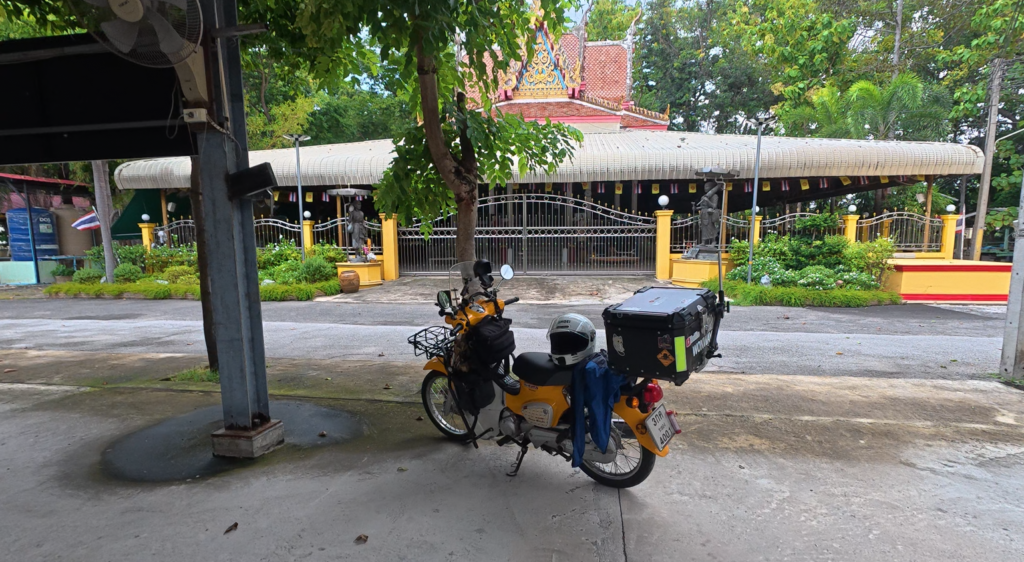
A temple drum, ceremonial buildings, a final shaded corner, and the yellow Cub waiting for the road home.
Watch the Journey
This video follows my complete visit to Wat Mai Ket Ngam—from the first ride through the temple gate and the 200-year-old ubosot to the moment a monk allowed me to join the chanting inside.
Walk with me around the bells and Buddha images, enter the brightly restored interior, and continue toward the newer ubosot and the memorial spaces beyond it.
Riding to Wat Mai Ket Ngam and entering its historic ubosot during the monks’ chanting—a living journey through faith, restoration, and community memory.
Visitor Information
Temple: Wat Mai Ket Ngam
Thai name: วัดใหม่เกตุงาม
Location: Ban Puek, Mueang Chonburi District, Chonburi, Thailand
Temple type: Community temple of the Mahanikaya tradition
Known for: The approximately 200-year-old ubosot, Chinese ceramic decoration, rows of bells and Buddha images, and its connection with the Ban Puek community
Admission: Free; voluntary donations are welcome
Best time to visit: Morning or late afternoon, when the grounds are cooler and quieter
Suggested visit duration: About 45–90 minutes
Parking: Available within the temple grounds
Visiting Respectfully
Dress modestly, remove shoes before entering religious buildings, and avoid standing directly in front of worshippers or monks during chanting.
The old ubosot may be open when monks are conducting ceremonies. Wait outside and ask permission before entering or taking photographs. Access can vary according to temple activities.
The bells and Buddha images around the old ubosot are religious offerings. Do not touch, ring, or move them unless the temple clearly permits visitors to do so.
Location
Open Wat Mai Ket Ngam in Google Maps
Approximate coordinates: 13.31618, 100.93249
Wat Mai Ket Ngam can be combined with a visit to Ang Sila, Bang Saen, Wat Tao Pun, Wat Yai Intharam, or the Na Jasa Tai Chue Shrine.
Further Reading
The history of Wat Mai Ket Ngam is incomplete, but the surviving temple records, community research, and architectural studies help distinguish documented facts from local tradition.
- Wat Mai Ket Ngam — Thailand’s Cultural Environment Conservation Database
Official field record describing the old ubosot, Buddha image, murals, roof tiles, and relationship with the local community. - Wat Mai Ket Ngam — Thai Buddhist Temple Record
Records the temple’s official establishment in 1892 and the granting of Wisungkhama Sima on October 14, 1982. - Cultural Heritage from the Ban Puek Community
Academic research describing the former Wat Ket, its relocation because of flooding, and the architectural features of the old ubosot.
Continue Exploring Chonburi
Use the WordPress link search to connect these anchor texts to the related Won Cub Life posts:
- Wat Tao Pun and Its Old Community Ubosot
- Where Faith Outlives Time: Wat Tan Lom’s 1833 Ubosot
- Wat Yai Intharam and Chonburi’s Royal Temple Heritage
- Na Jasa Tai Chue Shrine in Ang Sila
- Exploring Chonburi’s Historic Temples