Only a few kilometres from modern Pattaya lies a street that seems to belong to another time.
Old wooden shophouses stand close together. Red lanterns hang above the road. Behind weathered doors are family photographs, cooking tools, ceramic jars, shop counters and objects that once belonged to ordinary households. At the centre of the community, a Chinese shrine remains bright with colour and incense.
Today, Chak Ngaew is known as a Chinese cultural market. But before it became a place visited by travellers, it was a village built by migrants.
They came from China carrying little more than their labour, language, beliefs and hopes for a safer life. They cleared land, planted crops, opened shops and raised children. Their settlement grew into an important agricultural and commercial centre before changing roads, industries and cities drew people away.
This ride through Chak Ngaew is therefore not merely a visit to an old market. It follows the lives of people who arrived as strangers, created a community, witnessed its decline and later worked with public organisations to keep their heritage alive.
Above all, it is a story about those who still live here—people who continue to open the old doors, care for the shrine and light the red lanterns so that the lives of their ancestors will not disappear.
Riding from the rural fields into Chak Ngaew, where an old Chinese community still survives beyond the modern roads of Chonburi.
A Road Leading into the Past
The ride began on a quiet rural road surrounded by fields.
There was little to suggest that a historic Chinese settlement lay ahead. The landscape was open and agricultural, far removed from the hotels, traffic and entertainment districts of nearby Pattaya.
This countryside helps explain why migrants once settled here.
Chak Ngaew lay within fertile lowlands suitable for farming, while its position connected rural production with markets elsewhere in Chonburi. The original Thai settlement was later joined by Teochew Chinese migrants from Guangdong, whose descendants formed the Thai-Chinese community that survives today. Official tourism and cultural sources describe the settlement as more than a century old.
They did not arrive to preserve culture for future tourists. They came because they needed to live.
Some may have left China because of poverty, insecurity or the lack of land and opportunity. Others may have followed relatives or acquaintances who had already found work in Siam. Their individual reasons were rarely recorded, but the decision to migrate would not have been easy.
Behind each journey was a separation.
Parents were left behind. Familiar villages disappeared beyond the sea. The migrants entered a country whose language and customs were not their own, uncertain whether they would earn enough to survive or ever return home.
What they found in Chak Ngaew was not immediate prosperity. It was land that had to be worked, houses that had to be built and a future that depended upon endurance.
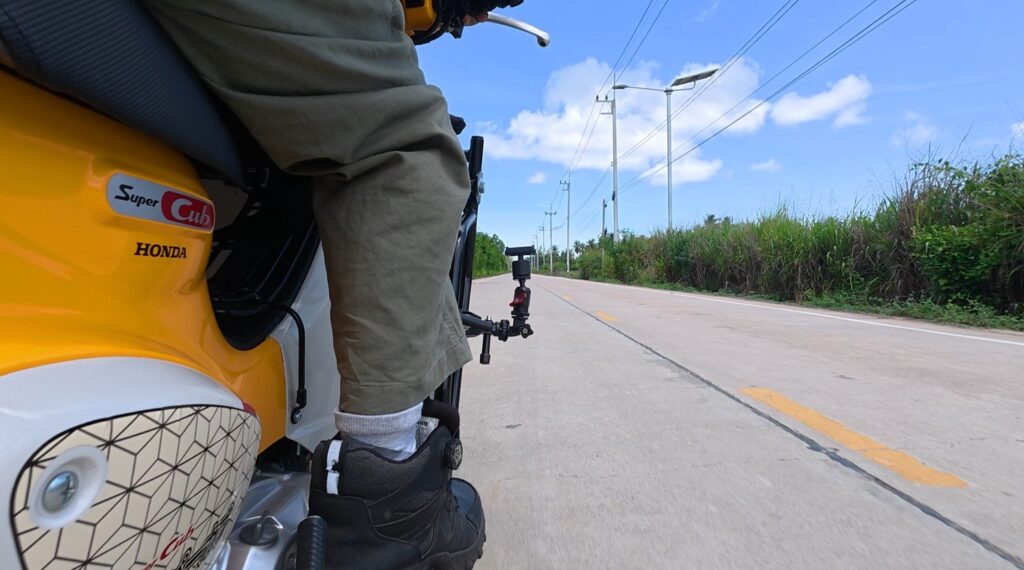
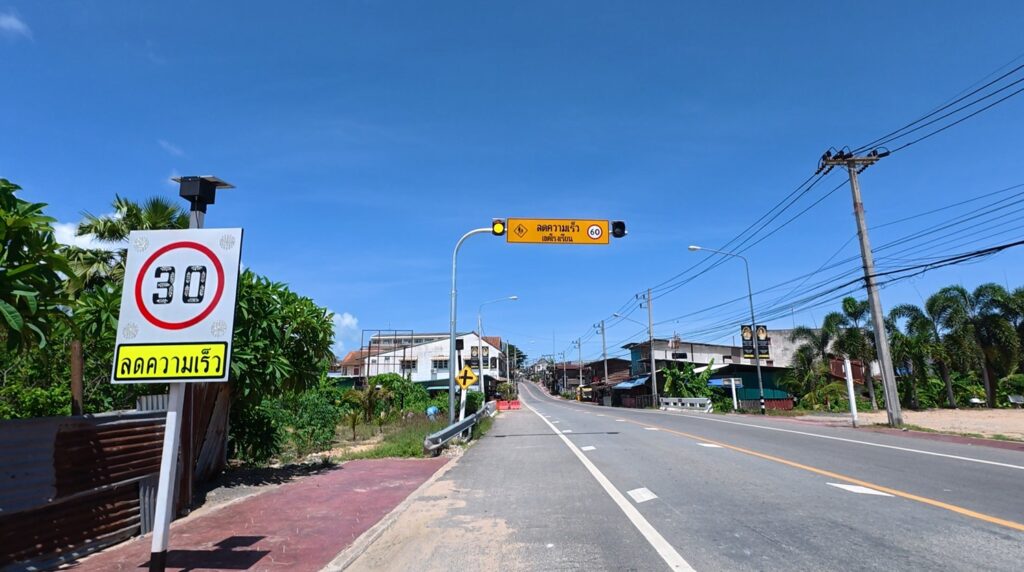
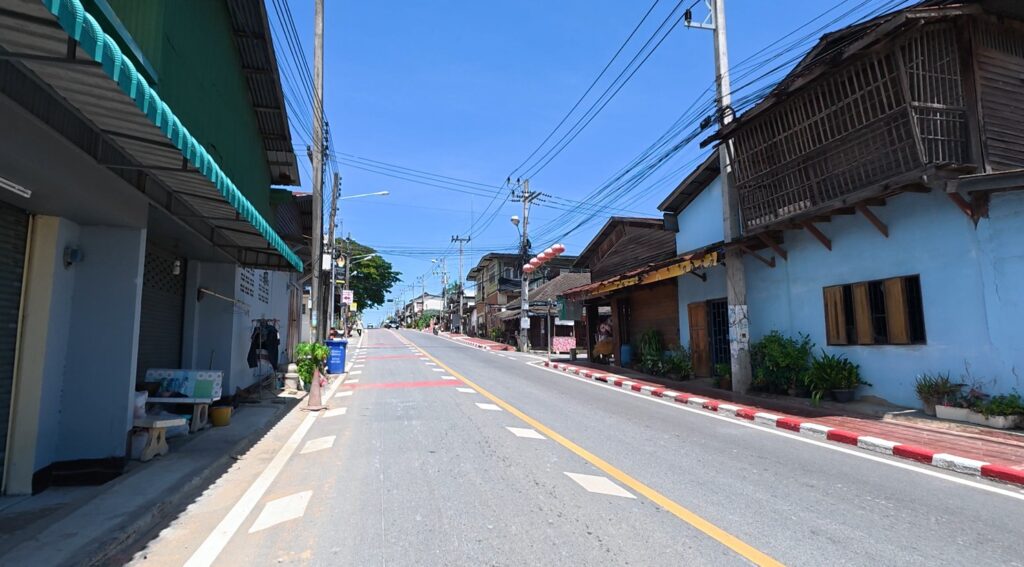
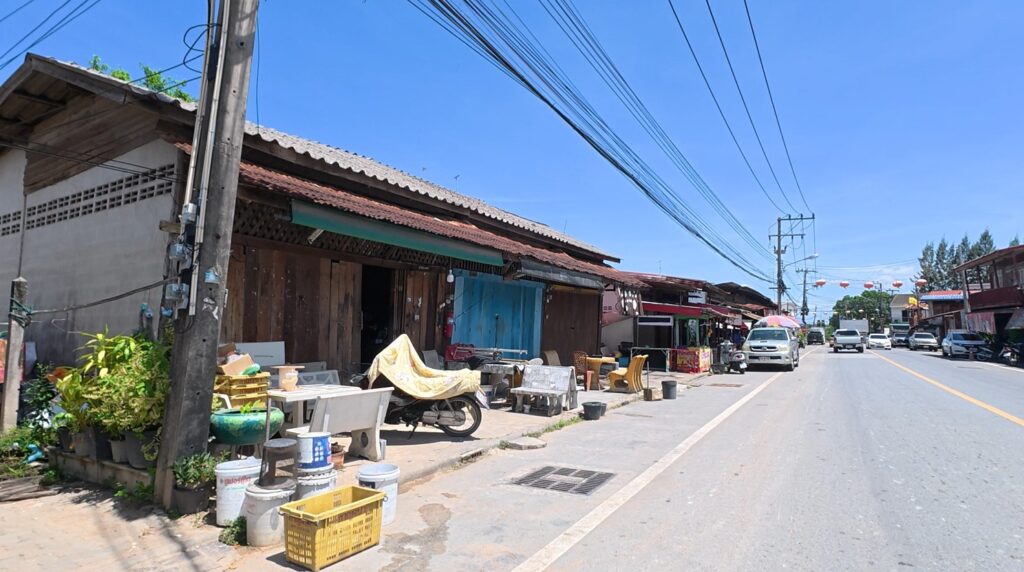
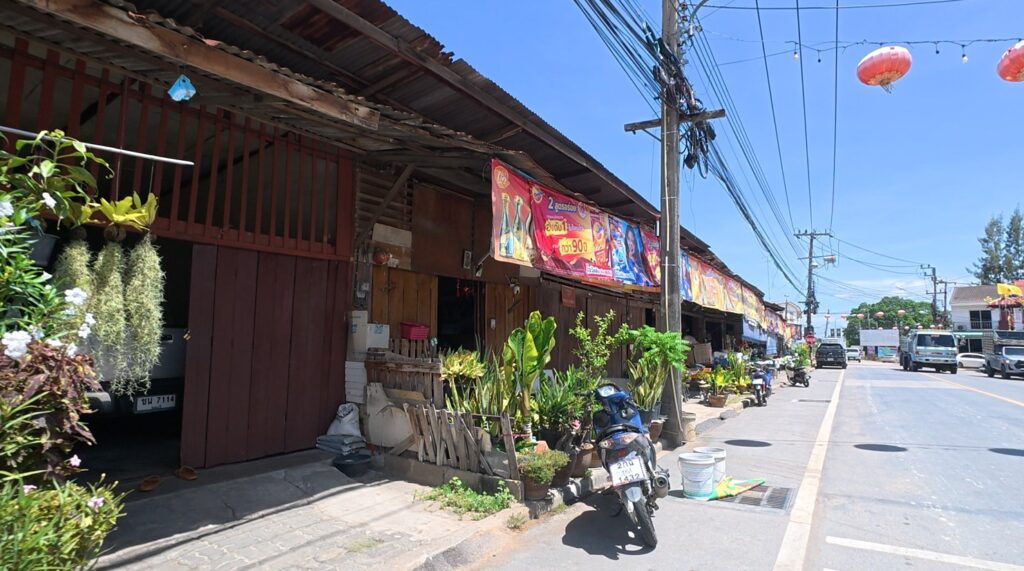
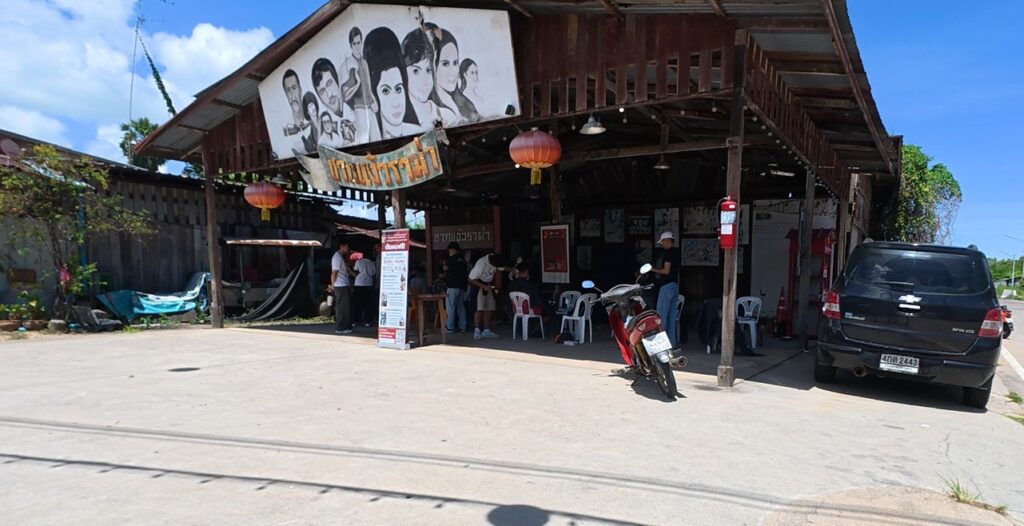
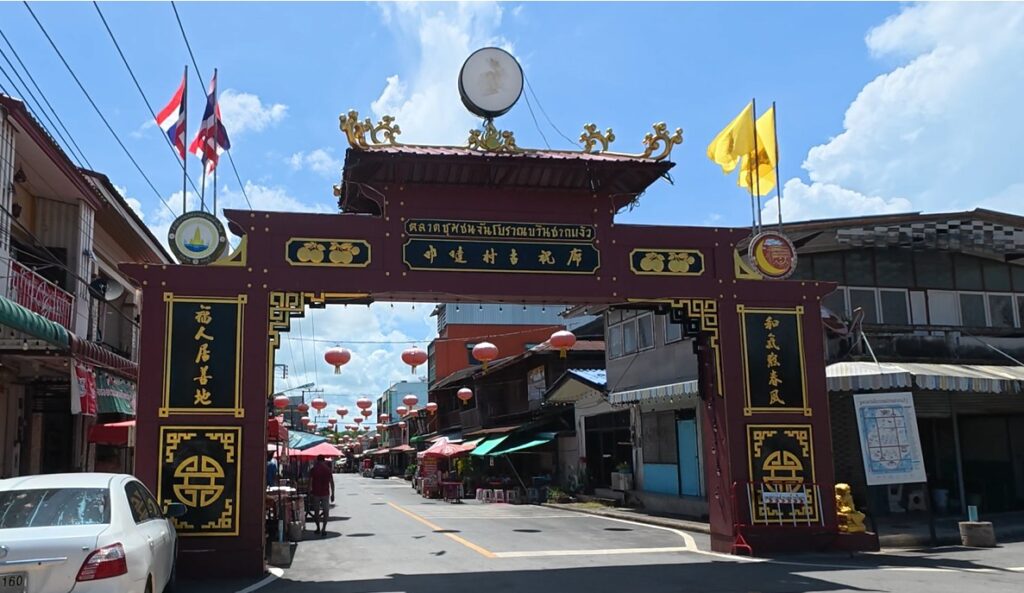
The road into Chak Ngaew leads from agricultural fields to a century-old Chinese settlement built through migration, farming and trade.
Beginning Again with Soil and Labour
The first generation built its life through physical work.
They planted cassava and other crops, traded agricultural products and gradually established small workshops and businesses. As production increased, Chak Ngaew developed into a processing and commercial centre serving the surrounding countryside.
The village eventually contained tapioca mills, shops, food producers, lodging and transport services. At its height, even cinemas and public performances drew people from neighbouring areas. Chak Ngaew became prosperous before Pattaya emerged as the major city known today.
But prosperity was not created by buildings alone.
It was created by people waking before sunrise, carrying sacks, weighing produce, repairing equipment and keeping accounts late into the evening.
A shopkeeper stood behind the same wooden counter every day. A mother prepared food while watching children grow up in the back room. Workers returned home covered in dust from fields and mills. Families saved money little by little, hoping that the next generation would have an easier life.
The wooden shophouses seen today were once both workplaces and homes.
Business took place at the front. Family life continued behind or above it. Meals were shared, children studied, grandparents rested and neighbours entered without formal invitation.
The street was not simply a market.
It was the community’s living room.
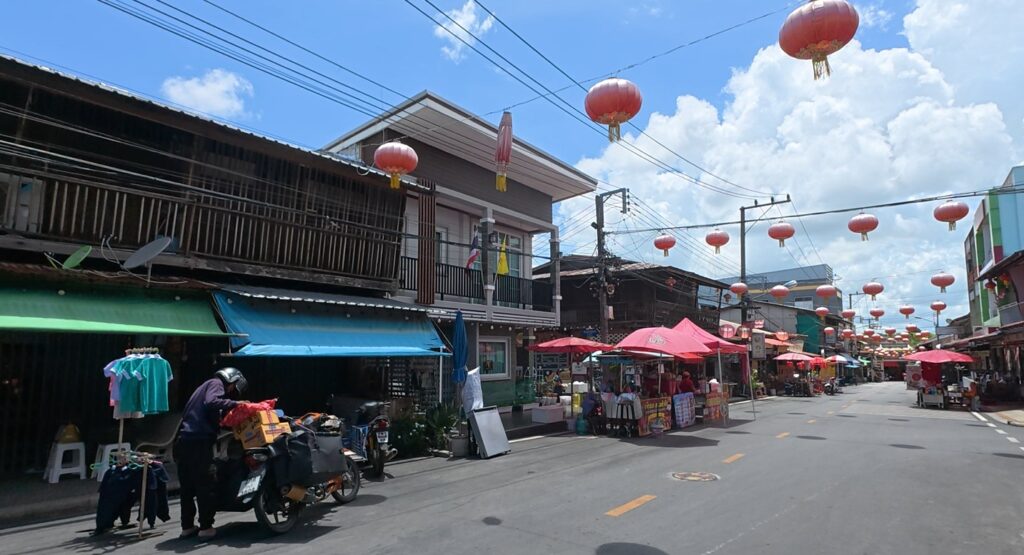
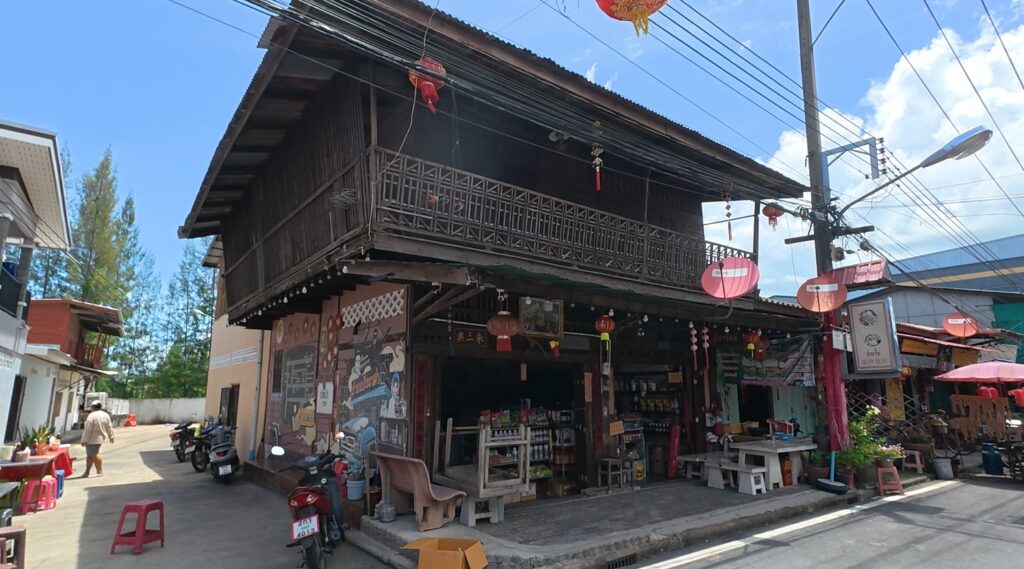
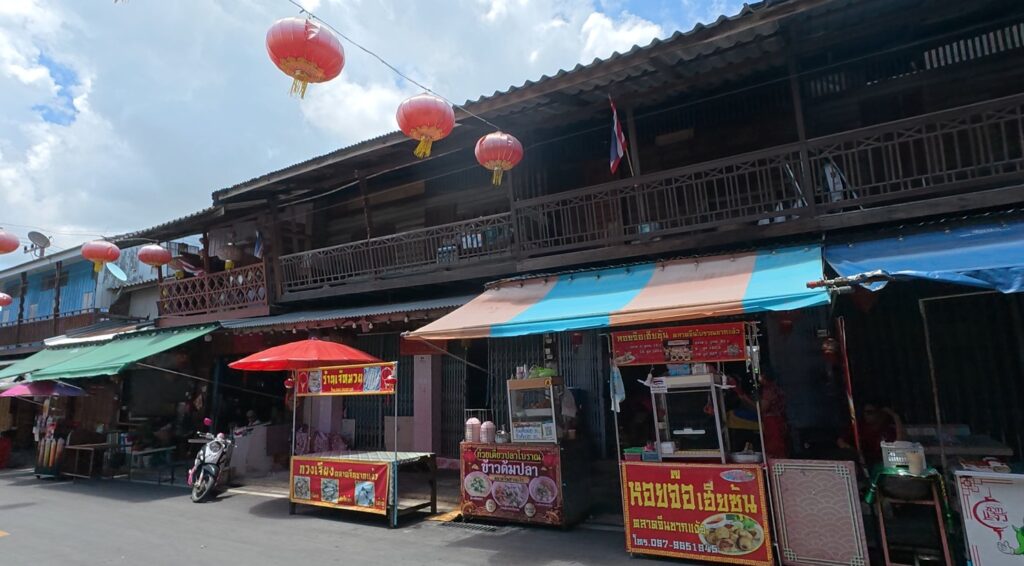
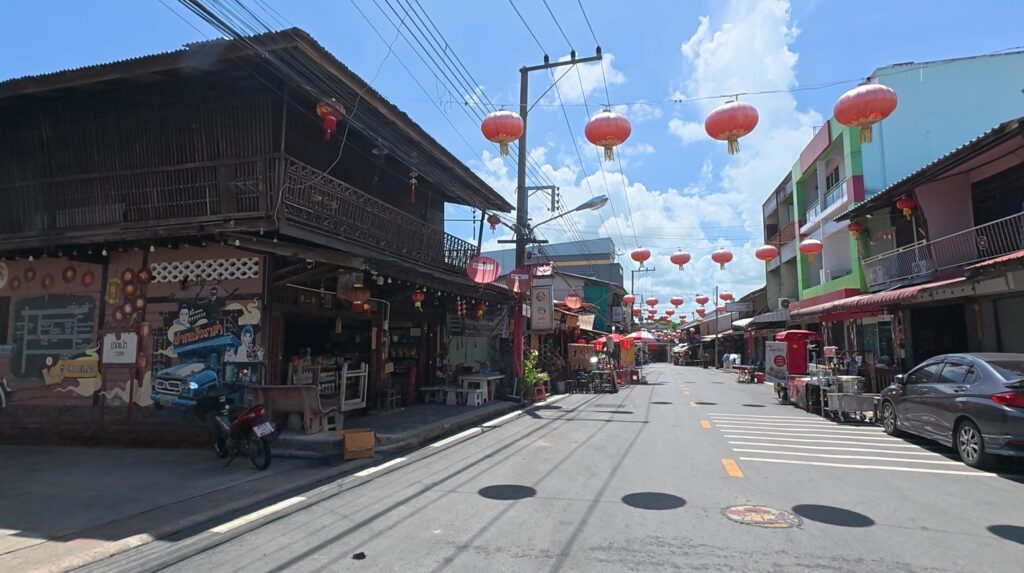
Old wooden shophouses reveal how farming, trade and family labour transformed Chak Ngaew into a prosperous rural community.
From Migrants to Neighbours
Newcomers rarely become part of a place immediately. Belonging develops through repeated encounters.
The Chinese settlers traded with Thai farmers, learned the local language and adapted their food and customs to new surroundings. Their children grew up between Chinese family traditions and Thai social life.
Over time, the boundary between migrant and local became less distinct.
People married, formed friendships and took part in one another’s lives. Thai became the everyday language, although Teochew continued to be spoken in some households. Chinese food, festivals, architecture and beliefs remained, but they were gradually woven into the wider culture of Chonburi.
The first generation may have thought often about returning to China.
Their children may have felt that they belonged to two worlds.
For later generations, however, Chak Ngaew was no longer a temporary settlement. It was home.
They knew the smell of food from neighbouring kitchens, the sound of rain on wooden roofs and the faces of every family along the street. The distant villages of their ancestors survived mostly through names, stories and rituals.
Their identity was no longer only Chinese or Thai.
It had become something shaped by this particular place.
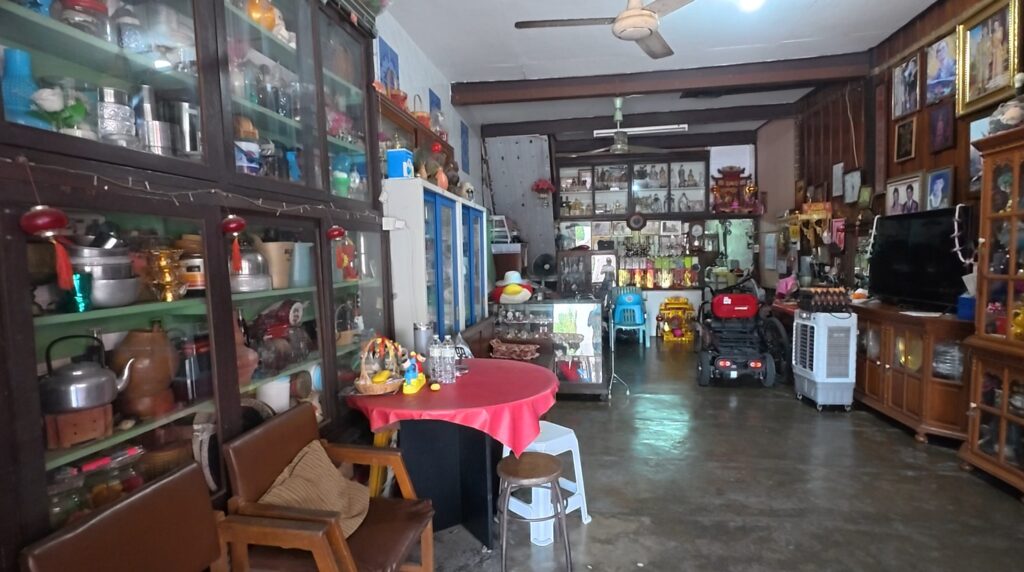
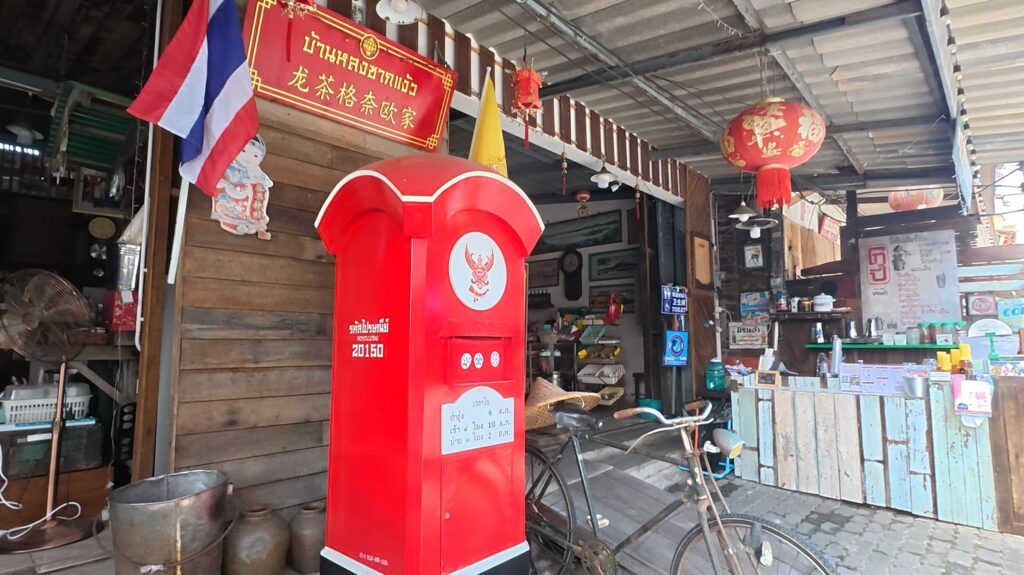
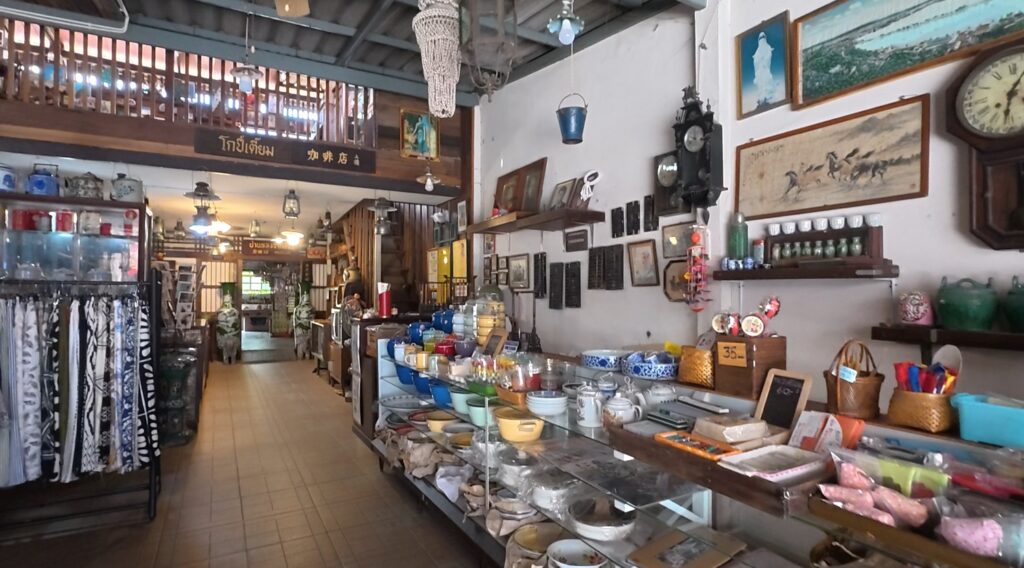
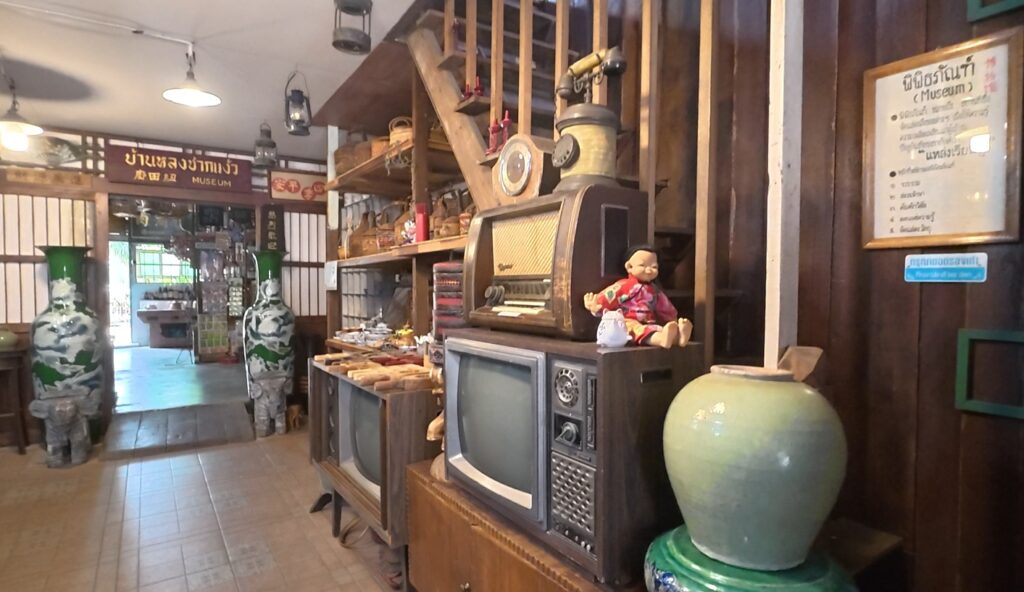
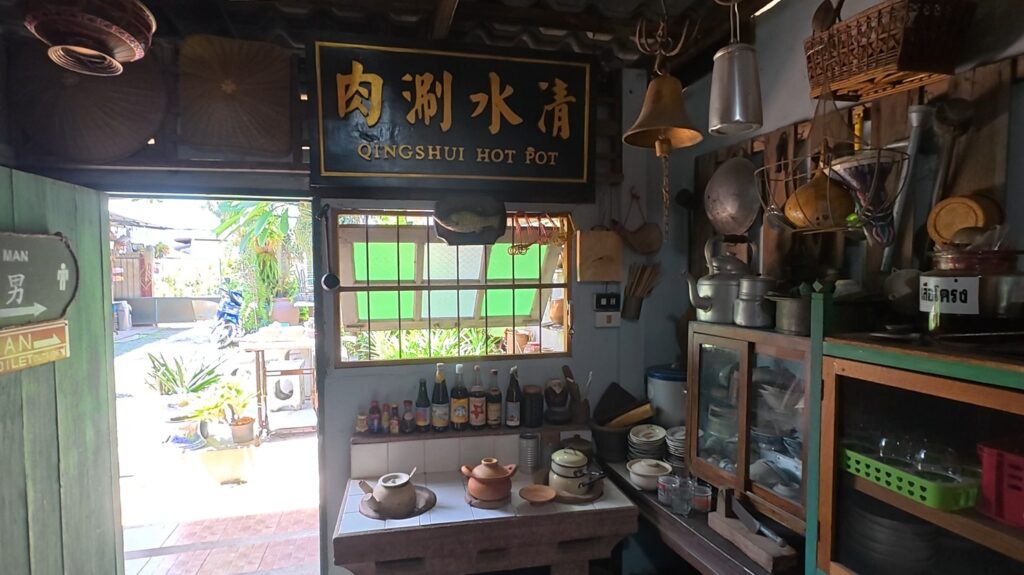
Household objects and old shop interiors preserve the everyday lives of families who gradually became part of Chak Ngaew.
Faith at the Centre of Community Life
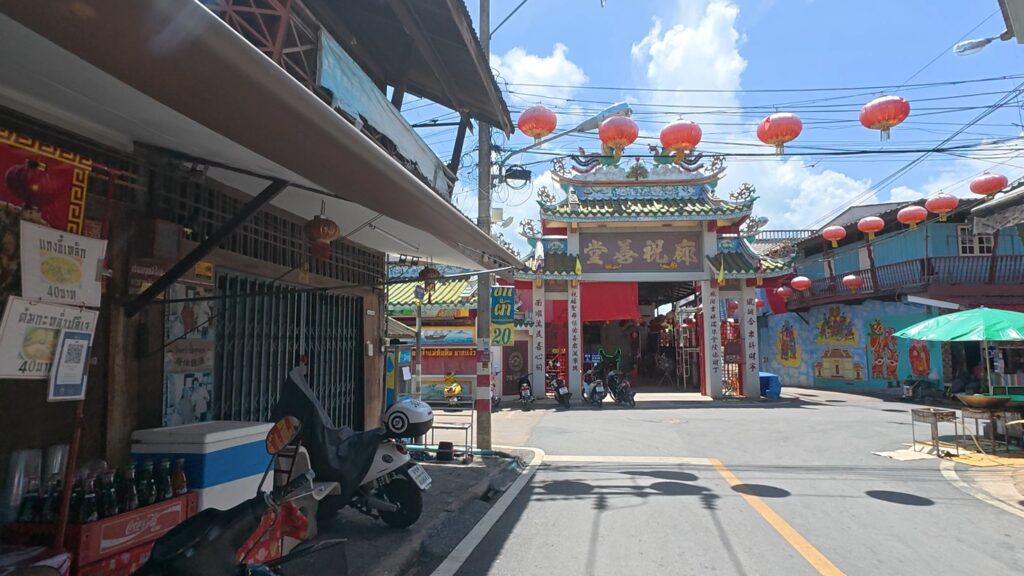
At the centre of Chak Ngaew stands the Chinese shrine.
Its colourful roof, painted pillars, religious figures and glowing altar create a striking contrast with the dark wooden houses surrounding it. But the shrine is more than a beautiful historic building.
For migrant families, faith offered stability in an uncertain world.
They prayed for protection during travel, for rain over the fields, for success in trade, for children’s health and for relatives far away. When illness, crop failure or family hardship came, the shrine gave people somewhere to gather and ask for strength.
The community particularly venerates Chao Mae Thapthim, associated with Mazu, the Chinese sea goddess widely respected by sailors, merchants and coastal communities. The shrine and its ceremonies remain an important centre of local spiritual and communal life.
Religious festivals also did something practical: they brought people together.
Families prepared food, made offerings, cleaned the shrine and shared responsibilities. Older residents taught younger ones the correct rituals. Disagreements were temporarily set aside because the whole community had to participate.
Through faith, migrants preserved a connection with their ancestors.
But they also created new traditions rooted in Thailand.
The shrine therefore represents both memory and adaptation. It looks back toward the homeland that earlier generations left, while standing firmly in the land where their descendants continue to live.
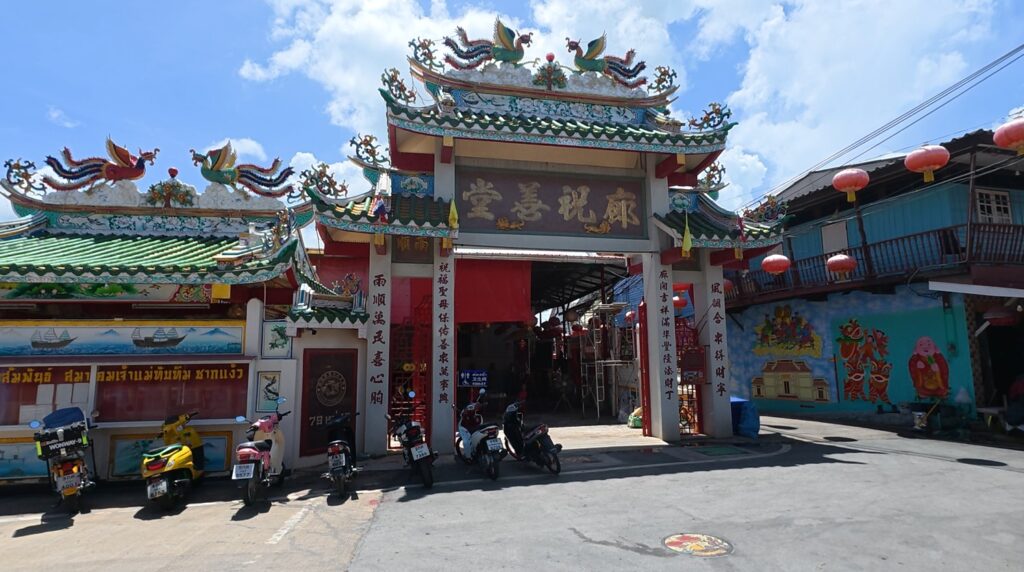
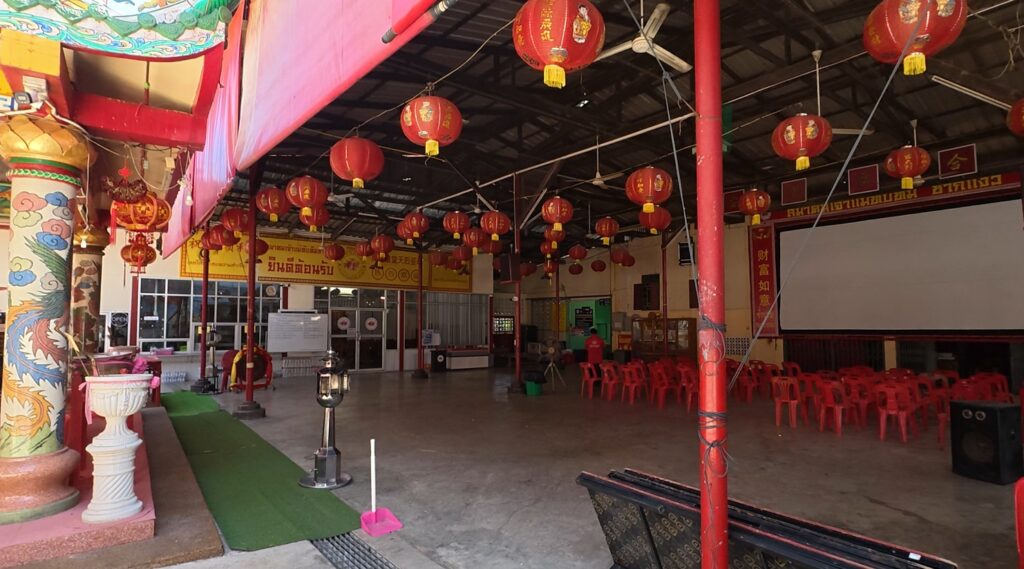
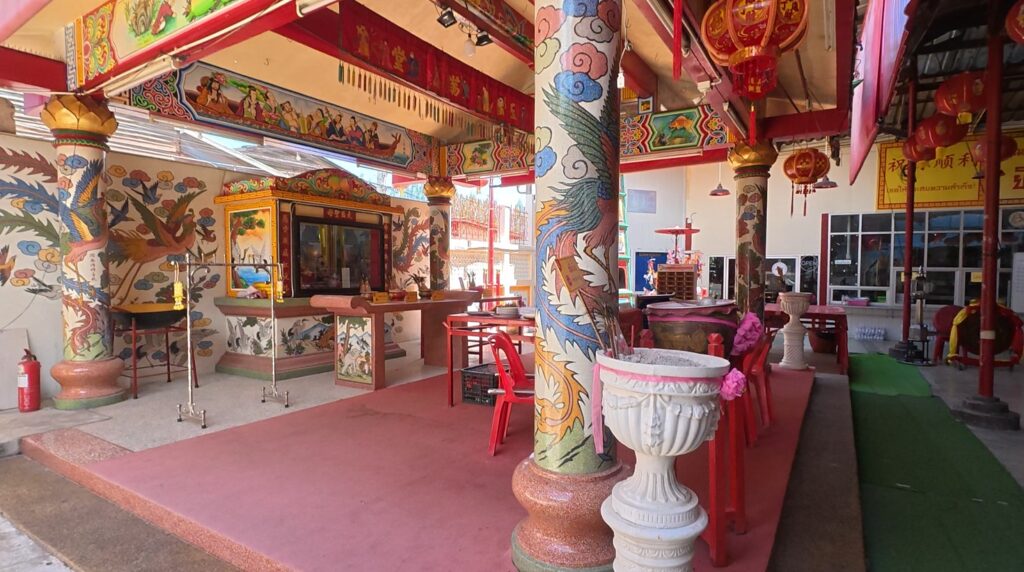
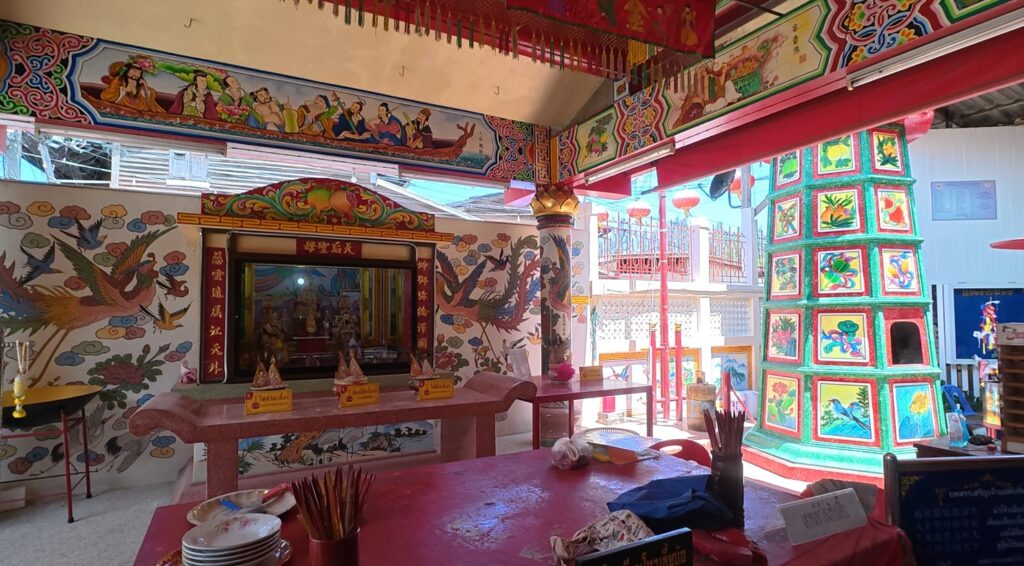
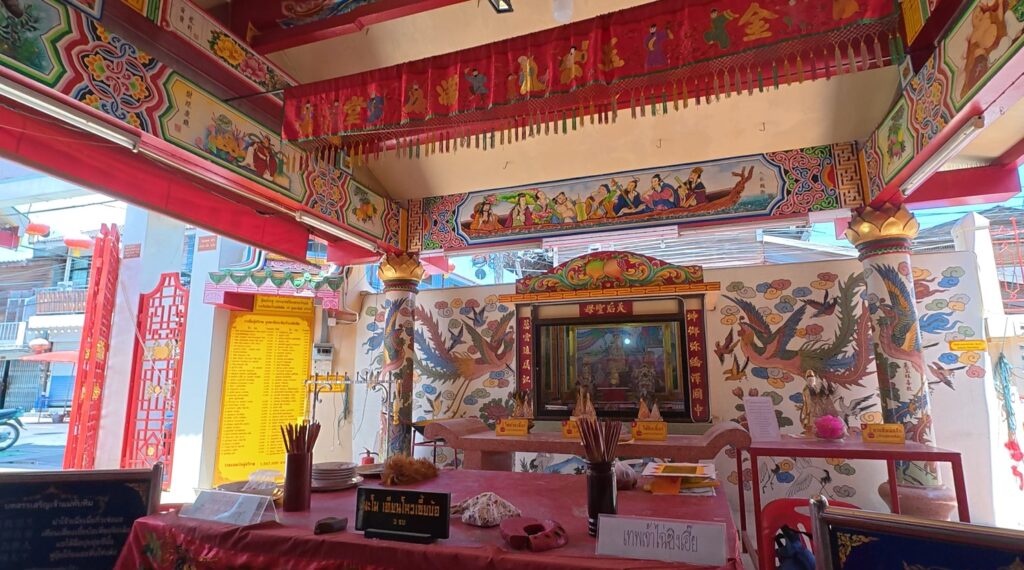
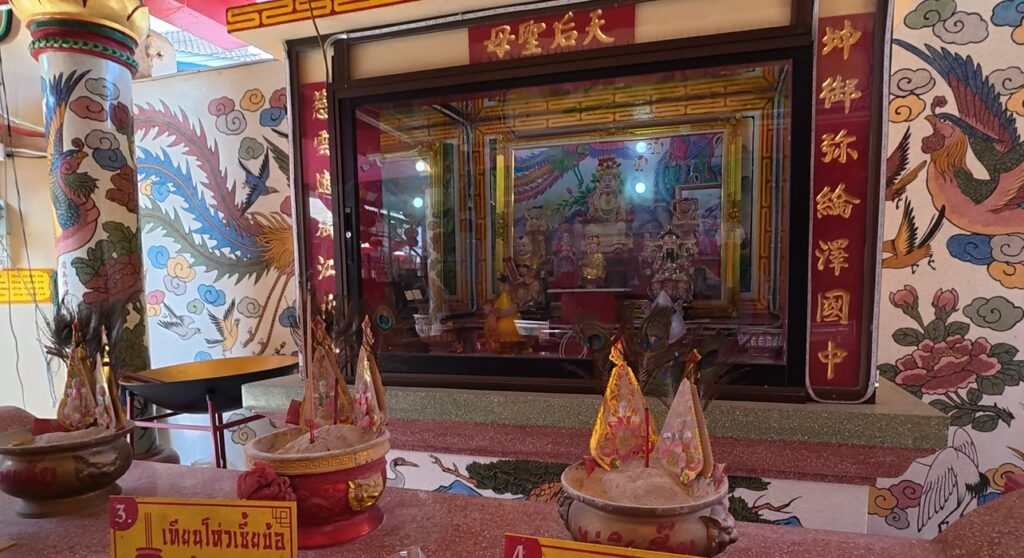
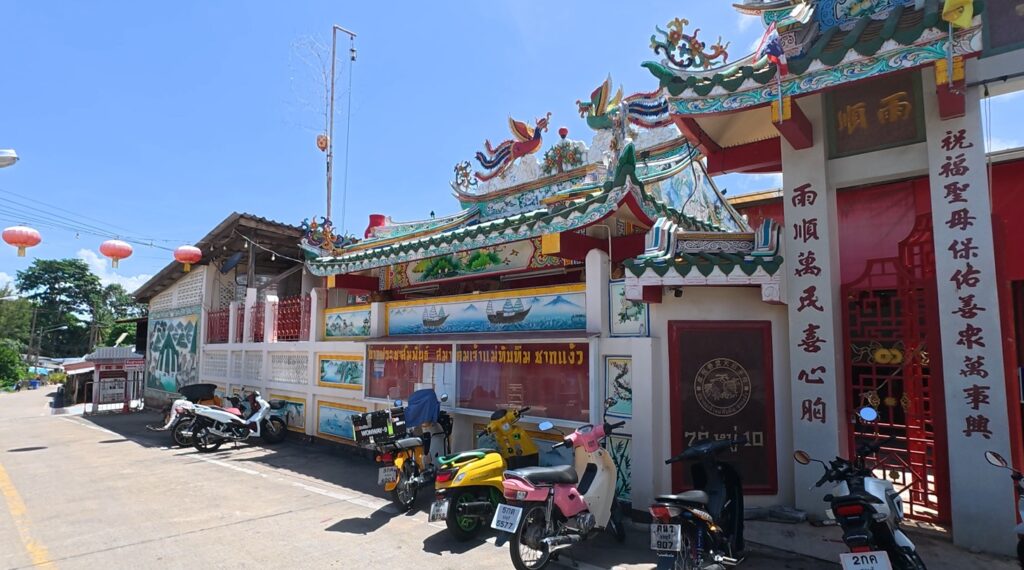
The Chinese shrine remains the spiritual heart of Chak Ngaew, where faith, ancestral memory and community life continue across generations.
The Street during Its Prosperous Years
It is difficult to imagine the old street at its busiest while riding through it in the quiet daytime.
Yet the objects inside the old shops suggest another world.
Shelves once held goods needed by farming families. Cooking utensils were used repeatedly until their surfaces became smooth. A gramophone played music while customers talked. Photographs recorded weddings, school days, festivals and people whose names may now be known only to their descendants.
There were sounds everywhere.
Engines from agricultural machinery. Vendors calling to customers. Workers unloading produce. Children running between houses. Music from theatres and performances. Conversations in Thai and Teochew flowing from open doors.
The prosperity of Chak Ngaew was not grand in the manner of a royal city. It belonged to working people.
A successful harvest meant debts could be paid. A busy shop allowed a child to continue studying. A new house or business represented years of family sacrifice.
Every signboard along the street carried not only a business name but also a household’s hope.
For several decades, this community believed the future would continue to pass along its road.
Then the direction of movement changed.
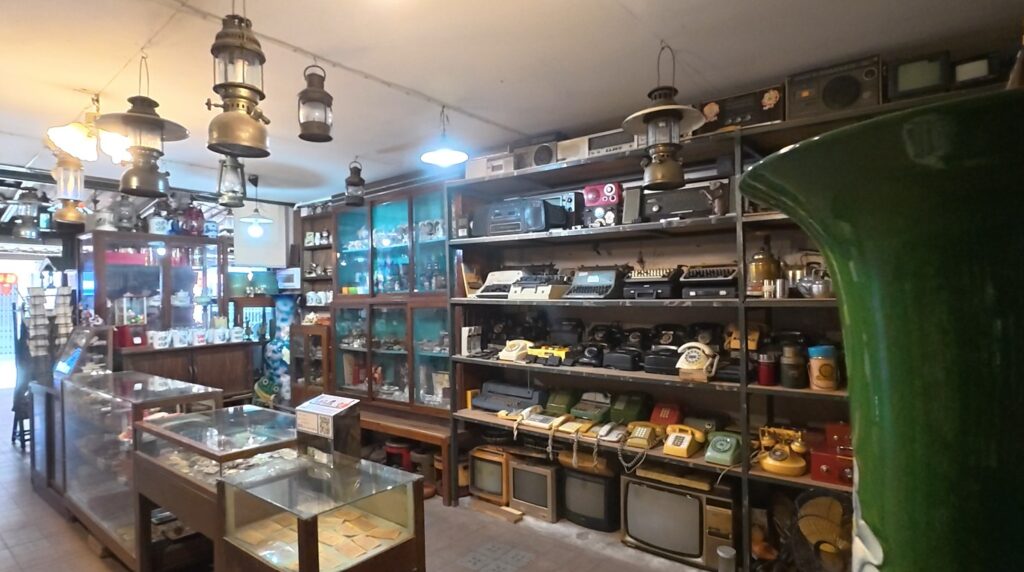


Old photographs, household objects and a gramophone recall the years when Chak Ngaew’s shops and streets were filled with work, trade and family life.
When the Main Road Moved Away
Communities built around transport routes are vulnerable when those routes change.
In the early 1970s, a new road redirected traffic away from Chak Ngaew. At the same time, Pattaya was expanding, new industries were developing and employment opportunities were drawing younger people toward larger urban centres.
The old commercial street gradually lost its customers and economic importance. Mills and businesses closed. Young residents left for education and work, while many older people remained behind. Sources describing the community’s revival identify the 1972 road diversion as a major turning point in its decline.
Decline rarely happens in a single dramatic moment.
One shop closes first
Then another family moves away.
A building that once held several generations becomes occupied by only one elderly person. Repairs are postponed because there is not enough money. Children return less often because their jobs and families are elsewhere.
The street grows quieter year by year.
The same wooden houses that had witnessed prosperity began to carry the weight of absence.
This is a familiar pattern in historic communities. People leave not because they hate their hometown, but because they need work, education and opportunity. Yet each departure weakens the network that once kept the community alive.
By the time outsiders recognise the cultural value of an old town, much of its everyday life may already have vanished.
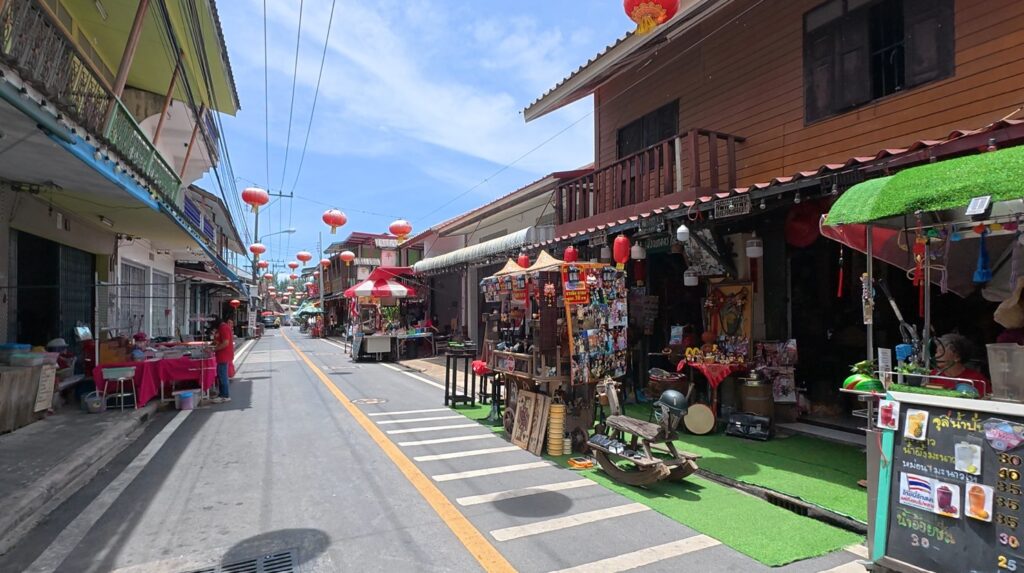
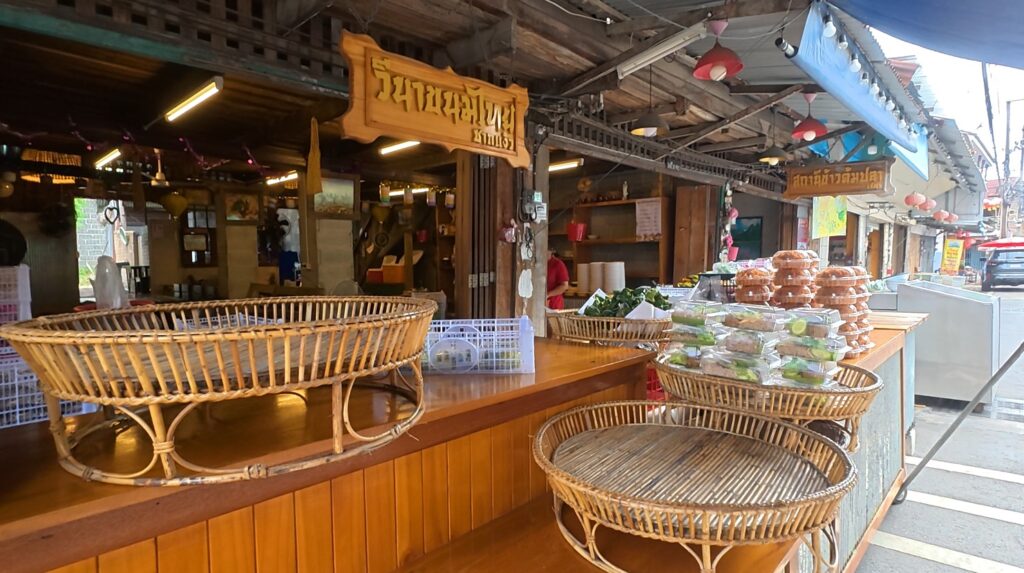
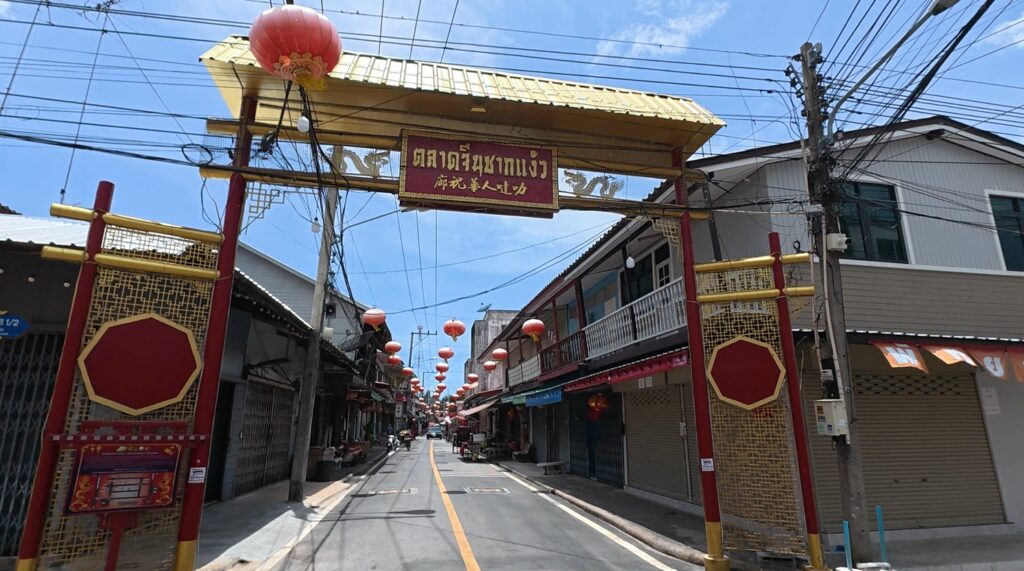
The quiet old street reflects the years when changing roads, industries and opportunities drew people away from Chak Ngaew.
A Chinatown in Danger of Becoming Only a Memory
The greatest danger to Chak Ngaew was not the collapse of a single building.
It was the disappearance of collective memory.
When elderly residents pass away, they take with them names, recipes, dialects, working methods and stories that may never have been written down. A house can be repaired, but the meaning of each room is harder to restore.
Who slept above the old shop?
Who used the gramophone?
Which family prepared food for a festival?
Why was a particular image placed beside the door?
Without people to answer those questions, heritage can become decoration.
The red lanterns may remain, but the lives beneath them become invisible.
Chak Ngaew faced this difficult question: should the ageing community be allowed to fade quietly, or could the remaining residents find a way to give its old street a new purpose?
The answer did not come from government alone.
It began with local people recognising that their ordinary surroundings possessed value.
The wooden shophouses, shrine, family food and memories were not outdated burdens. Together, they formed a cultural inheritance that existed nowhere else in exactly the same way.
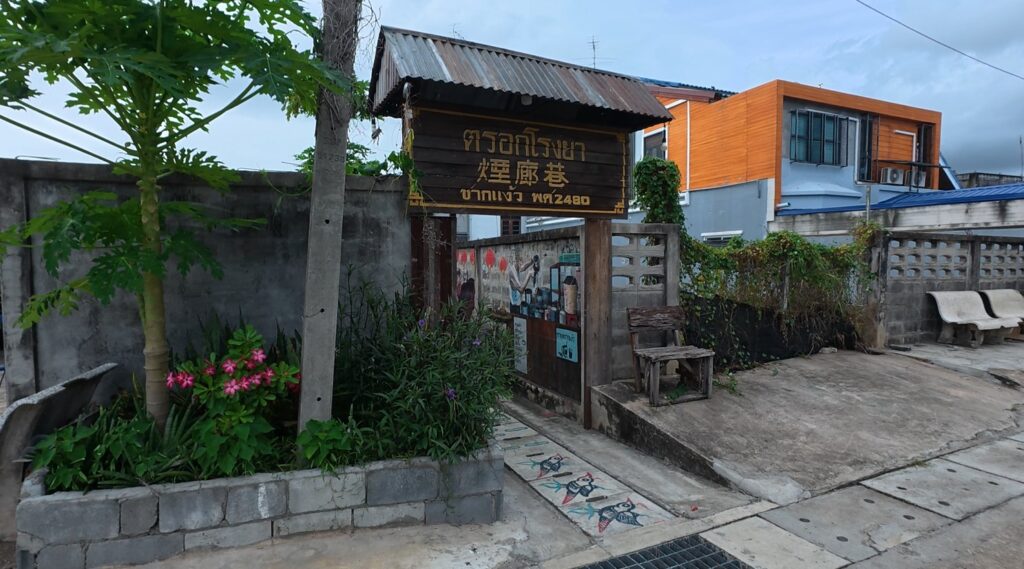
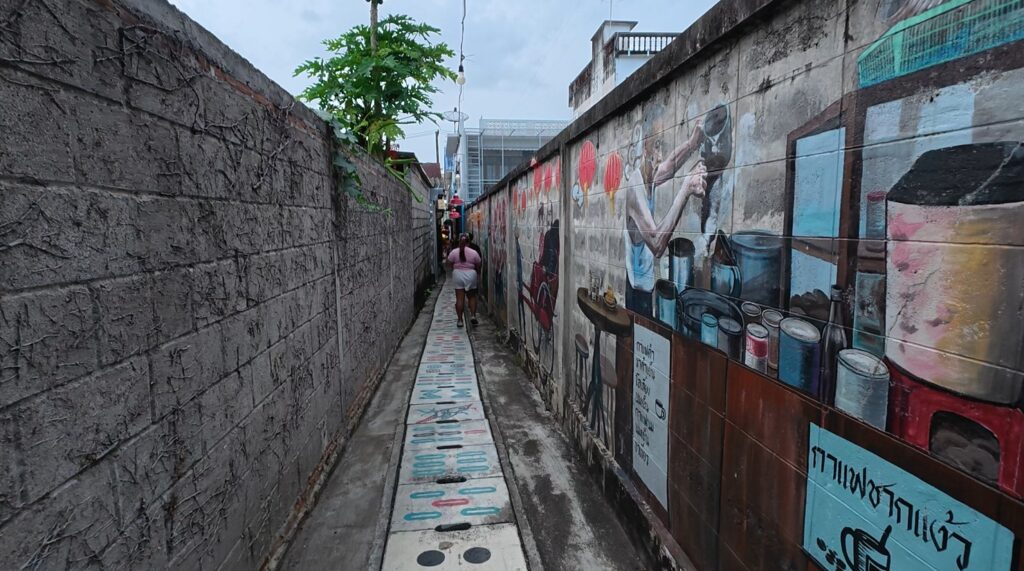
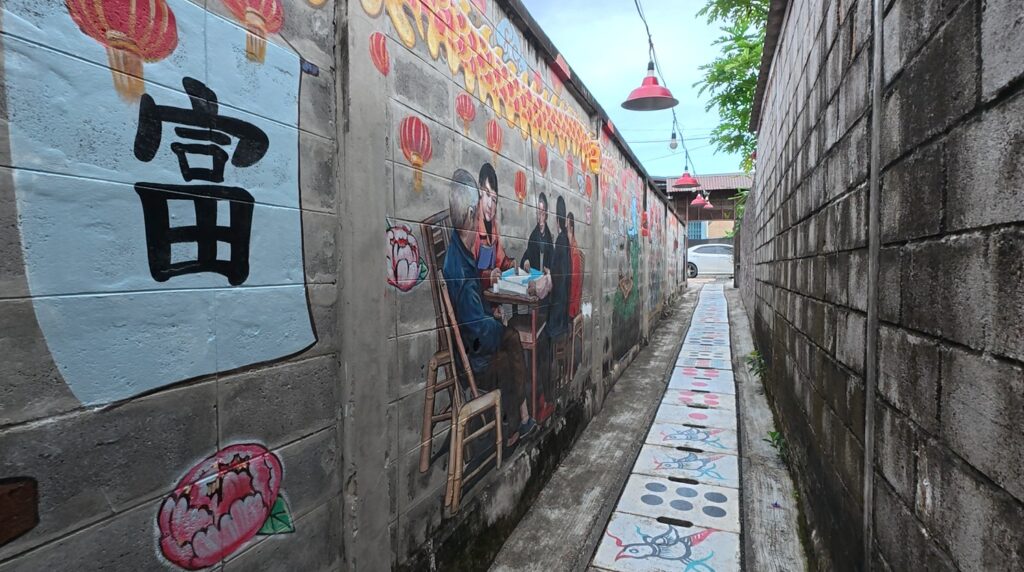
Behind the market street, quiet lanes and ageing walls preserve memories that could disappear with the last generation who still remembers them.
Public Support and a Community-Led Revival
The revival of Chak Ngaew developed through cooperation between residents, local authorities and public tourism organisations.
The community organised itself around cultural preservation and community-based tourism. Support from the Huai Yai local administration and Thailand’s Designated Areas for Sustainable Tourism Administration helped strengthen tourism management, public facilities, cultural interpretation and promotion. Chak Ngaew subsequently became recognised as a model of community-based cultural tourism.
The Saturday walking street gave the old commercial road a new rhythm.
Families reopened the fronts of their houses. Local dishes returned to public view. Historic objects were displayed, and visitors could walk through a streetscape that modern development had largely passed by.
Government support played an important role, but it did not manufacture the identity of Chak Ngaew.
The culture already belonged to the residents.
Public organisations could provide planning, infrastructure, promotion and outside attention. Only the community, however, could decide which memories mattered and how they should be shared.
This distinction is important.
A historic village can easily become a stage made only for tourists. Its buildings may look old while its residents lose control of the story.
Chak Ngaew’s deeper value lies in the effort to use tourism as a means of sustaining the community—not replacing it.
The market creates income, but it also gives younger generations a reason to return, participate and reconsider the value of what their grandparents preserved.
Public support helped the community reopen its old street, but the identity of Chak Ngaew still belongs to the residents who preserved it.
The People Behind the Market
Visitors often see the lanterns first.
They photograph the wooden houses, taste traditional snacks and admire the Chinese decorations. But behind every stall is a person whose relationship with Chak Ngaew is more complicated than a weekend visit.
Some residents were born in these houses.
They remember the period before the street became a tourist destination. They remember empty shops, elderly neighbours and years when few outsiders were interested in the village.
For them, the market is not simply an attraction.
It is an attempt to keep their home alive.
An elderly woman selling a family recipe is passing down more than food. A shopkeeper displaying old household objects is presenting part of a family biography. Someone cleaning the shrine is continuing a responsibility inherited from previous generations.
Their lives do not stop when the market closes on Saturday night.
On ordinary weekdays, they still repair houses, care for ageing relatives, prepare ingredients and manage the practical difficulties of living in an old community.
The preservation of heritage can appear romantic from the outside. For residents, it requires continual labour.
Wood decays. Roofs leak. Young people still need jobs. Visitor numbers change. Traditions must be adapted without losing their meaning.
The future of Chak Ngaew depends upon whether preservation can support real lives rather than merely beautiful photographs.
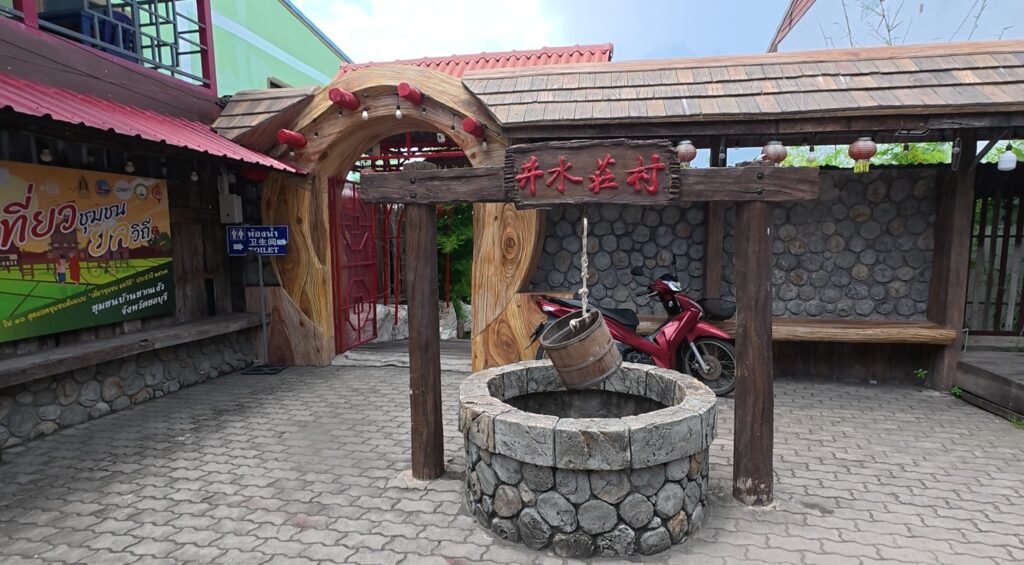
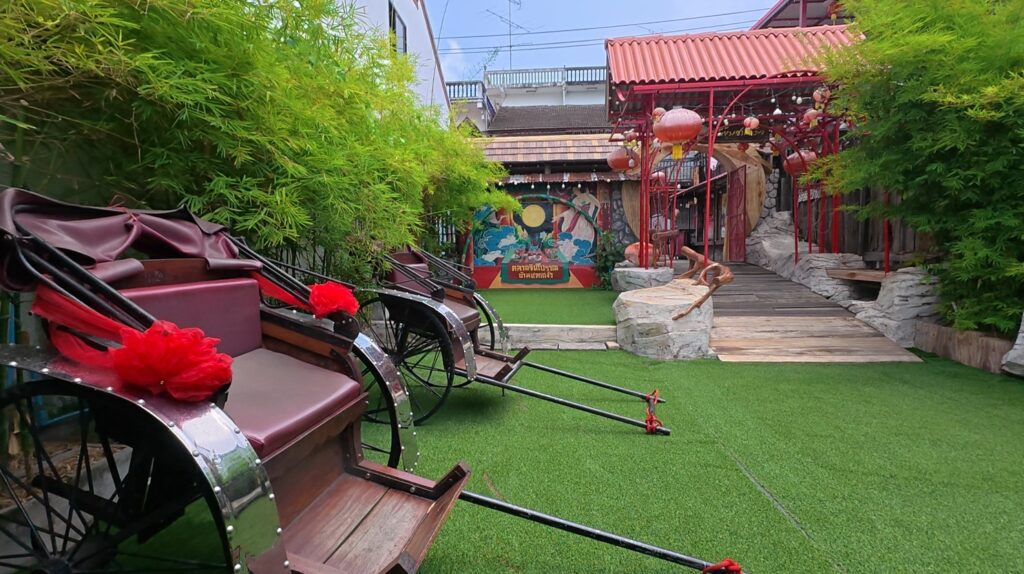
Behind the weekend market are residents whose daily work keeps Chak Ngaew alive throughout the year
The Quiet Rooms behind the Wooden Doors
Inside several buildings, I saw old furniture, ceramics, tools, photographs and a gramophone.
They seemed to be waiting for the people who once used them.
Museums often separate objects from daily life. Here, the objects remained close to the houses and street where that life actually unfolded.
A bowl was not simply an antique. Someone had eaten from it.
A counter was not just old wood. A family had depended upon it.
A photograph did not merely show traditional clothing. It recorded a person who once worried, laughed, worked and expected to be remembered.
Looking at these objects, I began to think less about Chinese migration as a historical movement and more about individual human lives.
History often says that people migrated, settled, prospered and declined.
But no one experiences life in such neat categories.
One person misses a mother left behind.
Another is proud when the family shop succeeds.
A child wants to leave the village, while an ageing parent hopes someone will stay.
A family closes a business with sadness, then opens the same doorway years later as part of a cultural market.
The story of Chak Ngaew is made from thousands of such private moments.
A Shrine That Still Receives Prayers
The shrine remains one of the strongest signs that Chak Ngaew is not an abandoned historical set.
People still enter.
Incense is still offered.
The deities are still approached with personal concerns that no tourist brochure can fully explain.
A person may pray for health, family peace, financial security or protection for a child working far from home. These prayers connect the present community with its migrant ancestors.
The circumstances have changed, but the need for reassurance has not.
Earlier settlers asked whether they could survive in an unfamiliar country.
Their descendants may now ask whether the community can survive in a rapidly changing economy.
The shrine has witnessed both questions.
Around it, festivals and ceremonies continue to renew relationships among neighbours and family members. Through these gatherings, cultural inheritance remains active rather than frozen in the past.
Beyond the Market Street
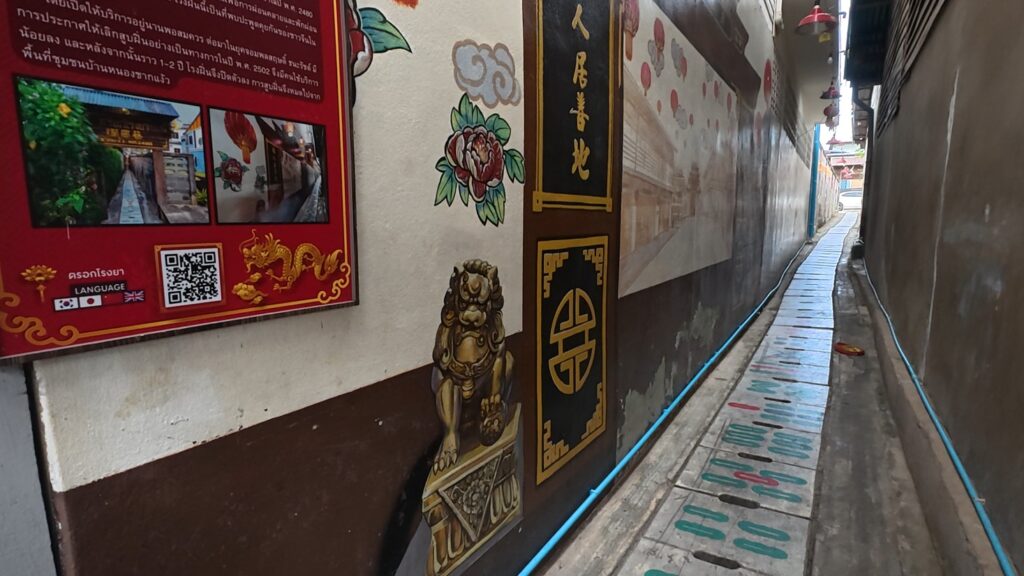
Near the end of the ride, I entered a narrow lane behind the main street.
The lanterns and shops gave way to old walls, small houses, murals and quieter signs of daily life.
This was perhaps the most meaningful part of the journey.
The main street presents Chak Ngaew to visitors. The back lanes remind us that it is still somebody’s home.
Here, people were born and grew old. Families argued and reconciled. Children left for the city. Elderly residents waited for them to return during festivals.
The community’s real story cannot be contained in the market alone.
It continues in kitchens, courtyards, shrines and rooms closed to tourists. It lives in people who may not appear in promotional photographs but whose presence keeps the village from becoming empty.
Chak Ngaew was a home before it became heritage.
It must remain a home if that heritage is to have meaning.
When the Red Lanterns Shine Again
Every Saturday, the lanterns are lit and people return to the street.
Food is prepared. Doors open. Visitors walk between the old houses, and the quiet road once again fills with voices.
The scene may resemble the prosperous past, but it is not a complete return to that world. The mills will not reopen as they once operated, and the old commercial importance of Chak Ngaew will not simply be restored.
The revival has another purpose.
It allows the community to carry its past into a different future.
The migrants who first settled here are gone. Many of their names survive only within families. The people who built the shops, planted the fields and prayed at the shrine could not have imagined visitors arriving with cameras generations later.
Yet the street they created still stands.
Their descendants continue to live beneath its roofs. Public support has helped protect and present the community, but its survival ultimately depends upon those residents choosing to remain connected to it.
The red lanterns are therefore more than decorations.
They illuminate the labour of migrants who began again in a foreign land.
They illuminate the years of prosperity when the street was crowded with trade.
They illuminate the silence that followed when roads and opportunities moved elsewhere.
And they illuminate the people who still open the doors today.
Chak Ngaew is not a story about preserving a perfect Chinatown from the past.
It is a story about change, loss and the difficult work of continuing.
The old town survives not because time stopped here, but because people refused to let time erase everything.
When the lanterns shine again, they do not bring the ancestors back.
But for a few hours, they allow us to see the lives those ancestors left behind.
Visit Chak Ngaew Chinese Market
Chak Ngaew Chinese Market preserves the story of a Chinese migrant community that grew through farming, trade and family labour before finding new life through cultural tourism.
View Chak Ngaew Chinese Market on Google Maps
Visit on a Saturday evening to see the old wooden street illuminated by red lanterns, local food stalls and the community members who continue to keep its heritage alive.
Continue Exploring Chinese Heritage in Eastern Thailand
Follow the traces of Chinese migrants in Rayong’s historic Yomjinda Road, where old shophouses, family businesses and cultural memories still remain beside the river.
Explore the Chinese Heritage of Yomjinda Road
From the river mouth to shrines, mosques and fishing communities, this journey follows how migrants entered Rayong and gradually became part of the local landscape.