A Temple Left Beside the Tracks
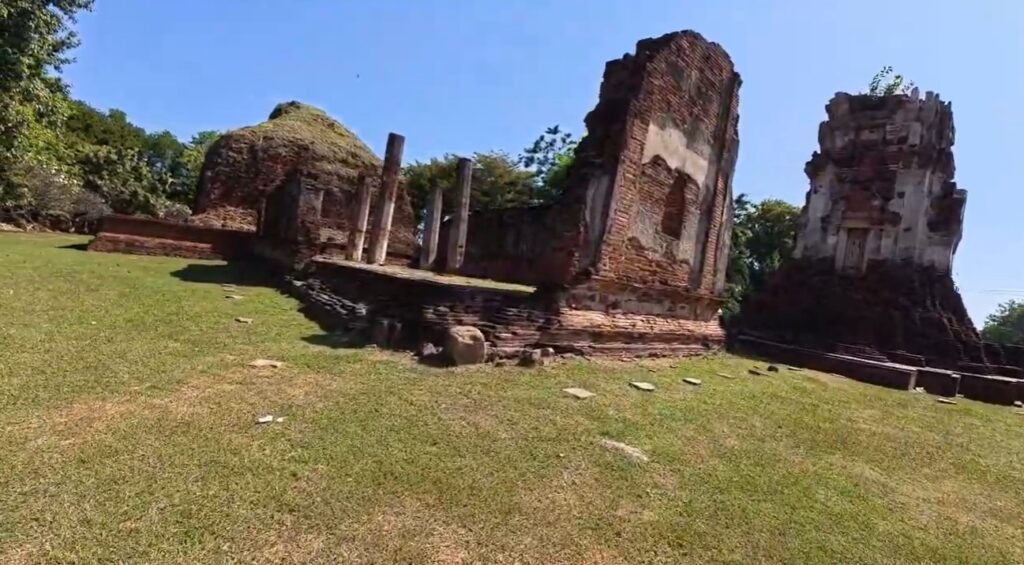
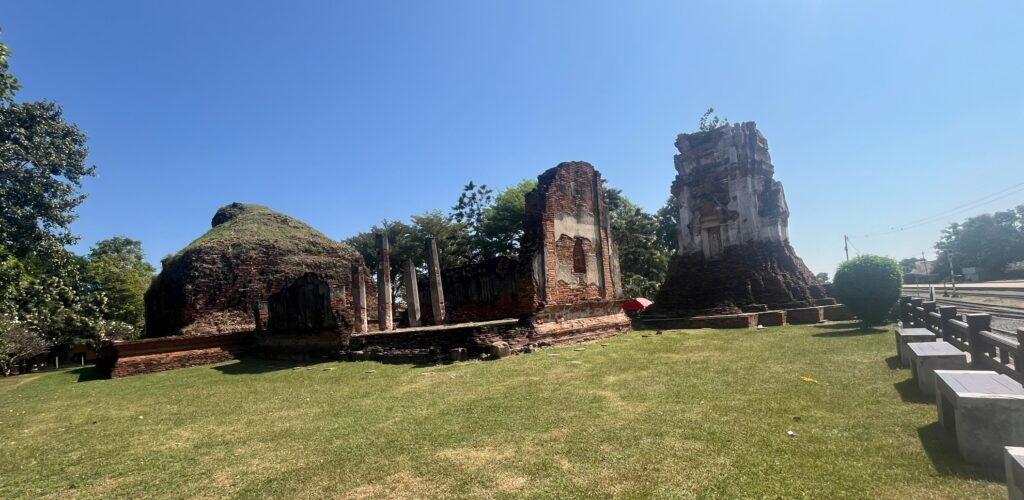
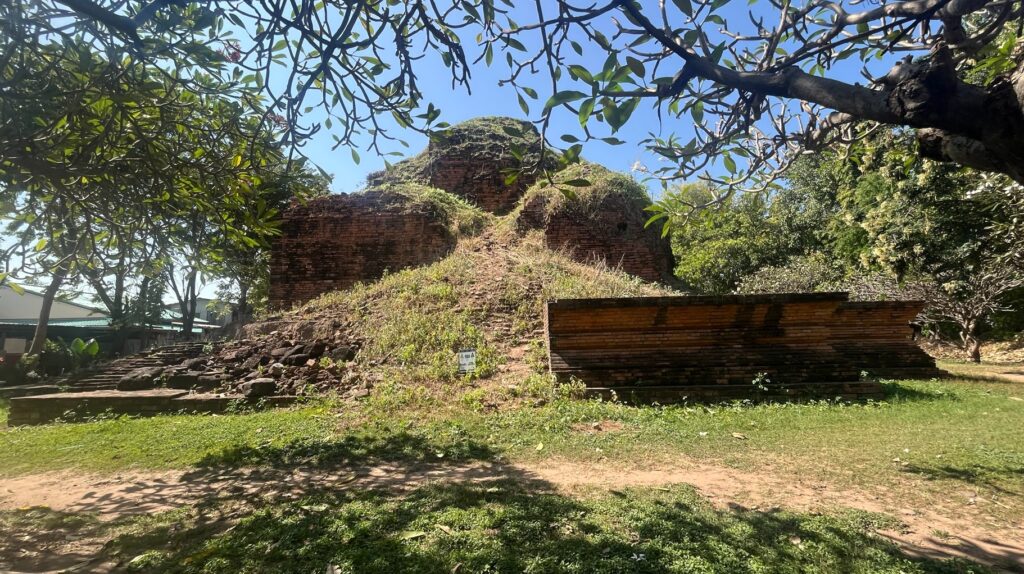
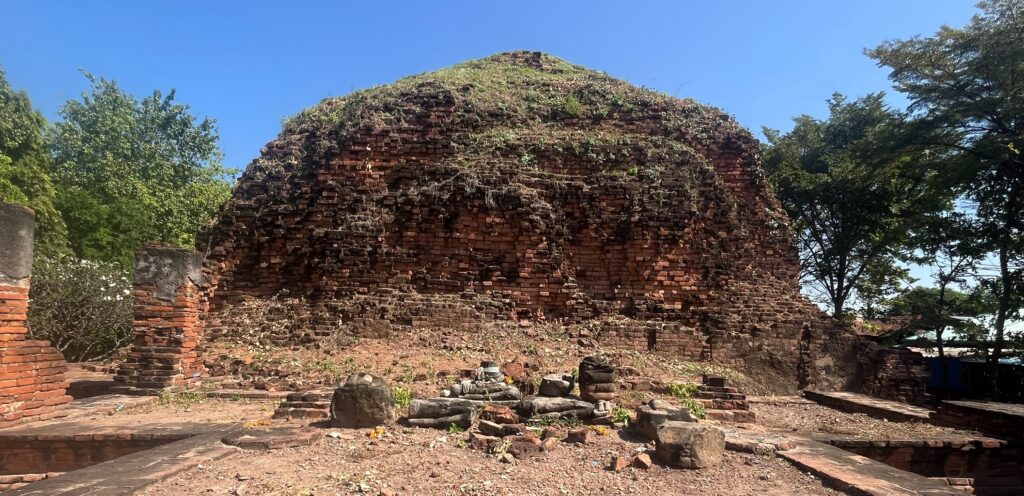
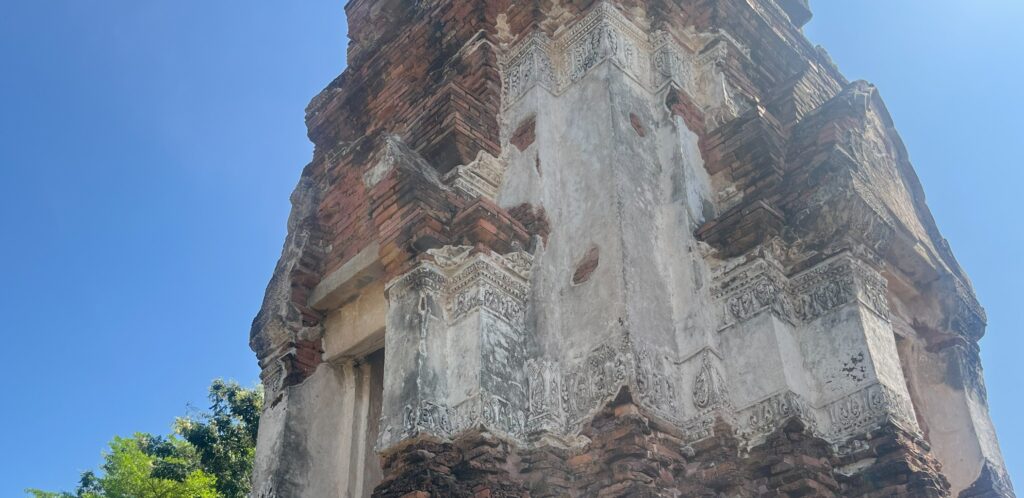
Wat Nakhon Kosa does not greet visitors with restored towers or polished stone. What remains today is a tired body of ancient brick—broken walls, collapsed foundations, and weathered structures that have endured centuries of rain, heat, and human change.
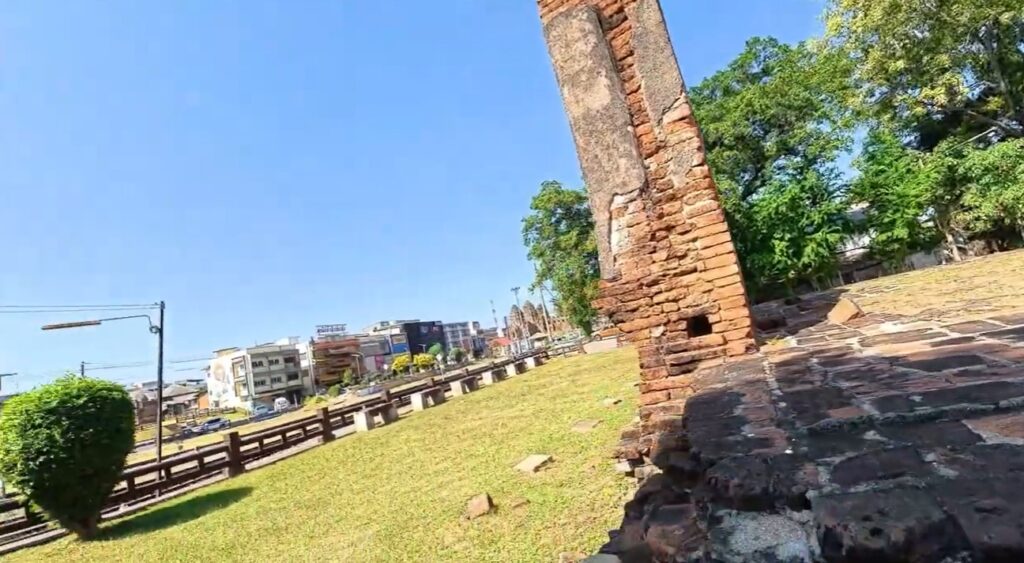
Only a short distance away, trains continue to pass through Lopburi. People travel toward new destinations while the old temple remains in the same place, quietly watching the modern world move around it.
Was It a Temple or a Tomb?
At first glance, Wat Nakhon Kosa can feel almost like the remains of an ancient tomb. Its massive brick base, broken towers, and empty chambers create a solemn atmosphere.
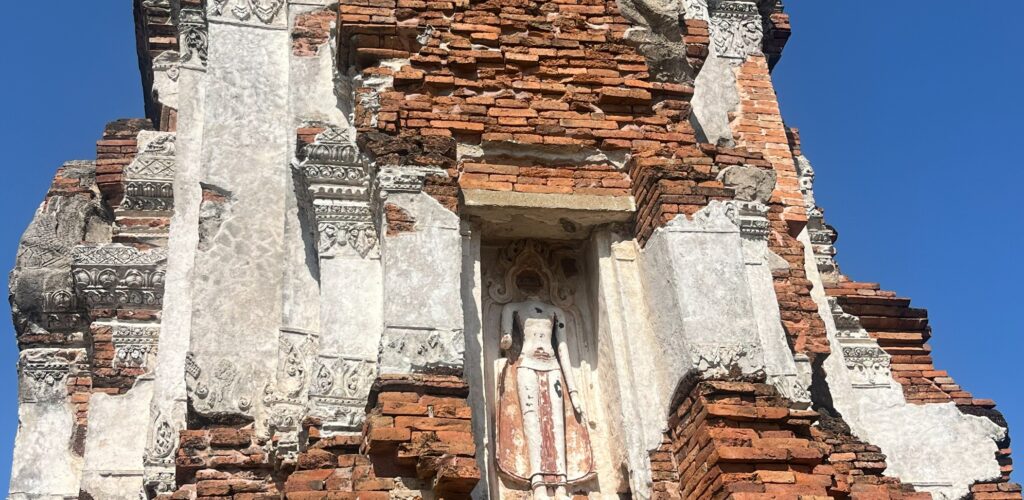
However, the site is generally understood as an ancient religious complex rather than the burial place of a known ruler or noble. It appears to have begun as a Khmer-influenced sanctuary and was later adapted for Buddhist worship as beliefs and rulers changed across Lopburi.
The Unknown Patron of Wat Nakhon Kosa
No inscription has clearly identified a single ruler, noble, or religious figure as the owner of Wat Nakhon Kosa. The temple’s original patron therefore remains uncertain.
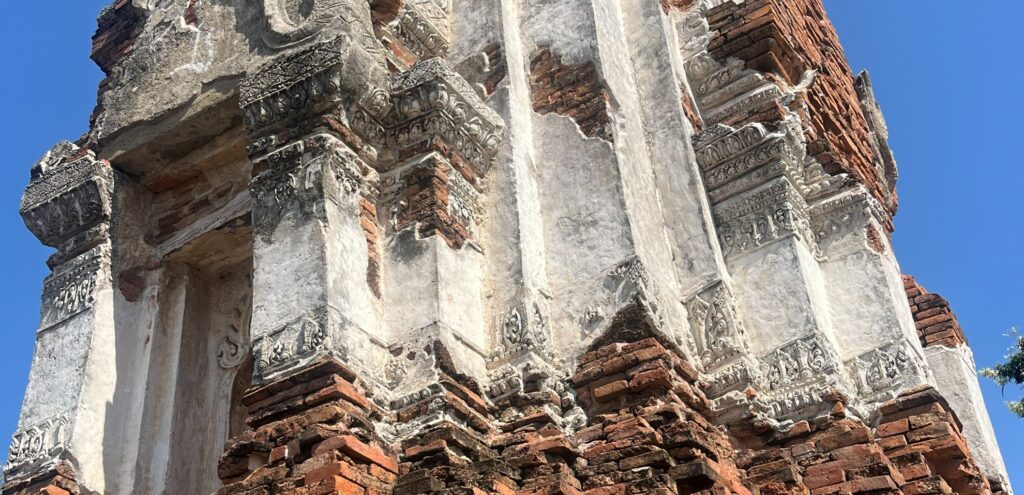
Its surviving structures suggest that the site passed through several periods of use. Khmer religious influence, later Buddhist additions, and repairs from succeeding eras appear to overlap within the same complex.
Perhaps the true protagonist of Wat Nakhon Kosa is not one forgotten person, but Lopburi itself—a city where different kingdoms, beliefs, and generations left their marks upon the same ancient walls.
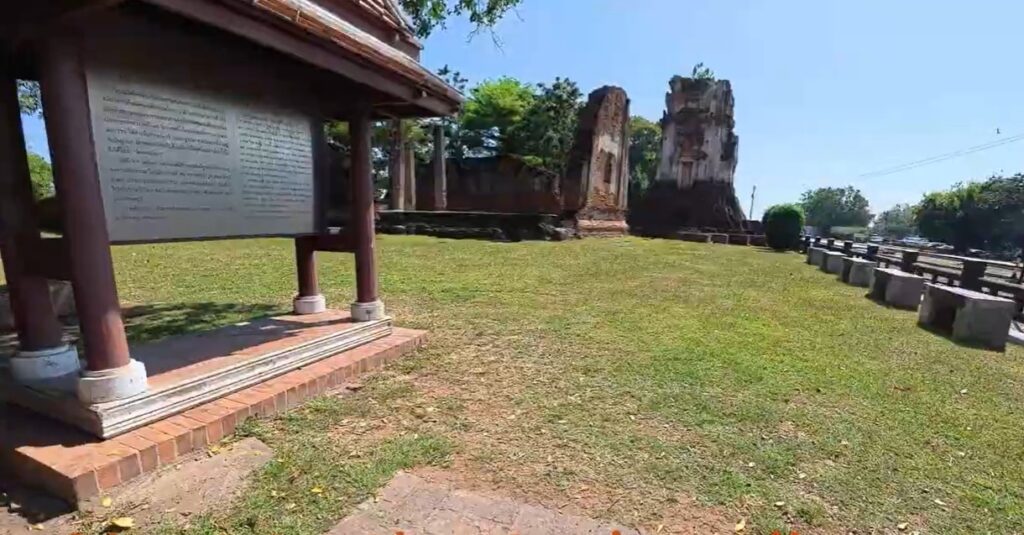
Layers of Faith and Time
Wat Nakhon Kosa was not shaped in a single period. Its surviving brickwork suggests that the complex was altered, repaired, and reused as Lopburi passed through different religious and political eras.
A sanctuary influenced by Khmer traditions appears to have stood here first. Later generations adapted the site for Buddhist worship, adding new structures while preserving parts of what already existed.
This layering gives the ruins their unusual character. Wat Nakhon Kosa is not the monument of only one ruler or one faith. It is a place where several centuries remain visible within the same broken walls.
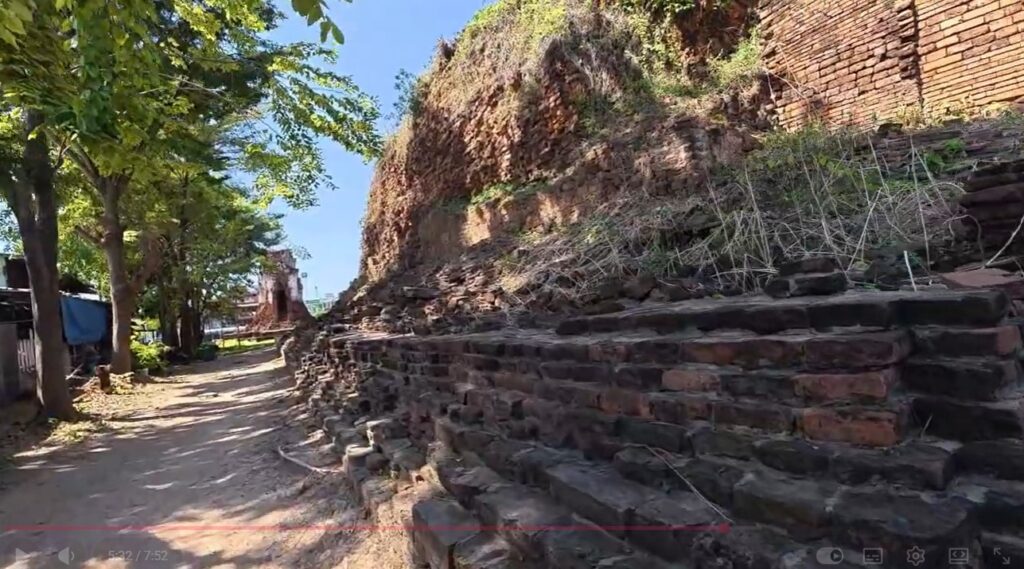
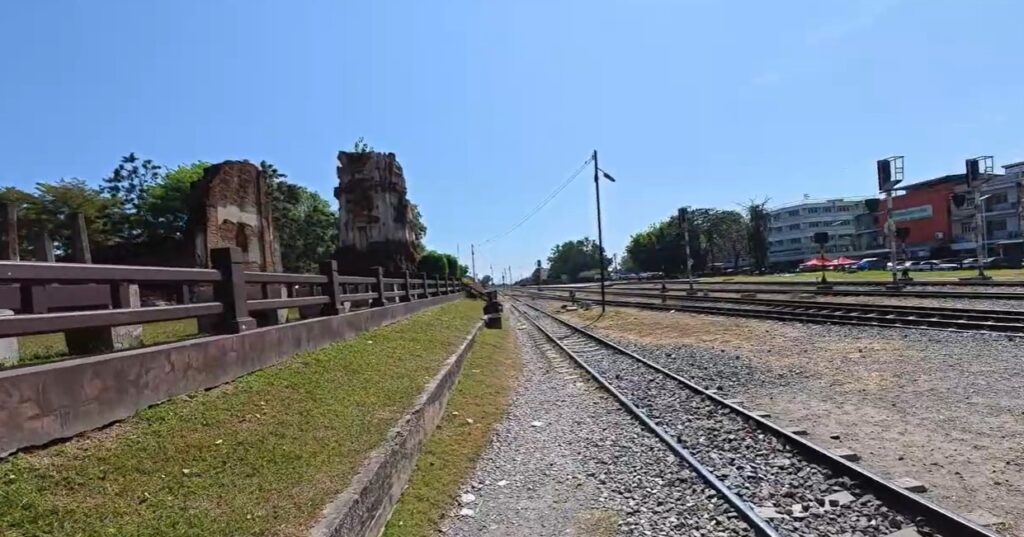
A Temple Watching the Trains Go By
Only a short distance from the ruins, the railway continues to carry people through Lopburi. Trains arrive and disappear, passengers come and go, and the city keeps moving forward.
Wat Nakhon Kosa remains behind.
Its broken walls and worn brick towers seem to watch this endless movement in silence. Once, people may have gathered here to pray, make offerings, or serve the rulers and gods of their time. Today, the temple stands alone, supporting its aging body beside the tracks.
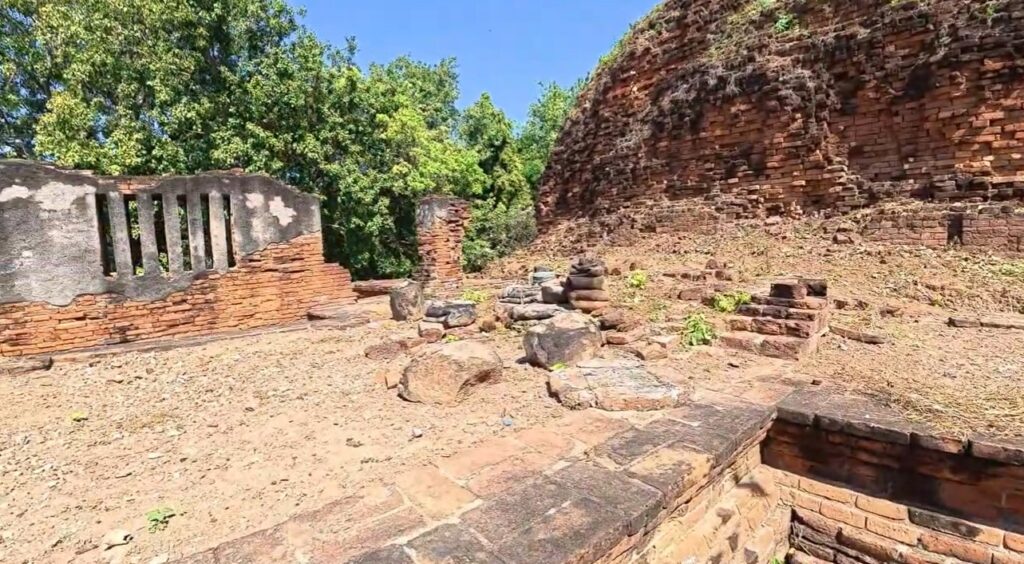
The Scars of Destruction
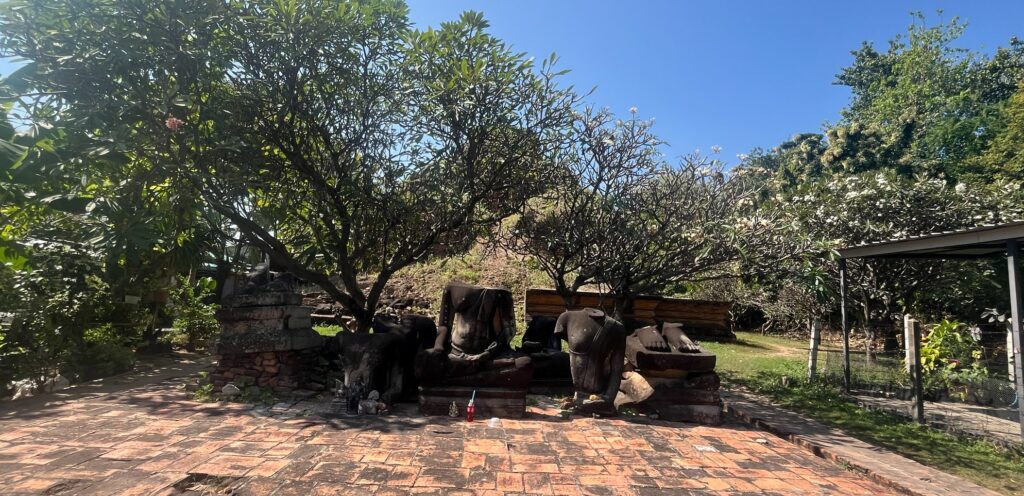
Time alone may not explain everything that happened here. Some walls have collapsed under centuries of rain and heat, while other stones and sculptures may have been removed, reused, or damaged during periods of war and political change.
What remains is incomplete, but the missing parts also speak. Empty foundations, broken edges, and exposed brick reveal how vulnerable even sacred buildings become when the society that protected them disappears.
Wat Nakhon Kosa no longer possesses the power it once held. Yet its ruins continue to preserve the memory of that lost world.
Still Standing After Its World Has Gone
Despite the damage, Wat Nakhon Kosa has not completely disappeared. Its remaining towers and heavy brick foundations continue to hold their place against heat, rain, and passing years.
The people who built the sanctuary are gone. Their names, ceremonies, and reasons for choosing this ground have largely faded from memory. Yet the temple still stands, carrying fragments of their world in every worn brick.
Perhaps that is why the ruins feel so lonely. They are not simply abandoned structures. They are the last witnesses of a time that can no longer return.
Walking Through the Forgotten Ruins
In the video, I walk slowly through the surviving structures of Wat Nakhon Kosa. Broken walls, exposed foundations, and weathered brick towers appear one after another, each carrying traces of a different age.
There is no grand entrance and no complete monument waiting at the end. Instead, the journey passes through fragments—pieces of a sacred place that once belonged to a living world.
The railway nearby makes the silence feel even deeper. Trains continue toward their destinations, while Wat Nakhon Kosa remains where it has stood for centuries.
The Temple That Remains
Wat Nakhon Kosa may never reveal the name of the person who first ordered its construction. Its original patron, ceremonies, and purpose have become blurred by centuries of change.
But perhaps the silence of the ruins is part of their meaning.
The temple no longer calls people to worship, yet it still holds its place beside the railway. Trains pass, travelers come and go, and the city continues to change. Wat Nakhon Kosa remains—worn, broken, and incomplete, but still refusing to disappear.
It stands not as the monument of one forgotten ruler, but as a witness to Lopburi itself: a city where faith, power, destruction, and time have all left their marks upon the same ancient bricks.
Gallery
Visitor Information & Location
Wat Nakhon Kosa is located near Lopburi railway station, making it easy to visit while exploring the old city. The ruins stand close to active railway tracks, so visitors should stay within the designated area and remain careful when walking near the site.
Because much of the complex is exposed, the early morning or late afternoon is the most comfortable time to visit. Soft light also brings out the texture of the old brickwork and gives the ruins a deeper atmosphere.
Location: Lopburi, Thailand
Google Maps – Wat Nakhon Kosa https://maps.app.goo.gl/5qC8Q9CzVicbGRdE6
YouTube – Wat Nakhon Kosa, Lopburi https://youtu.be/6E1eKoxcHNg
Explore More History Stories
Continue exploring the forgotten kingdoms, ancient ruins, and living history of Thailand with Won Cub Life.